

P2096 on 2013-2019 Ford Escape: Lean Fuel Trim Causes and Fixes
On a 2013-2019 Ford Escape, P2096 is most often caused by an exhaust leak or a failing downstream oxygen sensor. For 2013-2014 2.0L models (built 9/1/2012-8/1/2013), check for oil contamination on the O2 sensor connector from a leaking VVT solenoid per TSB 16-0031. A new O2 sensor costs between $50 and $180. After repair, a KOER self-test is often necessary to reset fuel trim adaptations.
- For all models, your first diagnostic step should be a thorough inspection of the exhaust system for leaks.
- If you have a 2013-2014 Escape with the 2.0L engine, immediately check the O2 sensor and VVT solenoid connectors for oil contamination as described in TSB 16-0031.
- The most common part to fail is the downstream oxygen sensor (Bank 1, Sensor 2).
- After replacing the O2 sensor, it may be necessary to use a scan tool to perform a 'Key On Engine Running' (KOER) self-test to fully clear the code and reset the engine's computer.
What's Unique About the 2013-2019 Ford Escape
For the 2013-2014 Ford Escape with the 2.0L engine, this code is frequently linked to a specific issue outlined in a Technical Service Bulletin (TSB 16-0031). Oil can leak from the Variable Valve Timing (VVT) solenoids and travel through the wiring harness, contaminating the downstream O2 sensor's electrical connector. This contamination causes a false lean signal. For the 1.5L EcoBoost, the cause is more typical, often pointing to exhaust leaks or a simple sensor failure. Some owners and service information have noted that after replacing a sensor, a specific 'Key On Engine Running' (KOER) self-test using a scan tool (like the dealer's IDS or FORScan) is necessary to reset adaptations and prevent the code from returning.
Symptoms You May Notice
- Check Engine Light is on
- Reduced fuel economy
- Rough idle (less common, but possible if a vacuum leak is the cause)
- Failed emissions test
- Poor acceleration (less common)
- Replacing the O2 sensor without checking for exhaust leaks first. If a leak is present, the new sensor will still detect a lean condition and the code will return.
- Replacing the upstream O2 sensor. While related, P2096 specifically points to the post-catalyst (downstream) sensor's reading.
- On 2.0L models, replacing the O2 sensor without checking for oil contamination from the VVT solenoids per TSB 16-0031. The new sensor will quickly become contaminated and the code will return.
Most Likely Causes
- Exhaust Leak 🔴 High Probability Exhaust components like flex pipes and gaskets can degrade over time from heat cycles and corrosion, allowing outside air to be pulled into the exhaust stream between the two oxygen sensors.
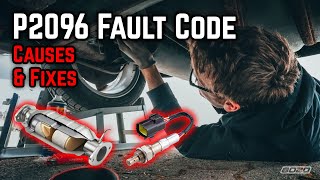
How to confirm: Visually inspect the exhaust system from the engine to the downstream O2 sensor for cracks, holes, or loose connections. A smoke machine test is the most effective way to find small leaks. 🎬 See this video for a deep dive into P2096 causes and fixes. You may also hear a louder exhaust tone.
Typical fix: Repair or replace the leaking section of the exhaust, which may include a flex pipe, manifold gasket, or other pipe section.
Est. part cost: $20-$200 - Faulty Downstream Oxygen (O2) Sensor 🔴 High Probability → Shop Oxygen Sensor O2 sensors are a common wear item and can fail with age (typically 80k-100k miles) and contamination, sending incorrect lean signals to the PCM.
How to confirm: After ruling out exhaust leaks, use a scan tool to monitor the voltage of the downstream O2 sensor (Bank 1, Sensor 2). A sensor that is stuck at a low voltage (typically < 0.2V) or is slow to respond is likely faulty.
Typical fix: Replace the downstream oxygen sensor (Bank 1, Sensor 2). After replacement, a Key On Engine Running (KOER) self-test is highly recommended to reset adaptations and prevent the code from returning.
Est. part cost: $50-$180 - Oil Contamination of O2 Sensor Wiring (2.0L Specific) 🟡 Medium Probability → Shop Oxygen Sensor On 2013-2014 2.0L models (built 9/1/2012-8/1/2013), Ford TSB 16-0031 identifies an issue where VVT solenoids leak oil into the engine harness, which then wicks through the wiring to contaminate the O2 sensor connector.
How to confirm: Disconnect the electrical connectors for the VVT solenoids and the downstream O2 sensor. Inspect for the presence of engine oil inside the connectors. Any oil is a definitive sign.
Typical fix: If oil is found, replace both VVT solenoids and the contaminated downstream O2 sensor. Clean the connectors thoroughly with electrical contact cleaner. If oil has heavily saturated the harness, replacement may be necessary, but cleaning is often sufficient.
Est. part cost: $150-$700
Rare But Worth Checking
- Failing Catalytic Converter: → Shop Catalytic Converter While less common, a deteriorating catalytic converter can sometimes trigger P2096 before it sets a P0420 (catalyst efficiency) code. A failing converter can't properly store oxygen, causing the rear O2 sensor to see a lean mixture.
- Low Fuel Pressure: A weak fuel pump or clogged filter can cause a genuine lean condition, though this will usually trigger other codes like P0171 first.
- Intake/Vacuum Leaks: A significant leak of unmetered air after the mass airflow sensor (e.g., cracked intake boot, bad PCV valve) can cause a lean condition. This typically sets a P0171 code first but can contribute to P2096.
Diagnosis Steps
- Check for any Technical Service Bulletins (TSBs) related to your vehicle's year and engine. For 2013-2014 2.0L models, check for TSB 16-0031 and inspect VVT and O2 sensor connectors for oil.
- Scan for any other diagnostic trouble codes to see if other systems are reporting faults (e.g., P0171, P0420).
- Thoroughly inspect the exhaust system for any signs of leaks (soot, cracks, holes) between the engine and the downstream O2 sensor. A smoke test is the most reliable method.
- If no leaks are found, use a scan tool to observe the live data from the downstream O2 sensor (Bank 1, Sensor 2). The voltage should fluctuate. If it's stuck low (<0.2V), the sensor is likely bad or there is a wiring issue.
- Inspect the O2 sensor's wiring and connector for any physical damage, corrosion, or contamination (especially oil on 2.0L models).
- If exhaust leaks and wiring issues are ruled out, the downstream O2 sensor is the most probable cause of the fault.
- After repair, clear the codes and perform a drive cycle. For Ford, a Key On Engine Running (KOER) self-test using a tool like FORScan or IDS is critical to reset fuel trim adaptations and prevent the code from returning. Simply clearing the code with the engine off may not be sufficient. 🎬 Watch: How to perform the critical KOER self-test on your Ford.
Parts You'll Likely Need
- Downstream Oxygen Sensor (Bank 1, Sensor 2)
(OEM #1.5L EcoBoost: F1FZ-9G444-G (replaces DY1377, F1FZ9G444C/F) or LX6Z-9G444-M. 2.0L EcoBoost: Motorcraft DY1159 or CJ5Z-9G444-A.)— This sensor is the primary reporter for this code and is a common failure point due to age and exhaust heat.
Trusted brands: Motorcraft, Bosch, Denso, NTK
OEM price range: $120-$180
Aftermarket price range: $50-$100 - VVT Solenoids (2.0L Engine)
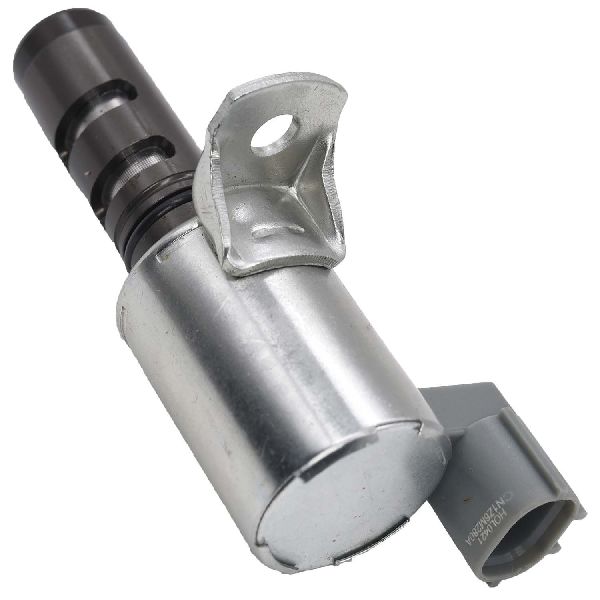
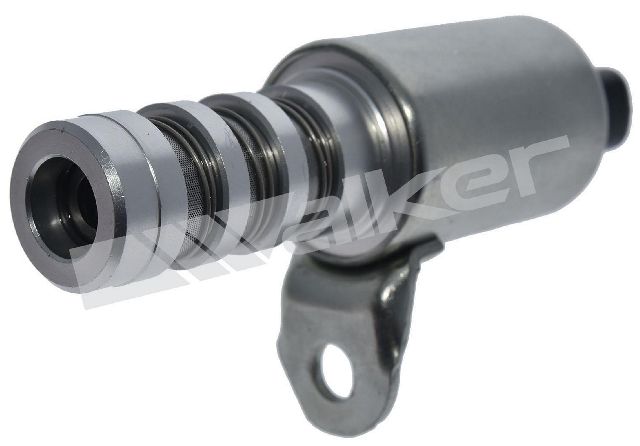
(OEM #CJ5Z-6M280-A or CM5Z-6M280-C. Two are required.)— For 2013-2014 2.0L models, these may need to be replaced if they are found to be leaking oil into the wiring harness per TSB 16-0031.
Trusted brands: Motorcraft, Dorman
OEM price range: $50-$80 each
Aftermarket price range: $30-$60 each - Exhaust Gasket / Flex Pipe Repair Kit — If an exhaust leak is found, a new gasket or a weld-in flex pipe section is often required for the repair.
Trusted brands: Walker Exhaust, Fel-Pro
OEM price range: $40-$150
Aftermarket price range: $20-$80
Related Codes That Often Appear With This One
- P0171 — If a vacuum leak or fuel delivery issue is the root cause, the upstream sensor will also likely detect a lean condition, triggering P0171 (System Too Lean Bank 1). Diagnosing P0171 will usually fix P2096 in this case.
- P0420 — If the catalytic converter is failing, P2096 may appear alongside or be followed by P0420 (Catalyst System Efficiency Below Threshold). If you have both codes, the catalytic converter is the prime suspect, but you must still rule out exhaust leaks.
Technical Service Bulletins (TSBs) & Recalls
- TSB 16-0031: Some 2013-2014 Escape vehicles with a 2.0L GTDI engine may exhibit an illuminated MIL with DTC P2096. This may be due to engine oil migrating from the VVT solenoids and contaminating the HO2S12 sensor connector. The fix involves replacing both VVT solenoids and the O2 sensor, and cleaning or replacing the harness.
- Bulletin #TSB160031: Specifically addresses 2.0L GTDI models built between 09/01/2012 and 08/01/2013 exhibiting an illuminated MIL with DTC P2096.
Platform-Specific Known Issues
- TSB 16-0031 for 2013-2014 2.0L EcoBoost models (built between 9/1/2012 and 8/1/2013) describes an issue where oil leaks from VVT solenoids, wicks through the wiring harness, and contaminates the downstream O2 sensor connector, causing a false P2096 code.
Mechanic-Grade Diagnostic Values
- Downstream O2 Sensor (HO2S12) Voltage — expected: Should fluctuate slowly. A healthy sensor after a warmed-up catalyst will generally stay above 0.5V.. Failure: Stuck at a low voltage, typically less than 0.2V, indicating a lean reading or sensor failure.
- Post-Catalyst Fuel Trim Bank 1 (Mode $06, Test ID $3C) — expected: A value below the maximum limit (often represented as a ratio less than 1.99).. Failure: The value is at or exceeds the maximum limit, often displayed as 1.99 or similar, indicating the PCM has maxed out its adjustment capability.
- O2 Sensor Heater Circuit Resistance — expected: Approximately 4-10 Ohms when measured at the sensor's connector.. Failure: An open circuit (infinite resistance) or a short (near zero resistance) indicates a failed heater element, which can cause slow sensor response and trigger codes.
Scan Tool Commands That Help
- FORScan / Ford IDS: KOER (Key On Engine Running) Self-Test — After performing a repair like replacing an O2 sensor. This test forces the PCM to re-evaluate sensor inputs under active conditions and can confirm a fix or clear adaptive tables that may cause the code to return falsely.
- FORScan / Ford IDS: PCM Service Procedure: 'Reset All Adaptations' or 'Clear Fuel Trim Tables' — This is critical after replacing a component that affects the air/fuel mixture (like an O2 sensor or fixing a vacuum/exhaust leak). It erases the old, incorrect learned values (long-term fuel trims) that caused the P2096 code to set. Failing to do this is a very common reason for the code to return after a successful hardware repair.
Wiring & Ground Locations
- C134 — The electrical connector for the downstream oxygen sensor (HO2S12), located on the exhaust system downstream of the catalytic converter.. This is the primary inspection point for damage, corrosion, or oil contamination from the VVT solenoids on 2.0L models. All voltage and resistance tests for the sensor circuit begin here.
- G103 — A primary engine bay ground point, typically located on the left (driver's side in North America) strut tower or inner fender.. The PCM and its sensors rely on clean ground connections. A corroded or loose G103 can cause erratic voltage readings from the O2 sensor, leading to false lean codes. It should be inspected for tightness and corrosion as part of any electrical diagnosis.
Real Owner Repair Stories
- Ford Escape Forum user (2017 Ford Escape 1.5L) — P2096 Check Engine Light
❌ Tried (didn't work) Replaced the downstream O2 sensor, Performed a smoke test which found no leaks
✅ What actually fixed it The shop used a high-level scan tool to perform a PCM reset (clearing fuel adaptations) and a KOER self-test. The old learned fuel trim values were causing the code to return despite the new, functional sensor. - Reddit r/MechanicAdvice user (2015 Ford Escape 1.5L) — P2096 Check Engine Light
❌ Tried (didn't work) Replacing the downstream O2 sensor
✅ What actually fixed it The actual cause was a small, hard-to-see crack in the exhaust flex pipe located before the catalytic converter. This allowed air to be sucked in, causing a true lean condition at the downstream sensor. The leak was only found with a thorough inspection. - Ford Escape Forum user (2014 Ford Escape 2.0L, 110,000 miles) — P2096 Check Engine Light
❌ Tried (didn't work) Replacing the downstream O2 sensor initially
✅ What actually fixed it Following TSB 16-0031, the owner inspected and found oil in the VVT solenoid connectors and the O2 sensor harness connector. The final fix was replacing both VVT solenoids, replacing the downstream O2 sensor again, and thoroughly cleaning the harness connectors with electrical contact cleaner. - NHTSA ODI #11618319 — An owner reported that their engine light came on with code P2096 and later began misfiring with an additional code of P0302 at approximately 82,000 miles.
"I Checked Everything" — The Actual Cause
- In cases where a smoke test finds no exhaust leaks, the most common cause is either a faulty downstream O2 sensor sending a false signal, or the failure to reset the PCM's adaptive fuel trim tables after a previous repair. The old learned values will cause the code to persist even if the hardware is now correct. A scan tool reset is required.
- A less common cause is a failing catalytic converter that has lost its oxygen storage capacity but has not yet degraded enough to set a P0420 efficiency code. It causes the downstream sensor to see a lean mixture similar to an exhaust leak.
OEM Part Supersession History
CJ5Z-6M280-A (VVT Solenoid, 2.0L)→CM5Z-6M280-C, then CM5Z-6M280-D— The original solenoids were prone to leaking oil into the harness. The revised parts have improved seals to prevent this failure.
Heads up: Always use the latest part number (CM5Z-6M280-D) when replacing. Do not use old stock or salvaged -A or -C revisions.F1FZ-9G444-C (O2 Sensor, 1.5L)→F1FZ-9G444-F, F1FZ-9G444-G, and most recently LX6Z-9G444-M— Likely minor revisions for durability, performance, or manufacturing changes.
Model Year Variations Within This Range
- 2013-2016 vs 2017-2019: The Ford Escape received a significant facelift for the 2017 model year. The 1.5L EcoBoost engine became the standard, replacing the 1.6L. While the P2096 code applies to both, the specific TSB for oil contamination (TSB 16-0031) only applies to the 2.0L engine on 2013-2014 models. Causes on the 1.5L engine are more likely to be standard exhaust leaks or sensor failure.
Diagnostic Flowchart
Used vs. New Parts: Buying Guide for This Vehicle
When a used part is the smart pick: For this specific repair, using used parts is generally not recommended. However, a major exhaust component like a catalytic converter pipe assembly could be sourced from a low-mileage, non-salt-belt donor vehicle to save significant cost over a new OEM part.
Donor-vehicle mileage cap: roughly under 60000 miles for the part to have meaningful remaining life.
What to inspect on the donor part:
- For exhaust parts, check for zero rust perforation, especially at welds and flanges.
- Ensure no visible cracks or signs of heavy impact.
- Verify the donor vehicle is from a dry, southern climate if possible to minimize corrosion.
OEM-only on this vehicle (don't cheap out):
- VVT Solenoids: Due to the known oil leak defect in early versions, only new, latest-revision OEM (Motorcraft) or reputable aftermarket parts with redesigned seals should be used.
- Oxygen (O2) Sensor: This is a wear item with a finite lifespan. A used sensor has unknown life remaining and is a poor value. The risk of premature failure and having to repeat the labor is high.
Aftermarket brands forum-validated for this vehicle:
- O2 Sensors: NTK and Denso are highly regarded and are often the original equipment manufacturer for Ford. Bosch is also a viable option.
- VVT Solenoids: Dorman often produces redesigned versions of failure-prone OEM parts that can be a reliable alternative.
Brands owners have reported issues with on this vehicle:
- Avoid unbranded, 'white-box' oxygen sensors from online marketplaces. These often have poor calibration and a high failure rate, leading to the code returning quickly.
Real Owner Stories
Aggregated from forums and TSBs cited above. Mileages and costs reflect what owners reported in those sources.
2020 Ford Escape Titanium 2.0L EcoBoost — 27000 miles
Symptoms: Check engine light only. Car seems to run fine, no harsh idle, noticeable smell or fuel efficiency changes.
What fixed it: The user did not report a final fix. The dealership replaced the O2 sensor twice without success and was considering the catalytic converter next.
Source hint: r/fordescape - P2096 Code on 2020 Escape, 27k Miles
2014 Escape 2.0L — 98000 miles
Symptoms: P2096 code was present; owner found oil in the O2 sensor connector upon inspection.
What fixed it: Following the procedure in TSB 16-0031, the owner replaced both VVT solenoids and the downstream O2 sensor, then cleaned the harness connector with electrical cleaner. This resolved the code.
Source hint: fordforums.com: Real-world repair story
2017 Escape 1.5L
Symptoms: The P2096 code returned immediately after replacing the downstream O2 sensor and clearing the code.
What fixed it: The code was permanently resolved only after performing a Key On Engine Running (KOER) self-test, which reset the vehicle's fuel adaptations.
Source hint: My Home Garage (YouTube): P2096 Post Catalyst Fuel Trim System Too Lean (bank 1). Battery, B1S2 oxygen sensor replacement
Related OBD-II Codes
Frequently Asked Questions
I have a 2014 Ford Escape 2.0L and got a P2096 code. Is there a specific TSB I should check for?
How do I check for the oil leak issue mentioned in TSB 16-0031 on my 2.0L Escape?
I replaced the downstream O2 sensor on my 1.5L Escape, but the P2096 code came back. What did I miss?
What are the most common causes for a P2096 on this specific Ford Escape?
If the TSB 16-0031 oil leak is confirmed, what parts need to be replaced?
Helpful Videos

We Have This Part in Stock


The information in this article is provided for general reference and educational purposes only. Vehicle specifications, procedures, and part compatibility can vary by production date, trim level, and region. Always consult your vehicle's factory service manual and verify part numbers before purchasing or performing repairs. Safety-critical components such as airbags, seat belts, and braking systems should be installed by a qualified professional.
- Ford Escape:
- 🧭 Diagnostic Flowchart
- 🎬 Helpful Videos
- 🛍️ Shop This Part
- What's Unique About the 2013-2019 Ford Escape
- Symptoms You May Notice
- Most Likely Causes
- Rare But Worth Checking
- Diagnosis Steps
- Parts You'll Likely Need
- Related Codes That Often Appear With This One
- Technical Service Bulletins (TSBs) & Recalls
- Platform-Specific Known Issues
- Mechanic-Grade Diagnostic Values
- Scan Tool Commands That Help
- Wiring & Ground Locations
- Real Owner Repair Stories
- "I Checked Everything" — The Actual Cause
- OEM Part Supersession History
- Model Year Variations Within This Range
- Used vs. New Parts: Buying Guide for This Vehicle
- Real Owner Stories
- 2020 Ford Escape Titanium 2.0L EcoBoost — 27000 miles
- 2014 Escape 2.0L — 98000 miles
- 2017 Escape 1.5L
- Related OBD-II Codes
- Frequently Asked Questions
- 🎟️ Get 5% Off