

P2096 on 2011-2019 Ford Explorer 3.5L EcoBoost: Lean Fuel Trim Causes and Fixes
Code P2096 on a 3.5L EcoBoost Explorer most often means there is an exhaust leak before the rear, downstream oxygen sensor (Bank 1). Inspect for cracked manifolds, flex pipes, or bad gaskets before replacing any sensors. If no leaks are found, the Bank 1 downstream O2 sensor is the next likely culprit, though a failing upstream sensor can also trigger this code.
- Do not replace the oxygen sensor until you have ruled out exhaust leaks. A smoke test is the best way to check.
- Bank 1 on the 3.5L EcoBoost Explorer is the rear cylinder bank, near the firewall.
- The most common fix is repairing an exhaust leak, often at the exhaust manifold gasket.
- If no leaks are found, the next most likely part to replace is the downstream O2 sensor on Bank 1 (Motorcraft DY-1173).
What's Unique About the 2011-2019 Ford Explorer
On the 3.5L EcoBoost engine, the complex plumbing for the twin turbochargers and exhaust system creates more potential failure points for leaks. An exhaust leak between the turbo and the downstream O2 sensor is a very common cause for P2096, often leading to misdiagnosis where the O2 sensor itself is replaced unnecessarily. Identifying the correct bank (Bank 1 is the rear bank, near the firewall) is the critical first step for any diagnosis on this specific platform. Cracks in the exhaust flex pipe are also a known failure point that can introduce unmetered air.
Symptoms You May Notice
- Check Engine Light is on
- Reduced fuel economy
- Rough or unstable idle
- Poor acceleration or hesitation
- A ticking or hissing sound from the engine bay or exhaust, especially when cold
- A popping sound from the exhaust on deceleration can indicate an exhaust leak.
- Immediately replacing the downstream O2 sensor without first thoroughly checking for exhaust leaks. An exhaust leak is the most probable cause and replacing the sensor will not fix the code if a leak is present.
- Replacing the downstream (Sensor 2) O2 sensor when the upstream (Sensor 1) is actually the one providing faulty data, causing the downstream sensor to report a problem.
Most Likely Causes
- Exhaust Leak (before downstream O2 sensor) 🔴 High Probability The 3.5L EcoBoost engine's exhaust manifolds and turbo flange gaskets can be prone to leaks. Additionally, the flexible pipe in the exhaust system can crack, allowing outside air to be drawn in, 🎬 See how to identify and repair a cracked flex pipe. which fools the downstream O2 sensor.
How to confirm: Visually inspect the rear exhaust manifold, turbocharger connections, and exhaust pipe for cracks or black soot trails. A more definitive method is to perform a smoke test on the exhaust system to pinpoint the leak. Listen for a hissing or ticking noise that is loudest on a cold start and may quiet down as the engine warms up and the metal expands.
Typical fix: Replace the leaking gasket (e.g., exhaust manifold gasket), repair the leak with exhaust putty for small holes, or replace the cracked exhaust component (e.g., flex pipe or manifold).
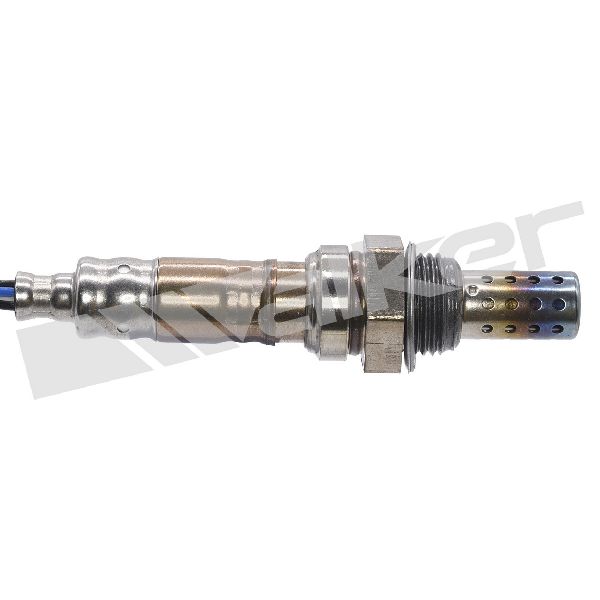
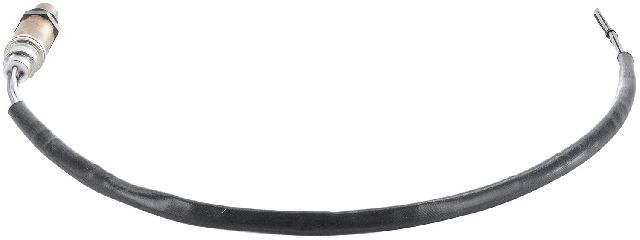
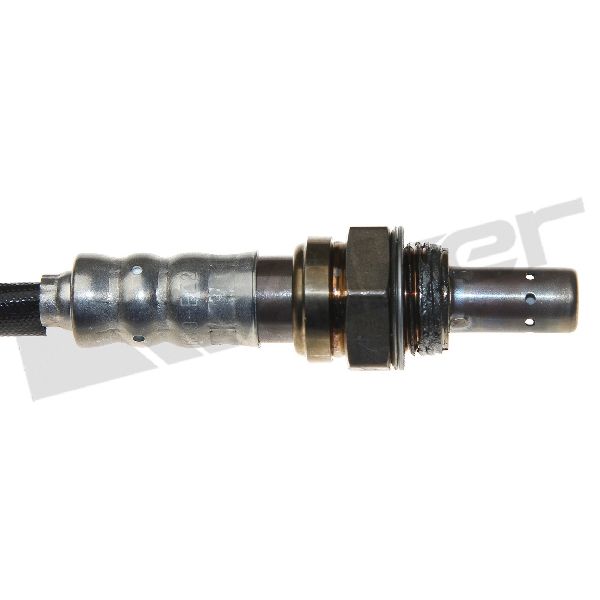
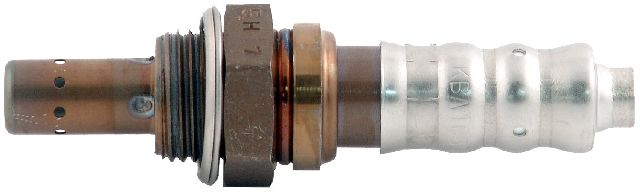
Est. part cost: $20-$250 - Faulty Downstream Oxygen Sensor (Bank 1, Sensor 2) 🟡 Medium Probability → Shop Oxygen Sensor Oxygen sensors are wear items that degrade over time, leading to slow or inaccurate readings. They can become 'lazy' or contaminated and send a false 'lean' signal to the computer. Manufacturer bulletin SSM 50230 notes that on some Ford models, P2096 may be due to an exhaust gas oxygen sensor seal, requiring an updated sensor.
How to confirm: After confirming no exhaust leaks, use a scan tool to monitor the voltage of the Bank 1 Sensor 2. A sensor stuck at a low voltage (typically < 0.2V) suggests it is reading lean.
Typical fix: Replace the Bank 1, Sensor 2 oxygen sensor. It is located on the rear catalytic converter, accessible from underneath the vehicle, near the oil pan.
Est. part cost: $50-$120 - Faulty Upstream Oxygen Sensor (Bank 1, Sensor 1) 🟡 Medium Probability → Shop Oxygen Sensor A failing upstream (pre-catalyst) O2 sensor can provide bad data to the PCM, causing incorrect fuel adjustments that are then flagged by the downstream sensor. This can lead to a misdiagnosis where the downstream sensor is replaced without fixing the issue.
How to confirm: Monitor live data for both upstream and downstream O2 sensors. If the upstream sensor's readings are erratic or biased, it may be the root cause. A propane enrichment test can also be used; adding propane to the intake should cause the sensor voltage to go high (rich), and if it doesn't respond, it's likely faulty.
Typical fix: Replace the Bank 1, Sensor 1 oxygen sensor. Many owners of 3.5L EcoBoost vehicles report that replacing the upstream sensor ultimately solved the P2096 code after a new downstream sensor did not. 🎬 Watch: How replacing the upstream sensor can fix lean codes.
Est. part cost: $60-$150 - Intake Air / Vacuum Leak ⚪ Low Probability Plastic and rubber hoses in the intake system can crack or become disconnected over time, allowing unmetered air to enter the engine and cause a true lean condition that is detected downstream.
How to confirm: Listen for a hissing sound at idle. A common method is to spray short bursts of brake cleaner or propane around intake manifold gaskets and vacuum lines; a change in engine RPM indicates a leak. A smoke test of the intake system is the most reliable method.
Typical fix: Replace the cracked vacuum hose or failed intake gasket.
Est. part cost: $10-$100 - Low Fuel Pressure / Delivery Issue ⚪ Low Probability While less common for this specific code, a weak high-pressure fuel pump (HPFP) or clogged fuel injectors can cause a genuine lean condition affecting one bank.
How to confirm: Connect a fuel pressure gauge to test if the fuel pressure is within the manufacturer's specifications. A scan tool can also monitor fuel rail pressure, which should be around 50 PSI from the low-pressure pump and can reach over 2,000 PSI from the high-pressure pump under load.
Typical fix: Replace the failing fuel pump, clean or replace clogged fuel injectors.
Est. part cost: $200-$1000+
Rare But Worth Checking
- Failing Catalytic Converter: → Shop Catalytic Converter While P0420 is the more common code for a bad converter, an inefficient or partially clogged converter can sometimes cause erratic readings on the downstream O2 sensor, leading to a P2096 code. An infrared thermometer can be used to check for a significant temperature drop across the converter, which indicates it's not working. A glowing red hot converter is a sign of a severe clog.
- Aftermarket Exhaust Installation: An improperly sealed aftermarket exhaust system can introduce leaks, causing a P2096 code to appear. One owner on an Explorer ST forum reported the code appeared after installing a cat-back exhaust and disappeared after reinstalling the stock system, indicating a leak at one of the new clamps.
- Engine Oil Migration: Manufacturer Bulletin #16-0031 notes that on some EcoBoost engines, P2096 may be stored due to engine oil migrating from the valve cover to the O2 sensor connector.
Diagnosis Steps
- Scan for any other DTCs. Codes like P0171 or P219A strongly point towards an issue upstream of the post-catalyst O2 sensor.
- With the engine cold, start it and listen for any ticking or hissing sounds from the rear exhaust manifold area, which would indicate an exhaust leak.
- Perform a thorough visual inspection of the exhaust system from the rear cylinder head to the downstream O2 sensor. Look for cracks (especially on the flex pipe), heavy rust, or soot trails at gaskets.
- For best results, have a smoke test performed on the exhaust system to definitively identify any leaks.
- If no exhaust leaks are found, inspect the intake system for vacuum leaks. Listen for hissing noises or use a smoke machine.
- If no leaks are found, use a scan tool to observe the live data for both the Bank 1 Sensor 1 (upstream) and Bank 1 Sensor 2 (downstream) oxygen sensors. If the upstream sensor is behaving erratically, it could be the cause. If the downstream sensor voltage is consistently low (<0.2V) and unresponsive, the sensor is likely faulty.
- As a final check, you can test fuel pressure to rule out a fuel delivery problem.
- If all else fails, the catalytic converter may need to be tested for efficiency, often by comparing its inlet and outlet temperatures with an infrared thermometer.
Parts You'll Likely Need
- Exhaust Manifold Gasket (Bank 1 - Rear)
(OEM #BL3Z-9448-A)— This is a very common failure point for exhaust leaks on the 3.5L EcoBoost, which is the leading cause of P2096.
Trusted brands: Motorcraft, Fel-Pro
OEM price range: $30-$50
Aftermarket price range: $15-$30 - Downstream Oxygen Sensor (Bank 1, Sensor 2)
(OEM #DY-1173 (Motorcraft Service #), also seen as GK4Z-9G444-H or FL3Z-9G444-D depending on year/specifics.)— If no exhaust leaks are present, this sensor is the next most likely cause. It is responsible for reporting the lean condition to the PCM.
Trusted brands: Motorcraft, Bosch, Denso, NTK
OEM price range: $80-$120
Aftermarket price range: $50-$90 - Upstream Oxygen Sensor (Bank 1, Sensor 1)
(OEM #LK4Z-9F472-D (verify by VIN))— A faulty upstream sensor can cause this downstream code. In one documented case on a similar 3.5L EcoBoost, replacing the upstream sensor solved the issue after a new downstream sensor did not.
Trusted brands: Motorcraft, Bosch, Denso, NTK
OEM price range: $60-$150
Aftermarket price range: $50-$100
Related Codes That Often Appear With This One
- P0171 — Indicates a lean condition detected by the *upstream* sensor on Bank 1. If a vacuum leak is large enough, it can trigger both upstream and downstream lean codes.
- P0420 — This code means 'Catalyst System Efficiency Below Threshold (Bank 1)'. It can appear alongside P2096 if the catalytic converter itself is failing and causing the abnormal oxygen readings.
- P219A — Indicates an air-fuel ratio imbalance on Bank 1. This code, when paired with P2096, strongly suggests a problem upstream of the O2 sensors, such as a vacuum leak, fuel injector issue, or a problem with the upstream O2 sensor itself.
Technical Service Bulletins (TSBs) & Recalls
- TSB 15-0131: While not directly for P2096, this TSB addresses the timing chain stretch and cold-start rattle common on 2011-2015 3.5L EcoBoost engines. An engine with incorrect timing could potentially affect fuel trims.
- SSM 46159: Notes that vehicles equipped with a 3.5L GTDI engine may exhibit P2096 due to incorrect calibration values setting a system DTC instead of a sensor-specific code.
- TSB 21-2366: A manufacturer bulletin for the 2.7L EcoBoost engine notes that P2096 may be stored due to various software parameters within the PCM and/or a catalyst monitor.
Platform-Specific Known Issues
- A user on FordF150Forum.com with a 3.5L EcoBoost chased a P2096 code, first having a dealer perform a $3,800 repair for oil and coolant leaks that didn't solve the CEL. After replacing the downstream O2 sensor himself with no luck, he replaced the upstream O2 sensor which finally fixed the code. This highlights that the upstream sensor can be the true culprit.
- On ExplorerST.org, a user reported that installing a Thermal R&D aftermarket exhaust system immediately caused a P2096 code. The code was resolved by reinstalling the factory exhaust, proving the aftermarket system had a leak at a connection point.
Mechanic-Grade Diagnostic Values
- Downstream O2 Sensor (Bank 1, Sensor 2) Voltage — expected: Relatively steady 0.6V - 0.9V on a warm engine with a healthy catalytic converter.. Failure: Voltage is consistently stuck below 0.2V - 0.4V, triggering the P2096 code.
- O2 Sensor Heater Circuit Resistance — expected: Between 3 and 30 Ohms when measured across the two heater pins (often same-colored wires, e.g., two blacks) on the disconnected sensor.. Failure: An open circuit (infinite resistance) or a direct short (near zero ohms) indicates a failed internal heater, which can affect sensor performance.
- Low-Pressure Fuel System Pressure — expected: 40-60 PSI at idle, supplied from the in-tank pump.. Failure: Pressure significantly below this range indicates a weak in-tank pump or clogged filter, which could cause a true lean condition.
- High-Pressure Fuel System Pressure (Direct Injection) — expected: Around 500 PSI when cranking, and 1,500 to 2,150+ PSI under load or at wide-open throttle.. Failure: If the actual pressure shown on a scan tool lags the desired pressure by more than 200 PSI, it can indicate a failing high-pressure fuel pump (HPFP).
- O2 Sensor Torque Specification — expected: 35 ft-lbs (47 Nm). Failure: Improper torque can lead to exhaust leaks if too loose or damaged threads if too tight.
Hidden / Shadow Codes Worth Checking
- Mode $06, TID $81: This Test ID within Mode $06 specifically monitors the O2 Sensor (Bank 1, Sensor 2) switching time and response as part of the catalyst monitor diagnostics. A value that is approaching or has exceeded its limit can indicate a sensor is becoming slow or 'lazy' before it's bad enough to set a hard fault code like P2096. (see via A professional-level scan tool or an advanced DIY tool with Mode $06 capability (like FORScan for Fords) is required to view this data.)
Scan Tool Commands That Help
- Ford IDS / FORScan: Reset All Adaptations / Clear Transmission Adaptive Tables / Reset KAM — After replacing a component like an O2 sensor or fixing a major vacuum/exhaust leak, it is critical to reset the Keep Alive Memory (KAM). This forces the PCM to erase the long-term fuel trim adjustments it 'learned' while compensating for the fault. Failing to do so can cause the code to return temporarily as the PCM uses old, incorrect data until it relearns.
- Ford IDS / FORScan: O2 Sensor Heater Test — This is a bidirectional test that commands the O2 sensor's internal heater on and off. It can be used to verify that the heater circuit (power, ground, and the heater element itself) is functioning correctly, which is crucial for the sensor to reach operating temperature quickly and provide accurate readings.
Wiring & Ground Locations
- G104 (Right side of engine compt) — Located on the right side of the engine compartment, typically on the chassis frame rail or inner fender structure.. This is a primary engine and PCM ground point. A corroded or loose G104 can cause a host of issues, including erratic signals from engine sensors like the O2 sensors, leading to incorrect readings and false codes.
- G100 (Top rear of engine) — Located at the top rear of the engine block/cylinder head.. This ground strap connects the engine block directly to the chassis/firewall. A poor connection here can create a voltage potential difference between the engine block (where the sensor is grounded) and the PCM, disrupting the sensitive low-voltage O2 sensor signal.
- O2 Sensor Connector (C144 for B1S2) — The connector for the Bank 1 Sensor 2 is located above the sensor, clipped to a bracket on the vehicle's underbody. The wiring harness follows the frame rail up towards the engine bay.. The connector itself is a common failure point. Inspect for signs of water intrusion, corrosion on the pins, or damaged wires, as this can directly cause the P2096 code by disrupting the sensor signal.
Real Owner Repair Stories
- Ford F150 Forum (2016 Ford F-150 3.5L EcoBoost, 52,000 miles) — Check Engine Light for P2096, would turn on and off intermittently.
❌ Tried (didn't work) Replaced downstream O2 sensor (Bank 1), Replaced spark plugs, Replaced air filter, Cleaned all 3 MAP sensors, Checked for vacuum leaks with starting fluid, Reset Keep Alive Memory (KAM)
✅ What actually fixed it The final fix was not explicitly stated, but the diagnostic advice from the forum and Ford's PCED manual pointed directly to inspecting the wiring harness connectors for corrosion, water intrusion, or damaged pins, as this was a known issue on some 2016 models where the harness was not installed properly from the factory. - NHTSA ODI #11618319 — An owner reported the engine light came on with code P2096, and after a while, the vehicle started misfiring and showed an additional code of P0302 around 82,000 miles.
"I Checked Everything" — The Actual Cause
- In a documented case on a 3.5L EcoBoost with a similar lean code (P2098), the vehicle passed both a visual inspection and a low-pressure exhaust smoke/soap bubble test. The owner had already replaced both O2 sensors on the affected bank. The actual cause was a contaminated upstream O2 sensor, which was not visually apparent or detectable by the smoke test. Replacing the upstream sensor again resolved the issue, highlighting that even new sensors can be faulty or that a subtle contamination issue can cause a lean code without an obvious leak.
OEM Part Supersession History
BE5Z-9G444-A→BE5Z-9G444-B, which is serviced by Motorcraft part number DY-1173.— Ford often supersedes parts to improve reliability, material composition, or to consolidate parts across different models. The specific reason for this change is not publicly documented.
Diagnostic Flowchart
Other Known Issues on This Vehicle
Issues unrelated to this code that are worth knowing about as an owner of this generation:
- Internal Water Pump Failure 🔴 High — Commonly occurs after 100,000-140,000 miles. When it fails, coolant leaks into the engine oil, which can lead to catastrophic engine damage if not caught immediately. (Ref: No specific TSB, but it is a widely documented failure leading to class-action lawsuits.)
- Timing Chain Stretch & Phaser Rattle 🔴 High — Affects first-generation (2011-2015) 3.5L EcoBoost engines. Symptoms include a loud rattle on cold startup lasting 2-5 seconds and potential for timing-related codes like P0016. (Ref: TSB 15-0131 was issued, updating the repair procedure to include replacing the timing chain and all four VCT phasers.)
- Intake Valve Carbon Buildup 🟠 Medium — A consequence of the direct-injection-only design on pre-2017 engines. Fuel does not wash over the intake valves, allowing oil and carbon deposits to build up over 80,000-100,000 km, causing rough idle, misfires, and reduced power. (Ref: No TSB; the recommended service is a manual (walnut blasting) or chemical intake cleaning.)
- Cracked Exhaust Manifolds 🟠 Medium → Shop Exhaust Manifold — The cast iron manifolds, particularly on the rear bank (Bank 1), are prone to cracking from heat cycles, causing exhaust leaks that can trigger P2096.
- Power Transfer Unit (PTU) Failure 🔴 High — The all-wheel-drive PTU is not designed to be easily serviced and can fail under 100,000 miles due to fluid breakdown and overheating. Owners recommend fluid changes every 30,000 miles despite Ford's 'lifetime fluid' claim.
Used vs. New Parts: Buying Guide for This Vehicle
When a used part is the smart pick: For this repair, using a used part is generally only recommended for major exhaust components like an exhaust manifold. A used manifold from a low-mileage, non-corroded donor vehicle can offer significant savings over a new OEM part. Avoid used parts for sensors and catalytic converters.
Donor-vehicle mileage cap: roughly under 70000 miles for the part to have meaningful remaining life.
What to inspect on the donor part:
- For an exhaust manifold: check meticulously for hairline cracks, especially around the turbo flange and mounting ears.
- Ensure all mounting surfaces are flat and not warped.
- Verify the donor vehicle is from a region with little to no road salt to avoid excessive rust and corrosion that can hide cracks.
OEM-only on this vehicle (don't cheap out):
- Catalytic Converter: Aftermarket catalytic converters for modern direct-injection engines like the EcoBoost are known to be less efficient and can fail to meet the PCM's strict monitoring parameters, leading to recurring P0420 or P2096 codes. It is highly recommended to use an OEM Ford converter if replacement is necessary.
- High-Pressure Fuel Pump (HPFP): Given the critical nature of this component and the high labor cost for replacement, using a new OEM (Motorcraft) or reputable high-quality aftermarket part is the safest choice to ensure longevity and proper fuel pressure.
Aftermarket brands forum-validated for this vehicle:
- O2 Sensors: NTK and Denso are the world's largest OEM suppliers of oxygen sensors and are widely regarded as the best aftermarket choice, often being the original manufacturer for Motorcraft. Bosch is also a reputable option with a long history of producing quality sensors.
Brands owners have reported issues with on this vehicle:
- Avoid unbranded, 'white-box' oxygen sensors from online marketplaces. These often use lower-quality sensing elements and may have incorrect heater resistances, leading to inaccurate readings, premature failure, or other fault codes.
Real Owner Stories
Aggregated from forums and TSBs cited above. Mileages and costs reflect what owners reported in those sources.
2013 Ford F-150 FX4 3.5L EcoBoost
Symptoms: Check engine light for P2096. The owner previously had a dealer perform $3,800 in repairs for oil and coolant leaks which did not fix the code.
What fixed it: Replacing the upstream O2 sensor (Bank 1, Sensor 1) after a new downstream sensor failed to solve the issue.
Cost: $3,800-$4,000
Source hint: Ford F150 Forum - '2013 FX4 Ecoboost P2096 Fix'
2020+ Ford Explorer ST
Symptoms: Immediate P2096 code following the installation of a Thermal R&D aftermarket exhaust system.
What fixed it: Reinstalling the factory exhaust system, which confirmed the aftermarket system had a leak at a connection point.
Source hint: Explorer ST Forum - 'Thermal 2.5 and P2096?'
2011-2014 Ford F-150 5.0L V8
Symptoms: P2096 code present; owner noted poor fuel economy prior to the fix.
What fixed it: Replacement of the O2 sensor, which also resulted in a remarkable improvement in fuel economy.
Source hint: Ford F150 Forum - 'P2096 code'
Related OBD-II Codes
Frequently Asked Questions
Does TSB 15-0131 for the 3.5L EcoBoost engine relate to my P2096 code?
Where is the Bank 1 Sensor 2 oxygen sensor located on my Ford Explorer 3.5L EcoBoost?
I already replaced the downstream O2 sensor but the P2096 code returned. What should I check next?
Can an aftermarket exhaust system cause a P2096 on my Explorer?
What specific exhaust components are prone to causing this code on the 3.5L EcoBoost?
How can I tell if my P2096 is caused by an exhaust leak or a bad sensor without a scan tool?
Helpful Videos

We Have This Part in Stock


The information in this article is provided for general reference and educational purposes only. Vehicle specifications, procedures, and part compatibility can vary by production date, trim level, and region. Always consult your vehicle's factory service manual and verify part numbers before purchasing or performing repairs. Safety-critical components such as airbags, seat belts, and braking systems should be installed by a qualified professional.
- Ford Explorer:
- 🧭 Diagnostic Flowchart
- 🎬 Helpful Videos
- 🛍️ Shop This Part
- What's Unique About the 2011-2019 Ford Explorer
- Symptoms You May Notice
- Most Likely Causes
- Rare But Worth Checking
- Diagnosis Steps
- Parts You'll Likely Need
- Related Codes That Often Appear With This One
- Technical Service Bulletins (TSBs) & Recalls
- Platform-Specific Known Issues
- Mechanic-Grade Diagnostic Values
- Hidden / Shadow Codes Worth Checking
- Scan Tool Commands That Help
- Wiring & Ground Locations
- Real Owner Repair Stories
- "I Checked Everything" — The Actual Cause
- OEM Part Supersession History
- Other Known Issues on This Vehicle
- Used vs. New Parts: Buying Guide for This Vehicle
- Real Owner Stories
- 2013 Ford F-150 FX4 3.5L EcoBoost
- 2020+ Ford Explorer ST
- 2011-2014 Ford F-150 5.0L V8
- Related OBD-II Codes
- Frequently Asked Questions
- 🎟️ Get 5% Off