

P2096 on 2009-2019 Ford Flex 3.5L: Causes and Fixes for Lean Fuel Trim
On a Ford Flex with a 3.5L V6, code P2096 is most often caused by an exhaust leak before the rear oxygen sensor or a failing rear oxygen sensor on Bank 1 (the firewall side). Inspect for exhaust leaks first, then consider replacing the sensor. Cracked or rusted flex pipes are a common source of such leaks on this platform.
- P2096 means the exhaust is too lean (too much oxygen) after the catalytic converter on Bank 1 (firewall side).
- The most likely causes are an exhaust leak anywhere between the engine and the rear O2 sensor, or a faulty rear O2 sensor itself.
- Always check for exhaust and vacuum leaks before replacing any parts.
- Bank 1 is the cylinder bank closer to the firewall, which can be harder to access than Bank 2.
- Driving with this code is possible, but it will cause you to fail an emissions test and can lead to more expensive catalytic converter damage over time.
What's Unique About the 2009-2019 Ford Flex
For the Ford Flex, identifying Bank 1 is the key platform-specific detail. Because the 3.5L V6 engine is mounted sideways (transversely), Bank 1 is the set of cylinders against the firewall, which can make accessing its exhaust manifold and oxygen sensors more difficult than Bank 2, which faces the radiator. A particularly common failure point leading to P2096 on the Flex and its platform mates is a cracked or rusted exhaust flex pipe located before the catalytic converters. Accessing the Bank 1 downstream O2 sensor connector often requires removing the engine's air intake ducting for access from above.
Symptoms You May Notice
- Check Engine Light is on.
- Reduced fuel economy.
- Rough or uneven idle.
- Hesitation or stumbling during acceleration.
- Audible exhaust leak (ticking or puffing sound from the engine bay or under the car).
- Replacing the upstream oxygen sensor (Bank 1, Sensor 1) instead of the downstream one (Bank 1, Sensor 2). This code specifically relates to the post-catalyst sensor's reading.
- Replacing the oxygen sensor without first thoroughly checking for exhaust leaks. An exhaust leak, especially from a cracked flex pipe, will cause a new sensor to read lean as well, and the code will return.
Most Likely Causes
- Exhaust Leak (especially Flex Pipe) 🔴 High Probability The woven metal flex pipes located between the exhaust manifolds and the catalytic converters are highly susceptible to rust and cracking from heat cycles and road debris. This allows outside air to be drawn into the exhaust, fooling the downstream O2 sensor.
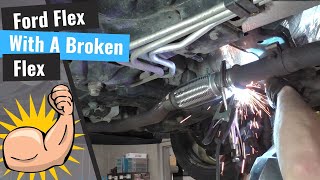
How to confirm: Listen for a loud ticking or roaring noise that gets louder with acceleration. A visual inspection will often reveal black soot marks or obvious cracks 🎬 Watch: See what a failed flex pipe looks like on a Flex. in the braided metal of the flex pipe. A shop can use a smoke machine to pinpoint the leak definitively.
Typical fix: Replace the failed flex pipe section. This often involves cutting out the old pipe and welding or clamping in a new one. Both left and right side pipes are available.
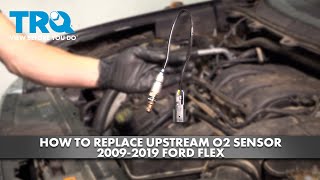
Est. part cost: $60-$250 per pipe - Failing Downstream Oxygen Sensor (Bank 1, Sensor 2) 🔴 High Probability → Shop Oxygen Sensor Oxygen sensors are wear items that typically last 100,000-150,000 miles. They can become contaminated or simply fail with age, providing slow or inaccurate readings. Manufacturer Bulletin #SSM 50230 notes that on similar Ford platforms, P2096 may be caused by an exhaust gas oxygen sensor seal, requiring an updated sensor.
How to confirm: Use a scan tool to monitor the live data for the Bank 1 Sensor 2 voltage. A healthy downstream sensor should show a relatively stable voltage (typically above 0.5V) on a warm, running engine at a steady RPM. If it is stuck low (e.g., < 0.2V) or fluctuating rapidly like the upstream sensor, it is the primary suspect (assuming no exhaust leaks).
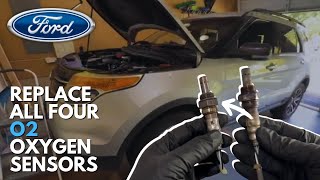
Typical fix: Replace the Bank 1, Sensor 2 oxygen sensor. Accessing the connector may require removing the air intake ductwork. After replacement, a Key-On-Engine-Running 🎬 See this walkthrough for replacing all four oxygen sensors. (KOER) self-test or PCM reset may be required to prevent the code from immediately returning.
Est. part cost: $40-$120 - Engine Vacuum Leak 🟡 Medium Probability Intake manifold gaskets, vacuum hoses, and the PCV system can degrade over time, allowing unmetered air to enter the engine. This will typically set a P0171 code before or alongside P2096.
How to confirm: Listen for a hissing sound at idle. Carefully spray short bursts of brake cleaner or use an unlit propane torch around suspected leak areas like the intake manifold gasket. If the engine idle changes, you've found the leak. A smoke test is the most definitive method.
Typical fix: Replace the leaking gasket, hose, or component.
Est. part cost: $10-$200 - Fuel Delivery Issue ⚪ Low Probability Less common, but a weak fuel pump, clogged fuel filter, or dirty fuel injectors on Bank 1 can cause a true lean condition.
How to confirm: Check fuel pressure using a gauge connected to the fuel rail to ensure it's within Ford's specifications. This cause will often be accompanied by other codes, such as P0171 (System Too Lean Bank 1). Inspecting spark plugs can also give clues; white, ashy deposits indicate a lean condition.
Typical fix: Replace the failing component, such as the fuel pump, filter, or clean/replace the affected fuel injectors.
Est. part cost: $50-$600
Rare But Worth Checking
- Failing Catalytic Converter: → Shop Catalytic Converter While not a primary cause, a deteriorating or inefficient catalytic converter can sometimes trigger P2096 by altering the oxygen content of the exhaust gas. This is more likely on higher-mileage vehicles and is often preceded by a P0420 (Catalyst System Efficiency) code. Manufacturer Bulletin #TSB 21-2366 indicates that on some EcoBoost engines, this code may be due to various software parameters within the PCM or a catalyst monitor.
- Dirty or Faulty Mass Airflow (MAF) Sensor: A contaminated MAF sensor can under-report the amount of air entering the engine, causing the PCM to inject too little fuel. Cleaning the MAF sensor with a dedicated cleaner is a simple diagnostic step.
Diagnosis Steps
- Scan for any other stored trouble codes. If codes like P0171 are present, address them first as they indicate a problem upstream of the P2096 fault.
- Perform a thorough visual and audible inspection of the exhaust system for leaks. Start the engine when cold and listen for loud ticking or roaring. Pay extremely close attention to the braided metal flex pipes located between the engine and the catalytic converters. Look for soot trails or visible cracks.
- Inspect the engine bay for vacuum leaks. Listen for hissing noises and check the integrity of all vacuum hoses, the air intake duct, and intake manifold gaskets.
- If no leaks are found, use a scan tool to observe the live data for the Bank 1, Sensor 2 (downstream) oxygen sensor. The voltage should be relatively stable (typically above 0.5V) on a warm, running engine at steady RPM. If it's stuck low (e.g., < 0.2V) or fluctuating wildly, the sensor is the primary suspect.
- If the sensor appears faulty, replace the Bank 1, Sensor 2 oxygen sensor. Be prepared to remove air intake components for access to the electrical connector.
- After replacing the sensor, perform a KOER (Key-On-Engine-Running) self-test or clear the PCM's learned values to ensure the code does not return due to old fuel trim data.
- If the code returns, perform a fuel pressure test to rule out a weak fuel pump or clogged filter.
- As a final step, consider testing the catalytic converter for efficiency, as a failing converter can be a rare cause.
Parts You'll Likely Need
- Downstream Oxygen Sensor (Bank 1, Sensor 2)
(OEM #DY-1290 (Motorcraft service part number, also seen as FL3Z-9G444-A))— This sensor is responsible for reporting the post-catalyst air/fuel mixture. It is a common failure item that directly causes the P2096 code when it provides inaccurate lean readings.
Trusted brands: Motorcraft, Bosch, Denso, NGK
OEM price range: $75-$120
Aftermarket price range: $40-$80 - Exhaust Flex Pipe (Bank 1, Right/Firewall Side)
(OEM #BA8Z-5G203-A)— This is a very common failure point on the Ford Flex. Rust and stress cause it to crack, creating a major exhaust leak that triggers P2096.
Trusted brands: Ford/Motorcraft, Walker, AP Exhaust
OEM price range: $150-$250
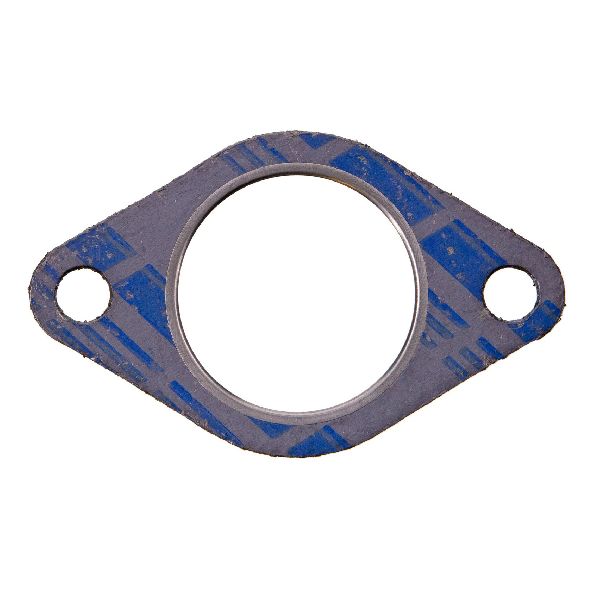
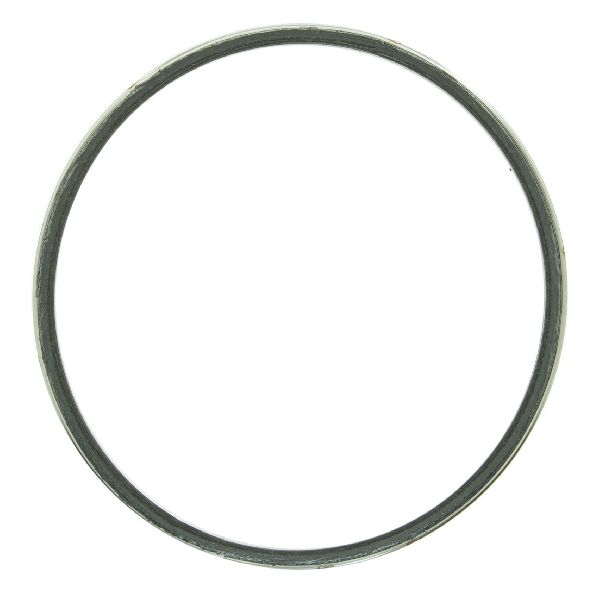
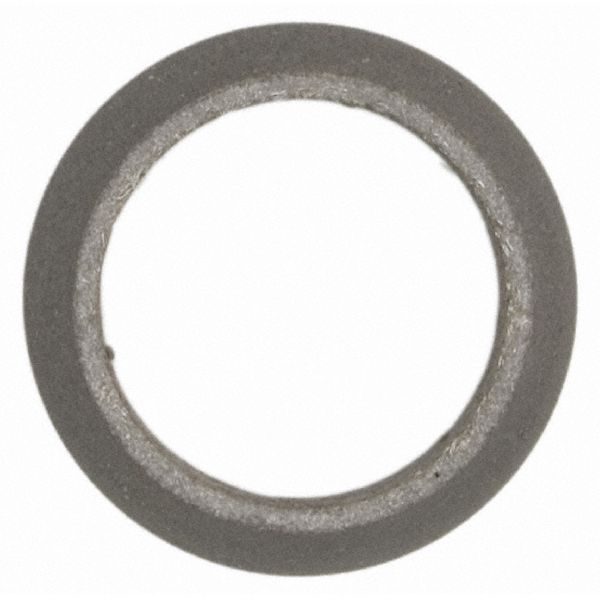
Aftermarket price range: $60-$120 - Exhaust Manifold to Flex Pipe Gasket
(OEM #7T4Z-9450-AA)— If the flex pipe is being replaced, this gasket is required to seal the connection to the exhaust manifold.
Trusted brands: Fel-Pro, Mahle, Motorcraft
OEM price range: $25-$50
Aftermarket price range: $15-$30
Related Codes That Often Appear With This One
- P0171 — P0171 indicates a lean condition detected by the *upstream* oxygen sensor on Bank 1. If both codes are present, it strongly suggests a true lean condition caused by a vacuum leak or fuel delivery issue, rather than just a faulty downstream sensor or post-cat exhaust leak.
- P2098 — This is the same 'Post Catalyst Fuel Trim System Too Lean' code but for Bank 2 (radiator side). Seeing both codes together would point to a systemic issue affecting both banks, like a major vacuum leak, low fuel pressure, or a faulty MAF sensor.
- P0420 — This code indicates 'Catalyst System Efficiency Below Threshold (Bank 1)'. If seen with P2096, it could suggest the catalytic converter itself is failing and is the root cause of the abnormal oxygen readings.
Technical Service Bulletins (TSBs) & Recalls
- Bulletin #SSM 46159: This bulletin states that vehicles equipped with a 3.5L GTDI engine may exhibit an illuminated MIL with DTC P2096, P2097, P2098 and/or P2099 due to incorrect calibration values setting a system DTC instead of a sensor-specific code.
- Bulletin #16-0031: While documented for the 2.0L GTDI engine, this bulletin notes that P2096 may be due to engine oil migrating from the valve cover to the oxygen sensor harness.
- While no TSB is specific to P2096 on the Flex 3.5L, other Ford platforms with similar codes have had TSBs related to oil wicking into the O2 sensor harness (e.g., TSB 16-0031 for the 2.0L GTDI). This highlights the sensitivity of these sensor circuits, though it is not a documented common cause for the Flex.
Platform-Specific Known Issues
- The exhaust flex pipes are a known weak point on this platform, often cracking and causing exhaust leaks that directly lead to a P2096 code.
Mechanic-Grade Diagnostic Values
- Fuel Pressure (Low-Pressure, In-Tank Pump) — expected: Naturally Aspirated: ~45-55 PSI. EcoBoost: 40-60 PSI at idle, should hold steady.. Failure: Pressure that is significantly below specification or drops off under load indicates a weak fuel pump or clogged filter.
- Fuel Pressure (High-Pressure, EcoBoost Only) — expected: ~500 PSI during cranking, up to 2,000+ PSI under load.. Failure: If actual pressure lags requested pressure by more than 200 PSI, it suggests a failing high-pressure fuel pump (HPFP). This would likely be accompanied by other performance-related codes.
- Mode $06, TID $85 (HO2S12 Rich-to-Lean Response Rate) — expected: Value should be below the maximum threshold specified on the scan tool.. Failure: A measured value that exceeds the maximum limit indicates the sensor is switching too slowly, confirming it is lazy or failing, even if its voltage appears somewhat normal.
Hidden / Shadow Codes Worth Checking
- Mode $06, TID:$05: This is the Test ID for the Catalyst Monitor. Within this, Component IDs (CIDs) like $21 (Bank 1) will show the results of the catalyst efficiency test. While not a 'shadow code,' it provides pre-DTC data on catalyst health. (see via A professional-grade scan tool or software like FORScan that can display Mode $06 data.)
- Mode $06, TID:$53: This Test ID shows cylinder-specific misfire counts from the last 10 drive cycles. While not directly related to P2096, it can reveal if a persistent misfire on one cylinder in Bank 1 is contributing to the lean reading downstream. (see via A professional-grade scan tool or software like FORScan that can display Mode $06 data.)
Scan Tool Commands That Help
- FORScan / Ford IDS: KOER (Key On Engine Running) Self-Test — This is critical after replacing an O2 sensor or fixing an exhaust/vacuum leak. It forces the PCM to perform a series of active tests and reset the keep-alive memory (KAM) and fuel trim adaptations. Failing to do this is a common reason for the P2096 code to return immediately after a repair.
- FORScan / Ford IDS: Reset All Adaptations / Clear Fuel Trim Tables — Use this function after a repair to erase the long-term fuel trim values that were learned while the fault was present. This gives the PCM a clean slate to learn new, correct values with the new parts.
Wiring & Ground Locations
- G104 — On the right rear of the engine or on the left side of the engine compartment. Its exact location can vary slightly by year and engine type.. This is a primary engine and PCM ground. A corroded or loose connection at G104 can cause a voltage drop and erratic readings from multiple sensors, including the oxygen sensors, potentially leading to false lean codes.
- Bank 1 Sensor 2 Connector — The connector for the firewall-side downstream O2 sensor is located on the upper part of the engine, often requiring removal of the air intake ducting to access.. This is the direct connection point for the sensor. The typical Ford 4-wire O2 sensor uses two white wires for the heater, a black wire for the signal, and a gray wire for the signal ground. Knowing this helps in testing the correct pins for voltage and resistance.
Real Owner Repair Stories
- NHTSA ODI #11618319 — An owner reported that their engine light came on with code P2096 and after a while, the vehicle started misfiring and showed an additional code of P0302 at approximately 82,000 miles.
- Composite of multiple forum threads on Ford Edge/Taurus/Flex forums. (2013 Ford Flex SEL 3.5L NA, ~115,000 miles) — Check Engine Light on, code P2096. No other codes present. No noticeable drivability issues, but a slight drop in fuel economy.
❌ Tried (didn't work) Replaced the Bank 1, Sensor 2 (downstream) oxygen sensor with a new Bosch part. Cleared codes, but P2096 returned within 50 miles., Cleaned the MAF sensor., Performed a visual inspection of the exhaust and couldn't see or hear any obvious leaks.
✅ What actually fixed it Took the vehicle to an exhaust shop. They put it on a lift and performed a smoke test, which revealed a small, hairline crack in the Bank 1 (firewall side) braided flex pipe. The crack was not visible on a cold visual inspection but opened up when hot. The shop cut out the old flex pipe and welded in a new section. After the repair, the codes were cleared and did not return.
"I Checked Everything" — The Actual Cause
- In some cases reported on platform-mate forums (F-150 3.5L), a P2096 persisted after both a new downstream O2 sensor and a clean smoke test. The ultimate cause was a failing *upstream* (pre-cat) O2 sensor. The lazy upstream sensor was causing incorrect fuel commands from the PCM, and the downstream sensor was correctly reporting the resulting lean condition. The PCM flagged the downstream sensor's report instead of the upstream sensor's faulty input.
When the Usual Fixes Don't Work
- While the most common fixes are exhaust leaks and the downstream O2 sensor, a significant number of owners of vehicles with the Ford 3.5L engine (including platform mates like the F-150) have reported that the true cause of their P2096 was a failing *upstream* O2 sensor. The downstream sensor was functioning perfectly and accurately reporting the lean condition created by the PCM's incorrect fuel adjustments, which were based on the bad data from the failing upstream sensor. This is a critical counter-narrative to the common diagnostic flow.
OEM Part Supersession History
BE5Z-9G444-A, BE5Z-9G444-B, BE5Z-9G444-C→FL3Z-9G444-A (Motorcraft DY-1290)— Part consolidation and potential minor updates to sensor design or materials over the vehicle's production run.
Heads up: These part numbers are generally interchangeable for this application, but it is always best to use the latest revision (FL3Z-9G444-A / DY-1290) to ensure you have the most updated component.
Model Year Variations Within This Range
- 2013-2019: For the 2013 model year facelift, the standard 3.5L V6 was upgraded with Ti-VCT (Twin Independent Variable Camshaft Timing), boosting horsepower from 262 to 287. The 3.5L EcoBoost also saw a power increase and a switch from a Hitachi direct injection system to a Bosch system. While the P2096 code's meaning is the same, these engine changes could introduce different potential failure points (e.g., VCT system vs. fuel system components).
Diagnostic Flowchart
Other Known Issues on This Vehicle
Issues unrelated to this code that are worth knowing about as an owner of this generation:
- Internal Timing-Chain-Driven Water Pump Failure 🔴 High — Can occur anywhere from 50,000 to 150,000+ miles. Failure can cause catastrophic engine damage by leaking coolant directly into the engine oil.
- Power Transfer Unit (PTU) Failure (AWD Models) 🔴 High — Commonly fails between 40,000 and 100,000 miles due to lubricant breakdown from exhaust heat. The fluid is considered 'lifetime' by Ford with no service interval, leading to sludge formation and gear failure.
- Cracked Front Brake Caliper Brackets 🟠 Medium — An issue on earlier models where the original caliper brackets were prone to failure, causing uneven brake wear or noise. A revised part was later issued.
- Faulty Door Ajar Sensor/Latch Assembly 🟡 Low — The sensor within the door latch can fail, causing the 'door ajar' light to stay on, draining the battery, and preventing doors from locking properly. (Ref: Subject of multiple recalls and customer satisfaction programs over the years.)
- Stretched Timing Chains (Primarily 3.5L EcoBoost) 🔴 High — More common on the twin-turbo EcoBoost variant, often presenting after 100,000 miles with a cold-start rattle noise. It's a major repair often done alongside a water pump replacement.
Used vs. New Parts: Buying Guide for This Vehicle
When a used part is the smart pick: For this repair, using used parts is generally not recommended. The only exception might be a low-mileage, rust-free exhaust pipe assembly (including the flex pipe) from a donor vehicle in a dry climate, if the part can be thoroughly inspected for cracks before purchase.
Donor-vehicle mileage cap: roughly under 60000 miles for the part to have meaningful remaining life.
What to inspect on the donor part:
- For a used flex pipe: check for any broken strands in the braided metal cover.
- Flex the pipe by hand; it should be pliable but not loose or crunchy.
- Look for any black soot marks, which indicate a pinhole leak.
- Ensure the donor vehicle is from a region without heavy road salt use to minimize rust.
OEM-only on this vehicle (don't cheap out):
- While not OEM-only, it is strongly recommended to use either Motorcraft or a known OE supplier for the Oxygen Sensor. Ford vehicles can be sensitive to off-brand electronics.
Aftermarket brands forum-validated for this vehicle:
- Oxygen Sensors: Motorcraft (OEM), Denso, NGK/NTK.
- Exhaust Flex Pipes: Walker, AP Exhaust.
Brands owners have reported issues with on this vehicle:
- Ultra-cheap, unbranded 'universal' oxygen sensors that require splicing wires. These often have incorrect heater resistance or slow response times, causing the code to return.
Real Owner Stories
Aggregated from forums and TSBs cited above. Mileages and costs reflect what owners reported in those sources.
2014 Ford Flex
Symptoms: Owner discussed flex pipe rot and sought suggestions for a temporary repair versus full replacement.
What fixed it: Full replacement of the failed flex pipe section.
Source hint: Reddit r/FordFlex - 'ford flex 2014 flex pipe repair, any suggestions for a temporary repair...'
Ford Flex 3.5L V6
Symptoms: Broken flex pipe identified by a professional mechanic.
What fixed it: Replacing the broken flex pipe.
Source hint: South Main Auto Repair - Ford Flex With A Bad Flex!?
Ford Flex 3.5L V6
Symptoms: Broken front flex pipes.
What fixed it: Replacing both front flex pipes using OEM parts BA8Z-5G203-A and BA8Z-5G203-B.
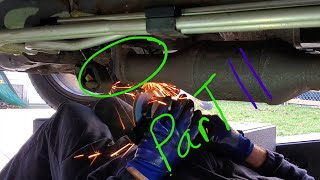
Source hint: Belkin Eco - Ford Flex | Broken Flex Pipe Part Two : Expensive
Related OBD-II Codes
Frequently Asked Questions
I have a 2014 Ford Flex with a loud ticking noise and code P2096. Is there a specific part I should check?
Does TSB 16-0031 apply to my Ford Flex 3.5L V6?
What are the OEM part numbers for the flex pipes if I need to replace them?
Could a vacuum leak cause P2096 on my Flex?
I just replaced the Bank 1 Sensor 2 oxygen sensor; do I need to do anything else?
Is the P2096 code related to the PTU failures I've heard about on the Flex?
Helpful Videos
We Have This Part in Stock


The information in this article is provided for general reference and educational purposes only. Vehicle specifications, procedures, and part compatibility can vary by production date, trim level, and region. Always consult your vehicle's factory service manual and verify part numbers before purchasing or performing repairs. Safety-critical components such as airbags, seat belts, and braking systems should be installed by a qualified professional.
- Ford Flex:
- 🧭 Diagnostic Flowchart
- 🎬 Helpful Videos
- 🛍️ Shop This Part
- What's Unique About the 2009-2019 Ford Flex
- Symptoms You May Notice
- Most Likely Causes
- Rare But Worth Checking
- Diagnosis Steps
- Parts You'll Likely Need
- Related Codes That Often Appear With This One
- Technical Service Bulletins (TSBs) & Recalls
- Platform-Specific Known Issues
- Mechanic-Grade Diagnostic Values
- Hidden / Shadow Codes Worth Checking
- Scan Tool Commands That Help
- Wiring & Ground Locations
- Real Owner Repair Stories
- "I Checked Everything" — The Actual Cause
- When the Usual Fixes Don't Work
- OEM Part Supersession History
- Model Year Variations Within This Range
- Other Known Issues on This Vehicle
- Used vs. New Parts: Buying Guide for This Vehicle
- Real Owner Stories
- 2014 Ford Flex
- Ford Flex 3.5L V6
- Ford Flex 3.5L V6
- Related OBD-II Codes
- Frequently Asked Questions
- 🎟️ Get 5% Off