

P2096 on 2012-2018 Ford Focus 2.0L: Post-Catalyst Lean Causes and Fixes
On a 2012-2018 Ford Focus with the 2.0L GDI engine, code P2096 is most often caused by an exhaust leak before the downstream O2 sensor (especially the flex pipe) or a failing downstream O2 sensor itself. A new sensor costs between $40 and $100, and the repair is a straightforward DIY job for many. Do not immediately suspect the catalytic converter.
- P2096 on your Focus almost always points to a problem with the exhaust system after the engine, not the engine itself.
- Before buying any parts, perform a thorough inspection of the exhaust system for leaks between the engine and the rear O2 sensor.
- The most likely part to fail is the downstream (post-catalyst) O2 sensor. It's a common wear item and is relatively inexpensive to replace.
- Do not replace the expensive catalytic converter unless you have completely ruled out exhaust leaks and a faulty O2 sensor.
- The TSB (16-0031) for this code does not apply to your 2.0L GDI engine; it is for the turbo (GTDI/EcoBoost) model only.
What's Unique About the 2012-2018 Ford Focus
The 2012-2018 Ford Focus (Mk3 generation) with the naturally-aspirated 2.0L GDI engine is not known for complex issues causing a P2096 code. The problem is almost always mechanical: a simple exhaust leak or a worn-out oxygen sensor. It's important not to confuse this engine with the 2.0L GTDI (EcoBoost) turbo engine found in the Focus ST, which had a specific Technical Service Bulletin (TSB 16-0031) for this code related to oil leaking from the VVT solenoids into the wiring harness. That TSB does not apply to the standard 2.0L GDI engine covered here.
Symptoms You May Notice
- Check Engine Light is on
- Reduced fuel economy
- Failed emissions test
- A ticking or hissing sound from the exhaust if a leak is present
- Rough idle (less common, but possible)
- Replacing the catalytic converter when the actual cause is a much cheaper exhaust leak or a bad O2 sensor.
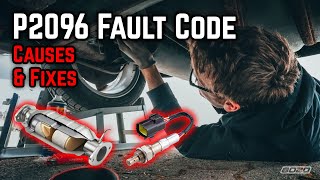
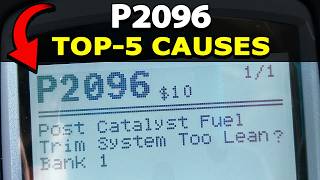
- Replacing the upstream (Bank 1, Sensor 1) O2 sensor instead of the downstream (Bank 1, Sensor 2) sensor indicated by the 'Post Catalyst' definition. 🎬 See this video for a deep dive into P2096 causes.
- On Focus ST models, incorrectly installing an O2 sensor spacer (defouler) after installing an aftermarket downpipe can cause the code by allowing condensation to foul the sensor.
Most Likely Causes
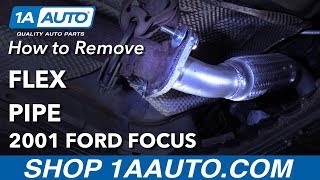
- Exhaust Leak 🔴 High Probability Exhaust components like gaskets and flex pipes are exposed to constant heat cycles and road debris, making them common failure points over time. A leak allows outside air into the exhaust, which is then detected by the downstream O2 sensor, creating a false lean reading. The flex pipe, located before the catalytic converter, is a particularly common failure point.
How to confirm: With the engine cold, start the car and carefully feel or listen for air escaping from the exhaust manifold, flex pipe (located near the front of the exhaust system), and flange gaskets. A smoke machine can also be used to pressurize the exhaust and make leaks easy to spot. A missing or improperly sealed fire ring gasket at a downpipe connection is a common cause after recent exhaust work.
Typical fix: Replace the leaking gasket or repair the cracked pipe section. The flex pipe is a common culprit and often needs to be cut out and have a new section welded in.
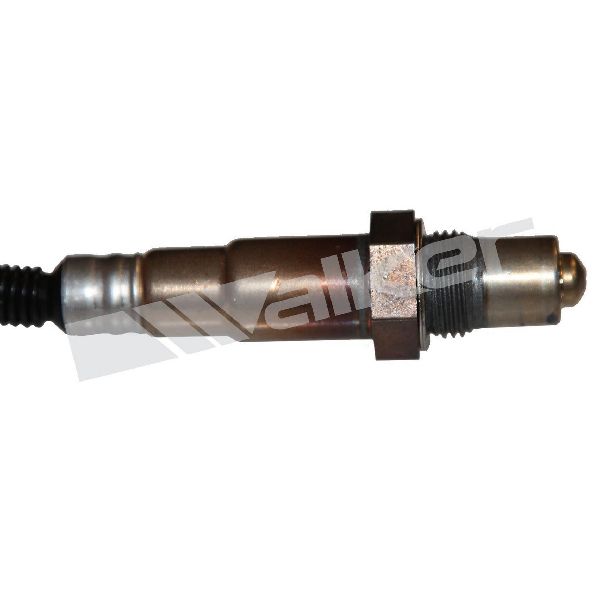
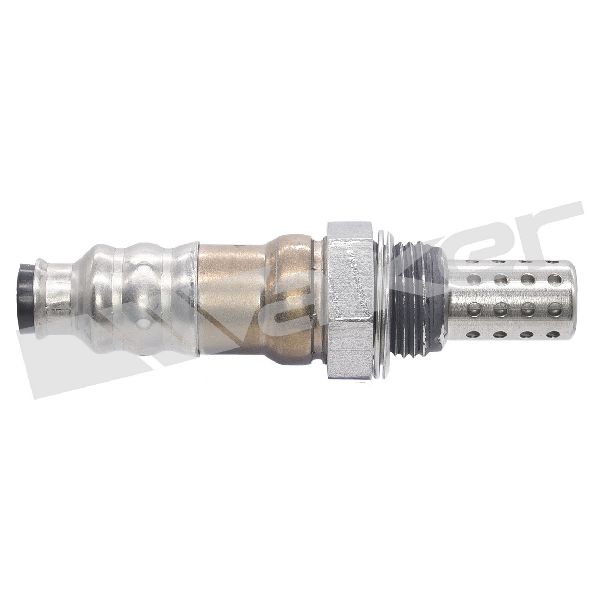
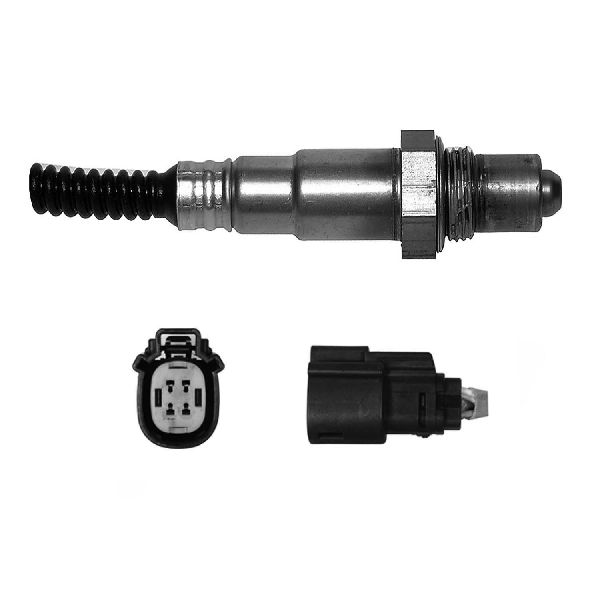
Est. part cost: $10-$50 for gaskets, $50-$150 for a flex pipe repair section. - Failing Downstream Oxygen (O2) Sensor 🔴 High Probability → Shop Oxygen Sensor Oxygen sensors are wear-and-tear items with a typical lifespan of 60,000 to 90,000 miles. As they age, their ability to accurately read oxygen levels diminishes, and they can send a false 'lean' signal to the computer. The original factory sensor is often a Bosch brand.
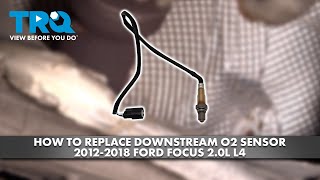
How to confirm: Use an OBD-II scanner with live data capability. A healthy downstream O2 sensor (B1S2) should show a relatively stable voltage (typically between 0.5V and 0.8V) when the engine is warm and at a steady RPM. If the voltage is stuck low (e.g., below 0.2V) or fluctuates wildly like the upstream sensor, the sensor is likely faulty. The sensor is accessible from under the car after removing the engine splash shield. 🎬 Watch: Step-by-step guide to replacing the downstream O2 sensor.
Typical fix: Replace the downstream (Bank 1, Sensor 2) oxygen sensor. The sensor is located on the exhaust pipe after the catalytic converter. Penetrating lube may be needed for removal due to rust. An O2 sensor socket is highly recommended.
Est. part cost: $40-$100 - Intake Vacuum Leak ⚪ Low Probability While possible, a vacuum leak is less likely to *only* cause P2096. It typically also triggers a P0171 (System Too Lean) code because the unmetered air affects the upstream sensor first. If both codes are present, diagnose the vacuum leak first.
How to confirm: Check for other codes, especially P0171. Listen for a hissing sound around the engine bay at idle. Spraying short bursts of brake cleaner or propane around intake manifold gaskets and vacuum hoses will cause a change in engine idle if a leak is present.
Typical fix: Replace the cracked vacuum hose or faulty intake gasket.
Est. part cost: $5-$75
Rare But Worth Checking
- Clogged or Failing Catalytic Converter: → Shop Catalytic Converter This is an expensive part to replace and should only be considered after exhaust leaks and the O2 sensor have been definitively ruled out. A failing converter can sometimes alter exhaust flow in a way that causes a lean reading downstream.
- Low Fuel Pressure: A weak fuel pump or clogged filter can create a true lean condition, but this will almost always set a P0171 code first or in conjunction with P2096.
- Dirty Fuel Injectors or Fuel Contamination: Some owners on forums have reported that using a quality fuel system cleaner like Techron or Seafoam has resolved the code, suggesting a mild fuel delivery issue could be a fringe cause.
Diagnosis Steps
- Read all fault codes with an OBD-II scanner. If P0171 is also present, start by diagnosing it (likely a vacuum leak or MAF issue).
- Visually inspect the exhaust system from the engine to the downstream O2 sensor. Look for black soot marks, listen for audible ticking/hissing, and check for rusted-out pipes or broken flange gaskets, paying close attention to the flex pipe.
- Use a scanner to monitor the live data for the downstream O2 sensor (B1S2). At a steady 2,500 RPM, the voltage should be relatively stable and high (e.g., >0.6V). If it's stuck low (under 0.2V), this indicates a lean reading, pointing to a significant exhaust leak or a bad sensor.
- If no exhaust leaks are found, test the O2 sensor's internal heater resistance with a multimeter. It should be between 2 and 30 Ohms. An open circuit ('OL') confirms a bad sensor.
- If the sensor tests good and no exhaust leaks are found, perform a smoke test on the exhaust system to find small, hard-to-see leaks.
- Only after confirming there are no leaks and the O2 sensor is good should you consider a faulty catalytic converter as the cause.
- After the repair, clearing the code may not be enough. A Key On Engine Running (KOER) self-test must be performed to properly reset the fuel trim adaptations and prevent the code from returning. 🎬 Watch: How to perform the KOER self-test correctly.
Parts You'll Likely Need
- Downstream Oxygen Sensor (Bank 1, Sensor 2)
(OEM #CV6Z-9G444-A)— This sensor is the primary component responsible for the P2096 code reading. It is a common wear item that degrades over time, leading to inaccurate lean readings.
Trusted brands: Motorcraft, Bosch, Denso, NTK
OEM price range: $60-$100
Aftermarket price range: $40-$80 - Exhaust Gasket / Flex Pipe — An exhaust leak is a very common cause of a false lean condition. Replacing a failed gasket or a cracked flex pipe will seal the system and provide an accurate reading to the O2 sensor.
Trusted brands: Fel-Pro, Walker, Bosal
OEM price range: $15-$40
Aftermarket price range: $10-$25
Related Codes That Often Appear With This One
- P0171 — If a vacuum leak or fuel delivery problem is severe enough, it will create a lean condition detected by the upstream sensor (P0171) and the downstream sensor (P2096). If both are present, the root cause is likely an unmetered air leak before the first O2 sensor.
- P0420 — This code for 'Catalyst Efficiency Below Threshold' can appear with P2096, suggesting the issue might be a failing catalytic converter or a major exhaust leak located between the converter and the downstream sensor.
Technical Service Bulletins (TSBs) & Recalls
- TSB 16-0031: This TSB is often mentioned in relation to P2096 on the Focus, but it is critical to note it applies ONLY to the 2.0L GTDI (EcoBoost/Turbo) engine, not the standard 2.0L GDI (naturally-aspirated) engine. It addresses an issue where engine oil migrates from the VVT solenoids into the engine wiring harness, contaminating the downstream O2 sensor connector. Manufacturer records for Bulletin #TSB160031 specifically note this applies to vehicles built between 09/01/2012 and 08/01/2013.
Platform-Specific Known Issues
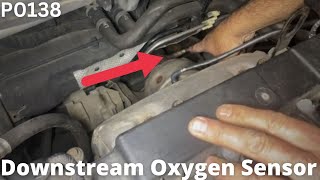
- Downstream O2 Sensor Accessibility: → Shop Oxygen Sensor The downstream O2 sensor can be seen from the top of the engine bay, looking down past the catalytic converter. However, it is best accessed from underneath the vehicle after removing the plastic engine splash shield (which is held on by several T30 Torx screws). The electrical connector is typically unclipped from the top.
Mechanic-Grade Diagnostic Values
- Downstream O2 Sensor (HO2S12) Heater Element Resistance — expected: 2 to 30 Ohms. A more specific Ford value is often around 5-15 Ohms.. Failure: A reading of 'OL' (Open Loop/infinite resistance) on a multimeter indicates a broken internal heater element, requiring sensor replacement. A reading of 14.6 Ohms has been observed on a functional sensor for a 2017 Focus.
- Downstream O2 Sensor (HO2S12) Voltage at warm idle — expected: Relatively stable voltage between 0.6V and 0.8V.. Failure: Voltage is stuck low (e.g., < 0.2V) or fluctuates rapidly like the upstream sensor. A low reading indicates a lean condition (real or perceived).
Scan Tool Commands That Help
- Ford IDS / FORScan / High-End Scanners: Key On Engine Running (KOER) Self-Test — This is a critical step *after* replacing a part like an O2 sensor. The PCM stores adaptive fuel trim values, and simply clearing the code may not be enough. Running the KOER test forces the PCM to re-learn and reset these adaptations, which can prevent the P2096 code from returning even after a successful hardware fix.
Wiring & Ground Locations
- C175B — This is the main 70-pin connector at the Powertrain Control Module (PCM).. For advanced diagnostics, this is where you would test for continuity and voltage for the O2 sensor circuits directly at the computer. Pin assignments vary by year and specific vehicle options, so a model-year specific diagram is required for accurate testing.
- G107 — On the right side of the engine compartment.. This is a major engine ground point shown in wiring diagrams. A poor ground connection here could potentially cause erratic sensor readings, although it would likely cause multiple other codes and symptoms beyond just P2096.
Real Owner Repair Stories
- YouTube video on a 2017 Ford Escape 1.5L EcoBoost (similar Ford logic) (2017 Ford Escape 1.5L EcoBoost) — P2096 code returned after replacing the downstream O2 sensor.
❌ Tried (didn't work) Replacing the downstream O2 sensor., Clearing the code with a basic scanner.
✅ What actually fixed it The final fix was to perform a 'Key On Engine Running' (KOER) self-test using a proper scan tool. Ford service information indicated this was necessary to reset system adaptations. After running the KOER test, the code did not come back.
OEM Part Supersession History
CV6Z-9G444-A→No supersession found.— This appears to be the stable, correct part number for the entire 2012-2018 2.0L GDI range.
Heads up: This part is for the downstream position on the naturally-aspirated 2.0L engine. Do not confuse it with the upstream sensor or sensors for the 2.0L EcoBoost (GTDI) engine, which may have different part numbers.
Model Year Variations Within This Range
- 2012-2018: No significant variations related to the P2096 code were found for the 2.0L GDI engine across the Mk3 generation. The 2015 facelift involved primarily cosmetic and infotainment changes, with no major alterations to the base 2.0L powertrain or exhaust system that would affect the diagnosis of this code.
Diagnostic Flowchart
Other Known Issues on This Vehicle
Issues unrelated to this code that are worth knowing about as an owner of this generation:
- DPS6 'PowerShift' Automatic Transmission Failure 🔴 High — Extremely common on 2012-2016 models with the automatic transmission. Symptoms include shuddering, hesitation, slipping, and complete failure to engage gears. (Ref: Multiple TSBs and a class-action lawsuit settlement exist for this issue. Ford extended the warranty for affected components on many vehicles.)
- Stuck-Open Canister Purge Valve (CPV) 🟠 Medium — Common across all 2012-2018 Focus models. A stuck-open valve can cause rough idle, difficulty starting after refueling, and in some cases, deformation of the fuel tank. (Ref: NHTSA Recall 18V735 (Ford campaign 18S32) was issued to reprogram the PCM to better detect the failure and, if necessary, replace the valve.)
- Collapsing Passenger-Side Engine Mount 🟠 Medium — Very common failure item. The fluid-filled hydraulic mount on the passenger side collapses, causing severe vibration at idle and clunking noises. (Ref: TSBs have been issued for prior generations, but for the Mk3, it is a widely known wear-and-tear issue.)
- Electronic Power Steering (EPAS) Failure 🔴 High — A significant number of owners have reported sudden loss of power steering, often accompanied by a 'Power Steering Assist Fault' message on the dash.
Used vs. New Parts: Buying Guide for This Vehicle
When a used part is the smart pick: For this repair, a used part is generally not recommended for the sensor itself. However, a used section of exhaust pipe or a used catalytic converter assembly from a low-mileage, non-corroded donor vehicle can be a cost-effective way to fix a physical leak if the OEM converter is confirmed to be good.
Donor-vehicle mileage cap: roughly under 60000 miles for the part to have meaningful remaining life.
What to inspect on the donor part:
- For exhaust components, check for a vehicle from a dry, salt-free climate.
- Inspect welds and flanges for any signs of rust-through, cracking, or previous repairs.
- Ensure the flex pipe is intact with no frayed steel braiding.
- If buying a used catalytic converter, look for the original OEM markings and avoid any that are dented or rattling.
OEM-only on this vehicle (don't cheap out):
- Catalytic Converter: While expensive, the OEM converter is designed to meet specific emissions requirements. Many aftermarket converters for this platform are known to fail prematurely or not meet the efficiency standards required by the PCM, leading to a P0420 code shortly after installation.
Aftermarket brands forum-validated for this vehicle:
- O2 Sensors: NTK, Denso, Bosch are widely trusted OEM suppliers and their aftermarket parts are considered reliable.
- Exhaust Components: Walker, Bosal, and MagnaFlow offer quality replacement exhaust pipes, gaskets, and flex pipe repair kits.
Brands owners have reported issues with on this vehicle:
- Ultra-cheap, unbranded oxygen sensors from online marketplaces often have high failure rates, inaccurate readings, or short lifespans.
Real Owner Stories
Aggregated from forums and TSBs cited above. Mileages and costs reflect what owners reported in those sources.
2013-2018 Ford Focus ST 2.0L GTDI
Symptoms: P2096 code on a vehicle with an aftermarket catted downpipe.
What fixed it: Corrected the orientation of the O2 sensor defouler. It was originally facing downward, allowing condensation to collect; rotating it to face forward against the exhaust flow fixed the issue.
Source hint: Reddit r/FocusST (2022-03-22)
2013-2018 Ford Focus ST 2.0L GTDI
Symptoms: P2096 code on a modified vehicle.
What fixed it: Fixed a combination of a vacuum leak and reversed lines to the blow-off valve solenoid.
Source hint: Reddit r/FocusST (2023-11-02)
2013-2018 Ford C-Max Hybrid 2.0L Atkinson-cycle
Symptoms: Experiencing the P2096 code.
What fixed it: Used Lucas fuel system cleaner, which resolved the issue.
Source hint: Reddit r/cmaxhybrid (2018-05-08)
Related OBD-II Codes
Frequently Asked Questions
Does TSB 16-0031 apply to my 2012-2018 Ford Focus with the 2.0L GDI engine?
Where is the downstream oxygen sensor located on my Focus, and how do I get to it?
My Focus has both P2096 and P0171; which one should I fix first?
Is there a specific brand of O2 sensor I should use for the 2.0L GDI engine?
I just replaced the O2 sensor, but the P2096 code came back. Did I miss a step?
Could my Focus's rough idle and P2096 be related to the fuel tank recall?
Helpful Videos
We Have This Part in Stock



The information in this article is provided for general reference and educational purposes only. Vehicle specifications, procedures, and part compatibility can vary by production date, trim level, and region. Always consult your vehicle's factory service manual and verify part numbers before purchasing or performing repairs. Safety-critical components such as airbags, seat belts, and braking systems should be installed by a qualified professional.
- Ford Focus:
- 🧭 Diagnostic Flowchart
- 🎬 Helpful Videos
- 🛍️ Shop This Part
- What's Unique About the 2012-2018 Ford Focus
- Symptoms You May Notice
- Most Likely Causes
- Rare But Worth Checking
- Diagnosis Steps
- Parts You'll Likely Need
- Related Codes That Often Appear With This One
- Technical Service Bulletins (TSBs) & Recalls
- Platform-Specific Known Issues
- Mechanic-Grade Diagnostic Values
- Scan Tool Commands That Help
- Wiring & Ground Locations
- Real Owner Repair Stories
- OEM Part Supersession History
- Model Year Variations Within This Range
- Other Known Issues on This Vehicle
- Used vs. New Parts: Buying Guide for This Vehicle
- Real Owner Stories
- 2013-2018 Ford Focus ST 2.0L GTDI
- 2013-2018 Ford Focus ST 2.0L GTDI
- 2013-2018 Ford C-Max Hybrid 2.0L Atkinson-cycle
- Related OBD-II Codes
- Frequently Asked Questions
- 🎟️ Get 5% Off