

P2096 on 2010-2012 Ford Fusion 3.0L V6: Causes and Fixes for Lean Fuel Trim
This code most often points to an exhaust leak before the rear (Bank 1) downstream O2 sensor or a failing sensor itself. Inspecting for exhaust leaks is the first step before replacing any parts. A new sensor costs between $50 and $150. Bank 1 is the rear cylinder bank, closer to the firewall.
- P2096 means the rear oxygen sensor (Bank 1) is detecting a lean condition.
- The most common causes are an exhaust leak or a bad oxygen sensor.
- Always check for exhaust leaks before spending money on a new O2 sensor.
- Bank 1 is the cylinder bank against the firewall, which is more difficult to access than Bank 2.
- Driving with this code can hurt your fuel economy and eventually damage your catalytic converter.
What's Unique About the 2010-2012 Ford Fusion
On the Ford Fusion's transversely mounted 3.0L V6, identifying the correct bank is the first challenge for DIYers; Bank 1 is the rear bank, closer to the firewall, making access to its components more difficult than for Bank 2. While some later Ford models (like the 2013-2014 2.0L Fusion) have specific issues like oil wicking into the O2 sensor harness (per TSB 16-0031), the 2010-2012 3.0L V6 does not have this specific documented pattern failure for P2096. The causes are typically standard issues like exhaust leaks or sensor failure, with the primary platform-specific challenge being the physical location of the components.
Symptoms You May Notice
- Check Engine Light is on
- Reduced fuel economy
- Rough idle or poor acceleration, though this is less common
- Vehicle will fail an emissions test
- Replacing the oxygen sensor without first checking for exhaust leaks. An exhaust leak will cause a new sensor to report the same lean condition, and the code will return. 🎬 Watch: A breakdown of P2096 causes and common fixes.
Most Likely Causes
- Exhaust Leak 🔴 High Probability Gaskets and exhaust pipes, particularly the flexible pipe sections, can develop leaks from corrosion and heat cycles. A leak anywhere between the cylinder head and the downstream O2 sensor can introduce oxygen and trigger the code.
How to confirm: Visually inspect the exhaust manifold, gaskets, and pipes for cracks or black soot trails. A smoke test is the most effective method. You can also have a helper temporarily block the tailpipe while you listen for hissing sounds from the exhaust system (use caution as the exhaust is hot). A shop can use a smoke machine to pinpoint the leak quickly.
Typical fix: Replace the leaking gasket or repair/replace the cracked exhaust component. Small cracks or holes can sometimes be sealed with exhaust putty or a heat wrap as a temporary fix.
Est. part cost: $20-$100 for gaskets, $150+ for pipe sections. - Faulty Downstream Oxygen (O2) Sensor 🔴 High Probability → Shop Oxygen Sensor O2 sensors are wear items that degrade over time, typically lasting 100,000-150,000 miles. Contamination from engine byproducts or simple age can cause them to fail and send inaccurate lean readings.
How to confirm: Use a scan tool to monitor the Bank 1, Sensor 2 voltage at idle. A healthy downstream sensor should show a relatively steady voltage (e.g., 0.5V-0.8V). If the voltage is stuck low (e.g., <0.2V), it confirms the lean reading. This doesn't prove the sensor is bad (it could be accurately reporting a leak), but if no leaks are found, the sensor is the likely culprit.
Typical fix: Replace the Bank 1 downstream oxygen sensor. Bank 1 is the rear bank, against the firewall.
Est. part cost: $50-$150 - Intake / Vacuum Leak 🟡 Medium Probability Vacuum hoses and intake gaskets can become brittle and crack with age, allowing unmetered air to enter the engine. This affects the overall air-fuel mixture.
How to confirm: Listen for hissing noises around the engine bay. Perform a smoke test on the intake system to find the source of the leak. This cause will often trigger a P0171 (System Too Lean Bank 1) code as well, since the upstream sensor will also detect the lean condition.
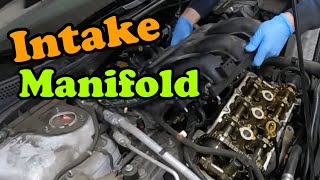
Typical fix: Replace the cracked vacuum line or leaking gasket. 🎬 See this walkthrough on how to remove the intake manifold.
Est. part cost: $5-$75
Rare But Worth Checking
- Low Fuel Pressure: A weak fuel pump or clogged fuel filter can create a true lean condition. This would typically affect both cylinder banks and may set other codes (like P0171/P0174 or P2098). Check fuel pressure with a gauge on the fuel rail if other causes are ruled out.
- Failing Catalytic Converter: → Shop Catalytic Converter An inefficient or partially clogged catalytic converter can disrupt exhaust flow and oxygen levels, triggering a P2096. This is usually a last resort after checking for leaks and sensor issues.
- PCM Failure from Ignition Coils: A known issue on this platform is for a failing ignition coil to damage the PCM. While this usually throws P035x codes, it can potentially cause other erratic engine management behavior. This is an unlikely cause for an isolated P2096 but should be considered if other electrical issues are present.
Technical Service Bulletins (TSBs) & Recalls
While the 2010-2012 3.0L Fusion is not the primary subject of specific P2096 bulletins, it is helpful to note manufacturer findings on similar platforms. For instance, TSB Bulletin #16-0031 and TSB Bulletin #TSB160031 describe a condition where an illuminated MIL with DTC P2096 occurs due to engine oil migrating from the VCT solenoid into the O2 sensor harness on newer 2.0L GTDI engines. While this specific oil migration is not a documented pattern for the 3.0L V6, it illustrates how electrical harness contamination can trigger this code.
Diagnosis Steps
- Check for other diagnostic trouble codes. Codes like P0171 or P2098 can point towards a vacuum leak or fuel delivery issue as the root cause, rather than a localized exhaust leak.
- Thoroughly inspect the exhaust system for leaks. Pay close attention to the exhaust manifold on the rear cylinder bank and the flange gaskets all the way to the downstream O2 sensor. Look for soot marks or cracks. A smoke test is the definitive method.
- Inspect the intake system for vacuum leaks. Check all vacuum hoses and the intake manifold gaskets for cracks or damage. Listen for hissing sounds at idle.
- Use a scan tool to observe the live data for the Bank 1, Sensor 2 (downstream) oxygen sensor. The voltage should be relatively stable. If it is stuck below 0.2V, it confirms a lean signal is being sent to the computer.
- If no exhaust or vacuum leaks are found, and the sensor is reading consistently lean, the sensor itself is the most likely point of failure.
- As a final check, you can test fuel pressure to rule out a fuel delivery problem, though this is less likely if P2096 is the only code present.
Parts You'll Likely Need
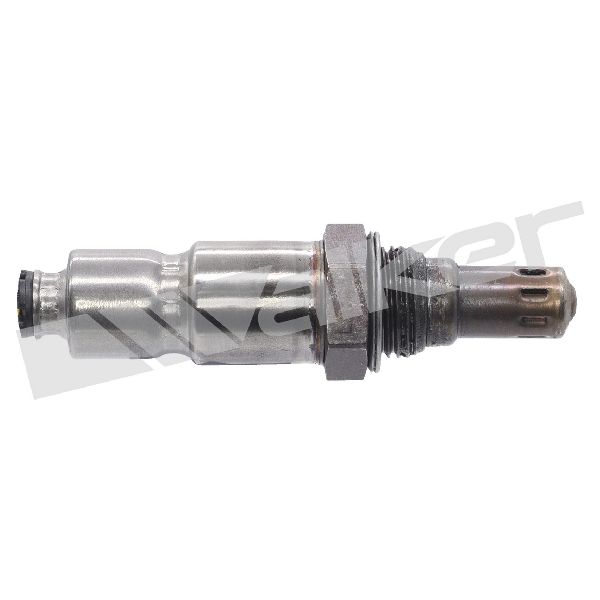
- Downstream Oxygen Sensor (Bank 1, Sensor 2)
(OEM #Motorcraft DY-1175 or DY-1174 (Verify by VIN, as part numbers can vary by specific build date and configuration).)— This sensor is the most common part to fail and cause a P2096 code when no exhaust leaks are present. It is a standard wear-and-tear component.
Trusted brands: Motorcraft, Bosch, Denso, Walker, TRQ
OEM price range: $100-$180
Aftermarket price range: $50-$120 - Exhaust Manifold Gasket or Flange Gasket — If an exhaust leak is found to be the cause, the corresponding gasket will need to be replaced to seal the leak.
Trusted brands: Fel-Pro, Motorcraft, Bosch
OEM price range: $25-$60
Aftermarket price range: $15-$40
Related Codes That Often Appear With This One
- P0171 — P0171 indicates a lean condition detected by the *upstream* O2 sensor on Bank 1. If a significant vacuum leak or fuel delivery issue is present, both the upstream and downstream sensors will detect the lean condition, causing both codes to appear.
- P2098 — This is the same lean code but for Bank 2 (the front cylinder bank). If both P2096 and P2098 are present, it strongly suggests a systemic problem affecting both banks, such as a major intake leak, low fuel pressure, or a faulty MAF sensor, rather than a localized exhaust leak or single bad O2 sensor.
Mechanic-Grade Diagnostic Values
- Long Term Fuel Trim (LONGFT1) — expected: Close to 0%, within +/- 10%.. Failure: A value consistently above +10% to +25% indicates the PCM is adding significant fuel to compensate for a lean condition. P2096 is a post-catalyst code, but high upstream fuel trims can confirm a systemic lean condition affecting the whole bank.
- Fuel Pressure (Key On, Engine Off) — expected: Approximately 40-65 PSI (Varies by specific system, must verify for 3.0L Duratec).. Failure: Pressure below the specified range indicates a potential issue with the fuel pump or filter, causing a true lean condition.
- Downstream O2 Sensor (B1S2) Voltage at Idle — expected: Relatively steady voltage between 0.5V and 0.8V on a warm engine with a healthy catalytic converter.. Failure: Voltage stuck low (below 0.2V) indicates a lean condition (real or perceived). Voltage that fluctuates rapidly similar to the upstream sensor can indicate a failing catalytic converter.
Hidden / Shadow Codes Worth Checking
- Mode $06 Data: This is not a 'code' but a diagnostic mode that shows results from the PCM's self-tests. For P2096, a technician would examine the test results for the Catalyst Monitor Bank 1 (often TID $81) and the O2 Sensor Monitor for Bank 1, Sensor 2. Failing values here can confirm a fault in the component's function before a DTC is set, or help pinpoint the issue between the sensor and the catalyst. (see via A professional-grade scan tool with Mode $06 capability (e.g., Ford IDS, FORScan, high-end Autel/Launch scanners).)
Scan Tool Commands That Help
- Ford IDS, FORScan, or equivalent professional scanner: Reset All Adaptations / Clear Transmission Adaptive Tables / Keep Alive Memory (KAM) Reset — This MUST be performed after replacing a component that affects the air/fuel ratio, such as an O2 sensor, MAF sensor, or fixing a significant vacuum/exhaust leak. The PCM stores long-term fuel trim adjustments in KAM. Failing to reset it will cause the PCM to use old, incorrect data with the new parts, often leading to the code returning immediately or poor performance.
Wiring & Ground Locations
- G103 — On the left rear of the engine compartment.. A poor engine ground can introduce electrical noise and voltage offsets into sensor circuits, potentially causing the PCM to receive inaccurate readings from the O2 sensor.
- G104 — On the right front of the engine compartment.. Similar to G103, this is a primary engine ground. Both should be inspected to ensure they are clean, tight, and free of corrosion when diagnosing any sensor-related codes.
- Bank 1 O2 Sensor Connector — The Bank 1 (rear) downstream O2 sensor connector is notoriously difficult to access. It is located on the back of the engine, and often requires removing intake air ducting from above to reach it.. Technicians should budget extra time for replacement. The harness should be inspected for chafing or damage in this tight area, as a damaged wire can mimic a failed sensor.
Real Owner Repair Stories
- Reddit user comment in r/fordfusion (Ford Focus (similar logic to Fusion)) — P2096 code present.
❌ Tried (didn't work) Initial diagnosis pointed towards O2 sensor or exhaust leak.
✅ What actually fixed it The root cause was a broken hose attached to the intake manifold, creating a vacuum leak. Replacing the hose resolved the code. - YouTube video by 'P2096 Post Catalyst Fuel Trim System Too Lean (bank 1)' (2012 Ford Focus (similar engine management)) — P2096 code, check engine light.
❌ Tried (didn't work) Disconnecting the battery (code returned due to Keep Alive Memory).
✅ What actually fixed it The final fix was replacing the Bank 1 Sensor 2 oxygen sensor. The video emphasizes the critical, and often missed, step of performing a Key-On-Engine-Running (KOER) self-test or KAM reset to make the PCM recognize the new sensor and clear the code properly.
"I Checked Everything" — The Actual Cause
- A hairline crack in the Bank 1 exhaust manifold that only opens and leaks when the engine reaches operating temperature. A smoke test performed on a cold engine may not reveal the leak, leading to a misdiagnosis.
- A chemically inefficient catalytic converter. The converter may not be physically clogged (so it passes a backpressure test), but its catalyst materials are degraded and can no longer store and release oxygen effectively. This confuses the downstream O2 sensor, which expects to see a much different oxygen reading than the upstream sensor, triggering the code.
When the Usual Fixes Don't Work
- In a documented case for a similar Ford vehicle, a user with a P2096 code had exhaust work performed to fix a leak, but the code remained. This highlights that even when a likely cause (exhaust leak) is found and fixed, it may not be the only fault. The next logical step in this scenario would be to test or replace the downstream O2 sensor, as it could have failed independently or been damaged by the conditions that caused the exhaust leak.
OEM Part Supersession History
Motorcraft DY-1175→Still current, but may be cross-referenced with Ford engineering number BE5Z-9G444-D.— Standard part lifecycle and numbering schemes.
Heads up: Ensure the replacement sensor is a direct fit with the correct connector. While universal sensors exist, they require splicing wires which can be a point of failure.
Model Year Variations Within This Range
- 2010-2012: The 3.0L V6 in this generation uses the Ford 6F35 automatic transmission. Some owners have reported more issues with this transmission compared to the Aisin F21 transmission that was paired with the larger 3.5L V6 available in the Sport model. While not directly related to P2096, it's a notable mechanical difference in the powertrain.
- 2010: For the 2010 model year, the 3.0L V6 was updated with Cam Torque Actuated (CTA) iVCT, which increased its output to 240 horsepower. This is distinct from earlier versions of the 3.0L Duratec.
Diagnostic Flowchart
Other Known Issues on This Vehicle
Issues unrelated to this code that are worth knowing about as an owner of this generation:
- Electronic Throttle Body Failure 🔴 High — Very common. Can cause sudden stalling, rough idle, and the vehicle entering 'limp mode' with a wrench light. Ford issued Customer Satisfaction Program 13N03 which extended the warranty, but it has since expired. (Ref: Customer Satisfaction Program 13N03)
- 6F35 Transmission Problems 🔴 High — Widespread issues reported, including harsh shifting (especially 1-2 and 2-3), shift flares, shuddering, and sometimes complete failure. Problems were the subject of a class-action lawsuit. Some owners report that replacing a faulty throttle body can resolve what appear to be transmission shifting issues. (Ref: A class-action lawsuit was filed concerning these issues.)
- Electric Power Steering Failure 🔴 High — Common enough to trigger a NHTSA investigation and a recall for some model years. Can result in a sudden loss of power steering assist, making the vehicle difficult to steer at low speeds. Recall 15S18 was issued for 2011-2012 models to update software or replace the steering gear. (Ref: Recall 15S18 / NHTSA 15V340000)
- PCM Failure Due to Ignition Coils 🟠 Medium — A failing ignition coil can short and send a voltage spike to the Powertrain Control Module (PCM), damaging the coil driver circuit. This typically results in misfire codes (P0351-P0356). The standard repair requires replacing the PCM and all six ignition coils and spark plugs simultaneously.
Used vs. New Parts: Buying Guide for This Vehicle
When a used part is the smart pick: For this repair, used parts are generally not recommended for sensors. However, obtaining a used exhaust component, such as an exhaust manifold or a section of pipe from a low-mileage, rust-free donor vehicle, can be a cost-effective alternative to a new part.
Donor-vehicle mileage cap: roughly under 80000 miles for the part to have meaningful remaining life.
What to inspect on the donor part:
- For exhaust parts, inspect for any signs of rust, corrosion, or hairline cracks, especially at welds and flanges.
- Ensure the donor vehicle is from a region with little to no road salt use.
- Verify the part is from the exact same engine (3.0L V6) and model year range to ensure proper fitment.
OEM-only on this vehicle (don't cheap out):
- While not strictly 'OEM-only', using a high-quality OEM (Motorcraft) or top-tier aftermarket O2 sensor is highly recommended. Cheap, no-name sensors are notorious for failing quickly or being inaccurate out of the box.
Aftermarket brands forum-validated for this vehicle:
- O2 Sensors: Bosch, Denso, NTK.
- Exhaust Components: Walker, MagnaFlow, Bosal.
Brands owners have reported issues with on this vehicle:
- Avoid unbranded, 'white-box' oxygen sensors from online marketplaces. Forum discussions frequently cite these as being unreliable and a common cause of recurring codes.
Real Owner Stories
Aggregated from forums and TSBs cited above. Mileages and costs reflect what owners reported in those sources.
2010 Ford Fusion SEL 3.0L V6
Symptoms: Check engine light comes on and then turns off by itself; code read as P2096 - Post Catalyst Fuel Trim System Too Lean Bank 1.
What fixed it: Replacing a broken hose that attaches to the intake manifold.
Source hint: Reddit r/fordfusion thread '2010 Fusion Check Engine Light/Advice on Modifications'
2012 Ford Fusion 3.0L V6
Symptoms: Check engine light pops on intermittently, sometimes twice a week, other times not for months.
What fixed it: The context suggests checking for intake boot, manifold leaks, or exhaust leaks before the O2 sensor.
Source hint: Reddit r/fordfusion
Related OBD-II Codes
Frequently Asked Questions
Where is Bank 1 located on my 2010-2012 Ford Fusion 3.0L V6?
Could my P2096 code be related to the 13N03 Customer Satisfaction Program?
Is there a recall for the steering issues I'm having alongside this check engine light?
Will a vacuum leak cause P2096 on my Fusion?
Can I just replace the O2 sensor to fix P2096?
Does the P2096 code mean my 6F35 transmission is failing?
Helpful Videos
![How to Fix FORD P2096 Engine Code in 4 Minutes [2 DIY Methods / Only $9.53]](https://img.youtube.com/vi/BbZdqV_m0cY/mqdefault.jpg)
We Have This Part in Stock


The information in this article is provided for general reference and educational purposes only. Vehicle specifications, procedures, and part compatibility can vary by production date, trim level, and region. Always consult your vehicle's factory service manual and verify part numbers before purchasing or performing repairs. Safety-critical components such as airbags, seat belts, and braking systems should be installed by a qualified professional.
- Ford Fusion:
- 🧭 Diagnostic Flowchart
- 🎬 Helpful Videos
- 🛍️ Shop This Part
- What's Unique About the 2010-2012 Ford Fusion
- Symptoms You May Notice
- Most Likely Causes
- Rare But Worth Checking
- Technical Service Bulletins (TSBs) & Recalls
- Diagnosis Steps
- Parts You'll Likely Need
- Related Codes That Often Appear With This One
- Mechanic-Grade Diagnostic Values
- Hidden / Shadow Codes Worth Checking
- Scan Tool Commands That Help
- Wiring & Ground Locations
- Real Owner Repair Stories
- "I Checked Everything" — The Actual Cause
- When the Usual Fixes Don't Work
- OEM Part Supersession History
- Model Year Variations Within This Range
- Other Known Issues on This Vehicle
- Used vs. New Parts: Buying Guide for This Vehicle
- Real Owner Stories
- 2010 Ford Fusion SEL 3.0L V6
- 2012 Ford Fusion 3.0L V6
- Related OBD-II Codes
- Frequently Asked Questions
- 🎟️ Get 5% Off