

P2096 on 2013-2014 Ford Fusion: Lean Fuel Trim Causes and Fixes
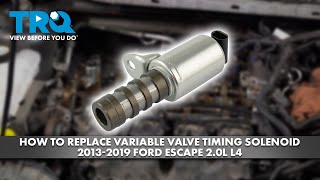
On a 2013-2014 Ford Fusion with the 2.0L GTDI engine, code P2096 is frequently caused by a specific issue where engine oil leaks from the VVT solenoids and contaminates the downstream oxygen sensor wiring harness. The oil 'wicks' through the wires to the sensor connector. The official fix, outlined in TSB 16-0031, involves replacing the VVT solenoids, the downstream O2 sensor, and the affected engine wiring harness.
- For a 2013-2014 Fusion 2.0L, P2096 is very likely caused by oil in the O2 sensor wiring harness, per Ford TSB 16-0031.
- The first diagnostic step should be to inspect the VVT solenoid and downstream O2 sensor electrical connectors for oil.
- Do not simply replace the O2 sensor without checking for oil; the problem will likely return.
- The official fix is extensive, requiring replacement of the harness, sensor, and VVT solenoids, making it a difficult DIY job.
What's Unique About the 2013-2014 Ford FUSION
Unlike the generic causes of P2096 like exhaust leaks or fuel issues, the 2013-2014 Fusion with the 2.0L GTDI engine has a very specific and well-documented problem. Ford issued a Technical Service Bulletin (TSB 16-0031) identifying that engine oil can leak from the Variable Valve Timing (VVT) oil control solenoids. This oil then travels, or 'wicks', through the engine wire harness and contaminates the electrical connector for the downstream oxygen sensor (Catalyst Monitor Sensor or CMS), causing faulty readings and triggering the P2096 code. 🎬 Watch: A deep dive into what this code really means. This issue also affects the Ford Escape, Focus ST, and Lincoln MKZ with the same engine and build dates.
Diagnostic Flowchart
Tap your situation to follow the diagnostic path that matches what you're seeing on this vehicle.
Symptoms You May Notice
- Check Engine Light (Malfunction Indicator Lamp or MIL) is on.
- Reduced fuel economy.
- Rough idling.
- Poor acceleration.
- In many cases, no noticeable drivability symptoms other than the Check Engine Light may be present.
- Replacing only the oxygen sensor without checking for oil contamination in the harness. If the harness is full of oil, the new sensor will still receive a bad signal and the code will return.
- Replacing the O2 sensor and only performing a standard code clear. On many Fords, a Key-On Engine-Running (KOER) self-test is required to reset adaptations and prevent the code from immediately returning.
Most Likely Causes
- Oil Contamination of Catalyst Monitor Sensor (Downstream O2 Sensor) Harness 🔴 High Probability A known issue documented in Ford TSB 16-0031 for 2013-2014 Fusions with the 2.0L GTDI engine built between 9/1/2012 and 8/1/2013. Oil migrates from the VVT solenoids through the wiring harness to the sensor connector, causing a false lean reading.
How to confirm: Disconnect the electrical connectors at both the VVT oil control solenoids (on top of the engine) and the downstream oxygen sensor. Visually inspect the inside of the connectors and the wiring for any signs of engine oil. The TSB suggests using a paper towel for verification.
Typical fix: Replace both VVT oil control solenoids, the downstream oxygen sensor (Catalyst Monitor Sensor), and the affected engine wiring harness (Part No. DU5Z-12A581-CA for Fusion/MKZ).
Est. part cost: $400-$650 - Exhaust Leak 🟡 Medium Probability
How to confirm: Visually inspect the exhaust system from the engine to the tailpipe for cracks, holes, or loose gaskets, particularly at the exhaust manifold and flex pipe. A shop can perform a smoke test to find small leaks. A leak allows unmetered outside air into the exhaust, which the O2 sensor reads as a lean condition.
Typical fix: Repair the leak by replacing the cracked pipe, manifold, or failed gasket.
Est. part cost: $20-$500 - Failing Downstream Oxygen Sensor ⚪ Low Probability → Shop Oxygen Sensor Failure can occur naturally over time, but it's less likely to be the root cause on this specific platform compared to the oil wicking issue.
How to confirm: If no oil contamination or exhaust leaks are found, the sensor itself may have failed. A technician can use a scan tool to observe the sensor's voltage readings to determine if it is responding correctly. After replacement, a Key-On Engine-Running (KOER) self-test is crucial 🎬 Watch: A guide to replacing the Bank 1 Sensor 2 oxygen sensor. to prevent the code from returning.
Typical fix: Replace the downstream (post-catalyst) Bank 1 oxygen sensor.
Est. part cost: $50-$150 - Fuel Delivery Issues ⚪ Low Probability
How to confirm: Check for a genuine lean condition affecting the engine. This can be done by monitoring fuel trims with a scan tool and checking fuel pressure against specifications. This could be caused by a weak fuel pump, clogged filter, or dirty injectors.
Typical fix: Replace the failing component, such as the fuel pump, fuel filter, or clean/replace fuel injectors.
Est. part cost: $20-$400
Rare But Worth Checking
- Clogged Catalytic Converter: → Shop Catalytic Converter While less common, a partially clogged or inefficient converter can sometimes alter exhaust flow and oxygen content, contributing to a P2096 code. A glowing red converter after running the engine is a sign of a clog.
- Intake (Vacuum) Leak: A significant vacuum leak introduces unmetered air into the engine, creating a true lean condition that can be detected by the downstream O2 sensor. This will often be accompanied by a P0171 code.
Diagnosis Steps
- Check for Technical Service Bulletins (TSBs) for your vehicle's specific year and engine. For the 2.0L GTDI, TSB 16-0031 is the primary starting point.
- Disconnect the electrical connector for the VVT oil control solenoids and the downstream oxygen sensor (Catalyst Monitor Sensor).
- Carefully inspect the inside of both connectors for any trace of engine oil. Use a paper towel to wipe inside the connector for better verification.
- If oil is present, the TSB procedure is the correct repair. This involves replacing the VVT solenoids, the downstream O2 sensor, and the engine wiring harness.
- If no oil is found, proceed with standard P2096 diagnostics.
- Thoroughly inspect the entire exhaust system for leaks between the engine and the downstream O2 sensor. Pay close attention to gaskets and flex pipes.
- If no leaks are found, use a scan tool to monitor the live data from the downstream O2 sensor. The voltage should be relatively stable. If it's stuck low or fluctuating wildly, the sensor may be faulty.
- Check for underlying engine issues causing a true lean condition, such as low fuel pressure or vacuum leaks.
- After any repair, especially an O2 sensor replacement, perform a Key-On Engine-Running (KOER) self-test to properly clear codes and reset system adaptations.
Parts You'll Likely Need
- Engine Wiring Harness
(OEM #DU5Z-12A581-CA)— Required by TSB 16-0031 to fix the oil migration issue from the VVT solenoids. The original harness becomes saturated with oil.
Trusted brands: Motorcraft
OEM price range: $350-$500 - VVT Oil Control Solenoid
(OEM #DG9Z-6C535-A)— This is the source of the oil leak that contaminates the wiring harness. Both should be replaced as part of the TSB fix.
Trusted brands: Motorcraft, Dorman
OEM price range: $40-$70 each
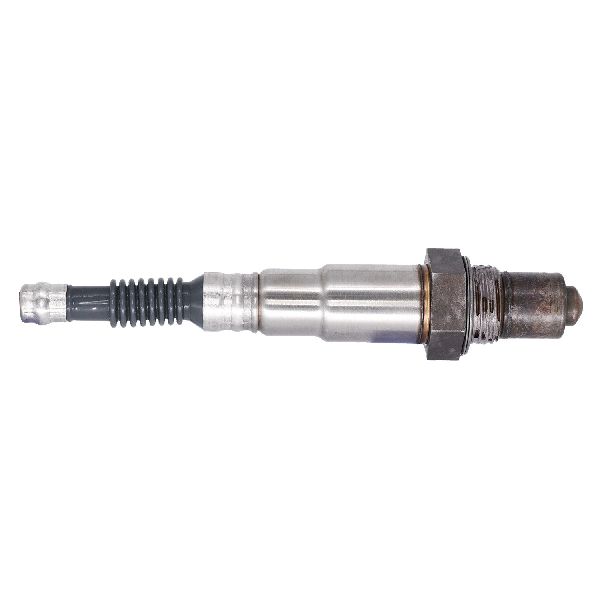
Aftermarket price range: $25-$50 each - Downstream Oxygen Sensor (Catalyst Monitor Sensor)
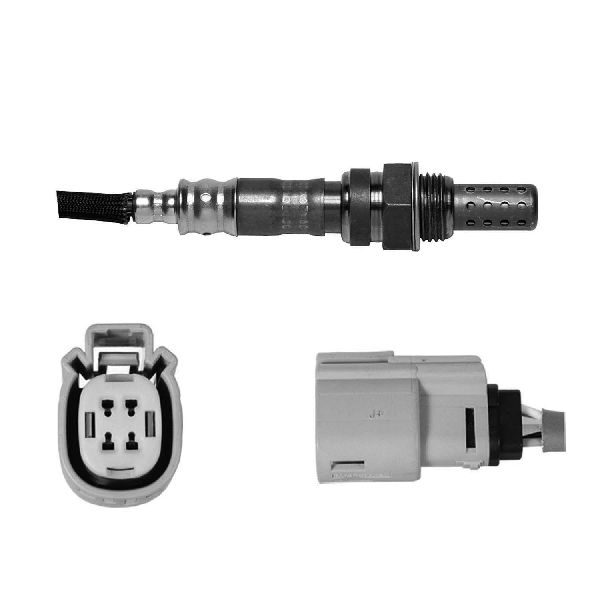
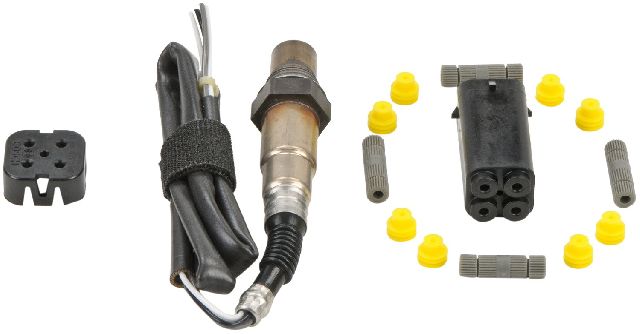
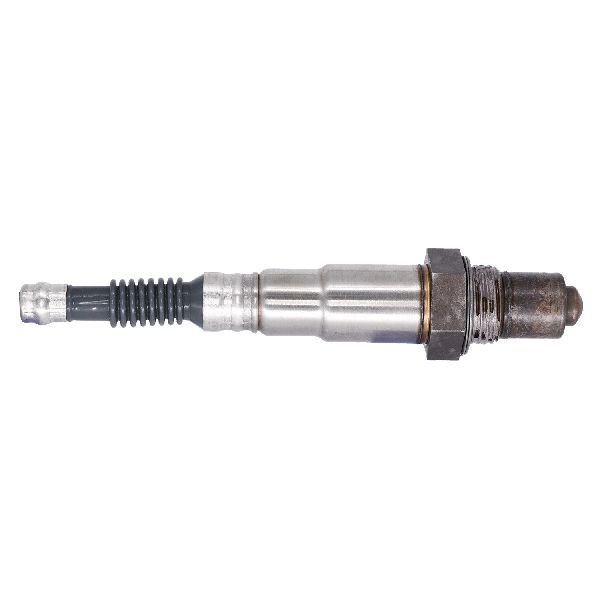
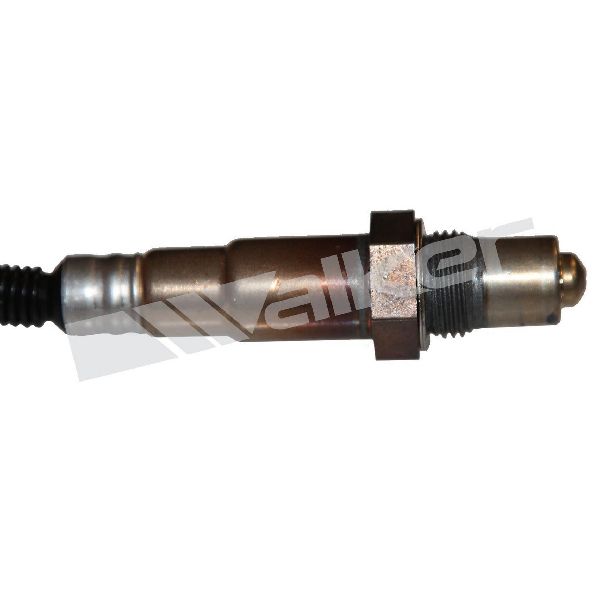
(OEM #GU2Z-9G444-A (Motorcraft DY-1401))— The sensor's connector gets contaminated by oil, causing incorrect readings. It is replaced as part of the TSB fix or if it fails independently.
Trusted brands: Motorcraft, Bosch, Denso, NGK
OEM price range: $60-$95
Aftermarket price range: $50-$100
Related Codes That Often Appear With This One
- P0171 — P0171 indicates a lean condition on Bank 1 detected by the *upstream* oxygen sensor. If a major vacuum leak or fuel delivery problem exists, it can be severe enough for both the upstream and downstream sensors to detect the lean mixture.
- P0420 — P0420 indicates 'Catalyst System Efficiency Below Threshold'. If the P2096 code is caused by a failing catalytic converter, or if a prolonged lean condition has damaged the converter, P0420 may appear as well.
Technical Service Bulletins (TSBs) & Recalls
- TSB 16-0031: '2.0L GTDI - ILLUMINATED MIL WITH DTC P2096 - BUILT ON 9/1/2012 AND THROUGH 8/1/2013'. Details the issue of oil migrating from VVT solenoids to the catalyst monitor sensor harness. This TSB supersedes a previous version, 15-0196, and expands the list of affected vehicles to include the Focus ST, Escape, and Lincoln MKZ.
Platform-Specific Known Issues
- TSB 16-0031: Oil Wicking from VVT Solenoids: On 2013-2014 models with the 2.0L GTDI engine built from September 2012 to August 2013, oil can leak from the VVT solenoids and travel through the engine harness to the downstream oxygen sensor connector, causing a false P2096 code. The official repair requires replacing both VVT solenoids, the downstream O2 sensor, and the entire engine wiring harness. Labor time is estimated at 2.4 hours for FWD models and 2.9 hours for AWD models.
Mechanic-Grade Diagnostic Values
- VVT Oil Control Solenoid Resistance — expected: 5 to 15 Ohms. Failure: A reading of infinity (open circuit) or near zero (short circuit) indicates a failed solenoid coil.
- VVT Oil Control Solenoid Connector Voltage — expected: ~12 Volts (Battery Voltage) on one pin with Key On, Engine Off.. Failure: No voltage suggests a problem with the wiring harness or a blown fuse in the power supply circuit to the solenoid.
- Downstream O2 Sensor (Catalyst Monitor) Voltage at Idle — expected: A steady voltage, typically between 0.5V and 0.8V, indicating the catalytic converter is working.. Failure: For a P2096 lean code, the voltage will be stuck low, typically below 0.2V. This indicates excess oxygen is being detected after the catalyst.
Scan Tool Commands That Help
- Ford IDS (or equivalent professional scanner): VVT Solenoid Output State Control / Cycle Test — This bidirectional command allows a technician to manually activate the VVT solenoids. It can be used to confirm if the solenoid is mechanically stuck or to potentially clear minor debris, as suggested in some Ford diagnostic procedures.
- Ford IDS (or equivalent professional scanner): KOER (Key-On Engine-Running) Self-Test — This is a critical step after replacing an O2 sensor or performing other emission system repairs on a Ford. It forces the PCM to re-run its internal monitors and reset fuel trim adaptations, which can prevent the code from immediately returning.
Wiring & Ground Locations
- G103 / G104 — Located on the right side of the engine compartment.. These are primary engine ground points. A poor ground connection here can cause erratic voltage readings for various engine sensors, including the O2 sensors and VVT solenoids.
- G100 — Located on the left front of the engine compartment.. Another key engine bay ground. Verifying it is clean and tight is a fundamental step in diagnosing any electrical fault.
- C175B — This is one of the main multi-pin connectors at the Powertrain Control Module (PCM).. The signal and control wires for the VVT solenoids and the downstream O2 sensor run through this connector. When diagnosing the oil wicking issue, inspecting this connector for oil contamination can also be useful.
- Data Link Connector (DLC) — Under the driver's side dash, above the footrest area.. This is the OBD-II port used to connect a scan tool to read the P2096 code and monitor live data.
"I Checked Everything" — The Actual Cause
- On this specific platform, a common diagnostic trap is performing an exhaust smoke test, finding no leaks, and immediately concluding the downstream O2 sensor is faulty. The code then returns after sensor replacement because the actual root cause, as defined in TSB 16-0031, is not an exhaust leak but rather oil contamination in the sensor's wiring harness originating from the VVT solenoids. The oil compromises the electrical signal, creating a false lean reading that a smoke test cannot identify.
Helpful Videos

We Have This Part in Stock


The information in this article is provided for general reference and educational purposes only. Vehicle specifications, procedures, and part compatibility can vary by production date, trim level, and region. Always consult your vehicle's factory service manual and verify part numbers before purchasing or performing repairs. Safety-critical components such as airbags, seat belts, and braking systems should be installed by a qualified professional.
- Ford FUSION:
- 🧭 Diagnostic Flowchart
- 🎬 Helpful Videos
- 🛍️ Shop This Part
- What's Unique About the 2013-2014 Ford FUSION
- Symptoms You May Notice
- Most Likely Causes
- Rare But Worth Checking
- Diagnosis Steps
- Parts You'll Likely Need
- Related Codes That Often Appear With This One
- Technical Service Bulletins (TSBs) & Recalls
- Platform-Specific Known Issues
- Mechanic-Grade Diagnostic Values
- Scan Tool Commands That Help
- Wiring & Ground Locations
- "I Checked Everything" — The Actual Cause
- 🎟️ Get 5% Off