

P2096 on 2011-2014 Ford Mustang 3.7L V6: Causes and Fixes for Lean Fuel Trim
On a 2011-2014 Mustang 3.7L, code P2096 is most often caused by an exhaust leak before the downstream O2 sensor or a failing sensor itself. Bank 1 is the passenger side. A new sensor costs about $40-$80 for aftermarket or $90-$120 for OEM Motorcraft. Always check for exhaust leaks first, as this is a very common cause and can make a good sensor report a lean condition.
- P2096 on your Mustang means the passenger side exhaust is reading too lean after the catalytic converter.
- The two most common causes are an exhaust leak on the passenger side or a bad downstream O2 sensor.
- Always check for exhaust leaks first before replacing parts. A smoke test is the most reliable method.
- Bank 1 is the passenger side of the engine.
- Replacing the correct sensor (Bank 1, Sensor 2) is a common DIY fix that can be done with basic tools.
What's Unique About the 2011-2014 Ford Mustang
For the 3.7L Cyclone V6 in this generation of Mustang (S197), the P2096 code is a straightforward emissions issue with no unique, widespread design flaws causing it. The causes are typical for most modern vehicles: exhaust leaks or sensor failures. Diagnosis is standard, focusing on the passenger side exhaust components. Unlike some other platforms, there are no common Technical Service Bulletins (TSBs) that point to a required software reflash as a primary fix for this code. The most common real-world reports for this code on the 3.7L Mustang point to either a bad O2 sensor or a small exhaust leak, often at the manifold or a flange gasket.
Symptoms You May Notice
- Check Engine Light is on
- Reduced fuel economy
- Rough or unstable idle
- Hesitation or poor acceleration
- Failed emissions test
- A ticking or exhaust leak sound may be audible, especially when the engine is cold
- Replacing the oxygen sensor when the true cause is an exhaust leak fooling the sensor.
- Replacing the upstream (pre-catalyst) oxygen sensor instead of the downstream (post-catalyst) sensor.
- Assuming an aftermarket tune is the cause without first checking for mechanical faults like leaks.
Most Likely Causes
- Exhaust leak before or near the downstream O2 sensor 🔴 High Probability → Shop Oxygen Sensor Exhaust components are exposed to constant heat cycles, vibration, and road debris, which can lead to cracks in manifolds or, more commonly, leaks at gasket joints over time. A leak allows outside air (oxygen) to be pulled into the exhaust stream, which the downstream O2 sensor reads as a lean condition. One user on a Mustang forum found a sheared exhaust manifold stud to be the cause.
How to confirm: Perform a visual inspection of the passenger side exhaust manifold, gaskets, and pipe flanges for black soot trails or visible cracks. A definitive method is to use a smoke machine to introduce smoke into the exhaust system (when cold) and watch for where it escapes. 🎬 See this video for easy ways to find and fix exhaust leaks. You may also hear a ticking or 'putt-putt' noise when the engine is cold that may quiet down as the metal expands.
Typical fix: Repair the leak. This may involve replacing a flange gasket (like a Fel-Pro), replacing a cracked exhaust manifold, 🎬 Watch: How to replace a leaking passenger side exhaust manifold gasket. or repairing a broken stud.
Est. part cost: $10-$300 - Failing downstream oxygen sensor (Bank 1, Sensor 2) 🔴 High Probability → Shop Oxygen Sensor Oxygen sensors are wear items that degrade over time from heat and contamination. They can become 'lazy' or biased, sending inaccurate (low voltage) signals to the PCM, even if no real lean condition exists. Multiple owner accounts confirm that replacing the sensor resolved the code. Manufacturer bulletin SSM 50230 notes that on other Ford models, this code can be caused by a faulty exhaust gas oxygen sensor seal, requiring an updated sensor.
How to confirm: Using a scan tool, monitor the live voltage data for the Bank 1, Sensor 2. A healthy downstream sensor on a warm, running engine should show a relatively stable voltage, typically between 0.5V and 0.8V. If the voltage is stuck low (e.g., below 0.2V) and you have confirmed there are absolutely no exhaust leaks, the sensor is likely faulty.
Typical fix: Replace the Bank 1 (passenger side), downstream (post-catalyst) oxygen sensor. It is often recommended to use anti-seize on the threads for future removal.
Est. part cost: $40-$120 - Vacuum leak in the engine intake system 🟡 Medium Probability Rubber and plastic hoses, as well as intake manifold gaskets, can become brittle and crack with age, allowing unmetered air to enter the engine. This affects the entire engine's air-fuel ratio.
How to confirm: Listen for a hissing sound around the engine bay at idle. A smoke test, where smoke is fed into the intake manifold, is the most effective way to pinpoint the source of a vacuum leak. Spraying brake cleaner or starting fluid near suspected leak areas and listening for a change in engine RPM can also work, but this method is flammable and should be done with extreme caution.
Typical fix: Replace the cracked hose, leaking gasket, or faulty component (e.g., PCV valve) that is causing the leak.
Est. part cost: $5-$150
Rare But Worth Checking
- Low fuel pressure or clogged fuel injector on Bank 1: This would likely cause a true lean condition and often trigger a P0171 (System Too Lean Bank 1) code as well. If P2096 appears alone, this is less likely. Causes could be a weak fuel pump or a dirty injector.
- Damaged or inefficient catalytic converter: → Shop Catalytic Converter A failing catalytic converter can sometimes cause this code, especially if it's accompanied by a P0420 (Catalyst Efficiency) code. A clogged converter might glow red after running.
- Wiring or connector issue to the O2 sensor: → Shop Oxygen Sensor Damage to the sensor's wiring harness from road debris or heat can cause an open or short, leading to a bad signal. The Ford service manual suggests inspecting connectors for corrosion or water ingress as a primary diagnostic step.
- PCM Software Calibration: While rare on the Mustang, manufacturer bulletin SSM 46159 for other Ford vehicles notes that P2096 may be triggered due to incorrect calibration values setting a system DTC instead of a hardware fault. Similarly, TSB 21-2366 suggests that software parameters within the PCM can cause this code.
- Oil Migration: Manufacturer bulletin TSB 16-0031 describes an issue where engine oil migrating from the variable camshaft timing (VCT) solenoid can lead to a P2096 code.
Diagnosis Steps
- Scan for any other stored trouble codes. Address codes like P0171 or P0420 first if they are present, as they can provide valuable clues.
- Thoroughly inspect the exhaust system on the passenger side from the engine block to behind the catalytic converter. Look for signs of leaks like black soot trails, cracks in the manifold, or failed gaskets at flanges.
- With the engine running (and when cold), carefully listen for any hissing or ticking noises that would indicate an exhaust or vacuum leak.
- If an exhaust leak is suspected but not visible, perform a smoke test on the exhaust system for a definitive diagnosis.
- Use a scan tool to observe the live data for the Bank 1 Sensor 2 (downstream) O2 sensor. The voltage should be relatively stable and above 0.5V on a healthy, warm engine. If it is stuck low (under 0.2V), it confirms a lean reading.
- If no exhaust leaks are found, and the sensor is reading consistently lean, the downstream O2 sensor is the most likely culprit.
- Inspect the O2 sensor's wiring and connector for any signs of damage, melting, or corrosion.
- If replacing the sensor does not resolve the code, perform a smoke test on the intake manifold to check for vacuum leaks.
- As a final step, check fuel pressure and consider injector health on Bank 1, especially if a P0171 code is also present.
Parts You'll Likely Need
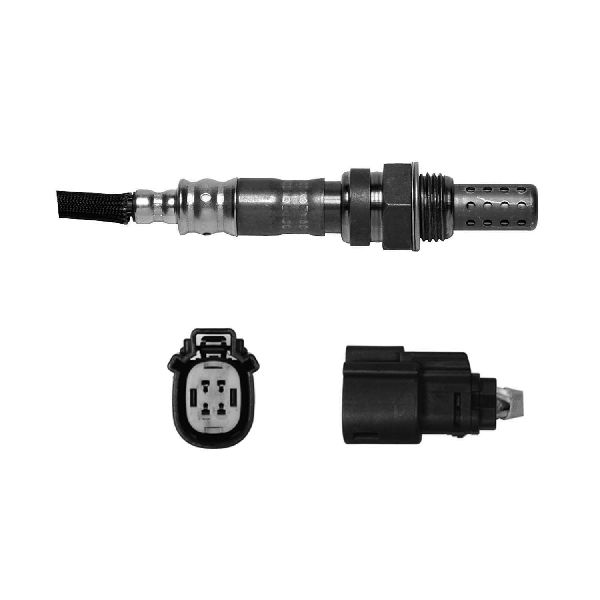
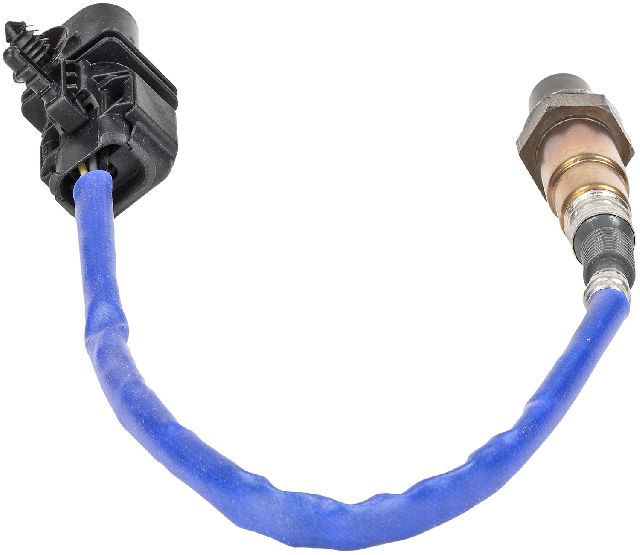
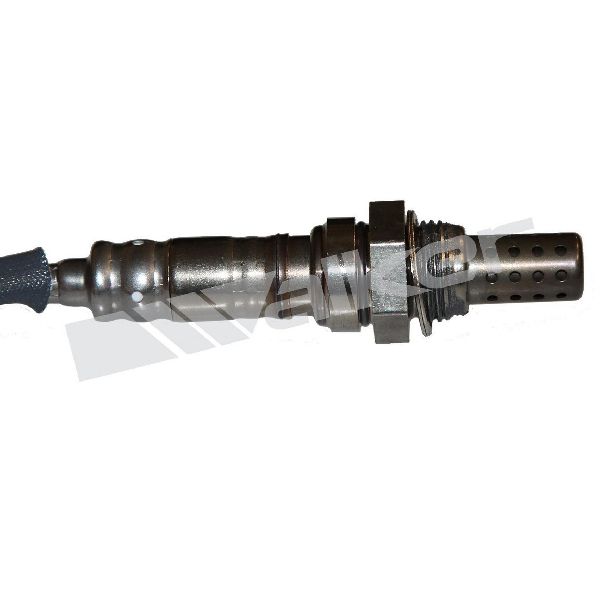
- Downstream Oxygen Sensor (Bank 1, Sensor 2)
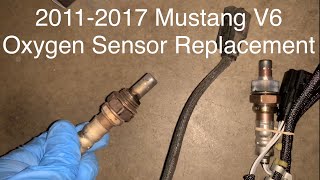
(OEM #BR3Z-9G444-A)— This sensor is the primary reporter for this code and is a common failure item. Bank 1 is the passenger side, and the downstream sensor is located after the catalytic converter. 🎬 Watch: Step-by-step guide to replacing your downstream O2 sensors.
Trusted brands: Motorcraft (DY-1162), Bosch, Denso, NTK
OEM price range: $90-$120
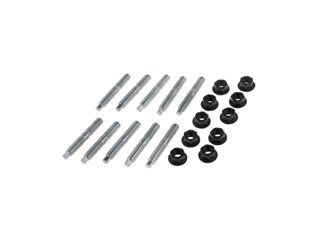
Aftermarket price range: $40-$80 - Exhaust Manifold Gasket — If an exhaust leak is found at the manifold-to-head or manifold-to-pipe connection, this gasket will need to be replaced. Leaks here are a common cause of P2096.
Trusted brands: Ford, Fel-Pro (e.g., MS 97337, check specific application), Mahle
OEM price range: $20-$40
Aftermarket price range: $10-$25
Related Codes That Often Appear With This One
- P0171 — Indicates a lean condition on Bank 1 detected by the *upstream* sensor. If seen with P2096, it strongly points to a significant vacuum leak or a fuel delivery problem affecting the entire bank, rather than just an O2 sensor or post-cat exhaust leak.
- P0420 — Indicates 'Catalyst System Efficiency Below Threshold (Bank 1)'. If seen with P2096, it suggests a significant exhaust leak between the two sensors or a failing catalytic converter itself.
Platform-Specific Known Issues
- Exhaust Leak at Manifold Stud: A user on TrackMustangsOnline.com reported chasing a P2096 code that only appeared under hard driving. The cause was found to be a sheared exhaust manifold stud on Bank 1, which allowed the gasket to leak under high exhaust pressure.
- Resolution by O2 Sensor Replacement: → Shop Oxygen Sensor On a Ford F-150 forum (with a similar engine architecture), a user with P2096 ultimately fixed the issue by replacing the downstream O2 sensor after finding no exhaust leaks. This resulted in a remarkable improvement in fuel economy. A similar success story was documented in a YouTube video on a 2014 Mustang GT.
- Confusion with Aftermarket Tunes: Several forum threads show owners initially blaming an aftermarket engine tune (like from Bama Performance) for the P2096 code. However, the root cause is almost always a mechanical issue like an exhaust leak or a bad sensor, which the tune may make more apparent but does not directly cause.
Mechanic-Grade Diagnostic Values
- Mode $06, Test ID $3C (Post-Catalyst Fuel Trim Bank 1) — expected: A value below the maximum limit, often represented as a ratio less than 1.99.. Failure: The value is at or exceeds the maximum limit, indicating the PCM has maxed out its lean adjustment capability.
- O2 Sensor Heater Circuit Resistance — expected: Approximately 4-10 Ohms when measured across the two heater wires at the sensor's connector (typically the two wires of the same color).. Failure: An open circuit (infinite resistance) or a short (near-zero resistance) indicates a failed heater element.
- O2 Sensor Installation Torque — expected: 30-35 ft-lbs.. Failure: Overtightening can damage the sensor threads or body; undertightening can cause an exhaust leak.
Hidden / Shadow Codes Worth Checking
- Mode $06, TID $81, CID $01: This refers to the 'HO2S Monitor Bank 1 - Sensor 2' test results. It provides raw data on the sensor's switching characteristics, which can indicate a lazy or failing sensor before it completely fails. (see via A professional scan tool or an app like FORScan that can access Ford's specific Mode $06 data.)
Scan Tool Commands That Help
- Ford IDS / FORScan: 'Reset All Adaptations' or 'Clear Fuel Trim Tables' — This is critical after replacing an O2 sensor or fixing a significant vacuum/exhaust leak. The PCM 'learns' and stores fuel correction values (long-term fuel trims) based on the old, faulty readings. Failing to clear these adaptations is a very common reason for P2096 to return even after the physical part has been fixed.
- Ford IDS / FORScan: KOER (Key On Engine Running) Self-Test — After performing a repair, running this test forces the PCM to re-evaluate all sensor inputs under active conditions. It can help confirm that the fix was successful and that the sensor is now reading within its expected parameters.
Wiring & Ground Locations
- Main Engine-to-Chassis Ground — A ground strap connected to a stud on the underside of the passenger side motor mount.. A poor engine ground can create voltage offsets and noise in sensor circuits, including the O2 sensors, leading to incorrect readings by the PCM. The PCM relies on a stable ground reference to interpret sensor voltages accurately.
- G201 — Located behind the passenger side kick panel, near the Smart Junction Box (SJB) and PCM.. This is a primary ground point for the Powertrain Control Module (PCM). Corrosion or a loose connection at this specific ground can directly impact the PCM's operation and its interpretation of all engine sensor data, including the O2 sensor signal.
- HO2S Harness Routing — The main O2 sensor harness runs over the top of the transmission. The passenger side (Bank 1) sensor lead is notably shorter than the driver's side.. After transmission work, it is possible for the connectors to be swapped or mis-routed. The differing harness lengths are a key physical indicator; if the passenger side harness seems stretched or the driver's side has excessive slack, they may be crossed.
Real Owner Repair Stories
- Aggregated from multiple forum reports and mechanic advice. (2011-2014 Ford Mustang 3.7L) — Persistent P2096 Check Engine Light, sometimes with slightly reduced fuel economy.
❌ Tried (didn't work) Replacing the downstream O2 sensor (Bank 1, Sensor 2)., Clearing the code with a basic OBD-II scanner.
✅ What actually fixed it Using a capable scan tool (like FORScan or the dealer's IDS) to perform the 'Reset All Adaptations' or 'Clear Fuel Trim Tables' service function. The old, learned fuel trim values from the previous fault were causing the code to reappear immediately with the new, correctly-functioning sensor. - NHTSA ODI #11618319: An owner reported that their engine light came on with code P2096, and after a while, the vehicle started misfiring and showed an additional code of P0302.
"I Checked Everything" — The Actual Cause
- In cases where a thorough smoke test of the exhaust system reveals no leaks, the two most likely culprits for a P2096 are either the downstream O2 sensor itself providing a false lean signal, or the failure to reset the PCM's learned fuel trim adaptations after a previous repair. Old adaptive values can make the code persist even when the hardware is correct.
OEM Part Supersession History
BR3Z-9G444-A→Motorcraft DY-1162— DY-1162 is the service part number for the original equipment sensor.
Heads up: No incompatibility is noted. These parts are direct replacements for each other for the 2011-2014 3.7L V6.
Diagnostic Flowchart
Other Known Issues on This Vehicle
Issues unrelated to this code that are worth knowing about as an owner of this generation:
- Premature Water Pump Failure 🔴 High — Commonly occurs between 60k-100k miles. Many owners report this failure. (Ref: TSB 16-0074 (supersedes 14-0212). This TSB addresses coolant pump leakage due to air entering the system and involves replacing the pump and a coolant hose with a revised part kit containing a check valve.)
- MT-82 Manual Transmission Problems 🟠 Medium — Affects 2011-2019 manual transmission models. Complaints include high-RPM lockout (especially 2nd to 3rd gear), grinding, and premature wear. A class-action lawsuit was filed regarding these issues. (Ref: Multiple TSBs issued to dealers, but no federal recall. The issue became the subject of a class-action lawsuit.)
- Driveshaft Vibration or Clunking 🟡 Low — Some owners report vibrations or a 'clunk' noise from the driveshaft, particularly on initial take-off or when shifting. Often related to the two-piece factory driveshaft design. (Ref: TSB SSM 47614 notes a vibration felt in the shifter on deceleration for vehicles with the 3.7L and MT82 transmission.)
- PCM Failure due to Ignition Coil Short 🟡 Low — A failed ignition coil can short and damage the Powertrain Control Module (PCM), leading to misfire codes (P0351-P0356). Repair requires replacing the PCM and all six ignition coils simultaneously.
- Variable Camshaft Timing (Ti-VCT) Solenoid Issues 🟠 Medium — The Ti-VCT system is sensitive to oil quality and level. Dirty oil or low oil pressure can cause solenoids to stick, leading to camshaft timing codes (like P0011, P0021).
Used vs. New Parts: Buying Guide for This Vehicle
When a used part is the smart pick: For this repair, a used exhaust manifold from a reputable salvage yard is a reasonable choice if the original is cracked. It is a simple cast iron part with no internal mechanics.
Donor-vehicle mileage cap: roughly under 80000 miles for the part to have meaningful remaining life.
What to inspect on the donor part:
- For an exhaust manifold, inspect meticulously for hairline cracks, especially around the collector and flange welds.
- Ensure all mounting studs are intact and not sheared off.
- Verify the flange surfaces are not excessively warped or pitted where the gasket seals.
OEM-only on this vehicle (don't cheap out):
- Oxygen Sensor: While not strictly 'OEM-only', it is highly recommended to use the OEM Motorcraft sensor or a top-tier OE supplier like NTK or Denso. Cheap, no-name aftermarket sensors are a common source of repeat failures and incorrect readings.
- Catalytic Converter: If the converter needs replacement, an OEM unit is the safest bet for passing emissions tests. Some high-quality aftermarket brands are acceptable, but cheap converters often lack sufficient catalyst material and will fail to perform correctly, causing codes to return.
Aftermarket brands forum-validated for this vehicle:
- NTK (for O2 Sensors)
- Denso (for O2 Sensors)
- Bosch (for O2 Sensors)
- Fel-Pro (for exhaust gaskets)
Brands owners have reported issues with on this vehicle:
- Unbranded or 'white-box' oxygen sensors from online marketplaces.
Real Owner Stories
Aggregated from forums and TSBs cited above. Mileages and costs reflect what owners reported in those sources.
2011-2014 Ford Mustang 3.7L V6
Symptoms: The P2096 code appeared specifically under hard driving conditions.
What fixed it: Found a sheared exhaust manifold stud on Bank 1, which caused the gasket to leak under high pressure.
Source hint: TrackMustangsOnline.com report cited in vehicle_specific_issues
2014 Ford Mustang 3.7L V6
Symptoms: Check Engine Light with code P2096.
What fixed it: Replacement of the passenger side downstream O2 sensor.
Source hint: mustangforums.com
2011-2014 Ford F-150 3.7L V6
Symptoms: Persistent P2096 code with no visible exhaust leaks.
What fixed it: Replacing the Bank 1 Sensor 2 (downstream O2 sensor), which also resulted in a remarkable improvement in fuel economy.
Source hint: f150forum.com
Related OBD-II Codes
Frequently Asked Questions
I have a 2014 Mustang 3.7L and hear a ticking noise when the engine is cold that goes away later. Could this be related to P2096?
Could my Bama Performance aftermarket tune be the cause of the P2096 code on my Mustang?
Which oxygen sensor should I replace for a P2096 code on my 3.7L Cyclone engine?
Is there a specific mechanical failure on the Mustang's exhaust manifold known to cause this?
What should a healthy downstream O2 sensor voltage look like on a 2011-2014 Mustang?
Are there any TSBs for the 3.7L Mustang that I should address while fixing emissions codes?
Helpful Videos
We Have This Part in Stock


The information in this article is provided for general reference and educational purposes only. Vehicle specifications, procedures, and part compatibility can vary by production date, trim level, and region. Always consult your vehicle's factory service manual and verify part numbers before purchasing or performing repairs. Safety-critical components such as airbags, seat belts, and braking systems should be installed by a qualified professional.
- Ford Mustang:
- 🧭 Diagnostic Flowchart
- 🎬 Helpful Videos
- 🛍️ Shop This Part
- What's Unique About the 2011-2014 Ford Mustang
- Symptoms You May Notice
- Most Likely Causes
- Rare But Worth Checking
- Diagnosis Steps
- Parts You'll Likely Need
- Related Codes That Often Appear With This One
- Platform-Specific Known Issues
- Mechanic-Grade Diagnostic Values
- Hidden / Shadow Codes Worth Checking
- Scan Tool Commands That Help
- Wiring & Ground Locations
- Real Owner Repair Stories
- "I Checked Everything" — The Actual Cause
- OEM Part Supersession History
- Other Known Issues on This Vehicle
- Used vs. New Parts: Buying Guide for This Vehicle
- Real Owner Stories
- 2011-2014 Ford Mustang 3.7L V6
- 2014 Ford Mustang 3.7L V6
- 2011-2014 Ford F-150 3.7L V6
- Related OBD-II Codes
- Frequently Asked Questions
- 🎟️ Get 5% Off