

P2096 on 2009-2015 Honda Pilot: Post-Catalyst Lean Condition Causes and Fixes
On a 2009-2015 Honda Pilot, code P2096 is most often caused by an exhaust leak before the rear-most oxygen sensor or a failing sensor itself. A thorough inspection for exhaust leaks using a smoke machine is the first step before replacing any parts. Less common causes include VCM-related sensor fouling or fuel delivery problems.
- P2096 on a 2009-2015 Pilot means the rear oxygen sensor (Bank 1, by firewall) is detecting a lean condition.
- Always check for exhaust leaks between the engine and the rear O2 sensor before buying any parts. This is the most common cause. A smoke test is the best method.
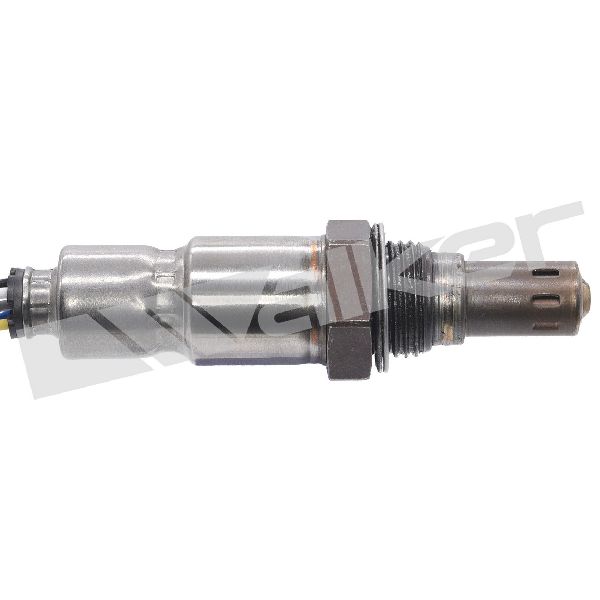
- If no leaks are found, the Bank 1, Sensor 2 O2 sensor (Denso P/N 234-4462) is the next most likely culprit.
- Be aware of the platform's VCM-related oil consumption issue, as it can foul sensors and complicate diagnosis.
What's Unique About the 2009-2015 Honda Pilot
For the second-generation Honda Pilot, the P2096 code is a straightforward emissions-related fault without known software glitches or specific recalls complicating the diagnosis. The J35Z4 engine's layout places the Bank 1 catalytic converter and sensors against the firewall, making access slightly more challenging than for Bank 2, which is at the front. The issue is almost always a physical problem like an exhaust leak or a degraded sensor. However, issues with the Variable Cylinder Management (VCM) system causing oil consumption can lead to fouled spark plugs and O2 sensors, which can be a contributing factor. Additionally, a manufacturer service bulletin, TSB Bulletin #A25-006, notes that a burning oil smell from under the hood or a P2096 code can be caused by porosity in the cylinder head cover bolt hole, which allows oil to weep onto the Bank 1 catalytic converter.
Symptoms You May Notice
- Check Engine Light is on
- Reduced fuel economy
- Possible rough idle or hesitation during acceleration
- Vehicle may fail an emissions test
- Audible hissing or ticking from an exhaust leak, especially when the engine is cold
- A burning oil smell from under the hood (as noted in TSB Bulletin #A25-006)
- Immediately replacing the oxygen sensor without first checking for exhaust leaks. An exhaust leak will cause a new sensor to read lean as well, leading to the code returning and wasted money on a part that may not have been needed.
Most Likely Causes
- Exhaust Leak 🔴 High Probability Exhaust components, particularly gaskets and flex pipes, are exposed to constant heat cycles and road salt in many climates, leading to corrosion and cracks. This allows unmetered air to enter the exhaust stream before the O2 sensor, causing a false lean reading.
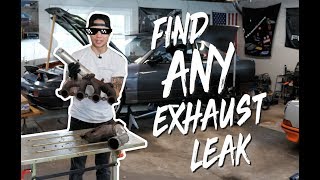
How to confirm: With the engine running, carefully listen and feel for air escaping from the exhaust manifold, gaskets, or pipes between the engine and the rear (Bank 1) downstream O2 sensor. A smoke machine test is the most effective way to pinpoint small leaks 🎬 Watch: This 5-minute trick helps you find any exhaust leak. that may not be audible or visible.
Typical fix: Repair the leak. This may involve replacing a leaking gasket (e.g., manifold or converter gasket), welding a cracked pipe, or using exhaust putty for very small pinholes as a temporary fix.
Est. part cost: $20-$400 - Faulty Rear Oxygen Sensor (Bank 1, Sensor 2) 🟡 Medium Probability → Shop Oxygen Sensor Oxygen sensors are wear items with a finite lifespan, often degrading after 80,000-100,000 miles. Contamination from oil burning (a known VCM issue) or normal heat cycles can cause them to become slow, biased, or fail entirely, sending inaccurate signals.
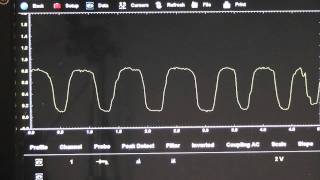
How to confirm: Use an OBD-II scanner to monitor the live voltage data 🎬 See how to test a Honda oxygen sensor using a voltmeter. from the Bank 1 Sensor 2. A healthy downstream sensor should show a relatively steady voltage (typically above 0.5V). If the voltage is stuck low (e.g., below 0.2V) or fluctuates rapidly like the upstream sensor, it is likely faulty.
Typical fix: Replace the Bank 1, Sensor 2 oxygen sensor. It is located on the rear catalytic converter, accessible from underneath the vehicle, though access can be tight.
Est. part cost: $50-$150 - Fuel Delivery Issue ⚪ Low Probability
How to confirm: Check for other codes related to the fuel system. Test fuel pressure using a gauge connected to the fuel rail to ensure it's within Honda's specification. Clogged injectors can be diagnosed by observing fuel trim data per bank or performing an injector balance test.
Typical fix: Replace the failing component, which could be a weak fuel pump, clogged fuel filter, or dirty/clogged fuel injectors.
Est. part cost: $100-$500 - Intake Air (Vacuum) Leak ⚪ Low Probability
How to confirm: Listen for a hissing sound around the intake manifold, vacuum hoses, and throttle body with the engine running. A smoke test is the most reliable method. Spraying carb cleaner near suspected leaks may cause a change in engine idle, helping to pinpoint the source.
Typical fix: Replace the leaking vacuum hose or intake gasket.
Est. part cost: $5-$100
Rare But Worth Checking
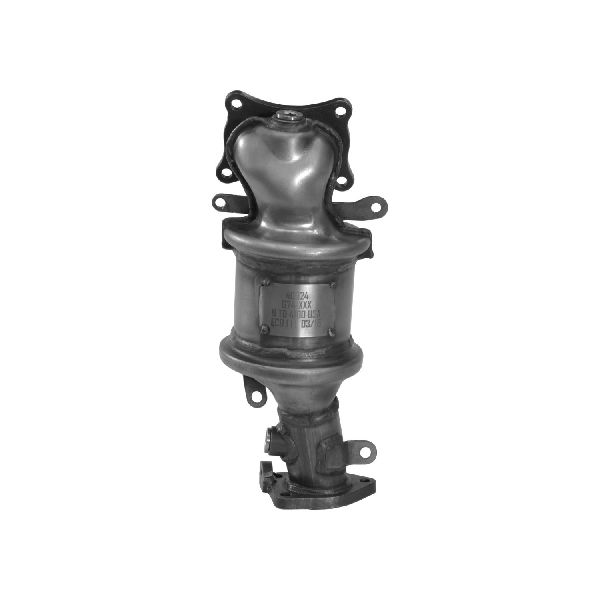
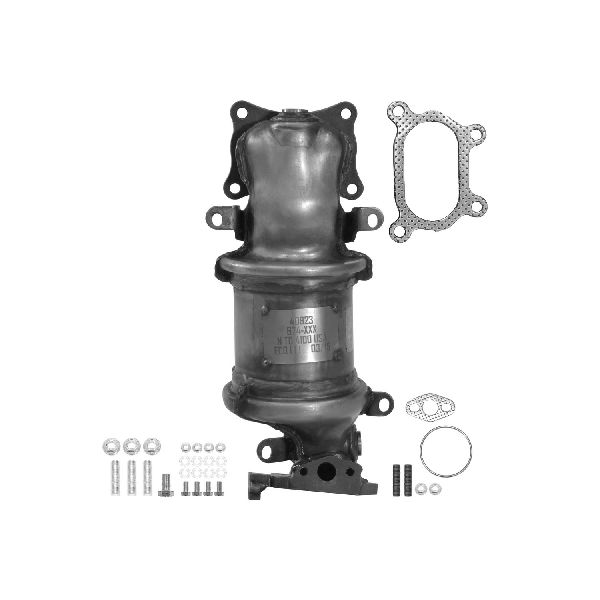
- Failing Catalytic Converter: → Shop Catalytic Converter While a failing converter more commonly sets a P0420 (Catalyst Efficiency) code, a partially clogged or inefficient converter can sometimes contribute to erratic O2 sensor readings and trigger P2096, especially if seen together with P0420. This should be considered after all other causes are ruled out.
Diagnosis Steps
- Scan for all stored trouble codes. Note any other codes like P0171, P0420, or P3400, as they provide critical diagnostic clues.
- Perform a thorough visual and audible inspection of the exhaust system from the engine to the tailpipe, paying close attention to the Bank 1 (rear) manifold, J-pipe, and catalytic converter gaskets. Check for cracks, rust holes, and black soot trails indicating a leak.
- If no obvious leaks are found, perform an exhaust system smoke test. This is the most reliable way to find small cracks or gasket leaks that are not easily visible.
- Using an OBD-II scanner with live data, monitor the voltage of the Bank 1 Sensor 1 (upstream) and Bank 1 Sensor 2 (downstream) O2 sensors. The upstream sensor should fluctuate rapidly between ~0.1V and ~0.9V. The downstream sensor should hold a relatively steady, higher voltage (e.g., >0.6V). If the downstream sensor is stuck low (<0.2V) or mirrors the upstream sensor's fluctuations, suspect a bad sensor or a large exhaust leak.
- If no exhaust leaks are found, consider testing the sensor itself or swapping it with the Bank 2 sensor (if identical) to see if the code follows the sensor.
- If sensors and exhaust are confirmed good, investigate the fuel system. Check fuel pressure and inspect fuel injectors for clogging.
- As a final step, if all else fails, inspect the catalytic converter for damage or clogging. An infrared thermometer can be used to check for a significant temperature increase across the converter, which indicates it is working.
Parts You'll Likely Need
- Rear Downstream Oxygen Sensor (Bank 1, Sensor 2)
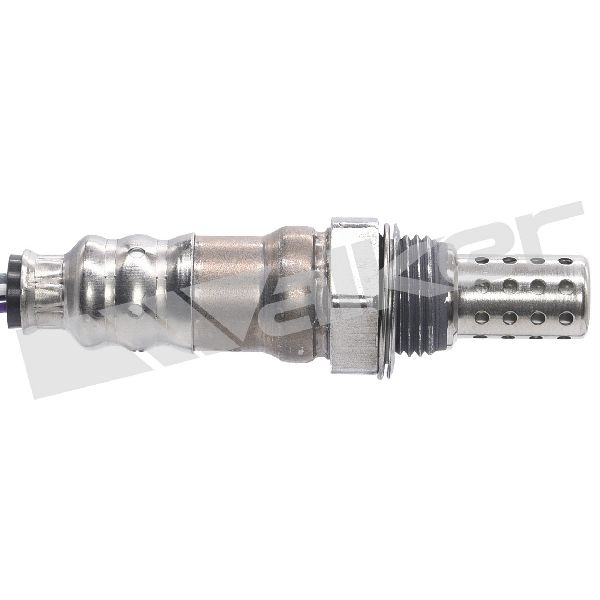
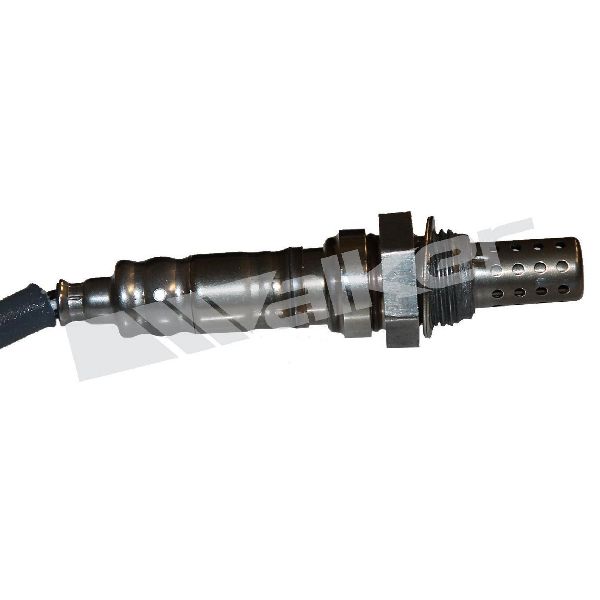
(OEM #36542-RN0-A01 (Honda), 234-4462 (Denso))— This sensor is responsible for triggering the code. It is a common wear item and its failure is a frequent cause for P2096 when no exhaust leaks are present.
Trusted brands: Denso (OEM supplier), NTK, Bosch
OEM price range: $120-$180
Aftermarket price range: $50-$100 - Exhaust Manifold Gasket / Catalytic Converter Gasket — Gaskets between exhaust components are a common failure point for leaks that cause this code. The gasket between the J-pipe and the rear catalytic converter is a frequent culprit.
Trusted brands: Fel-Pro, Bosal, Walker Exhaust
OEM price range: $20-$50
Aftermarket price range: $10-$30
Related Codes That Often Appear With This One
- P0171 — Indicates a lean condition detected by the *upstream* sensor on Bank 1. If seen with P2096, it points towards a root cause affecting the whole bank, like a vacuum leak or fuel delivery issue, which should be diagnosed first.
- P0420 — This code means 'Catalyst System Efficiency Below Threshold'. It can appear with P2096 if the root cause is a major exhaust leak between the two sensors or a failing catalytic converter itself.
- P2098 — This is the same 'Post Catalyst Too Lean' code but for Bank 2 (front bank). If both P2096 and P2098 are present, the cause is likely something that affects the entire engine, such as low fuel pressure or a major intake leak.
- P3400 / P3497 — These codes are related to the Variable Cylinder Management (VCM) system. Chronic oil consumption caused by VCM issues can foul spark plugs and O2 sensors, potentially leading to lean codes like P2096 as a secondary fault.
Technical Service Bulletins (TSBs) & Recalls
- Honda TSB 13-082: 'Warranty Extension: Engine Misfire with DTCs P3400/P3497' - Addresses the root cause of VCM-related oil consumption by replacing piston rings on affected 2009-2013 models. While not directly for P2096, fixing this underlying issue can prevent sensor fouling.
- TSB Bulletin #A25-006: Addresses a condition where porosity in the cylinder head cover bolt hole may cause oil to weep onto the Bank 1 (Rear Cylinder Head) catalytic converter, potentially triggering DTC P2096.
Platform-Specific Known Issues
- VCM Oil Consumption Fouling Sensors: The J35Z4's Variable Cylinder Management (VCM) system is known to cause increased oil consumption due to piston ring issues. This burning oil can contaminate and eventually foul the O2 sensors and catalytic converters, leading to erroneous readings and codes like P2096. If the vehicle consumes a lot of oil, this could be a contributing factor.
Mechanic-Grade Diagnostic Values
- Fuel Pressure at Idle — expected: 390-440 kPa (57-64 psi). Failure: Pressure below 57 psi indicates a potential issue with the fuel pump, filter, or pressure regulator.
- Downstream O2 Sensor (Bank 1, Sensor 2) Voltage — expected: Relatively stable voltage between 0.5V and 0.8V on a warm, running engine.. Failure: A voltage signal stuck low (below 0.4V, often near 0.1V) for an extended period indicates a lean condition or a failed sensor. Fluctuating rapidly like the upstream sensor indicates a failing catalytic converter.
- O2 Sensor Heater Circuit Resistance — expected: 10 to 40 Ω when measured across the two heater wires (typically same color).. Failure: A reading outside this range indicates a failed heater element within the sensor, which can affect sensor performance, especially during warm-up.
Wiring & Ground Locations
- G101 — Located on the top front of the engine.. This is a primary engine ground point. A loose or corroded G101 ground can cause erratic behavior and incorrect readings from various engine sensors, including the oxygen sensors, potentially leading to false lean codes.
- Bank 1 Sensor 2 Connector — The connector for the rear bank downstream O2 sensor is typically mounted on a metal bracket near the firewall or on the transmission housing.. The connector itself has a two-stage locking mechanism. To disconnect it, you must first slide the entire connector assembly off its metal mounting bracket before the main release tab can be pressed to separate the two halves. Attempting to force it apart while on the bracket can break the connector.
Real Owner Repair Stories
- Reddit user in r/cmaxhybrid (Ford, but same generic code) (Ford C-Max (demonstrates a non-obvious fix for a generic code)) — Recurring P2096 code.
❌ Tried (didn't work) Clearing the code (it would return).
✅ What actually fixed it Using a quality fuel injector cleaner (specifically Lucas Upper Cylinder Lubricant and Injector Cleaner) resolved the issue and prevented it from returning. Another user reported success with Seafoam. - NHTSA ODI #11510016 — An owner reported that their vehicle displayed the MIL with codes P0420 and P2096 for over a year. Despite having the fuel injectors and O2 sensor replaced, the MIL continued to persist, suggesting other malfunctioning components required replacement.
OEM Part Supersession History
36542-RN0-A01→36542-R70-A01, 36542-RV0-A01— Standard part evolution and consolidation across different Honda models (like the Odyssey).
Heads up: The original part number 36542-RN0-A01 specified in Pass 2 appears to be less common now. Part numbers 36542-R70-A01 and 36542-RV0-A01 are also listed for this vehicle and position. Always verify fitment with a VIN, but these are generally interchangeable for the Bank 1 Sensor 2 position on this platform.
Model Year Variations Within This Range
- 2009-2011 vs 2012-2015: The Honda Pilot had a facelift for the 2012 model year. While the core J35Z4 engine and P2096 diagnosis remain the same, some exhaust components and part numbers for items like catalytic converters may differ between the pre-facelift (2009-2011) and post-facelift (2012-2015) models. Always confirm part compatibility with the vehicle's specific model year.
Diagnostic Flowchart
Other Known Issues on This Vehicle
Issues unrelated to this code that are worth knowing about as an owner of this generation:
- VCM-Related Oil Consumption & Fouled Plugs 🔴 High — Widespread issue. Can start as early as 80,000 miles. Leads to misfires and potential catalytic converter damage if unaddressed. (Ref: Honda TSB 11-033 and a subsequent warranty extension (13-082 for 2009-2013 models) address this issue by updating software and, if necessary, replacing piston rings.)
- Torque Converter Judder/Shudder 🟠 Medium — Common complaint of a vibration or shudder during light acceleration between 20-60 mph. Often misdiagnosed as a bad torque converter. (Ref: Honda TSB 17-040 and related bulletins state the issue is caused by deteriorated transmission fluid. The fix involves a software update and repeated transmission fluid flushes.)
- Failing Timing Belt Tensioner 🔴 High — The hydraulic tensioner for the timing belt can fail, causing a rattling noise. If it fails completely, the timing belt can skip, leading to catastrophic engine damage as the J35 is an interference engine. (Ref: No specific TSB, but it is a widely documented failure mode for the J-series engine.)
- Worn Compliance Bushings 🟠 Medium — The large front lower control arm bushings (compliance bushings) are prone to tearing, causing clunking noises over bumps and imprecise steering. Typically occurs at higher mileage (100k+ miles). (Ref: Honda TSB 15-045 extended the warranty for this issue on 2009-2014 models.)
- VCM-Related Engine Vibrations 🟡 Low — Some owners report noticeable vibrations or a feeling of the engine surging as the VCM system engages and disengages cylinders to save fuel. Many owners install a 'VCM Muzzler' device to disable the system.
Used vs. New Parts: Buying Guide for This Vehicle
When a used part is the smart pick: Used parts can be a cost-effective option for major exhaust components like pipes or the exhaust manifold, provided they are sourced from a dry climate to minimize rust and are inspected for cracks.
Donor-vehicle mileage cap: roughly under 80000 miles for the part to have meaningful remaining life.
What to inspect on the donor part:
- For exhaust pipes/manifolds: Check for heavy rust, especially at welds and flanges. Look for any signs of cracking or previous repairs.
- Ensure all mounting tabs and flanges are intact and not bent.
- Avoid parts with visible holes or significant pitting from corrosion.
OEM-only on this vehicle (don't cheap out):
- Catalytic Converter: Aftermarket catalytic converters for Honda vehicles are known to sometimes fail to meet strict emissions standards, causing a P0420 code to appear shortly after installation. For guaranteed emissions compliance, an OEM converter is strongly recommended.
- PCV Valve: Given the low cost of the OEM part (17130-RCA-A02) and its importance in crankcase ventilation, using a genuine Honda valve is the safest choice to ensure proper function.
Aftermarket brands forum-validated for this vehicle:
- Oxygen Sensors: Denso and NTK are the OEM suppliers to Honda. Using direct-fit sensors from these brands is equivalent to using a genuine Honda part and is a reliable, cost-effective repair.
- Exhaust Components: Brands like Walker, Bosal, and MagnaFlow offer quality direct-fit replacement exhaust pipes and gaskets.
Brands owners have reported issues with on this vehicle:
- Universal Oxygen Sensors: Avoid 'universal' O2 sensors that require cutting and splicing wires. These are prone to failure and can lead to incorrect readings.
- Ultra-cheap, no-name catalytic converters: These often lack the necessary precious metal loading to function correctly and will likely fail an emissions test.
Real Owner Stories
Aggregated from forums and TSBs cited above. Mileages and costs reflect what owners reported in those sources.
2009-2015 Honda Pilot J35Z4
Symptoms: The Check Engine Light was on with code P2096. The owner replaced the O2 sensor first, but the code returned shortly after.
What fixed it: Finding and fixing a small exhaust leak at a gasket/flex pipe.
Source hint: Piloteers.org: Multiple threads discuss P2096. A common repair story involves owners first replacing the O2 sensor, only to have the code return, then finding and fixing a small exhaust leak at a gasket or flex pipe to finally resolve the issue.
2014 Acura MDX J35Y5 — 162000 miles
Symptoms: P2096 reported along with P0420.
What fixed it: The high-mileage scenario pointed toward faulty sensors or potential catalytic converter problems.
Source hint: Reddit r/Acura: A user with a 2014 MDX (162k miles) reported P2096 along with P0420
2014+ Acura MDX J35Y5
Symptoms: Lean condition and associated poor fuel economy.
What fixed it: Checking for injector problems and exhaust leaks as primary causes.
Source hint: Acurazine.com (for platform-mate MDX): A thread titled 'Help with P2096' discusses the code on a 2014+ MDX
Related OBD-II Codes
Frequently Asked Questions
Does Honda TSB 13-082 for engine misfires apply to my P2096 code on a 2012 Pilot?
Can the Variable Cylinder Management (VCM) system on my J35Z4 engine cause a P2096 code?
I have a P2096 on my 2010 Pilot; should I replace the Bank 1 Sensor 2 immediately?
Where is the Bank 1 Sensor 2 located on the 2009-2015 Honda Pilot?
How can I tell if my P2096 is caused by an exhaust leak rather than a bad sensor?
Helpful Videos
Used OEM Parts in Stock
New Aftermarket Parts Available

The information in this article is provided for general reference and educational purposes only. Vehicle specifications, procedures, and part compatibility can vary by production date, trim level, and region. Always consult your vehicle's factory service manual and verify part numbers before purchasing or performing repairs. Safety-critical components such as airbags, seat belts, and braking systems should be installed by a qualified professional.
- Honda Pilot:
- 🧭 Diagnostic Flowchart
- 🎬 Helpful Videos
- 🛍️ Shop This Part
- What's Unique About the 2009-2015 Honda Pilot
- Symptoms You May Notice
- Most Likely Causes
- Rare But Worth Checking
- Diagnosis Steps
- Parts You'll Likely Need
- Related Codes That Often Appear With This One
- Technical Service Bulletins (TSBs) & Recalls
- Platform-Specific Known Issues
- Mechanic-Grade Diagnostic Values
- Wiring & Ground Locations
- Real Owner Repair Stories
- OEM Part Supersession History
- Model Year Variations Within This Range
- Other Known Issues on This Vehicle
- Used vs. New Parts: Buying Guide for This Vehicle
- Real Owner Stories
- 2009-2015 Honda Pilot J35Z4
- 2014 Acura MDX J35Y5 — 162000 miles
- 2014+ Acura MDX J35Y5
- Related OBD-II Codes
- Frequently Asked Questions
- 🎟️ Get 5% Off