

P2096 on 2011-2015 Kia Optima 2.4L: Causes and Fixes for Post Catalyst Lean Condition
On a 2011-2015 Kia Optima 2.4L, code P2096 is most often caused by an exhaust leak before the downstream O2 sensor or a failing downstream O2 sensor itself. A thorough inspection for exhaust leaks is the first step before replacing any parts. However, be aware that this code can also be a secondary symptom of the engine's known oil consumption issues destroying the catalytic converter.
- First, always check for exhaust leaks before replacing any parts. A smoke test is the best method.
- Inspect the air filter housing to ensure it's properly sealed, as improper service can cause this code.
- If no leaks are found, the downstream O2 sensor (Bank 1, Sensor 2) is the most likely culprit.
- This code will cause an automatic failure on an emissions test, so it must be resolved.
- While you can continue driving, doing so for an extended period may harm your catalytic converter.
What's Unique About the 2011-2015 Kia Optima
While P2096 is a generic code, on the Kia Optima with the 2.4L Theta II GDI engine, the primary culprits are very specific. The most common cause is not a complex engine issue, but rather a simple exhaust leak, often from a cracked flex pipe or degraded gasket. If no leak is present, the downstream O2 sensor itself is the next most likely failure point. It's crucial to rule out leaks before spending money on sensors. Critically, this engine family is known for catastrophic internal failures and oil consumption, which can destroy the catalytic converter and O2 sensors, making P2096 a potential secondary symptom of a much larger engine problem.
Symptoms You May Notice
- Check Engine Light is on
- Reduced fuel economy
- Rough or unstable idle
- Hesitation or poor acceleration
- Failure to pass an emissions test
- Engine pinging or knocking under load
- Replacing the oxygen sensor without first checking for exhaust leaks. The sensor is often just doing its job of reporting the lean condition caused by the leak.
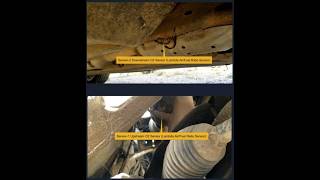
- Replacing the upstream (Bank 1, Sensor 1) O2 sensor when the code points to the post-catalyst system, which is monitored by the downstream (Bank 1, Sensor 2) sensor. 🎬 Watch: Locate the upstream and downstream sensors on your Optima.
Most Likely Causes
- Exhaust Leak 🔴 High Probability Exhaust components like flex pipes and gaskets are subject to high heat, vibration, and corrosion, making them common failure points. A leak between the engine and the downstream O2 sensor allows unmetered oxygen into the exhaust, which the sensor reads as a lean condition.
How to confirm: Visually inspect the exhaust system from the engine manifold to the downstream O2 sensor for cracks, rust, or black soot marks. Listen for ticking or hissing sounds, especially on a cold start. The most effective method is to have a smoke test performed on the exhaust system to pinpoint the exact leak location.
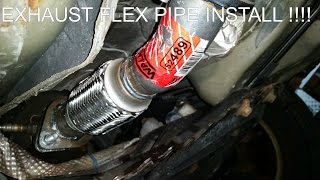
Typical fix: Replace the leaking gasket or the section of pipe that has failed, such as the front flex pipe. 🎬 See how to perform a simple DIY flex pipe repair.
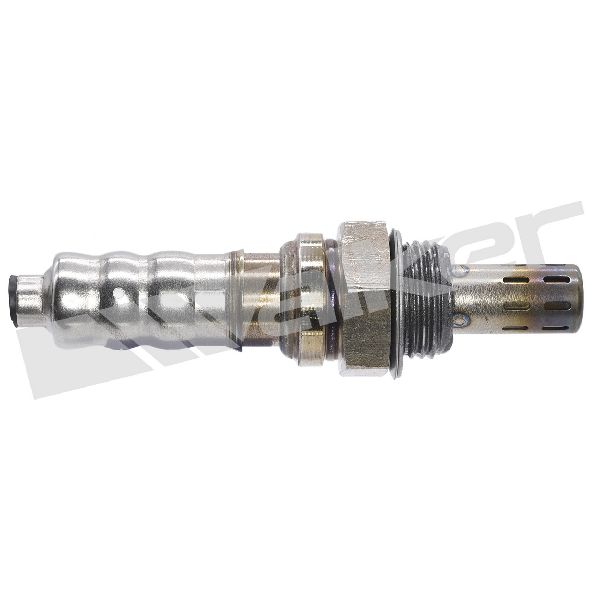
Est. part cost: $20-$150 - Faulty Downstream Oxygen (O2) Sensor 🔴 High Probability → Shop Oxygen Sensor Oxygen sensors are wear items with a finite lifespan, typically around 100,000 miles. Contamination from oil consumption (a known issue on this engine) and extreme heat cause them to degrade and provide inaccurate readings.
How to confirm: After confirming no exhaust leaks, use a scan tool to monitor the voltage of the downstream O2 sensor (Bank 1, Sensor 2). A healthy sensor should show a relatively stable voltage (typically 0.6V-0.8V) on a warm engine at idle. If the voltage is stuck low (under 0.3V) or is not responding, the sensor is likely faulty.
Typical fix: Replace the downstream (post-catalyst) oxygen sensor.
Est. part cost: $60-$180 - Intake Air Leak (Vacuum Leak) 🟡 Medium Probability A common source is an improperly seated air filter housing after service, which allows a large amount of unmetered air into the engine. Degraded vacuum hoses can also be a cause.
How to confirm: Check that the air filter box and all intake ducting are properly sealed and clamped. Listen for whistling sounds at idle. A smoke test of the intake system can pinpoint hidden leaks.
Typical fix: Reseat the air filter housing correctly or replace the leaking vacuum hose.
Est. part cost: $5-$50 - Failing Catalytic Converter ⚪ Low Probability → Shop Catalytic Converter While less common as a primary cause, an inefficient or clogged converter can fail to properly process exhaust gases. On the Theta II engine, this is often a secondary failure caused by excessive oil consumption contaminating the converter over time, which can trigger P2096.
How to confirm: Use a scan tool to compare the live data graphs of the upstream and downstream O2 sensors. If the downstream sensor's pattern mimics the upstream sensor's rapid switching, the converter is not working. An infrared thermometer can also be used to check the inlet and outlet temperatures; the outlet should be significantly hotter. A glowing red converter after a drive is a sure sign of a clog.
Typical fix: Replace the catalytic converter. This should only be done after addressing the root cause (like oil consumption) to prevent repeat failure.
Est. part cost: $500-$1500
Rare But Worth Checking
- Fuel Delivery Issue: Problems like a weak fuel pump or clogged injectors usually trigger other codes first (like P0171), but can contribute to a P2096.
- Powertrain Control Module (PCM) Software Anomaly: → Shop Engine Control Module (ECM) In some cases, particularly on Hyundai and Kia models, a software glitch can cause a false P2096 code. A dealer can check for and apply an ECU software update, which may resolve the issue without replacing parts.
Diagnosis Steps
- Scan the vehicle for any other trouble codes to see if P2096 is appearing alone or with other related codes like P0171 or P0420.
- Perform a thorough visual and auditory inspection of the entire exhaust system from the engine to the rear O2 sensor. Look for cracks, holes, and signs of leakage like black soot, and listen for hissing or ticking sounds.
- Inspect the air intake system, paying close attention to the air filter housing to ensure it is properly sealed and all clamps are tight.
- If no obvious leaks are found, use a scan tool to monitor live data from the downstream O2 sensor (Bank 1, Sensor 2). The voltage should be relatively stable above 0.5V on a warm engine. If it's stuck low, it confirms the lean reading.
- Perform a smoke test on the exhaust system. This is the most reliable way to find small leaks that are not visible to the naked eye.
- If no exhaust or intake leaks are found, and the wiring to the sensor is intact, the downstream O2 sensor is the most likely faulty component.
- Check with a Kia dealer for any available PCM/ECU software updates, as this is a known, though rare, fix.
Parts You'll Likely Need
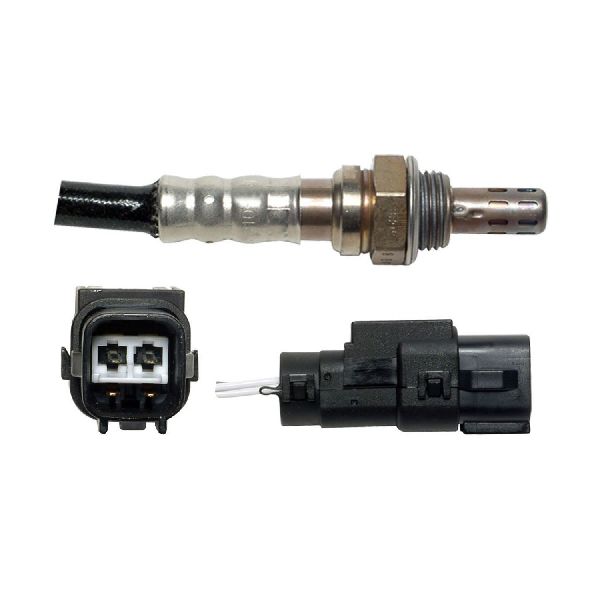
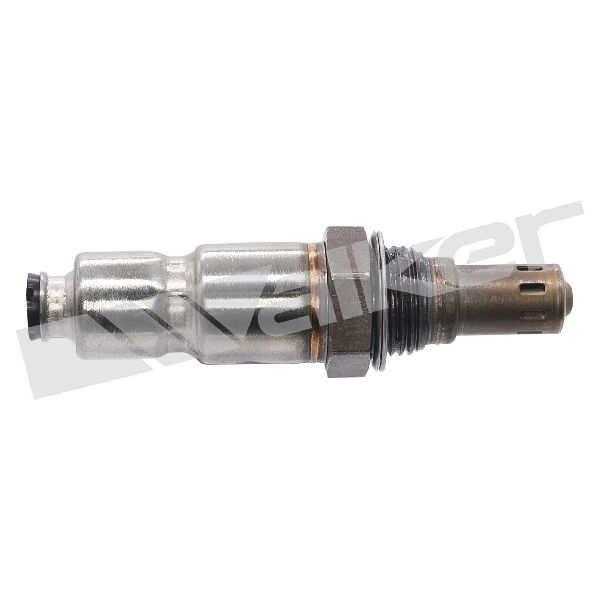
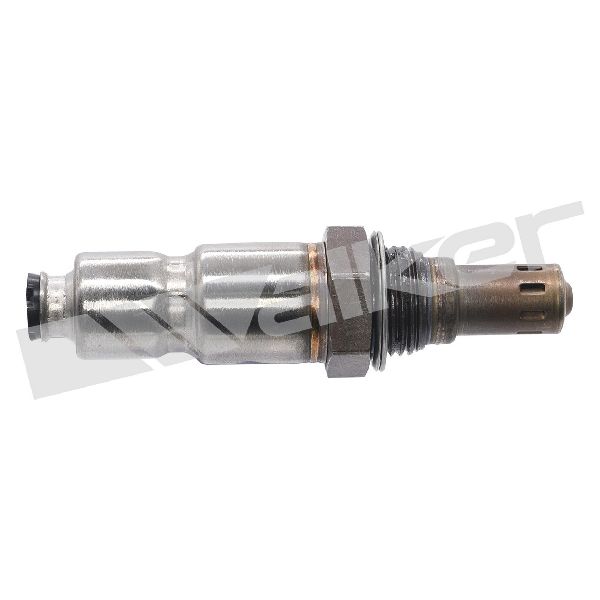
- Downstream Oxygen Sensor (Bank 1, Sensor 2)
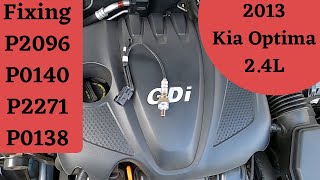
(OEM #39210-2G200 (superseded by 39210-2G260 for some 2015 models))— This sensor is directly responsible for the reading that triggers the P2096 code. It is a common wear-and-tear item and the most likely part to fail if no exhaust leaks are present. 🎬 Watch: Step-by-step guide to replacing the downstream O2 sensor.
Trusted brands: Denso, Bosch, NGK/NTK
OEM price range: $150-$220
Aftermarket price range: $60-$120 - Exhaust Gasket / Flex Pipe — Exhaust leaks are a very common cause of P2096. The fix often involves replacing a failed gasket or a cracked flex pipe section.
Trusted brands: Walker Exhaust, Fel-Pro
OEM price range: $50-$200
Aftermarket price range: $20-$150
Related Codes That Often Appear With This One
- P0171 — P0171 means 'System Too Lean (Bank 1)'. If a major vacuum leak is present, it can be severe enough to be detected by both the upstream sensor (triggering P0171) and the downstream sensor (triggering P2096).
- P0420 — P0420 means 'Catalyst System Efficiency Below Threshold'. A failing catalytic converter can cause erratic readings from the downstream O2 sensor, potentially triggering both P0420 and P2096, especially if the failure is due to contamination.
- P2270 — P2270 means 'O2 Sensor Signal Stuck Lean Bank 1 Sensor 2'. This is a more specific version of the P2096 fault, pointing directly to the sensor signal being stuck in a lean state, often appearing alongside P2096.
Technical Service Bulletins (TSBs) & Recalls
- While no TSB is specifically for P2096, TSBs related to engine replacement (SC147) and the Knock Sensor Detection System (KSDS) update (PI1805) are highly relevant, as the underlying engine issues can cause P2096 as a secondary code.
- As a cross-manufacturer reference, Kia Bulletin #TSBFUE028 for the Sorento notes that an ECM software upgrade may be required for vehicles experiencing a MIL on with DTC P2096.
Platform-Specific Known Issues
- source — A Reddit user with a Kia Optima reported getting a P2096 code with no drivability issues. A trip to the dealership resulted in a diagnosis of a faulty O2 sensor. The repair, including an air filter change, cost between $500-$600. This highlights that even without other symptoms, the sensor itself can be the sole cause.
Mechanic-Grade Diagnostic Values
- Downstream O2 Sensor (B1S2) Voltage at Idle — expected: Relatively stable voltage, typically between 0.6V and 0.8V on a warm engine.. Failure: Sustained low voltage (less than ~0.2V) indicates a lean condition or faulty sensor.
- Upstream O2 Sensor (B1S1) Voltage — expected: Should switch rapidly between approximately 0.1V and 0.9V on a healthy engine.. Failure: A lazy sensor or one that is stuck high or low. If this sensor is not switching correctly, it should be diagnosed before B1S2.
- Long-Term Fuel Trim (LTFT) at Idle — expected: Close to 0%, within a range of -5% to +5%.. Failure: Sustained positive values (e.g., +10% or higher) confirm the ECU is compensating for a perceived lean condition.
- Low-Pressure Fuel Pump Pressure — expected: 65-75 PSI feeding the high-pressure pump.. Failure: Pressure below 65 PSI can cause a lean condition under load, potentially contributing to P2096.
Scan Tool Commands That Help
- Kia GDS (or equivalent professional scanner): Resetting Adaptive Values / Reset Fuel Trim Adaptations — This is a critical, often-missed step after replacing a component like an O2 sensor or fixing a major vacuum/exhaust leak. The ECU has 'learned' incorrect fuel trims to compensate for the old fault. Failing to reset these values can cause the P2096 code to return immediately, even with a good new part.
Wiring & Ground Locations
- Main Fuse Panel Ground Bolt — There is a primary grounding bolt located on the chassis, typically to the right side of the interior fuse panel under the driver's side dash.. A poor ground connection at this point can cause erratic voltage readings for various sensors and modules, including the O2 sensors and ECU. If electrical testing of the O2 sensor circuit reveals inconsistent readings, verifying this ground is a crucial step before replacing components.
- Engine Block / Cylinder Head Grounds — Multiple grounding points exist directly on the engine block, cylinder head, and transmission.. The O2 sensors rely on a solid engine ground to function correctly. Corrosion or a loose ground strap on the engine itself can create a voltage offset, leading to incorrect sensor readings and false lean codes.
Real Owner Repair Stories
- Reddit user in r/Cartalk (2011 Subaru Outback (similar generic OBD-II code behavior)) — Check engine light on, flashing brake light.
❌ Tried (didn't work) Considering a dealership visit for diagnostics ($105 fee).
✅ What actually fixed it The issue was resolved by filling the tank with a higher octane fuel (89 instead of 87) and adding a fresh tank of gas, suggesting the cause was a bad batch of fuel. The code did not return. - ScannerDanner Forum user 'hotrodkia' (2008 Kia Optima 2.4L) — P2096 code, engine pinging under load.
❌ Tried (didn't work) Initial inspection for exhaust leaks did not find anything obvious.
✅ What actually fixed it The user replaced the air filter and the code did not immediately return. While not a definitive long-term fix, it suggests a significant airflow restriction could have been a contributing factor. The final resolution was not posted in the thread. - NHTSA ODI #11513767 — An owner reported an "incredible situation" where P2096 appeared alongside a long list of other codes including P0087, P0506, and multiple misfire codes (P0300-P0306).
- NHTSA ODI #11499800 — An owner described a frightening highway experience where P2096 appeared in November following earlier codes for the fuel system (P0087) and idle control (P0506).
OEM Part Supersession History
39210-2G200→39210-2G260— Part update for improved performance or to address a known issue. Often related to changes in sensor calibration or durability.
Heads up: Always verify the correct part number with a VIN at the dealership. While 39210-2G260 often replaces 39210-2G200, using the wrong sensor for the vehicle's specific ECU calibration can cause persistent codes.
Model Year Variations Within This Range
- 2014-2015: The third-generation Optima received a facelift for the 2014 model year. While the 2.4L GDI engine remained fundamentally the same, there were minor revisions and potential ECU software changes. Notably, a TSB for an ECU update to install the Knock Sensor Detection System (KSDS) specifically lists 2014-2015 models, indicating software differences from earlier years.
- 2011-2013: A recall (18V907000) was issued for a deteriorating low-pressure fuel hose on 2013-2014 models. While not a direct cause of P2096, it highlights a potential fuel system weakness in the mid-cycle of this generation that could contribute to fuel delivery problems.
Diagnostic Flowchart
Other Known Issues on This Vehicle
Issues unrelated to this code that are worth knowing about as an owner of this generation:
- Catastrophic Engine Failure (Rod Bearing Wear) 🔴 High — Widespread issue affecting 2011-2014 models, often occurring under 100,000 miles. Led to a class-action lawsuit and lifetime engine warranty extension for many owners. (Ref: Recall SC147; Kia Service Campaign T9A (KSDS Update))
- Excessive Oil Consumption 🔴 High — Commonly linked to the engine bearing wear and piston ring issues. Can lead to premature failure of the catalytic converter and O2 sensors, which can be a root cause of P2096. (Ref: Related to engine warranty extension (PI1805))
- Carbon Buildup on Intake Valves 🟠 Medium — A common problem for all Gasoline Direct Injection (GDI) engines, including the Theta II. Typically becomes noticeable after 60,000-80,000 miles, causing misfires, rough idle, and reduced performance.
- Steering Pull or Clicking Noise 🟡 Low — A common complaint involving a worn flexible coupling in the steering column, leading to a noticeable clicking sound when turning the wheel. (Ref: Related to TSB CHA053)
Used vs. New Parts: Buying Guide for This Vehicle
When a used part is the smart pick: Used parts are generally not recommended for the primary fixes of this code. O2 sensors are wear items with a limited lifespan, and a used one may fail shortly after installation. Exhaust components like flex pipes from salt-belt regions are likely to have similar corrosion and fatigue as the part being replaced.
Donor-vehicle mileage cap: roughly under 50000 miles for the part to have meaningful remaining life.
What to inspect on the donor part:
- For exhaust parts, inspect for heavy rust, flaking, or previous repairs (welds, patches).
- Ensure any flex pipe mesh is intact and not frayed.
- For an O2 sensor, check that the wiring and connector are free of damage, oil contamination, or corrosion.
OEM-only on this vehicle (don't cheap out):
- Catalytic Converter: Aftermarket converters for this vehicle are notorious for failing to meet efficiency standards, often causing a P0420 code to appear shortly after installation, even if they resolve the P2096 code temporarily.
- Powertrain Control Module (PCM/ECU): Used ECUs may have immobilizer conflicts and incorrect software versions. This part should only be replaced with a new or properly programmed unit from a dealer.
Aftermarket brands forum-validated for this vehicle:
- O2 Sensors: Denso, NGK/NTK, and Bosch are trusted OEM suppliers and their aftermarket sensors are generally reliable.
- Exhaust Components: Walker Products is a well-regarded brand for aftermarket exhaust pipes and gaskets.
Brands owners have reported issues with on this vehicle:
- Unbranded or 'white-box' oxygen sensors from online marketplaces. These often have incorrect calibration, leading to persistent codes or poor performance.
Real Owner Stories
Aggregated from forums and TSBs cited above. Mileages and costs reflect what owners reported in those sources.
2015 Kia Optima 2.4L
Symptoms: Check engine codes P2096 and P2270; dealership used a boroscope to show a cracked catalyst.
What fixed it: The dealership recommended catalytic converter replacement, though they attributed the failure to 85 octane fuel.
Source hint: Reddit r/MechanicAdvice
2012 Kia Optima 2.4L — 190000 miles
Symptoms: Code P2096; owner was monitoring live O2 sensor data and noted confusion between wideband and narrowband readings.
What fixed it: Diagnostic process involved interpreting live O2 sensor data to determine if the lean reading was genuine.
Source hint: Reddit r/MechanicAdvice
2011-2015 Kia Optima 2.4L
Symptoms: P2096 code with no noticeable drivability issues.
What fixed it: Replacement of the faulty downstream O2 sensor and an air filter change.
Cost: $500-$600
Source hint: Reddit user report in vehicle_specific_issues
2008 Kia Optima 2.4L
Symptoms: Persistent P2096 code, steady high voltage on downstream O2 sensor (~0.8V), and engine pinging under load.
What fixed it: Diagnostic discussion focused on live data logs and fuel trim analysis.
Source hint: ScannerDanner.com Forum
Related OBD-II Codes
Frequently Asked Questions
Is the P2096 code on my 2011-2015 Kia Optima related to the engine recall SC147?
Could a simple air filter change cause a P2096 code on this vehicle?
My Kia dealer says my P2096 code is caused by a cracked catalyst from using 85 octane fuel. Is this common?
Is there a software update for the P2096 code on the Kia Optima?
Why is the flex pipe mentioned so often for P2096 on the Optima and Sonata?
Helpful Videos
We Have This Part in Stock



The information in this article is provided for general reference and educational purposes only. Vehicle specifications, procedures, and part compatibility can vary by production date, trim level, and region. Always consult your vehicle's factory service manual and verify part numbers before purchasing or performing repairs. Safety-critical components such as airbags, seat belts, and braking systems should be installed by a qualified professional.
- Kia Optima:
- 🧭 Diagnostic Flowchart
- 🎬 Helpful Videos
- 🛍️ Shop This Part
- What's Unique About the 2011-2015 Kia Optima
- Symptoms You May Notice
- Most Likely Causes
- Rare But Worth Checking
- Diagnosis Steps
- Parts You'll Likely Need
- Related Codes That Often Appear With This One
- Technical Service Bulletins (TSBs) & Recalls
- Platform-Specific Known Issues
- Mechanic-Grade Diagnostic Values
- Scan Tool Commands That Help
- Wiring & Ground Locations
- Real Owner Repair Stories
- OEM Part Supersession History
- Model Year Variations Within This Range
- Other Known Issues on This Vehicle
- Used vs. New Parts: Buying Guide for This Vehicle
- Real Owner Stories
- 2015 Kia Optima 2.4L
- 2012 Kia Optima 2.4L — 190000 miles
- 2011-2015 Kia Optima 2.4L
- 2008 Kia Optima 2.4L
- Related OBD-II Codes
- Frequently Asked Questions
- 🎟️ Get 5% Off