

P2096 on 2013-2014 Lincoln MKZ 2.0L: Causes for Post Catalyst Lean Code & Fixes
On a 2013-2014 Lincoln MKZ with the 2.0L engine, code P2096 is most often caused by a specific issue where engine oil contaminates the downstream oxygen sensor wiring. This is documented in a Technical Service Bulletin (TSB 16-0031). Other causes include a faulty oxygen sensor or exhaust leaks.
- For a 2013-2014 Lincoln MKZ 2.0L, P2096 is very likely caused by a specific oil leak described in TSB 16-0031.
- Before buying any parts, you must inspect the wiring connectors for the VVT solenoids and the downstream O2 sensor for oil contamination.
- If no oil is found, the next most likely causes are a simple exhaust leak or a failed downstream oxygen sensor.
- Do not replace the upstream O2 sensor; this code specifically relates to the post-catalyst (downstream) sensor.
- Ignoring this code can lead to poor fuel mileage and expensive catalytic converter damage in the long run.
What's Unique About the 2013-2014 Lincoln MKZ
For this specific vehicle and engine combination, there is a well-documented, non-standard cause for P2096. Ford issued a Technical Service Bulletin (TSB 16-0031) for 2013-2014 MKZ models with the 2.0L GTDI engine built between September 1, 2012, and August 1, 2013. The bulletin explains that engine oil can leak from the Variable Valve Timing (VVT) solenoids and travel through the engine wiring harness, contaminating the downstream oxygen sensor connector and causing a false lean reading. This makes it critical to check for this specific oil migration issue before replacing parts. This same issue also affects platform mates like the Ford Fusion, Focus ST, and Escape with the same engine and build dates.
Diagnostic Flowchart
Tap your situation to follow the diagnostic path that matches what you're seeing on this vehicle.
Symptoms You May Notice
- Check Engine Light (MIL) is on
- Decreased fuel economy
- Rough idle
- Poor acceleration
- Engine misfires
- Replacing the upstream (pre-catalyst) oxygen sensor instead of the downstream (post-catalyst) one.
- Replacing the oxygen sensor without first checking for the oil contamination issue described in TSB 16-0031.
- Replacing fuel system components like the fuel pump or injectors before ruling out exhaust leaks or sensor faults.
Most Likely Causes
- Engine Oil Contamination of O2 Sensor Wiring 🔴 High Probability → Shop Oxygen Sensor A known issue documented in Ford TSB 16-0031 where oil leaks from VVT solenoids and wicks through the engine wiring harness to the Catalyst Monitor Sensor (CMS), also known as the downstream O2 sensor. This affects vehicles built between 9/1/2012 and 8/1/2013.
How to confirm: Disconnect the electrical connectors at both the VVT oil control solenoids and the downstream O2 sensor. Visually inspect the connectors and harness pins for any signs of engine oil. The TSB suggests using a paper towel to wipe inside the connector to verify.
Typical fix: If oil is present, the official fix requires replacing the VVT oil control solenoids, the downstream O2 sensor (CMS), and the affected engine wiring harness. Simply cleaning the connectors is not a permanent solution as the oil has compromised the wiring insulation.
Est. part cost: $300-$600 - Faulty Downstream Oxygen Sensor (Bank 1, Sensor 2) 🟡 Medium Probability → Shop Oxygen Sensor O2 sensors are consumable parts and fail over time due to heat and contamination. Upstream sensors often fail sooner, but downstream sensors can also degrade and provide false lean readings.
How to confirm: If no oil contamination is found, use a scan tool to monitor the voltage of the downstream O2 sensor. A healthy sensor on a warm engine should show a relatively stable voltage that fluctuates between 0.1 and 0.9 volts. If the voltage is stuck low (below 0.5V) or is completely fixed, it has likely failed.
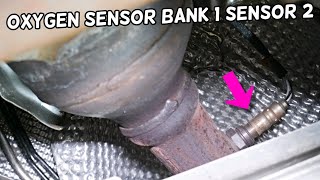
Typical fix: Replace the Bank 1 downstream oxygen sensor. 🎬 See this walkthrough for locating and replacing the downstream sensor.
Est. part cost: $50-$150 - Exhaust System Leaks 🟡 Medium Probability Leaks can develop at gaskets, flex pipes, or from corrosion, allowing outside air into the exhaust stream. This extra oxygen is read by the O2 sensor, creating a false lean condition.
How to confirm: Visually inspect the exhaust system from the engine manifold to the catalytic converter for cracks, holes, or failed gaskets. Listen for hissing or ticking sounds with the engine running. A smoke test is the most definitive way to pinpoint the exact location of a leak.
Typical fix: Repair the leak by replacing the cracked component or failed gasket. For small holes, exhaust putty may be a temporary fix.
Est. part cost: $20-$200 - Engine Vacuum Leaks ⚪ Low Probability
How to confirm: Inspect all vacuum hoses and the intake manifold for cracks or loose connections. A smoke test is the most effective way to find a vacuum leak.
Typical fix: Replace the leaking hose or gasket.
Est. part cost: $10-$100
Rare But Worth Checking
- Clogged or Failing Catalytic Converter: → Shop Catalytic Converter While a failing converter can cause this code, it's less common than sensor or leak issues. A clogged converter may glow red after the engine has been running. It can also be triggered if the converter's efficiency drops, allowing more oxygen to pass through.
- Fuel Delivery Issues: A weak fuel pump, clogged fuel filter, or dirty injectors could cause a true lean condition, but this would typically trigger other codes (like P0171 System Too Lean) before or alongside P2096.
Diagnosis Steps
- Scan for any other DTCs. Address other codes first if they are present, especially P0171.
- Per TSB 16-0031, disconnect the electrical connectors for the VVT solenoids and the downstream oxygen sensor (CMS).
- Carefully inspect the connectors and terminals for any trace of engine oil. If oil is found, the TSB procedure is the required fix.
- If no oil is present, thoroughly inspect the exhaust system for leaks between the engine and the downstream O2 sensor. Pay close attention to the exhaust manifold gasket and flex pipe.
- Use a scan tool to observe the live data from the downstream O2 sensor (Bank 1, Sensor 2). The voltage should be relatively steady and fluctuate between 0.1 and 0.9V on a warm engine. If it's stuck low, the sensor is likely bad.
- If the sensor and exhaust are good, check for vacuum leaks using a smoke machine.
- As a final, less likely step, check fuel pressure to rule out a fuel delivery problem. General spec is often 30-60 psi.
Parts You'll Likely Need
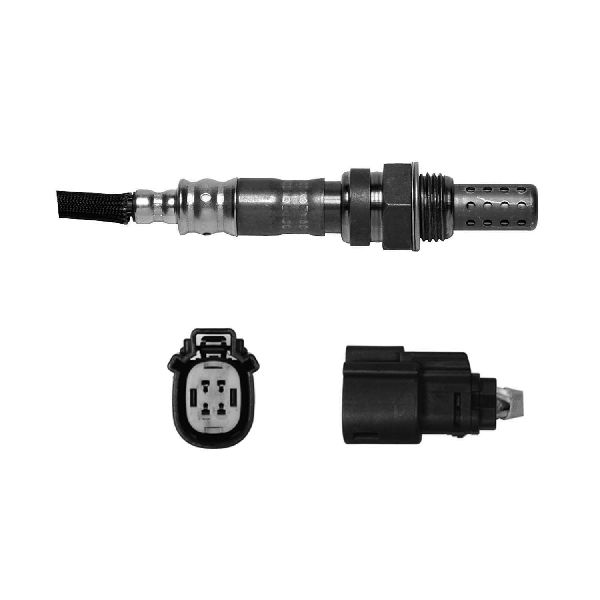
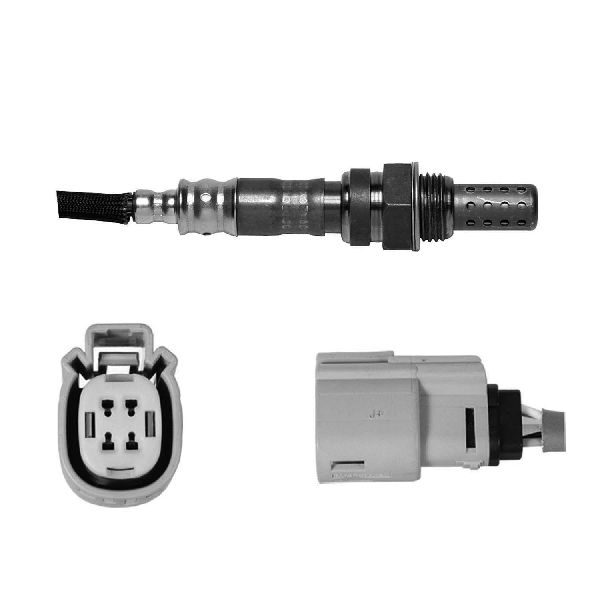
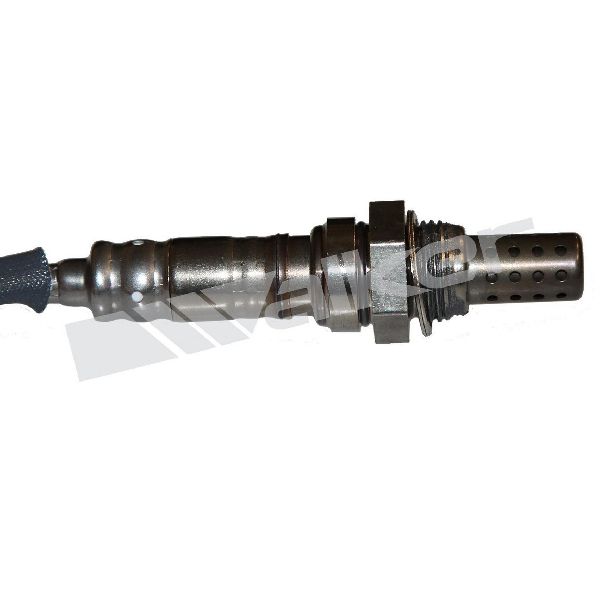
- Downstream Oxygen Sensor (Catalyst Monitor Sensor)
(OEM #CJ5Z-9G444-B)— This sensor is the primary source of the P2096 reading and can fail on its own or become contaminated by oil per TSB 16-0031.
Trusted brands: Motorcraft, Bosch, Denso, NTK
OEM price range: $100-$180
Aftermarket price range: $50-$120 - VVT Oil Control Solenoids
(OEM #CJ5Z-6M280-A)— If the oil contamination issue from TSB 16-0031 is present, these solenoids are the source of the leak and must be replaced to prevent a repeat failure.
Trusted brands: Motorcraft, Dorman
OEM price range: $80-$150
Aftermarket price range: $40-$90 - Engine Wiring Harness
(OEM #DU5Z-12A581-CA)— Required if oil has wicked through the harness per TSB 16-0031. The oil degrades the wire insulation and corrupts the signal, so simply cleaning it is not a permanent solution.
Trusted brands: Motorcraft
OEM price range: $200-$400
Related Codes That Often Appear With This One
- P0420 —
- P0171 —
Technical Service Bulletins (TSBs) & Recalls
- 16-0031: Some 2013-2014 MKZ vehicles with a 2.0L GTDI engine may exhibit an illuminated MIL with DTC P2096 due to engine oil migrating from the VVT oil control solenoids to the catalyst monitor sensor.
Platform-Specific Known Issues
- TSB 16-0031: For vehicles built between 9/1/2012 and 8/1/2013, Ford identified an issue where engine oil can migrate from the VVT oil control solenoids through the engine wire harness to the catalyst monitor sensor (CMS), causing DTC P2096. The official repair involves replacing the VVT solenoids, the CMS, and the wiring harness.
- Owner Experience: Many owners of affected Ford/Lincoln vehicles confirm the TSB is the correct fix. Some have attempted to clean the harness with contact cleaner as a temporary measure, but the code typically returns until the harness is replaced.
Mechanic-Grade Diagnostic Values
- Downstream O2 Sensor (HO2S12) Voltage — expected: Fluctuating constantly between 0.1 and 0.9 volts on a warm, running engine.. Failure: Voltage is stuck at a particular value, especially low (below 0.5V), or does not fluctuate. 🎬 Watch: Testing and replacing the B1S2 oxygen sensor.
- VVT Solenoid Internal Resistance — expected: 5 to 15 Ohms when measured across the two pins.. Failure: A reading of infinity (open circuit) or near zero (short circuit).
- VVT Solenoid Bolt Torque — expected: 89 in-lbs (10 Nm). Failure: N/A - This is an installation specification.
Scan Tool Commands That Help
- Ford IDS / FORScan / Equivalent: Key On Engine Running (KOER) Self-Test — This procedure should be run after replacing an oxygen sensor. Some Ford engine strategies require this test to reset adaptations and recognize the new sensor properly. Failing to do so may cause the P2096 code to return even with a good part.
Wiring & Ground Locations
- G104 — Right side of the engine compartment.. A poor engine ground can cause erratic sensor readings. This is a primary ground point for engine-related components.
- G200 — Left center of the dash, behind the instrument panel.. This is a major interior ground point. While less likely to cause this specific code, it's relevant for overall PCM and module communication diagnostics.
- HO2S 12 Connector — On the exhaust system, downstream of the catalytic converter. The harness routes up into the engine bay. On AWD models, the rear driveshaft may need to be removed for access per TSB 16-0031.. This is the connector for the sensor that triggers the code. It is the primary inspection point for oil contamination from the TSB.
- VVT Solenoid Connectors — Top, front-facing side of the cylinder head.. These are the source of the oil leak described in TSB 16-0031. They must be inspected for oil weeping into the harness.
- Passenger Compartment Fuse Panel — For 2013-2014 models, it is located behind a panel on the right side of the center console in the passenger footwell.. Provides power to various modules, including the PCM. A fault here could cause widespread electrical issues.
Real Owner Repair Stories
- Ford F150 Forum user 'banc123' (2013 Ford F-150 FX4 EcoBoost (Note: Different engine, but same code and manufacturer logic)) — Check Engine Light with code P2096.
❌ Tried (didn't work) Dealer replaced valve cover gaskets and reinstalled vacuum pump., Owner replaced the downstream O2 sensor (#2 sensor) himself.
✅ What actually fixed it The dealer ultimately diagnosed and replaced the upstream O2 sensor (#1 sensor), which resolved the P2096 code.
"I Checked Everything" — The Actual Cause
- The issue described in TSB 16-0031 is a primary example of this pattern. A smoke test for exhaust leaks will come back clean because the source of the false lean reading is not an air leak. It is engine oil that has wicked through the wiring harness from the VVT solenoids to the O2 sensor connector, corrupting the sensor's voltage signal to the PCM.
When the Usual Fixes Don't Work
- While the vast majority of P2096 causes relate to the post-catalyst O2 sensor or exhaust leaks, there are documented cases where the root cause was the upstream (pre-catalyst) O2 sensor. In one instance involving a Ford EcoBoost engine, replacing the downstream sensor and checking for leaks did not resolve the code. The final fix was replacing the upstream sensor, which was providing incorrect data that affected the entire fuel trim strategy, leading to the downstream code. This highlights the importance of analyzing live data from both sensors before replacing parts.
OEM Part Supersession History
DU5Z-12A581-CA→No supersession found.— This harness part number appears to be current and has not been officially superseded in part catalogs.CJ5Z-6M280-A→No supersession found.— This VVT solenoid part number appears to be current for the specified model years.
Model Year Variations Within This Range
- 2013-2014 (specifically with build dates from 9/1/2012 to 8/1/2013): Vehicles within this build date range are subject to TSB 16-0031 regarding oil migration through the engine wiring harness causing P2096. Vehicles built after this date are not expected to have this specific defect.
Helpful Videos


We Have This Part in Stock


The information in this article is provided for general reference and educational purposes only. Vehicle specifications, procedures, and part compatibility can vary by production date, trim level, and region. Always consult your vehicle's factory service manual and verify part numbers before purchasing or performing repairs. Safety-critical components such as airbags, seat belts, and braking systems should be installed by a qualified professional.
- Lincoln MKZ:
- 🧭 Diagnostic Flowchart
- 🎬 Helpful Videos
- 🛍️ Shop This Part
- What's Unique About the 2013-2014 Lincoln MKZ
- Symptoms You May Notice
- Most Likely Causes
- Rare But Worth Checking
- Diagnosis Steps
- Parts You'll Likely Need
- Related Codes That Often Appear With This One
- Technical Service Bulletins (TSBs) & Recalls
- Platform-Specific Known Issues
- Mechanic-Grade Diagnostic Values
- Scan Tool Commands That Help
- Wiring & Ground Locations
- Real Owner Repair Stories
- "I Checked Everything" — The Actual Cause
- When the Usual Fixes Don't Work
- OEM Part Supersession History
- Model Year Variations Within This Range
- 🎟️ Get 5% Off