

P2096 on 2012-2018 Mazda 3 Skyactiv: Causes and Fixes for Lean Fuel Trim
On a 2012-2018 Mazda 3 with the 2.0L Skyactiv engine, code P2096 is most commonly caused by an exhaust leak before the rear oxygen sensor. The exhaust manifold gasket is a frequent culprit. A failing rear O2 sensor is the next likely cause, followed by the potential for a PCM software update. Always check for leaks before replacing any parts.
- P2096 means the oxygen sensor *after* the catalytic converter is detecting a lean condition (too much oxygen).
- The most common cause on a 2012-2018 Mazda 3 is an exhaust leak between the engine and the rear O2 sensor.
- Always check for exhaust leaks before you spend money replacing the oxygen sensor.
- This code will cause you to fail an emissions test but is not immediately harmful to your engine.
- Do not replace the catalytic converter for this code; it is almost never the cause.
What's Unique About the 2012-2018 Mazda 3
While P2096 is a generic code, on the Skyactiv-G engines it is very frequently triggered by small cracks or gasket failures in the exhaust system, which allow outside air to be sucked in, fooling the rear oxygen sensor. The unique 4-2-1 long-tube exhaust manifold design on Skyactiv engines, while efficient, has more gasket surfaces and length before the catalyst, increasing potential leak points. Some other Mazda models, like the CX-5 and Mazda6, have known software issues that can falsely trigger this code, requiring a dealer to update the PCM, as detailed in TSBs like 01-011/19. While less common for this specific Mazda 3 range, it's a known pattern for the manufacturer.
Generation note: This range covers two generations of the Mazda 3: the end of the second generation (BL, 2012-2013) and the entire third generation (BM/BN, 2014-2018). Both generations used the 2.0L Skyactiv-G engine, and the common causes for P2096 are consistent across them, primarily focusing on the exhaust system and sensors. However, the 2012-2013 models have a different exhaust manifold design than the 2014+ models.
Symptoms You May Notice
- Check Engine Light is on
- Reduced fuel economy
- Slightly rough or uneven idle
- Audible ticking or hissing exhaust noise, especially when the engine is cold
- Smelling exhaust fumes in the cabin or engine bay if the leak is large
- Replacing the catalytic converter. A P2096 code is very rarely caused by a bad converter. 🎬 Watch: Save money fixing the catalytic converter and flex pipe A failing converter would almost always trigger a P0420 (Catalyst Efficiency) code instead. One user reported P2096 was caused by a completely hollowed-out converter, but this was an extreme case of tampering where the O2 sensor had also been relocated.
- Replacing the oxygen sensor without first checking for exhaust leaks. Many owners replace the sensor only to have the code return because the root cause was a small, hard-to-see leak at a gasket or weld seam.
Most Likely Causes
- Exhaust Leak (before rear O2 sensor) 🔴 High Probability The exhaust system's gaskets, particularly the exhaust manifold gasket and flex pipe, are known to fail over time from heat cycles and vibration. The long 4-2-1 manifold design of the Skyactiv engine provides more surface area and joints for potential leaks to develop. This allows unmetered air to be sucked into the exhaust stream, creating a false lean reading at the downstream O2 sensor.
How to confirm: Visually inspect the exhaust manifold, gaskets, and flex pipe for black soot marks or visible cracks. A common DIY method is to use a shop vac in reverse to blow air into the tailpipe and spray soapy water on exhaust joints; bubbles will indicate a leak. A professional exhaust smoke test is the most definitive method.
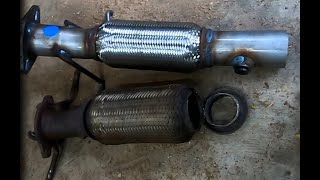
Typical fix: Replace the leaking gasket or repair the cracked component. The exhaust manifold gasket and flex pipe are very common points of failure. 🎬 See this DIY exhaust flex pipe replacement walkthrough
Est. part cost: $20-$300 - Failing Rear (Downstream) Oxygen Sensor 🟡 Medium Probability → Shop Oxygen Sensor Oxygen sensors are consumable parts with a finite lifespan. An aging sensor can become slow, contaminated, or biased, sending an inaccurate low voltage signal that the PCM interprets as a lean condition.
How to confirm: Use a scan tool to monitor the live voltage data from the downstream O2 sensor (Bank 1, Sensor 2). On a fully warmed-up engine at a steady RPM, a healthy sensor should show a relatively stable voltage, typically between 0.5V and 0.8V. If the voltage is stuck low (e.g., below 0.2V) or fluctuates wildly without reason, and no exhaust leaks are present, the sensor is likely faulty.
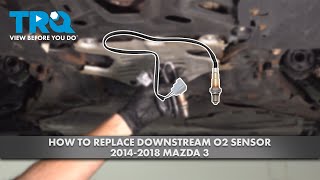
Typical fix: Replace the rear oxygen sensor, which is located on the exhaust pipe after the catalytic converter. 🎬 Watch: How to replace the downstream O2 sensor
Est. part cost: $80-$180 - Intake Air (Vacuum) Leak ⚪ Low Probability While less common for this specific code, a significant vacuum leak from a cracked hose, faulty PCV valve, or bad intake manifold gasket can cause a genuinely lean condition that the rear O2 sensor detects. One owner on a forum discovered an improperly-sized, non-OEM air filter was preventing the airbox from sealing, causing a persistent P2096.
How to confirm: Listen for a hissing or whistling sound around the engine bay at idle. A mechanic can perform a smoke test on the intake system to pinpoint the source of the leak. Carefully check the engine air filter for proper fitment and ensure the airbox is fully sealed.
Typical fix: Replace the leaking vacuum line, gasket, or install the correct air filter.
Est. part cost: $10-$150
Rare But Worth Checking
- Failing Front Air/Fuel Ratio Sensor: → Shop Oxygen Sensor A failing front sensor (Bank 1, Sensor 1) can cause incorrect fuel mixture adjustments, which can sometimes be flagged by the rear sensor. This would typically be accompanied by other fuel trim codes like P0171.
- Clogged Fuel Injectors or Weak Fuel Pump: → Shop Fuel Pump A problem with fuel delivery can create a true lean condition. This should be suspected if you also experience noticeable engine hesitation, misfires, or a loss of power under load.
- PCM Software Issue: While more common on other Mazda models like the CX-5 and Mazda6, it's possible that the PCM has outdated logic. If all physical causes are ruled out, checking with a dealer for available software updates (a process called 'reflashing' or 'calibration') is a valid final step. Manufacturer Bulletin #SA271 notes that for some vehicles with P2096, updating the PCM calibration with IDS version 99.01 or higher is required.
Diagnosis Steps
- Read all fault codes with an OBD-II scanner. Note any other codes that are present, especially P0171 or P0137. Note if the scanner displays sub-codes like '$07e8Pd', which indicates a pending fault.
- With the engine cold, perform a thorough visual inspection of the entire exhaust system from the engine's exhaust manifold back to the rear oxygen sensor. Look for black soot trails, rust patterns around joints, or visible cracks that indicate a leak. Pay close attention to the manifold-to-head gasket and the flex pipe.
- Start the engine and listen for any unusual ticking or hissing exhaust noises that could signal a leak. You can also carefully use a length of rubber hose as a stethoscope to pinpoint the source of the noise.
- If a leak is suspected but not visible, perform a smoke test. A professional smoke machine is best, but a DIY method involves using a shop vac on 'blow' connected to the tailpipe and spraying joints with soapy water to look for bubbles.
- If no exhaust leaks are found, use a scan tool to monitor live data. Watch the voltage for the downstream O2 sensor (Bank 1, Sensor 2). On a warm, stable engine, it should hold a steady voltage around 0.6-0.8V. If it's stuck below 0.2V, the sensor is either bad or is correctly detecting a lean condition.
- Inspect the intake system for leaks. Check that the air filter is the correct part and is seated properly, and that the airbox is sealed. Listen for hissing noises and check all vacuum hoses for cracks or disconnection.
- If no leaks are found and the O2 sensor seems to be the culprit, replace the downstream (Bank 1, Sensor 2) O2 sensor.
- As a final step, if no other cause is found, consult a Mazda dealer to check for any available PCM software updates (calibrations) related to this code.
Parts You'll Likely Need
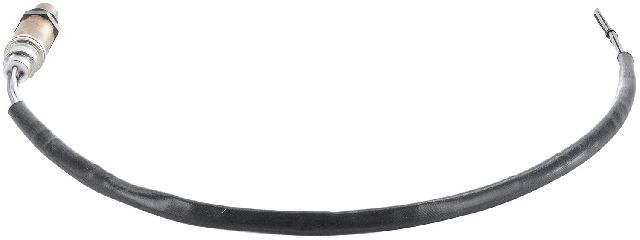
- Downstream Oxygen Sensor (Bank 1, Sensor 2)
(OEM #PE21-18-861A)— This sensor is responsible for triggering the code. It can fail with age, providing inaccurate lean readings.
Trusted brands: Denso, NGK/NTK, Bosch
OEM price range: $150-$220
Aftermarket price range: $80-$150 - Exhaust Manifold Gasket
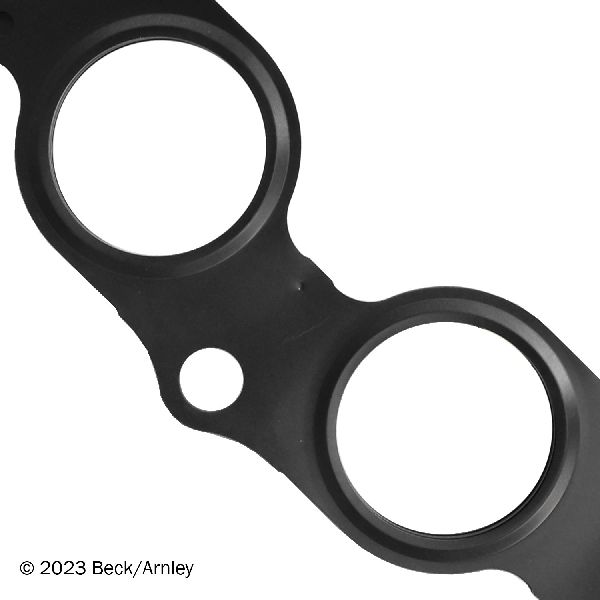
(OEM #PE01-13-460)— A very common failure point for exhaust leaks on the Skyactiv engine, allowing air to enter the exhaust and cause a false lean reading. This part number fits many 2014+ models.
Trusted brands: Fel-Pro, Mahle, Victor Reinz
OEM price range: $30-$50
Aftermarket price range: $15-$30
Related Codes That Often Appear With This One
- P0137 — This code means 'O2 Sensor Circuit Low Voltage (Bank 1, Sensor 2)'. It often appears with P2096 because a sensor that is failing or reading a false lean condition (due to an exhaust leak) will produce a low voltage signal.
- P0171 — This code means 'System Too Lean (Bank 1)'. If you see P0171 along with P2096, it strongly suggests a true lean condition caused by a vacuum leak or fuel delivery issue, rather than just an exhaust leak fooling the rear sensor.
Technical Service Bulletins (TSBs) & Recalls
- 01-011/19: Relates to P2096 on 2018-2019 Mazda6 and CX-5 models due to improper PCM logic requiring a software update. While not for the Mazda 3, it shows a pattern of Mazda using software fixes for this code.
- 01-015/16: Addresses P2096 on older (2010-2011) Mazda 3 models via a PCM software update, showing a history of this issue being software-related.
- 01-012/20: For 2018-2019 CX-5s, states that P2096 may appear and be impossible to clear until a PCM software update is performed.
- Bulletin #01-011-19-3586a: Notes that some customers may experience a check engine light with DTC P2096:00 (Air fuel too lean) specifically on vehicles with PCMs manufactured by MITSUBISHI.
- Bulletin #01-027-12-2739: Describes how PCM logic control was changed to eliminate MIL illumination with DTC P2096:00 stored in memory for certain models.
- Bulletin #01-012-20-3738: Reports that some vehicles may experience a check engine light with DTC P2096:00 that cannot be cleared by itself, even if the detection condition has gone.
- Bulletin #01-015-16-3234: Confirms that for some Mazda 3 vehicles, P2096:00 (Target A/F Feedback System Too Lean) is caused by improper control logic of the PCM.
Platform-Specific Known Issues
- A Reddit user with a 2012 Mazda 3 reported having a mechanic diagnose an exhaust leak as the cause of their P2096 code.
- On Mazdas247 forums, a user with a different model traced a persistent P2096 to an incorrectly sized aftermarket air filter (for a CX-9 instead of a CX-7) that prevented the airbox from sealing, creating a vacuum leak. This is a plausible, though unusual, cause to check.
Mechanic-Grade Diagnostic Values
- Downstream O2 Sensor (B1S2) Voltage — expected: Relatively stable voltage between 0.5V and 0.8V on a fully warmed-up engine at steady RPM.. Failure: Voltage is stuck low (e.g., below 0.2V) or fluctuates erratically when no exhaust leaks are present.
- Long Term Fuel Trim (LTFT) — expected: Ideally close to 0%, but values up to +/- 5% are generally considered normal. A value of -3.9% was observed on a healthy vehicle after a fix.. Failure: Consistently high positive values (e.g., > +10%) would indicate the PCM is adding fuel to combat a lean condition. However, a user reported a value of -10% while the P2096 code was active, indicating complexity.
Hidden / Shadow Codes Worth Checking
- $07e8Pd: This is not a separate fault code, but how a basic OBD-II scanner might display the P2096 code. '$07e8' refers to the standard diagnostic response from the Engine Control Module, and 'Pd' signifies that the code is in a 'Pending' status. (see via May be displayed on various consumer-grade OBD-II code readers.)
Scan Tool Commands That Help
- Mazda Dealer Tool (e.g., MDARS/IDS): Mazda Module Programming — This function is used to reflash the Powertrain Control Module (PCM) with updated software. It should be used as a final step if all physical causes (exhaust leaks, sensor failures) have been ruled out, as some P2096 codes are caused by outdated PCM logic.
Real Owner Repair Stories
- Reddit user BuoyBoy (2012 Mazda 3 GS-Skyactiv) — P2096 code and poor fuel economy. Eventually could smell exhaust and see smoke from under the vehicle in cold weather.
❌ Tried (didn't work) Initial diagnosis focused on sensors and fuel trim.
✅ What actually fixed it A reputable mechanic found and welded a patch on an exhaust leak, which restored normal fuel economy and cleared the code. - Reddit user Fazeman13 (2014 Mazda 3 GS Sky, 2.0L) — P2096 code.
❌ Tried (didn't work) Previous mechanics used an OBD-II reader and guessed the catalytic converter was clogged.
✅ What actually fixed it An exhaust shop put the car on a lift and identified a broken flex pipe as the source of the leak causing the code. - Mazdas247 forum user D-Dub (2011 Mazda CX-7 2.3L Turbo (different model, but highly relevant issue)) — Persistent P2096 code (current, pending, and permanent) preventing emissions inspection.
❌ Tried (didn't work) Cleaning MAF sensor, Replacing spark plugs, Purchased new MAF and O2 sensors but did not install them.
✅ What actually fixed it The owner discovered the wrong engine air filter had been installed (for a CX-9 instead of a CX-7). The incorrectly sized filter prevented the airbox from sealing properly, creating an unmetered air leak. Replacing it with the correct filter resolved the code. - Reddit user Usual_Awareness_7985 (2012 Mazda 3 i Touring, 2.0L Skyactiv-G, ~107k miles) — Recurring P2096 code.
❌ Tried (didn't work) Initial diagnosis was confusing due to lack of other symptoms.
✅ What actually fixed it The root cause was discovered to be a completely hollowed-out catalytic converter. A previous owner had moved the downstream O2 sensor to a new bung further down the exhaust to trick the PCM. Moving the sensor back to its original location and replacing the gutted converter with a new one permanently fixed the issue (and triggered the correct P0420 code prior to the final repair).
"I Checked Everything" — The Actual Cause
- In one documented case on a similar Mazda, a persistent P2096 was not caused by a typical vacuum hose or exhaust leak that a smoke test would find. The actual cause was an incorrectly sized aftermarket engine air filter that prevented the airbox lid from sealing correctly, allowing unmetered air to enter the intake system.
When the Usual Fixes Don't Work
- While the vast majority of P2096 codes on this platform are caused by exhaust leaks or a faulty O2 sensor, there are confirmed cases where the cause was more unusual. One owner found the code was triggered by a previous owner who had completely gutted the catalytic converter and moved the O2 sensor to try and fool the computer; the P2096 only resolved after a new converter was installed and the sensor was returned to its proper location. Another owner of a similar Mazda model traced the code to an incorrectly sized air filter that was preventing the airbox from sealing, proving that intake-side air leaks, while less common, can be the root cause.
Model Year Variations Within This Range
- 2012-2013: The first Skyactiv-G engines in the second-generation (BL) Mazda 3 are considered a 'partial' implementation. Due to chassis constraints, they could not fit the full 4-2-1 exhaust header that is a signature of the system. This results in a different exhaust manifold and downpipe configuration compared to later models.
- 2014-2018: The third-generation (BM/BN) Mazda 3 features the 'full' Skyactiv-G setup, including the specially designed 4-2-1 'tuned' exhaust header. This design is more efficient but also introduces more gasket surfaces and length prior to the catalytic converter, potentially creating different common leak points than the earlier models.
Diagnostic Flowchart
Other Known Issues on This Vehicle
Issues unrelated to this code that are worth knowing about as an owner of this generation:
- Infotainment System 'Ghost Touch' or Delamination 🟠 Medium — Common on 2014-2016 models. The touchscreen's conductive layer fails, causing random inputs or unresponsiveness. (Ref: Mazda issued a warranty extension (SSP97) for this issue on some models.)
- Carbon Buildup on Intake Valves 🟡 Low — A long-term consequence of all direct-injection (GDI) engines. Can occur after 80,000+ miles, potentially causing reduced performance or rough idle. Not as severe as on some other manufacturers' GDI engines.
- Premature Rear Brake Pad Wear 🟡 Low — Some owners report rear brake pads wearing out faster than front pads, sometimes due to sticky caliper slide pins. More of a maintenance item than a critical failure.
Used vs. New Parts: Buying Guide for This Vehicle
When a used part is the smart pick: For this repair, sourcing a used exhaust manifold or a section of exhaust pipe from a reputable auto recycler can be a cost-effective option, especially for owners in regions without heavy road salt usage. These parts have no moving components and their condition is easy to assess visually.
Donor-vehicle mileage cap: roughly under 100000 miles for the part to have meaningful remaining life.
What to inspect on the donor part:
- For exhaust components, check for heavy rust, flaking, or previous weld repairs.
- Ensure all mounting flanges are flat and not warped.
- Inspect for any hairline cracks, particularly near welds and O2 sensor bungs.
- Avoid parts from vehicles that show signs of a major collision or fire.
OEM-only on this vehicle (don't cheap out):
- Catalytic Converter: While rarely the cause of P2096, if a replacement is needed, OEM is highly recommended. Aftermarket converters for Skyactiv engines are known to sometimes fail to meet the PCM's strict efficiency monitoring, leading to a P0420 code shortly after installation.
Aftermarket brands forum-validated for this vehicle:
- Oxygen Sensors: Denso and NTK (a brand of NGK) are the original equipment manufacturers for many Japanese vehicles, including Mazda. They are widely considered the most reliable aftermarket replacements.
Real Owner Stories
Aggregated from forums and TSBs cited above. Mileages and costs reflect what owners reported in those sources.
2012 Mazda 3 GS-Skyactiv
Symptoms: Check engine light on, poor fuel economy. Car performing normally otherwise. Later smelled exhaust occasionally and could see exhaust smoke from under the vehicle on cold starts.
What fixed it: A mechanic welded a patch on an exhaust leak.
Source hint: owner_reports
2012 Mazda 3
Symptoms: Check Engine Light throwing P2096 code with no other symptoms.
What fixed it: A mechanic diagnosed and repaired an exhaust leak.
Source hint: Reddit r/AskMechanics thread titled '2012 mazda 3 i throwing p2096 code with no/'
Mazda CX-7 (Platform Mate)
Symptoms: Persistent P2096 error codes not disappearing.
What fixed it: Discovered an incorrectly sized aftermarket air filter (intended for a CX-9) was preventing the airbox from sealing, creating a vacuum leak.
Source hint: Mazdas247 forum thread titled 'o2-sensor-issues-p2096-error-codes-not-disappearing'
Related OBD-II Codes
Frequently Asked Questions
Does TSB 01-015/16 apply to my 2012-2018 Mazda 3?
Could a simple air filter change cause a P2096 code on my Mazda?
Why is the 4-2-1 manifold design on my Skyactiv-G engine prone to this code?
Is there a software update for the 2018 Mazda 3 to fix P2096?
How can I check for exhaust leaks at home without professional tools?
What voltage should I see on my scan tool for the Bank 1, Sensor 2 O2 sensor?
Helpful Videos

We Have This Part in Stock

The information in this article is provided for general reference and educational purposes only. Vehicle specifications, procedures, and part compatibility can vary by production date, trim level, and region. Always consult your vehicle's factory service manual and verify part numbers before purchasing or performing repairs. Safety-critical components such as airbags, seat belts, and braking systems should be installed by a qualified professional.
- Mazda 3:
- 🧭 Diagnostic Flowchart
- 🎬 Helpful Videos
- 🛍️ Shop This Part
- What's Unique About the 2012-2018 Mazda 3
- Symptoms You May Notice
- Most Likely Causes
- Rare But Worth Checking
- Diagnosis Steps
- Parts You'll Likely Need
- Related Codes That Often Appear With This One
- Technical Service Bulletins (TSBs) & Recalls
- Platform-Specific Known Issues
- Mechanic-Grade Diagnostic Values
- Hidden / Shadow Codes Worth Checking
- Scan Tool Commands That Help
- Real Owner Repair Stories
- "I Checked Everything" — The Actual Cause
- When the Usual Fixes Don't Work
- Model Year Variations Within This Range
- Other Known Issues on This Vehicle
- Used vs. New Parts: Buying Guide for This Vehicle
- Real Owner Stories
- 2012 Mazda 3 GS-Skyactiv
- 2012 Mazda 3
- Mazda CX-7 (Platform Mate)
- Related OBD-II Codes
- Frequently Asked Questions
- 🎟️ Get 5% Off