

P2096 on 2016-2017 Mazda 6: Causes and Fixes for Post-Catalyst Lean Code
On a 2016-2017 Mazda 6, code P2096 is most often caused by overly sensitive PCM software or an exhaust leak. Before replacing parts, have a Mazda dealer check for a PCM software update per TSB 01-006/16. If no update is needed, the next most likely cause is an exhaust leak before the rear O2 sensor, with the exhaust manifold gasket being a common culprit.
- Your first step should always be to contact a Mazda dealer to check if your VIN is eligible for a free or low-cost PCM software update to fix a false P2096 code.
- Do not replace the oxygen sensor or catalytic converter until you have ruled out both a software issue and an exhaust leak.
- The most common physical problem is an exhaust leak between the engine and the rear O2 sensor; have the exhaust manifold and flex pipe inspected closely.
- This code will cause an automatic failure on an emissions test, so it must be resolved to stay compliant.
- If you see code P0171 along with P2096, the problem is more likely a vacuum leak or fuel system issue.
What's Unique About the 2016-2017 Mazda 6
While P2096 is a generic code, Mazda's Skyactiv engines have specific tendencies. Mazda has a documented history of releasing software updates (TSBs) to fix false P2096 codes caused by overly sensitive monitoring logic. The original software has thresholds set too tightly, and the update widens the acceptable voltage range from the O2 sensor before triggering a fault. Additionally, the unique 4-2-1 long-tube exhaust manifold, while efficient, has more gasket surfaces and length, creating more potential points for small exhaust leaks to develop, which can fool the rear oxygen sensor.
Symptoms You May Notice
- Check Engine Light is on
- Decreased fuel economy
- Rough or uneven idle
- Hesitation during acceleration
- Inability to pass a state emissions/smog test
- Exhaust smell in the cabin (if caused by a significant leak)
- Replacing the rear oxygen sensor without first checking for software updates or exhaust leaks. Many owners report the code returning because the root cause was not the sensor itself.
- Replacing the catalytic converter. A P2096 code is very rarely caused by a bad converter. A failing converter would typically trigger a P0420 (Catalyst Efficiency) code instead.
Most Likely Causes
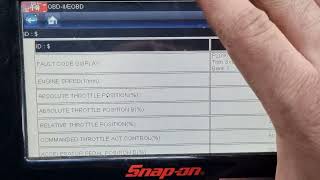
- Outdated Powertrain Control Module (PCM) Software 🔴 High Probability → Shop Engine Control Module (ECM) Mazda has issued multiple Technical Service Bulletins (TSBs) for this engine platform because the original PCM logic had overly sensitive thresholds, leading to false P2096 codes. TSB 01-006/16 specifically addresses this on 2016 models with the same engine. This is a well-documented pattern across many Mazda models and years. 🎬 Watch: What to check first on a Mazda with code P2096
How to confirm: A Mazda dealer or a qualified shop with OEM tools can check your vehicle's current software calibration version against the latest available version referenced in TSBs. TSB 01-006/16 applies to 2016 CX-5 models with the 2.5L engine and VINs lower than JM3KE**759448, which is highly indicative of the same issue on the Mazda 6 of the same year. A key symptom of a software issue can be the inability to clear the code with a standard OBD-II scanner, which may be stored as a 'Permanent DTC'. Manufacturer TSB Bulletin #01-012-20-3738 notes that on some vehicles, the check engine light stays on even if the detection condition has gone.
Typical fix: Reprogramming the PCM with the latest software. This must be done by a dealer or a shop with a J2534 pass-thru device and appropriate Mazda software (MDARS). TSB Bulletin #SA271 recommends updating the PCM calibration with IDS version 99.01 or higher. The repair may be covered under the Federal Emissions Warranty.
Est. part cost: $0 - Exhaust Leak (before rear O2 sensor) 🟡 Medium Probability The Skyactiv engine's long 4-2-1 exhaust manifold has numerous gaskets and welds that can develop small leaks from heat cycles and vibration. The exhaust manifold gasket is a common failure point. The flex pipe is another common area for cracks or rust holes.
How to confirm: Visually inspect the exhaust system from the engine to the rear O2 sensor for black soot marks, cracks, or rust holes, especially around gaskets and welds. A smoke test is the most effective way to find small leaks. You may also hear a 'ticking' noise on a cold start that goes away as the metal expands with heat.
Typical fix: Repairing the leak, which may involve replacing a gasket (like the exhaust manifold gasket, P/N PY8W-13-460) or welding a crack.
Est. part cost: $10-$50 - Failing Rear (Downstream) Oxygen Sensor ⚪ Low Probability → Shop Oxygen Sensor Oxygen sensors are consumable parts that wear out over time. However, this part is often replaced unnecessarily when the true cause is a software issue or exhaust leak. It should only be replaced after the other, more common causes are ruled out.
How to confirm: Use a scan tool to monitor the live data for the downstream O2 sensor (Bank 1, Sensor 2). At a warm, steady idle (around 2500 RPM), the voltage should be relatively stable and high, typically between 0.6V - 0.8V. If it is stuck low (under 0.2V) or fluctuating rapidly like the upstream sensor, it may be faulty.
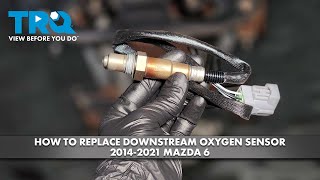
Typical fix: Replace the downstream oxygen sensor. A video guide shows the process involves removing underbody shields to access the sensor and its connector. 🎬 Watch: How to replace the downstream oxygen sensor Using an OEM-quality brand like Denso is recommended.
Est. part cost: $75-$200
Rare But Worth Checking
- Intake Air (Vacuum) Leak: A significant leak in the intake manifold, vacuum hoses, or PCV system can cause the engine to run genuinely lean, which both the upstream and downstream sensors will detect. This is more likely if code P0171 is also present. A surprisingly common cause can be an ill-fitting or improperly installed engine air filter that prevents the airbox lid from sealing correctly, creating a large unmetered air leak after the MAF sensor.
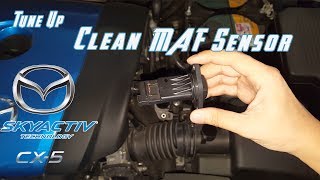
- Dirty or Faulty Mass Airflow (MAF) Sensor: A contaminated MAF sensor can under-report the amount of air entering the engine, causing the PCM to deliver less fuel and create a lean condition. Cleaning with a dedicated MAF sensor cleaner is a simple diagnostic step.
Diagnosis Steps
- Check for TSBs: Contact a Mazda dealer with your VIN to see if TSB 01-006/16 or another software update for P2096 applies to your vehicle. This is the most critical first step.
- Scan for Other Codes: Check for any other pending or active codes. If P0171 is present, focus on finding intake vacuum leaks or fuel delivery issues.
- Inspect for Exhaust Leaks: Carefully inspect the entire exhaust system from the cylinder head to the downstream O2 sensor. A cold start may reveal audible 'ticking' from a leak. Look for soot trails or cracks. A smoke test is the most reliable method.
- Check for Intake Leaks: Ensure the engine air filter is seated correctly and the airbox lid is fully latched. Inspect all intake ducting post-MAF sensor for cracks or loose connections.
- Analyze Live Sensor Data: Use an OBD-II scanner to view live data. At a steady 2500 RPM, the downstream O2 sensor (B1S2) voltage should be stable and high (e.g., >0.6V). If it's stuck low (<0.2V), it confirms a lean reading. This could be from a leak or a bad sensor.
- Test the Oxygen Sensor: If no leaks are found and the software is up to date, test the oxygen sensor itself. Check its wiring and connector for damage. If the sensor's readings remain low and unresponsive, it is likely faulty.
- Clean the MAF Sensor: As a final, simple step, clean the MAF sensor with a dedicated MAF sensor cleaner.
Parts You'll Likely Need
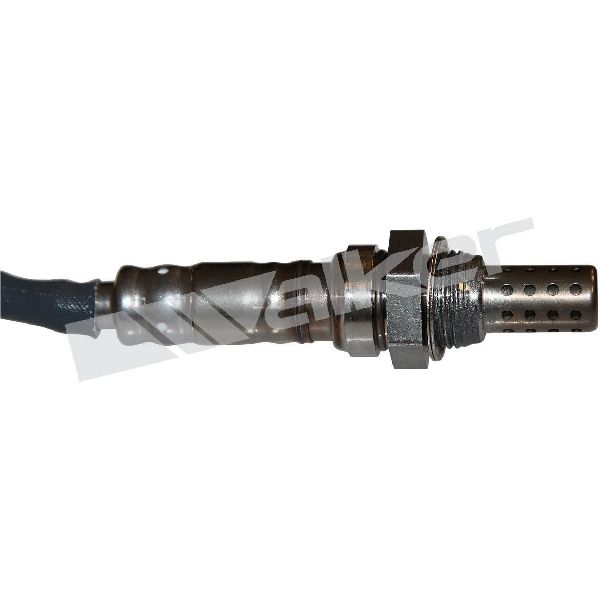
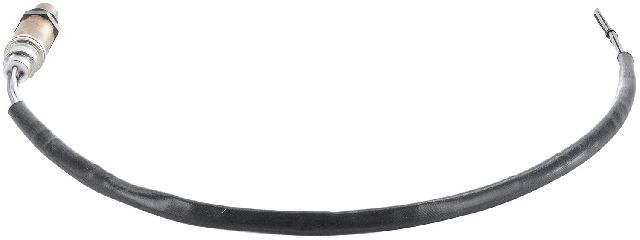
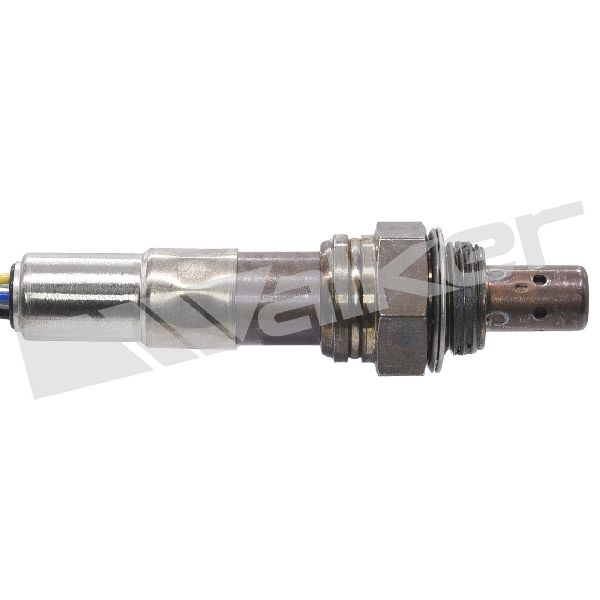
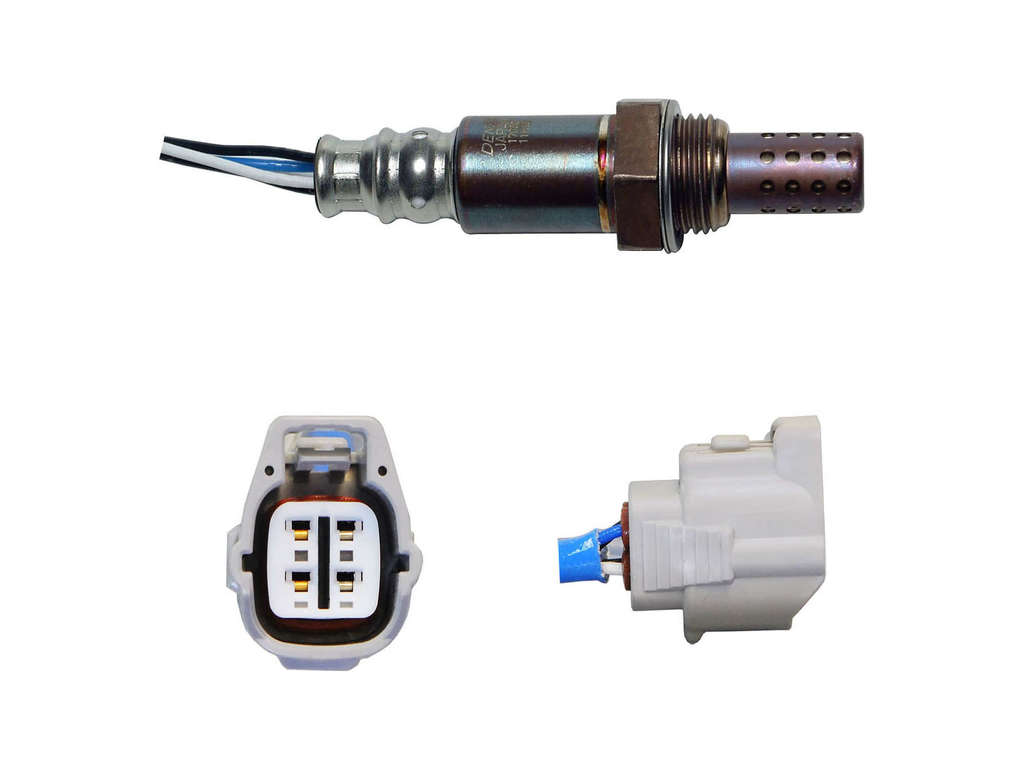
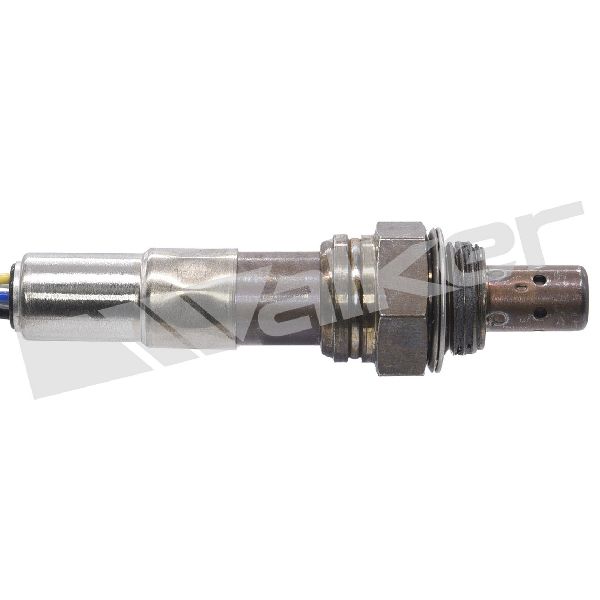
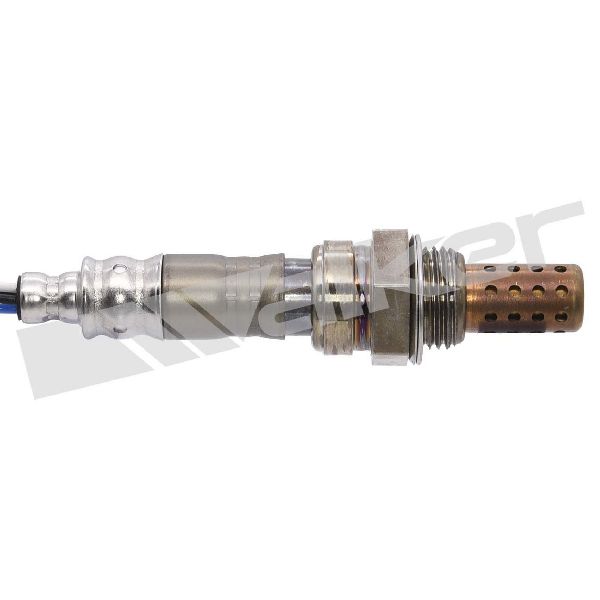
- Downstream Oxygen Sensor
(OEM #PE12-18-86Z)— This sensor provides the reading that triggers the code. While often not the root cause, it can fail and is a common replacement part after other causes are ruled out.
Trusted brands: Denso (OEM supplier, e.g., #234-4939), NGK, Bosch
OEM price range: $190-$240
Aftermarket price range: $70-$150 - Exhaust Manifold Gasket
(OEM #PY8W-13-460)— This is a common failure point for exhaust leaks on the Skyactiv 2.5L engine, which cause a false lean reading at the rear O2 sensor.
Trusted brands: Fel-Pro, Mahle, Mazda OE
OEM price range: $30-$50
Aftermarket price range: $10-$30
Related Codes That Often Appear With This One
- P0171 — If P0171 (System Too Lean Bank 1) is present with P2096, it strongly suggests a true lean condition affecting the entire engine, such as a vacuum leak or a fuel delivery problem, rather than just an exhaust leak fooling the rear sensor.
- P0137 — This code for 'O2 Sensor Circuit Low Voltage (Bank 1, Sensor 2)' often appears with P2096 because a sensor reading a lean condition (due to an exhaust leak or its own failure) will produce a low voltage signal.
Technical Service Bulletins (TSBs) & Recalls
- 01-006/16: Addresses 'CHECK ENGINE LIGHT ON WITH DTC P2096:00' on 2016 CX-5 models (with the same engine) due to improper PCM control logic, requiring a software update. It applies to vehicles produced before Dec. 24, 2015.
- 01-011/19: Addresses P2096 on 2018-2019 Mazda 6 and CX-5 models with Mitsubishi-made PCMs, also due to improper PCM logic, showing a pattern of this being a recurring software issue for Mazda.
- TSB Bulletin #01-011-19-3586a: Notes that some customers may experience a check engine light with DTC P2096:00 specifically on vehicles with PCMs manufactured by Mitsubishi due to improper control logic.
- TSB Bulletin #01-015-16-3234: Confirms that P2096:00 (Target A/F Feedback System Too Lean) can be caused by improper control logic of the PCM, requiring a logic update to eliminate the concern.
- TSB Bulletin #01-027-12-2739: Indicates that PCM logic control has been changed on some models to eliminate MIL illumination with DTC P2096:00 stored in memory.
Platform-Specific Known Issues
- A known issue, addressed by Mazda TSB 01-006/16, involves improper PCM logic causing a false P2096 code on 2016 models. The fix is a simple software update performed by a dealer.
- TSB 01-011/19 addresses the same P2096 code on 2018-2019 models due to improper logic in Mitsubishi-made PCMs, showing a clear pattern of this being a recurring software issue for Mazda.
- TSB Bulletin #01-012-20-3738: Highlights that some vehicles may experience P2096:00 where the code cannot be cleared by itself, and the light stays on even after the detection condition has been resolved.
Mechanic-Grade Diagnostic Values
- Downstream O2 Sensor (HO2S) Voltage at steady RPM (warm engine) — expected: Relatively stable, fluctuating slowly between 0.6V and 0.8V.. Failure: Voltage is stuck low (below 0.2V) or fluctuates rapidly like the upstream sensor.
- Post-Catalyst Fuel Trim DTC Trigger Condition — expected: The code sets if short-term fuel feedback (SHRT_FUEL_TRIM_HO2S_SEN) is ≥ 2% AND the sum of short and long-term feedback is ≥ 2.2% for a continuous 25 seconds.. Failure: Meeting these thresholds in live data confirms the PCM is commanding the code based on its logic.
- O2 Sensor Heater Circuit Resistance — expected: 3-25 ohms.. Failure: A reading outside this range indicates a faulty heater element within the sensor.
Hidden / Shadow Codes Worth Checking
- Permanent DTC (P-DTC): A 'Permanent' version of P2096 that cannot be cleared with a standard OBD-II scanner's 'Clear Codes' function is a key symptom of the software glitch addressed by Mazda TSBs. The code will only clear after the PCM's own internal diagnostic completes a drive cycle and confirms the fault is gone. (see via A standard OBD-II scanner can show if a code is stored as 'Current', 'Pending', or 'Permanent'. The inability to clear it is the main indicator.)
Scan Tool Commands That Help
- Mazda MDARS / J2534 Pass-Thru Device: PCM Reprogramming / Calibration Update — This is the primary fix when TSB 01-006/16 applies. It updates the PCM's software logic to widen the acceptable O2 sensor voltage thresholds, preventing the false code.
- Mazda MDARS / FORScan: Reset All Adaptations / Clear Fuel Trim Data — After replacing a physical part like an O2 sensor or fixing a significant vacuum/exhaust leak, resetting the PCM's learned fuel trim values forces it to re-learn based on the new, correct inputs. Some TSBs require disconnecting the battery for 30+ seconds to achieve a similar reset.
Wiring & Ground Locations
- Downstream O2 Sensor Connector — Underneath the vehicle, tucked above the splash shields near the catalytic converter. The connector is often clipped to the underbody above the exhaust pipe.. This is the primary connection point to test the sensor's circuit. Damage, corrosion, or looseness at this connector can cause low voltage readings, mimicking a lean condition and triggering P0137 along with P2096.
- Engine Room Ground Point — In the engine room, specific to SKYACTIV-G 2.5 engines. The exact location is detailed in the official Mazda wiring diagram guide.. A poor engine or PCM ground can cause erratic voltage readings from all engine sensors, including the oxygen sensors. If multiple sensor codes are present or readings are unstable with no clear mechanical cause, verifying this ground is tight and free of corrosion is a critical step.
Real Owner Repair Stories
- Mazdas247 Forums (2020 Mazda CX-5 Turbo (similar Skyactiv engine and P2096 logic)) — Persistent P2096 Check Engine Light that would not clear.
❌ Tried (didn't work) Inspecting manifold and exhaust for leaks, Inspecting air box and hoses, Cleaning O2 sensor and MAF harnesses, Cleaning the MAF sensor, Replacing the MAF sensor, Clearing codes with scanner and battery disconnect
✅ What actually fixed it The owner discovered a previous shop had installed the wrong air filter (for a CX-9 instead of a CX-7/CX-5). The incorrectly sized filter prevented the airbox from sealing properly, creating a large, unmetered air leak. Replacing it with the correct OEM air filter resolved the code.
"I Checked Everything" — The Actual Cause
- In a case on the Mazdas247 forums, a user performed extensive diagnostics including visual leak checks and sensor replacements for a P2096 code with no success. The final cause was not an exhaust leak but an intake leak caused by an incorrectly sized engine air filter that prevented the airbox from sealing, allowing unmetered air to enter the system post-MAF sensor.
Model Year Variations Within This Range
- 2016: Vehicles produced before December 24, 2015 (VINs lower than JM3KE**759448 on the related CX-5) are specifically called out in TSB 01-006/16 as potentially having improper PCM control logic causing a false P2096. The fix is a software update.
Diagnostic Flowchart
Other Known Issues on This Vehicle
Issues unrelated to this code that are worth knowing about as an owner of this generation:
- Infotainment 'Ghost Touch' and Delamination 🟠 Medium — Very common, especially in warmer climates. The touch-sensitive digitizer delaminates, causing phantom inputs. Often occurs after 3-5 years. (Ref: No recall, but a common DIY fix is to disconnect the touchscreen ribbon cable, forcing use of the commander knob.)
- Intake Valve Carbon Buildup 🟠 Medium — Inherent to all direct-injection engines, including Skyactiv-G. Can cause misfires (P030x codes) and rough idle, typically becoming noticeable after 60,000-80,000 miles. (Ref: No recall. Requires periodic manual cleaning (e.g., walnut blasting) for best performance.)
- Premature Rear Brake Wear / Grinding Noise 🟡 Low — Common issue where rear brake pads wear out faster than expected or create a grinding noise due to rust buildup on the discs. (Ref: TSB #04-007-20-3713a addresses grinding noise on vehicles with the electric parking brake (EPB), suggesting a change in brake pad material may be needed.)
- Thin Paint Prone to Chipping 🟡 Low — Frequently reported by owners, especially on the front bumper and hood. The paint is considered thin and easily damaged by road debris.
Used vs. New Parts: Buying Guide for This Vehicle
When a used part is the smart pick: For this repair, a used part from a junkyard is generally not recommended for the primary failure components. O2 sensors are wear items and a used one has an unknown lifespan. A used PCM would require dealer programming that often costs more than the part itself. The only potential used part that could make sense is a complete, crack-free exhaust manifold if the original is found to be damaged, as it is a simple piece of metal.
Donor-vehicle mileage cap: roughly under 60000 miles for the part to have meaningful remaining life.
What to inspect on the donor part:
- For an exhaust manifold, inspect thoroughly for hairline cracks, especially around welds and flanges.
- Ensure all mounting studs are intact and not broken off.
- Check for severe rust or pitting that could compromise gasket sealing.
OEM-only on this vehicle (don't cheap out):
- PCM Software Update: This is a dealer-only service; no physical part is replaced.
Aftermarket brands forum-validated for this vehicle:
- Denso or NGK/NTK for Oxygen Sensors (they are often the OEM suppliers).
- Fel-Pro for the exhaust manifold gasket.
Brands owners have reported issues with on this vehicle:
- Avoid unbranded, generic 'universal' oxygen sensors, as they often have incorrect wiring or response characteristics that can cause persistent issues.
Real Owner Stories
Aggregated from forums and TSBs cited above. Mileages and costs reflect what owners reported in those sources.
2014 Mazda 6 2.5L
Symptoms: Vehicle experienced a P2096 code.
What fixed it: Replacing the exhaust manifold to resolve an exhaust leak.
Source hint: Reddit r/mazda6 - P2096: A user with a 2014 model reports their P2096 was caused by an exhaust leak that required replacing the exhaust manifold. URL: https://www.reddit.com/r/mazda6/comments/s05v6g/p2096/
2016 Mazda 6 2.5L — 77000 miles
Symptoms: Check engine light with code P2096; owner advised to check for TSBs and leaks before replacing sensors.
What fixed it: Prioritizing TSB checks, inspecting for intake/exhaust leaks, and cleaning the MAF sensor.
Source hint: Reddit r/Cartalk - P2096 Code on a 2016 Mazda 6: A new owner asks for advice, and a detailed response correctly prioritizes checking for TSBs, intake/exhaust leaks, and cleaning the MAF before replacing the O2 sensor. URL: https://www.reddit.com/r/Cartalk/comments/14j060g/p2096_code_on_a_2016_mazda_6_w_77k_miles_and_4/
2016 Mazda CX-5 2.5L (Platform Mate)
Symptoms: Check engine light on with DTC P2096:00; caused by improper PCM control logic.
What fixed it: Reprogramming the PCM with the latest software calibration as per TSB 01-006/16.
Source hint: TSB 01-006/16: Addresses 'CHECK ENGINE LIGHT ON WITH DTC P2096:00' on 2016 CX-5 models (with the same engine) due to improper PCM control logic
Related OBD-II Codes
Frequently Asked Questions
Does TSB 01-006/16 apply to my 2016 Mazda 6 with the 2.5L engine?
Can I fix the P2096 code on my Mazda 6 by simply clearing it with a standard OBD-II scanner?
Is the P2096 repair covered under warranty for a 2016-2017 model?
What specific exhaust part is known to fail and cause this lean code on the Skyactiv-G 2.5L?
Why did my dealer replace the O2 sensors but the P2096 code came back?
How can I confirm if my Mazda 6 needs a software update for P2096?
Helpful Videos

We Have This Part in Stock

The information in this article is provided for general reference and educational purposes only. Vehicle specifications, procedures, and part compatibility can vary by production date, trim level, and region. Always consult your vehicle's factory service manual and verify part numbers before purchasing or performing repairs. Safety-critical components such as airbags, seat belts, and braking systems should be installed by a qualified professional.
- Mazda 6:
- 🧭 Diagnostic Flowchart
- 🎬 Helpful Videos
- 🛍️ Shop This Part
- What's Unique About the 2016-2017 Mazda 6
- Symptoms You May Notice
- Most Likely Causes
- Rare But Worth Checking
- Diagnosis Steps
- Parts You'll Likely Need
- Related Codes That Often Appear With This One
- Technical Service Bulletins (TSBs) & Recalls
- Platform-Specific Known Issues
- Mechanic-Grade Diagnostic Values
- Hidden / Shadow Codes Worth Checking
- Scan Tool Commands That Help
- Wiring & Ground Locations
- Real Owner Repair Stories
- "I Checked Everything" — The Actual Cause
- Model Year Variations Within This Range
- Other Known Issues on This Vehicle
- Used vs. New Parts: Buying Guide for This Vehicle
- Real Owner Stories
- 2014 Mazda 6 2.5L
- 2016 Mazda 6 2.5L — 77000 miles
- 2016 Mazda CX-5 2.5L (Platform Mate)
- Related OBD-II Codes
- Frequently Asked Questions
- 🎟️ Get 5% Off