

P2096 on 2018-2021 Mazda 6: Causes for Post Catalyst Lean Condition and Fixes
On a 2018-2021 Mazda 6, P2096 is most often caused by a PCM software glitch that requires a dealer update per TSB 01-011-19-3586a or 01-012-20-3738. A key symptom is the code being stored as a 'Permanent DTC' that cannot be cleared with a standard scanner; this almost certainly confirms the software issue. If the code can be cleared but returns, suspect an exhaust leak (manifold gasket) or, less commonly, a faulty downstream O2 sensor.
- Before buying any parts, try to clear the code. If it will not clear, you almost certainly need a PCM software update from a Mazda dealer.
- If the code clears but returns, the most likely causes are an exhaust leak before the rear O2 sensor or an air intake leak.
- Do not immediately replace the oxygen sensor; it is a less common cause for this code on this specific vehicle compared to software glitches and leaks.
- Ignoring the code can lead to poor fuel mileage and potential long-term damage to the catalytic converter.
What's Unique About the 2018-2021 Mazda 6
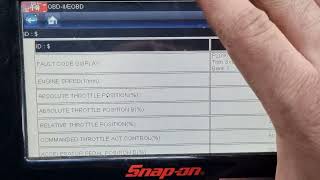
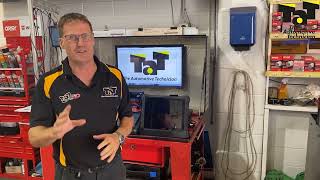
What makes the 2018-2021 Mazda 6 unique regarding P2096 is a well-documented software issue. Mazda issued multiple Technical Service Bulletins (TSBs) acknowledging that this code can appear and become impossible to clear with a standard scan tool, even if there's no physical fault. This glitch is due to improper PCM control logic with thresholds set too tightly, causing a false error. It specifically affects vehicles with Mitsubishi-made PCMs and requires a dealer-level software update to resolve. 🎬 See: How upgrading the engine computer resolves this code This is the most common cause for this specific vehicle and should be the first diagnostic consideration.
Symptoms You May Notice
- Check Engine Light is on.
- Inability to clear the DTC with a standard OBD-II scanner.
- Decreased fuel efficiency.
- Rough or uneven idle.
- Hesitation or poor acceleration.
- Inability to pass a state emissions/smog test.
- Replacing the oxygen sensor without first checking for TSBs or exhaust leaks. Many owners and even shops replace the sensor only to have the code return because the root cause was the PCM software or a leak.
- Replacing the catalytic converter. A P2096 code is rarely caused by a bad converter. A failing converter would more commonly trigger a P0420 🎬 Watch: Learn the common causes and fixes for P2096 (Catalyst Efficiency) code.
Most Likely Causes
- PCM Software Requires Update 🔴 High Probability Mazda issued TSBs 01-011-19-3586a and 01-012-20-3738 for improper PCM control logic causing a false P2096 code. This is specifically noted on 2018-2019 models with Mitsubishi-made PCMs and VINs lower than JM1GL**503220 (produced before March 4, 2019).
How to confirm: Connect an OBD-II scanner. If the P2096 code is stored as a 'Permanent' DTC and cannot be cleared by the scanner's 'Clear Codes' function, it is almost certainly the software issue.
Typical fix: Visit a Mazda dealership for a PCM software update (reflash). This is a software-only fix and may be covered under the federal emissions warranty (8 years/80,000 miles).
Est. part cost: $150-$300 - Exhaust System Leak 🟡 Medium Probability Leaks from a cracked exhaust manifold or a failed exhaust manifold gasket can allow unmetered air to enter the exhaust stream before the downstream O2 sensor, causing a false lean reading. This is the most likely physical fault if the PCM software is already up to date.
How to confirm: Visually inspect the exhaust system, especially the manifold and gaskets, for cracks, black soot trails, or loose connections. Listen for hissing or ticking sounds, especially on a cold start. A smoke test is the most definitive way to find a leak.
Typical fix: Replace the failed gasket or repair/replace the cracked exhaust component. The exhaust manifold gasket is a common failure point.
Est. part cost: $30-$250 - Failing Downstream Oxygen (O2) Sensor ⚪ Low Probability → Shop Oxygen Sensor While less common than software issues or leaks on this platform, the sensor that provides the reading can fail over time, becoming 'lazy' or contaminated.
How to confirm: Use a scan tool to monitor live data. The downstream O2 sensor voltage should be relatively stable (around 0.6V-0.8V) on a warm engine at idle. If it's stuck low (below 0.2V) or fluctuating rapidly like the upstream sensor, it's likely faulty.
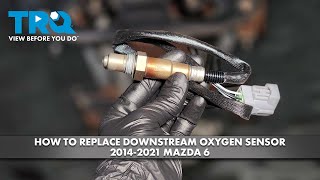
Typical fix: Replace the downstream (post-catalyst) oxygen sensor. 🎬 Watch: How to replace the downstream oxygen sensor
Est. part cost: $70-$180
Rare But Worth Checking
- Intake Air Leak (e.g., Improperly Seated Air Filter): A significant unmetered air leak after the MAF sensor can cause a lean condition. One owner on a forum reported a persistent P2096 was fixed by discovering an incorrectly sized air filter (OEM part for CX-9) was installed, preventing the airbox from sealing properly. The correct filter for the 2.5T is PY8W-13-3A0.
- Fuel Delivery Issue: A weak fuel pump, clogged fuel filter, or failing fuel pressure regulator can cause a true lean condition. This is less likely to cause only P2096 and would typically be accompanied by other codes like P0171 (System Too Lean) indicating a problem detected by the upstream sensor as well.
Diagnosis Steps
- Connect an OBD-II scanner and check for any other stored trouble codes. Address any other codes first.
- Attempt to clear the P2096 code. If the code is listed as 'Permanent' and cannot be cleared, the vehicle requires a PCM software update from a Mazda dealer per TSB 01-011-19-3586a or 01-012-20-3738. This is the most likely scenario.
- If the code clears but returns after a drive cycle, perform a thorough visual and auditory inspection of the exhaust system for leaks between the engine and the downstream O2 sensor. Listen for hissing sounds on a cold start.
- Inspect the entire air intake system, ensuring the air filter is the correct part (PY8W-13-3A0 for the turbo model) and the airbox is sealed properly with no cracks or loose clamps.
- Use a scan tool to monitor live data from the upstream and downstream O2 sensors. The downstream sensor voltage should be stable and high (0.6-0.8V). If it's stuck low or erratic, suspect a leak or a bad sensor.
- Perform a smoke test on the exhaust system to definitively locate any hard-to-see leaks. This is the most reliable method for finding small cracks or gasket failures.
- If no leaks are found and the PCM software is up to date, test the downstream O2 sensor's circuit and consider replacing the sensor.
Parts You'll Likely Need
- PCM Reprogramming Service — This is not a physical part, but a service to fix the most common cause of a persistent P2096 code on this vehicle, as documented by Mazda TSBs.
Trusted brands: Mazda Dealership Service
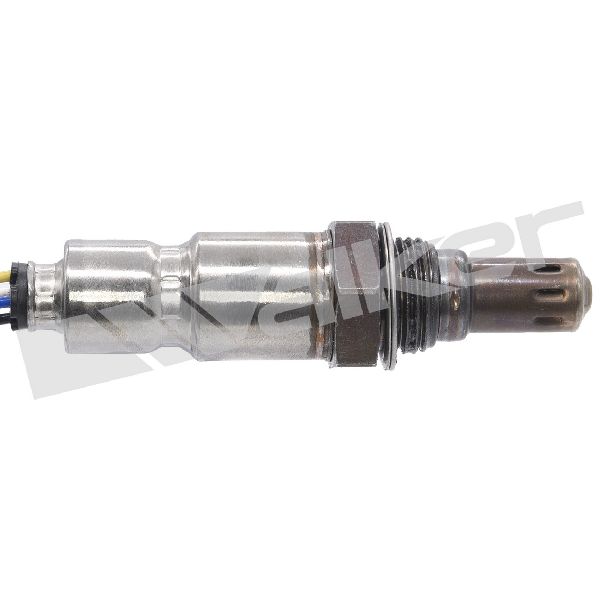
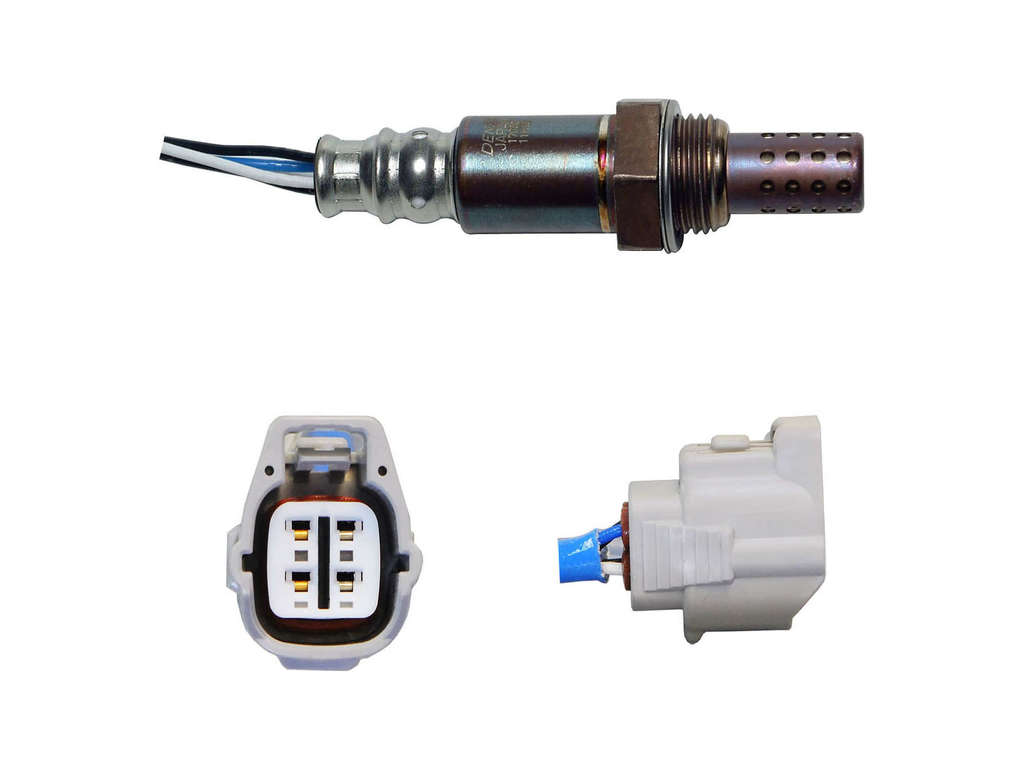
OEM price range: $150-$300 - Downstream Oxygen Sensor
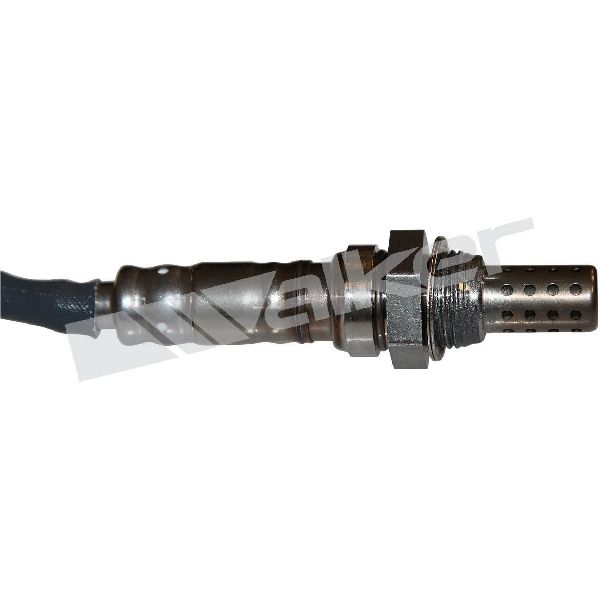
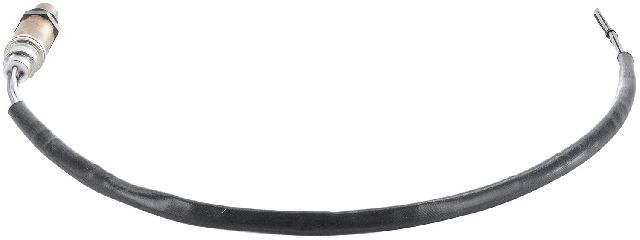
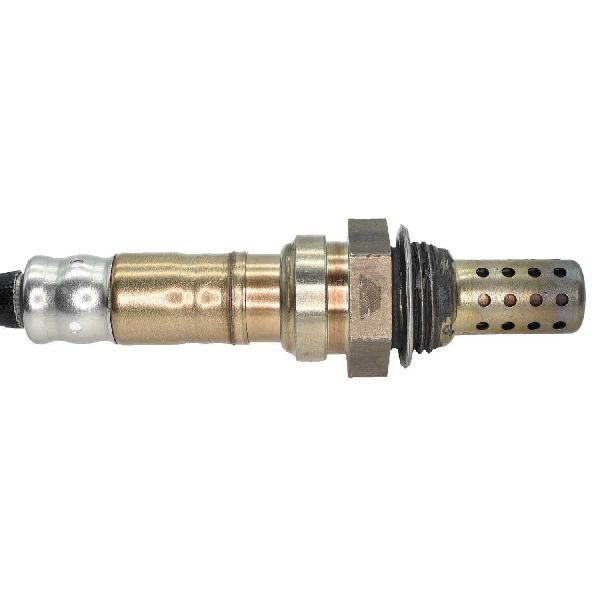
(OEM #PE12-18-86Z)— If software and leaks are ruled out, the sensor itself may have failed. It provides the reading that triggers the code.
Trusted brands: Denso (OEM supplier), NGK, Bosch
OEM price range: $120-$180
Aftermarket price range: $70-$110 - Exhaust Manifold Gasket
(OEM #PY8V-13-460C)— A failed gasket is a common source of an exhaust leak that introduces unmetered air and causes a false lean reading. This is a frequent physical point of failure.
Trusted brands: Mazda (OEM), Fel-Pro
OEM price range: $40-$60
Aftermarket price range: $20-$35
Related Codes That Often Appear With This One
- P0171 — P0171 (System Too Lean Bank 1) indicates a lean condition detected by the *upstream* sensor. If you see both, it points to a more significant vacuum leak or fuel delivery issue affecting the entire engine, rather than just an exhaust leak post-combustion.
- P2097 — This code means 'Post Catalyst Fuel Trim System Too Rich'. It's the opposite of P2096 but is also mentioned in the same Mazda TSBs (01-012-20-3738), indicating it can also be caused by the same PCM software glitch that prevents codes from being cleared.
Technical Service Bulletins (TSBs) & Recalls
- 01-011-19-3586a: Addresses a false P2096:00 code on 2018-2019 Mazda6 and CX-5 with Mitsubishi-made PCMs due to 'improper control logic'. It specifies VINs lower than JM1GL**503220 for the Mazda6 and requires a PCM software update.
- 01-012-20-3738: Addresses an issue where the check engine light stays on with DTCs P2096, P2097, and/or P0524 that cannot be cleared, even after the fault condition is gone. This also requires a PCM software update.
- SSPC0: A Special Service Program for California vehicles specifically addressing the non-clearing DTC issue (related to TSB 01-012-20-3738) to prevent smog check failures.
- TSB Bulletin #SA271: Notes that if a vehicle has a check engine light on with DTC P2096 stored, technicians should update the PCM calibration with IDS version 99.01 or higher.
- TSB Bulletin #01-027-12-2739: A manufacturer bulletin stating that for some vehicles exhibiting MIL illumination with DTC P2096:00, the PCM logic control has been changed to eliminate this concern.
- TSB Bulletin #01-015-16-3234: Describes a condition where the check engine light is on with DTC P2096:00 (Target A/F Feedback System Too Lean) caused by improper control logic of the PCM, requiring a control logic update.
Platform-Specific Known Issues
- Owner Experience (PCM Reflash): A user on the Mazdas247 forums with a 2018 CX-5 (same engine and TSB) reported getting P2096. The dealer performed the PCM update covered by the rocker arm recall, which also contained the fix for P2096. This resolved the check engine light without replacing any parts.
- Owner Experience (Exhaust Leak): A user on Reddit with a 2014 Mazda 6 reported a P2096 code was ultimately caused by an exhaust leak that required replacing the exhaust manifold to fix.
- Owner Experience (Incorrect Air Filter): A user on the Mazdas247 forums with a 2020 CX-5 Turbo spent significant time and money diagnosing a P2096, including replacing the MAF sensor. The final fix was discovering a previous shop had installed the wrong air filter, which prevented the airbox from sealing. Replacing it with the correct filter resolved the code.
Mechanic-Grade Diagnostic Values
- Downstream O2 Sensor (HO2S) Voltage at Idle — expected: Relatively stable, fluctuating slowly between 0.5V and 0.8V on a warm, healthy system.. Failure: Voltage is stuck low (below 0.2V), indicating a lean condition is being detected.
- Post-Catalyst Fuel Trim DTC Trigger Condition — expected: The code sets if short-term fuel feedback (SHRT_FUEL_TRIM_HO2S_SEN) is ≥ 2% AND the sum of short and long-term feedback is ≥ 2.2% for a continuous 25 seconds.. Failure: Meeting these thresholds in live data confirms the PCM is commanding the code based on its logic.
- High Pressure Fuel System Pressure (Direct Injection) — expected: Approximately 400 PSI at idle, rising to 1600-1850 PSI under wide-open throttle.. Failure: Significantly lower pressure suggests a fuel pump or filter issue, though this would likely trigger other codes as well.
- O2 Sensor Heater Resistance — expected: Between 10 and 25 ohms when measured across the two heater circuit wires (often the same color) on a cold sensor.. Failure: An open circuit (no reading) or very low resistance indicates a failed heater element within the sensor.
Hidden / Shadow Codes Worth Checking
- P2096:00: The ':00' is a Failure Type Code (FTC) indicating a general 'Component Fault'. It doesn't pinpoint a specific part but confirms the fuel trim calculation has exceeded its limit. This is the specific format seen on dealer-level scanners like the M-MDS and is referenced in TSB 01-011-19-3586a. (see via Mazda Modular Diagnostic System (M-MDS) or other professional OBD-II scanners that display FTCs.)
Scan Tool Commands That Help
- Mazda M-MDS (or J2534 Pass-through equivalent): Module Reprogramming — This is the primary function required to fix the common software glitch. It updates the PCM calibration to the latest version, which has wider thresholds for the P2096 logic.
- Mazda M-MDS: PID/Data Monitor for SHRT_FUEL_TRIM_HO2S_SEN and LONG_FUEL_TRIM_HO2S_SEN — To confirm if the live fuel trim values for the post-catalyst sensor are actually exceeding the thresholds (2.0% and 2.2% respectively) that trigger the code, as specified in the service manual.
- Mazda M-MDS: Clear DTCs — After reprogramming the PCM, a specific DTC clear must be performed. TSB 01-011/19 also requires disconnecting the negative battery cable for 30+ seconds after reprogramming to reset fuel control learning data.
Wiring & Ground Locations
- Engine Room Ground Point — In the engine room, specific to SKYACTIV-G 2.5 and 2.5T engines. Exact location is detailed in the official Mazda wiring diagram guide.. A poor engine or PCM ground can cause erratic voltage readings from all sensors, including the oxygen sensors. Verifying this ground is tight and free of corrosion is a crucial electrical diagnostic step if sensor readings are unstable without a clear mechanical cause.
- Downstream O2 Sensor Connector — Underneath the vehicle, tucked above the splash shields near the catalytic converter. The wire is routed up towards the passenger side of the engine bay, with the connector often located near the battery.. The connector is a common point for corrosion or damage. The wiring is held by several clips and retainers that can rust or break, allowing the harness to contact hot exhaust components.
Real Owner Repair Stories
- YouTube Channel 'A1 Mechanical Oakey' (Mazda 3 (demonstrating a common Mazda issue)) — Persistent P2096 code that returns 5-10 minutes after being cleared, even with good O2 sensor and fuel trim readings.
❌ Tried (didn't work) Initial diagnosis showed fuel trims and O2 sensor data appeared normal, ruling out an immediate physical fault.
✅ What actually fixed it A PCM software update (recalibration) using a J2534 pass-through tool and the Mazda Module Programming software. The technician showed the old calibration number and the new one being flashed. After the update and a test drive, the code did not return.
OEM Part Supersession History
PE02-18-861→PE12-18-86Z— Part update/revision by Mazda.
Heads up: While PE02-18-861 may be listed for earlier models, for the 2018-2021 2.5L Turbo, PE12-18-86Z is the specified OEM downstream O2 sensor. Using an incorrect revision could potentially cause compatibility issues.
Model Year Variations Within This Range
- 2018-2019: TSB 01-011-19-3586a specifically targets 2018-2019 models with Mitsubishi-made PCMs and VINs lower than JM1GL**503220 (for the Mazda6). Vehicles produced after March 4, 2019, or 2020-2021 models, are less likely to have the software glitch as the cause, though the 'permanent DTC' issue from TSB 01-012-20-3738 can still apply.
Diagnostic Flowchart
Other Known Issues on This Vehicle
Issues unrelated to this code that are worth knowing about as an owner of this generation:
- Excessive Oil Consumption (Valve Stem Seals) 🔴 High — Affects some 2021 models. A TSB (01-012/21) and a class-action lawsuit were issued. The issue may cause the low oil light to come on between changes. (Ref: TSB 01-012/21)
- Cracked Cylinder Head 🔴 High — A known issue on 2018-2020 2.5T engines, typically occurring outside of the basic warranty period (e.g., 50k-80k miles). It causes an external coolant leak. A TSB was issued for the CX-9 with the same engine. (Ref: TSB 01-012/20 (related))
- Failing Lower Control Arm Bushings 🟠 Medium — Owners report premature wear of front lower control arm bushings, leading to suspension noise and alignment issues, sometimes before 60,000 miles.
- Warped Brake Rotors 🟡 Low — The OEM front brake rotors are known to be susceptible to warping, causing vibration during braking. This is a common complaint across many modern Mazda models.
Used vs. New Parts: Buying Guide for This Vehicle
When a used part is the smart pick: For this specific code, used parts are generally not recommended for the most common fixes. The primary fix is a software update which cannot be bought used. For physical parts, an exhaust manifold could potentially be sourced from a low-mileage donor vehicle, but the gasket must always be new.
Donor-vehicle mileage cap: roughly under 60000 miles for the part to have meaningful remaining life.
What to inspect on the donor part:
- For an exhaust manifold, inspect thoroughly for hairline cracks, especially around the welds and flanges.
- Ensure all mounting studs are intact and not excessively rusted or stripped.
- Verify the donor vehicle was not involved in a front-end collision that could have stressed the manifold.
OEM-only on this vehicle (don't cheap out):
- PCM Reprogramming: This is a dealer/specialist service, not a part.
- Catalytic Converter: While not a common cause for P2096, if replacement is needed, aftermarket converters are known to cause efficiency codes (P0420) on modern vehicles. An OEM converter is strongly advised.
Aftermarket brands forum-validated for this vehicle:
- Denso or NGK/NTK for Oxygen Sensors (they are often the OEM suppliers).
- Fel-Pro for the exhaust manifold gasket.
Brands owners have reported issues with on this vehicle:
- Avoid unbranded, generic 'universal' oxygen sensors that require splicing wires. The correct OE-style connector is critical for a reliable repair.
Real Owner Stories
Aggregated from forums and TSBs cited above. Mileages and costs reflect what owners reported in those sources.
2018 Mazda CX-5 2.5L Turbo
Symptoms: Check engine light with code P2096.
What fixed it: The dealer performed a PCM update (reflash) covered by the rocker arm recall, which contained the fix for P2096 and resolved the light without part replacement.
Source hint: Mazdas247.com: Thread 'P2096 2018 CX-5, rocker arm recall'
2020 Mazda CX-5 2.5L Turbo
Symptoms: Persistent P2096 code; owner spent significant time and money diagnosing, including replacing the MAF sensor.
What fixed it: Discovering a previous shop had installed the wrong air filter, preventing the airbox from sealing. Replacing it with the correct filter (PY8W-13-3A0) resolved the code.
Source hint: Mazdas247.com: Thread 'O2 Sensor issues P2096, error codes not disappearing'
2014 Mazda 6
Symptoms: P2096 code.
What fixed it: Replacing a leaking exhaust manifold.
Source hint: Reddit r/mazda6: Thread 'P2096'
Related OBD-II Codes
Frequently Asked Questions
Does TSB 01-011-19-3586a apply to my 2019 Mazda 6?
Why can't I clear the P2096 code with my standard OBD-II scanner?
Will the PCM software update for P2096 be covered under warranty?
Could a simple air filter change cause a P2096 code on my 2.5L Turbo?
Is there a specific program for California vehicles regarding this non-clearing P2096 code?
What physical part is most likely to fail if my PCM software is already up to date?
Helpful Videos
![How to Fix P2096 Engine Code in 4 Minutes [2 DIY Methods / Only $9.53]](https://img.youtube.com/vi/-id6j6Bm5Fk/mqdefault.jpg)

We Have This Part in Stock

The information in this article is provided for general reference and educational purposes only. Vehicle specifications, procedures, and part compatibility can vary by production date, trim level, and region. Always consult your vehicle's factory service manual and verify part numbers before purchasing or performing repairs. Safety-critical components such as airbags, seat belts, and braking systems should be installed by a qualified professional.
- Mazda 6:
- 🧭 Diagnostic Flowchart
- 🎬 Helpful Videos
- 🛍️ Shop This Part
- What's Unique About the 2018-2021 Mazda 6
- Symptoms You May Notice
- Most Likely Causes
- Rare But Worth Checking
- Diagnosis Steps
- Parts You'll Likely Need
- Related Codes That Often Appear With This One
- Technical Service Bulletins (TSBs) & Recalls
- Platform-Specific Known Issues
- Mechanic-Grade Diagnostic Values
- Hidden / Shadow Codes Worth Checking
- Scan Tool Commands That Help
- Wiring & Ground Locations
- Real Owner Repair Stories
- OEM Part Supersession History
- Model Year Variations Within This Range
- Other Known Issues on This Vehicle
- Used vs. New Parts: Buying Guide for This Vehicle
- Real Owner Stories
- 2018 Mazda CX-5 2.5L Turbo
- 2020 Mazda CX-5 2.5L Turbo
- 2014 Mazda 6
- Related OBD-II Codes
- Frequently Asked Questions
- 🎟️ Get 5% Off