

P2096 on 2017-2024 Mazda CX-5: Post Catalyst Lean Causes & Fixes
On a 2017-2024 Mazda CX-5, code P2096 is most often caused by outdated Powertrain Control Module (PCM) software that is too sensitive. Before replacing any parts, have a dealer check for available software updates, as this is a common fix documented in multiple Mazda Technical Service Bulletins (TSBs). Exhaust leaks are the second most common cause, while the cracked cylinder head issue on 2018+ models with cylinder deactivation is a more severe but known possibility.
- Your first step should be to contact a Mazda dealer to check if your vehicle needs a PCM software update; this is the most common and cheapest fix.
- If a software update doesn't apply or doesn't fix the issue, the next most likely cause is an exhaust leak between the engine and the rear O2 sensor.
- Do not replace the oxygen sensor or catalytic converter until you have ruled out both software issues and exhaust leaks.
- If you own a 2018 or newer model with cylinder deactivation, be aware of the potential for a cracked cylinder head, a more serious but documented cause.
What's Unique About the 2017-2024 Mazda CX-5
Unlike many vehicles where P2096 points directly to a bad oxygen sensor or a significant exhaust leak, the Mazda CX-5 is well-known for this code being triggered by overly sensitive software. Mazda has released multiple Technical Service Bulletins (TSBs) to correct this with a PCM reflash. This is especially true for early production models of a new feature, like the 2016 models at the start of the generation and the 2018+ models which introduced cylinder deactivation. Additionally, 2018+ models with cylinder deactivation have a known, though less common, issue with cracked cylinder heads that can cause an exhaust leak at the manifold and trigger this specific code.
Generation note: The 2017-2024 Mazda CX-5 is all part of the second generation (KF). However, a key difference exists: 2018 and newer models equipped with the SKYACTIV-G 2.5L engine may feature cylinder deactivation. This is notable because these specific engines have a documented history of cylinder head cracks that can lead to code P2096. The software logic for cylinder deactivation was also a source of early bugs, with some owners noting the P2096 code appeared concurrently with recalls for the rocker arm assembly, both of which were addressed with a PCM update.
Symptoms You May Notice
- Check Engine Light (CEL) is on
- No noticeable drivability issues in many cases
- Potentially reduced fuel economy
- A faint exhaust tick or leak sound on a cold start
- A smell of petroleum or exhaust fumes in the cabin, especially when stopped with the heater on
- Replacing the downstream O2 sensor without first checking for software updates or exhaust leaks.
- Replacing the catalytic converter when the issue is an inexpensive exhaust gasket, a rust hole in a pipe, or a software glitch.
- Assuming the problem is a major component failure when it's an incorrect or poorly seated engine air filter.
Most Likely Causes
- Outdated Powertrain Control Module (PCM) Software 🔴 High Probability → Shop Engine Control Module (ECM) Mazda has issued multiple TSBs because the original PCM logic had overly sensitive thresholds for detecting a lean condition, leading to false codes. This is the most common first fix. TSB 01-012/20 specifically notes the code may not be clearable, even if the condition is gone, until the update is performed. Manufacturer TSB Bulletin #01-011-19-3586a further clarifies that this concern occurs specifically on vehicles with PCMs manufactured by Mitsubishi due to improper logic.
How to confirm: A Mazda dealer or a qualified shop with OEM tools (like Mazda IDS) can check the current software calibration version against the latest available version mentioned in TSBs like 01-011/19 or 01-012/20.
Typical fix: Update (reflash) the PCM to the latest software version. This must be done by a dealer or a shop with a J2534 pass-thru device and Mazda's software subscription.
Est. part cost: $0-$200 - Exhaust Leak 🟡 Medium Probability Leaks between the engine and the downstream O2 sensor allow unmetered oxygen into the exhaust, which the sensor reads as a lean condition. Gaskets, flex pipes, and rust-prone areas around exhaust hangers are common failure points.
How to confirm: Perform a visual inspection of the exhaust manifold, gaskets, and pipes for black soot, cracks, or rust holes. A smoke test is the most effective method to pinpoint small leaks. Some owners report finding leaks by removing the heat shield over the catalytic converter.
Typical fix: Replace the failed gasket or repair/replace the cracked/rusted component. Some owners have used high-temp exhaust sealant for very small leaks as a temporary fix.
Est. part cost: $10-$150 - Failing Downstream Oxygen (O2) Sensor ⚪ Low Probability → Shop Oxygen Sensor While the O2 sensor is what reports the problem, it is less often the cause of the problem on this platform compared to software or leaks. Many owners replace this sensor first, only to have the code return.
How to confirm: Use a scan tool to monitor the voltage of the downstream O2 sensor (Sensor 2). It should show a relatively steady voltage (typically above 0.5V). If it's stuck low (below 0.2V) or not responding, it may have failed. Compare its reading to the rapidly fluctuating upstream sensor (Sensor 1).
Typical fix: Replace the downstream (post-catalyst) oxygen sensor. Denso is a common OEM supplier for Mazda.
Est. part cost: $80-$200
Rare But Worth Checking
- Cracked Cylinder Head: This is a known but serious issue on 2018+ models with cylinder deactivation. It causes an exhaust leak at the head/manifold interface and may also present as an external oil or coolant leak. Mazda issued TSB #01-002/23 for coolant leaks and TSB #SA-009-19 as an instruction for dealers to contact Mazda's hotline when P2096 appears on these models, indicating a known complex issue.
- Clogged Fuel Injectors or Weak Fuel Pump: → Shop Fuel Pump A restriction in fuel delivery can cause a genuinely lean condition throughout the engine, which the post-catalyst sensor will detect. This is less common on the CX-5 but possible.
- Mass Airflow (MAF) Sensor Malfunction: A dirty or failing MAF sensor can under-report the amount of air entering the engine, causing the PCM to inject too little fuel and create a lean condition. An incorrectly installed or wrong model of engine air filter can also cause this by allowing unmetered air.
Diagnosis Steps
- Check for TSBs: This is the most critical first step. Contact a Mazda dealer with your VIN or use an online TSB database to see if any software updates apply to your vehicle for P2096 (e.g., TSB 01-012/20, 01-011/19, or 01-006/16 for older models). Manufacturer TSB Bulletin #01-012-20-3738 notes that the check engine light may stay on even if the detection condition has gone until the software is updated.
- Visual Inspection for Exhaust Leaks: Carefully inspect the entire exhaust system from the engine's exhaust manifold back to the second O2 sensor. Look for black soot marks, cracks, or obvious signs of leaks, especially around gaskets and the flex pipe.
- Scan Tool Data Analysis: Observe live data for the upstream (Sensor 1, A/F Sensor) and downstream (Sensor 2, O2 Sensor). The upstream sensor should fluctuate rapidly around its center point. The downstream sensor should hold a relatively steady, high voltage (e.g., >0.6V). A steady low voltage (<0.3V) on Sensor 2 confirms the lean reading.
- Perform an Exhaust Smoke Test: If no obvious leaks are found, inject smoke into the exhaust system (with the engine off and cool) to reveal any small, hard-to-see leaks. This is the most definitive way to rule out a physical leak.
- Inspect Air Intake System: Ensure the engine air filter is the correct part number and is seated properly in the airbox. Check all intake ducting between the MAF sensor and the throttle body for cracks or loose connections.
- Test the O2 Sensor: If all other causes are ruled out, test the downstream O2 sensor's response and heater circuit to confirm it is functioning correctly before deciding to replace it. 🎬 Watch this walkthrough for replacing the downstream oxygen sensor.
- Investigate Fuel System & Cylinder Head: If the car shows other signs of poor performance or if it's a 2018+ model with cylinder deactivation, a deeper investigation into fuel pressure, injector health, or for a cracked cylinder head may be necessary. Per TSB Bulletin #SA-009-19, technicians are instructed to contact the manufacturer hotline specifically for cylinder deactivation models showing P2096.
Parts You'll Likely Need
- Exhaust Manifold Gasket
(OEM #PY8W-13-460)— A common source of exhaust leaks that allow unmetered air into the system, triggering the P2096 code. The gasket between the cylinder head and exhaust manifold is a frequent culprit.
Trusted brands: Fel-Pro, Mahle, Mazda OE
OEM price range: $30-$50
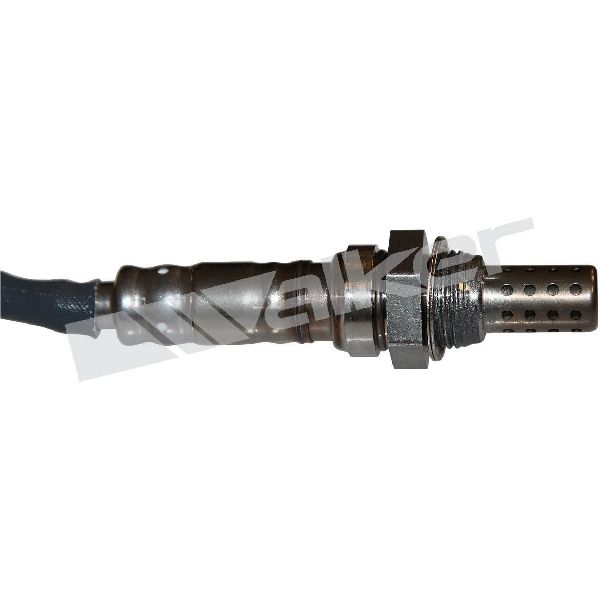
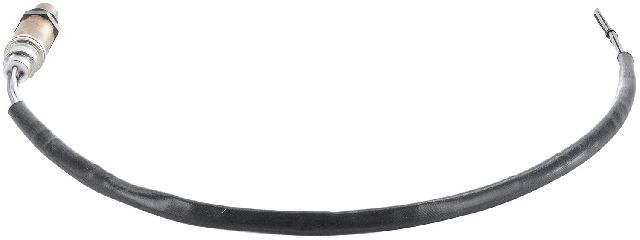
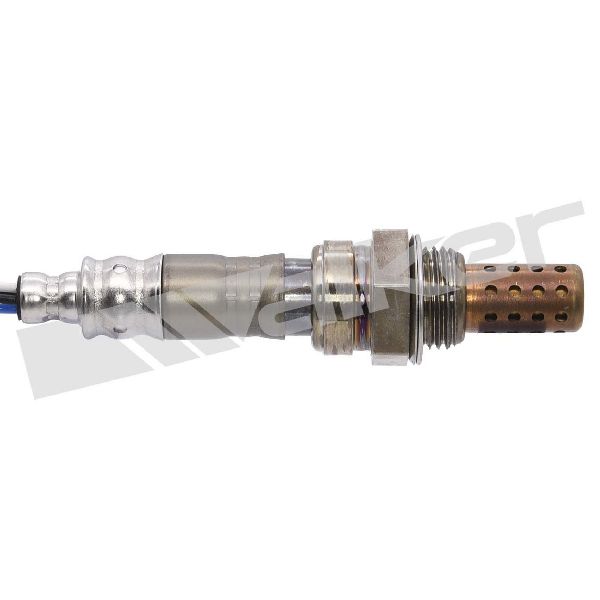
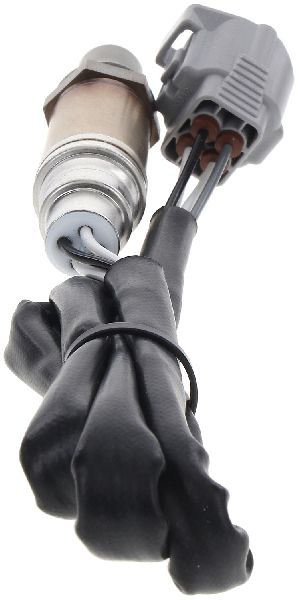
Aftermarket price range: $10-$30 - Downstream Oxygen Sensor (Bank 1, Sensor 2)
(OEM #PE5R-18-861B)— Though less common to be the root cause, it is sometimes replaced. It is the sensor that actually reports the lean condition. Often replaced unnecessarily.
Trusted brands: Denso (OEM supplier), NGK/NTK, Bosch
OEM price range: $180-$250
Aftermarket price range: $80-$150
Related Codes That Often Appear With This One
- P0137 — This code for 'O2 Sensor Circuit Low Voltage (Bank 1, Sensor 2)' can accompany P2096 as it also points to a lean reading or faulty circuit for the downstream sensor.
- P2097 — This is the opposite code ('Post Catalyst Fuel Trim System Too Rich'). TSB 01-012/20 notes that P2096 and P2097 issues can both be resolved with the same PCM software update, as the root cause is faulty logic that can't clear the code.
- P0421 — This code for 'Warm Up Catalyst Efficiency Below Threshold' can appear with P2096 if there is a persistent exhaust leak or a genuine issue with the catalytic converter.
- P0524 — 'Engine Oil Pressure Too Low'. This code is also mentioned in TSB 01-012/20 as being potentially stored erroneously along with P2096/P2097 due to the same PCM logic fault.
Technical Service Bulletins (TSBs) & Recalls
- TSB #01-012/20: For 2018-2019 CX-5s, states that P2096, P2097, and/or P0524 may appear and cannot be cleared until PCM software is updated due to improper control logic.
- TSB #01-011/19: For 2018-2019 CX-5s with Mitsubishi-made PCMs, addresses P2096 caused by a false error detection due to improper PCM logic.
- TSB #SA-009-19: A Special Service Announcement instructing dealers to contact the Mazda Technical Hotline for 2018 CX-5 models with cylinder deactivation that show a P2096, indicating a known complex issue that may relate to the cylinder head.
- TSB #01-006/16: Specifically for 2016 CX-5 models, this TSB calls for a PCM update to fix improper control logic causing P2096.
- TSB #01-002/23: While not for P2096 directly, it addresses coolant leaks from the cylinder head area on 2018-2021 models, which is related to the cracked cylinder head issue that can cause P2096.
- TSB Bulletin #01-012-20-3738: Confirms that for certain models, the check engine light for P2096:00 and P2097:00 may stay on even if the detection condition has gone, requiring a software update.
- TSB Bulletin #01-011-19-3586a: Identifies that P2096:00 (Air fuel too lean) may illuminate the check engine light specifically on vehicles equipped with Mitsubishi-manufactured PCMs.
Platform-Specific Known Issues
- A PCM software update is a very common fix required for this code, per Mazda TSBs 01-012/20, 01-011/19, and 01-006/16.
- 2018+ models with cylinder deactivation are susceptible to cracked cylinder heads, which can cause this code via an exhaust leak at the manifold.
- The code may appear in conjunction with the rocker arm recall on 2018 models, with a PCM update addressing both issues.
Mechanic-Grade Diagnostic Values
- Downstream O2 Sensor (B1S2) Voltage at steady state (warm engine) — expected: Relatively steady voltage above 0.5V-0.6V.. Failure: Voltage is stuck low (e.g., < 0.2V or 0.3V) or is fluctuating rapidly like the upstream sensor.
- Short-Term and Long-Term Fuel Trims (Freeze Frame Data) — expected: Ideally within +/- 5-7%.. Failure: Even with trims in a normal range (e.g., +5%), the P2096 code can be set due to overly sensitive PCM software, which points away from a true fuel delivery issue.
- High-Pressure Fuel System (Direct Injection) — expected: Up to 200 bar (approx. 2900 PSI) under load.. Failure: Significantly lower pressure could indicate a failing high-pressure fuel pump, though this is a rare cause for an isolated P2096.
Hidden / Shadow Codes Worth Checking
- N/A (Special Dealer Instruction): While not a formal shadow code, Mazda TSB #SA-009-19 instructs dealers to contact the Mazda Technical Hotline when a P2096 code appears on 2018 CX-5 models with cylinder deactivation. This acts as an internal flag for a known, complex issue, likely related to the cracked cylinder head problem, that requires more than standard diagnosis. (see via This is an instruction for dealers, not a code visible to standard scanners. The presence of P2096 on a 2018+ model with cylinder deactivation is the trigger.)
Scan Tool Commands That Help
- Mazda IDS (Integrated Diagnostic System): Module Reprogramming -> PCM — This is the primary function used to perform the TSB software update that corrects the overly sensitive logic causing false P2096 codes.
- Mazda IDS (Integrated Diagnostic System): Power Supply Mode — This function should be activated before starting a PCM reprogram to ensure stable battery voltage. Fluctuations in voltage can corrupt the PCM during the flash process.
- Mazda IDS or equivalent: Clear DTCs — After a successful PCM reprogram, all diagnostic trouble codes must be cleared. It is also recommended to disconnect the negative battery terminal for at least 30 seconds to reset all learned fuel trim values.
Wiring & Ground Locations
- Downstream O2 Sensor Harness — The sensor is located on the exhaust pipe after the catalytic converter. The wiring harness runs along the underbody and connects near the transmission tunnel. Access requires lifting the vehicle and possibly removing plastic underbody shields.. This harness is exposed to road debris and heat. Any damage, melting, or corrosion at the connector can disrupt the sensor's signal, causing a false lean code or other O2 sensor circuit codes.
- Upstream A/F Sensor Harness — The sensor is screwed into the exhaust manifold, visible from the top of the engine bay. The harness connects nearby.. While not the direct cause, a faulty upstream sensor reading can affect the PCM's fueling strategy, which is then monitored by the downstream sensor. Damage to this harness can contribute to overall fuel trim problems.
Real Owner Repair Stories
- Reddit user /u/Kcstew (2018 Mazda CX-5 with ~9,700 miles) — Check Engine Light with code P2096, no other drivability symptoms.
❌ Tried (didn't work) Initial diagnosis pointed towards a faulty O2 sensor.
✅ What actually fixed it The dealer performed a PCM software update per a recall/TSB related to the cylinder deactivation system. This corrected the sensitive logic and the code did not return. - Mazdas247 Forum User (on a similar SKYACTIV engine) (Mazda CX-7) — Persistent P2096 code that would not clear.
❌ Tried (didn't work) Replacing the MAF sensor, Replacing O2 sensors
✅ What actually fixed it The owner discovered that the wrong size engine air filter (for a CX-9) had been installed. This prevented the airbox from sealing correctly, creating an unmetered air leak after the MAF sensor. Installing the correct air filter resolved the code. - Mazdas247 Forum User ruthrj (2018 Mazda CX-5 Grand Touring with ~13,000 miles) — Check Engine Light with P2096 after exiting the highway.
✅ What actually fixed it The dealer service advisor noted that P2096 is a potential code associated with the rocker arm recall and that reprogramming the PCM was the likely fix for both issues simultaneously.
"I Checked Everything" — The Actual Cause
- A confirmed repair story on a similar Mazda SKYACTIV engine showed that after replacing sensors, the actual cause was an incorrectly sized engine air filter. This allowed the airbox lid to sit improperly, creating an unmetered air leak between the MAF sensor and the throttle body. An exhaust smoke test would show no leaks, but the engine was still getting air the computer didn't know about, causing a lean condition.
OEM Part Supersession History
e.g., PYX1-18-881F (example PCM software)→Undisclosed later calibration version— To correct overly sensitive diagnostic thresholds for P2096 and other related codes, and to address issues with the cylinder deactivation system.
Heads up: The PCM must be updated using the Mazda IDS. The update addresses a logic flaw; simply clearing the code on an old software version may not resolve the issue, as the code can become 'stuck'.
Model Year Variations Within This Range
- 2018-2023: Models in this range with the 2.5L SKYACTIV-G engine may feature cylinder deactivation. These specific engines are susceptible to a known cylinder head cracking issue near the exhaust manifold, which creates an exhaust leak and can trigger P2096. Symptoms often include a burning oil smell before the CEL appears.
- 2024+: Some lower trim levels of the 2024 CX-5 with the 2.5L engine were reportedly produced without cylinder deactivation. This may potentially make them less prone to the specific type of cylinder head crack associated with the cylinder deactivation system's heat cycling and vibrations.
Diagnostic Flowchart
Other Known Issues on This Vehicle
Issues unrelated to this code that are worth knowing about as an owner of this generation:
- Premature Rear Brake Wear 🟠 Medium — Commonly reported, with some owners replacing rear pads as early as 20,000-30,000 miles. Can be caused by sticky caliper slide pins or the electronic parking brake not fully retracting. (Ref: TSB 04-003/24 addresses various brake noises and may involve updated parts, but no specific recall for wear.)
- Infotainment 'Ghost Touch' and System Failure 🟠 Medium — Widespread issue on 2017-2020 models where the screen registers phantom touches, making it unusable. A class-action lawsuit led to a warranty extension (CSP13) for the Connectivity Master Unit (CMU). (Ref: TSB 09-003/22 and Service Program SSPB6 / CSP13 address this. Repair may be covered under the warranty extension program.)
- Cracked Cylinder Head (2018+ w/ Cylinder Deactivation) 🔴 High — A significant but not universal issue affecting 2.5L engines with cylinder deactivation. Can occur at various mileages, causing oil/coolant leaks and potentially P2096. (Ref: Multiple TSBs exist, including SA-009-19 (for P2096), 01-002/23 (coolant leak), and others for the turbo version. No recall has been issued for the naturally aspirated engine's cylinder head crack.)
- Carbon Buildup on Intake Valves 🟡 Low — A potential long-term issue for all Gasoline Direct Injection (GDI) engines, including the SKYACTIV-G. Symptoms like rough idle or misfires may appear after 80,000-100,000+ miles. Mazda's engine design attempts to mitigate this, and it is not considered a widespread problem compared to other brands.
Used vs. New Parts: Buying Guide for This Vehicle
When a used part is the smart pick: For this repair, used parts are generally not recommended for the most common failure items. However, if a physical section of the exhaust pipe (not the catalytic converter itself) is rusted or damaged, a clean, rust-free used section from a donor vehicle in a dry climate can be a cost-effective replacement.
Donor-vehicle mileage cap: roughly under 50000 miles for the part to have meaningful remaining life.
What to inspect on the donor part:
- For exhaust components, inspect for deep rust, especially at welds and flanges.
- Check for any cracks or signs of previous repair (welds that are not factory).
- Ensure all mounting hangers are intact and not rusted through.
OEM-only on this vehicle (don't cheap out):
- Catalytic Converter: Aftermarket converters often use less precious metal, may not satisfy the PCM's efficiency monitoring, and can cause recurring P0420 or P2096 codes. It is also illegal in many jurisdictions to sell a used catalytic converter.
- Powertrain Control Module (PCM): While a used PCM could be installed, it requires dealer-level programming to the vehicle's VIN and specific configuration. The primary fix for P2096 is a software update to the existing PCM, not a hardware replacement.
Aftermarket brands forum-validated for this vehicle:
- Denso (O2 Sensors)
- NGK / NTK (O2 Sensors)
Brands owners have reported issues with on this vehicle:
- Unbranded or 'universal' catalytic converters should be avoided as they have a high failure rate for passing ECU monitors.
- Generic, low-cost oxygen sensors are known to have a shorter lifespan and may not provide accurate readings, leading to the code returning.
Real Owner Stories
Aggregated from forums and TSBs cited above. Mileages and costs reflect what owners reported in those sources.
2018 Mazda CX-5
Symptoms: P2096 code appeared; vehicle was also subject to a separate rocker arm recall.
What fixed it: The dealer performed a PCM update that addressed both the P2096 TSB and the rocker arm recall.
Source hint: Mazdas247.com thread 'P2096 2018 CX-5, rocker arm recall' (Jul 13, 2019)
2014 Mazda CX-5
Symptoms: Codes P2096 and P0421; owner replaced O2 sensors and spark plugs but the codes remained.
What fixed it: Inspection revealed a rusted exhaust pipe at the hanger, which is a common source of unmetered oxygen leaks.
Source hint: Reddit r/CX5 thread 'Codes P2096 & P0421' (2023)
Mazda CX-5 (Year Unspecified)
Symptoms: P2096 code; dealer replaced both O2 sensors but the code did not disappear; dealer then suggested expensive fuel injector replacement.
What fixed it: The owner discovered an incorrect air filter (intended for a CX-9) had been installed by mistake, creating an air leak.
Source hint: Mazdas247.com thread 'O2 Sensor issues P2096, error codes not disappearing' (Jul 29, 2023)
Related OBD-II Codes
Frequently Asked Questions
Does TSB 01-012/20 apply to my 2018 CX-5 if I can't clear the P2096 code?
I have a 2018 CX-5 with cylinder deactivation and a P2096 code; is there a specific concern I should know about?
Can an incorrect air filter cause a P2096 code on my Mazda?
Is the P2096 code related to the rocker arm recall on 2018 models?
My 2016 CX-5 has a P2096 code; is there a software fix for older models too?
Should I replace my downstream O2 sensor first to fix P2096?
Helpful Videos

We Have This Part in Stock

The information in this article is provided for general reference and educational purposes only. Vehicle specifications, procedures, and part compatibility can vary by production date, trim level, and region. Always consult your vehicle's factory service manual and verify part numbers before purchasing or performing repairs. Safety-critical components such as airbags, seat belts, and braking systems should be installed by a qualified professional.
- Mazda CX-5:
- 🧭 Diagnostic Flowchart
- 🎬 Helpful Videos
- 🛍️ Shop This Part
- What's Unique About the 2017-2024 Mazda CX-5
- Symptoms You May Notice
- Most Likely Causes
- Rare But Worth Checking
- Diagnosis Steps
- Parts You'll Likely Need
- Related Codes That Often Appear With This One
- Technical Service Bulletins (TSBs) & Recalls
- Platform-Specific Known Issues
- Mechanic-Grade Diagnostic Values
- Hidden / Shadow Codes Worth Checking
- Scan Tool Commands That Help
- Wiring & Ground Locations
- Real Owner Repair Stories
- "I Checked Everything" — The Actual Cause
- OEM Part Supersession History
- Model Year Variations Within This Range
- Other Known Issues on This Vehicle
- Used vs. New Parts: Buying Guide for This Vehicle
- Real Owner Stories
- 2018 Mazda CX-5
- 2014 Mazda CX-5
- Mazda CX-5 (Year Unspecified)
- Related OBD-II Codes
- Frequently Asked Questions
- 🎟️ Get 5% Off