

P2096 on 2018-2020 Mazda MAZDA6: Causes for Lean Fuel Trim and Fixes
On a 2018-2020 Mazda6, code P2096 is most often caused by a PCM software issue that requires a dealer update, as noted in several TSBs (01-011-19-3586a, 01-012-20-3738, SSPC0). A key symptom of this glitch is the inability to clear the code with a standard scanner. If the code can be cleared but returns, the next most likely causes are exhaust leaks or, less commonly, a faulty downstream oxygen sensor.
- Before buying any parts, try to clear the code. If it won't clear, you most likely need a dealer software update.
- This code is caused by a problem detected by the *rear* oxygen sensor, often due to an exhaust leak *before* that sensor.
- Do not immediately assume the oxygen sensor is bad; software issues and exhaust leaks are more common on this specific vehicle.
- Ignoring this code can lead to poor fuel mileage and potential long-term damage to the catalytic converter.
What's Unique About the 2018-2020 Mazda MAZDA6
What makes the 2018-2020 Mazda6 unique regarding P2096 is a well-documented software issue. Mazda issued technical service bulletins (TSBs) acknowledging that on some vehicles, this code can appear and become impossible to clear, even if the original problem is gone. This glitch is particularly noted on vehicles with PCMs manufactured by Mitsubishi and requires a dealer-level software update to resolve. TSB 01-011-19-3586a specifically calls out this issue, stating that "Due to improper control logic of the PCM, a false error may be detected."
Diagnostic Flowchart
Tap your situation to follow the diagnostic path that matches what you're seeing on this vehicle.
Symptoms You May Notice
- Check Engine Light is on.
- Decreased fuel efficiency.
- Rough or uneven idle.
- Hesitation or poor acceleration.
- Inability to pass a state emissions/smog test.
- Replacing the oxygen sensor without checking for software TSBs or exhaust leaks first. Many owners report the code returning after sensor replacement because the root cause was the PCM software.
- Replacing the catalytic converter. A P2096 code is rarely caused by a bad converter; a failing converter would typically trigger a P0420 (Catalyst Efficiency) code instead.
Most Likely Causes
- PCM Software Glitch 🔴 High Probability Mazda TSBs #01-011-19-3586a, #01-012-20-3738, and #SSPC0 confirm this issue. The PCM logic has an overly sensitive threshold for triggering the code, or a glitch prevents it from being cleared after a repair. TSB 01-011-19-3586a specifically applies to 2018-2019 Mazda6 vehicles with VINs lower than JM1GL**503220 and Mitsubishi-made PCMs.
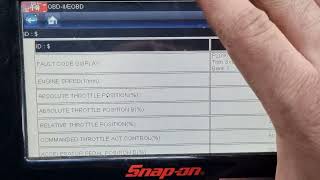
How to confirm: The primary symptom is that the P2096 code cannot be cleared with a standard OBD-II scanner, even after 🎬 Watch: See how this software glitch prevents clearing the code. disconnecting the battery. The check engine light remains on. A Mazda dealer can verify the PCM manufacturer and software version to confirm the TSB applies.
Typical fix: The Powertrain Control Module (PCM) needs to be reprogrammed with updated software by a Mazda dealership or a qualified shop with J2534 programming capabilities. This is a software-only fix; no parts are replaced.
Est. part cost: $0 - Exhaust Leak 🟡 Medium Probability Leaks can develop at gaskets (especially the exhaust manifold gasket) or flex pipes, allowing outside air to be sucked into the exhaust stream. This extra, unmetered oxygen tricks the downstream O2 sensor into reporting a false lean condition.
How to confirm: Visually inspect the exhaust system from the engine to the rear O2 sensor for cracks, rust, or loose connections. A common method is to have a shop use a smoke machine to pressurize the exhaust 🎬 Watch: A mechanic explains how exhaust leaks trigger this code. and make leaks easy to spot. You can also listen for hissing or ticking sounds that change with engine RPM.
Typical fix: Repairing the leak, which may involve replacing a failed gasket or welding a cracked pipe.
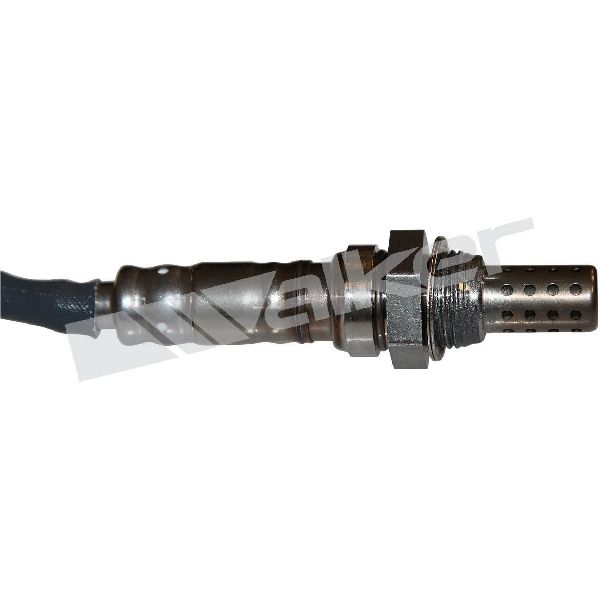
Est. part cost: $20-$150 - Faulty Downstream Oxygen Sensor ⚪ Low Probability → Shop Oxygen Sensor Sensors can degrade over time and provide inaccurate readings. However, on this platform, it's less common than software issues or exhaust leaks. Owners often replace the sensor only to have the code return, indicating another root cause.
How to confirm: Use an OBD-II scanner with live data capabilities to monitor the voltage of the downstream O2 sensor (O2S12). A healthy sensor should show a relatively stable voltage (typically fluctuating slowly around 0.5-0.8V). If it's stuck low (e.g., below 0.2V), it indicates a persistent lean reading.
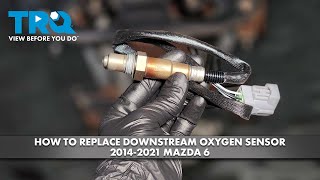
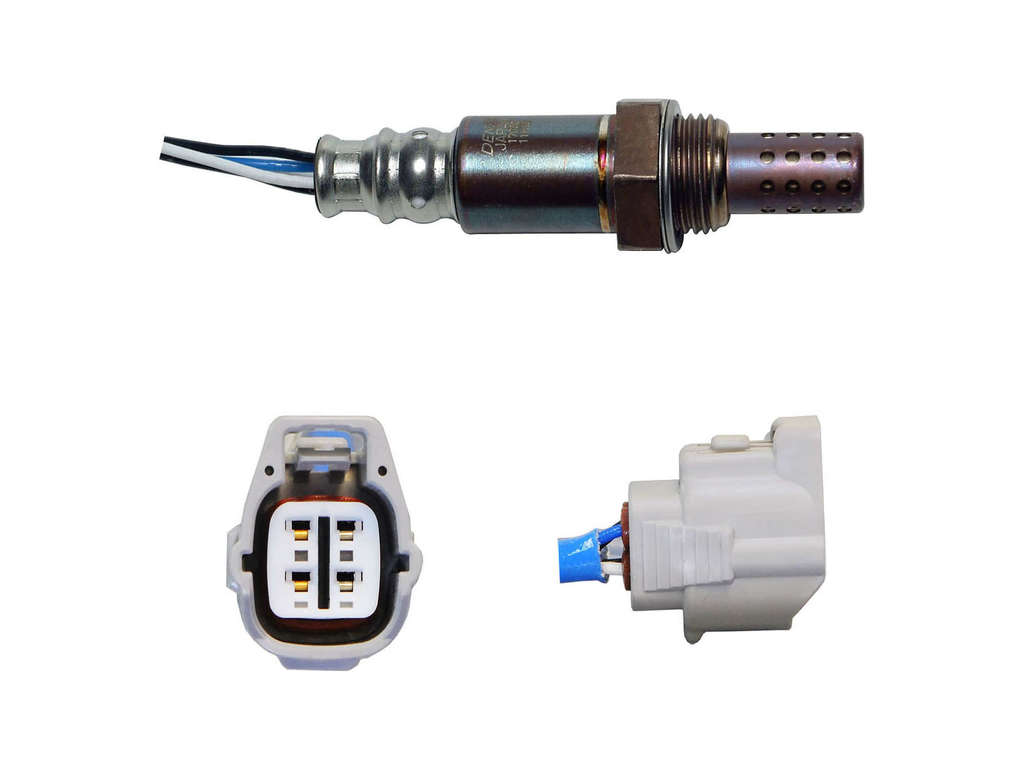
Typical fix: Replace the downstream (post-catalyst) oxygen sensor. Using an OEM-quality brand like Denso is highly recommended for Japanese vehicles. The Mazda OEM part number for the non-turbo 2.5L engine is often cross-referenced to Denso part #234-4939. 🎬 See this walkthrough on replacing the downstream oxygen sensor.
Est. part cost: $70-$180
Rare But Worth Checking
- Incorrect Air Filter Installation: A user on a Mazda forum reported that an improperly sized air filter for a different model was installed, causing the airbox lid to not seal. This created a significant unmetered air leak after the MAF sensor, leading to a P2096 code.
- Clogged or Failing Catalytic Converter: → Shop Catalytic Converter While a P0420 code is more common for a failing converter, a partial clog or other internal damage can sometimes lead to erratic O2 sensor readings that trigger P2096. This is a rare cause and should only be considered after all other possibilities are exhausted.
Diagnosis Steps
- Connect an OBD-II scanner and attempt to clear the P2096 code.
- If the code CANNOT be cleared, your vehicle is almost certainly affected by the software issue described in Mazda TSBs #01-011-19-3586a and #01-012-20-3738. The fix is a PCM software update at a dealership.
- If the code clears but returns after driving, proceed with further diagnosis.
- Check for any other stored trouble codes, especially P0171 (System Too Lean Bank 1), which would indicate a problem upstream of the catalytic converter. Address those first.
- Thoroughly inspect the exhaust system for leaks between the engine and the downstream O2 sensor. A smoke test is the most effective method. Listen for hissing sounds and look for black soot trails or rust at joints and gaskets.
- Use a scanner to monitor live data for the downstream O2 sensor (O2S12). The voltage should be relatively steady. If it's stuck low (e.g., below 0.2V), it confirms a lean reading but doesn't pinpoint the cause.
- Check for intake system vacuum leaks after the Mass Airflow (MAF) sensor, ensuring the air filter box is properly sealed and all hoses are secure.
- If no exhaust or vacuum leaks are found and the wiring is intact, the downstream oxygen sensor is the most likely remaining physical cause.
Parts You'll Likely Need
- PCM Reprogramming Service — This is not a physical part, but a service to fix the most common cause of a persistent P2096 code on this vehicle, as documented by Mazda TSBs.
Trusted brands: Mazda Dealership Service
OEM price range: $150-$300
Aftermarket price range: N/A - Downstream Oxygen Sensor
(OEM #PE12-18-86Z)— If software and leaks are ruled out, the sensor itself may have failed. It provides the reading that triggers the code.
Trusted brands: Denso (OEM Manufacturer, Part #234-4939), NGK/NTK
OEM price range: $150-$220
Aftermarket price range: $70-$120 - Exhaust Manifold Gasket — A failed gasket between the cylinder head and exhaust manifold is a common source of an exhaust leak that can cause a P2096 code.
Trusted brands: Fel-Pro, Bosal
OEM price range: $25-$50
Aftermarket price range: $15-$30
Related Codes That Often Appear With This One
- P2097 — This code for 'Post Catalyst Fuel Trim System Too Rich' can appear alongside P2096 due to the same PCM software glitch mentioned in TSB #01-012-20-3738 and SSPC0.
- P0524 — This code for 'Engine Oil Pressure Too Low' is also mentioned in TSBs #01-012-20-3738 and #SSPC0 as a code that may become 'stuck' in the PCM along with P2096 due to the software issue.
Technical Service Bulletins (TSBs) & Recalls
- 01-011-19-3586a: Notes P2096 due to a lean condition on vehicles with Mitsubishi-made PCMs, requiring a software update. Affects 2018-2019 Mazda6 with VINs lower than JM1GL**503220.
- 01-012-20-3738: Addresses P2096/P2097/P0524 codes that cannot be cleared and require a PCM software update due to improper PCM control logic.
- SSPC0: A Special Service Program for California vehicles that addresses the non-clearing DTC issue for P2096/P2097/P0524 to prevent smog check failures.
Platform-Specific Known Issues
- A software glitch in the Powertrain Control Module (PCM), particularly those made by Mitsubishi, can cause the P2096 code to illuminate and be impossible to clear with a standard scanner. (Source: TSB #01-011-19-3586a).
- Some vehicles may store P2096, P2097, and/or P0524 and the check engine light will stay on even if the condition that caused it is no longer present, requiring a PCM software update. (Source: TSB #01-012-20-3738, #SSPC0).
- The issue is prevalent enough that Mazda issued Special Service Program (SSP) C0 for California-registered vehicles, specifically to address the inability to clear these codes, which would cause a failed smog check.
Mechanic-Grade Diagnostic Values
- Post-Catalyst Fuel Trim Trigger Condition — expected: The code sets if the short-term fuel feedback correction (SHRTFT12) is ≥ 2% AND the sum of short and long-term feedback (SHRTFT12+LONGFT12) is ≥ 2.3-2.5% for a continuous 25-second period.. Failure: Meeting these specific thresholds in live data confirms the PCM is commanding the code.
- High Pressure Fuel System Pressure (Direct Injection) — expected: Approximately 400 PSI at idle, rising to 1600-1850 PSI under wide-open throttle.. Failure: Significantly lower pressure than expected indicates a fuel delivery issue (pump or filter). Pressure that is stuck high could indicate a sensor or regulator issue.
- Downstream O2 Sensor (HO2S) Voltage — expected: A relatively stable voltage, typically fluctuating slowly between 0.5V and 0.8V on a healthy system after warm-up.. Failure: A voltage that is habitually low or stuck below 0.2V indicates a lean condition (excess oxygen) is being detected.
Hidden / Shadow Codes Worth Checking
- P2096:00: The ':00' is a Failure Type Code (FTC) or sub-code indicating a general 'Component Fault'. It does not point to a specific component but confirms the general nature of the DTC trigger, which in this case is the fuel trim calculation exceeding its limit as described in the TSBs and diagnostic documents. (see via Most professional OBD-II scanners, including the Mazda MDARS/M-MDS, will display this two-digit suffix.)
Scan Tool Commands That Help
- Mazda Diagnostic And Repair Software (MDARS): Module Reprogramming — This function is required to load the updated software into the PCM to fix the non-clearing P2096 code as specified in TSBs 01-011-19-3586a and 01-012-20-3738.
- Mazda Diagnostic And Repair Software (MDARS): Initial Learning — This procedure must be performed after reprogramming the PCM or TCM to allow the control module to learn adaptive values and ensure proper operation.
- Mazda Diagnostic And Repair Software (MDARS): Clear DTCs & Hard Reset — After reprogramming, a specific procedure is required: clear DTCs, turn off ignition, lock the doors, and wait at least 10 minutes. This forces a full power-down and reset of the vehicle's modules.
Wiring & Ground Locations
- Engine Room Ground Point [WD63395] — In the engine room, specific to the SKYACTIV-G 2.5 and 2.5T engines. Exact location is detailed in the official Mazda wiring diagram guide.. A poor engine or PCM ground can cause erratic sensor readings, including from the oxygen sensors, leading to false diagnostic codes. Verifying this ground is tight and free of corrosion is a key electrical diagnostic step.
- Chassis Ground Point (for Jump-Starting) — A specific, unpainted bolt or bracket on the chassis inside the engine bay, as indicated in the owner's manual for jump-starting.. This is a known-good, factory-designated grounding point. It can be used as a reference point for testing sensor ground circuits with a multimeter.
Real Owner Repair Stories
- Mazdas247 Forum User (Mazda CX-7 (similar Skyactiv engine logic)) — Persistent P2096 code that would not stay cleared.
❌ Tried (didn't work) Clearing the code with a scanner (it would return), Cleaning the MAF sensor, Replacing spark plugs
✅ What actually fixed it The owner discovered a previous shop had installed the wrong size air filter (for a CX-9). The incorrect filter prevented the airbox from sealing, creating a large, unmetered air leak after the MAF sensor. Replacing the air filter with the correct part number resolved the P2096 code permanently.
"I Checked Everything" — The Actual Cause
- A confirmed repair story showed a persistent P2096 was caused by an improperly sized air filter that prevented the airbox lid from sealing correctly. This created a major vacuum leak *after* the MAF sensor but *before* the engine. An exhaust smoke test would show no leaks, and a typical intake smoke test might miss a leak at the airbox itself, leading to misdiagnosis focused on sensors or the exhaust system.
OEM Part Supersession History
PE12-18-86Z→PE12-18-86Z (current)— No supersession found; this part number appears stable for the 2014-2021 model years.
Heads up: While the OEM part is stable, forum users caution that some aftermarket oxygen sensors, even from reputable brands, can provide incorrect waveforms that are not interpreted correctly by Mazda's PCM, leading to the code returning. Using OEM or the original equipment manufacturer (Denso) is highly recommended.
Model Year Variations Within This Range
- 2018-2019: Vehicles with VINs lower than JM1GL**503220 and equipped with a Mitsubishi-made PCM are specifically called out in TSB #01-011-19-3586a as being prone to a false P2096 code due to improper control logic, requiring a software update.
Helpful Videos
![How to Fix P2096 Engine Code in 4 Minutes [2 DIY Methods / Only $9.53]](https://img.youtube.com/vi/-id6j6Bm5Fk/mqdefault.jpg)
We Have This Part in Stock

The information in this article is provided for general reference and educational purposes only. Vehicle specifications, procedures, and part compatibility can vary by production date, trim level, and region. Always consult your vehicle's factory service manual and verify part numbers before purchasing or performing repairs. Safety-critical components such as airbags, seat belts, and braking systems should be installed by a qualified professional.
- Mazda MAZDA6:
- 🧭 Diagnostic Flowchart
- 🎬 Helpful Videos
- 🛍️ Shop This Part
- What's Unique About the 2018-2020 Mazda MAZDA6
- Symptoms You May Notice
- Most Likely Causes
- Rare But Worth Checking
- Diagnosis Steps
- Parts You'll Likely Need
- Related Codes That Often Appear With This One
- Technical Service Bulletins (TSBs) & Recalls
- Platform-Specific Known Issues
- Mechanic-Grade Diagnostic Values
- Hidden / Shadow Codes Worth Checking
- Scan Tool Commands That Help
- Wiring & Ground Locations
- Real Owner Repair Stories
- "I Checked Everything" — The Actual Cause
- OEM Part Supersession History
- Model Year Variations Within This Range
- 🎟️ Get 5% Off