

P2096 on 2002-2006 Mini Cooper S (R53): Causes and Fixes for Post Catalyst Lean Code
On the R53 Mini Cooper S, P2096 is almost always caused by an exhaust leak between the two oxygen sensors. Inspect the exhaust manifold and flex pipe for cracks or bad gaskets before replacing any parts. A smoke test is the best way to confirm. In some cases, even after the repair, a BMW/MINI-specific scan tool is needed to reset DME adaptations to clear the code permanently.
- Do not replace any O2 sensors until you have definitively ruled out an exhaust leak.
- Perform a smoke test on the exhaust system; it is the most reliable way to find the leak.
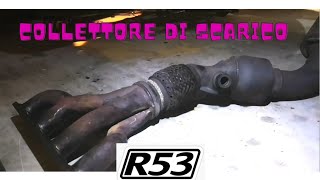
- The most likely leak location is the flex pipe section or collector welds of the factory exhaust manifold.
- After repairing the mechanical fault, you may need a BMW/MINI-specific tool (like INPA) to reset the DME fuel adaptations to permanently clear the check engine light.
- A used, intact exhaust manifold can be a cost-effective solution compared to a new OEM part.
What's Unique About the 2002-2006 Mini Cooper
The first-generation Mini Cooper S (R53) is notoriously prone to developing exhaust leaks, which is the number one cause of P2096 on this specific car. The factory exhaust manifold's flex pipe section and the collector welds are very common failure points that crack from age and stress. Gaskets at the flanges also frequently fail. While the code points to a lean condition, it's often a 'false lean' reading caused by outside air being sucked into the exhaust stream, tricking the downstream O2 sensor. This issue is so prevalent that many owners and technicians immediately suspect an exhaust leak before considering other causes.
Symptoms You May Notice
- Check Engine Light (SES) is on
- Reduced fuel economy
- Rough idle in some cases
- Audible exhaust leak (hissing, ticking, or tractor-like sound, especially when cold)
- Hesitation on acceleration, particularly when the engine is cold
- Immediately replacing the oxygen sensors. Many owners replace both O2 sensors only to have the code return because the root cause was an exhaust leak. Multiple sources, including forum mentions of a TSB, advise diagnosing for leaks first.
Most Likely Causes
- Exhaust Leak 🔴 High Probability The factory exhaust manifold is a known weak point. The flexible mesh pipe (flex pipe) cracks internally and externally, and the collector where the four pipes merge is prone to cracking at the welds. Gaskets between the cylinder head and manifold, and at the downstream flange, also fail.
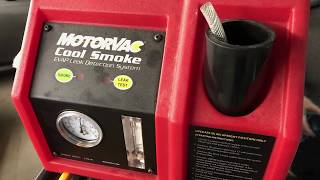
How to confirm: Perform a visual inspection of the entire exhaust system from the engine to the rear O2 sensor. Look for black soot marks around flanges or visible cracks in the pipes. The most effective method is to have a smoke test performed on the exhaust system to pinpoint the leak. 🎬 Watch: How to perform a smoke test on your R53. Some owners also pressurize the cold exhaust with a shop vac in 'blow' mode and spray soapy water on joints to look for bubbles.
Typical fix: Weld the crack or replace the leaking component. Due to the common failure location, this often means replacing the entire exhaust manifold/catalytic converter assembly. In some cases, a new flex pipe can be welded in. Failed gaskets are a simpler replacement.
Est. part cost: $20-$40 for gaskets, $250-$1000+ for a new manifold assembly. Used manifolds can sometimes be found for $100-$250. - Faulty Downstream (Post-Catalyst) Oxygen Sensor 🟡 Medium Probability → Shop Oxygen Sensor O2 sensors are consumable parts that degrade over time, typically after 80k-100k miles. Their readings can become slow or biased, leading to false codes.
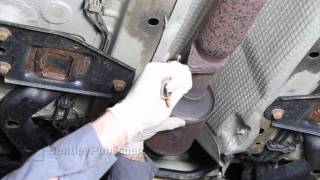
How to confirm: Use a scan tool to monitor the live data from the downstream O2 sensor on a fully warmed engine. A healthy sensor with no exhaust leaks should show a relatively steady voltage, typically around 0.5V to 0.8V. If the voltage is stuck low (e.g., below 0.2V) or fluctuates rapidly like the upstream sensor, and you have confirmed there are absolutely no exhaust leaks, the sensor is likely faulty. 🎬 See this DIY walkthrough for replacing the post-catalyst oxygen sensor.
Typical fix: Replace the downstream (post-catalyst) oxygen sensor. The pre-cat and post-cat sensors on the R53 are identical parts, so some owners have swapped them for diagnosis.
Est. part cost: $80-$180 - Intake System Vacuum Leak ⚪ Low Probability Aging plastic and rubber components in the intake system can crack. Common culprits include the plastic charge pipe between the throttle body and supercharger, intercooler boots, or brittle vacuum lines, such as those connected to the JCW airbox if equipped.
How to confirm: Perform a smoke test on the intake system. With the engine running, you can also (carefully) spray brake cleaner or starting fluid around suspected vacuum lines; a change in engine idle indicates a leak. High positive fuel trims at idle that decrease with RPM also suggest a vacuum leak.
Typical fix: Replace the cracked hose, boot, or gasket.
Est. part cost: $15-$100
Rare But Worth Checking
- Fuel Delivery Issue: A weak fuel pump or clogged fuel filter can cause a true lean condition, but this will usually trigger other codes (like P0171, System Too Lean) before or alongside P2096.
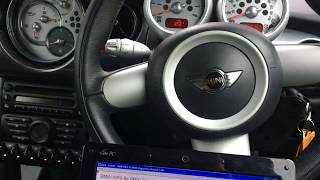
- DME Adaptation Reset Needed: On MINIs, P2096 can sometimes be a 'sticky' code that won't clear with a basic scanner even after the mechanical fix is complete. The fuel trim adaptations in the engine computer (DME) may need to be reset using a more advanced, BMW/MINI-specific scan tool like INPA or a Foxwell scanner with MINI software. The car may eventually re-learn on its own over several drive cycles, but a manual reset is often required 🎬 Watch: How to reset DME adaptation values using INPA. to turn off the light immediately.
- Faulty PCV Valve: A failing PCV valve can cause unmetered air to enter the crankcase and eventually the intake, leading to a lean condition. One owner reported this as a contributing factor alongside an exhaust leak. A 'glove test' (placing a rubber glove over the oil filler neck to see if it inflates) can help diagnose a bad PCV.
Diagnosis Steps
- Read the code with an OBD-II scanner to confirm P2096 is present. Check for any other codes. Note that P2096 is a generic code; a BMW/MINI-specific scanner may reveal more descriptive fault codes.
- Thoroughly inspect the exhaust system for leaks. Pay close attention to the exhaust manifold, flex pipe, and all gasket flanges between the engine and the second O2 sensor. Look for soot/black marks or listen for audible ticks.
- For a definitive diagnosis, perform an exhaust smoke test. Introduce smoke into the tailpipe (with the engine off and cold) and look for it escaping from any cracks or bad gaskets.
- If no exhaust leaks are found, use a scan tool to observe the live voltage data for the downstream (post-catalyst) O2 sensor. It should be relatively stable between 0.5V and 0.8V on a warm engine at steady RPM. If it's stuck low or fluctuating wildly, it may be faulty.
- If exhaust and O2 sensors seem okay, check for intake vacuum leaks using a smoke test on the intake tract. Pay attention to fuel trims at idle; if they are high (e.g., >10%) it points towards a vacuum leak. A long-term fuel trim of 15% at idle that drops to 4-5% when driving is a strong indicator of a vacuum leak.
- As a final step, if parts have been replaced but the code persists, use a MINI-specific scan tool (like INPA or Foxwell) to reset the DME's fuel adaptations. A standard code clear may not be sufficient.
Parts You'll Likely Need
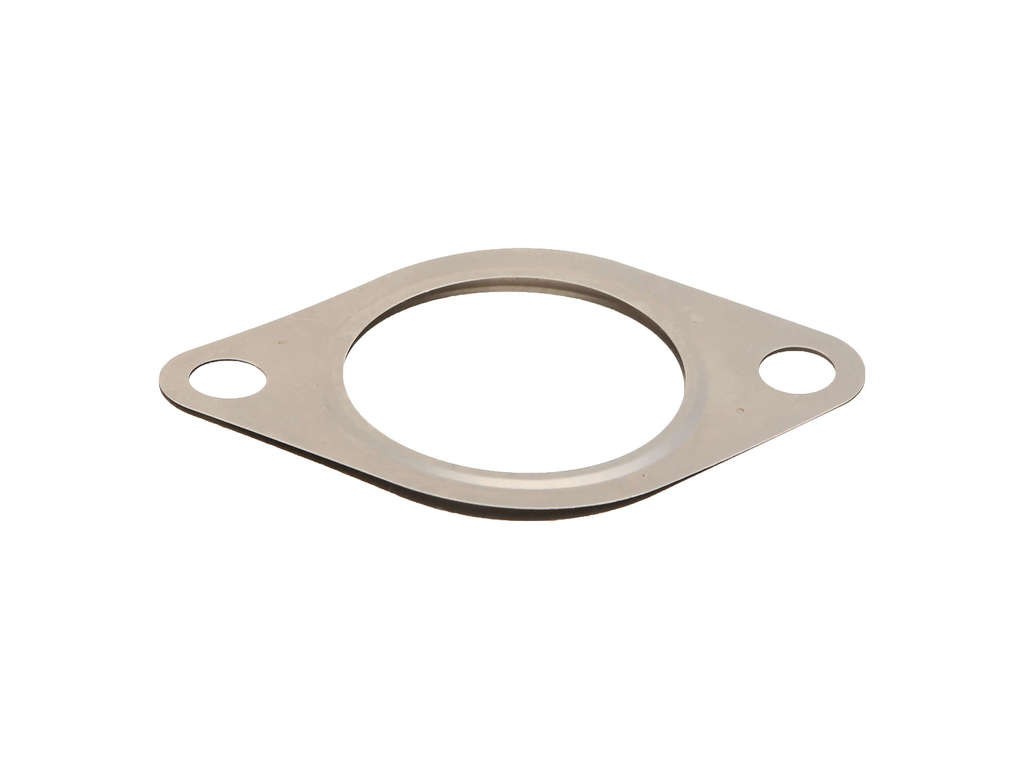
- Exhaust Manifold Gasket (Head to Manifold)
(OEM #11621174968)— Failed gaskets are a common source of exhaust leaks that trigger this code. This part number fits R50, R52, and R53 models.
Trusted brands: Victor Reinz, Elring, Genuine MINI/BMW
OEM price range: $20-$40
Aftermarket price range: $10-$25 - Downstream Oxygen Sensor (Post-Catalyst)
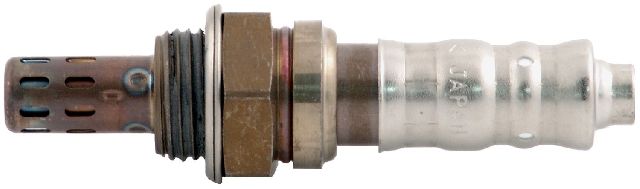
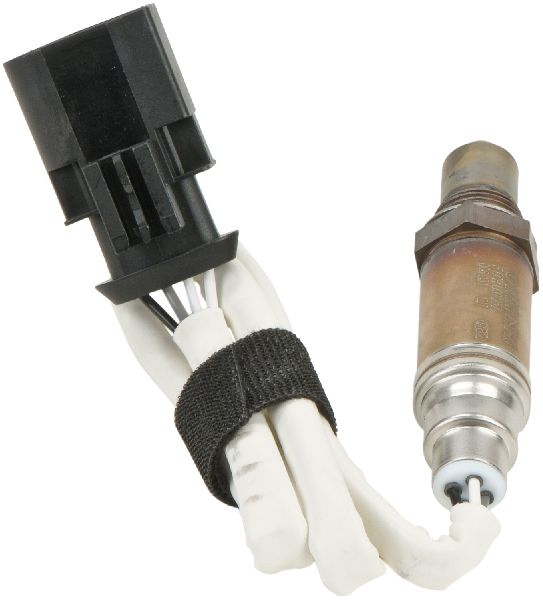
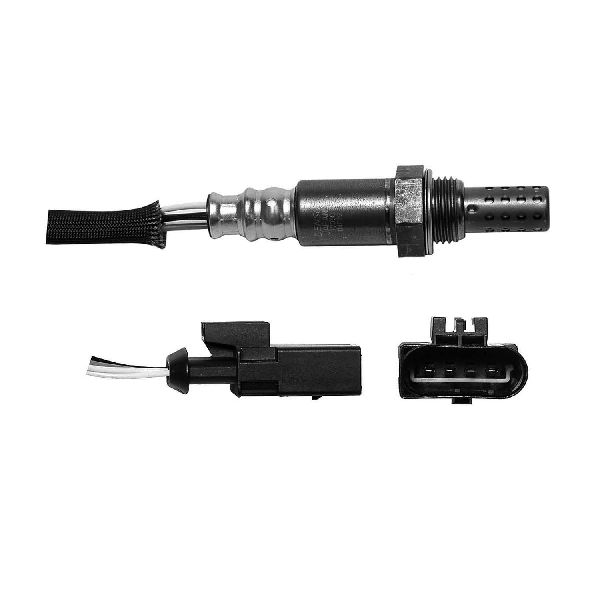
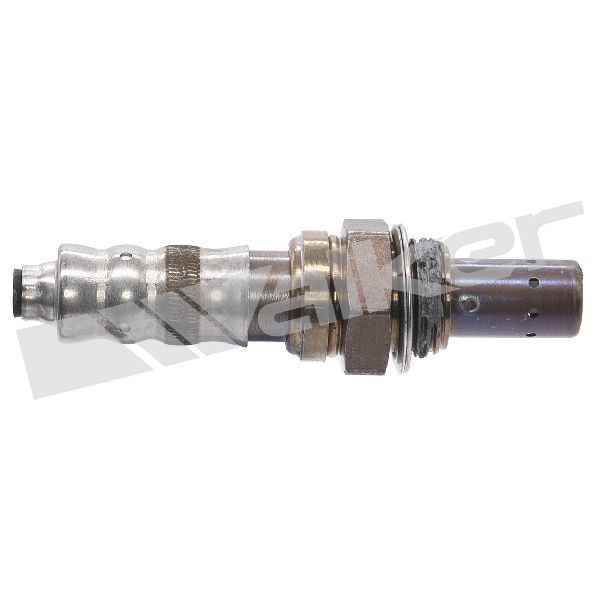
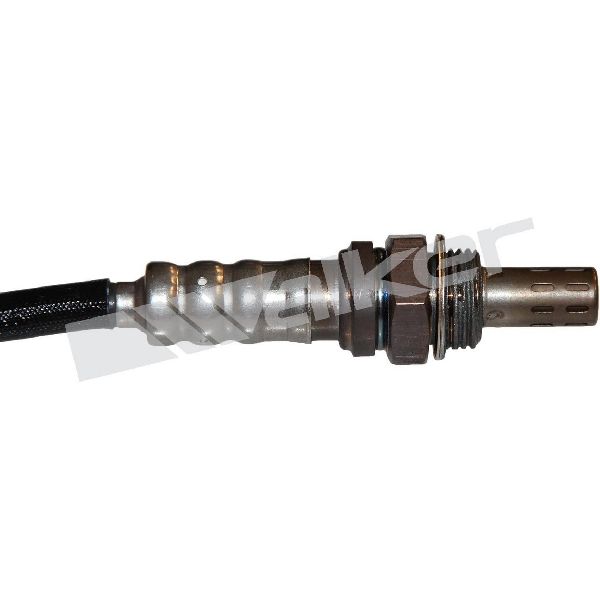
(OEM #11780872674)— If exhaust leaks are ruled out, a failing sensor is the next most likely culprit. Note: The upstream and downstream sensors are the same part number on the R53.
Trusted brands: Bosch, NTK, Denso
OEM price range: $150-$200
Aftermarket price range: $80-$150 - Exhaust Manifold with Integrated Catalytic Converter — Often required if the original manifold's flex pipe or collector has cracked, which is a very common failure on the R53. Aftermarket options are available.
Trusted brands: Walker Exhaust, MagnaFlow, Used OEM
OEM price range: $1000+
Aftermarket price range: $300-$700
Technical Service Bulletins (TSBs) & Recalls
- While no specific TSB number was found in the searches, multiple forum users reference a TSB that advises against immediately replacing O2 sensors for this code, pointing instead to other causes like leaks. One user on Reddit mentioned, 'there are also easily found TSB's that clearly state this can not be caused by a bad sensor!!!'
Platform-Specific Known Issues
- Cracked Exhaust Manifold/Flex Pipe: → Shop Exhaust Manifold The flex pipe on the stock exhaust manifold is a well-documented failure point that cracks and causes leaks, leading directly to code P2096. One owner on North American Motoring noted, 'This break is really common. I had exhaust manifolds break in the exact same place on two Minis last year.'
- Persistent Code After Repair: This code can be difficult to clear permanently without a scan tool capable of resetting MINI-specific engine adaptations (fuel trims). A standard code clear may not be sufficient. A user on North American Motoring stated, 'The P2096 code is one of those codes that cannot be cleared by an over the counter OBDII scanners. It has to be cleared by the dealer or shop that has one of those special diagnostic machines.' Software like INPA is often cited as the solution.
Mechanic-Grade Diagnostic Values
- Long Term Fuel Trim (LTFT) at Idle — expected: Close to 0%, ideally within +/- 5%. Failure: A high positive value, such as +15%, points strongly to an unmetered air (vacuum) leak.
- Long Term Fuel Trim (LTFT) while driving — expected: Should remain relatively low, within +/- 5-7%. Failure: If a high idle trim (e.g., +15%) drops to a much lower value (e.g., +4-5%) while driving, it further confirms a vacuum leak as the cause.
- Post-Catalyst O2 Sensor Voltage (steady cruise) — expected: Relatively steady voltage between 0.4V and 0.8V.. Failure: Voltage stuck low (e.g., < 0.2V) or fluctuating rapidly like the pre-cat sensor indicates a problem (either a leak or a bad sensor).
- Engine Vacuum at Idle — expected: A steady reading around 19-21 inHg indicates good engine health and no major vacuum leaks.. Failure: A low or fluctuating vacuum reading would indicate a significant vacuum leak or other engine mechanical issues.
Scan Tool Commands That Help
- INPA: Engine -> R53 DME -> F6 (Activate) -> F3 (Reset adaptation values) — This is critical for clearing 'sticky' P2096 codes after a mechanical repair. A standard OBD-II clear often fails to extinguish the light permanently. This function resets the long-term fuel trims stored in the DME, forcing it to relearn based on the new, correct conditions.
- Foxwell (NT510 Elite, etc.): Service -> Drive -> Motor Electronics -> Clear adaptations — Similar to INPA, this is used to reset fuel trim adaptations after a repair. Users report this is necessary to clear the P2096 code when generic scanners fail.
Wiring & Ground Locations
- Main Engine Ground Strap — A large, visible ground strap connecting the upper passenger-side engine mount to the chassis frame rail/strut tower area.. A corroded or loose main engine ground can cause erratic sensor readings and phantom electrical issues. The DME and its sensors rely on a stable ground reference. While not a primary cause, it's a critical check for any electrical-related fault code.
- Post-Catalyst O2 Sensor Connector (DME side) — Connector X60004 on the DME. The signal wire is located at Pin 8 (Yellow/Black wire).. Allows for continuity and voltage testing directly at the DME, bypassing the entire vehicle harness to rule out wiring faults between the sensor and the computer.
- O2 Sensor Harness Connector — The pre-cat sensor connector is on the left side of the engine, while the post-cat sensor connector is located near the firewall, requiring removal of a small heat shield to access.. Knowing the physical location is necessary for swapping sensors (a common diagnostic step since they are identical parts) or testing the sensor-side of the harness.
Real Owner Repair Stories
- YouTube user (2004 Mini Cooper S (R53)) — Persistent P2096 code for over a year, poor fuel economy, needed to pass state inspection.
❌ Tried (didn't work) Replacing valve cover gasket and seal (light went off briefly but returned), Clearing the code with a standard OBD2 scanner multiple times
✅ What actually fixed it The final solution was replacing the entire exhaust manifold assembly which includes the integrated catalytic converters and the flex pipe. The owner also serviced the PCV system ('glove test') as a contributing factor. After the manifold replacement, the code still required several long drive cycles (over 100 miles) and repeated clearing before it stayed off, highlighting the 'sticky' nature of the code. - Reddit user /u/pagokel (Mini Cooper S R53) — P2096 code, long term fuel trim at +15% at idle but normal (4-5%) when driving. Good vacuum at idle (19 mmHg).
❌ Tried (didn't work) Patching small exhaust leaks found with soapy water, Swapping the pre-cat and post-cat O2 sensors (since they are identical parts on the R53)
✅ What actually fixed it The user updated their post stating the final fix was replacing the exhaust manifold gasket. This confirms that even a small leak, not easily found, between the cylinder head and manifold was enough to trigger the code.
OEM Part Supersession History
Unknown→11780872674— Standard part evolution for the O2 sensor used in both pre- and post-catalyst positions on the R50, R52, and R53.
Heads up: The pre- and post-cat O2 sensors are physically identical and share the same part number (11780872674) for the R53, making them interchangeable for diagnostic purposes.
Model Year Variations Within This Range
- July 2004 - 2006 (Facelift models): Facelift R53s received a revised ECU tune, a supercharger with more durable Teflon-coated rotors, and slightly different gear ratios. While the root causes of P2096 are the same, the cat-back exhaust hangers are different between pre-facelift (2002-mid-2004) and post-facelift cars, which is important when replacing the exhaust system.
Diagnostic Flowchart
Used vs. New Parts: Buying Guide for This Vehicle
When a used part is the smart pick: An OEM exhaust manifold from a low-mileage donor car can be a very cost-effective solution, as the primary failure is cracking from heat cycles and stress, not simple wear. A used part without visible cracks in the flex pipe or collector welds can offer significant savings over a new OEM unit.
Donor-vehicle mileage cap: roughly under 80000 miles for the part to have meaningful remaining life.
What to inspect on the donor part:
- Thoroughly inspect the flexible mesh section (flex pipe) for any broken strands, kinks, or soot marks indicating a hidden crack.
- Examine all welds where the four primary tubes merge into the collector; this is a common point for hairline cracks.
- Check the flanges to ensure they are flat and not warped.
- Look for a donor car from a dry, salt-free climate to minimize rust and corrosion, which makes future disassembly easier.
Aftermarket brands forum-validated for this vehicle:
- NTK or Bosch for Oxygen Sensors (NTK is often cited as the original equipment supplier).
- Milltek, Scorpion, Janspeed, or Malian for aftermarket exhaust manifolds/systems if seeking a performance upgrade.
Brands owners have reported issues with on this vehicle:
- Unbranded, ultra-cheap catalytic converters from online marketplaces may not have sufficient catalyst loading to satisfy the DME, potentially causing a P0420 (Catalyst Efficiency) code even if they solve the P2096 leak.
Real Owner Stories
Aggregated from forums and TSBs cited above. Mileages and costs reflect what owners reported in those sources.
Mini Cooper S (R53)
Symptoms: Owner experienced exhaust manifolds breaking in the exact same place on two different Minis, leading to the P2096 code.
What fixed it: Replacing the broken exhaust manifold.
Source hint: North American Motoring owner quote from 'vehicle_specific_issues'
2004 Mini Cooper S (R53)
Symptoms: The owner struggled with a persistent P2096 code for over a year.
What fixed it: The issue was ultimately resolved by replacing the entire exhaust manifold assembly with a used unit.
Source hint: YouTube: 'P2096 mini Cooper s 2004 r53 solution'
Mini Cooper S (R53)
Symptoms: The P2096 code could not be cleared using a standard over-the-counter OBDII scanner after a repair was performed.
What fixed it: The code had to be cleared by a dealer or a shop using a special diagnostic machine capable of resetting MINI-specific fuel adaptations.
Source hint: North American Motoring user quote from 'vehicle_specific_issues'
Related OBD-II Codes
Frequently Asked Questions
My mechanic says P2096 means a bad O2 sensor and wants to replace it. Should I do that first?
I fixed an exhaust leak, but the P2096 code came back. What did I miss?
Where exactly does the exhaust usually leak on these cars to cause P2096?
What's the best way to confirm an exhaust leak on my R53 without taking everything apart?
I've checked my exhaust and O2 sensors. Could an intake leak cause P2096 on my supercharged R53?
Can I swap the front and rear oxygen sensors on my R53 to help diagnose P2096?
Helpful Videos

We Have This Part in Stock

The information in this article is provided for general reference and educational purposes only. Vehicle specifications, procedures, and part compatibility can vary by production date, trim level, and region. Always consult your vehicle's factory service manual and verify part numbers before purchasing or performing repairs. Safety-critical components such as airbags, seat belts, and braking systems should be installed by a qualified professional.
- Mini Cooper:
- 🧭 Diagnostic Flowchart
- 🎬 Helpful Videos
- 🛍️ Shop This Part
- What's Unique About the 2002-2006 Mini Cooper
- Symptoms You May Notice
- Most Likely Causes
- Rare But Worth Checking
- Diagnosis Steps
- Parts You'll Likely Need
- Technical Service Bulletins (TSBs) & Recalls
- Platform-Specific Known Issues
- Mechanic-Grade Diagnostic Values
- Scan Tool Commands That Help
- Wiring & Ground Locations
- Real Owner Repair Stories
- OEM Part Supersession History
- Model Year Variations Within This Range
- Used vs. New Parts: Buying Guide for This Vehicle
- Real Owner Stories
- Mini Cooper S (R53)
- 2004 Mini Cooper S (R53)
- Mini Cooper S (R53)
- Related OBD-II Codes
- Frequently Asked Questions
- 🎟️ Get 5% Off