

P2096 on 2013-2018 Nissan Altima: Post-Catalyst Lean Causes and Fixes
On a 2013-2018 Nissan Altima, code P2096 is most often caused by a small exhaust leak before the rear oxygen sensor. Common leak points are the flex pipe and manifold gaskets. If no leaks are found, the rear (downstream) O2 sensor itself is the next most likely culprit. Always perform an exhaust smoke test before replacing any parts.
- Always check for exhaust leaks before buying any parts. A smoke test is the most reliable method.
- If no leaks are found, the downstream (Bank 1, Sensor 2) oxygen sensor is the next most likely cause.
- For the 3.5L V6, Bank 1 is the cylinder bank closer to the firewall (passenger side).
- While you can drive with this code, fixing it promptly will save fuel and prevent potential damage to the expensive catalytic converter.
- Check for applicable TSBs or warranty extensions, like NTB22-007 for the rear O2 sensor on 2013-2016 models.
What's Unique About the 2013-2018 Nissan Altima
For Nissan vehicles of this era, including the Altima, this code is very frequently traced back to small, hard-to-find exhaust leaks between the engine and the downstream O2 sensor. Mechanics and experienced owners strongly recommend a thorough exhaust inspection before assuming the sensor is bad. While the sensor can fail, leaks from the exhaust manifold, gaskets, or the flexible pipe are common failure points that can trick the sensor into reporting a false lean condition.
Symptoms You May Notice
- Check Engine Light is on
- Reduced fuel economy
- Rough or unstable idle
- Poor or slow acceleration
- Possible exhaust smell or rattling sound from the exhaust
- Replacing the oxygen sensor without first checking for exhaust leaks. An exhaust leak will cause the new sensor to read lean as well, and the code will return. This is a very common mistake reported by owners in forums.
Most Likely Causes
- Exhaust Leak (before downstream O2 sensor) 🔴 High Probability Exhaust components like flex pipes and gaskets are common failure points on many vehicles, and Nissans are frequently cited for this issue with P2096. The leak introduces unmetered oxygen that fools the downstream sensor into thinking the engine is running lean.
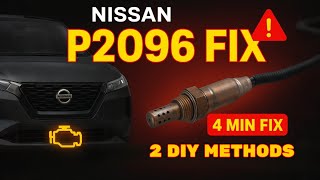
How to confirm: Perform a visual inspection of the exhaust system from the engine to the catalytic converter for cracks, rust, or black soot marks at gasket joints. The most reliable method is to have a shop perform a smoke test, which forces smoke through the exhaust to reveal small, hard-to-see leaks. 🎬 Watch: Two quick DIY methods to fix a Nissan P2096 code
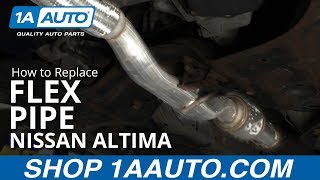
Typical fix: Repair the leak. This may involve replacing a gasket, welding a crack, or replacing a section of the exhaust like the front flex pipe. 🎬 Watch: How to replace a leaking Nissan flex pipe
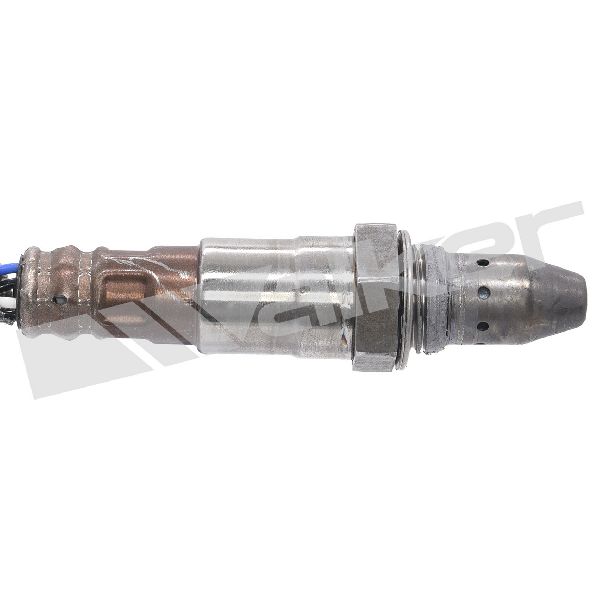
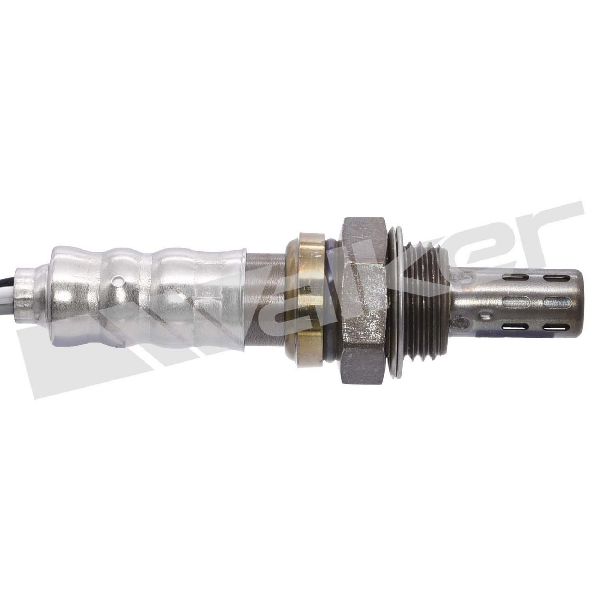
Est. part cost: $20-$400 - Faulty Downstream Oxygen Sensor (Bank 1, Sensor 2) 🟡 Medium Probability → Shop Oxygen Sensor Oxygen sensors are wear-and-tear items that degrade over time, typically lasting 60,000-100,000 miles. A failing sensor can send inaccurate (false lean) signals to the ECM. Nissan issued TSB NTB22-007 extending the warranty on this sensor for 2013-2016 models due to a known short-to-ground issue, highlighting potential component unreliability.
How to confirm: After confirming there are no exhaust leaks, test the sensor's voltage output with a scan tool. A healthy downstream sensor should show a relatively stable voltage. If the voltage is stuck low (e.g., below 0.2V), the sensor is likely faulty. TSB NTB22-007 specifies that a voltage reading of less than 0.13V indicates a short-to-ground failure.
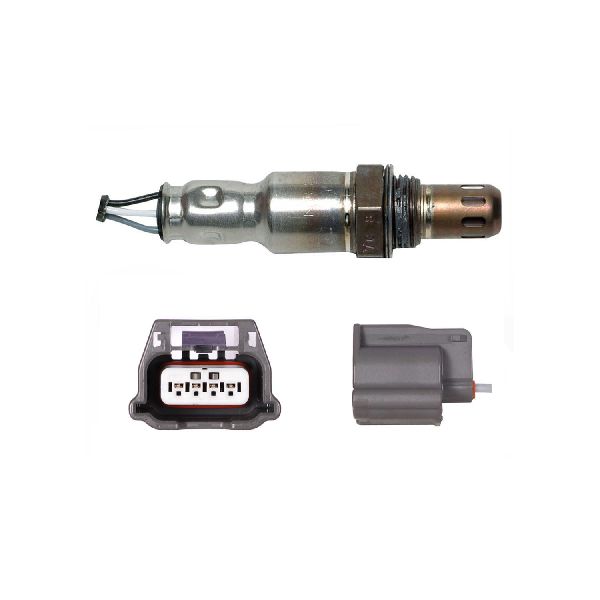
Typical fix: Replace the Bank 1, Sensor 2 oxygen sensor. For the QR25DE 2.5L, this is the only downstream sensor. For the VQ35DE 3.5L, Bank 1 is the firewall side.
Est. part cost: $60-$180 - Intake System Vacuum Leak ⚪ Low Probability On the QR25DE 2.5L engine, the intake manifold gasket is a known failure point that can cause a lean condition. On the VQ35DE 3.5L, PCV hoses are known to crack. This is a less likely cause for only P2096, as a significant intake leak usually triggers a P0171 (upstream lean) code first or simultaneously.
How to confirm: Listen for a hissing sound around the engine at idle. A professional smoke test of the intake system is the most effective way to confirm and locate a leak.
Typical fix: Replace the leaking gasket or hose. The intake manifold gasket on the 2.5L is a common repair.
Est. part cost: $15-$50
Rare But Worth Checking
- Failing Catalytic Converter: → Shop Catalytic Converter A damaged or inefficient catalytic converter can sometimes cause this code, but it's much less common than leaks or sensor failure. This should only be considered after all other possibilities have been ruled out.
- Fuel Delivery Issue: A weak fuel pump or clogged fuel injectors can cause a true lean condition. This is less likely to cause only P2096 and would typically be accompanied by other codes like P0171 and more severe drivability problems.
- O2 Sensor Harness Routing: → Shop Oxygen Sensor As noted in a cross-manufacturer reference for other Nissan models like the Titan in TSB Bulletin #NTB20-062, if multiple O2 sensor codes (P2096, P2097, P2098, or P2099) are stored together, it is possible that the O2 sensor harness routing is the root cause.
Diagnosis Steps
- Read the code with an OBD-II scanner and check for any other stored codes. Manufacturer bulletin TSB Bulletin #NTB15115 notes that P2096 and P2097 (Post Cat Fuel Trim System Bank 1) may be stored alongside P0171 or P0172.
- Perform a thorough visual inspection of the entire exhaust system from the engine manifold to the catalytic converter. Look for any signs of black soot, cracks, or rust holes, especially around gaskets and the flex pipe.
- For best results, perform or have a shop perform an exhaust smoke test to identify any leaks that are not visually apparent. This is the most recommended step by experienced owners and mechanics for this specific code on Nissans.
- If an exhaust leak is found, repair it, clear the codes, and perform a drive cycle to see if the code returns.
- If no exhaust leaks are found, use a scan tool to monitor the live data for the Bank 1, Sensor 2 voltage. If the voltage is stuck low (under 0.2V, and especially under the 0.13V threshold noted in TSB NTB22-007) and does not fluctuate, the sensor has likely failed.
- Inspect the oxygen sensor's wiring and connector for any damage, corrosion, or loose connections.
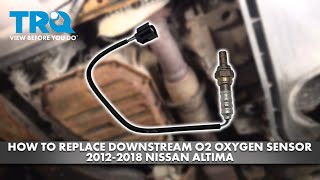
- If the sensor is deemed faulty, replace the Bank 1, Sensor 2 oxygen sensor. 🎬 See this step-by-step downstream O2 sensor replacement walkthrough
- If the code persists, consider a more complex issue like an intake vacuum leak (confirm with a smoke test), a fuel delivery problem (confirm with a fuel pressure test), or a failing catalytic converter.
Parts You'll Likely Need
- Exhaust Gasket / Flex Pipe — This is the most common cause of P2096 on Nissans. A leak in an exhaust gasket or a crack in the flex pipe allows unmetered oxygen into the exhaust, causing a false lean reading.
Trusted brands: Walker Exhaust, Bosal, Fel-Pro
OEM price range: $50-$400
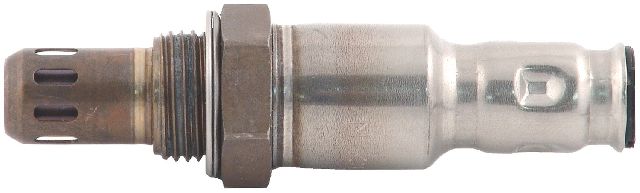
Aftermarket price range: $20-$250 - Downstream Oxygen Sensor (Bank 1, Sensor 2)
(OEM #226A0-3TA0B (for QR25DE, verify by VIN))— This is the sensor that reports the lean condition. It is a common wear item and the second most likely cause of the code if no exhaust leaks are present.
Trusted brands: Denso, NGK/NTK, Bosch
OEM price range: $180-$250
Aftermarket price range: $75-$150 - Intake Manifold Gasket (QR25DE)
(OEM #14035-6RC0A (verify by VIN))— A less common cause, but a known failure point on the 2.5L engine that can create a vacuum leak and lead to lean codes.
Trusted brands: Fel-Pro (MS 97143), Mahle, Genuine Nissan
OEM price range: $25-$40
Aftermarket price range: $10-$25
Related Codes That Often Appear With This One
- P0171 — This code means 'System Too Lean (Bank 1)' and is detected by the *upstream* Air/Fuel sensor. A large vacuum leak or an exhaust leak before the first sensor can cause both P0171 and P2096 to appear together. TSB NTB19-022 instructs technicians diagnosing P0171 to check for P2096/P2097 first, showing the close relationship.
- P0420 — This code means 'Catalyst System Efficiency Below Threshold'. A failing catalytic converter, a bad downstream O2 sensor, or an exhaust leak can cause either P0420 or P2096, and sometimes they can appear together as the system tries to make sense of the conflicting data.
- P0138 / P0139 — As indicated in TSB Bulletin #NTB15053A for other Nissan models, P2096 may appear in conjunction with Heated Oxygen Sensor 2 (HO2S2) circuit high voltage or slow response codes.
Technical Service Bulletins (TSBs) & Recalls
- NTB22-007: Voluntary Service Campaign for 2013-2016 Altima (QR25) & Sentra. Extends warranty on the rear oxygen sensor to 20 years/200,000 miles for a short-to-ground condition, identified by voltage < 0.13V.
- NTB19-022: Applies to 2017-2018 Altimas. Provides a revised diagnostic procedure for code P0171 that involves checking for P2096/P2097 first, indicating a diagnostic relationship where the downstream code can point to the root cause.
- TSB Bulletin #NTB15115: Provides service procedures for fuel system lean/rich conditions and post-catalyst fuel trim system codes including P2096 and P2097.
Platform-Specific Known Issues
- Nissan TSB NTB22-007 extends the warranty for the rear oxygen sensor to 20 years/200,000 miles for 2013-2016 Altimas (QR25DE only) for a specific short-to-ground failure condition. The TSB directs technicians to check the sensor voltage; if it is below 0.13V, the sensor is considered failed and should be replaced under warranty.
- The QR25DE 2.5L engine is known to develop leaks from the intake manifold gasket, which can cause lean conditions. While this more commonly throws a P0171, it can contribute to or cause P2096.
Mechanic-Grade Diagnostic Values
- Downstream O2 Sensor (Bank 1, Sensor 2) Voltage — expected: A healthy sensor should fluctuate in a regular pattern between approximately 0.1V (lean) and 0.9V (rich) at operating temperature.. Failure: A steady low voltage (stuck below 0.2V) indicates a lean reading or failed sensor. A voltage below 0.13V specifically points to a short-to-ground failure per Nissan TSB NTB22-007.
- Long Term Fuel Trim (Bank 1) — expected: Ideally within +/- 5%.. Failure: Values consistently above +10% indicate the ECM is compensating for a perceived lean condition by adding excessive fuel.
- O2 Sensor to ECM wiring continuity — expected: Less than 1.0 Ω of resistance.. Failure: Higher resistance indicates a problem in the wiring harness (corrosion, break) between the sensor connector and the ECM pin.
Hidden / Shadow Codes Worth Checking
- Mode 6, Test ID for A/F Sensor: In some cases, generic OBD-II Mode 6 data may show a test failure for the upstream Air/Fuel (A/F) sensor, even though the DTC is P2096 (post-catalyst). This can be misleading, as replacing the upstream sensor may not resolve the P2096 code. (see via Advanced OBD-II scan tool capable of displaying Mode 6 diagnostic monitor test results.)
Wiring & Ground Locations
- Downstream O2 Sensor Connector (QR25DE) — Underneath the vehicle, on the exhaust pipe after the first catalytic converter. The harness connector is typically black.. This is the connector for the sensor that triggers code P2096. The black color helps distinguish it from the upstream sensor's brown connector, preventing incorrect replacement.
- Upstream A/F Sensor Connector (QR25DE) — Visible from the top of the engine bay, connected to the sensor in the exhaust manifold. The harness connector is typically brown.. Knowing the location and color of the upstream connector helps avoid accidentally replacing the wrong sensor during diagnosis.
- Main Engine Grounds — A primary ground strap runs from the exhaust side of the cylinder head to the firewall. Another runs from the intake manifold area to the negative battery terminal.. A poor ground connection can cause erratic voltage signals from sensors, including the O2 sensor, potentially leading to false codes. Ensuring these grounds are clean and tight is a crucial diagnostic step.
Real Owner Repair Stories
- ScannerDanner Forum (2016 Nissan Rogue (uses same QR25DE engine and similar logic)) — Check Engine Light with code P2096, increased fuel consumption (440km per tank, mostly highway).
❌ Tried (didn't work) Dealer inspection found nothing, cleared code, it returned in 150km., Second dealer visit (3 hours), removed and tested O2 sensor which passed. Checked other systems, found nothing, cleared code.
✅ What actually fixed it The issue was unresolved in the thread, but a master technician noted that even pinhole exhaust leaks, which are not audible and may pass a simple visual check, can cause this code and that a proper pressurized smoke test is essential, as just listening for leaks is not sufficient. - NHTSA ODI #11710587 (Nissan Versa - cross-manufacturer reference) — An owner reported that out of nowhere their airbag light started blinking; upon running codes, they found P2096, which was noted as being unrelated to the airbag system, highlighting how this code can appear unexpectedly during other diagnostic events.
OEM Part Supersession History
226A0-3TA0A→226A0-3TA0B— Part revision or supplier change. Functionally interchangeable for the specified application.
Model Year Variations Within This Range
- 2017-2018: Nissan issued TSB NTB19-022 specifically for these model years, which revises the diagnostic procedure for a related lean code (P0171). It instructs technicians to check for P2096 first, suggesting a software logic change or known issue where the downstream code is a better indicator of the root cause on these later models.
- 2013-2016: These model years (with the QR25DE engine) are covered by the TSB NTB22-007 Voluntary Service Campaign, which extends the warranty on the rear O2 sensor to 20 years/200,000 miles for a specific short-to-ground failure.
Diagnostic Flowchart
Other Known Issues on This Vehicle
Issues unrelated to this code that are worth knowing about as an owner of this generation:
- CVT Transmission Failure/Judder 🔴 High — Very common, especially in 2013-2017 models. Problems like shuddering, hesitation, and whining can appear well before 100,000 miles. TSBs NTB15-084e and NTB16-110P address judder and provide diagnostic procedures. (Ref: NTB15-084e, NTB16-110P, NTB15-102)
- A/C Compressor Failure 🟠 Medium — A frequent complaint where the A/C stops blowing cold air. The failure can be the compressor itself, the clutch, or the internal control valve. In some cases, the issue is electrical, stemming from the Intelligent Power Distribution Module (IPDM) which has an internal, non-serviceable AC relay.
- Rear Suspension Clunking/Noise 🟡 Low — Owners report clunking or rattling noises from the rear suspension when going over small bumps at low speeds. Common causes are worn rear shocks, strut mounts, or sway bar links.
- Excessive Engine Oil Consumption (QR25DE) 🟠 Medium — The 2.5L QR25DE engine has a reputation for consuming oil, with some reports showing consumption as high as 1 quart per 1,000 miles. This is a long-standing issue with this engine family.
Used vs. New Parts: Buying Guide for This Vehicle
When a used part is the smart pick: Used exhaust components like pipes or manifolds can be a cost-effective option, provided they come from a dry, non-salt-belt region and are thoroughly inspected for cracks and rust, especially at welds and flanges.
Donor-vehicle mileage cap: roughly under 100000 miles for the part to have meaningful remaining life.
What to inspect on the donor part:
- For exhaust parts, check for intact mounting flanges, absence of heavy rust scaling, and no visible cracks or previous weld repairs.
- Ensure the flex pipe mesh is intact and not frayed or separating.
OEM-only on this vehicle (don't cheap out):
- Catalytic Converter: Nissans are known to be sensitive to aftermarket catalytic converters, which can fail to resolve efficiency codes like P0420 or cause them to return prematurely. OEM is strongly recommended for long-term reliability.
- Sensors: While not strictly 'OEM-only', using sensors from the original equipment manufacturer (Denso, NTK) is highly advised. Cheap, no-name aftermarket sensors are a common cause of persistent codes.
Aftermarket brands forum-validated for this vehicle:
- O2 Sensors: Denso, NTK/NGK.
- Exhaust Components: Walker Exhaust, Bosal.
- Catalytic Converters (if OEM is not an option): Magnaflow has been reported to work well by some Nissan owners.
Brands owners have reported issues with on this vehicle:
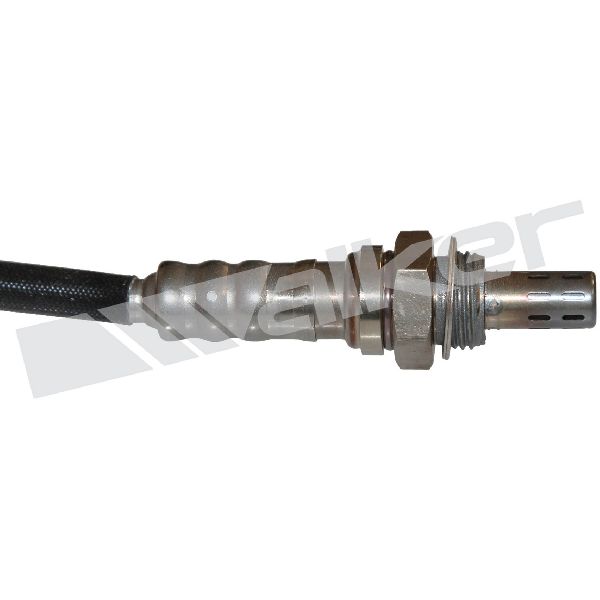
- Universal O2 Sensors: While they can work, they require splicing wires which introduces a potential point of failure. Direct-fit sensors are preferred.
- Unbranded/"eBay special" sensors and catalytic converters: These often use lower-quality materials and may not meet the ECM's precise parameters, leading to the code returning.
Real Owner Stories
Aggregated from forums and TSBs cited above. Mileages and costs reflect what owners reported in those sources.
2014 Altima 3.5L
Symptoms: Check engine light for P2096; mechanic suggested replacing the O2 sensor.
What fixed it: A smoke test revealed a hairline crack in the flex pipe, which was then welded.
Source hint: NissanForums.com - Thread 'P2096 code, 2014 Altima 3.5'
2013-2016 Altima QR25DE
Symptoms: P2096 code triggered by a short-to-ground failure in the rear oxygen sensor.
What fixed it: Replacement of the Bank 1, Sensor 2 oxygen sensor under the 20-year/200,000-mile warranty extension.
Source hint: TSB NTB22-007
2013-2018 Altima 2.5L
Symptoms: Lean condition codes and reduced fuel economy.
What fixed it: Replacement of the intake manifold gasket, which is a known failure point on the QR25DE engine.
Source hint: ARTICLE CONTEXT - vehicle_specific_issues
Related OBD-II Codes
Frequently Asked Questions
Is there a warranty extension for the oxygen sensor on my 2014 Nissan Altima 2.5L?
How can I tell if my 2015 Altima's P2096 code is covered by TSB NTB22-007?
Could a vacuum leak on my QR25DE 2.5L engine cause this code?
My 2017 Altima has a P0171 code; should I look for P2096 first?
I have a VQ35DE 3.5L engine; what are the common leak points for P2096?
Why is a smoke test recommended for my Altima instead of just replacing the sensor?
Helpful Videos

Used OEM Parts in Stock
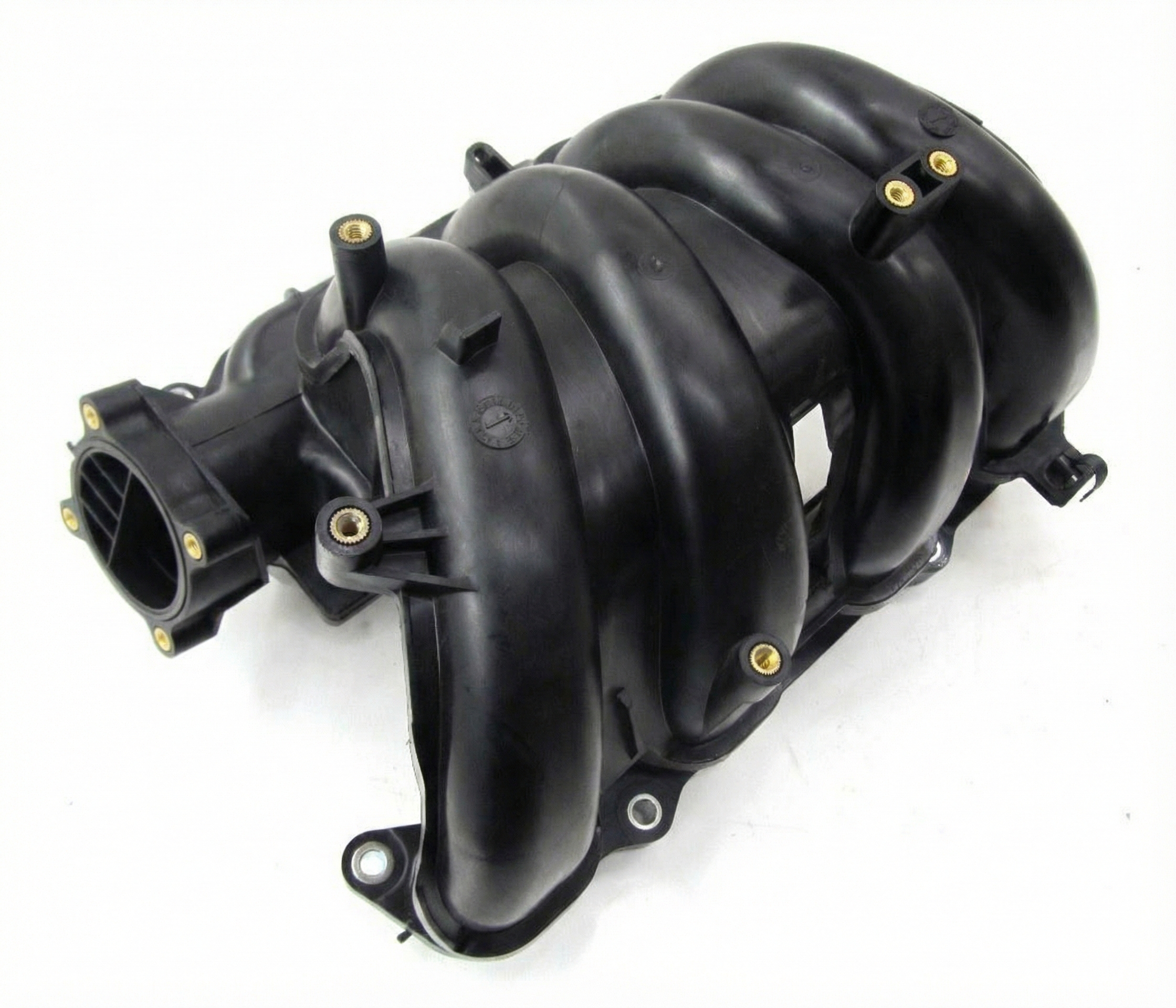
New Aftermarket Parts Available

The information in this article is provided for general reference and educational purposes only. Vehicle specifications, procedures, and part compatibility can vary by production date, trim level, and region. Always consult your vehicle's factory service manual and verify part numbers before purchasing or performing repairs. Safety-critical components such as airbags, seat belts, and braking systems should be installed by a qualified professional.
- Nissan Altima:
- 🧭 Diagnostic Flowchart
- 🎬 Helpful Videos
- 🛍️ Shop This Part
- What's Unique About the 2013-2018 Nissan Altima
- Symptoms You May Notice
- Most Likely Causes
- Rare But Worth Checking
- Diagnosis Steps
- Parts You'll Likely Need
- Related Codes That Often Appear With This One
- Technical Service Bulletins (TSBs) & Recalls
- Platform-Specific Known Issues
- Mechanic-Grade Diagnostic Values
- Hidden / Shadow Codes Worth Checking
- Wiring & Ground Locations
- Real Owner Repair Stories
- OEM Part Supersession History
- Model Year Variations Within This Range
- Other Known Issues on This Vehicle
- Used vs. New Parts: Buying Guide for This Vehicle
- Real Owner Stories
- 2014 Altima 3.5L
- 2013-2016 Altima QR25DE
- 2013-2018 Altima 2.5L
- Related OBD-II Codes
- Frequently Asked Questions
- 🎟️ Get 5% Off