

P2096 on 1999-2004 Oldsmobile Alero 3.4L: Post Catalyst Lean Code Causes and Fixes
On the Alero 3.4L, code P2096 is most often caused by an exhaust leak before the rear oxygen sensor or the sensor itself has failed. Before replacing parts, carefully check for exhaust leaks at the manifold and flex pipe, as this is a common issue that will make a new sensor read lean, too. A new sensor costs approximately $40-$80. Also be aware of the notorious Lower Intake Manifold (LIM) gasket issue on this engine, which can cause vacuum leaks leading to this code.
- Code P2096 on your Alero means the rear oxygen sensor (Bank 1, firewall side) is detecting a lean condition.
- The most common causes are an exhaust leak or a bad downstream O2 sensor.
- Always inspect for exhaust leaks before replacing the O2 sensor to avoid a misdiagnosis.
- Be aware that a failing Lower Intake Manifold gasket, a known issue on the 3.4L V6, can cause a vacuum leak that triggers this code.
- If code P0171 is also present, focus your diagnosis on vacuum leaks or fuel delivery problems, as this indicates a more widespread lean condition.
What's Unique About the 1999-2004 Oldsmobile Alero
While the common causes for P2096 like exhaust leaks and O2 sensor failure apply to the Alero, this vehicle's 3.4L V6 (LA1) engine has a well-documented history of Lower Intake Manifold (LIM) gasket failures. The original plastic-carrier gaskets degrade from heat and exposure to Dex-Cool coolant. A significant vacuum leak resulting from a bad intake gasket can create a true lean condition throughout the engine, which can be the underlying root cause for the P2096 code, often accompanied by a P0171. Owners should be aware of this possibility if more common fixes don't resolve the issue.
Symptoms You May Notice
- Check Engine Light is on
- Reduced fuel economy
- Slight engine hesitation or stumbling during acceleration
- Rough or fluctuating idle
- Louder than normal exhaust noise, possibly a ticking or hissing sound from the engine bay or under the car.
- Poor acceleration.
- Replacing the downstream O2 sensor without first checking thoroughly for exhaust leaks. An exhaust leak will cause a brand new sensor to report the same lean condition, leading to a wasted part and the code returning.
- Replacing the catalytic converter when the actual issue is a faulty downstream O2 sensor or an exhaust leak.
Most Likely Causes
- Exhaust Leak (before downstream O2 sensor) 🔴 High Probability Exhaust components of this age are prone to rust and gasket failure, particularly at the exhaust manifold and the flexible pipe section. A leak allows outside oxygen into the exhaust, which fools the downstream O2 sensor into thinking the engine is running lean.
How to confirm: Perform a visual inspection of the Bank 1 (rear) exhaust manifold, gaskets, and the flexible pipe section. Listen for a 'ticking' or 'hissing' sound, which is often more noticeable on a cold start before the metal expands. You can also briefly plug the tailpipe with a rag to increase pressure and make leaks more audible; listen for puffing sounds from the front of the vehicle.
Typical fix: Replace the failed gasket or leaking exhaust component.
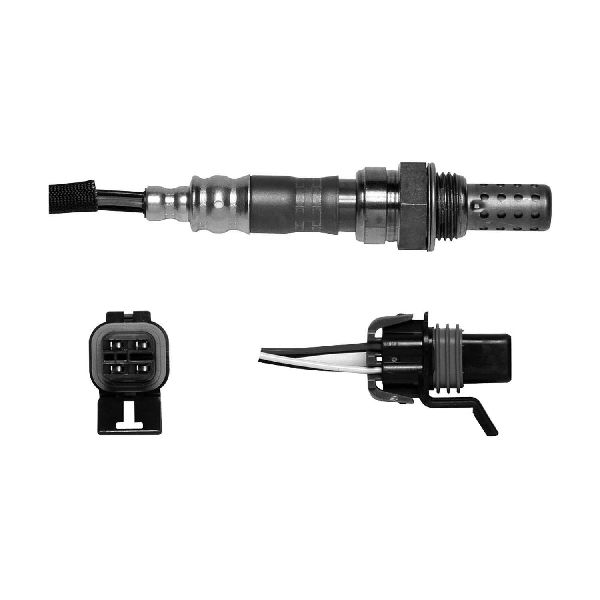
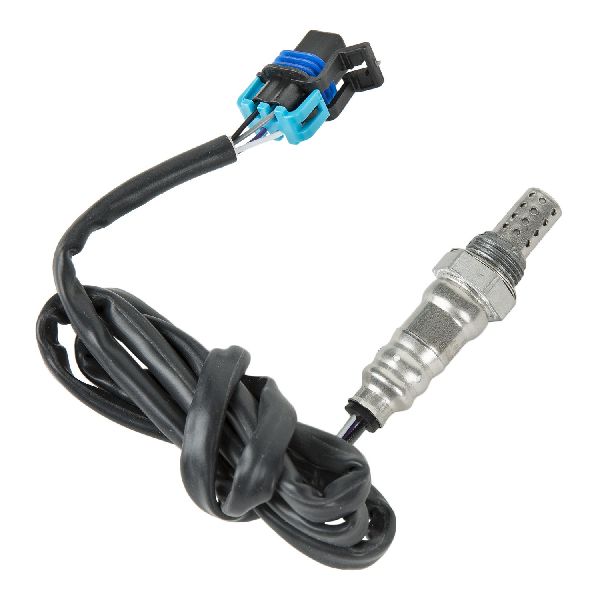
Est. part cost: $20-$150 - Failing Downstream Oxygen Sensor (Bank 1, Sensor 2) 🔴 High Probability → Shop Oxygen Sensor Oxygen sensors have a finite lifespan and can become 'lazy' or contaminated with age, causing them to send inaccurate, slow, or fixed lean voltage signals to the PCM.
How to confirm: Use an OBD-II scanner with live data capability. Observe the Bank 1 Sensor 2 voltage. It should be relatively stable between 0.5V and 0.8V on a warm, running engine. If the voltage is stuck low (e.g., below 0.2V) or fluctuating wildly like the upstream sensor, it is likely faulty. A healthy sensor should show voltage fluctuating between 0.1V and 0.9V, but more slowly than the upstream sensor.
Typical fix: Replace the downstream oxygen sensor. It requires a special 7/8" (22mm) O2 sensor socket. Apply anti-seize compound to the new sensor's threads.
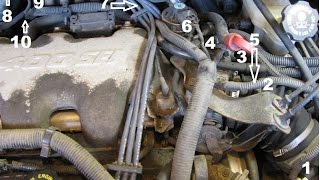
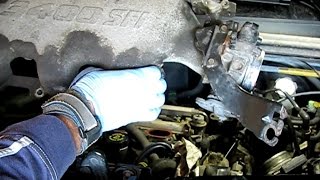
Est. part cost: $40-$80 - Vacuum Leak 🟡 Medium Probability The GM 3.4L V6 is notorious for Lower Intake Manifold (LIM) gasket failure, which can create a vacuum leak. The original plastic gaskets degrade over time. 🎬 Watch: Removing the upper manifold and top-end components Cracked vacuum hoses are also common on older vehicles.
How to confirm: Perform a smoke test by introducing smoke into the intake system via a vacuum line. Watch for smoke escaping from the intake manifold gaskets, throttle body, or any vacuum hoses. You can also spray carburetor cleaner around suspected areas with the engine running; a change in idle speed indicates a leak.
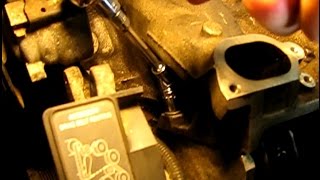
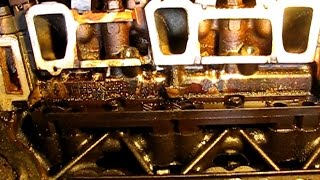
Typical fix: Replace the leaking gasket or hose. The LIM gasket job is involved and requires partial disassembly of the top of the engine. 🎬 Watch: Part 1 of the lower intake manifold disassembly Upgraded metal-frame gaskets (e.g., Fel-Pro MS98014T) are highly recommended.
Est. part cost: $5-$100 - Low Fuel Pressure ⚪ Low Probability The fuel pump or fuel pressure regulator can fail with age, reducing fuel flow and causing a lean condition.
How to confirm: Connect a fuel pressure gauge to the Schrader valve on the engine's fuel rail. With the engine running, the pressure should meet the manufacturer's specification (typically 48-55 PSI for this system). If pressure is low, the fuel pump, clogged filter, or fuel pressure regulator may be at fault.
Typical fix: Replace the weak fuel pump or clogged fuel filter.
Est. part cost: $20-$200
Rare But Worth Checking
- Dirty or Faulty Mass Airflow (MAF) Sensor: A MAF sensor that under-reports airflow will cause the PCM to inject too little fuel, creating a true lean condition. Cleaning with a dedicated MAF sensor cleaner may help, but replacement is sometimes necessary. Do not use other cleaners like carb cleaner, as they can damage the sensor.
- Failing Catalytic Converter: → Shop Catalytic Converter A clogged or inefficient catalytic converter can sometimes alter exhaust flow and temperature in a way that causes an incorrect reading from the downstream O2 sensor. This is usually a last resort after other causes are ruled out. A glowing red converter after running is a tell-tale sign of a clog.
- Clogged Fuel Injectors: Restricted fuel injectors can cause a lean condition. GM issued TSB #03-06-04-030 regarding injector cleaning procedures for various engines, including the 3.4L, that experience lean codes.
Diagnosis Steps
- Scan for any other stored trouble codes. Codes like P0171 or P0300 are major clues pointing towards a vacuum leak or fuel issue rather than just an exhaust leak.
- With the engine cold, start it and listen carefully around the rear exhaust manifold (firewall side) and flex pipe for any 'ticking' or 'hissing' sounds that indicate an exhaust leak.
- Visually inspect the exhaust system from the manifold to the catalytic converter for signs of black soot, cracks, or rust-through.
- Using a scan tool, monitor the live data for the Bank 1 Sensor 2 (downstream) O2 sensor. A healthy sensor on a warm engine at steady RPM should show a relatively stable voltage above 0.5V. If it's stuck low (under 0.2V), it confirms a lean reading.
- To rule out a vacuum leak, perform a smoke test on the intake system, paying close attention to the Lower Intake Manifold gasket area.
- If no leaks are found, test the fuel pressure at the fuel rail to ensure the fuel pump and filter are supplying adequate fuel (should be 48-55 PSI).
- Inspect and clean the Mass Airflow (MAF) sensor using a dedicated MAF sensor cleaner.
- If all other tests pass, the downstream O2 sensor itself is the most likely culprit.
Parts You'll Likely Need
- Downstream Oxygen Sensor (Bank 1, Sensor 2)
(OEM #19178745 (Superseded by ACDelco 213-2893))— This sensor is responsible for reporting the post-catalyst air/fuel mixture. It is a common failure item due to age and heat cycles.
Trusted brands: ACDelco, Denso (234-4363), Bosch
OEM price range: $70-$110
Aftermarket price range: $40-$80 - Exhaust Manifold Gasket (Bank 1 / Rear) — A failed gasket between the cylinder head and exhaust manifold is a common source of exhaust leaks that trigger P2096.
Trusted brands: Fel-Pro, ACDelco, Mahle
OEM price range: $25-$40
Aftermarket price range: $15-$30 - Lower Intake Manifold Gasket Set
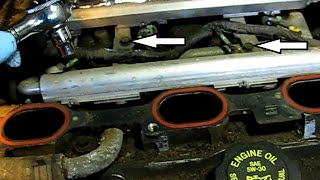
(OEM #Fel-Pro MS98014T (Updated metal design))— A known major failure point on the 3.4L V6. If a smoke test reveals a vacuum leak from the intake manifold, replacing these gaskets is necessary. The Fel-Pro MS98014T is a widely recommended steel-carrier upgrade over the failure-prone OEM plastic design. 🎬 Watch: How to install the upgraded gaskets and manifold
Trusted brands: Fel-Pro (PermaDryPlus MS98014T), ACDelco
OEM price range: $80-$120
Aftermarket price range: $40-$70
Related Codes That Often Appear With This One
- P0171 — P0171 is 'System Too Lean (Bank 1)' detected by the *upstream* sensor. If you have both codes, it strongly suggests a true lean condition (like a vacuum leak from the LIM gasket or a fuel delivery issue) affecting the entire engine bank, rather than just an isolated exhaust leak or bad downstream sensor.
- P0137 — P0137 indicates 'O2 Sensor Circuit Low Voltage (Bank 1, Sensor 2)'. This code points more directly to a faulty sensor or a wiring issue, as it relates to the circuit voltage itself being out of range.
- P0300 — A P0300 'Random Misfire' code can appear alongside P2096 if the lean condition is severe enough to cause misfires. This is particularly common if the root cause is a failing Lower Intake Manifold gasket.
Technical Service Bulletins (TSBs) & Recalls
- TSB #03-06-04-030F: Addresses various driveability symptoms, including lean codes (P0171, P0174), due to clogged fuel injectors on many GM engines including the 3.4L LA1. Recommends an on-vehicle cleaning procedure.
Platform-Specific Known Issues
- The 3.4L LA1 engine is widely known for premature failure of the plastic-carrier Lower Intake Manifold (LIM) gaskets. This typically causes coolant to
Mechanic-Grade Diagnostic Values
- Fuel Pressure (Key On, Engine Off) — expected: 48-55 PSI. Failure: Pressure below 48 PSI suggests a weak fuel pump, clogged filter, or faulty regulator. Pressure that bleeds off quickly indicates a leak.
- Mass Airflow (MAF) Sensor Reading at Idle (Scan Tool) — expected: 4.0 to 6.0 grams/second (g/s) at warm idle. Failure: A reading significantly below 4.0 g/s, near zero, or a value that is stuck and does not increase with RPM.
- Mass Airflow (MAF) Sensor Reading at 2500 RPM (Scan Tool) — expected: 15 to 25 grams/second (g/s). Failure: Reading does not increase smoothly and linearly from idle.
- O2 Sensor Heater Element Resistance — expected: 3 to 10 Ohms at room temperature. Failure: A reading of OL (infinite resistance) or near 0 Ohms (direct short) confirms a failed heater element in the sensor.
- Fuel Injector Coil Resistance — expected: 11.8 to 12.6 Ohms. Failure: A reading outside this range indicates a faulty injector coil. While not a primary cause of P2096, it can contribute to fuel trim issues.
Wiring & Ground Locations
- G103 — On a transmission stud on the left side of the engine.. This is a critical ground for the Powertrain Control Module (PCM) and other sensors. A poor connection here can cause erratic sensor readings and trigger various codes, including lean conditions.
- G102 — On the left side of the engine, in front of the starter for the 3.4L model.. Serves as a ground point for various components in the computer data lines system. A bad ground can interfere with communication between modules.
- Downstream O2 Sensor Wires — On the O2 sensor connector itself.. On GM vehicles of this era, the two wires that are the same color (often black) are for the heater circuit. The other two different colored wires are for the sensor signal and ground. This allows for quick testing of the heater circuit without a diagram.
- MAF Sensor Connector — On the intake tube between the air filter box and the throttle body.. The 3-pin connector wiring is typically: Pin C (Pink wire) = 12V power, Pin B (Black/White wire) = ground, Pin A (Yellow wire) = Hz signal to PCM. Verifying power and ground here is crucial before replacing a sensor.
OEM Part Supersession History
GM 19178745→ACDelco 213-2893— Standard part number update by the manufacturer.
Heads up: ACDelco 213-2893 may have been further superseded by AFS109 in some parts catalogs.Original GM Lower Intake Manifold Gasket (Plastic Carrier)→Fel-Pro MS 98014 T (Steel Carrier)— The original plastic-carrier design was prone to degradation and failure from exposure to Dex-Cool coolant and heat cycles. The aftermarket developed a more durable steel-frame version.
Heads up: The steel-carrier design is a direct-fit upgrade and is highly recommended over replacing with another plastic-framed gasket set.
Model Year Variations Within This Range
- 1999-2004: No significant changes were made to the 3.4L LA1 V6 engine, fuel system, or emissions components during the Alero's production run that would materially affect the diagnosis or common causes of code P2096.
Diagnostic Flowchart
Other Known Issues on This Vehicle
Issues unrelated to this code that are worth knowing about as an owner of this generation:
- Lower Intake Manifold (LIM) Gasket Failure 🔴 High → Shop Engine Intake Manifold — Extremely common. The original plastic-framed gaskets degrade from heat and Dex-Cool coolant, typically failing between 80,000 and 150,000 miles. (Ref: TSB #03-06-01-010B)
- GM Passlock II Anti-Theft System Failure 🟠 Medium — Very common. The 'SECURITY' light illuminates or flashes, and the vehicle may crank but fail to start, or start and immediately die. Often requires a 10-minute wait for a reset. The issue is often in the ignition lock cylinder.
- Failing Window Regulators 🟡 Low — Common failure. A loud pop or grinding noise is heard from the door, and the window may drop into the door or become crooked. The failure is usually the plastic clips or cable, not the motor itself.
- Brake System Problems 🟠 Medium — Frequently reported issue in NHTSA complaints, covering premature wear of pads and rotors, and ABS module faults.
- Cooling System Issues 🟠 Medium — Often related to the LIM gasket failure, but also includes water pump failures and radiator leaks.
Used vs. New Parts: Buying Guide for This Vehicle
When a used part is the smart pick: For this repair, obtaining used parts from a junkyard is generally not recommended for sensors or gaskets. However, if the cause is a cracked exhaust manifold or a damaged section of exhaust pipe, a used component from a rust-free donor vehicle can be a cost-effective alternative to a new part.
Donor-vehicle mileage cap: roughly under 100000 miles for the part to have meaningful remaining life.
What to inspect on the donor part:
- For exhaust components, inspect for hairline cracks, especially around welds and flanges.
- Check for excessive rust or thinning of the pipe walls.
- Ensure mounting studs on manifolds are intact and not seized or broken off.
Aftermarket brands forum-validated for this vehicle:
- O2 Sensors: Denso, Bosch, and NTK are frequently cited as reliable OEM-quality alternatives.
- Lower Intake Manifold Gaskets: Fel-Pro, specifically the PermaDryPlus set (MS98014T), is widely regarded as the definitive upgrade over the OEM design.
Brands owners have reported issues with on this vehicle:
- Universal O2 Sensors: While cheaper, these require cutting and splicing wires, which introduces a potential point of failure. They are not always calibrated correctly for the vehicle and can cause persistent issues.
Real Owner Stories
Aggregated from forums and TSBs cited above. Mileages and costs reflect what owners reported in those sources.
2001 Pontiac Grand Am 3.4L
Symptoms: Experienced a P2096 code and bizarre electrical problems.
What fixed it: Found the Body Control Module (BCM) full of ice due to a water leak.
Source hint: alldata.com forum discussion
2004 Hyundai Accent
Symptoms: P2096 code accompanied by P2196 and P2270.
What fixed it: Identified as a complex sensor issue.
Source hint: iATN (International Automotive Technicians Network)
Related OBD-II Codes
Frequently Asked Questions
Does TSB #03-06-04-030F apply to my 3.4L Alero if I have a lean code?
Is there a specific intake gasket I should use to prevent future vacuum leaks on my Alero?
My Alero has a ticking sound from the engine bay and a P2096 code; what is the likely cause?
What is the correct fuel pressure specification for the 1999-2004 Oldsmobile Alero 3.4L?
Can a water leak cause a P2096 code on my Alero's platform mate, the Grand Am?
What size socket do I need to replace the downstream oxygen sensor on my 3.4L V6?
Helpful Videos
We Have This Part in Stock


The information in this article is provided for general reference and educational purposes only. Vehicle specifications, procedures, and part compatibility can vary by production date, trim level, and region. Always consult your vehicle's factory service manual and verify part numbers before purchasing or performing repairs. Safety-critical components such as airbags, seat belts, and braking systems should be installed by a qualified professional.
- Oldsmobile Alero:
- 🧭 Diagnostic Flowchart
- 🎬 Helpful Videos
- 🛍️ Shop This Part
- What's Unique About the 1999-2004 Oldsmobile Alero
- Symptoms You May Notice
- Most Likely Causes
- Rare But Worth Checking
- Diagnosis Steps
- Parts You'll Likely Need
- Related Codes That Often Appear With This One
- Technical Service Bulletins (TSBs) & Recalls
- Platform-Specific Known Issues
- Mechanic-Grade Diagnostic Values
- Wiring & Ground Locations
- OEM Part Supersession History
- Model Year Variations Within This Range
- Other Known Issues on This Vehicle
- Used vs. New Parts: Buying Guide for This Vehicle
- Real Owner Stories
- 2001 Pontiac Grand Am 3.4L
- 2004 Hyundai Accent
- Related OBD-II Codes
- Frequently Asked Questions
- 🎟️ Get 5% Off