

P2096 on 2005-2010 Pontiac G6 3.5L V6: Causes and Fixes for Lean Fuel Trim
On a Pontiac G6 with the 3.5L V6, code P2096 is most often caused by an exhaust leak before the rear (Bank 1) downstream O2 sensor or a failing O2 sensor itself. Carefully inspect the exhaust manifold and flex pipe for leaks before replacing any parts. These are known weak points on the G6 platform.
- P2096 on your G6 3.5L means the rear oxygen sensor (Bank 1) is detecting a lean condition.
- The most likely cause is an exhaust leak. Before buying any parts, carefully inspect the rear exhaust manifold, gaskets, and the flex pipe for cracks or soot trails.
- If no leaks are found, the next most likely culprit is the downstream (Bank 1, Sensor 2) oxygen sensor itself.
- Do not immediately replace the expensive catalytic converter; it is rarely the cause unless accompanied by code P0420.
- Addressing this code promptly will restore fuel economy and prevent potential damage to your catalytic converter.
What's Unique About the 2005-2010 Pontiac G6
The Pontiac G6 uses a transverse (sideways-mounted) 3.5L V6 engine, which places Bank 1 against the firewall, making access to its exhaust components slightly more challenging. While the causes for P2096 are common across many vehicles, G6 owners should pay special attention to exhaust leaks from the flex pipe and exhaust manifold gaskets, which are known weak points. Unlike some other G6 engines, there are no specific Technical Service Bulletins (TSBs) for the 3.5L V6 that directly address this code, meaning diagnosis relies on standard procedures. The LX9 version of the 3.5L V6 (2005-2006 models) was an evolution of the older 3.4L and still used plastic-framed lower intake manifold gaskets, which were a known failure point on prior GM engines, though the design was revised to be more robust.
Symptoms You May Notice
- Check Engine Light is on
- Reduced fuel economy
- Rough or unstable idle
- Poor acceleration or lack of power
- Audible ticking or hissing from the exhaust system, especially when cold
- Replacing the catalytic converter before thoroughly checking for exhaust leaks. An exhaust leak is a much more common and cheaper fix.
- Replacing the upstream (Bank 1, Sensor 1) oxygen sensor instead of the downstream (Bank 1, Sensor 2) sensor that is responsible for this code.
- Replacing the O2 sensor without first checking its wiring and connector for damage or corrosion.
Most Likely Causes
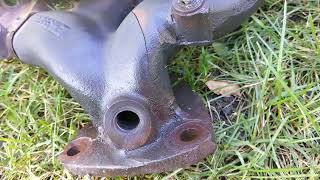
- Exhaust Leak (before downstream O2 sensor) 🔴 High Probability Heat cycles and engine vibration can cause exhaust manifold gaskets and flex pipes to crack or fail over time, which is a common issue on many vehicles including the G6. The rear manifold (Bank 1) is particularly susceptible.
How to confirm: Visually inspect the entire exhaust system for Bank 1 (rear side) from the engine to the downstream O2 sensor. Look for black soot, cracks, or rust holes. Listen for a ticking noise when the engine is cold. A definitive method is to use a smoke machine to pump smoke into the exhaust system and watch for where it escapes.
Typical fix: Replace the failed gasket or leaking exhaust component 🎬 See this step-by-step exhaust manifold replacement guide (e.g., flex pipe, exhaust manifold gasket).
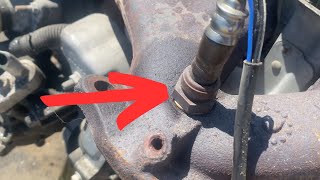
Est. part cost: $20-$200 - Failing Downstream Oxygen Sensor (Bank 1, Sensor 2) 🟡 Medium Probability → Shop Oxygen Sensor Oxygen sensors are wear-and-tear items that have a finite lifespan. They can become contaminated or simply degrade over time, leading to inaccurate readings. On many GM vehicles, they are a common replacement item.
How to confirm: Use a scan tool to monitor the live voltage data from the Bank 1, Sensor 2 O2 sensor. A healthy downstream sensor on a warm, running engine should show a relatively stable voltage. If the voltage is stuck low (typically below 0.2V) or fluctuates wildly like the upstream sensor, it is likely faulty.
Typical fix: Replace the Bank 1, Sensor 2 oxygen sensor. 🎬 Watch: Locate and replace your G6 oxygen sensors
Est. part cost: $40-$120 - Engine Vacuum Leak ⚪ Low Probability While the later LZ4 engine design improved upon older GM V6s, vacuum leaks can still occur from aged gaskets and hoses. The LX9 (2005-2006) used plastic intake gaskets which were a known weak point on predecessor engines.
How to confirm: Listen for a hissing sound around the intake manifold, vacuum hoses, and throttle body with the engine running. You can spray short bursts of brake cleaner or a propane torch (unlit) around suspected areas; a change in engine idle indicates a leak.
Typical fix: Replace the leaking vacuum hose or intake gasket.
Est. part cost: $5-$100 - Low Fuel Pressure ⚪ Low Probability
How to confirm: Connect a fuel pressure gauge to the fuel rail's service port. Check that the pressure is within the manufacturer's specified range (typically 50-60 PSI for this platform) with the engine running.
Typical fix: Replace the failing fuel pump or clogged fuel filter.
Est. part cost: $20-$300
Rare But Worth Checking
- Failing Catalytic Converter: → Shop Catalytic Converter This is a possible but less common cause, especially if code P0420 (Catalyst Efficiency Below Threshold) is not also present. A clogged converter can sometimes create backpressure and exhaust flow issues that trigger a P2096 code.
- Dirty or Faulty Mass Air Flow (MAF) Sensor: A MAF sensor that under-reports the amount of air entering the engine will cause the computer to inject too little fuel, creating a lean condition. Cleaning the MAF sensor with a dedicated cleaner is a simple diagnostic step.
Diagnosis Steps
- Scan for other trouble codes. If codes like P0171 or P0137 are present, address them first as they can point to the root cause.
- Thoroughly inspect the exhaust system for Bank 1 (rear side, near firewall) for any signs of leaks. Pay close attention to the exhaust manifold gasket and the flexible pipe section. Listen for ticking noises on a cold start.
- If no obvious leaks are found, use a scan tool to observe the live data from the Bank 1 Sensor 2 (downstream) O2 sensor. The voltage should be relatively steady on a warm engine at a constant RPM. If it's stuck low or mirroring the upstream sensor's activity, it points to a bad sensor or a significant exhaust leak.
- Inspect the wiring and connector for the downstream O2 sensor for any signs of melting, corrosion, or physical damage.
- If exhaust leaks and the O2 sensor are ruled out, check for engine vacuum leaks using a smoke machine or by listening for hissing sounds around the intake manifold.
- As a final step, verify fuel pressure using a mechanical gauge to rule out a weak fuel pump or clogged filter.
Parts You'll Likely Need
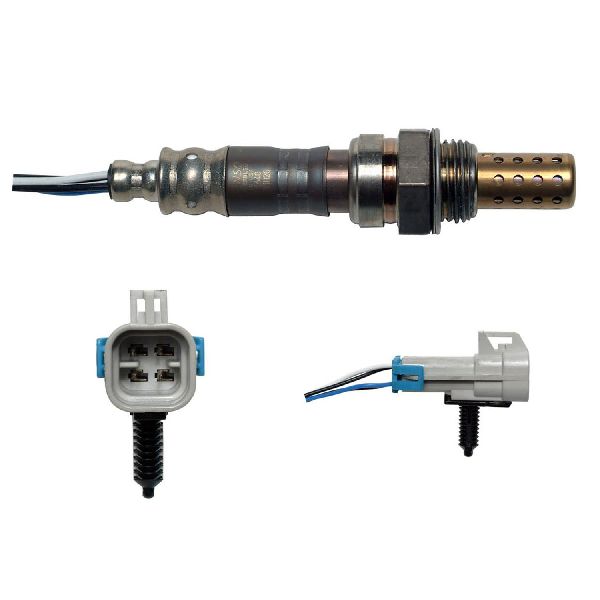
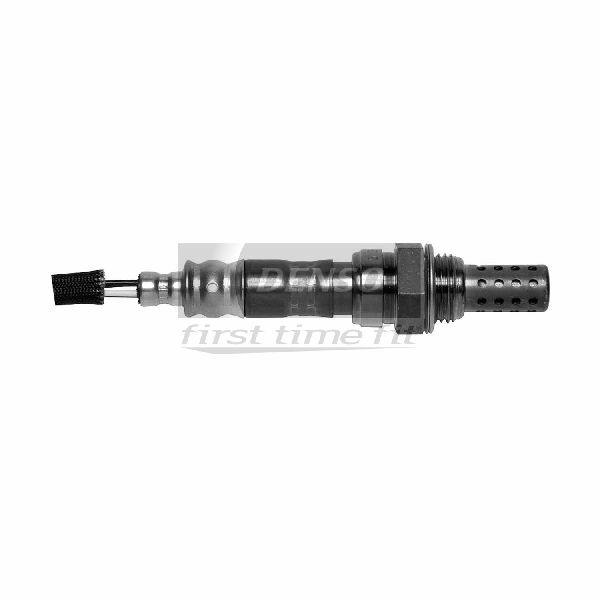
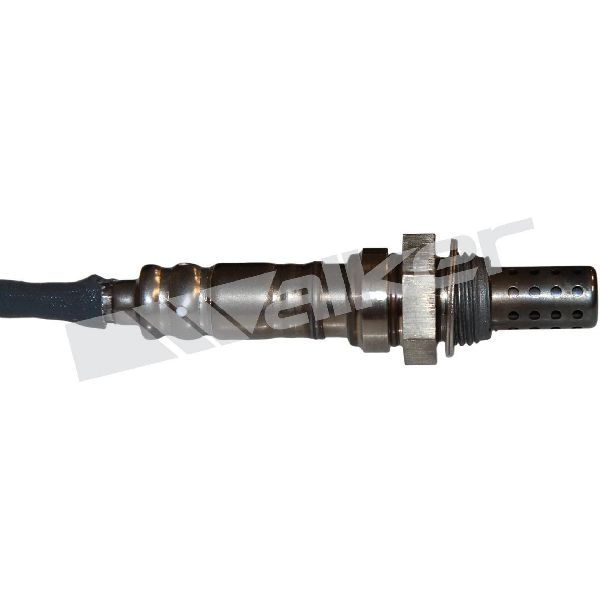
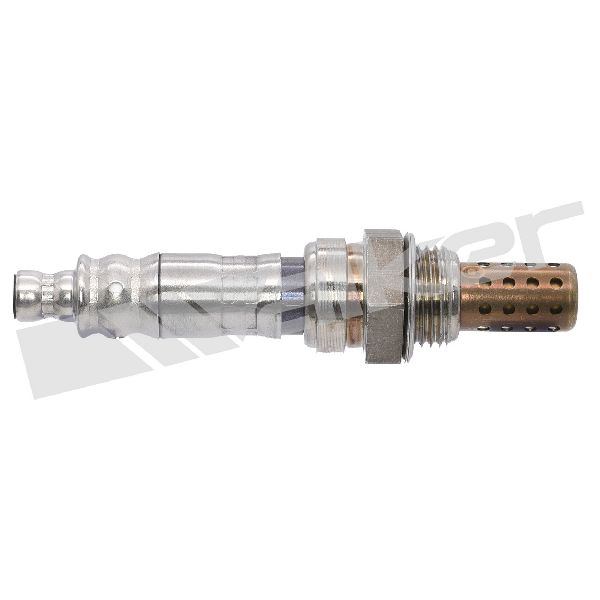
- Downstream Oxygen Sensor (Bank 1, Sensor 2)
(OEM #ACDelco 213-1570 (GM 12573721) or ACDelco 213-1574 (GM 12589549) - verify by VIN)— This sensor is the direct source of the code reading. It is a common wear item and often fails, providing inaccurate lean readings. The part number can vary by model year.
Trusted brands: ACDelco, Denso, Bosch, NGK/NTK
OEM price range: $80-$120
Aftermarket price range: $40-$75 - Exhaust Manifold Gasket (Rear)
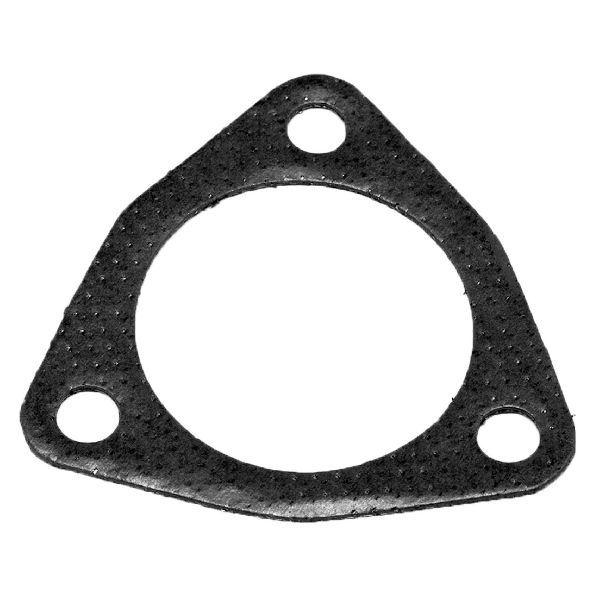
(OEM #Fel-Pro MS96973 (set) or Victor Reinz (set))— The rear exhaust manifold gasket is a common source of leaks that can introduce air into the exhaust stream and trigger a P2096 code.
Trusted brands: Fel-Pro, ACDelco, Mahle, Victor Reinz
OEM price range: $20-$40
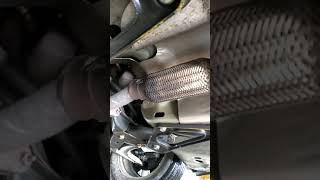
Aftermarket price range: $10-$25 - Exhaust Flex Pipe — The flexible, woven section of the exhaust pipe is prone to cracking from vibration and heat, causing leaks that are a primary cause of this code.
Trusted brands: Walker, AP Exhaust, Bosal
OEM price range: N/A (often part of a larger assembly)
Aftermarket price range: $50-$150 (weld-in or clamp-on section)
Related Codes That Often Appear With This One
- P0171 — P0171 indicates a lean condition detected by the *upstream* sensor. If you have both codes, it points to a genuine engine running lean issue (like a vacuum leak or fuel delivery problem) that is being detected by both sensors. Diagnose P0171 first.
- P0137 — This code means 'O2 Sensor Circuit Low Voltage (Bank 1, Sensor 2)'. It points directly to an electrical fault with the downstream sensor or its circuit, which would also cause the lean reading of P2096.
- P0420 — This code means 'Catalyst System Efficiency Below Threshold (Bank 1)'. It often appears with P2096 when a major exhaust leak exists between the two O2 sensors or when the catalytic converter itself has failed.
Technical Service Bulletins (TSBs) & Recalls
- TSB 09-06-04-026X: This is a general GM bulletin regarding engine oil consumption and does not directly relate to P2096, but is an example of a TSB for this engine family.
- TSB 15-08-45-001: Mentions potential wiring harness damage under the rear seat on G6, Aura, and Malibu models, which could cause various electrical issues. While not directly linked to P2096, it highlights a known electrical vulnerability in the platform.
Platform-Specific Known Issues
- Exhaust Manifold Gasket Leak: → Shop Exhaust Manifold Owners on forums frequently report that the first step to fixing P2096 is a thorough check for exhaust leaks, specifically at the rear manifold gasket. A user on iATN forums confirmed fixing a P2096 on a different vehicle by replacing the downstream O2 sensor only after exhaust leaks were ruled out, highlighting the common diagnostic path.
- Flex Pipe Failure: The flexible pipe section after the manifold is another very common failure point mentioned in owner communities. It can crack due to engine movement and heat cycles, creating a significant leak that introduces oxygen and triggers the code.
Mechanic-Grade Diagnostic Values
- Downstream O2 Sensor (B1S2) Voltage at Steady Cruise/RPM — expected: Relatively stable voltage between 0.6V and 0.8V.. Failure: Voltage is stuck low (under 0.2V), fluctuates rapidly like an upstream sensor, or does not respond to throttle changes.
- O2 Sensor Heater Circuit Resistance — expected: 4-10 Ohms between the two same-colored heater wires on the sensor connector.. Failure: A reading of 'OL' (Open Loop/infinite resistance) or a value significantly outside the expected range indicates a failed internal heater.
- O2 Sensor Heater Circuit Power Supply — expected: 12V (battery voltage) at the vehicle-side harness connector (typically on the pink wire) with the key on.. Failure: Low or no voltage indicates a blown fuse (check 'EMISSIONS' fuse in underhood fuse box) or an open circuit in the power wire.
- Mass Air Flow (MAF) Sensor Reading at Warm Idle — expected: Approximately 2-4 g/s for the 3.5L engine.. Failure: A reading that is stuck, erratic, or does not increase smoothly with RPM. A contaminated sensor can under-report airflow, causing the PCM to command a lean mixture.
- Long-Term Fuel Trim (Post-Repair Verification) — expected: Should settle within -10% to +10% during a drive cycle.. Failure: Values remaining significantly positive (e.g., >15%) indicate the lean condition has not been fully resolved.
- ECM Reference Voltage to O2 Sensor — expected: The ECM supplies a bias voltage of approximately 450 mV to the O2 sensor signal circuit.. Failure: If a scan tool shows a value significantly different from 450mV with the sensor disconnected (key on), there may be a wiring or ECM issue.
Scan Tool Commands That Help
- Tech 2 / GDS2: O2 Sensor Heater Test / Bidirectional Control — This command allows a technician to manually turn the O2 sensor's internal heater on and off. It is used to verify if the PCM's driver, the wiring, and the heater element itself are functioning correctly, which helps isolate the cause of heater-related O2 sensor codes that can sometimes accompany P2096.
Wiring & Ground Locations
- G105 — On the left rear side of the engine compartment, on an engine-to-transmission stud, below the upper coolant hose.. This is a primary ground for the Engine Control Module (ECM). A corroded or loose connection at G105 can cause erratic sensor readings and various engine performance codes, including O2 sensor faults.
- G106 — On the front of the engine, at a transmission stud, near the Park/Neutral Position (PNP) switch for the 3.5L V6.. This is another primary engine ground. Verifying that both G105 and G106 are clean, tight, and free of corrosion is a critical step when diagnosing any electrical sensor fault.
- Bank 1 Sensor 2 Connector — The connector for the downstream O2 sensor is located up above the sensor, and can be difficult to see. It has a locking tab that must be slid sideways before the connector can be unplugged.. This is the direct connection point for the sensor triggering the code. The harness is susceptible to damage from heat and debris. Unplugging it first can make sensor removal easier by preventing the wires from twisting.
Real Owner Repair Stories
- YouTube user video (2009 Pontiac G6) — Loud exhaust leak noise, ticking sound from engine area.
❌ Tried (didn't work) Initially diagnosed as a timing chain issue, but the noise persisted.
✅ What actually fixed it The front exhaust manifold was found to have a large crack running almost its entire length. Replacing the cracked manifold with a new one (and a new gasket) resolved the loud leak and associated issues. - Reddit user r/AskMechanics (2007 Pontiac G6) — O2 sensor codes were being triggered.
✅ What actually fixed it Upon removing the heat shield to access the O2 sensor, a significant crack was discovered in the exhaust manifold. This crack was the likely source of the leak causing the O2 sensor codes.
OEM Part Supersession History
12606908→19209811— Part number update for GM/ACDelco downstream oxygen sensor (Position 2).
Model Year Variations Within This Range
- 2005-2006 (LX9) vs 2007-2010 (LZ4): The earlier 3.5L engine was the LX9, a derivative of the older 3.4L. The later 3.5L was the LZ4, which added Variable Valve Timing (VVT). While the core causes of P2096 are similar, the LZ4 has additional components (like the cam phaser and solenoid) that could theoretically affect engine performance, though they are not a primary cause for this specific code. The block casting and mounting bosses also have minor differences.
Diagnostic Flowchart
Other Known Issues on This Vehicle
Issues unrelated to this code that are worth knowing about as an owner of this generation:
- Electric Power Steering (EPS) Failure 🔴 High — Common, typically occurs around 70,000-100,000 miles. Subject to multiple recalls. (Ref: Recall N140115 (also 14116, 14772). A sudden loss of power steering assist can occur.)
- 4T45-E Automatic Transmission Failures 🔴 High — Moderately common. Issues include failed shift solenoids, broken wave plates, or loss of forward gears. (Ref: Special Coverage 14404 for fractured wave plate (loss of 3rd, 5th, Rev).)
- Body Control Module (BCM) Connector Corrosion 🟠 Medium — Common issue leading to erratic electrical problems, especially with brake lights. (Ref: TSB 15-08-45-001 mentions wiring harness issues. A common DIY fix involves cleaning the connector and applying low-voltage dielectric grease.)
- Front Wheel Hub Bearing Failure 🟠 Medium — Common wear item, often failing before 100,000 miles, causing a loud humming or helicopter noise that changes while turning.
- Steering Column Rattle/Clunk 🟡 Low — Very common complaint. Often caused by a faulty intermediate steering shaft. (Ref: Recall 14E044 for aftermarket Dorman shafts; a well-known issue on the original parts as well.)
Used vs. New Parts: Buying Guide for This Vehicle
When a used part is the smart pick: For this repair, a used exhaust manifold from a low-mileage, rust-free donor car can be a cost-effective option if the original is cracked. Structural components like this are generally safe to source used, provided they are inspected carefully.
Donor-vehicle mileage cap: roughly under 80000 miles for the part to have meaningful remaining life.
What to inspect on the donor part:
- For exhaust manifolds, check thoroughly for hairline cracks, especially around the collector and mounting flanges.
- Ensure all mounting studs are intact and not broken off.
- Look for a donor vehicle from a dry climate to avoid excessive rust that can compromise the part's integrity and make installation difficult.
- Verify the part is from the correct engine (Bank 1 is the rear manifold).
OEM-only on this vehicle (don't cheap out):
- Oxygen Sensor: While not strictly 'OEM-only', using a reputable OEM supplier like ACDelco, Denso, or NTK is highly recommended. Cheap, no-name online sensors are a very common cause of repeat failures and persistent codes.
Aftermarket brands forum-validated for this vehicle:
- O2 Sensors: Denso, NGK/NTK, Bosch, Delphi.
- Exhaust Gaskets: Fel-Pro, Mahle, Victor Reinz.
- Exhaust Flex Pipe: Walker, AP Exhaust, Bosal.
Brands owners have reported issues with on this vehicle:
- Unbranded or 'white-box' oxygen sensors from online marketplaces. These frequently use lower-quality elements and electronics, leading to premature failure or incorrect readings right out of the box.
Real Owner Stories
Aggregated from forums and TSBs cited above. Mileages and costs reflect what owners reported in those sources.
2007 Saturn Aura 3.5L LZ4
Symptoms: Check engine light P2096; owner reports traced issue back to common platform vulnerabilities shared with the G6.
What fixed it: The issue was resolved by addressing exhaust leaks or replacing the O2 sensor, following standard diagnostic procedures for the Epsilon platform.
Source hint: iATN (International Automotive Technicians Network) discussion regarding P2096 and platform mates
2005 Pontiac G6 3.5L LX9
Symptoms: P2096 code present; investigation into common failure points for the early 3.5L engine design.
What fixed it: Replacing the downstream O2 sensor after exhaust leaks were ruled out.
Source hint: iATN (International Automotive Technicians Network) - A technician discussion about a P2096 code
2006 Chevrolet Malibu 3.5L LX9
Symptoms: P2096 code; vehicle shares identical powertrain and exhaust layout with the G6.
What fixed it: Repairing exhaust leaks at the manifold or flex pipe, which are prone to cracking from heat cycles.
Source hint: Vehicle Specific Issues - Platform Mates (2005-2006 Chevrolet Malibu)
Related OBD-II Codes
Frequently Asked Questions
I hear a ticking noise from my G6 engine when it's cold and have a P2096 code. Are these related?
Does TSB 15-08-45-001 explain why my Pontiac G6 has a P2096 code?
My 2005 G6 3.5L has P2096; could the intake gaskets be the problem?
Is there a specific part of the exhaust I should check first on my 3.5L V6 G6?
Can I use a used exhaust manifold to fix this code on my Pontiac?
What should the voltage look like on my downstream O2 sensor for a 2008 G6 LZ4?
Helpful Videos

We Have This Part in Stock


The information in this article is provided for general reference and educational purposes only. Vehicle specifications, procedures, and part compatibility can vary by production date, trim level, and region. Always consult your vehicle's factory service manual and verify part numbers before purchasing or performing repairs. Safety-critical components such as airbags, seat belts, and braking systems should be installed by a qualified professional.
- Pontiac G6:
- 🧭 Diagnostic Flowchart
- 🎬 Helpful Videos
- 🛍️ Shop This Part
- What's Unique About the 2005-2010 Pontiac G6
- Symptoms You May Notice
- Most Likely Causes
- Rare But Worth Checking
- Diagnosis Steps
- Parts You'll Likely Need
- Related Codes That Often Appear With This One
- Technical Service Bulletins (TSBs) & Recalls
- Platform-Specific Known Issues
- Mechanic-Grade Diagnostic Values
- Scan Tool Commands That Help
- Wiring & Ground Locations
- Real Owner Repair Stories
- OEM Part Supersession History
- Model Year Variations Within This Range
- Other Known Issues on This Vehicle
- Used vs. New Parts: Buying Guide for This Vehicle
- Real Owner Stories
- 2007 Saturn Aura 3.5L LZ4
- 2005 Pontiac G6 3.5L LX9
- 2006 Chevrolet Malibu 3.5L LX9
- Related OBD-II Codes
- Frequently Asked Questions
- 🎟️ Get 5% Off