

P2096 on 2014 Ram 3500: Downstream Fuel Trim System Lean Causes and Fixes
For a 2014 Ram 3500 with a HEMI engine, code P2096 is most often caused by an exhaust leak before the downstream O2 sensor, particularly from broken exhaust manifold bolts, a common HEMI issue. A faulty O2 sensor is also a likely culprit. However, a critical first step is to check for a PCM software update, as TSBs #18-096-16 and #18-042-15 were issued by Ram to fix overly sensitive diagnostics that falsely trigger this code.
- For a 2014 Ram 3500 with a HEMI engine, P2096 means the downstream O2 sensor on Bank 1 is detecting a lean condition.
- Before replacing any parts, check if your vehicle needs a PCM software update per TSB #18-096-16, as this is a known fix.
- The most common physical causes are exhaust leaks between the engine and the sensor, or a faulty downstream O2 sensor itself.
- This code is specific to the gasoline HEMI engines (5.7L/6.4L) and is not typically found on the 6.7L Cummins diesel for this fault definition.
What's Unique About the 2014-2014 Ram 3500
For the 2014 Ram HD trucks with the 6.4L HEMI engine, this code is specifically called out in manufacturer Technical Service Bulletins (TSBs). The TSBs indicate that the original PCM software could be overly sensitive, causing the P2096 code to be set erroneously. A software reflash at a dealership is a known fix, making it a unique and critical diagnostic step for this platform before replacing parts. Additionally, HEMI engines in this era are notorious for exhaust manifold bolts breaking, leading to leaks that are a primary trigger for P2096.
Diagnostic Flowchart
Tap your situation to follow the diagnostic path that matches what you're seeing on this vehicle.
Symptoms You May Notice
- Check Engine Light is on
- Reduced fuel economy
- Rough idle
- Poor acceleration
- Ticking noise from the engine bay, especially when cold, which may disappear as the engine warms up (indicative of an exhaust manifold leak)
- Exhaust smell in the cabin
- Replacing the upstream (pre-catalyst) O2 sensor. This code specifically relates to the downstream (post-catalyst) sensor's reading.
- Replacing the catalytic converter. While a failing converter can be a cause, it's far less common than exhaust leaks, sensor failure, or the need for a PCM update. A converter should only be replaced after all other possibilities are ruled out.
- Replacing the O2 sensor before checking for exhaust leaks. Given the high probability of manifold leaks on HEMI engines, this is a critical first physical check.
Most Likely Causes
- Exhaust System Leak 🔴 High Probability HEMI engines are known for breaking exhaust manifold bolts due to thermal cycles. This creates a leak between the cylinder head and the manifold, allowing fresh air to be sucked into the exhaust stream, which fools the O2 sensor into a false lean reading. Leaks can also occur at collector gaskets or flanges.
How to confirm: Listen for a distinct 'ticking' sound from the passenger side of the engine, especially on a cold start. A shop can use a smoke machine to pinpoint the leak, or you can use a method of blowing low-pressure air into the tailpipe and spraying soapy water on manifold joints to look for bubbles. Visually inspect for broken or missing manifold bolts.
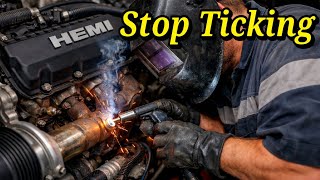
Typical fix: Replace the broken exhaust manifold bolts and the manifold gasket. If the manifold itself is warped or cracked 🎬 Watch: How to repair manifold leaks and extract broken bolts., it must also be replaced.
Est. part cost: $20-$250 - Outdated Powertrain Control Module (PCM) Software 🟡 Medium Probability → Shop Engine Control Module (ECM) TSBs #18-096-16 and #18-042-15 were issued specifically to correct the logic for this code on 2014 models with the 6.4L engine, as the original software was too sensitive. This applies to DD/DP body codes (Ram 3500/4500/5500 Cab Chassis).
How to confirm: A Ram dealership or a shop with access to OEM service information can check your vehicle's VIN to see if the software update has been applied. This requires a wiTECH scan tool.
Typical fix: Reprogram the PCM with the updated software. This is a dealer or specialty shop-only repair. Labor costs for a flash can range from $100 to $200.
Est. part cost: $0-$200 (Labor for flashing) - Faulty Downstream Oxygen (O2) Sensor 🟡 Medium Probability → Shop Oxygen Sensor O2 sensors are wear items and have a finite lifespan. Contamination from engine byproducts or simple age can cause them to fail or send inaccurate, slow, or biased readings.
How to confirm: Use a scan tool to monitor the voltage of the Bank 1, Sensor 2. A healthy downstream sensor should show a relatively steady voltage (typically above 0.5V). If it's stuck low (e.g., below 0.4 volts) or mimics the rapid switching of the upstream sensor, it's likely faulty.
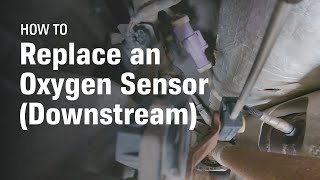
Typical fix: Replace the Bank 1, Sensor 2 oxygen sensor. This is the downstream sensor on the passenger side. 🎬 See this walkthrough on how to replace a downstream sensor.
Est. part cost: $50-$150 - Engine Vacuum Leak ⚪ Low Probability Hoses and intake manifold gaskets can degrade over time, creating a leak that introduces unmetered air into the engine. This leans out the mixture for all cylinders on that bank. While this typically sets an upstream code (P0171) first, it can also contribute to a P2096.
How to confirm: A smoke test is the most effective way to find a vacuum leak. You can also listen for whistling sounds near the intake manifold at idle or carefully spray carb cleaner around suspected areas and listen for a change in engine idle.
Typical fix: Replace the leaking hose or gasket.
Est. part cost: $10-$200
Rare But Worth Checking
- Fuel Delivery Issues: A failing fuel pump, clogged filter, or dirty injectors can cause a true lean condition, but this would typically set other codes as well, such as P0171 (System Too Lean Bank 1) or misfire codes. One owner on RamForum.com investigated fuel pressure (found it to be normal at 57 psi) while chasing this code.
- Damaged O2 Sensor Wiring: → Shop Oxygen Sensor Wiring can be damaged by road debris or contact with hot exhaust components, causing a short or open circuit. A visual inspection of the harness leading to the sensor is necessary.
- Clogged Catalytic Converter: → Shop Catalytic Converter In rare cases, a partially clogged converter can alter exhaust flow and temperature, potentially triggering a lean code. This is an unlikely cause and should be considered only after all other possibilities are exhausted.
Diagnosis Steps
- Check for Technical Service Bulletins (TSBs). Specifically, ask a dealer if TSB #18-096-16 or #18-042-15 applies to your VIN and has been performed. This is the most important first step for a 2014 6.4L.
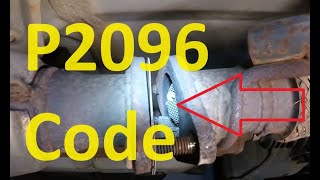
- Scan for other codes. The presence of codes like P2098, P0171, or P0300 can help 🎬 Watch: A breakdown of P2096 causes and common fixes. narrow down the cause.
- Perform a cold start exhaust leak check. Start the engine when it's cold and listen for a distinct ticking noise from the passenger-side exhaust manifold, which is a hallmark of a broken manifold bolt on a HEMI. The noise often fades as the engine warms up.
- Visually inspect the exhaust system. Look for cracks, soot trails, or broken bolts on the exhaust manifold. Continue inspecting all the way to the downstream O2 sensor.
- Use a scan tool to observe live data from the Bank 1 Sensor 2 (downstream) oxygen sensor. The voltage should be relatively stable and generally above 0.5 volts. If it's stuck below 0.4 volts, it confirms a lean reading.
- Inspect the O2 sensor's wiring and connector for any signs of damage, melting, or corrosion.
- If no exhaust leaks are found, the wiring is intact, and the TSB has been performed or doesn't apply, consider replacing the Bank 1, Sensor 2 oxygen sensor.
- If the code persists after all of the above, a more complex issue like a vacuum leak (confirm with a smoke test) or a fuel delivery problem may be the cause.
Parts You'll Likely Need
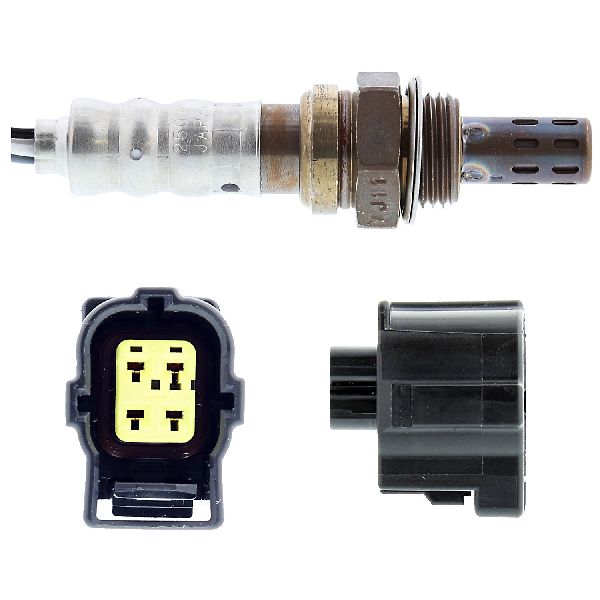
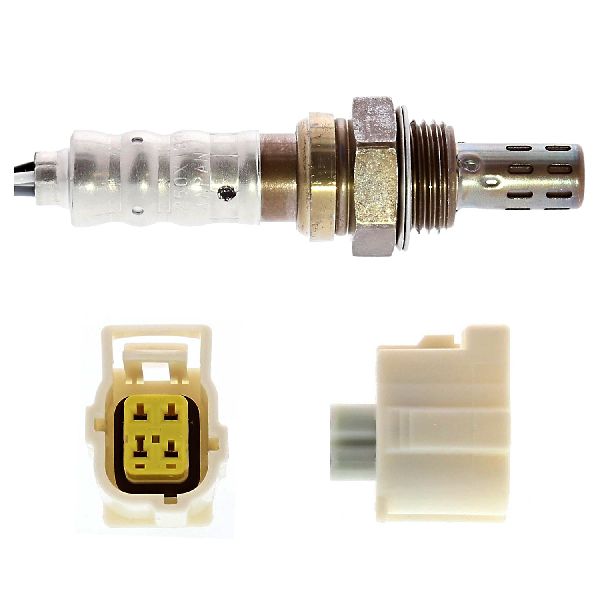
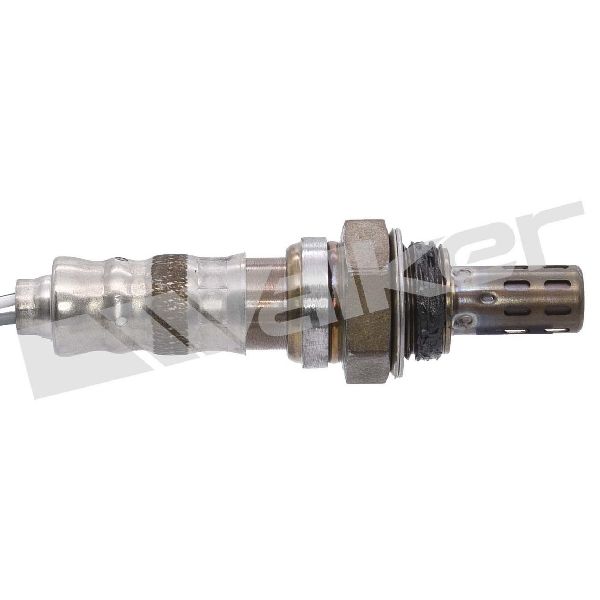
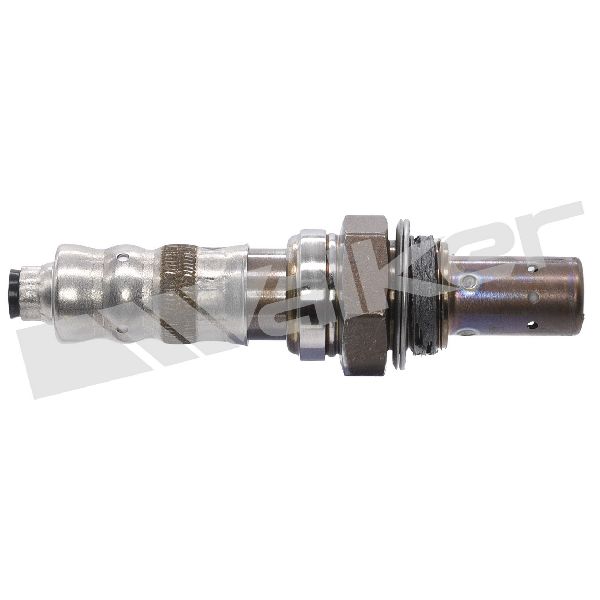
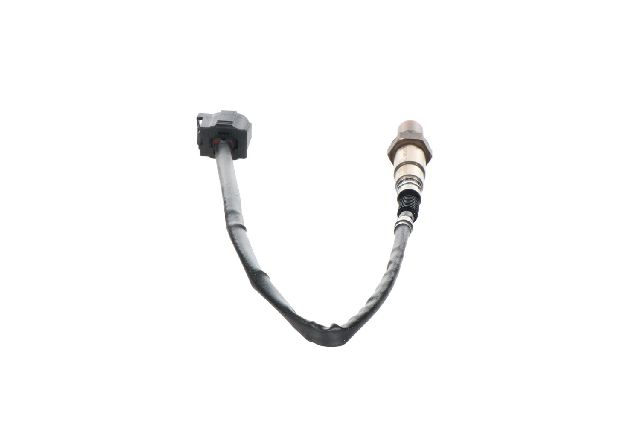
- Downstream Oxygen Sensor (Bank 1, Sensor 2)
(OEM #5149180AA)— This sensor is responsible for the reading that triggers the code. It can fail due to age or contamination, sending false lean signals. Bank 1 Sensor 2 is the downstream sensor on the passenger side.
Trusted brands: Mopar, Denso, NTK, Bosch
OEM price range: $100-$180
Aftermarket price range: $50-$120 - Exhaust Manifold Gasket — A common source for exhaust leaks that allow unmetered air into the exhaust stream, causing a false lean reading by the O2 sensor. Always replace when servicing the manifold.
Trusted brands: Fel-Pro, Mahle, Mopar
OEM price range: $30-$60
Aftermarket price range: $15-$40 - Exhaust Manifold Bolt Kit — The original bolts are prone to breaking on HEMI engines. It is critical to replace them when servicing the manifold to prevent a recurring leak.
Trusted brands: Dorman, Mopar
OEM price range: $50-$80
Aftermarket price range: $25-$50
Related Codes That Often Appear With This One
- P2098 — This is the identical 'Downstream Fuel Trim System Lean' code but for Bank 2. If both appear, it strongly suggests a common cause like a PCM software issue (TSB 18-096-16 explicitly lists both P2096 and P2098), a vacuum leak affecting the whole engine, or a fuel delivery problem.
- P0171 — This code means 'System Too Lean (Bank 1)' and is based on the *upstream* O2 sensor. If you see both, it indicates a genuine lean condition (like a vacuum leak or fuel issue) is happening at the engine, which is then detected by both sensors.
- P0300 — A random misfire code can be triggered by a lean condition. The same vacuum leak or fuel issue causing P2096 can also lead to misfires. TSB 18-096-16 also links P0300 with this family of issues.
Technical Service Bulletins (TSBs) & Recalls
- 18-096-16: FLASH: 6.4L Diagnostic And System Improvements, which includes a fix for falsely set P2096 and P2098 codes on 2014 DD/DP platform trucks (Ram 3500/4500/5500).
- 18-042-15: An earlier, superseded version of the TSB, also addressing diagnostic improvements for the 6.4L engine and P2096.
Platform-Specific Known Issues
- A primary specific issue is the need for a PCM software update as detailed in TSB #18-096-16 and #18-042-15 for 2014 models with the 6.4L HEMI engine. This update corrects the diagnostic logic that can falsely trigger P2096 and P2098.
- HEMI engines of this era are widely known for breaking exhaust manifold bolts, causing a leak often referred to as the 'Hemi tick'. This is a very frequent cause of P2096 on this platform.
Mechanic-Grade Diagnostic Values
- Downstream O2 Sensor Voltage (at idle, warm engine) — expected: Relatively steady voltage between 0.5V and 0.9V.. Failure: Voltage is stuck low (below 0.4V) or fluctuates rapidly like the upstream sensor.
- O2 Sensor Heater Resistance (cold sensor) — expected: Approximately 10Ω to 20Ω between the two heater wires (often the same color, e.g., white).. Failure: An open circuit (infinite resistance) or a dead short (near zero resistance) indicates a failed heater element.
- O2 Sensor Signal Circuit Test (connector disconnected, key on) — expected: Approximately 5.0V on the signal wire from the PCM.. Failure: No voltage or significantly lower voltage points to a wiring issue or PCM fault.
- O2 Sensor Signal Circuit Jumper Test (connector disconnected, key on) — expected: Voltage should drop from 5.0V to 2.5V when a jumper is placed between the signal and return circuits in the harness connector.. Failure: Voltage does not drop, indicating a problem in the return circuit or PCM.
Scan Tool Commands That Help
- wiTECH (or equivalent high-level scan tool): O2 Sensor Heater Test — To actively command the O2 sensor's internal heater on and off to verify the heater circuit's integrity without physically accessing the sensor. This can help differentiate between a bad sensor heater and a wiring/PCM issue.
- wiTECH (or equivalent high-level scan tool): View Downstream Fuel Trim — To monitor the fine-tuning adjustments the PCM is making based on the downstream O2 sensor's readings. If the downstream fuel trim value is consistently high, it confirms the PCM is trying to correct a perceived lean condition reported by the sensor.
Wiring & Ground Locations
- Engine to Body/Frame Ground Strap — There are multiple ground straps. A key one often runs from the back of the cylinder head to the firewall or from the engine block to the frame rail.. A poor engine ground can cause incorrect sensor readings across the engine management system. The O2 sensor relies on a solid ground reference to produce an accurate voltage signal. A compromised ground can introduce noise or a voltage offset, potentially leading to a false lean code.
- O2 Sensor Connector (Bank 1, Sensor 2) — Follow the wiring harness up from the downstream oxygen sensor on the passenger side exhaust pipe. The connector is typically clipped to the transmission bellhousing or the vehicle's underbody, away from direct exhaust heat.. This is the primary point for testing the sensor and the circuit back to the PCM. Inspecting for corrosion, pushed-out pins, or damage is crucial before replacing the sensor.
Real Owner Repair Stories
- Reddit user in r/ram_trucks (Ram truck, year not specified but behavior matches HEMI issues.) — P2096 code triggered. Also noted a bad exhaust ticking noise on cold starts for several years.
❌ Tried (didn't work) The user planned to clean the O2 and MAF sensors first, but acknowledged the manifold leak was the probable cause.
✅ What actually fixed it The user strongly suspected the exhaust manifold leak was the root cause of the P2096 code, which is consistent with common knowledge for this platform. The post implies fixing the known manifold leak is the correct path.
OEM Part Supersession History
5149180AA→05149180AB— Standard part revision by the manufacturer. Reasons can include minor design improvements, change in supplier, or material updates.
Heads up: The new part number 05149180AB is the direct replacement for 5149180AA and should be fully compatible.
Helpful Videos

We Have This Part in Stock


The information in this article is provided for general reference and educational purposes only. Vehicle specifications, procedures, and part compatibility can vary by production date, trim level, and region. Always consult your vehicle's factory service manual and verify part numbers before purchasing or performing repairs. Safety-critical components such as airbags, seat belts, and braking systems should be installed by a qualified professional.
- Ram 3500:
- 🧭 Diagnostic Flowchart
- 🎬 Helpful Videos
- 🛍️ Shop This Part
- What's Unique About the 2014-2014 Ram 3500
- Symptoms You May Notice
- Most Likely Causes
- Rare But Worth Checking
- Diagnosis Steps
- Parts You'll Likely Need
- Related Codes That Often Appear With This One
- Technical Service Bulletins (TSBs) & Recalls
- Platform-Specific Known Issues
- Mechanic-Grade Diagnostic Values
- Scan Tool Commands That Help
- Wiring & Ground Locations
- Real Owner Repair Stories
- OEM Part Supersession History
- 🎟️ Get 5% Off