

P2096 on 2007-2009 Saturn Aura 3.6L: Post-Catalyst Lean Trim Causes and Fixes
This code means the engine is running lean on Bank 1 (the firewall side). The most common causes are an exhaust leak before the rear oxygen sensor or a failing oxygen sensor itself. Before buying parts, check for obvious exhaust leaks and ensure the air filter box is sealed correctly.
- P2096 on your Saturn Aura points to a lean condition on the firewall-side of the engine, as seen by the rear O2 sensor.
- Before replacing any parts, perform a thorough inspection for exhaust leaks and make sure the air filter housing is perfectly sealed.
- The most likely fixes are repairing an exhaust leak or replacing the downstream (post-catalyst) oxygen sensor for Bank 1.
- If you also have a P0171 code, the problem is almost certainly an engine intake or fuel issue, not the exhaust sensor itself.
What's Unique About the 2007-2009 Saturn Aura
While the 3.6L V6 (LY7) engine in the Saturn Aura is known for specific issues like timing chain stretch, these problems typically trigger different, more specific trouble codes (like P0008 or P0017) and are not the usual cause for an isolated P2096. For this vehicle, the causes of P2096 are almost always the more universal culprits for a lean exhaust condition, such as exhaust leaks or faulty sensors, rather than a unique engine design flaw specific to this code.
Symptoms You May Notice
- Check Engine Light is on
- Reduced fuel economy
- Rough idle
- Poor acceleration or lack of power
- Engine misfires in some cases
- Replacing the upstream (pre-catalyst) oxygen sensor instead of the downstream (post-catalyst) sensor.
- Replacing the oxygen sensor without first checking for exhaust or intake leaks, which are very common causes.
- Replacing the catalytic converter when the root cause is a sensor or exhaust leak.
Most Likely Causes
- Exhaust Leak 🔴 High Probability Exhaust components, particularly the flexible pipe section and manifold gaskets, can develop leaks from rust, failed gaskets, or cracks over time due to heat cycles and environmental exposure.
How to confirm: Listen for a ticking or hissing noise from the exhaust system, especially when the engine is cold. A visual inspection may reveal black soot, rust, or cracks. A smoke test, where smoke is forced into the exhaust system, is the most definitive way to find a leak. 🎬 Watch: How to find exhaust leaks with a smoke machine
Typical fix: Repairing the leak, which may involve replacing a gasket (e.g., exhaust manifold gasket), welding a crack, or replacing a section of pipe like the flex pipe.
Est. part cost: $10-$150 - Faulty Downstream Oxygen Sensor (Bank 1, Sensor 2) 🔴 High Probability → Shop Oxygen Sensor Oxygen sensors have a finite lifespan and can become 'lazy' or contaminated over time, sending inaccurate (lean) readings to the computer. This is a common fix reported by owners.
How to confirm: Use a scan tool to monitor the voltage of the Bank 1 Sensor 2. A healthy sensor on a warm engine should show a relatively steady voltage. If the voltage is stuck low (below 0.45V) or mirrors the upstream sensor's activity, it is likely faulty.
Typical fix: Replace the Bank 1, Sensor 2 oxygen sensor. This sensor is located on the firewall side of the engine, after the catalytic converter. Access can be difficult. 🎬 See this step-by-step downstream O2 sensor replacement walkthrough Several owners on saturnfans.com have confirmed that replacing this sensor resolved their P2096 code.
Est. part cost: $40-$100 - Intake Air Leak (Vacuum Leak) 🟡 Medium Probability A common and simple-to-check issue is an improperly sealed air filter housing, often occurring after an air filter change. Vacuum hoses can also become brittle and crack with age.
How to confirm: Visually inspect the air filter box to ensure it is fully clamped and sealed. Check all vacuum lines for cracks or loose connections. You can spray carburetor cleaner or brake cleaner around suspected leak areas with the engine running; a change in engine idle indicates a leak.
Typical fix: Properly seat and clamp the air filter housing. Replace any cracked or broken vacuum hoses.
Est. part cost: $5-$50 - Fuel Delivery Issue ⚪ Low Probability
How to confirm: This is less likely without other codes (like P0171). Check fuel pressure with a gauge to see if it meets the manufacturer's specification. A weak fuel pump or clogged fuel filter could be the cause.
Typical fix: Replace the failing fuel pump or clogged fuel filter.
Est. part cost: $50-$300
Rare But Worth Checking
- Failing Catalytic Converter: → Shop Catalytic Converter A partially clogged or inefficient catalytic converter can sometimes cause this code, but it's more likely to set a P0420 code. GM Bulletin No.: 06-06-04-033 advises against replacing converters for fuel trim codes unless all other possibilities are exhausted. This should be a last resort.
- Dirty or Faulty Mass Airflow (MAF) Sensor: A dirty MAF sensor can under-report the amount of air entering the engine, causing the computer to inject too little fuel. This usually sets its own codes (like P0101 or P0102) but can contribute to a lean condition.
- PCM Software Issue: While more common on newer GM vehicles, it's worth noting that GM has issued TSBs for other models where a software anomaly can cause false P2096 codes. If all hardware checks out, checking for an available ECM update is a valid step.
Diagnosis Steps
- Use an OBD-II scanner to confirm P2096 and check for any other codes. If P0171 is present, start by diagnosing the cause of the P0171 code first.
- Inspect the air intake system, especially the air filter housing, to ensure it is properly sealed.
- Visually and audibly inspect the exhaust system for leaks between the Bank 1 cylinder head (firewall side) and the downstream O2 sensor. Pay close attention to the exhaust manifold gaskets and the flex pipe section.
- With the engine running, inspect for vacuum leaks by listening for hissing sounds or by carefully spraying carb cleaner around the intake manifold gaskets and vacuum hoses.
- Use a scan tool to observe the live data for the Bank 1 Sensor 2 (downstream) oxygen sensor. If the voltage is stuck low (e.g., under 0.2V) or fluctuates wildly like the upstream sensor, it is likely faulty.
- If basic checks do not reveal the cause, a technician may consult GM TSB #PIP4520D, which provides advanced diagnostics for persistent lean/rich codes on the 3.6L engine.
- If other causes are ruled out, test the fuel pressure to ensure the fuel pump and filter are functioning correctly.
- As a last resort, and after consulting GM Bulletin #06-06-04-033, inspect the catalytic converter for damage or clogging.
Parts You'll Likely Need
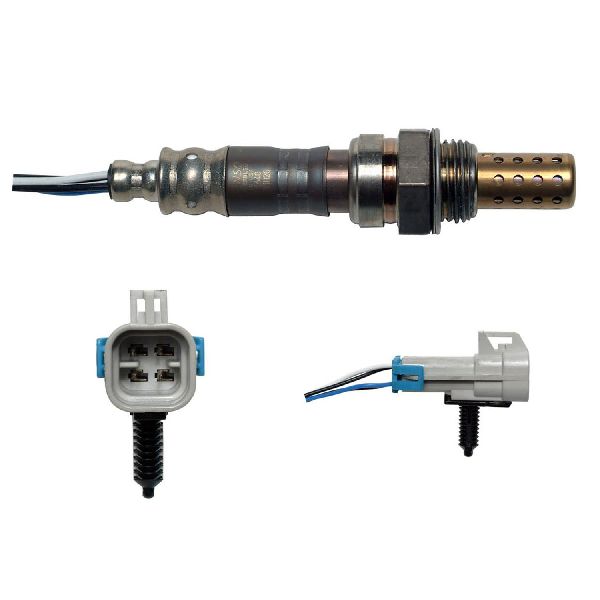
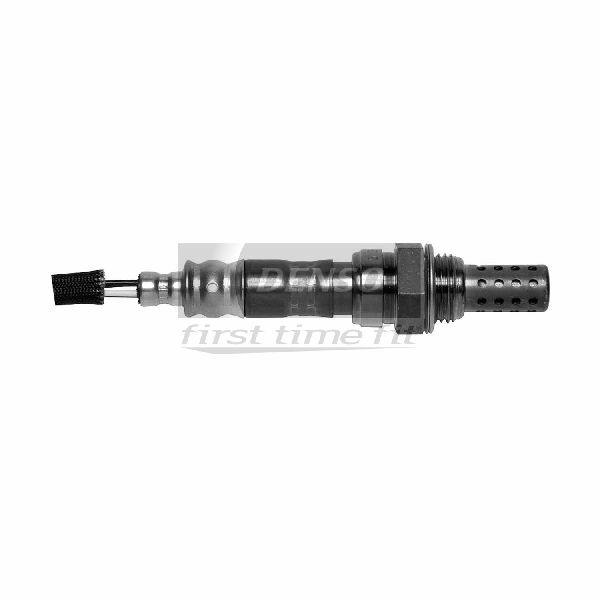
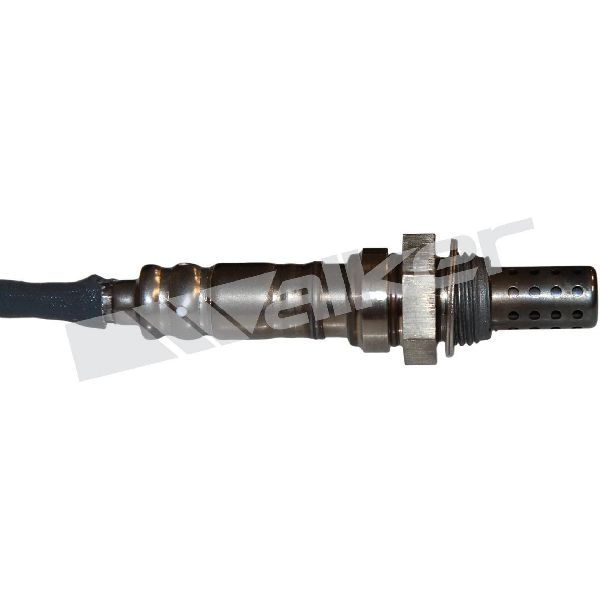
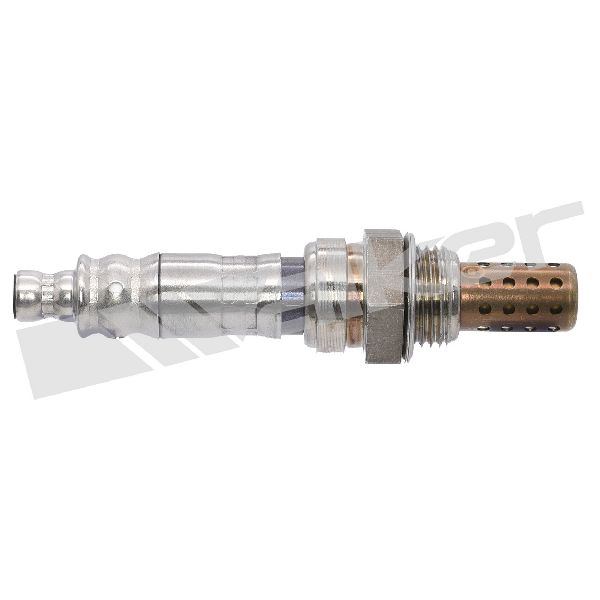
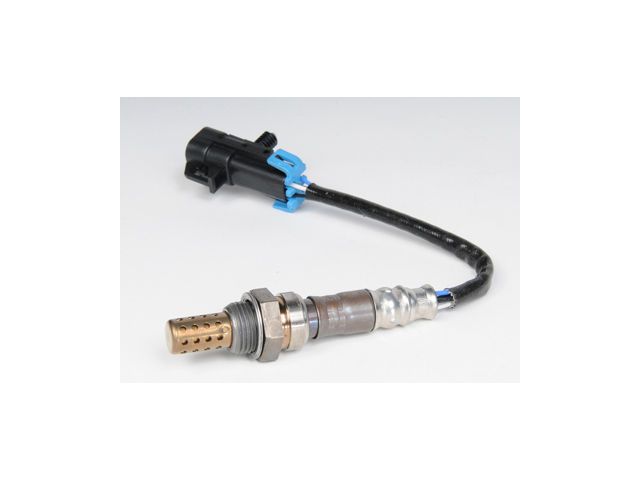
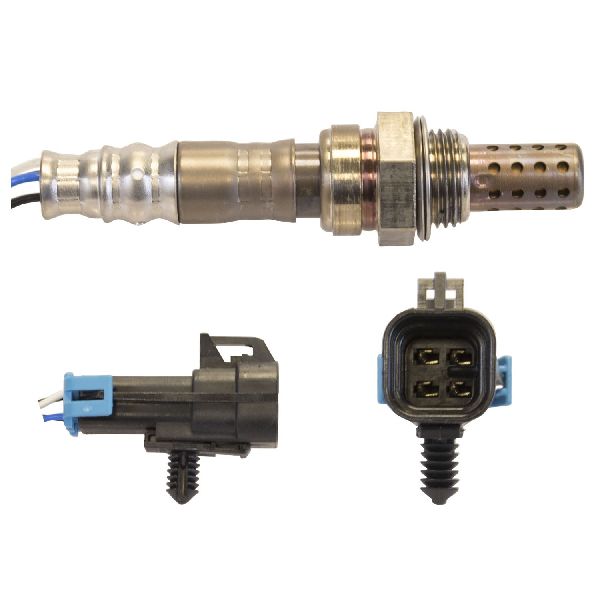
- Downstream Oxygen Sensor (Bank 1, Sensor 2)
(OEM #12609457 (supersedes 12592592))— This sensor is the direct source of the reading that triggers the code. They wear out over time and are a common failure point, confirmed by owner experiences.
Trusted brands: ACDelco (OEM #213-4229), Denso (e.g., 234-4209), Bosch, NGK/NTK
OEM price range: $70-$120
Aftermarket price range: $40-$80 - Exhaust Manifold Gasket
(OEM #12617933 (for rear/firewall side manifold))— If an exhaust leak is found at the manifold, this gasket will need to be replaced.
Trusted brands: Fel-Pro, ACDelco, Mahle
OEM price range: $15-$30
Aftermarket price range: $10-$20
Related Codes That Often Appear With This One
- P0171 — P0171 is 'System Too Lean (Bank 1)'. If you see both codes, it strongly suggests 🎬 Watch: Understand O2 sensor locations and bank numbers the problem is an actual lean condition affecting the whole bank (like a vacuum leak or fuel delivery issue) and P2096 is just a symptom of that primary problem.
- P2098 — P2098 is the same 'Post Catalyst Fuel Trim Too Lean' code but for Bank 2 (radiator side). Seeing both codes together might point towards a common issue affecting both banks, like a major intake leak, MAF sensor issue, or a fuel pump problem.
- P0137 — P0137 is 'O2 Sensor Circuit Low Voltage (Bank 1, Sensor 2)'. This code can appear alongside P2096 as they both point to a low voltage signal from the same downstream sensor, often caused by an exhaust leak or a failing sensor.
Technical Service Bulletins (TSBs) & Recalls
- TSB #PIP4520D: Diagnostic aid for technicians dealing with various fuel trim and misfire codes on the 3.6L V6, providing deeper diagnostic paths.
- GM Bulletin No.: 06-06-04-033: Advises technicians to avoid replacing catalytic converters for fuel trim codes (like P2096) until all other potential causes like leaks and sensor faults have been thoroughly ruled out.
Platform-Specific Known Issues
- The 3.6L LY7 engine is widely known for premature timing chain stretching, which can cause a variety of engine performance codes (like P0008, P0017). However, this is not a typical direct cause of an isolated P2096 code. If timing codes are present with P2096, the timing chain issue is the primary fault that must be addressed.
Mechanic-Grade Diagnostic Values
- Fuel Pressure (Key On, Engine Off) — expected: 380-410 kPa (55-60 psi). Failure: Pressure below this range indicates a weak fuel pump, clogged filter, or faulty pressure regulator.
- Fuel Injector Resistance — expected: 11-14 Ohms. Failure: A reading of OL (open circuit) or near zero ohms indicates a failed injector coil.
- Downstream O2 Sensor (Bank 1, Sensor 2) Voltage — expected: Relatively steady voltage between 0.6V and 0.8V on a warm, running engine at steady RPM.. Failure: Voltage stuck low (e.g., below 0.2V) indicates a lean reading or a sensor fault. Voltage mirroring the rapid fluctuations of the upstream sensor can indicate a failing catalytic converter.
Scan Tool Commands That Help
- GM Tech 2 / GDS2: Cylinder Power Balance Test — If P2096 is accompanied by misfire symptoms or codes, this test helps confirm which cylinder is not contributing. The tool disables injectors one by one; if disabling a cylinder causes no change in RPM, that cylinder has the problem.
- GM Tech 2 / GDS2: Fuel Trim Reset — After performing a repair for a lean condition (like fixing a vacuum leak or replacing an O2 sensor), resetting the long-term fuel trim values forces the PCM to relearn the fuel strategy immediately, which can help confirm the fix and turn off the check engine light faster.
Wiring & Ground Locations
- Bank 1 Sensor 2 (HO2S) — Located at the rear of the engine compartment, in the exhaust pipe just after the catalytic converter for the firewall-side cylinder bank.. This is the sensor providing the direct reading that triggers the P2096 code. Its wiring is susceptible to heat damage and physical abrasion.
- ECM Connector X1, Pins 10 & 11 — The Engine Control Module (ECM) is located in the left side of the engine compartment, in front of the battery. Pin 10 (Purple/White wire) is the HO2S High Signal and Pin 11 (Tan/White wire) is the HO2S Low Signal for Bank 1 Sensor 2.. These are the specific pins to test for continuity and voltage when diagnosing a faulty sensor circuit versus a faulty sensor. A break in these wires will cause a P2096 or related circuit code.
- G106 — On the 3.6L engine, this ground point is located on the rear of the engine, above the oil filter.. A poor ground connection at G106 can cause erratic behavior from various engine sensors that use it as a reference, potentially leading to incorrect sensor readings and fault codes.
- Underhood Fuse Block — Located on the left side of the engine compartment, next to the battery.. This fuse block powers the ECM and various sensors, including the oxygen sensor heaters. Corrosion or internal faults in this block can cause a wide range of electrical issues, including sensor circuit codes.
Real Owner Repair Stories
- YouTube video by 'Gears and Gaskets' (2008 Saturn Aura XR 3.6L) — Check engine light flashing, multiple codes including P0201, P0203, P0205 (injector circuit faults) and P0300 (random misfire). Car had no power and would take forever to accelerate.
❌ Tried (didn't work) Initial diagnosis pointed towards multiple injector failures, which is unlikely to happen simultaneously.
✅ What actually fixed it The problem was a short inside the underhood fuse block. Replacing the entire fuse block with a used unit resolved all the electrical fault codes and restored engine power.
OEM Part Supersession History
12592592→12609457— Standard part revision and improvement by GM.
Heads up: The new part number (12609457) is a direct replacement for the old one. The ACDelco Professional equivalent is part number 213-4229.
Diagnostic Flowchart
Other Known Issues on This Vehicle
Issues unrelated to this code that are worth knowing about as an owner of this generation:
- Premature Timing Chain Stretch 🔴 High — Very common, especially on 2007-2009 models. Can occur as early as 60,000 miles but more typically 80,000-120,000 miles. Using low-quality oil or extending oil change intervals exacerbates the issue. (Ref: GM Special Coverage Adjustment #11340C extended warranty coverage to 10 years/120,000 miles for this issue.)
- 3-5-R Transmission Wave Plate Failure 🔴 High — A well-documented failure in the 6T70/6T75 automatic transmission, often occurring between 70,000 and 120,000 miles. Results in sudden loss of 3rd, 5th, and Reverse gears. (Ref: GM Special Coverage #14404B addressed this issue, but the coverage period has likely expired for most vehicles.)
- Power Steering System Failures 🟠 Medium — Numerous complaints regarding intermittent or total loss of electric power steering (EPS) assist. Also, fluid leaks from hydraulic power steering lines were common on some models. (Ref: Multiple recalls and special coverages were issued, including NHTSA recall #14V252000 for loss of electric power steering assist.)
- Water Leaks into Cabin 🟡 Low — Owners report water leaks near the A-pillar, often due to clogged sunroof drains, which can lead to electrical problems with modules located in the passenger footwell or dash area.
Used vs. New Parts: Buying Guide for This Vehicle
When a used part is the smart pick: Used parts are a viable option for major mechanical components like a section of exhaust pipe or an exhaust manifold, provided they are from a low-mileage, non-corroded donor. A used underhood fuse block can also be a cost-effective fix for complex electrical issues, as seen in real-world repairs.
Donor-vehicle mileage cap: roughly under 80000 miles for the part to have meaningful remaining life.
What to inspect on the donor part:
- For exhaust parts, check for heavy rust, cracks (especially near welds and flanges), and thinned-out pipe walls.
- For electrical components like a fuse block, inspect for any signs of melting, corrosion on the terminals, or water intrusion.
- Ensure the donor vehicle was not in a front-end collision that could have damaged the component.
OEM-only on this vehicle (don't cheap out):
- While not strictly 'OEM-only', it is highly recommended to use new oxygen sensors. Used sensors have an unknown lifespan and may be contaminated.
- All gaskets (exhaust manifold, intake, etc.) should always be purchased new to ensure a proper seal.
Aftermarket brands forum-validated for this vehicle:
- O2 Sensors: Denso, Bosch, NGK/NTK are reputable alternatives to ACDelco.
- Exhaust Gaskets: Fel-Pro, Mahle.
Brands owners have reported issues with on this vehicle:
- Avoid unbranded, 'white-box' oxygen sensors from online marketplaces. They often have high failure rates, poor calibration, and can cause the code to return quickly.
Real Owner Stories
Aggregated from forums and TSBs cited above. Mileages and costs reflect what owners reported in those sources.
2008 Saturn Aura XR 3.6L
Symptoms: Check Engine Light on with code P2096.
What fixed it: Replacement of the Bank 1, Sensor 2 (downstream) oxygen sensor.
Source hint: saturnfans.com - Thread 'P2096 code'
2007-2009 Saturn Aura 3.6L
Symptoms: Check Engine Light - P2096; users discussed the need to verify the exhaust system integrity first.
What fixed it: Replacement of the post-catalyst O2 sensor after checking for exhaust leaks.
Source hint: saturnfans.com - Thread 'Check Engine Light - P2096'
Related OBD-II Codes
Frequently Asked Questions
Should I replace my catalytic converter immediately to fix P2096 on my 3.6L Aura?
Is there a specific diagnostic guide for persistent lean codes on the Saturn 3.6L engine?
Could a recent air filter change on my Aura XR be related to the P2096 code?
Where is the Bank 1 Sensor 2 oxygen sensor located on the 3.6L LY7 engine?
Can timing chain issues cause a P2096 code on the 2007-2009 Saturn Aura?
What is the most common exhaust leak point on the Aura that triggers this lean code?
Helpful Videos
We Have This Part in Stock

The information in this article is provided for general reference and educational purposes only. Vehicle specifications, procedures, and part compatibility can vary by production date, trim level, and region. Always consult your vehicle's factory service manual and verify part numbers before purchasing or performing repairs. Safety-critical components such as airbags, seat belts, and braking systems should be installed by a qualified professional.
- Saturn Aura:
- 🧭 Diagnostic Flowchart
- 🎬 Helpful Videos
- 🛍️ Shop This Part
- What's Unique About the 2007-2009 Saturn Aura
- Symptoms You May Notice
- Most Likely Causes
- Rare But Worth Checking
- Diagnosis Steps
- Parts You'll Likely Need
- Related Codes That Often Appear With This One
- Technical Service Bulletins (TSBs) & Recalls
- Platform-Specific Known Issues
- Mechanic-Grade Diagnostic Values
- Scan Tool Commands That Help
- Wiring & Ground Locations
- Real Owner Repair Stories
- OEM Part Supersession History
- Other Known Issues on This Vehicle
- Used vs. New Parts: Buying Guide for This Vehicle
- Real Owner Stories
- 2008 Saturn Aura XR 3.6L
- 2007-2009 Saturn Aura 3.6L
- Related OBD-II Codes
- Frequently Asked Questions
- 🎟️ Get 5% Off