

P2096 on 2017-2024 Subaru Crosstrek: Causes and Fixes for Post Catalyst Lean Code
On a Subaru Crosstrek, code P2096 is most often caused by an exhaust leak between the two oxygen sensors or a failing rear oxygen sensor. A smoke test is the most reliable way to find leaks. Expect to pay $100-$250 for a new sensor and budget for 1-2 hours of diagnostic time to check for leaks first.
- Do not rush to replace expensive parts. P2096 on a Crosstrek is almost always a simple fix.
- Your first step should be a thorough inspection for exhaust leaks. Use a smoke machine for best results.
- If no leaks are found, the rear oxygen sensor is the most likely culprit.
- When inspecting or replacing the O2 sensor, check its electrical connector for any signs of oil contamination from engine leaks.
- Clearing the code without fixing the underlying issue will only result in the Check Engine Light returning.
What's Unique About the 2017-2024 Subaru CROSSTREK
While P2096 is a generic code, on the Subaru Crosstrek platform and its relatives (Impreza, Forester), it points very strongly toward two specific issues: small exhaust leaks or a failing rear oxygen sensor. Unlike other vehicles where fuel system problems might be a primary suspect, on the Crosstrek, the diagnostic path almost always starts at the exhaust. Technicians and owners on forums like Reddit and Identifix frequently report that tiny, hard-to-see cracks or gasket leaks in the exhaust system are the culprit, which can trick the rear O2 sensor. Additionally, failing rear O2 sensors themselves are a very common point of failure, with some technicians on Reddit estimating they account for the vast majority of cases when no leak is present.
Diagnostic Flowchart
Tap your situation to follow the diagnostic path that matches what you're seeing on this vehicle.
Generation note: The 2017-2024 year range covers the first (2017), second (2018-2023), and third (2024+) generations of the Subaru Crosstrek. While the causes for P2096 are consistent across these generations due to the shared FB series engines (FB20D and FB25D), the exact part numbers for oxygen sensors and exhaust gaskets will differ. The diagnostic process remains the same. The location of the O2 sensor electrical connectors may vary, with some earlier models requiring removal of the under-tray for access.
Symptoms You May Notice
- Check Engine Light is on
- Possible decrease in fuel economy
- Slightly rough idle in some cases
- Poor acceleration or engine hesitation (less common)
- Engine may stall at low RPMs (rare)
- Replacing the catalytic converter immediately. This is an expensive part that is rarely the cause of an isolated P2096 code.
- Replacing the rear O2 sensor without first checking thoroughly for exhaust leaks. A new sensor will still report a lean condition if a leak is present.
- Replacing fuel system components like the fuel pump or injectors before ruling out exhaust leaks and sensor issues.
- Replacing the front A/F sensor when the rear O2 sensor is the actual culprit.
Most Likely Causes
- Exhaust System Leak 🔴 High Probability Exhaust gaskets, particularly the donut gasket between pipe sections 🎬 Watch: How to replace a leaking exhaust donut gasket, and pipe welds can degrade over time from heat cycles and corrosion, allowing outside air to be sucked into the exhaust stream. This unmetered air reaches the rear O2 sensor, causing it to report a false lean condition.
How to confirm: Perform a visual inspection of the exhaust system from the engine to the tailpipe, looking for black soot marks, cracks, or rusted-through sections. The most definitive method is to have a shop use a smoke machine to inject smoke into the exhaust and watch where it escapes. Some owners also report finding leaks by listening for a whistling or ticking sound.
Typical fix: Replace the leaking gasket (such as the donut gasket) or repair/replace the cracked section of the exhaust pipe. For small cracks, high-temperature exhaust putty 🎬 Watch: Two quick DIY methods to fix the P2096 code can be a temporary fix.
Est. part cost: $20-$100 - Failing Rear (Downstream) Oxygen Sensor 🔴 High Probability → Shop Oxygen Sensor Oxygen sensors are wear items that degrade over time, typically after 80,000-100,000 miles. They can also be contaminated by oil or coolant leaks, which is a known issue on some Subarus. A failing or 'lazy' sensor can send inaccurate, low-voltage signals to the ECM, triggering the P2096 code.
How to confirm: After confirming there are no exhaust leaks, use a scan tool to monitor the live voltage data from the rear O2 sensor. A healthy sensor should show a relatively stable voltage between 0.03V and 1.2V. A sensor that is stuck low, has erratic readings, or is slow to respond is likely faulty. A Subaru technician on Reddit states this is the cause in ~95% of cases where no leaks are found.
Typical fix: Replace the rear (Bank 1, Sensor 2) oxygen sensor. Ensure the electrical connector is clean and free of oil.
Est. part cost: $80-$250 - Failing Front (Upstream) Air/Fuel Ratio Sensor ⚪ Low Probability → Shop Oxygen Sensor Less common, but a failing front A/F sensor can send incorrect 'rich' signals to the computer. The computer then over-corrects by making the fuel mixture too lean (negative fuel trims), which the rear O2 sensor accurately detects, triggering the P2096 code. This can also be caused by oil from a cam carrier leak fouling the sensor.
How to confirm: Monitor long-term and short-term fuel trims with a scan tool. If the computer is consistently commanding a large negative fuel correction (e.g., -10% or more), it suggests the front sensor may be at fault. Visually inspect the sensor and its wiring for oil contamination. Advanced scan tools may show a failing test for the front A/F sensor in Mode 6 data.
Typical fix: Replace the front (Bank 1, Sensor 1) Air/Fuel Ratio sensor. If oil contamination is present, the source of the oil leak (e.g., cam carrier) should also be addressed.
Est. part cost: $100-$250
Rare But Worth Checking
- Clogged or Inefficient Catalytic Converter: → Shop Catalytic Converter This is a rare cause. Usually, a failing catalytic converter will trigger its own specific code, such as P0420 (Catalyst System Efficiency Below Threshold). Do not replace the converter for P2096 alone unless it has been definitively tested and proven to be faulty. A glowing red converter after running is a sign of a clog.
- Low Fuel Pressure or Clogged Injectors: A genuine lean condition from a weak fuel pump or dirty injectors would typically set a P0171 (System Too Lean) code first, as the front A/F sensor would detect it immediately. This is an unlikely cause for an isolated P2096.
- Intake Air Leak (Post-MAF): A vacuum leak after the Mass Airflow (MAF) sensor can cause a lean condition. A common example is an improperly seated air filter housing after service, allowing unmetered air in. This would usually also trigger a P0171 code, making it a less likely cause for an isolated P2096.
Diagnosis Steps
- Read all codes stored in the ECM. Note if P2096 is isolated or present with other codes like P0171. Check Mode 6 data on an advanced scan tool for failing non-continuous monitor tests, which can point to a specific sensor.
- Perform a thorough visual inspection of the entire exhaust system. Look for cracks in the exhaust manifold, broken flange bolts, and failed gaskets (especially the donut gasket between the catalytic converter and mid-pipe).
- If a visual inspection is inconclusive, the most reliable next step is to have the exhaust system tested with a smoke machine. This will reveal any pinhole leaks that are invisible to the naked eye.
- Inspect the wiring and connectors for both the front A/F and rear oxygen sensors. The connectors are located at the bottom-front passenger-side of the engine. Look for any signs of damage, melting, or oil contamination from engine leaks (e.g., cam carriers).
- If no leaks are found, use a scan tool to view live data. Observe the voltage of the rear O2 sensor (Bank 1, Sensor 2). It should be relatively stable. If it is stuck below 0.03V or above 1.2V, the sensor is likely faulty.
- Test the rear O2 sensor's heater circuit resistance with a multimeter. With the sensor disconnected, measure between the two heater pins. A good sensor should read between 5-8 ohms. 🎬 See this walkthrough for testing and replacing the rear sensor A reading over 50 ohms indicates a failed heater circuit.
- As a final check, observe the behavior of the front Air/Fuel Ratio sensor (Bank 1, Sensor 1) and the short/long term fuel trims. If fuel trims are highly negative, it could point to a faulty front sensor tricking the ECM.
- Only after confirming the absence of exhaust leaks and testing the sensor should you replace the rear oxygen sensor. If the front sensor was oil-fouled or failed a Mode 6 test, that should be the priority.
Parts You'll Likely Need
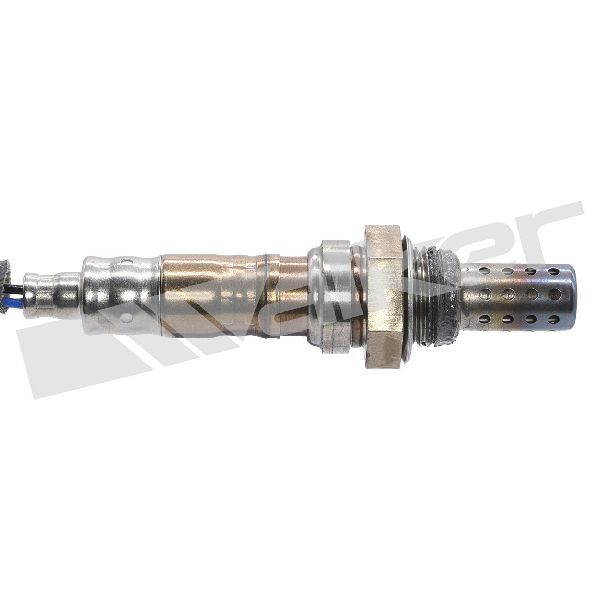
- Rear Oxygen Sensor (Bank 1 Sensor 2)
(OEM #22690AB010)— This sensor is the most common part to fail and directly causes the P2096 code when it sends false lean readings. Note: Part number 22690AB010 fits many Subaru models including Forester and WRX, but does not explicitly list the Crosstrek in some catalogs. Always verify fitment with VIN.
Trusted brands: Denso, NTK, Bosch
OEM price range: $180-$250
Aftermarket price range: $80-$150 - Exhaust Flange Gasket / Donut Gasket
(OEM #44022AA123)— These gaskets are a common failure point for exhaust leaks, which is a primary cause of P2096 on Subarus. This specific part number is a widely used donut gasket across many Subaru models, including the Crosstrek.
Trusted brands: Subaru (OEM), Walker Exhaust, Fel-Pro, Grimmspeed
OEM price range: $20-$40
Aftermarket price range: $10-$25 - Exhaust Muffler Gasket
(OEM #44011SG000)— Another common gasket that can fail and cause leaks. This part fits 2.0L and 2.5L Crosstrek models.
Trusted brands: Subaru (OEM)
OEM price range: $25-$45
Aftermarket price range: $15-$30
Related Codes That Often Appear With This One
- P0171 (System Too Lean Bank 1): If this code is present with P2096, it points towards a problem affecting the entire engine bank, such as a vacuum leak or a faulty front A/F sensor, rather than an isolated post-catalyst issue.
Technical Service Bulletins (TSBs) & Recalls
- 11-174-17R: Announces updated ECM logic to improve diagnostic accuracy for P2096/P2097. A dealership reflash may solve the issue if no physical faults are found.
- 02-131-12R: Provides detailed procedures for diagnosing and repairing common oil leaks, including from the cam carriers which can foul oxygen sensors.
Platform-Specific Known Issues
- Subaru has issued Technical Service Bulletin (TSB) #11-174-17R, which provides an updated logic for the ECM to prevent false P2096 codes. This involves a software update that can be performed by a dealer.
- On some models, oil leaks from the engine's cam carriers can drip down onto the oxygen sensor connectors, co
Mechanic-Grade Diagnostic Values
- Rear O2 Sensor (Bank 1, Sensor 2) Voltage via Scan Tool — expected: Relatively stable voltage between 0.03V and 1.2V with the engine running.. Failure: A voltage reading consistently under 0.03V or over 1.2V indicates a faulty sensor.
- Rear O2 Sensor Heater Circuit Resistance — expected: 5 to 8 ohms.. Failure: No reading (open circuit) or a very high reading (over 50 ohms) indicates the internal heater has failed and the sensor needs replacement.
- Rear O2 Sensor Voltage Reaction Test (Forced Lean) — expected: Voltage should drop to around 200mV (0.2V).. Failure: If the reading is higher or the sensor is slow to react, it suggests the sensor is failing.
- Rear O2 Sensor Voltage Reaction Test (Forced Rich) — expected: Voltage should rise to around 800mV (0.8V).. Failure: If the reading is lower or the sensor is slow to react, it suggests the sensor is failing.
Hidden / Shadow Codes Worth Checking
- Mode 6 Data: This is not a specific code, but a diagnostic mode that shows results from the ECM's non-continuous self-tests. A failing test for an oxygen sensor or A/F sensor can be seen here before a hard fault code is set, helping to pinpoint the component at fault. (see via Requires an advanced OBD-II scan tool that can access and display Mode 6 test results. Basic code readers typically cannot view this data.)
Wiring & Ground Locations
- O2 and A/F Sensor Connectors — On many Crosstrek models, the connectors for both the front and rear oxygen sensors are located together at the bottom-front, passenger side of the engine, near the power steering pump and radiator hose.. This location is susceptible to contamination from engine oil leaks (e.g., cam carriers), which can foul the connectors and cause sensor malfunctions. Knowing the location is critical for inspection.
- Front O2 Sensor Connector — This is a black and gray plug located on the front passenger side of the engine.. Correctly identifying this connector is necessary if diagnosing a potential issue with the front A/F sensor causing the P2096 code.
- Rear O2 Sensor Connector — This is an all-grey plug located next to the front sensor's connector on the front passenger side of the engine.. This is the primary connector to inspect, test, and disconnect when replacing the rear O2 sensor, which is the most common fix for P2096.
Real Owner Repair Stories
- Reddit user on r/subaru (2011 Subaru Outback) — Check engine light with code P2096 appeared for the second time in a year. Both occurrences happened after a significant drop in outdoor temperature.
❌ Tried (didn't work) The first time the code appeared, the oxygen sensor was replaced, which fixed the problem temporarily.
✅ What actually fixed it The code returned with the next winter season, suggesting the underlying cause might be related to temperature changes affecting a component or connection, or a recurring sensor failure. The user was seeking further diagnosis for the repeat failure. The initial fix was replacing the oxygen sensor.
Model Year Variations Within This Range
- 2014 (and similar early models): On some earlier Crosstrek models, the oxygen sensor electrical connectors are located low on the engine, making them inaccessible from the top. Access requires jacking up the vehicle and removing the plastic engine under-tray.
- 2017: 2017 models may be eligible for an ECM software update under TSB 11-174-17R, which updated the engine logic. This update could potentially resolve false P2096 codes.
Helpful Videos
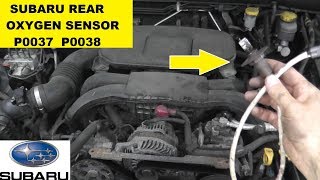
![How to Fix SUBARU P2096 Engine Code in 4 Minutes [2 DIY Methods / Only $9.53]](https://img.youtube.com/vi/iW2I89FXiL0/mqdefault.jpg)
We Have This Part in Stock
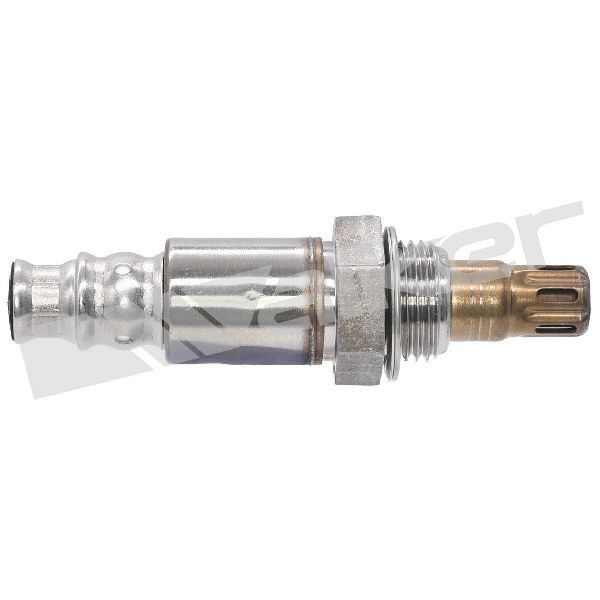

The information in this article is provided for general reference and educational purposes only. Vehicle specifications, procedures, and part compatibility can vary by production date, trim level, and region. Always consult your vehicle's factory service manual and verify part numbers before purchasing or performing repairs. Safety-critical components such as airbags, seat belts, and braking systems should be installed by a qualified professional.
- Subaru CROSSTREK:
- 🧭 Diagnostic Flowchart
- 🎬 Helpful Videos
- 🛍️ Shop This Part
- What's Unique About the 2017-2024 Subaru CROSSTREK
- Symptoms You May Notice
- Most Likely Causes
- Rare But Worth Checking
- Diagnosis Steps
- Parts You'll Likely Need
- Related Codes That Often Appear With This One
- Technical Service Bulletins (TSBs) & Recalls
- Platform-Specific Known Issues
- Mechanic-Grade Diagnostic Values
- Hidden / Shadow Codes Worth Checking
- Wiring & Ground Locations
- Real Owner Repair Stories
- Model Year Variations Within This Range
- 🎟️ Get 5% Off