

P2096 on 2008-2011 Subaru Impreza 2.5L: Exhaust Leaks, O2 Sensors, and Fixes
On a 2008-2011 Subaru Impreza, P2096 is almost always caused by a small exhaust leak before the rear O2 sensor. The most common culprit is a failed 'donut' gasket between the catalytic converter and mid-pipe. Inspect for leaks with a smoke test before replacing any parts, especially the O2 sensors.
- Do not replace any parts until you have ruled out an exhaust leak. A professional smoke test is the best way to do this.
- The most likely cause is a cheap and simple exhaust 'donut' gasket (Part #44022AA123).
- If no leaks are found, the next most likely culprit is the rear (downstream) oxygen sensor.
- Use a high-quality OEM (Subaru) or Denso brand sensor for the replacement to avoid repeat issues.
- Do NOT replace the expensive catalytic converter; it is almost never the cause of an isolated P2096 code.
What's Unique About the 2008-2011 Subaru Impreza
Subaru exhaust systems from this era are well-known for developing small, hard-to-find leaks at gaskets and flanges, which is the primary cause of P2096. The fast-moving exhaust gas flowing past a small crack or failed gasket creates a suction (Venturi effect), pulling outside air into the pipe. This extra, unmetered air travels past the rear oxygen sensor, fooling it into reporting a false lean condition. This often tricks owners and even some technicians into replacing expensive sensors when the actual problem is an inexpensive gasket.
Symptoms You May Notice
- Check Engine Light is on
- Flashing cruise control light (a standard Subaru behavior when a CEL is active)
- Slightly reduced fuel economy
- Possible rough idle or poor acceleration
- Audible exhaust leak noise, which may sound like hissing or puffing, especially when the engine is cold
- Replacing the catalytic converter. P2096 is a fuel trim code, not a catalyst efficiency code (like P0420). The converter is almost never the cause of an isolated P2096.
- Replacing the rear oxygen sensor before confirming there are no exhaust leaks. A new sensor cannot fix a leak, which is the most common cause.
- Using cheap, generic-brand oxygen sensors. Subarus are known to be sensitive to sensor quality, and a low-quality part may not fix the code or may fail quickly.
Most Likely Causes
- Exhaust Leak (before rear O2 sensor) 🔴 High Probability Gaskets, particularly the donut gasket between the catalytic converter and mid-pipe, are common failure points due to age, rust, and heat cycles. The bolts and springs holding the flange together also corrode and weaken, compromising the seal.
How to confirm: Perform a visual inspection of all exhaust flanges and welds from the engine to the rear O2 sensor. Look for black soot marks around flanges, which indicate a leak. The most effective method is to have a shop perform a smoke test, which will make even tiny leaks visible. You can also try feeling for puffs of air with your hand when the exhaust is cold.
Typical fix: Replace the leaking gasket or repair the cracked pipe. The donut gasket is the most frequent culprit. It's also wise to replace the spring bolts at the same time.
Est. part cost: $15-$50 - Failing Rear (Downstream) Oxygen Sensor 🟡 Medium Probability → Shop Oxygen Sensor Sensors have a finite lifespan and can fail from age, contamination, or the stress of nearby exhaust leaks. However, this part is often replaced unnecessarily when the real issue is a leak.
How to confirm: If an exhaust smoke test confirms there are absolutely no leaks, the sensor itself is the next likely cause. A scan tool can monitor the sensor's voltage; a healthy downstream sensor should show a relatively stable voltage (e.g., between 0.1 and 0.9 volts), whereas a failing one might be stuck low (e.g., <0.2V) or unresponsive. The sensor's internal heater circuit can also be tested with a multimeter; resistance should typically be between 5 and 20 ohms when cold.
Typical fix: Replace the rear (Bank 1, Sensor 2) oxygen sensor. It is highly recommended to use an OEM or high-quality brand like Denso, as Subarus can be sensitive to aftermarket sensors.
Est. part cost: $75-$180 - Failing Front Air/Fuel Ratio Sensor ⚪ Low Probability → Shop Oxygen Sensor The front sensor (also called an A/F sensor) is the primary input for fuel control. As it ages, it can become slow or biased, sending incorrect data to the ECM. If it incorrectly reads rich, the ECM will lean out the fuel mixture, causing the rear sensor to correctly report a lean condition and trigger P2096.
How to confirm: This is more difficult to diagnose and should only be considered after exhaust leaks and the rear O2 sensor have been ruled out. It requires a scan tool to watch the sensor's live data. If the front A/F sensor's readings are erratic, slow to respond, or biased, it may be the root cause. This is often a primary suspect on newer Subarus but less so on this generation.
Typical fix: Replace the front (Bank 1, Sensor 1) Air/Fuel Ratio sensor. Again, using Denso or OEM is critical.
Est. part cost: $100-$200
Rare But Worth Checking
- Cracked Exhaust Manifold: → Shop Exhaust Manifold While less common than a gasket failure, the exhaust manifold itself can develop hairline cracks that introduce air and trigger the code. A smoke test is the best way to identify this.
- Engine Vacuum Leak: A significant vacuum leak in the intake system (e.g., cracked PCV hose, intake gasket) can cause a true lean condition that is detected by both the front and rear sensors. This will almost always be accompanied by a P0171 code.
- Low Fuel Pressure: A weak fuel pump, clogged filter, or failing fuel pressure regulator can cause a lean condition across the board, triggering P2096. This is usually accompanied by other symptoms like hesitation and other codes like P0171.
Diagnosis Steps
- Scan for other codes. If P0171 is present, investigate engine vacuum leaks or fuel delivery issues first. If P0137 is present, suspect the rear O2 sensor or its wiring.
- Perform a thorough visual inspection of the exhaust system from the engine block to the rear O2 sensor. Look for black soot marks around flanges, which indicate a leak.
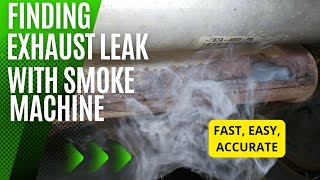
- For best results, perform an exhaust smoke test. This is the most reliable way to find the small, pinhole leaks that commonly cause this code on Subarus. Pay close attention to the donut gasket connection between the catalytic converter and the mid-pipe.
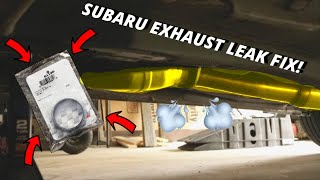
- If a leak is found, replace the faulty gasket (most likely the donut gasket, part #44022AA123) and the associated spring bolts. Clear the codes and drive to see if it returns.
- If no leaks are found, the rear oxygen sensor is the next suspect. Use a scan tool to observe its voltage at idle and while cruising. A healthy sensor should have a fairly steady voltage. A sensor stuck low (e.g., below 0.2V) is a strong indicator of failure.
- If the sensor is confirmed bad or is the only remaining possibility, replace the rear oxygen sensor (Bank 1, Sensor 2). Use a quality OEM or Denso replacement.
- If the code persists, investigate the front A/F sensor's live data for slow or biased readings.
- Clear the code and perform a drive cycle to confirm the fix.
Parts You'll Likely Need
- Exhaust Donut Gasket
(OEM #44022AA123)— This is the most common failure point for exhaust leaks that cause code P2096 on this vehicle. It seals the connection between the catalytic converter and the center pipe.
Trusted brands: Subaru (OEM), Walker, Fel-Pro
OEM price range: $20-$30
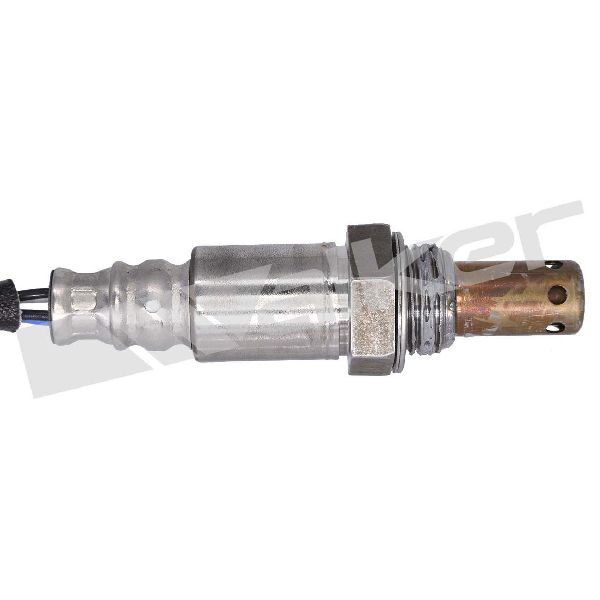
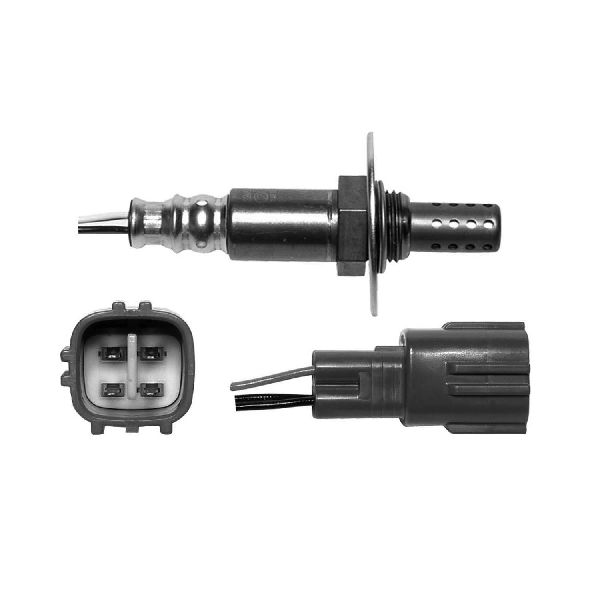
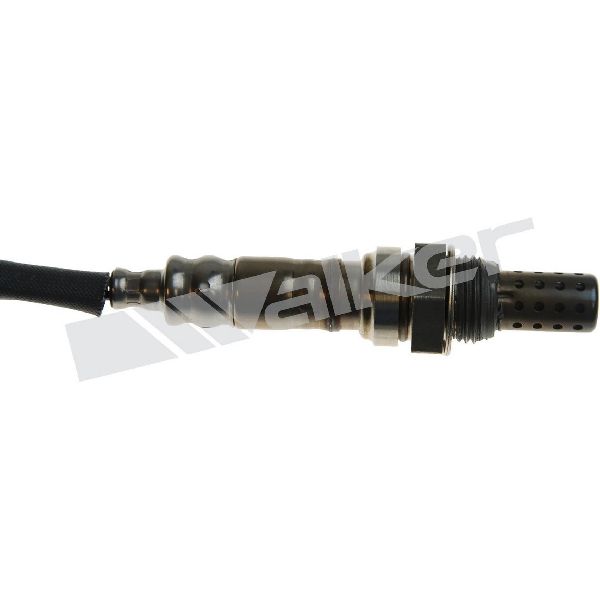
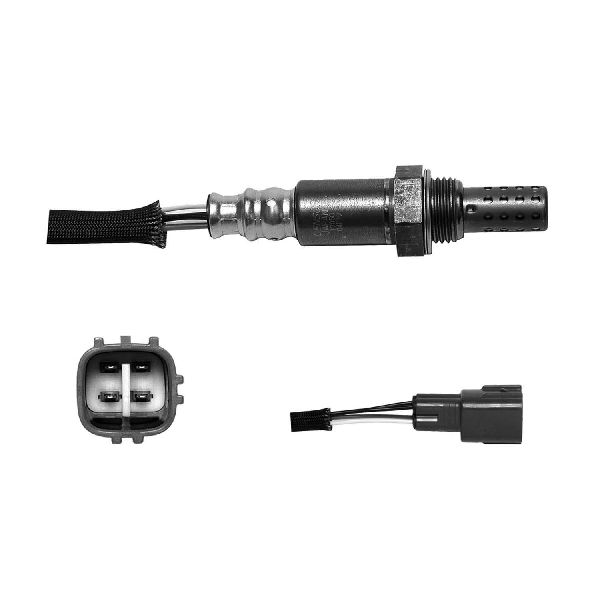
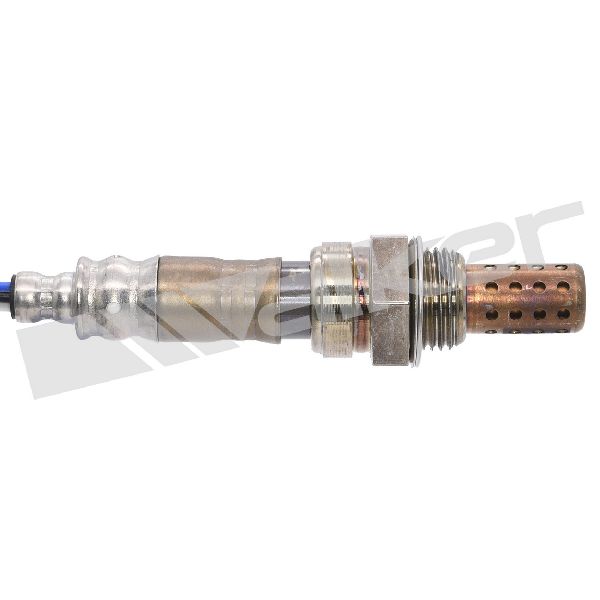
Aftermarket price range: $10-$20 - Rear (Downstream) Oxygen Sensor
(OEM #22690AA810)— This is the second most common cause, replaced only after confirming no exhaust leaks exist.
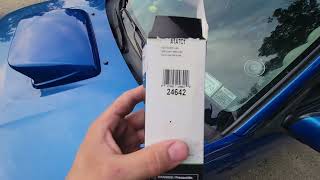
Trusted brands: Denso (234-4445), NTK (24642)
OEM price range: $150-$200
Aftermarket price range: $75-$120
Related Codes That Often Appear With This One
- P0171 — If a large vacuum leak or fuel delivery issue is the root cause, it creates a general lean condition detected by the front A/F sensor (P0171) and also seen by the rear O2 sensor (P2096). If P0171 is present, diagnose it first.
- P0137 — This code for 'O2 Sensor Circuit Low Voltage' strongly points to a failed rear O2 sensor or a wiring issue, as a large exhaust leak or sensor failure can cause the voltage to drop below the expected range.
- P0420 — While distinct, a significant exhaust leak between the two O2 sensors can sometimes affect the catalyst efficiency calculation, causing a P0420 to appear alongside P2096.
Technical Service Bulletins (TSBs) & Recalls
- 11-183-18R: Relevant for its revised diagnostic procedures for P2096, emphasizing software checks and thorough leak detection before part replacement.
- 18-228-25R: Relevant for acknowledging diagnostic challenges and instructing more rigorous testing before part replacement, applicable in principle to this generation.
Platform-Specific Known Issues
- Subaru has issued Technical Service Bulletins for newer models (like TSB 11-183-18R) that revise the diagnostic procedure for P2096. While not written specifically for the 2008-2011 models, they confirm the manufacturer's awareness of this common diagnostic challenge, instructing technicians to perform rigorous leak tests and evaluate front A/F sensor data before replacing the rear O2 sensor. This diagnostic logic is directly applicable to the 3rd generation Impreza.
- Owner Experience: The Donut Gasket is the Culprit: A common story on forums like NASIOC and r/subaru involves owners who were quoted for expensive O2 sensor or catalytic converter replacements, only to find the P2096 code was resolved by replacing the ~$25 donut gasket (part #44022AA123) and the two spring bolts connecting the catalytic converter to the mid-pipe.
Mechanic-Grade Diagnostic Values
- Rear O2 Sensor Heater Circuit Resistance — expected: 5 to 20 Ohms (when cold). Failure: A very high reading (over 50 Ohms) or an open circuit (infinite resistance) indicates a failed heater element within the sensor.
- Rear O2 Sensor Voltage (at operating temp) — expected: Fluctuating slowly or holding relatively steady between 0.1V and 0.9V.. Failure: A voltage signal that is stuck low (e.g., under 200mV or 0.2V) when the engine is at operating temperature strongly suggests a sensor failure or a large exhaust leak.
- Rear O2 Sensor Heater Circuit Voltage (KOEO) — expected: 12V to 14V (Battery Voltage). Failure: No voltage indicates a problem with the wiring, fuse, or relay supplying power to the sensor's heater circuit.
Scan Tool Commands That Help
- Subaru Select Monitor (SSM) or equivalent J2534 tool: ECM Reprogramming — This is a dealer-level function used to apply software updates. While more common for this code on newer models, it should only be considered for the 2008-2011 Impreza after all physical causes (leaks, sensors) have been exhaustively ruled out, as a logic update could exist.
Wiring & Ground Locations
- B19, E25, B95 — These are wiring diagram identifiers for the rear oxygen sensor connector plug and receptacle.. When testing for voltage, resistance, or signal at the sensor, it's crucial to identify the correct connector. These IDs, found in service manuals and wiring diagrams, help a technician locate the specific 4-pin connector for the downstream O2 sensor to perform pin-out tests for power, ground, and signal integrity.
- Main Engine Ground — Typically a large strap from the engine block to the chassis frame rail, often near the starter or alternator.. A poor engine ground can cause a variety of sensor-related issues, including incorrect readings from oxygen sensors. While not a primary cause, ensuring the main engine-to-chassis ground is clean and tight is a fundamental step in diagnosing any electronic fault code.
Real Owner Repair Stories
- YouTube video by Indu Das (2010 Subaru Legacy (procedure noted as identical for 2008-2016 Impreza)) — Multiple flashing lights on the dashboard, OBD-II scan revealed P2096.
❌ Tried (didn't work) The owner started by diagnosing with AI (ChatGPT/Gemini) which suggested an exhaust leak, faulty O2 sensor, or faulty MAF sensor. The owner chose to replace parts rather than starting with a leak test.
✅ What actually fixed it The owner replaced the engine air filter, the Mass Air Flow (MAF) sensor, and the downstream (rear) oxygen sensor. The combination of these part replacements resolved the code.
OEM Part Supersession History
Not specified, but multiple older numbers exist.→22690AA810— Standard part evolution and consolidation.
Heads up: Part number 22690AA810 is the specified rear oxygen sensor for the 2006-2011 Impreza 2.5L non-turbo. While other part numbers like 22690AA490/491/850/900 are associated with rear O2 sensors for Subarus of this era, using the specific 22690AA810 is critical to ensure correct heater resistance and signal calibration for the EJ253 ECU.
Diagnostic Flowchart
Other Known Issues on This Vehicle
Issues unrelated to this code that are worth knowing about as an owner of this generation:
- Head Gasket Failure 🔴 High — Common between 100,000 and 150,000 miles. The SOHC EJ253 is known for external oil and/or coolant leaks from the head gaskets.
- Catalytic Converter Heat Shield Rattle 🟡 Low → Shop Catalytic Converter — Very common as the vehicle ages, especially in rust-prone areas. The thin metal shields corrode, and the bolts break, causing a metallic rattle during idle and acceleration.
- Wheel Bearing Failure 🟠 Medium — Front and rear wheel bearings can become noisy and require replacement, sometimes as early as 60,000-80,000 miles.
- Excessive Oil Consumption 🟠 Medium — Some owners report higher-than-normal oil consumption, which can be caused by worn piston rings. It's crucial to check oil levels regularly.
- Power Steering Leaks 🟡 Low — Leaks can develop from power steering lines or the pump itself as the vehicle ages.
Used vs. New Parts: Buying Guide for This Vehicle
When a used part is the smart pick: For this repair, using used parts is generally not recommended. The primary failure items are a low-cost gasket (which should always be new) and an electronic sensor with a finite lifespan. A used O2 sensor carries an unknown history and may fail shortly after installation.
Donor-vehicle mileage cap: roughly under 50000 miles for the part to have meaningful remaining life.
What to inspect on the donor part:
- If considering a used sensor, source it from a vehicle with documented low mileage.
- Inspect the sensor's wiring for any brittleness, melting, or damage.
- Avoid sensors from vehicles that show signs of burning oil or coolant, as this contaminates the sensor tip.
OEM-only on this vehicle (don't cheap out):
- Oxygen Sensor
Aftermarket brands forum-validated for this vehicle:
- Denso (often the OEM supplier for Subaru)
- NTK (also a reputable OEM supplier for many Japanese vehicles)
Brands owners have reported issues with on this vehicle:
- Generic 'no-name' brands from online marketplaces like Amazon or eBay.
- Bosch sensors, while high quality for European cars, are frequently reported by Subaru owners to cause compatibility issues, incorrect readings, or premature failure in Subaru applications.
Real Owner Stories
Aggregated from forums and TSBs cited above. Mileages and costs reflect what owners reported in those sources.
2009 Subaru Impreza 2.5L EJ253
Symptoms: Check engine light on, flashing cruise control light, and an audible exhaust leak noise that sounded like puffing when the engine was cold.
What fixed it: Replaced the donut gasket (part #44022AA123) and the two spring bolts connecting the catalytic converter to the mid-pipe.
Cost: $15-$50
Source hint: Owner Experience: The Donut Gasket is the Culprit
2008 Subaru Impreza 2.5L
Symptoms: P2096 code and a rusted-out exhaust flange.
What fixed it: Replaced the rusted-out exhaust flange and donut gasket using a split flange repair kit.
Source hint: Instructables.com: A detailed DIY guide
2010 Subaru Impreza 2.5L
Symptoms: Metallic rattle during idle and acceleration.
What fixed it: DIY fix using stainless steel hose clamps to secure the corroded catalytic converter heat shields.
Source hint: r/subaru & r/subaru_outback forum threads
Related OBD-II Codes
Frequently Asked Questions
Why is my cruise control light flashing along with the Check Engine Light on my 2010 Impreza?
Does TSB 11-183-18R apply to my 2008-2011 Impreza EJ253?
What is the most common part to fail on an EJ253 engine causing the P2096 code?
Can I use any aftermarket oxygen sensor to fix P2096 on my Subaru?
My Impreza has a metallic rattle at idle along with the P2096 code; are they related?
How can I confirm if my rear O2 sensor is actually bad before buying a new one?
Helpful Videos
We Have This Part in Stock

The information in this article is provided for general reference and educational purposes only. Vehicle specifications, procedures, and part compatibility can vary by production date, trim level, and region. Always consult your vehicle's factory service manual and verify part numbers before purchasing or performing repairs. Safety-critical components such as airbags, seat belts, and braking systems should be installed by a qualified professional.
- Subaru Impreza:
- 🧭 Diagnostic Flowchart
- 🎬 Helpful Videos
- 🛍️ Shop This Part
- What's Unique About the 2008-2011 Subaru Impreza
- Symptoms You May Notice
- Most Likely Causes
- Rare But Worth Checking
- Diagnosis Steps
- Parts You'll Likely Need
- Related Codes That Often Appear With This One
- Technical Service Bulletins (TSBs) & Recalls
- Platform-Specific Known Issues
- Mechanic-Grade Diagnostic Values
- Scan Tool Commands That Help
- Wiring & Ground Locations
- Real Owner Repair Stories
- OEM Part Supersession History
- Other Known Issues on This Vehicle
- Used vs. New Parts: Buying Guide for This Vehicle
- Real Owner Stories
- 2009 Subaru Impreza 2.5L EJ253
- 2008 Subaru Impreza 2.5L
- 2010 Subaru Impreza 2.5L
- Related OBD-II Codes
- Frequently Asked Questions
- 🎟️ Get 5% Off