

P2096 on 2017-2024 Subaru Impreza: Causes and Fixes for Lean Fuel Trim
On a 2017-2024 Subaru Impreza, code P2096 is most often caused by a small exhaust leak before the rear oxygen sensor or a failing rear O2 sensor itself. The donut gasket between the catalytic converter and mid-pipe is a common failure point. A thorough exhaust inspection, ideally with a smoke test, is the critical first step before buying parts.
- P2096 on your Impreza means the computer sees a lean condition after the catalytic converter.
- The most likely cause is a simple exhaust leak. A smoke test is the best way to find it.
- Do not replace any oxygen sensors until you have confirmed there are no exhaust leaks.
- If no leaks are found, the rear (downstream) oxygen sensor is the next most probable cause.
- This code will cause an emissions test failure, so it should be addressed promptly.
What's Unique About the 2017-2024 Subaru Impreza
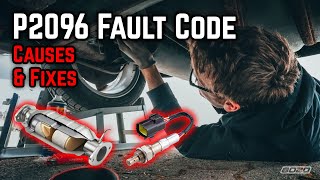
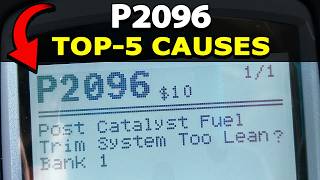
For the fifth-generation (2017+) Impreza and its platform-mate, the Crosstrek, the P2096 code is a common issue that frequently points to simple mechanical failures rather than complex electronic ones. 🎬 Watch: What this code really means for your Subaru Owners and technicians often trace this code to small, hard-to-see cracks or gasket leaks in the exhaust system. These leaks allow outside air to be pulled in, which fools the rear O2 sensor into sending a false lean reading. While a faulty sensor is also a common cause, a thorough exhaust inspection is critical on these vehicles before replacing any parts. Subaru has also acknowledged the prevalence of this code by issuing software updates and revised diagnostic procedures for some models.
Symptoms You May Notice
- Check Engine Light is on
- Flashing cruise control light (a common Subaru behavior when a CEL is present)
- Rough or unstable idle
- Reduced acceleration or engine power
- Poor fuel economy
- Audible hissing or ticking from the exhaust area
- Replacing the rear oxygen sensor before checking for exhaust leaks. An exhaust leak is the most common cause, and replacing the sensor will not fix the code if a leak is present.
- Replacing the catalytic converter. A P2096 code rarely indicates a bad converter; a P0420 code is the primary indicator for converter failure.
Most Likely Causes
- Exhaust System Leak 🔴 High Probability Subaru exhaust systems, particularly on the Global Platform, are known to develop small leaks at gasket flanges and welds. The donut gasket between the catalytic converter and the front pipe is a very frequent failure point leading to P2096. 🎬 See how to easily replace a leaking donut gasket These leaks allow unmetered air to enter the exhaust stream pre-sensor.
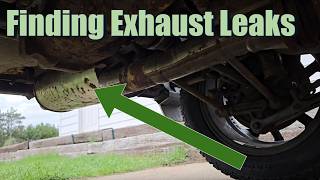
How to confirm: Perform a thorough visual inspection of the exhaust from the engine to the rear O2 sensor, looking for black soot. The most reliable method is an exhaust smoke test, which forces smoke through the system and makes even tiny leaks visible at flanges or cracks.
Typical fix: Repair the leak. This often involves replacing a failed donut gasket (OEM Part #44011AG001) or another flange gasket. In some cases, a cracked pipe may need to be welded or a component replaced.
Est. part cost: $15-$50 for gaskets - Failing Rear (Downstream) Oxygen Sensor 🟡 Medium Probability → Shop Oxygen Sensor Oxygen sensors are wear items that degrade over time, typically after 80,000 miles. Contamination from oil or carbon can cause them to read inaccurately, sending a false lean signal to the computer. They are often replaced unnecessarily when an exhaust leak is the true cause.
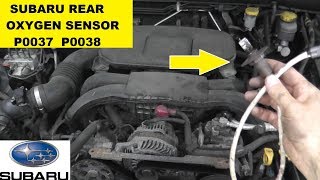
How to confirm: If no exhaust leaks are found, the sensor is the next likely cause. A technician can graph the sensor's voltage on a scan tool to see if it is responding slowly or providing an erratic/stuck low voltage signal. 🎬 Watch: How to test and replace the rear oxygen sensor
Typical fix: Replace the rear oxygen sensor (Bank 1, Sensor 2). Using an OEM-spec brand like Denso is highly recommended for accurate readings.
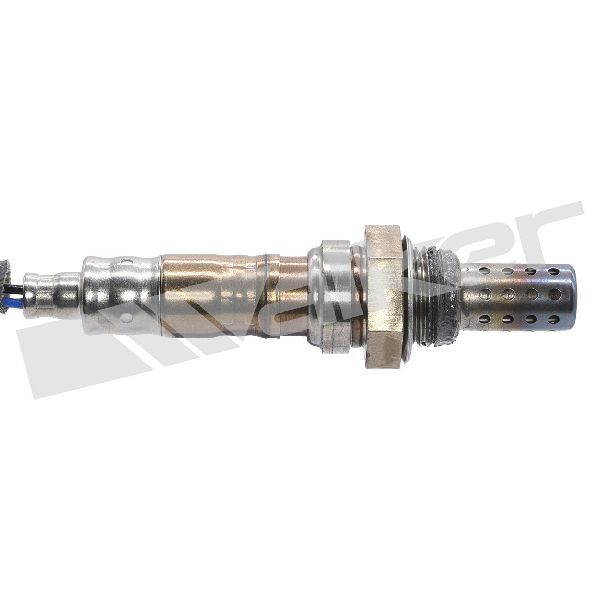
Est. part cost: $80-$200 - Failing Front (Upstream) Air/Fuel Ratio Sensor ⚪ Low Probability → Shop Oxygen Sensor Less common, but a failing front A/F sensor can provide incorrect data to the ECM. If it develops a rich bias, it will think the mixture is rich and command the ECM to lean it out, causing a genuinely lean condition that the rear sensor then correctly reports.
How to confirm: Monitor long-term and short-term fuel trims on a scan tool. If the front sensor is faulty, it may cause the ECM to command negative fuel trims (leaning out the mixture) based on a false rich reading. Unplugging the sensor should cause the ECM to revert to default values; if performance improves, the sensor is suspect.
Typical fix: Replace the front air/fuel ratio sensor (Bank 1, Sensor 1).
Est. part cost: $150-$250
Rare But Worth Checking
- Intake Vacuum Leak: A significant vacuum leak from a cracked hose (like a PCV hose) or bad intake gasket can introduce enough unmetered air to cause a true lean condition. This would typically trigger code P0171 alongside P2096.
- Low Fuel Pressure: A weak fuel pump or clogged fuel filter can starve the engine for fuel, creating a lean condition. This is less common and would typically be accompanied by other codes or more severe drivability issues.
- Failing Catalytic Converter: → Shop Catalytic Converter In rare cases, a partially clogged or inefficient catalytic converter can alter exhaust flow and fool the rear O2 sensor. This is usually a last resort after all other causes are ruled out and is more commonly associated with code P0420.
- ECM Software Issue: On some Subaru models, the ECM logic for this code is overly sensitive. A dealer may need to perform a software update as described in TSB #11-174-17R or a similar bulletin.
Diagnosis Steps
- Read all fault codes stored in the ECM. Note any other codes that are present, especially P0171.
- Perform a thorough visual inspection of the entire exhaust system for signs of leaks: black soot stains, cracks, or rust-through, especially at gasket flanges and welds between the engine and the rear O2 sensor.
- Pay special attention to the 'donut' gasket between the catalytic converter and the mid-pipe, as this is a very common failure point.
- For best results, perform or have a shop perform an exhaust smoke test to identify any small, hidden leaks.
- If no leaks are found, use a scan tool to monitor the live data for the front A/F sensor and the rear O2 sensor. The rear O2 sensor's voltage should be relatively stable (typically above 0.5V) on a healthy, warm engine. If it is fluctuating rapidly or stuck low (e.g., < 0.2V), the sensor is suspect or it is correctly reading a lean condition.
- Check short-term and long-term fuel trims. High positive trims (>10%) could indicate a vacuum leak or fuel delivery problem.
- If exhaust leaks are ruled out and fuel trims are normal, the rear oxygen sensor is the most likely faulty component.
- If fuel trims are highly negative, investigate the front A/F sensor as the potential root cause, as it may have a rich bias.
Parts You'll Likely Need
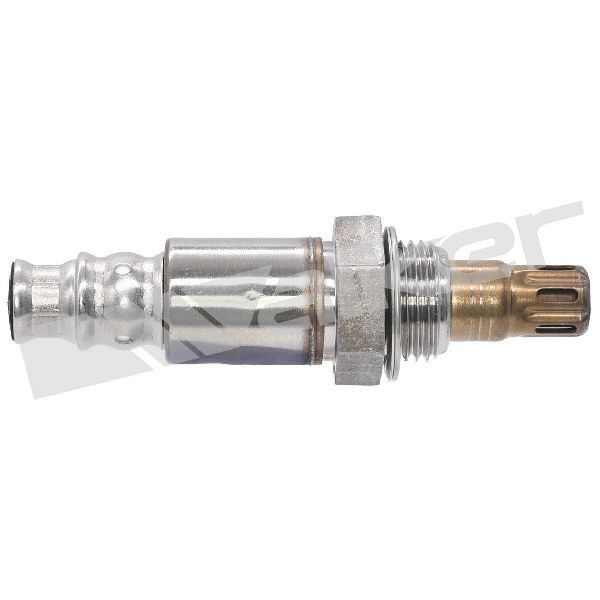
- Rear Oxygen Sensor (Bank 1, Sensor 2)
(OEM #22690AB08A)— This sensor is directly responsible for the reading that triggers the P2096 code. It is a common failure point after exhaust leaks are ruled out.
Trusted brands: Denso (OEM Supplier), NTK
OEM price range: $160-$230
Aftermarket price range: $80-$150 - Exhaust Donut Gasket
(OEM #44011AG001)— This specific gasket, located between the catalytic converter and front pipe, is a very common source of exhaust leaks that cause P2096 on this platform.
Trusted brands: Subaru (OEM), Fel-Pro, Walker Exhaust
OEM price range: $15-$40
Aftermarket price range: $10-$25 - Front Air/Fuel Ratio Sensor (Bank 1, Sensor 1)
(OEM #22641AA78A)— A less common but possible cause. A failing front sensor can cause incorrect fueling that leads to the P2096 code.
Trusted brands: Denso (OEM Supplier), Bosch
OEM price range: $240-$350
Aftermarket price range: $150-$220
Related Codes That Often Appear With This One
- P0171 — P0171 (System Too Lean Bank 1) indicates the *front* A/F sensor is detecting a lean condition. If both codes are present, it points more strongly toward a true lean condition caused by a vacuum leak or fuel delivery issue, rather than a localized exhaust leak.
- P0420 — P0420 (Catalyst System Efficiency Below Threshold) can sometimes appear with P2096. Both codes relate to the oxygen sensors and catalytic converter function. An issue causing P2096 (like a major exhaust leak) can sometimes lead to a P0420 code as well.
Technical Service Bulletins (TSBs) & Recalls
- TSB #11-174-17R: Mentions updated ECM logic to address false P2096 codes.
- TSB #18-228-25R: Provides updated diagnostic procedures for P2096 across multiple models including the Impreza.
Platform-Specific Known Issues
- Cracked Exhaust Manifold: → Shop Exhaust Manifold In some owner experiences, the root cause was not a gasket but a physical crack in the exhaust manifold itself. After replacing the O2 sensor failed to fix the code, a smoke test revealed the manifold crack. Replacing the manifold was the ultimate solution.
- ECM Software Updates: Subaru has issued TSB #11-174-17R which includes an ECM logic update to prevent false P2096 codes on some models, including the Impreza and Crosstrek. If no physical faults are found, checking with a dealer for available software updates is a valid diagnostic step.
Mechanic-Grade Diagnostic Values
- Rear O2 Sensor (B1S2) Voltage — expected: Relatively stable voltage between 0.5V and 0.8V at idle/cruise once the engine is fully warm.. Failure: Voltage is stuck low, consistently reading below 0.2V, confirming the lean condition reported by the code.
- Rear O2 Sensor (B1S2) Heater Circuit Resistance — expected: 5 to 6 Ohms when measured across the two heater circuit pins on a disconnected sensor.. Failure: A reading of infinite resistance (open circuit) or zero resistance (short circuit) indicates a failed heater element, which will prevent the sensor from operating correctly.
- Front A/F Sensor (B1S1) Heater Circuit Resistance — expected: Approximately 2 to 5 Ohms when measured across the heater circuit pins. Note: This value can vary slightly by manufacturer.. Failure: A reading of infinite resistance (open circuit) or zero resistance (short circuit) indicates a failed heater element.
- Long Term Fuel Trim (LTFT) Bank 1 — expected: Within +/- 10% at idle and cruise.. Failure: Sustained positive trims > +10% suggest an unmetered air leak (vacuum or exhaust). Sustained negative trims < -10% suggest the front A/F sensor has a rich bias, causing the ECM to lean out the mixture and trigger P2096 at the rear sensor.
Scan Tool Commands That Help
- Subaru Select Monitor (SSM) or equivalent dealer/J2534 tool: ECM Reprogramming — This is a dealer-level function used to apply a software update to the Engine Control Module. It should be performed if the vehicle is an early model year (e.g., 2017) and TSB #11-174-17R applies, after all physical causes like exhaust leaks and faulty sensors have been ruled out.
Wiring & Ground Locations
- ECU Ground — The primary ground reference for the ECU is through its connection to the top of the intake manifold.. A poor ground here can cause erratic sensor readings. This ground path can be compromised if aftermarket TGV deletes or phenolic spacers are installed without providing an alternate ground path, as they isolate the manifold from the engine block.
- Main Engine Ground — On the 2017+ Impreza platform, a primary engine ground strap is located on the top starter motor mounting bolt.. A loose or corroded main engine ground can affect the entire electrical system, including the operation and readings of the oxygen sensors.
- Chassis Ground — The negative battery cable connects directly to a point on the vehicle's chassis, often on the strut tower or inner fender.. All sensor circuits ultimately complete their path to ground through the chassis. Ensuring this primary connection is clean and tight is a fundamental step in diagnosing any electrical issue.
"I Checked Everything" — The Actual Cause
- A failing front Air/Fuel (A/F) ratio sensor that has developed a rich bias. The sensor incorrectly tells the ECM the mixture is too rich, so the ECM leans it out (creating negative fuel trims). The rear O2 sensor then correctly detects this genuinely lean condition and sets the P2096 code. This is often missed because diagnosis incorrectly focuses only on the rear sensor and for exhaust leaks, which would show positive fuel trims.
OEM Part Supersession History
22690AB070→22690AB08A— Standard part revision by the manufacturer, likely for improved performance, reliability, or manufacturing process.
Model Year Variations Within This Range
- 2017-2018 (Primarily): Early models of the fifth generation are more likely to be affected by overly sensitive ECM logic that can falsely trigger a P2096 code. Subaru TSB #11-174-17R addresses this with a software update. While the TSB covers multiple models, it's a known issue for this timeframe and should be investigated on early-gen cars after physical faults are ruled out.
Diagnostic Flowchart
Other Known Issues on This Vehicle
Issues unrelated to this code that are worth knowing about as an owner of this generation:
- Excessive Oil Consumption 🟠 Medium — More prevalent on earlier FB engines (pre-2017), but some reports exist for this generation. Condition is defined as consuming more than 1/3 of a quart in 1,200 miles. (Ref: Multiple TSBs exist for older models (e.g., 02-157-14R) and Subaru extended warranties for this issue on affected VINs.)
- Infotainment System Glitches (Starlink) 🟡 Low — Commonly reported across the model years. Issues include freezing, unresponsiveness, Bluetooth connectivity problems, and random reboots. (Ref: Dealers have performed numerous software updates to address these issues, with varying success.)
- Premature Wheel Bearing Failure 🟠 Medium — Some owners report humming or grinding noises indicating wheel bearing failure earlier than expected, sometimes under 60,000 miles.
- EVAP System Clogs 🟡 Low — The EVAP canister vent hose can become blocked, sometimes by spiders building webs, which can trigger an EVAP-related check engine light.
- Weak Windshield Glass 🟡 Low — A high number of owner complaints exist regarding windshields that seem to crack or chip very easily from minor impacts. (Ref: There have been class-action lawsuits regarding this issue for other Subaru models like the Outback and Forester.)
Used vs. New Parts: Buying Guide for This Vehicle
When a used part is the smart pick: Used parts are a reasonable choice for major structural exhaust components like a manifold or mid-pipe if they are confirmed to be free of cracks and significant rust. A used OEM oxygen sensor from a low-mileage donor vehicle can be a budget-friendly option, but carries risk.
Donor-vehicle mileage cap: roughly under 60000 miles for the part to have meaningful remaining life.
What to inspect on the donor part:
- For exhaust components: Inspect all welds and flanges for cracks or severe corrosion. Tap it lightly with a hammer to listen for internal rattles that could indicate a failing catalyst.
- For sensors: Check that the electrical connector is not damaged, and the sensor tip is free of heavy carbon, oil, or white (coolant) deposits. Ask for the donor vehicle's mileage.
OEM-only on this vehicle (don't cheap out):
- Oxygen / Air-Fuel Sensors: While not strictly 'OEM-only', using the OEM supplier (Denso) or NTK is strongly recommended. Cheaper, no-name aftermarket sensors are a common cause of repeat failures and incorrect readings.
Aftermarket brands forum-validated for this vehicle:
- Denso (OEM supplier for sensors)
- NTK (sensors)
- Fel-Pro (gaskets)
- Walker Exhaust (gaskets)
Brands owners have reported issues with on this vehicle:
- Universal oxygen sensors that require splicing wires. They are prone to failure and can introduce wiring issues.
Real Owner Stories
Aggregated from forums and TSBs cited above. Mileages and costs reflect what owners reported in those sources.
2017 Subaru Impreza 2.0L
Symptoms: Check engine light with code P2096. Replacing the rear O2 sensor did not resolve the issue.
What fixed it: A smoke test revealed a physical crack in the exhaust manifold. Replacing the manifold fixed the code.
Source hint: subaruimpreza.org forum citation
Related OBD-II Codes
Frequently Asked Questions
Is there a specific Subaru TSB for the P2096 code on my 2017 Impreza?
My 2018 Impreza has a flashing cruise control light along with the Check Engine Light. Is this related to P2096?
What is the most common exhaust leak point causing P2096 on the Subaru Global Platform?
If my rear O2 sensor is reading low voltage, does that mean the sensor is definitely bad?
Can a problem with the front Air/Fuel sensor cause a P2096 'Post Catalyst Fuel Trim System Too Lean' code?
Should I use any universal oxygen sensor to fix this code on my Impreza?
Helpful Videos
We Have This Part in Stock

The information in this article is provided for general reference and educational purposes only. Vehicle specifications, procedures, and part compatibility can vary by production date, trim level, and region. Always consult your vehicle's factory service manual and verify part numbers before purchasing or performing repairs. Safety-critical components such as airbags, seat belts, and braking systems should be installed by a qualified professional.
- Subaru Impreza:
- 🧭 Diagnostic Flowchart
- 🎬 Helpful Videos
- 🛍️ Shop This Part
- What's Unique About the 2017-2024 Subaru Impreza
- Symptoms You May Notice
- Most Likely Causes
- Rare But Worth Checking
- Diagnosis Steps
- Parts You'll Likely Need
- Related Codes That Often Appear With This One
- Technical Service Bulletins (TSBs) & Recalls
- Platform-Specific Known Issues
- Mechanic-Grade Diagnostic Values
- Scan Tool Commands That Help
- Wiring & Ground Locations
- "I Checked Everything" — The Actual Cause
- OEM Part Supersession History
- Model Year Variations Within This Range
- Other Known Issues on This Vehicle
- Used vs. New Parts: Buying Guide for This Vehicle
- Real Owner Stories
- 2017 Subaru Impreza 2.0L
- Related OBD-II Codes
- Frequently Asked Questions
- 🎟️ Get 5% Off