

P2096 on 2010-2014 Subaru Legacy: Exhaust Leaks, O2 Sensor Faults, and Fixes
On a 2010-2014 Subaru Legacy, P2096 is almost always caused by an exhaust leak before the rear O2 sensor. Inspect all exhaust gaskets, especially the donut gasket between the catalytic converter and mid-pipe, for leaks before replacing any parts. If no leaks are found, the front Air/Fuel (A/F) sensor is the next most likely culprit, followed by the rear O2 sensor itself.
- Do not replace any parts until you have checked for exhaust leaks. This is the most common and cheapest fix.
- A smoke test is the most reliable way to find a small exhaust leak.
- If no leaks are found, the front Air/Fuel (A/F) sensor is the next most likely cause, not the rear O2 sensor.
- The Check Engine, flashing cruise, and VSC lights all turning on at once is normal for this fault on a Subaru.
- Use a high-quality OEM (Denso) or equivalent sensor for replacement to avoid recurring issues.
What's Unique About the 2010-2014 Subaru Legacy
Subarus are particularly prone to developing exhaust leaks at their many gasketed joints, which is the number one cause of a P2096 code. Unlike many other vehicles where a lean code might point to a vacuum leak or fuel issue, on a Legacy, the diagnostic process must start with a thorough exhaust inspection. Furthermore, a failing front Air/Fuel ratio sensor is a more common cause than the rear O2 sensor that actually reports the fault, leading to frequent misdiagnosis. When this code appears, Subaru's system typically illuminates the Check Engine Light, disables cruise control (causing it to flash), and turns on the Vehicle Dynamics Control (VSC) warning light as a standard safety feature to get the driver's attention.
Symptoms You May Notice
- Check Engine Light is on
- Flashing cruise control light
- Vehicle Dynamics Control (VSC) light is on
- Reduced fuel economy
- Rough or unstable idle
- Slight hesitation during acceleration
- Audible ticking or hissing sound from the exhaust system
- Smell of exhaust fumes in the cabin
- Immediately replacing the rear oxygen sensor. 🎬 Watch: Step-by-step O2 and MAF sensor replacement guide This is a common mistake, as the actual cause is more often an exhaust leak or a faulty front A/F sensor.
- Replacing the catalytic converter. A P2096 code is a fuel trim issue, not a catalyst efficiency issue (like P0420). Replacing the converter is an expensive and incorrect fix for this code.
Most Likely Causes
- Exhaust System Leak 🔴 High Probability Subaru exhaust systems use multiple flange gaskets that degrade over time from heat cycles and corrosion, creating small leaks that pull in outside air. The 'donut' gasket is a notorious failure point.
How to confirm: Visually inspect all exhaust piping and flanges from the engine to the rear O2 sensor for black soot trails or cracks. Listen for ticking or hissing sounds. A simple DIY test is to carefully feel for escaping air at the joints when the engine is cold and first started. The most effective method is a smoke test, which will force smoke out of any leak points. 🎬 See two quick DIY methods to fix the P2096 code
Typical fix: Replace the failed exhaust gasket(s). The donut-style gasket between the catalytic converter and the mid-pipe is a very common failure point.
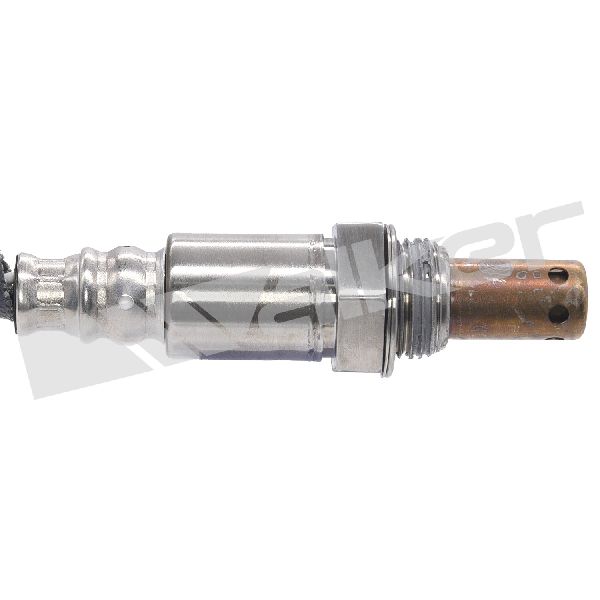
Est. part cost: $15-$50 - Failing Front Air/Fuel (A/F) Ratio Sensor 🟡 Medium Probability → Shop Oxygen Sensor The front A/F sensor (Bank 1, Sensor 1) is critical for fuel control and is a high-wear item. If it becomes slow or biased, it can cause the engine to run lean, which the rear sensor then correctly reports. This is a frequent point of misdiagnosis.
How to confirm: Use a scan tool to graph the sensor's live data. A healthy sensor will fluctuate rapidly in voltage. A slow or 'lazy' sensor will not respond quickly to changes in engine load or will have a biased voltage reading. This should only be diagnosed after confirming there are absolutely no exhaust leaks.
Typical fix: Replace the front A/F ratio sensor. 🎬 Watch this walkthrough for replacing the Air Fuel Ratio sensor Using an OEM or Denso-branded sensor is highly recommended for compatibility and longevity.
Est. part cost: $100-$180 - Failing Rear Oxygen Sensor ⚪ Low Probability → Shop Oxygen Sensor While this sensor triggers the code, it fails less often than the front A/F sensor or exhaust gaskets. It can become contaminated by oil/coolant or simply wear out, especially after 80,000-100,000 miles.
How to confirm: After ruling out exhaust leaks and a bad front A/F sensor, monitor the rear O2 sensor's voltage with a scan tool. It should be relatively stable (e.g., ~0.6-0.8V) on a warm engine with a healthy catalytic converter. If it's stuck low (e.g., <0.2V) or fluctuating wildly like the front sensor, it has likely failed.
Typical fix: Replace the rear (downstream) oxygen sensor.
Est. part cost: $60-$120
Rare But Worth Checking
- Intake Vacuum Leak: A significant vacuum leak (e.g., a cracked hose or bad intake gasket) can cause a lean condition. However, this will typically trigger a P0171 (System Too Lean) code along with the P2096. If you only have P2096, a vacuum leak is less likely.
- Dirty or Failing Mass Airflow (MAF) Sensor: A contaminated MAF sensor can under-report airflow, causing a lean mixture. This can sometimes be fixed by cleaning the sensor with a dedicated MAF sensor cleaner. A failing MAF sensor often sets other codes like P0101 or P0171.
- ECM Software Issue: On some Subaru models, overly sensitive ECU software can trigger a P2096 code. A dealership may need to perform a software update or reflash to correct the sensitivity. This should be considered after all hardware causes are ruled out.
Diagnosis Steps
- Scan for any other trouble codes. If P0171 is present, shift your focus to finding a vacuum leak or checking the MAF sensor.
- Perform a thorough visual inspection of the exhaust system from the engine block all the way to the rear O2 sensor. Look for black soot marks at gasket flanges, which indicate a leak.
- With the engine cool, start the car and carefully feel/listen for leaks at exhaust joints. A ticking or puffing sound is a clear sign of a leak.
- For best results, have a shop perform an exhaust smoke test to definitively identify any small leaks that are not visually apparent. This is the most reliable diagnostic step for this specific code on a Subaru.
- If no exhaust leaks are found, use a scan tool to monitor the live data from the front A/F sensor and rear O2 sensor to assess their performance and response. A healthy front sensor should fluctuate rapidly, while a healthy rear sensor should be relatively stable.
- If the front A/F sensor is lazy or biased, replace it. Denso is the OEM manufacturer.
- If the front A/F sensor is working correctly and no leaks are present, the rear O2 sensor is the likely culprit. Replace it.
- After any repair, clear the codes with a scanner and perform a complete drive cycle to ensure the fix was successful.
Parts You'll Likely Need
- Exhaust Flange Gasket ('Donut' Gasket)
(OEM #44011AG000 (superseded by 44011AG001))— This is the most common failure point for exhaust leaks on this platform, which is the primary cause of code P2096. The original part number 44011AG000 has been replaced by 44011AG001.
Trusted brands: Subaru (OEM), Fel-Pro, Walker Exhaust
OEM price range: $20-$40
Aftermarket price range: $10-$25 - Front Air/Fuel Ratio Sensor (Bank 1, Sensor 1)
(OEM #22641AA51A (may be superseded by 22641AA64A for some models))— This is the second most likely cause after an exhaust leak. A failing front sensor causes an actual lean condition that the rear sensor reports. Denso is the OEM supplier.
Trusted brands: Denso (OEM), NGK/NTK
OEM price range: $150-$220
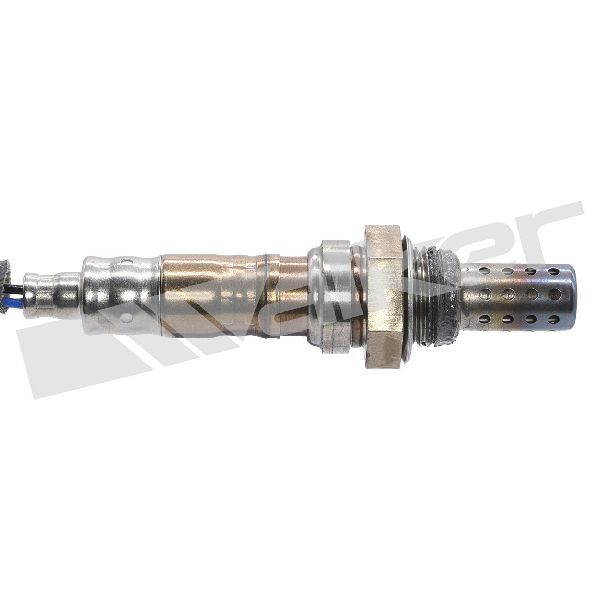
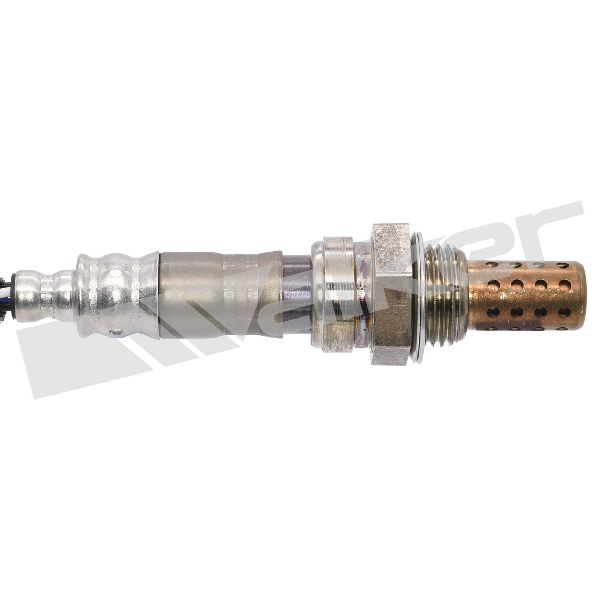
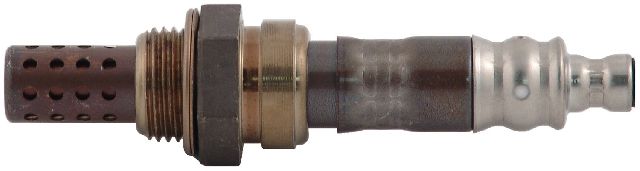
Aftermarket price range: $100-$160 - Rear Oxygen Sensor (Bank 1, Sensor 2)
(OEM #22690AA81A)— This part should only be replaced after exhaust leaks and the front A/F sensor have been ruled out. A user on Reddit with a 2012 Outback confirmed this code can be a recurring issue if the root cause isn't found.
Trusted brands: Denso (OEM), Bosch
OEM price range: $120-$180
Aftermarket price range: $60-$120
Related Codes That Often Appear With This One
- P0171 — If you see P0171 (System Too Lean) alongside P2096, it strongly suggests a problem affecting the entire engine's air-fuel mixture, such as a vacuum leak or a failing MAF sensor, rather than a localized exhaust leak.
- P0420 — While less common, a failing catalytic converter that is causing erratic oxygen readings could potentially set both codes. However, P2096 should be diagnosed and fixed first, as an exhaust leak or sensor issue can sometimes incorrectly lead to a P0420.
- P0137 — This code for 'O2 Sensor Circuit Low Voltage (Bank 1, Sensor 2)' can appear with P2096, pointing more directly toward a failing rear oxygen sensor or a wiring issue to that sensor.
Technical Service Bulletins (TSBs) & Recalls
- While no specific TSB number for P2096 on this exact model was found in the search, some repair databases note that Subaru has issued software updates for other models with overly sensitive ECUs that can trigger this code. This remains a possibility if hardware issues are ruled out.
- TSB Bulletin #18-228-25R announces specific diagnostic procedures to be used when DTC P2096 (Post Catalyst Fuel Trim System Too Lean Bank 1) is detected by the Engine Control Module.
Platform-Specific Known Issues
- On this generation of Subaru, it is standard for an emissions-related fault code like P2096 to trigger the main Check Engine Light, a flashing cruise control light, and the Vehicle Dynamics Control (VSC) light simultaneously. This can be alarming but is normal behavior designed to alert the driver to the fault.
- The donut gasket (OEM P/N 44011AG001) is a particularly high-failure item and should be one of the first components inspected when diagnosing a P2096 code.
Mechanic-Grade Diagnostic Values
- Long Term Fuel Trim (LTFT) — expected: Within +/- 10% at idle and cruise speed.. Failure: A reading consistently above +10% indicates the ECM is adding significant fuel to compensate for a perceived lean condition.
- Rear O2 Sensor (Bank 1, Sensor 2) Voltage — expected: Relatively steady voltage between 0.45V and 0.7V on a warm, running engine.. Failure: Voltage is stuck low, near 0.1V, indicating a constant lean reading.
- Front A/F Sensor (Bank 1, Sensor 1) Voltage — expected: On a Subaru A/F sensor, the voltage should remain relatively stable, often around 2.5V. The important reading is the current or the Lambda/equivalence ratio.. Failure: A Lambda value stuck over 1.0 (e.g., 1.2) indicates the sensor is incorrectly reading a lean condition.
- Rear O2 Sensor Heater Circuit Resistance — expected: 5 to 6 Ohms.. Failure: A reading significantly outside this range points to a faulty heater element within the sensor itself.
Scan Tool Commands That Help
- Advanced Scan Tool (e.g., Subaru Select Monitor, Autel): Reset Fuel Trims / Reset Memory — After replacing a sensor or fixing an exhaust/vacuum leak, resetting the learned long-term fuel trim values forces the ECM to relearn based on the new, correct inputs, which can prevent the code from returning during the adaptation period.
- Subaru Select Monitor (or equivalent): Active Test: Control the Injection Volume for A/F Sensor — This dealer-level function allows a technician to manually force the fuel mixture rich or lean (-12.5% to +12.5%) and observe the response of both the front A/F sensor and rear O2 sensor to confirm if they are reacting correctly to the changes.
Wiring & Ground Locations
- Rear O2 Sensor Connector (B1S2) — On many models including the related Outback, the connector is located in the engine bay on the passenger side, under the air intake snorkel/duct, making it accessible from the top rather than from under the car.. This connector is a known point for moisture intrusion and corrosion, which can cause erratic or low voltage signals from the rear O2 sensor, directly triggering a P2096 or P0137 code. Checking this connector for damage is a critical step before replacing the sensor.
- Engine Ground Strap — Main engine-to-chassis ground straps are typically found connecting the engine block or cylinder head to the firewall or frame rail.. While a broken ground strap is more likely to cause a P0171 or other codes, a poor ground can introduce electrical noise into sensor circuits. This can affect the accuracy of O2 and A/F sensor readings, contributing to incorrect fuel trim adjustments.
Real Owner Repair Stories
- Reddit user in r/subaru (2012 Subaru Outback (shares platform and powertrain)) — Check engine light with code P2096.
❌ Tried (didn't work) Replaced the front Air/Fuel Ratio sensor (Part 22641AA54A).
✅ What actually fixed it The user was advised that the next logical step, and the most common fix, is replacing the rear O2 sensor, as the diagnostic tree for this code is notoriously a process of elimination. - LegacyGT.com user 'TravisGT' (2005 Legacy GT (demonstrates similar logic on older models)) — Check engine light with code P2096.
❌ Tried (didn't work) Initial diagnosis and forum discussion.
✅ What actually fixed it Replacing the rear O2 sensor fixed the problem. The user noted that this is a common fix, but also warned that if an aftermarket downpipe (especially catless) is installed, a tune is required to prevent the code from returning. - NHTSA ODI #11119509 — An owner reported experiencing stalling and slipping problems around 104,000 miles. They noted a P2096 code and initially assumed it was a vacuum or brake booster leak, while also reporting bad shaking coming from around the torque converter.
"I Checked Everything" — The Actual Cause
- In cases where a smoke test reveals no exhaust leaks, the root cause is almost always a biased sensor. A technician on a forum noted a diagnostic trick: unplug the front A/F sensor and drive the vehicle. The ECM will revert to default fuel maps. If engine performance improves, the fault is almost certainly the A/F sensor itself providing incorrect (biased lean) information.
OEM Part Supersession History
44011AG000→44011AG001— Standard part revision/update by Subaru.
Heads up: The new part number 44011AG001 is a direct replacement for the old one and should be used. It is a non-reusable crush gasket.
Diagnostic Flowchart
Used vs. New Parts: Buying Guide for This Vehicle
When a used part is the smart pick: Used parts are generally not recommended for this repair. The primary failure points are gaskets (which are single-use) and sensors (which are wear items). A used exhaust pipe from a low-mileage, rust-free donor car could be considered if a crack is found in the original pipe, but new gaskets must be used for installation.
Donor-vehicle mileage cap: roughly under 60000 miles for the part to have meaningful remaining life.
What to inspect on the donor part:
- For exhaust pipes: check for thin, flaking rust, especially at welds and flanges.
- Ensure flanges are flat and not warped.
- Avoid parts from regions with heavy road salt use.
OEM-only on this vehicle (don't cheap out):
- Front Air/Fuel Ratio Sensor
- Rear Oxygen Sensor
Aftermarket brands forum-validated for this vehicle:
- Denso (for A/F and O2 sensors - they are the OEM supplier)
- NGK/NTK (for A/F and O2 sensors)
- Fel-Pro (for exhaust gaskets)
- Walker Exhaust (for gaskets and hardware)
Brands owners have reported issues with on this vehicle:
- Off-brand, no-name sensors from online marketplaces. These are notorious for being improperly calibrated, failing quickly, or being dead on arrival, which will cause the P2096 code to persist and waste significant diagnostic time.
Real Owner Stories
Aggregated from forums and TSBs cited above. Mileages and costs reflect what owners reported in those sources.
2011 Subaru Legacy 2.5i Premium — 176000 miles
Symptoms: The 'Christmas Lights' started blinking, which included the Check Engine, Cruise Control, and Vehicle Dynamics Control lights.
What fixed it: The owner suspected an exhaust leak after noticing the circular flange was damaged during a heat shield removal. They replaced the downstream O2 sensor, but the final resolution was not confirmed in the source.
Source hint: LegacyGT.com thread titled 'P2096 Code on a 2011 Subaru Legacy 2.5i Premium 176,000 miles'
2010 Subaru Legacy
Symptoms: A lot of lights started flashing on the dashboard.
What fixed it: The owner replaced the Downstream O2 Sensor, Mass Air Flow (MAF) Sensor, and the engine air filter, which reportedly resolved the issue.
Cost: <$60
Source hint: YouTube comment by Indu Das
Related OBD-II Codes
Frequently Asked Questions
Why are my Check Engine, cruise control, and VSC lights all on at the same time for a P2096 code?
I've heard the 'donut gasket' is a common problem. What is it and where can I find it on my Legacy?
Should I replace the front or rear oxygen sensor first to fix P2096?
What brand of oxygen sensor is best for my Subaru Legacy?
Is a smoke test really necessary to find the cause of a P2096 code?
Is there a known TSB or software update from Subaru for this code on my 2010-2014 Legacy?
Helpful Videos
![How to Fix SUBARU P2096 Engine Code in 4 Minutes [2 DIY Methods / Only $9.53]](https://img.youtube.com/vi/iW2I89FXiL0/mqdefault.jpg)
We Have This Part in Stock


The information in this article is provided for general reference and educational purposes only. Vehicle specifications, procedures, and part compatibility can vary by production date, trim level, and region. Always consult your vehicle's factory service manual and verify part numbers before purchasing or performing repairs. Safety-critical components such as airbags, seat belts, and braking systems should be installed by a qualified professional.
- Subaru Legacy:
- 🧭 Diagnostic Flowchart
- 🎬 Helpful Videos
- 🛍️ Shop This Part
- What's Unique About the 2010-2014 Subaru Legacy
- Symptoms You May Notice
- Most Likely Causes
- Rare But Worth Checking
- Diagnosis Steps
- Parts You'll Likely Need
- Related Codes That Often Appear With This One
- Technical Service Bulletins (TSBs) & Recalls
- Platform-Specific Known Issues
- Mechanic-Grade Diagnostic Values
- Scan Tool Commands That Help
- Wiring & Ground Locations
- Real Owner Repair Stories
- "I Checked Everything" — The Actual Cause
- OEM Part Supersession History
- Used vs. New Parts: Buying Guide for This Vehicle
- Real Owner Stories
- 2011 Subaru Legacy 2.5i Premium — 176000 miles
- 2010 Subaru Legacy
- Related OBD-II Codes
- Frequently Asked Questions
- 🎟️ Get 5% Off