

P2096 on 2010-2014 Subaru Outback: Causes and Fixes for Post-Catalyst Lean Code
On a 2010-2014 Subaru Outback, the P2096 code is almost always caused by an exhaust leak before the rear O2 sensor or a failing rear O2 sensor itself. Start by inspecting exhaust gaskets for leaks before replacing any parts. A new gasket is under $50, while a sensor is $80-$180.
- Do not immediately replace any parts. Your first step should always be a thorough inspection of the exhaust system for leaks.
- A smoke test is the most effective way to find small exhaust leaks that cause P2096.
- If no leaks are found, the rear (downstream) oxygen sensor is the next most likely part to fail.
- Avoid replacing the expensive catalytic converter, as it is rarely the cause of this specific code on a Subaru Outback.
- When replacing sensors, use high-quality OEM brands like Denso to avoid premature failure and repeat issues.
What's Unique About the 2010-2014 Subaru Outback
Subarus from this era are particularly susceptible to exhaust system leaks due to the design and materials used in their exhaust components. While many cars can get a P2096 code, on the 2010-2014 Outback, the cause is very frequently a physical leak rather than a complex electronic issue. Owners and technicians report that donut gaskets and flex pipe sections are common failure points that allow outside air to be sucked into the exhaust, tricking the rear oxygen sensor into a false lean reading. Forum users on subaruoutback.org frequently describe chasing this code only to find a small, hard-to-see crack in a weld or a failed gasket at the flange connecting the catalytic converter to the center pipe.
Symptoms You May Notice
- Check Engine Light is on
- Reduced fuel economy
- Rough or unstable idle
- Poor acceleration or hesitation
- Audible exhaust leak noise (hissing or ticking, especially when cold)
- Replacing the catalytic converter. P2096 is a fuel trim code, not a catalyst efficiency code (like P0420). The catalytic converter is very rarely the cause and is an expensive, unnecessary repair in most cases for this code.
- Replacing the front Air/Fuel Ratio sensor before thoroughly checking for exhaust leaks. An exhaust leak is the most common and cheapest fix to investigate first.
Most Likely Causes
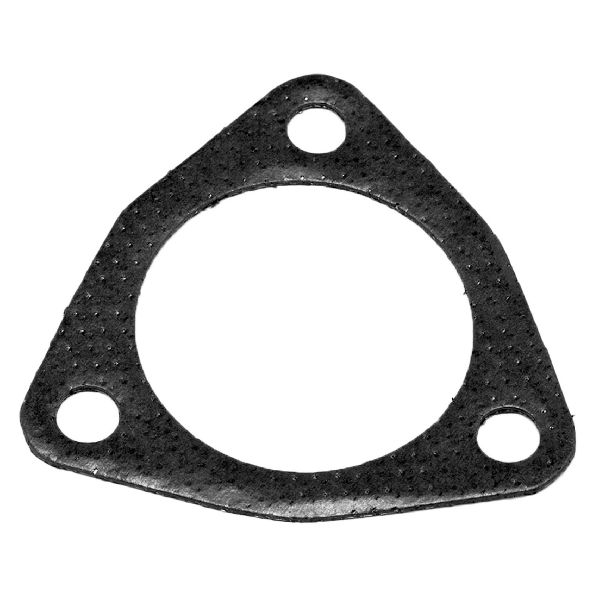
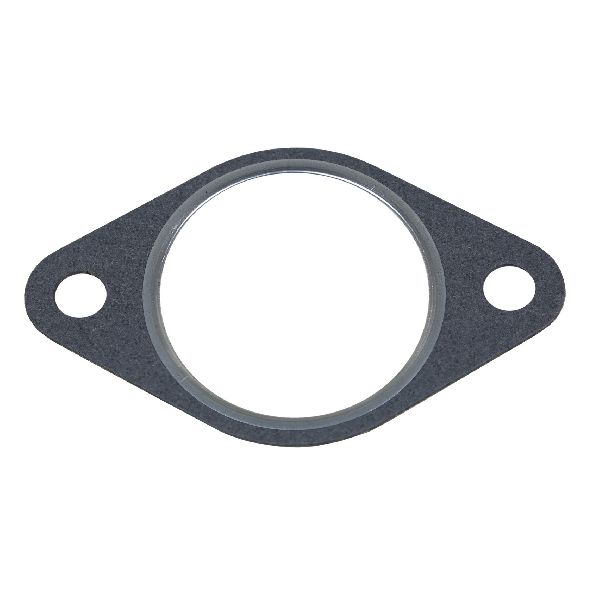
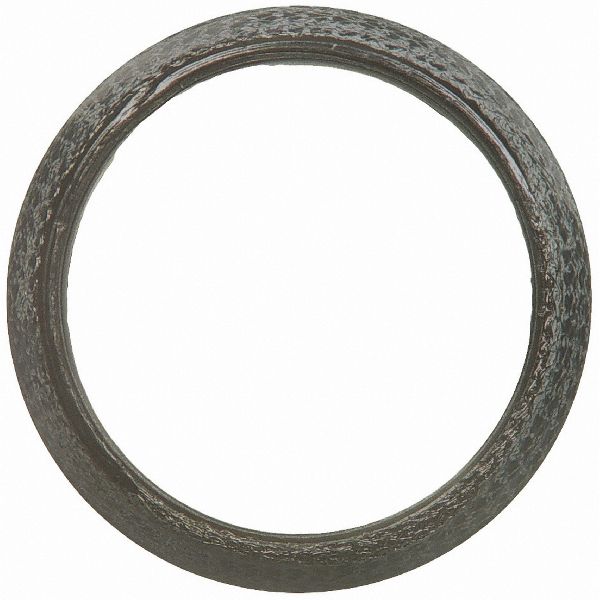
- Exhaust System Leak 🔴 High Probability Exhaust gaskets, particularly the donut gasket (Subaru P/N 44011AG000) between the catalytic converter and the mid-pipe, are known to fail and cause leaks. The exhaust pipes themselves can also develop cracks or rust holes, especially at welded seams.
How to confirm: Visually inspect all exhaust piping and flanges from the engine to the rear O2 sensor for black soot marks, which indicate a leak. Listen for a ticking or hissing sound from the exhaust when the engine is cold. The most reliable method is to have a mechanic perform a smoke test, which will force smoke through the exhaust and reveal the exact location of any pinhole leaks.
Typical fix: Replace the failed gasket or the section of exhaust pipe that is leaking. Exhaust putty can be used for a temporary repair on very small holes, but is not a permanent solution.
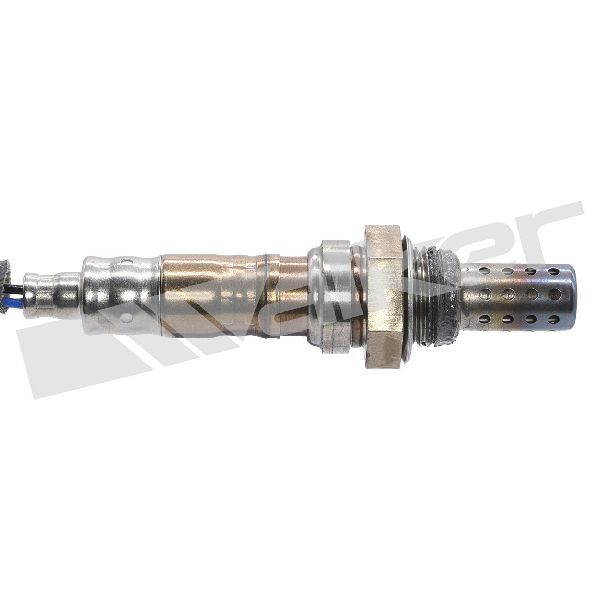
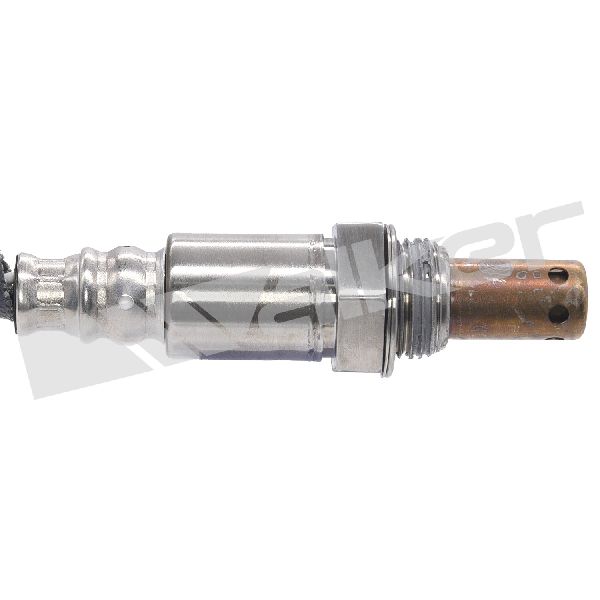
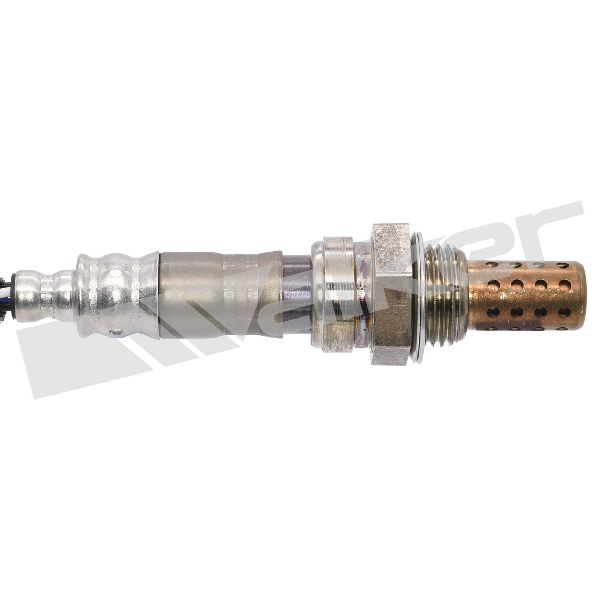
Est. part cost: $15-$60 for gaskets, $100-$300 for a pipe section - Failing Rear (Downstream) Oxygen Sensor 🟡 Medium Probability → Shop Oxygen Sensor The rear O2 sensor (also called Bank 1, Sensor 2) can become 'lazy' or fail with age and mileage, sending inaccurate lean readings to the computer even when the air/fuel mixture is correct. This is a very common failure after an exhaust leak has been ruled out.
How to confirm: If a thorough exhaust inspection and smoke test reveal no leaks, the rear O2 sensor is the next most likely cause. A technician can use a scan tool to monitor the sensor's voltage readings. A healthy sensor should show relatively stable voltage, while a faulty one might be stuck low (under 0.2V) or fluctuate erratically.
Typical fix: Replace the rear oxygen sensor. It is highly recommended to use an OEM-quality brand like Denso (Direct Fit P/N: 234-4445) or an original Subaru sensor (P/N: 22690AA93A) for reliability.
Est. part cost: $80-$180 - Failing Front (Upstream) Air/Fuel Ratio Sensor ⚪ Low Probability → Shop Oxygen Sensor While less common for this specific code, a failing front A/F sensor can sometimes contribute to the P2096 code by sending incorrect data that affects the entire fuel trim strategy. A Reddit user on r/subaru described a mechanic replacing the front sensor (P/N 22641AA54A) first, only for the P2096 code to return, highlighting that this is often not the root cause.
How to confirm: This is typically diagnosed after ruling out exhaust leaks and the rear O2 sensor. A scan tool showing erratic or out-of-spec readings from the front A/F sensor would confirm the issue. This is often seen with a P0171 code.
Typical fix: Replace the front Air/Fuel Ratio sensor (Bank 1, Sensor 1).
Est. part cost: $100-$200
Rare But Worth Checking
- Engine Vacuum Leak: A significant vacuum leak from a cracked hose (like a PCV hose) or bad intake gasket can cause a lean condition so severe that it's detected by the rear O2 sensor. This will almost always be accompanied by a P0171 (System Too Lean) code.
- Low Fuel Pressure: A weak fuel pump, clogged fuel filter, or failing fuel pressure regulator can cause a true lean condition. This is a less likely cause if P2096 is the only code present.
Diagnosis Steps
- Read the code with an OBD-II scanner and confirm P2096 is present. Note any other codes, especially P0171 or P0137.
- Perform a thorough visual inspection of the exhaust system from the engine back to the rear O2 sensor. Look for cracks, rust, and black soot around flanges and gaskets, particularly the donut gasket after the catalytic converter.
- With the engine cold, start it and listen/feel for any hissing or puffs of air from the exhaust manifold, gaskets, and pipe connections.
- For best results, have a smoke test performed on the exhaust system to pinpoint any leaks that are not visible.
- If an exhaust leak is found, repair it. Clear the codes and drive the vehicle to see if P2096 returns.
- If no leaks are found, use a scan tool to observe the live data from the rear O2 sensor (Bank 1, Sensor 2). A healthy sensor's voltage should be relatively stable and consistent (e.g., between 0.1 and 0.9 volts). A sensor that is stuck low (e.g., <0.2V) or is unresponsive is likely faulty.
- If the rear O2 sensor is suspected, replace it. Use a quality brand like Denso or a genuine Subaru part.
- If the code persists, investigate less common causes like the front A/F sensor, vacuum leaks (smoke test the intake), or fuel delivery issues (check fuel pressure).
Parts You'll Likely Need
- Rear Oxygen Sensor (Downstream)
(OEM #22690AA93A)— This sensor is the second most common failure point after exhaust leaks. It can fail with age, sending incorrect lean readings.
Trusted brands: Denso (OEM Supplier, P/N: 234-4445), NGK/NTK
OEM price range: $150-$230
Aftermarket price range: $80-$150 - Exhaust Pipe Flange Gasket (Donut Gasket)
(OEM #44011AG000)— This is a very common leak point on Subaru exhaust systems, allowing unmetered air to enter and cause a false lean reading by the rear O2 sensor.
Trusted brands: Walker Exhaust, Fel-Pro, Bosal
OEM price range: $25-$50
Aftermarket price range: $15-$30
Related Codes That Often Appear With This One
- P0171 — If an engine vacuum leak or major fuel delivery issue is severe enough, it will cause a general lean condition detected by the front A/F sensor (P0171) and also be seen by the rear O2 sensor (P2096).
- P0137 — This code for 'O2 Sensor Circuit Low Voltage (Bank 1, Sensor 2)' can appear with P2096 if the rear oxygen sensor is failing electrically or if a large exhaust leak is causing an extremely lean reading.
Technical Service Bulletins (TSBs) & Recalls
- TSB #09-52-11: Titled 'Squeaking Noise From The Center Exhaust Pipe Area'. While not directly for P2096, this TSB addresses a known issue with the center exhaust pipe flange gasket on 2010-2011 models. It details a repair procedure that involves replacing the donut gasket and spring bolts, which is a primary cause of the exhaust leaks that trigger the P2096 code.
- TSB Bulletin #18-228-25R: This manufacturer bulletin announces specific diagnostic procedures to be used when DTCs P2096 (Post Catalyst Fuel Trim System Too Lean Bank 1) and P2097 are detected by the Engine Control Module.
Platform-Specific Known Issues
- Cracked Y-Pipe: Some owners have reported finding cracks in the exhaust Y-pipe, which is part of the catalytic converter assembly. This is a more expensive repair but is a known failure point that causes a significant leak.
- Flange Spring Bolt Failure: The spring-loaded bolts that hold the flange together at the donut gasket can rust and weaken, reducing clamping force and allowing the gasket to leak. It's often recommended to replace these bolts and springs (P/N 44059AA010 for bolts, 44044AA010 for springs) when replacing the gasket.
- Cold Weather Onset: Some owners on Reddit have noted the P2096 code appears for the first time during a significant drop in temperature, suggesting that the contraction of the metal exhaust components may open up a small, pre-existing crack or failing gasket.
Mechanic-Grade Diagnostic Values
- Rear O2 Sensor (B1S2) Voltage at Idle (Warm Engine) — expected: Relatively stable voltage, typically between 0.5V and 0.9V.. Failure: Voltage is stuck low (e.g., below 0.2V), unresponsive, or reads below 0.03V or above 1.2V on a scan tool.
- Rear O2 Sensor (B1S2) Heater Circuit Resistance — expected: 5 to 8 ohms between the two heater circuit pins on the sensor connector.. Failure: No continuity (open circuit) or very high resistance (over 50 ohms).
- Rear O2 Sensor (B1S2) Response to Forced Lean Condition — expected: Voltage should quickly drop to around 200mV (0.2V).. Failure: Voltage is slow to react or does not drop to the expected lean reading.
- Rear O2 Sensor (B1S2) Response to Forced Rich Condition — expected: Voltage should quickly rise to around 800mV (0.8V).. Failure: Voltage is slow to react or does not rise to the expected rich reading.
- Fuel Pressure (at fuel pump module) — expected: Approximately 52 PSI.. Failure: Significantly lower fuel pressure indicates a weak fuel pump or clogged filter.
Scan Tool Commands That Help
- N/A - Manual Procedure: ECU Fuel Trim and Learned Memory Reset — After replacing an oxygen sensor or repairing a major vacuum/exhaust leak to force the ECU to relearn fuel strategies. Disconnect the negative battery terminal for 15-30 minutes. After reconnecting, perform a drive cycle including a few minutes of idling, mixed city driving, and steady highway speed to allow the ECU to adapt.
Wiring & Ground Locations
- B19 (Rear Oxygen Sensor Connector) — Passenger side of the engine bay, clipped to a metal bracket near the air intake duct and power steering reservoir. It is a gray-colored plug, often located next to the black plug for the front A/F sensor.. This is the primary connection point for testing the rear O2 sensor's signal and heater circuit. Corrosion or damage at this connector can cause the P2096 code.
Real Owner Repair Stories
- Reddit user comment in r/subaru (2012 Subaru Outback) — P2096 Check Engine Light.
❌ Tried (didn't work) Replaced the front Air/Fuel Ratio sensor (Bank 1, Sensor 1).
✅ What actually fixed it The code returned after replacing the front sensor. A technician commented that for P2096, the rear O2 sensor is the culprit in ~80% of cases, strongly suggesting it should have been the next part to replace, not the front sensor. - The DIY Guy .net repair article (2007 Subaru Outback, 213k miles (similar EJ25 engine and logic)) — P2097 (Post catalyst fuel trim too rich), but the diagnostic principle is identical.
❌ Tried (didn't work) A cheap, non-OEM 'direct fit' oxygen sensor was previously installed by the owner, which caused more problems, including a bad start, stalling, and additional trouble codes.
✅ What actually fixed it Replaced both the front and rear oxygen sensors with OEM-quality Denso parts (specifically Denso P/N 234-4445 for the rear sensor) to resolve the issue correctly. The author strongly advises sticking with Denso to avoid compatibility problems.
"I Checked Everything" — The Actual Cause
- In forum discussions for this vehicle and code, there are no documented cases where a smoke test was clean and the cause was something other than a faulty rear oxygen sensor. The diagnostic path is consistently: 1) Find and fix the exhaust leak. 2) If no leak is found, replace the rear O2 sensor.
When the Usual Fixes Don't Work
- While the vast majority of P2096 codes on this platform are caused by an exhaust leak or a bad rear O2 sensor, do not completely rule out the front A/F sensor. In a minority of cases, a failing front sensor can send skewed data that causes the entire fuel control system to operate incorrectly, leading the ECU to set a post-catalyst code. If an exhaust leak has been definitively ruled out with a smoke test AND a new, high-quality rear O2 sensor does not fix the problem, the front A/F sensor becomes a more likely suspect.
OEM Part Supersession History
44011AG000 (Donut Gasket)→44011AG001— Standard part revision.22690AA93A (Rear O2 Sensor)→N/A— This remains the current part number for the specified years. Other numbers like 22690AA900 may be for different trims or model years but are sometimes associated.
Heads up: Using non-OEM sensors is known to cause compatibility issues, even if listed as 'direct fit'. Denso P/N 234-4445 is the confirmed reliable aftermarket alternative.
Model Year Variations Within This Range
- 2010-2014: No significant variations in the exhaust system, sensors, or engine management logic related to the P2096 code have been identified within this generation. The diagnostic and repair procedures are consistent across all years in this range.
Diagnostic Flowchart
Used vs. New Parts: Buying Guide for This Vehicle
When a used part is the smart pick: For large, expensive exhaust components like the catalytic converter / Y-pipe assembly. A used OEM part from a low-mileage, non-rust-belt vehicle is often more reliable and cost-effective than a new aftermarket converter.
Donor-vehicle mileage cap: roughly under 100000 miles for the part to have meaningful remaining life.
What to inspect on the donor part:
- Check for minimal surface rust; avoid parts with deep pitting or flaking.
- Ensure mounting flanges are flat and not bent or heavily corroded.
- Ask for the VIN of the donor car to check its regional history (e.g., avoid cars from states with heavy road salt use).
- Inspect for any signs of impact damage or previous weld repairs.
OEM-only on this vehicle (don't cheap out):
- Catalytic Converter: Aftermarket catalytic converters are widely reported to be less efficient than OEM Subaru parts, often leading to a P0420 (Catalyst Efficiency) code shortly after installation, even if they fix the original P2096 leak.
Aftermarket brands forum-validated for this vehicle:
- Denso (for Oxygen Sensors - OEM supplier)
- NGK/NTK (for Oxygen Sensors)
- Walker Exhaust (for gaskets and hardware)
Brands owners have reported issues with on this vehicle:
- Generic, unbranded, or 'white-box' oxygen sensors are frequently reported on forums to be unreliable, fail quickly, or be dead-on-arrival, sometimes causing more codes than the original problem.
Real Owner Stories
Aggregated from forums and TSBs cited above. Mileages and costs reflect what owners reported in those sources.
2012 Subaru Outback
Symptoms: The check engine light came on with code P2096.
What fixed it: The final fix was not reported, but after incorrectly replacing the front Air/Fuel Ratio sensor, a commenter advised the next step was to replace the rear O2 sensor, which is the cause '80 times out of 100'.
Source hint: Reddit r/subaru thread titled '2012 Outback - Code P2096'
2011 Subaru Outback
Symptoms: The check engine light came on for the second time in a year, both times after a significant drop in temperature.
What fixed it: The user did not report a final fix. An oxygen sensor had been replaced after the first occurrence, but the code returned several months later during another cold snap.
Source hint: Reddit r/subaru
Related OBD-II Codes
Frequently Asked Questions
What is the most common cause of a P2096 code on my 2010-2014 Outback?
I've heard the P2096 code often appears in cold weather. Is this a known issue?
Is there a Technical Service Bulletin (TSB) for the P2096 code on my Outback?
Should I replace the front or rear oxygen sensor first to fix a P2096 code?
What specific parts should I use when replacing the oxygen sensor or exhaust gasket?
My 2012 Legacy has a P2096 code. Is the information for the Outback relevant?
We Have This Part in Stock

The information in this article is provided for general reference and educational purposes only. Vehicle specifications, procedures, and part compatibility can vary by production date, trim level, and region. Always consult your vehicle's factory service manual and verify part numbers before purchasing or performing repairs. Safety-critical components such as airbags, seat belts, and braking systems should be installed by a qualified professional.
- Subaru Outback:
- 🧭 Diagnostic Flowchart
- 🛍️ Shop This Part
- What's Unique About the 2010-2014 Subaru Outback
- Symptoms You May Notice
- Most Likely Causes
- Rare But Worth Checking
- Diagnosis Steps
- Parts You'll Likely Need
- Related Codes That Often Appear With This One
- Technical Service Bulletins (TSBs) & Recalls
- Platform-Specific Known Issues
- Mechanic-Grade Diagnostic Values
- Scan Tool Commands That Help
- Wiring & Ground Locations
- Real Owner Repair Stories
- "I Checked Everything" — The Actual Cause
- When the Usual Fixes Don't Work
- OEM Part Supersession History
- Model Year Variations Within This Range
- Used vs. New Parts: Buying Guide for This Vehicle
- Real Owner Stories
- 2012 Subaru Outback
- 2011 Subaru Outback
- Related OBD-II Codes
- Frequently Asked Questions
- 🎟️ Get 5% Off