

P2097 on 2009-2016 Buick Enclave: Causes for Post-Catalyst Rich Fuel Trim
This code means the engine is running rich on Bank 1. Before replacing the O2 sensor, check for exhaust leaks near the sensor and consider having the fuel injectors tested, as GM Technical Service Bulletin #PIP4964F points to them as a very common cause on this platform. An O2 sensor replacement costs around $35-$200 for the part, while professional fuel injector replacement can exceed $1000.
- P2097 on a Buick Enclave indicates a rich fuel condition on Bank 1 (firewall side) as detected by the rear oxygen sensor.
- Do not automatically replace the oxygen sensor. A GM service bulletin strongly suggests that a leaking fuel injector is a very common cause for this specific vehicle and engine.
- The next most likely cause is an exhaust leak between the engine and the rear O2 sensor, which allows air to enter and skews the sensor's readings.
- Proper diagnosis involves checking for other codes, testing fuel injectors, and inspecting for exhaust leaks before replacing any parts.
- Driving with this code can harm your catalytic converter over time, leading to a much more expensive repair.
What's Unique About the 2009-2016 Buick ENCLAVE
For the Buick Enclave and its platform-mates (Chevy Traverse, GMC Acadia, Saturn Outlook) with the 3.6L V6 engine, the P2097 code is specifically addressed in Technical Service Bulletin #PIP4964F. This TSB strongly suggests that leaking or malfunctioning fuel injectors are a very common cause for this code and recommends performing a fuel injector balance test (or AFIT test) early in the diagnosis. This is a key platform-specific issue that can lead to misdiagnosis if a technician immediately assumes the oxygen sensor is the culprit.
Diagnostic Flowchart
Tap your situation to follow the diagnostic path that matches what you're seeing on this vehicle.
Symptoms You May Notice
- Check Engine Light is on.
- Reduced fuel economy.
- Rough or erratic idle.
- Engine hesitation or stumbling during acceleration.
- A noticeable smell of fuel from the exhaust or rotten egg smell.
- In rare, extreme cases, black smoke from the tailpipe.
- Immediately replacing the downstream oxygen sensor without checking for exhaust leaks or testing the fuel injectors first. The O2 sensor is often correctly reporting a problem that originates elsewhere.
Most Likely Causes
- Leaking Fuel Injectors 🔴 High Probability → Shop Fuel Injector A GM Technical Service Bulletin (PIP4964F) specifically identifies faulty fuel injectors as a primary cause for P2097 on this platform. The direct injection system on the LLT and LFY engines can be prone to carbon buildup and injector failure.
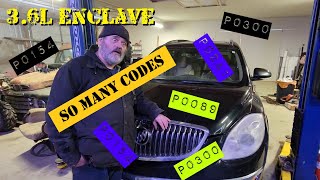
How to confirm: Perform a fuel injector balance test or an Active Fuel Injector Tester (AFIT) test to see if an injector is leaking or not flowing correctly. A visual inspection of spark plugs on Bank 1 may also reveal one that is black and fouled from excess fuel. 🎬 Watch: See how a leaking injector is diagnosed on an Enclave. Note: The TSB mentions the balance test is not available on 2009 models.
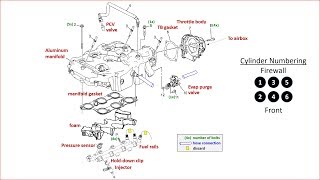
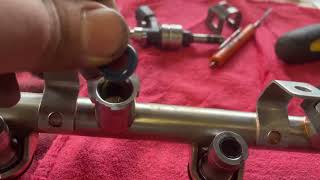
Typical fix: Replace the faulty fuel injector(s). 🎬 See this walkthrough for replacing injectors on the 3.6L engine. It is often recommended to replace all injectors on the affected bank at the same time.
Est. part cost: $50-$150 per injector - Exhaust System Leak 🟡 Medium Probability Gaskets and exhaust pipe welds can degrade over time, causing leaks. A TSB also mentions checking for small leaks at the converter outlet flange. Some owners report leaks at the flex pipe joint.
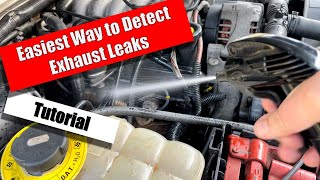
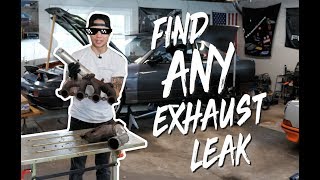
How to confirm: Visually inspect the exhaust system from the engine to the rear O2 sensor for cracks, rust holes, or bad gaskets. A smoke test or applying low-pressure air (5-8 psi) and using a soapy water solution can help pinpoint small leaks, 🎬 Watch: The quickest way to find exhaust leaks using soapy water. as recommended by GM.
Typical fix: Repair the leak by replacing the faulty gasket, applying exhaust putty for small holes, or replacing the damaged section of pipe. The TSB suggests filing the mating surface of the pipe flange when replacing a gasket to ensure a good seal.
Est. part cost: $10-$100 - Faulty Downstream Oxygen Sensor (Bank 1, Sensor 2) 🟡 Medium Probability → Shop Oxygen Sensor
How to confirm: Use a scan tool to monitor the voltage from the Bank 1 Sensor 2. A healthy downstream sensor on a warm engine should show a relatively steady voltage. If it's stuck high (e.g., above 0.65V) or fluctuating wildly like an upstream sensor, it may be faulty. Also inspect wiring for damage, as melting on the hot exhaust is possible.
Typical fix: Replace the Bank 1, Sensor 2 oxygen sensor. This sensor is located after the catalytic converter on the firewall side of the engine.
Est. part cost: $35-$200 - High Fuel Pressure ⚪ Low Probability
How to confirm: Connect a fuel pressure gauge to the fuel rail and check if the pressure is within the manufacturer's specified range. A faulty fuel pressure regulator or a failing high-pressure fuel pump (on direct injection models) can cause system-wide high pressure.
Typical fix: Replace the fuel pressure regulator or fuel pump module if pressure is out of spec.
Est. part cost: $100-$400
Rare But Worth Checking
- Failing Catalytic Converter: → Shop Catalytic Converter While a clogged or inefficient converter can cause this code, it's less common than the other causes. It's often the result of a long-term rich condition (caused by a leaking injector) destroying the converter, not the initial cause.
- Mechanical Valvetrain Issue: The TSB mentions that if no injector or exhaust leak issues are found, a sticking valve or other valvetrain problem could be the cause, though this is rare. This may or may not present with a misfire code.
- Faulty Powertrain Control Module (PCM): → Shop Engine Control Module (ECM) This is extremely rare. The PCM should only be considered after all other possibilities have been exhaustively ruled out. Sometimes a software update is needed.
Diagnosis Steps
- Scan for any other DTCs to see if other codes provide more clues (e.g., misfire codes, codes for the other bank).
- Visually inspect the exhaust system for any obvious leaks, cracks, or damage, especially around the Bank 1 catalytic converter and O2 sensor bungs. Pay close attention to the converter outlet flange and flex pipe.
- Use a scan tool to observe live data for the Bank 1 oxygen sensors (Sensor 1 and Sensor 2). Compare them to Bank 2 sensors to spot anomalies. A steady high voltage on B1S2 is a key indicator.
- Following GM TSB PIP4964F, perform a fuel injector balance test to check for leaking or poorly performing injectors on Bank 1.
- If no injector issues are found, perform an exhaust leak test using a smoke machine or low-pressure air (5-8 psi) and soapy water to find hidden leaks.
- Test the fuel pressure to ensure it is within the correct specifications.
- If all other tests are inconclusive, test the Bank 1, Sensor 2 oxygen sensor and its wiring for faults.
Parts You'll Likely Need
- Fuel Injector
(OEM #12669384 (supersedes 12638530, 12632255, 12611545))— A GM TSB specifically points to faulty fuel injectors as a very common cause for this code on the 3.6L engine.
Trusted brands: ACDelco, Bosch
OEM price range: $100-$200
Aftermarket price range: $50-$150 - Downstream Oxygen Sensor (Bank 1, Sensor 2)
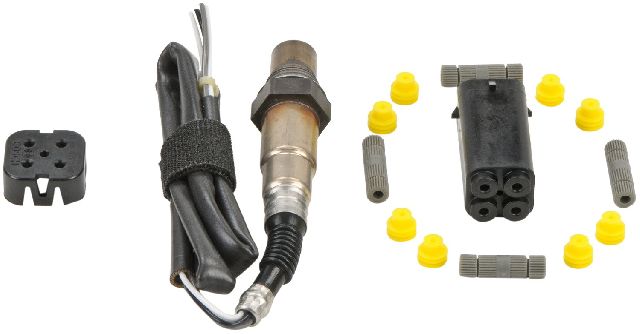
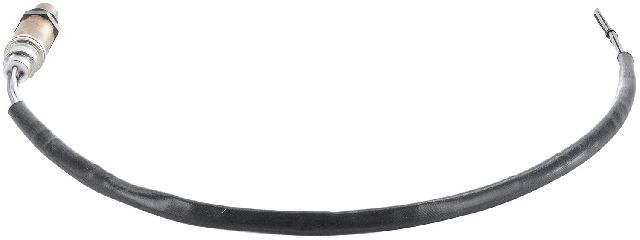
(OEM #12612430)— This sensor is what triggers the code. While often not the root cause, the sensor itself can fail and give false rich readings.
Trusted brands: ACDelco, Denso, NGK, Bosch
OEM price range: $80-$150
Aftermarket price range: $35-$100 - Exhaust Gasket — A leak at the catalytic converter flange is a common cause of incorrect O2 sensor readings.
Trusted brands: Fel-Pro, Walker Exhaust
OEM price range: $15-$40
Aftermarket price range: $10-$25
Related Codes That Often Appear With This One
- P2099 — This is the identical code for Bank 2 (the radiator side of the engine). Seeing both codes together suggests a systemic problem like high fuel pressure or a dirty mass airflow sensor affecting both banks.
- P0172 — This code means 'System Too Rich (Bank 1)' and is detected by the upstream O2 sensor. If both the upstream and downstream sensors agree the system is rich, it strongly points to a fuel delivery issue like a leaking injector.
- P0300-P0306 — These are misfire codes. A severely leaking fuel injector can foul the spark plug in its cylinder, leading to a misfire on that specific cylinder (e.g., P0301 for cylinder 1).
Technical Service Bulletins (TSBs) & Recalls
- PIP4964F: Advises that for a P2097 or P2099 code, the most common cause is a faulty fuel injector and recommends performing an injector balance test. It also suggests checking for exhaust leaks if injectors are okay.
Platform-Specific Known Issues
- A General Motors Technical Service Bulletin (TSB #PIP4964F) exists for the 2009-2016 Enclave (among other models) with a P2097 or P2099 code. It explicitly states that the most common concern is related to fuel injectors and advises technicians to perform an injector balance test before proceeding with other diagnostics.
- The TSB also provides a specific diagnostic procedure for finding exhaust leaks using low-pressure air and soapy water, noting that leaks are common at the converter outlet.
Mechanic-Grade Diagnostic Values
- Downstream O2 Sensor (Bank 1 Sensor 2) Voltage — expected: Relatively steady voltage, typically around 0.4V to 0.6V when the engine is warm and in closed loop.. Failure: Voltage stuck high (above 0.7V) indicates a rich condition or faulty sensor. Voltage fluctuating rapidly similar to the upstream sensor suggests a failing catalytic converter.
- Low-Side Fuel Pressure — expected: The in-tank fuel pump module for the 3.6L V6 LLT/LFX engine should operate between 87 PSI (minimum) and 130 PSI (maximum).. Failure: Pressure significantly outside this range could indicate a failing fuel pump or a problem with the fuel pressure sensor, contributing to a system-wide fuel delivery issue.
Scan Tool Commands That Help
- GDS2/Tech2: Injector Balance Test / Active Fuel Injector Test (AFIT) — This is the GM-recommended first step after a visual inspection, per TSB PIP4964F. It directly tests for leaking or malfunctioning fuel injectors, which are a primary cause of P2097 on this platform.
- GDS2/Tech2: Fuel Trim Reset — After replacing a component like a fuel injector or O2 sensor, resetting the fuel trims forces the ECM to relearn the fuel delivery strategy immediately, rather than slowly adapting over time. This helps confirm the fix.
Wiring & Ground Locations
- G110 — On the right front of the engine, mounted to the cylinder head.. This is a primary engine ground. A poor connection here can cause erratic behavior in various engine sensors and the ECM, potentially leading to incorrect sensor readings and fault codes.
- G113 — Located on the left side of the engine, at an engine-to-transmission stud.. Another critical engine and transmission ground point. A loose or corroded G113 can affect sensor readings and module communication.
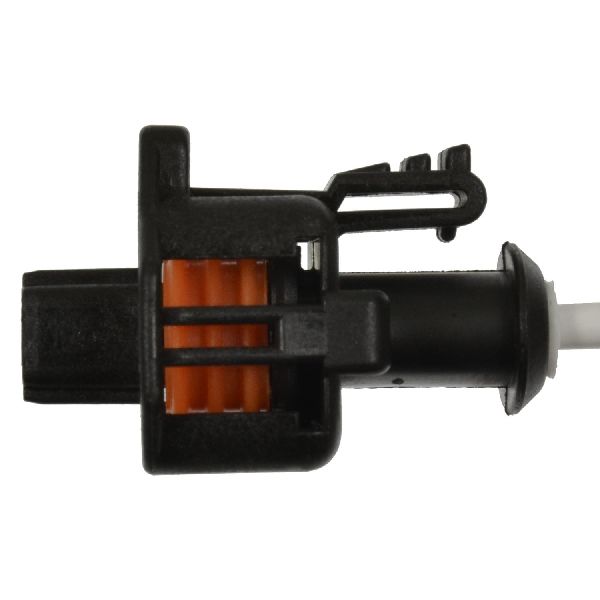
- O2 Sensor Wiring — The wiring harness for the oxygen sensors.. GM service information explicitly warns against soldering repairs on heated oxygen sensor wiring. The sensor uses the gaps in the wire strands to get a clean air reference. Soldering or using inappropriate connectors can block this reference path, degrading sensor performance and causing incorrect readings. If the pigtail is damaged, the entire sensor must be replaced.
OEM Part Supersession History
12611545, 12632255, 12638530→12669384— Standard part evolution for improved reliability or manufacturing process.
Heads up: The newer part number 12669384 is the correct service replacement for the previous numbers on this platform.
Model Year Variations Within This Range
- 2009-2017: The 2009-2017 Buick Enclave (first generation) consistently used the 3.6L LLT direct-injection V6 engine. The updated LFY engine was introduced in the second-generation Enclave starting in the 2018 model year. Therefore, diagnoses for P2097 are consistent across the 2009-2016 range.
- 2009: As noted in TSB #PIP4964F, the injector balance test, a key diagnostic step for P2097, is not available on 2009 models using the standard dealer scan tool. For this year, other methods like monitoring fuel trims or physically swapping injectors may be required to diagnose a faulty injector.
Helpful Videos


We Have This Part in Stock



The information in this article is provided for general reference and educational purposes only. Vehicle specifications, procedures, and part compatibility can vary by production date, trim level, and region. Always consult your vehicle's factory service manual and verify part numbers before purchasing or performing repairs. Safety-critical components such as airbags, seat belts, and braking systems should be installed by a qualified professional.
- Buick ENCLAVE:
- 🧭 Diagnostic Flowchart
- 🎬 Helpful Videos
- 🛍️ Shop This Part
- What's Unique About the 2009-2016 Buick ENCLAVE
- Symptoms You May Notice
- Most Likely Causes
- Rare But Worth Checking
- Diagnosis Steps
- Parts You'll Likely Need
- Related Codes That Often Appear With This One
- Technical Service Bulletins (TSBs) & Recalls
- Platform-Specific Known Issues
- Mechanic-Grade Diagnostic Values
- Scan Tool Commands That Help
- Wiring & Ground Locations
- OEM Part Supersession History
- Model Year Variations Within This Range
- 🎟️ Get 5% Off