

P2097 on 2010-2017 Buick LaCrosse: Post-Catalyst Fuel Trim Too Rich Fixes
On a 2010-2017 Buick LaCrosse, code P2097 usually indicates a rich fuel condition caused by leaking fuel injectors, an exhaust leak before the oxygen sensors, or a faulty upstream O2 sensor. A GM Technical Service Bulletin specifically advises testing the fuel injectors for this code, and real-world owner experiences point to issues like incorrect fuel pump flow rates on platform mates.
- P2097 on a Buick LaCrosse means the engine is running too rich on Bank 1, and the computer can no longer compensate.
- Do not immediately replace the downstream O2 sensor; it is usually just reporting the problem.
- The most likely causes are a leaking fuel injector (as per a GM TSB), an exhaust leak before the sensors, or a faulty upstream O2 sensor.
- A thorough diagnosis should include checking for exhaust leaks, analyzing live sensor data, and performing a fuel injector test.
- Ignoring this code will lead to poor gas mileage and will eventually destroy the catalytic converter, a much more expensive repair.
What's Unique About the 2010-2017 Buick LACROSSE
For this generation of Buick LaCrosse and related GM vehicles with the 3.6L V6 or 2.4L I4, the P2097 code is specifically addressed in Technical Service Bulletins. TSB PIP4964F directs technicians to investigate fuel injectors early, suggesting leaking injectors are a known issue. Furthermore, TSB 19-NA-017 highlights that a software anomaly can cause this code, requiring an ECM reprogram. A critical issue seen on platform mates like the Chevy Traverse is the installation of an aftermarket high-pressure fuel pump with an incorrect (higher) flow rate, which overwhelms the system and causes a persistent P2097 code.
🎬 Watch: How an incorrect fuel pump causes this specific code.Diagnostic Flowchart
Tap your situation to follow the diagnostic path that matches what you're seeing on this vehicle.
Generation note: This range covers the second generation (2010-2016) and the first model year of the third generation (2017) LaCrosse. Engine options included the 2.4L 4-cylinder (LUK, LEA) and 3.6L V6 (LLT, LFX). While the causes are similar, the location of Bank 1 and its components will differ. On the V6, Bank 1 is the rear bank against the firewall. The 4-cylinder engine only has one bank (Bank 1).
Symptoms You May Notice
- Check Engine Light is on
- Reduced fuel economy
- Rough or uneven idle
- Engine hesitation or stumbling on acceleration 🎬 Watch: A breakdown of P2097 symptoms and common causes.
- Smell of gasoline or black smoke from the exhaust in some cases
- Engine may be hard to start when hot
- Immediately replacing the downstream (post-catalyst) O2 sensor without checking for other causes. The downstream sensor is usually just the messenger reporting the problem. A GM-specific forum notes that an O2 sensor itself will not typically cause this DTC without setting its own circuit-related codes first. A mistaken diagnosis is often blamed on the downstream sensor when the actual fault is an exhaust leak, injector issue, or software glitch.
Most Likely Causes
- Leaking Fuel Injector(s) 🔴 High Probability → Shop Fuel Injector A specific GM Technical Service Bulletin (PIP4964F) for 2010 models with P2097 explicitly recommends performing a fuel injector balance test, indicating this is a known issue. Direct injection injectors on the 3.6L V6 operate under very high pressure and can leak fuel directly into the cylinder.
How to confirm: Perform a fuel injector balance test using a capable scan tool or a dedicated injector tester. You can also remove the spark plugs on Bank 1 and check for signs of one cylinder running much richer (dark, sooty, wet with fuel) than the others.
Typical fix: Replace the faulty fuel injector(s). It is often recommended to replace them as a set on the affected bank, especially for high-mileage vehicles. 🎬 See this walkthrough for replacing fuel injectors on the 3.6L.
Est. part cost: $50-$150 per injector - Exhaust Leak 🟡 Medium Probability Exhaust manifold gaskets and flex pipes can degrade over time. A known issue on some GM 3.6L V6 engines is a cracked exhaust manifold or a cracked weld on the manifold/catalytic converter assembly, which causes a leak. An audible tick or hiss may not always be present.
How to confirm: Visually inspect the exhaust system from the engine manifold to the catalytic converter for cracks, rust holes, or black soot trails indicating a leak. A smoke machine test is the most effective way to find small, non-audible leaks.
Typical fix: Replace the leaking gasket, tighten bolts, or repair/replace the cracked pipe or manifold section.
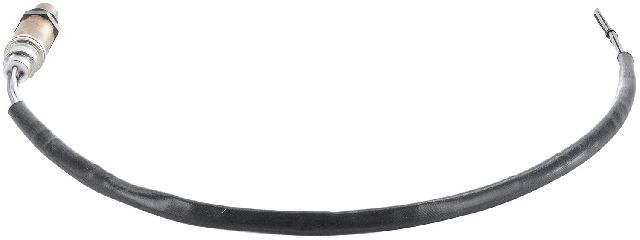
Est. part cost: $20-$400 - Faulty Upstream Oxygen Sensor (Bank 1, Sensor 1) 🟡 Medium Probability → Shop Oxygen Sensor O2 sensors are wear items. A faulty upstream sensor can become 'lazy' or biased, sending an incorrect 'lean' signal to the ECM. The ECM then commands more fuel, creating a genuinely rich condition that the downstream sensor correctly reports, triggering P2097.
How to confirm: Use a scan tool to monitor the live voltage data from the Bank 1 Sensor 1. A healthy sensor will show voltage fluctuating rapidly between approximately 0.1V and 0.9V. A sensor that is slow to respond or stuck at a low voltage is faulty and needs replacement.
Typical fix: Replace the Bank 1, Sensor 1 (upstream) oxygen sensor.
Est. part cost: $50-$120 - High Fuel Pressure ⚪ Low Probability While not specific to the LaCrosse itself, a well-documented case on a platform-mate (Chevy Traverse 3.6L) showed that using an aftermarket high-pressure fuel pump with a higher-than-spec flow rate (e.g., 56 GPH instead of OEM 36 GPH) caused a persistent P2097 code and destroyed catalytic converters. This highlights the importance of using OEM-spec parts.
How to confirm: Connect a fuel pressure gauge to the fuel rail (for port injection) or monitor fuel rail pressure with a scan tool (for direct injection) and check if the pressure is within the manufacturer's specified range. A reading that is consistently too high indicates a problem with the regulator or high-pressure pump.
Typical fix: Replace the fuel pressure regulator or the high-pressure fuel pump. Ensure the replacement part matches the OEM flow rate specification.
Est. part cost: $70-$450
Rare But Worth Checking
- Faulty Downstream Oxygen Sensor (Bank 1, Sensor 2): → Shop Oxygen Sensor While this sensor is what triggers the code, it's very uncommon for it to be the root cause. It can fail and send false rich readings, but this is rare. Technical forums strongly advise against replacing this sensor before thoroughly checking for exhaust leaks, injector issues, and upstream sensor problems. A mistaken diagnosis often blames the downstream sensor when the fault lies elsewhere.
- ECM Software Anomaly: TSB 19-NA-017 and 19-NA-058 confirm that on some GM models, P2097 can be set due to a software glitch that misinterprets sensor data. The fix is to have a dealer reprogram the ECM with the latest software, not replace parts. This should be considered if all mechanical and sensor checks pass.
- Contaminated or Failing Catalytic Converter: → Shop Catalytic Converter A failing catalytic converter can lose its ability to store oxygen, causing the downstream O2 sensor readings to mimic the upstream sensor, which can sometimes be interpreted as a rich condition. This is often a result of another problem (like a long-term rich condition from a leaky injector) and is an expensive last resort.
Diagnosis Steps
- Scan for all DTCs. Note any other codes, especially misfire (P030x), Bank 2 (P2099), or catalyst efficiency (P0420) codes.
- Visually inspect the exhaust system for any signs of leaks, such as black soot, cracks, or rust, particularly on the manifold, flex pipe, and all connections before the downstream O2 sensor. Consider a smoke test for a definitive diagnosis.
- Use a scan tool to observe live data. Look at the short-term and long-term fuel trims for Bank 1. High negative numbers (e.g., -15% or more) indicate the ECM is trying to remove a large amount of fuel.
- Observe the voltage of the upstream (Sensor 1) and downstream (Sensor 2) O2 sensors for Bank 1. The upstream sensor should fluctuate rapidly (0.1V-0.9V). The downstream sensor should be relatively stable and steady. If the upstream sensor is stuck low, it could be causing the rich condition.
- If fuel trims are highly negative and an exhaust leak isn't found, perform a fuel injector balance test as recommended by TSB PIP4964F to check for leaking injectors.
- Check fuel pressure using a scan tool to ensure it is within the specified range. Be especially wary if an aftermarket fuel pump was recently installed.
- If all else fails, check with a GM dealer for any applicable ECM software updates as per TSBs 19-NA-017 or 19-NA-058.
Parts You'll Likely Need
- Fuel Injector (3.6L V6)
(OEM #12638530)— A known issue for this code on GM vehicles, as highlighted by a TSB. An injector stuck open or leaking will cause a persistent rich condition.
Trusted brands: ACDelco, Bosch, Delphi
OEM price range: $100-$180
Aftermarket price range: $50-$120 - Upstream Oxygen Sensor (Bank 1 Sensor 1)
(OEM #12609457)— This sensor is critical for air/fuel ratio calculations. If it fails and reads lean, it will cause the ECM to command too much fuel, triggering P2097 downstream.
Trusted brands: ACDelco, Denso, Bosch
OEM price range: $80-$150
Aftermarket price range: $50-$100 - Exhaust Manifold Gasket — If an exhaust leak is found at the manifold, this gasket will need to be replaced to seal it.
Related Codes That Often Appear With This One
- P0300-P0306 — A misfire code (P030X, where X is the cylinder number) can occur if a leaking injector is fouling a spark plug, leading to incomplete combustion. This unburnt fuel then creates a rich condition detected downstream.
- P2099 — This is the same 'Post Catalyst Fuel Trim Too Rich' code but for Bank 2. If both P2097 and P2099 are present, it points towards a systemic issue affecting both banks, like a faulty fuel pressure regulator, MAF sensor, or an ECM software issue.
- P0420 — This code means 'Catalyst System Efficiency Below Threshold'. A long-term rich condition (causing P2097) will eventually damage the catalytic converter by overheating it, leading to a P0420 code as well.
Technical Service Bulletins (TSBs) & Recalls
- PIP4964F: Advises performing an injector balance test for P2097 or P2099 on 2010 models.
- 19-NA-017: Notes that a software anomaly can cause P2097 on some GM models, requiring an ECM reprogram.
- 19-NA-058: Mentions ECM reprogram for hesitation and P2096/P2097 codes.
Platform-Specific Known Issues
- TSB #PIP4964F: High Priority Injector Test: For the 2010 model year, GM issued this bulletin concerning codes P2097 or P2099. It advises technicians to perform an injector balance test before proceeding with other diagnostics, pointing to faulty injectors as a highly probable cause.
- TSB #19-NA-017 & #19-NA-058: ECM Software Anomaly: These bulletins, while for other GM models like the Malibu, show that GM has recognized software glitches that can cause P2097/P2096. The recommended fix is an ECM reprogram, not part replacement. This could potentially apply to the LaCrosse if other diagnostics are inconclusive.
- Incorrect Aftermarket Fuel Pump Flow Rate: A documented case on a 2009 Chevy Traverse (platform mate with 3.6L V6) showed a persistent P2097 code was caused by an aftermarket high-pressure fuel pump with a flow rate of 56 GPH instead of the OEM spec of 36 GPH. This caused a severe rich condition that damaged multiple catalytic converters.
Mechanic-Grade Diagnostic Values
- Downstream O2 Sensor Voltage (warmed up, closed loop) — expected: Relatively steady voltage, typically between 0.6V and 0.8V.. Failure: If the voltage is fluctuating rapidly like the upstream sensor, the catalytic converter may be failing. If it's stuck high (above 0.8V), it's indicating a rich condition.
- Upstream O2 Sensor Voltage (warmed up, closed loop) — expected: Rapidly fluctuating voltage between approximately 0.1V and 0.9V.. Failure: A sensor that is slow to respond, or is stuck at a low voltage (e.g., < 0.2V), is faulty and can trick the ECM into adding too much fuel.
- O2 Sensor Heater Circuit Resistance — expected: Typically between 5-7 Ω, but check manufacturer specifications.. Failure: A reading outside the specified range indicates a failed heater element within the sensor.
- Engine Vacuum at Idle (3.6L V6) — expected: Typically 18-21 inHg. A 2014 Impala with a timing issue showed a lower reading of 17 inHg.. Failure: A low and steady reading can indicate a vacuum leak, retarded ignition timing, or incorrect camshaft timing, all of which can affect the air/fuel mixture.
Scan Tool Commands That Help
- GDS2 / Tech2: Fuel Injector Balance Test — This is a critical step recommended by GM TSB PIP4964F for diagnosing P2097. It directly tests for leaking or poorly performing injectors, which are a primary cause on these engines.
- GDS2 / Tech2: Fuel Trim Reset — After replacing a component that affects the air/fuel ratio (like injectors, O2 sensors, or fixing a vacuum leak), resetting the fuel trims will force the ECM to relearn the new baseline values immediately.
Wiring & Ground Locations
- G103 — Located at the left rear of the engine compartment on the cowl, above the brake booster. On some 2018+ models, it's on the left frame rail under the SGCM bracket.. This is a major ground point for the BCM, IPC, and other modules. A poor connection at G103 can cause erratic voltage, communication errors (like U0100), and incorrect sensor readings, potentially leading to false fuel trim codes.
- G101 — Located at the left front of the engine, lower block.. This is a primary ground for the Engine Control Module (ECM) and Transmission Control Module (TCM). A compromised ECM ground can cause a wide range of drivability issues and fault codes, including P2097.
- O2 Sensor Harness — Runs from the sensors on the exhaust manifolds (Bank 1 is rear/firewall side, Bank 2 is front/radiator side on V6) to the main engine harness.. The wiring is susceptible to damage from heat. Visually inspect for melted insulation, chafing, or corrosion at the connectors, as an open, short, or high resistance in the O2 sensor circuit can mimic a sensor failure.
Real Owner Repair Stories
- Traverseforum.com user / YouTube video (2009 Chevrolet Traverse 3.6L (platform mate)) — Check Engine Light with code P2097 (system running too rich).
❌ Tried (didn't work) Replacing the downstream oxygen sensor with a new ACDelco part.
✅ What actually fixed it The owner had previously replaced the fuel pressure regulator/pump with an aftermarket unit. He discovered the aftermarket pump had a flow rate of 56 GPH, while the OEM spec was 36 GPH. The excessive fuel flow was overwhelming the system. Replacing the aftermarket pump with an OEM-spec pump resolved the P2097 code.
OEM Part Supersession History
12611545, 12632255→12638530 (and later 12669384)— Part revision and consolidation by the manufacturer.
Heads up: These part numbers are generally interchangeable for the 2010-2011 LaCrosse 3.6L, but always verify with VIN. The key is ensuring it's a genuine direct injection (DI) injector for the LLT engine.
Model Year Variations Within This Range
- 2014-2017: GM TSB 17-NA-321 addresses a cracked weld on the front (Bank 2) catalytic converter for some 3.6L V6 models. While this TSB specifically mentions the Impala and XTS, the underlying platform and engine are shared. A crack here would cause a P2099 (Bank 2 rich) but highlights a known exhaust leak failure point for this engine family.
- 2012+: The 3.6L engine was updated from the LLT to the LFX in 2012. The LFX has an integrated exhaust manifold cast into the cylinder head. This design changes the location of potential exhaust leaks from a gasket between the head and manifold to the manifold-to-converter connection point.
Helpful Videos

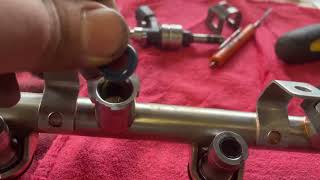
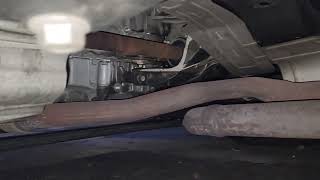
![How to Fix P2097 Engine Code in 4 Minutes [2 DIY Methods / Only $9.84]](https://img.youtube.com/vi/rCwtzRmhMwY/mqdefault.jpg)
We Have This Part in Stock



The information in this article is provided for general reference and educational purposes only. Vehicle specifications, procedures, and part compatibility can vary by production date, trim level, and region. Always consult your vehicle's factory service manual and verify part numbers before purchasing or performing repairs. Safety-critical components such as airbags, seat belts, and braking systems should be installed by a qualified professional.
- Buick LACROSSE:
- 🧭 Diagnostic Flowchart
- 🎬 Helpful Videos
- 🛍️ Shop This Part
- What's Unique About the 2010-2017 Buick LACROSSE
- Symptoms You May Notice
- Most Likely Causes
- Rare But Worth Checking
- Diagnosis Steps
- Parts You'll Likely Need
- Related Codes That Often Appear With This One
- Technical Service Bulletins (TSBs) & Recalls
- Platform-Specific Known Issues
- Mechanic-Grade Diagnostic Values
- Scan Tool Commands That Help
- Wiring & Ground Locations
- Real Owner Repair Stories
- OEM Part Supersession History
- Model Year Variations Within This Range
- 🎟️ Get 5% Off