

P2097 on 2018-2019 Buick LaCrosse: Post-Catalyst Rich Fuel Trim Causes and Fixes
On a 2018-2019 Buick LaCrosse, code P2097 is most often caused by a leaking fuel injector, not a bad oxygen sensor. A GM Technical Service Bulletin (TSB) directs technicians to perform a fuel injector balance test early in the diagnosis. Other causes include exhaust leaks, software glitches requiring an update, and on the 2.5L engine, even specific driving habits. Ignoring the code can lead to catalytic converter damage.
- For a 2018-2019 LaCrosse, P2097 strongly suggests a leaking fuel injector; start your diagnosis there.
- Do not automatically replace the oxygen sensor; it is usually just reporting the problem correctly.
- Ignoring this code will lead to poor gas mileage and will likely damage the catalytic converter, resulting in a much more expensive repair.
- Bank 1 on the 3.6L V6 is the cylinder bank located closer to the firewall.
- A thorough diagnosis involves checking for exhaust leaks, analyzing live sensor data, and performing a fuel injector balance test as recommended by GM.
What's Unique About the 2018-2019 Buick LACROSSE
For this generation of LaCrosse and other contemporary GM vehicles, the manufacturer has specifically identified leaking fuel injectors as a primary cause for P2097. Technical Service Bulletin #PIP4964F explicitly advises technicians to perform an injector balance test before extensive diagnosis. This is different from many other vehicles where an aging oxygen sensor or exhaust leak is the most common culprit. Furthermore, TSB #PIP5534A notes that for the 2.5L engine, the code can be induced by certain driving styles (like rapid on/off throttle application in traffic) without any mechanical failure present.
Diagnostic Flowchart
Tap your situation to follow the diagnostic path that matches what you're seeing on this vehicle.
Symptoms You May Notice
- Check Engine Light is on
- Reduced fuel economy
- Rough or erratic idle
- Engine may stumble or hesitate on acceleration
- A smell of fuel from the exhaust
- In some cases, black smoke from the tailpipe
- Often, no noticeable drivability issues other than the Check Engine Light
- Replacing the downstream oxygen sensor without confirming it has failed. The sensor is often just the messenger reporting a rich condition caused by another component, like a leaking fuel injector or an exhaust leak.
Most Likely Causes
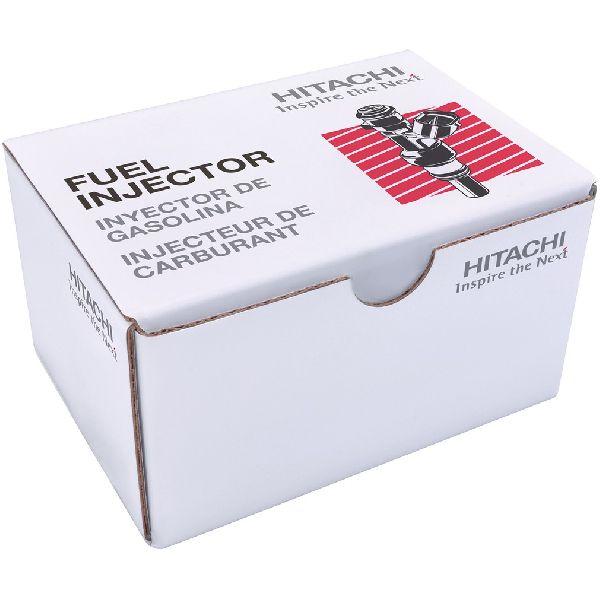
- Leaking Fuel Injector(s) 🔴 High Probability → Shop Fuel Injector Multiple GM Technical Service Bulletins, including #PIP4964F, point to faulty or leaking direct injection fuel injectors as a common cause for P2097 on this platform.
How to confirm: Perform a fuel injector balance test using a capable scan tool with GM-specific software (GDS2) or a dedicated Active Fuel Injector Tester (AFIT). This measures the pressure drop or flow for each injector to see if one is leaking or restricted.
Typical fix: Replace the faulty fuel injector(s). It is often recommended to replace all injectors on the affected bank at the same time.
Est. part cost: $80-$140 per injector - Exhaust System Leak 🟡 Medium Probability Leaks can occur at exhaust manifold gaskets, flex pipes, or at the flange welds of the catalytic converter. A leak before the post-catalyst O2 sensor can draw in outside air, confusing the sensor readings and causing the ECM to incorrectly enrich the fuel mixture.
How to confirm: Visually inspect the exhaust system for soot trails or cracks. A smoke test is highly effective. For very small leaks, pressurizing the exhaust and spraying welds (especially the O2 sensor bung) with soapy water can reveal pinhole leaks.
Typical fix: Replace the leaking gasket or repair/replace the cracked exhaust component. In some cases, a broken flange weld must be repaired by a muffler shop.
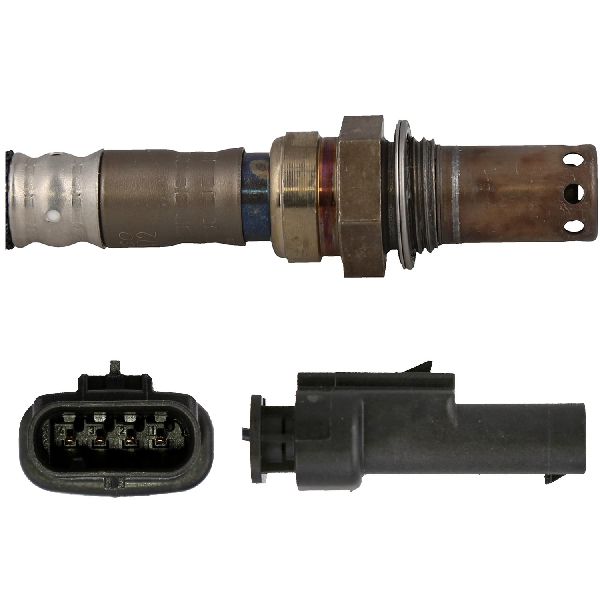
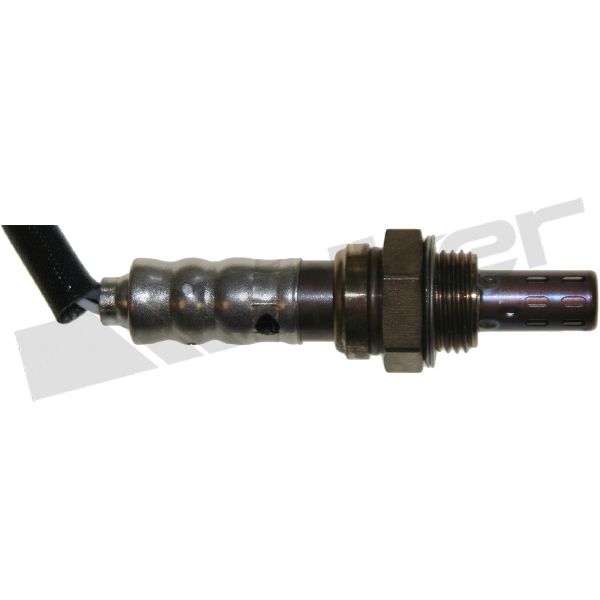
Est. part cost: $20-$300 - Faulty Downstream Oxygen Sensor (Bank 1, Sensor 2) ⚪ Low Probability → Shop Oxygen Sensor The O2 sensor is a wear-and-tear item, but it is often misdiagnosed. It is more common for the sensor to be correctly reporting a problem caused by something else. GM diagnostic aids specifically state not to replace the O2 sensor for this DTC unless it has set its own circuit-related codes.
How to confirm: Use a scan tool to monitor the live voltage data from the downstream O2 sensor. A healthy sensor on a warm engine should show a relatively steady voltage (e.g., ~0.45V - 0.7V). If it's stuck high (above 0.8v) even when the engine is not truly running rich, the sensor is likely faulty.
Typical fix: Replace the Bank 1 downstream oxygen sensor.
Est. part cost: $40-$120 - Faulty Mass Air Flow (MAF) Sensor ⚪ Low Probability TSB #PIP5534A lists a skewed MAF sensor as a possible cause for the 2.5L engine if fuel trims change dramatically at different RPMs.
How to confirm: A dirty or failing MAF sensor can under-report the amount of air entering the engine, causing the ECM to inject too much fuel. Check MAF sensor readings with a scan tool and inspect the sensor for contamination.
Typical fix: Clean the MAF sensor with a dedicated cleaner. If cleaning doesn't resolve the issue, replace the sensor.
Est. part cost: $70-$200
Rare But Worth Checking
- ECM Software Anomaly: GM TSB #19-NA-017 confirms that on some vehicles, P2097 can be triggered by a software glitch. The only fix is to have a dealership reprogram the Engine Control Module (ECM) with updated software.
- Driving Style / No Mechanical Fault (2.5L Engine): TSB #PIP5534A describes how a 'digital driver' style (rapidly accelerating and then coasting repeatedly) can induce a P2097 code on the 2.5L engine without any part being faulty. GM states there is no repair for this condition.
- Failing Catalytic Converter: → Shop Catalytic Converter While a failing converter more commonly causes a P0420 code, it can sometimes lose its ability to store oxygen, leading to erratic downstream O2 sensor readings that the ECM may interpret as a rich condition.
Diagnosis Steps
- Check for any other stored DTCs that could provide more clues.
- Ask a GM dealership to check your VIN for any open recalls or available ECM software updates, specifically referencing TSB #19-NA-017.
- Use a scan tool to observe live data, paying close attention to long-term and short-term fuel trims for Bank 1, as well as the voltage readings from both the upstream and downstream O2 sensors.
- Thoroughly inspect the exhaust system for any leaks between the cylinder head and the downstream O2 sensor. A smoke test is recommended. Pay special attention to gaskets, flex pipes, and catalytic converter flange welds.
- Following GM TSB #PIP4964F, perform a fuel injector balance test (AFIT) to check for leaking injectors. This is a critical step for this specific vehicle.
- For the 2.5L engine, follow TSB #PIP5534A: disconnect and block the EVAP purge valve vacuum source to isolate it, then monitor fuel trims at idle and at 2000 RPM to check for vacuum leaks or a skewed MAF sensor.
- If no injector or exhaust issues are found, test the downstream O2 sensor's response. A sensor that is stuck reading high voltage is a likely candidate for replacement.
- Check fuel pressure to ensure it is within the manufacturer's specified range.
Parts You'll Likely Need
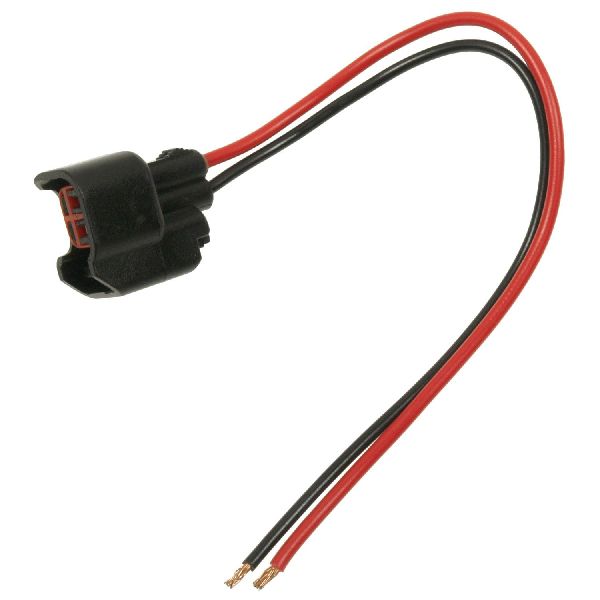
- Fuel Injector (3.6L V6 LGX)
(OEM #12692884)— This is the most likely cause for the 3.6L V6 engine according to GM's own Technical Service Bulletins. This is a direct injection (GDI) injector.
Trusted brands: ACDelco, Standard Motor Products, Bosch
OEM price range: $115-$140
Aftermarket price range: $80-$100 - Downstream Oxygen Sensor (Bank 1, Sensor 2)
(OEM #12683553 (for 2.5L I4))— If fuel delivery and exhaust integrity are confirmed to be good, the sensor itself may be faulty. This is a more common replacement part on the 2.5L engine than the 3.6L for this code.
Trusted brands: ACDelco, Denso, Bosch, Walker Products
OEM price range: $55-$110
Aftermarket price range: $40-$70
Related Codes That Often Appear With This One
- P0172 — This code means 'System Too Rich (Bank 1)' and is detected by the *upstream* O2 sensor. Seeing both P0172 and P2097 strongly confirms a persistent rich condition on Bank 1, pointing towards a fuel delivery issue.
- P2099 — This is the same 'Post Catalyst Fuel Trim Too Rich' code but for Bank 2. If both P2097 and P2099 are present, it points to a problem affecting the entire engine, such as a faulty fuel pressure regulator, MAF sensor, or a software issue.
- P0420 — This code means 'Catalyst System Efficiency Below Threshold'. A long-term rich condition from P2097 can overheat and destroy the catalytic converter, eventually leading to a P0420 code.
- P0300-P0306 — These are cylinder misfire codes. A severely leaking fuel injector can foul the spark plug in its cylinder, causing a misfire in addition to the rich condition.
Technical Service Bulletins (TSBs) & Recalls
- PIP4964F: Advises performing an injector balance test for P2097/P2099 codes.
- PIP5534A: Details complex diagnostics for the 2.5L engine, including driving habits as a potential cause.
- 19-NA-017: Identifies a software glitch that can be fixed with an ECM reprogram.
Platform-Specific Known Issues
- TSB #PIP4964F: Leaking Fuel Injectors: → Shop Fuel Injector This bulletin specifically addresses DTCs P2097 or P2099. It instructs technicians to perform a fuel injector balance test to identify leaking injectors as a primary cause before proceeding with other diagnostics.
- TSB #PIP5534A: Complex 2.5L Engine Diagnostics: For the 2.5L LCV engine, this TSB provides advanced diagnostic steps. It notes that P2097 can be caused by vacuum leaks, skewed MAF sensors, or even specific on-off throttle driving habits ('digital driver') for which there is no mechanical repair.
- TSB #19-NA-017: ECM Software Anomaly: This TSB confirms that on some GM vehicles, P2097 can be triggered by a software glitch. The only fix is to have a dealership reprogram the Engine Control Module (ECM) with updated software.
Mechanic-Grade Diagnostic Values
- Downstream O2 Sensor Voltage (Bank 1, Sensor 2) — expected: A steady voltage between 0.6V and 0.8V when a rich condition is present and the engine is in closed loop.. Failure: Voltage is stuck high (>0.8V) without a confirmed rich condition, or fluctuates rapidly like the upstream sensor.
- Low-Side Fuel Pressure — expected: 345–414 kPa (50–60 psi) with the fuel pump commanded on.. Failure: Pressure is below specification, or during a leak-down test, pressure drops more than 34 kPa (5 psi) in one minute.
- O2 Sensor Heater Circuit Resistance — expected: Typically 5-7 Ω when measured across the two heater wires on the sensor.. Failure: An open circuit (infinite resistance) or a short (very low resistance) indicates a failed heater element.
- DTC P2097 Set Conditions (GM 3.6L) — expected: The diagnostic test for P2097 runs when engine speed is between 1,280-3,480 RPM and the engine load is steady between 17-65%.. Failure: N/A - This is the condition under which the ECM checks for the fault.
Scan Tool Commands That Help
- GDS2 / Tech2 / High-End Aftermarket Scan Tool: Fuel Injector Balance Test (AFIT) — This is a critical diagnostic step for P2097 on this vehicle, as mandated by TSB #PIP4964F. The tool commands the fuel pump to build pressure, then individually pulses each injector for a precise duration. It measures the corresponding drop in fuel pressure for each injector. By comparing the pressure drops, a technician can identify an injector that is leaking (larger pressure drop) or restricted (smaller pressure drop) compared to the others.
Wiring & Ground Locations
- G101 — Potentially located at the left front of the engine, on the lower block.. This is a primary ground for the Engine Control Module (ECM). A poor connection here can cause erratic ECM behavior and incorrect sensor readings, potentially leading to false fuel trim codes.
- G103 — Potentially on the left frame rail, under the SGCM bracket.. This is a major chassis ground point. A bad ground can cause a voltage differential, leading to distorted signals from sensors like the O2 sensor, which relies on a stable ground reference.
- Downstream O2 Sensor Wires — On the sensor's wiring harness.. For manual testing: A typical 4-wire sensor has two heater wires (often both white), a signal wire (often black), and a signal ground wire (often gray). Checking for proper voltage and continuity on these pins is essential if a wiring fault is suspected.
Real Owner Repair Stories
- AcadiaForum.net user report (2018 GMC Acadia 3.6L V6 (platform mate with same engine)) — Check Engine Light with code P2097.
❌ Tried (didn't work) Replaced the Bank 1 Sensor 2 (downstream) oxygen sensor, Replaced the Bank 1 Sensor 1 (upstream) oxygen sensor, Replaced the EVAP purge solenoid
✅ What actually fixed it The dealership performed an injector flow test and found two fuel injectors on Bank 1 were leaking. Replacing the two faulty injectors and their seals resolved the P2097 code.
"I Checked Everything" — The Actual Cause
- In cases where an exhaust smoke test reveals no leaks, the root cause is often a leaking fuel injector. This scenario is common on these GM platforms. The owner may have already replaced the O2 sensor and purge valve with no success. The fix requires a specific 'Fuel Injector Balance Test' with a scan tool to measure the flow of each injector, which will reveal the leaking component that a visual inspection or smoke test cannot.
We Have This Part in Stock


The information in this article is provided for general reference and educational purposes only. Vehicle specifications, procedures, and part compatibility can vary by production date, trim level, and region. Always consult your vehicle's factory service manual and verify part numbers before purchasing or performing repairs. Safety-critical components such as airbags, seat belts, and braking systems should be installed by a qualified professional.
- Buick LACROSSE:
- 🧭 Diagnostic Flowchart
- 🛍️ Shop This Part
- What's Unique About the 2018-2019 Buick LACROSSE
- Symptoms You May Notice
- Most Likely Causes
- Rare But Worth Checking
- Diagnosis Steps
- Parts You'll Likely Need
- Related Codes That Often Appear With This One
- Technical Service Bulletins (TSBs) & Recalls
- Platform-Specific Known Issues
- Mechanic-Grade Diagnostic Values
- Scan Tool Commands That Help
- Wiring & Ground Locations
- Real Owner Repair Stories
- "I Checked Everything" — The Actual Cause
- 🎟️ Get 5% Off