

P2097 on 2013-2018 Cadillac ATS: Causes for Post Catalyst Rich Fuel Trim
On a 2013-2018 Cadillac ATS, code P2097 is often caused by a faulty downstream oxygen sensor, an exhaust leak before the sensor, or a leaking fuel injector. Before replacing parts, check for a necessary Engine Control Module (ECM) software update as specified in GM Technical Service Bulletin PIP5393A, which is the primary fix if long-term fuel trims are within +/- 13%.
- Always check for an available ECM software update first, as per TSB #PIP5393A, before replacing any parts.
- P2097 on the ATS is not always a simple O2 sensor issue; leaking fuel injectors are a known cause documented by GM (TSB #PIP4964F).
- Thoroughly inspect for exhaust leaks between the two oxygen sensors before assuming a component has failed.
- Avoid immediately replacing the expensive catalytic converter, as it is often misdiagnosed for this code.
What's Unique About the 2013-2018 Cadillac ATS
While P2097 is a generic code, the Cadillac ATS and its GM platform mates have specific documented issues. Technical Service Bulletins (TSBs) point to causes beyond the usual faulty oxygen sensor. These include the need for an ECM software update to correct overly sensitive code-setting logic (TSB PIP5393A) and diagnostics pointing toward faulty or leaking fuel injectors (TSB PIP4964F), which are known issues on these direct-injection engines. Forum discussions reveal a high sensitivity to aftermarket modifications like intakes and exhausts, which can also trigger the code.
🎬 Watch: A quick fix for common Cadillac ATS vacuum and trim codes.Diagnostic Flowchart
Tap your situation to follow the diagnostic path that matches what you're seeing on this vehicle.
Symptoms You May Notice
- Check Engine Light is on
- Reduced fuel economy
- Rough or unstable idle
- Hesitation during acceleration
- Strong smell of fuel from the exhaust
- Engine may be hard to start when hot.
- In rare cases, black smoke from the tailpipe.
- Replacing the catalytic converter when the actual problem is a faulty oxygen sensor, an exhaust leak, a software issue, or a leaking injector.
- Replacing the downstream O2 sensor when the root cause is a leaking fuel injector, a faulty upstream O2 sensor, or an exhaust leak.
- Assuming the engine has a rich-running fault when it may actually have a vacuum/exhaust leak causing the ECM to overcompensate with fuel.
Most Likely Causes
- Outdated Engine Control Module (ECM) Software 🔴 High Probability → Shop Engine Control Module (ECM) GM issued TSB #PIP5393A specifically for intermittent P2097 codes on the 2013 ATS (and Malibu) with the 2.5L LCV engine, recommending an ECM software update. This suggests the original factory calibration may be too sensitive.
How to confirm: Use a scan tool to check Long Term Fuel Trim values at idle and steady driving speeds. According to TSB PIP5393A, if the value is within -13% and +13%, the software update is the correct fix. If it is outside this range, a physical problem exists that the flash will not correct.
Typical fix: Update or reflash the ECM with the latest software via a GM dealership or a qualified shop with access to Tis-2Web.
Est. part cost: $0-$200 (Labor for flashing) - Faulty Downstream Oxygen Sensor (Bank 1, Sensor 2) 🔴 High Probability → Shop Oxygen Sensor O2 sensors are wear-and-tear items that degrade over time, leading to inaccurate readings. This is a very common cause for this code across all makes and models. However, it is often misdiagnosed when the root cause is something else.
How to confirm: Use a scan tool to monitor the live voltage data from the downstream O2 sensor. A healthy sensor should show a relatively stable voltage (typically 0.6-0.8v). If it's stuck high (above 0.8v) or fluctuating rapidly like the upstream sensor, it is likely faulty or the catalytic converter is inefficient.
Typical fix: Replace the Bank 1 downstream oxygen sensor. It is recommended to use OEM or high-quality OE-spec replacements, as some GM platforms are sensitive to aftermarket sensor designs.
Est. part cost: $40-$120 - Leaking Fuel Injector(s) 🟡 Medium Probability → Shop Fuel Injector TSB #PIP4964F explicitly mentions performing an injector balance test for P2097, indicating that leaking injectors are a known issue on these direct-injection engines. A leaking injector allows excess fuel into a cylinder, creating a rich condition detected downstream.
How to confirm: Perform a fuel injector balance test using a specialized tool (like GM's AFIT) to see if one or more injectors are flowing more fuel than the others. A simpler, though less precise, check is to pull the spark plugs and look for one that is significantly more fouled or black than the others.
Typical fix: Replace the faulty fuel injector(s). It is often recommended to replace them as a set on the affected bank.
Est. part cost: $80-$160 per injector - Exhaust System Leak 🟡 Medium Probability Leaks in the exhaust system between the engine and the downstream O2 sensor can allow outside air to be pulled in. This fools the *upstream* O2 sensor into detecting a lean condition, causing the ECM to add more fuel and create a genuinely rich condition that the downstream sensor then reports. A Camaro owner found the cause to be a small pinhole in a pipe weld.
How to confirm: Visually inspect the exhaust pipes, manifolds, flanges, and gaskets for soot marks or physical damage. A smoke test is the most effective method. A DIY method involves spraying short bursts of carb cleaner near suspected leak points while watching for changes in short-term fuel trim on a scan tool.
Typical fix: Replace the leaking gasket or repair/replace the damaged section of the exhaust pipe.
Est. part cost: $10-$100
Rare But Worth Checking
- Faulty Upstream Oxygen Sensor (Bank 1, Sensor 1): → Shop Oxygen Sensor A failing upstream O2 sensor can send incorrect 'lean' data to the ECM, causing it to command an overly rich fuel mixture as a response. The downstream sensor then correctly reports the resulting rich condition, setting the P2097 code.
- High Fuel Pressure: A failing fuel pressure regulator or a problem with the high-pressure fuel pump (on direct injection models) can cause system-wide high fuel pressure, forcing too much fuel through the injectors and leading to a rich condition.
- Failing Catalytic Converter: → Shop Catalytic Converter While often blamed, a truly inefficient catalytic converter is a less common cause. It can fail to store and use oxygen correctly, leading to a rich reading from the downstream sensor. This should only be considered after all other causes (sensors, leaks, fuel system) are definitively ruled out.
- Aftermarket Modifications: Aftermarket parts like cold air intakes, high-flow air filters, or high-flow/catless downpipes can alter the engine's airflow and exhaust characteristics enough to trigger this code. This is particularly noted on the 2.0L LTG engine with an aftermarket downpipe.
Diagnosis Steps
- Check for Technical Service Bulletins (TSBs). Specifically, ask a dealer if TSB #PIP5393A (ECM update for 2.5L) or other relevant software updates apply to your VIN.
- Scan for any other stored trouble codes. Address any misfire, fuel system, or upstream O2 sensor codes first, as they are likely the root cause.
- Use a scan tool to observe live data. Check Long Term Fuel Trim (LTFT) for Bank 1. If it is within +/- 13%, the ECM flash from TSB PIP5393A is a strong possibility. If it's significantly positive (e.g., > +15%), suspect a vacuum/exhaust leak.
- Watch the voltage of the Bank 1 Sensor 2 (downstream). It should be relatively steady. If it's stuck high (above 0.8v), it confirms the rich reading.
- Perform a thorough inspection of the exhaust system from the engine to the tailpipe for any signs of leaks, such as black soot trails, cracks, or failed gaskets. A smoke test is highly recommended.
- If an exhaust leak is suspected, you can try spraying carb cleaner near gaskets and welds while monitoring Short Term Fuel Trim (STFT). A dip in STFT indicates the cleaner was sucked into the leak.
- If no leaks are found and software is up to date, consider testing the fuel injectors. An injector balance test is the most definitive method, as recommended by TSB #PIP4964F.
- If injectors test good, evaluate the upstream and downstream O2 sensors. The downstream sensor may be faulty, or the upstream sensor may be biased, causing the issue.
- Only after all other possibilities are exhausted should the catalytic converter be tested for efficiency.
Parts You'll Likely Need
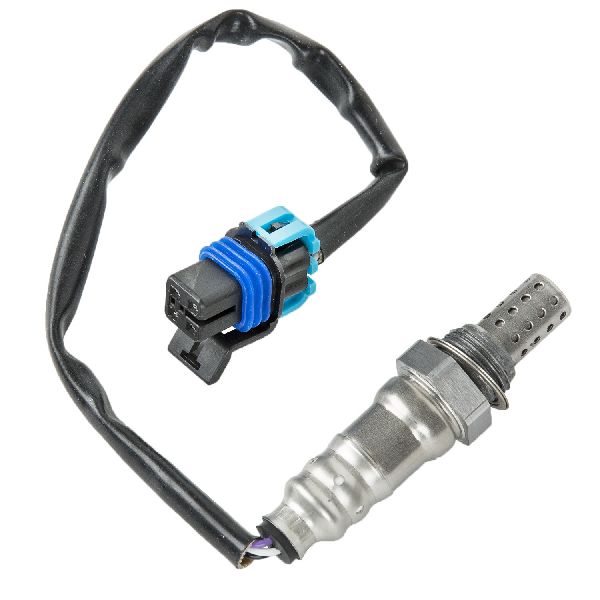
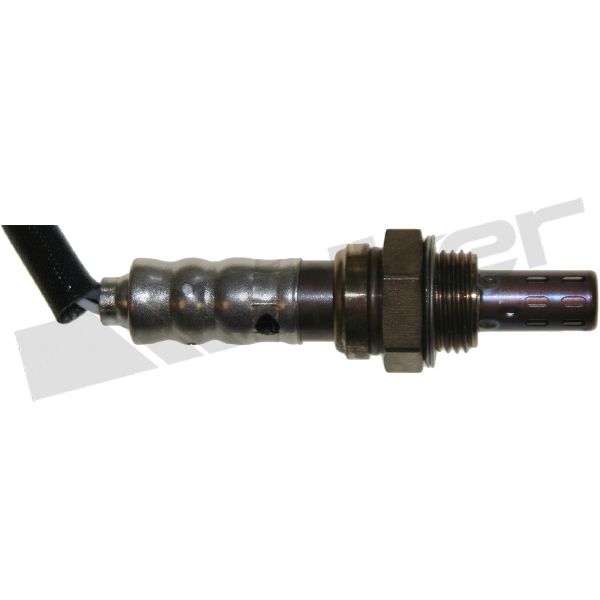
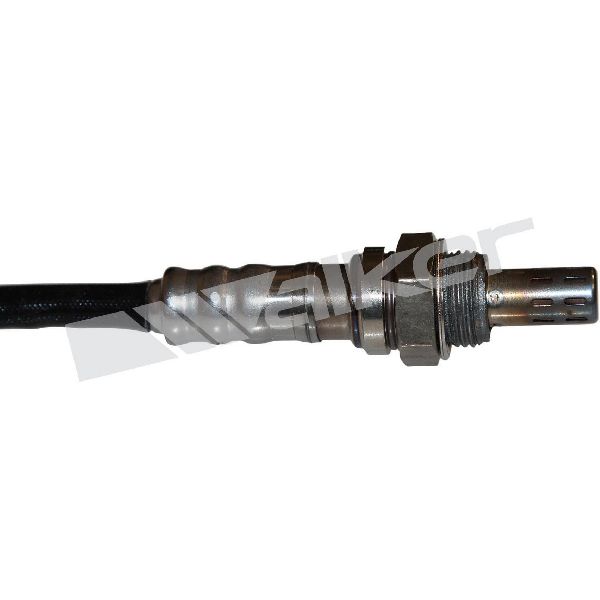
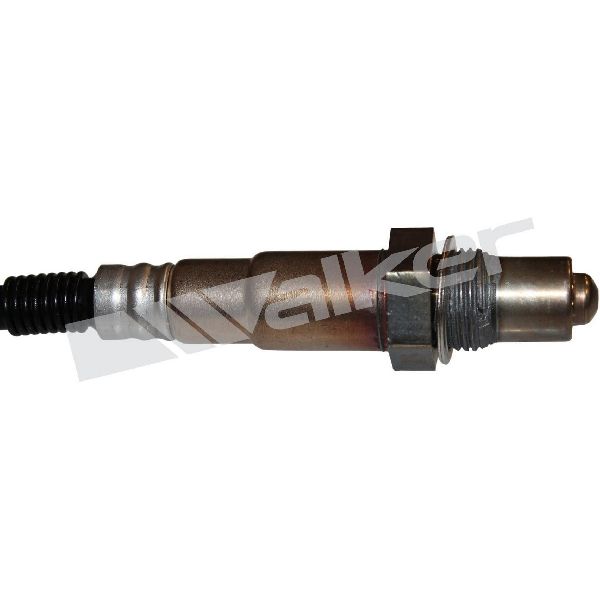
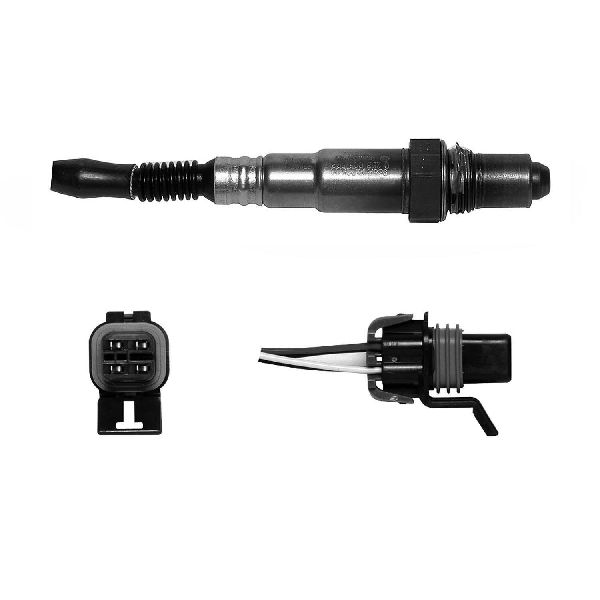
- Downstream Oxygen Sensor (Bank 1 Sensor 2)
(OEM #12683553)— This sensor is the primary input for this code and is a common failure item. It directly measures the condition that triggers the P2097 code. Using an OEM ACDelco part is highly recommended.
Trusted brands: ACDelco, Bosch, Denso, NGK
OEM price range: $70-$120
Aftermarket price range: $40-$80 - Fuel Injector
(OEM #12662571)— GM has identified leaking fuel injectors as a specific cause for this code on the ATS platform, as noted in TSB #PIP4964F. This is a known issue with GM's direct injection
Related Codes That Often Appear With This One
- P0171 — A P0171 (System Too Lean Bank 1) can sometimes appear alongside or precede P2097. This happens when a vacuum or exhaust leak causes a lean condition (P0171), and the ECM's attempt to correct it by adding fuel goes too far, triggering the P2097 rich code downstream.
- P0300 — A P0300 (Random/Multiple Cylinder Misfire) can occur if a rich condition from a leaking injector is severe enough to foul spark plugs and cause incomplete combustion.
- P2099 — This is the equivalent code for Bank 2. It would not typically appear on 4-cylinder engines (which only have Bank 1) but could appear with P2097 on V6 models if a systemic issue is affecting both banks.
Technical Service Bulletins (TSBs) & Recalls
- PIP4964F: Advises performing an injector balance test for P2097.
- PIP5534A: Communicates additional diagnostics to assist with repairing trouble code P2097.
- PIP5393A: Recommends updating the Engine Control Module software for intermittent P2097 issues on 2013 2.5L models if fuel trims are normal.
- PIP-5393: Acknowledges that GM Engineering is aware of and investigating the P2097 issue.
Platform-Specific Known Issues
- TSB #PIP5393A: Notes that some 2013 models with the 2.5L LCV engine may set an intermittent P2097, which can be resolved by updating the Engine Control Module (ECM) if long-term fuel trims are within +/- 13%.
- TSB #PIP4964F: Instructs technicians to perform a fuel injector balance test when diagnosing P2097, pointing to faulty injectors as a known cause.
- TSB #PIP5534A: Provides additional, unspecified diagnostic assistance for trouble code P2097, reinforcing that this code can be complex on this platform.
- Intermittent Nature: Some owners report the code appearing and disappearing on its own, sometimes correlated with changes in driving style (e.g., more highway driving clearing the code).
Mechanic-Grade Diagnostic Values
- Downstream O2 Sensor (Bank 1, Sensor 2) Voltage — expected: Relatively stable voltage, typically between 0.4V and 0.8V at steady RPM.. Failure: Stuck high (above 0.8V) indicates a persistent rich condition. Fluctuating rapidly similar to the upstream sensor can indicate a failing catalytic converter.
- Upstream O2 Sensor (Bank 1, Sensor 1) Voltage — expected: Rapidly fluctuating between approximately 0.1V (lean) and 0.9V (rich).. Failure: A lazy or biased sensor that doesn't switch correctly can cause the ECM to command an incorrect fuel mixture, leading to a P2097 downstream.
- O2 Sensor Heater Circuit Resistance — expected: Typically between 5-7 Ω, but manufacturer specs should be confirmed.. Failure: A reading outside the specified range indicates a faulty heater element within the sensor.
- DTC P2097 'Conditions for Running' — expected: Engine speed: 1,280-3,480 RPM; Engine load: 17-65% (steady); Closed loop active; Exhaust temp > 250°C (482°F).. Failure: The code sets when the rich correction limit is exceeded for over 4 seconds or a cumulative 30 seconds under these conditions.
Hidden / Shadow Codes Worth Checking
- Prerequisite DTCs: Before the ECM will report a P2097, it must first run and pass tests for numerous other DTCs related to O2 sensor circuits (P0030-P0161), MAF sensors (P0101-P0103), catalyst efficiency (P0420), and fuel system (P2177-P2190). (see via A standard OBD-II scanner. If any of these other codes are present, they must be diagnosed and fixed first, as they are the likely root cause of the P2097.)
Scan Tool Commands That Help
- GDS2/Tech2: Injector Balance Test / Active Fuel Injector Tester (AFIT) — As per TSB #PIP4964F, this test should be performed to identify leaking or malfunctioning fuel injectors, which are a known cause of P2097 on this platform.
- GDS2/Tis-2Web: ECM Reprogramming/Update — As per TSB #PIP5393A, if long-term fuel trims are within +/- 13% and the code is intermittent, an ECM software update is the specified fix for certain 2.5L models.
- GDS2/Tech2: Purge/Seal — TSB #PIP5534A notes that standard diagnostics for P2097 test the EVAP purge valve and lines. This function can be used to command the valve and check for leaks or malfunction.
Wiring & Ground Locations
- G104 — For 2013 2.0L/2.5L with automatic transmission, the location moved mid-year. Early production: front of the engine. Late production (after mid-Dec 2012): rear of the engine. For 3.6L LFX, it is at the front of the engine.. This is a primary engine ground. A poor connection here can cause erratic behavior from multiple sensors and the ECM, leading to incorrect fuel trim calculations.
- G101 — Located at the left front of the engine, lower block.. This ground point serves the Engine Control Module (ECM) and Transmission Control Module (TCM). A fault here can directly impact ECM calculations and sensor readings.
- G103 — Located at the left rear of the engine compartment on the cowl, above the brake booster.. Grounds the Body Control Module (BCM), Instrument Panel Cluster (IPC), and the Data Link Connector (DLC). A poor ground here can interfere with scan tool communication and diagnostics.
- O2 Sensor Connector (4-wire) — On the sensor pigtail and corresponding engine harness connector.. A typical 4-wire sensor has two wires for the heater circuit (often same color), one for the sensor signal, and one for the sensor ground. Damage or corrosion at the connector pins can cause incorrect readings, triggering the code.
Real Owner Repair Stories
- Reddit user No-Berr (2013 Cadillac ATS 2.5L with 126k miles) — Intermittent Check Engine Light for P2097.
❌ Tried (didn't work) Visual inspection for exhaust leaks (none found)., Testing VVT solenoids (tested good).
✅ What actually fixed it The code disappeared on its own and did not return after the owner started making more long highway trips (previously mostly city driving) and used a fuel injector cleaning additive. The owner speculated this may have helped. - Reddit user CharmingPercentage48 (Cadillac ATS 2.0T (year not specified)) — Persistent P2097 for over a year.
❌ Tried (didn't work) Replaced MAF sensor., Replaced upstream O2 sensor., Replaced downstream O2 sensor., Sealed a small vacuum leak., Dealer verified no tunes and updated/flashed the PCM.
✅ What actually fixed it The story is unresolved. The owner noted the code cleared temporarily once after filling the gas tank completely. This highlights the diagnostic difficulty of the code, even for professionals.
"I Checked Everything" — The Actual Cause
- While no specific owner story confirms this pattern with a final fix, GM's own Technical Service Bulletins point directly to it. TSB #PIP5393A identifies an overly sensitive ECM calibration as the cause, and TSB #PIP4964F points to leaking fuel injectors. Both of these are non-obvious causes that would not be found with a standard exhaust smoke test.
When the Usual Fixes Don't Work
- In one unresolved case on a 2.0T ATS, the owner had already replaced both O2 sensors, the MAF sensor, fixed a vacuum leak, and had the dealer perform an ECM software update, yet the P2097 code persisted. This demonstrates that even when following the most common fixes and official TSBs, the root cause can be elusive, suggesting other possibilities like a wiring issue, an intermittent injector leak, or a hairline crack in the exhaust manifold that doesn't show on a typical smoke test.
OEM Part Supersession History
12627140→12683553— Standard part revision and update by the manufacturer.
Heads up: The new part number (12683553) is the correct replacement for the original. Using old stock of 12627140 is not recommended.
Model Year Variations Within This Range
- 2016-2018: The 3.6L V6 engine was updated from the LFX to the LGX starting in the 2016 model year. The LGX is a significant redesign with different cylinder heads, larger valves, and architecture. While they share displacement, they are not interchangeable and may have different diagnostic nuances.
- 2013 only: On 4-cylinder models (2.0L LTG, 2.5L LCV) with automatic transmissions, the engine ground G104 location was moved from the front of the engine to the rear of the engine starting in mid-December 2012.
Helpful Videos


![How to Fix P2097 Engine Code in 4 Minutes [2 DIY Methods / Only $9.84]](https://img.youtube.com/vi/rCwtzRmhMwY/mqdefault.jpg)
We Have This Part in Stock


The information in this article is provided for general reference and educational purposes only. Vehicle specifications, procedures, and part compatibility can vary by production date, trim level, and region. Always consult your vehicle's factory service manual and verify part numbers before purchasing or performing repairs. Safety-critical components such as airbags, seat belts, and braking systems should be installed by a qualified professional.
- Cadillac ATS:
- 🧭 Diagnostic Flowchart
- 🎬 Helpful Videos
- 🛍️ Shop This Part
- What's Unique About the 2013-2018 Cadillac ATS
- Symptoms You May Notice
- Most Likely Causes
- Rare But Worth Checking
- Diagnosis Steps
- Parts You'll Likely Need
- Related Codes That Often Appear With This One
- Technical Service Bulletins (TSBs) & Recalls
- Platform-Specific Known Issues
- Mechanic-Grade Diagnostic Values
- Hidden / Shadow Codes Worth Checking
- Scan Tool Commands That Help
- Wiring & Ground Locations
- Real Owner Repair Stories
- "I Checked Everything" — The Actual Cause
- When the Usual Fixes Don't Work
- OEM Part Supersession History
- Model Year Variations Within This Range
- 🎟️ Get 5% Off