

P2097 on 2021-2024 Cadillac CT5: Causes for Post-Catalyst Rich Fuel Trim
On a 2021-2024 Cadillac CT5, code P2097 often points to a leaking fuel injector, not a bad oxygen sensor. Multiple GM Technical Service Bulletins (#PIP4964F, #PIP5534A) specifically advise performing an injector balance test and monitoring fuel trims before replacing other parts, as direct injection issues are a known cause.
- For a P2097 code on a 2021-2024 Cadillac CT5, suspect a leaking fuel injector before a bad oxygen sensor.
- A GM Technical Service Bulletin (#PIP4964F) directs technicians to perform an injector balance test early in the diagnosis.
- Do not replace the catalytic converter to fix this code; the rich condition must be resolved first to avoid damaging the new part.
- Also inspect for small exhaust leaks between the engine and the downstream O2 sensor, as this is another common cause.
- Ignoring this code can lead to significantly worse fuel mileage and costly damage to the catalytic converter.
What's Unique About the 2021-2024 Cadillac CT5
Unlike many vehicles where a P2097 code immediately suggests a faulty oxygen sensor, on modern GM direct-injection platforms like the Cadillac CT5, the focus is heavily shifted towards fuel delivery issues. A key Technical Service Bulletin (TSB #PIP4964F) for similar GM engines directs technicians to investigate leaking fuel injectors as a primary cause for P2097. A second TSB, #PIP5534A, provides an even deeper diagnostic procedure for related engines, looking at fuel trims and even driving habits before condemning parts. 🎬 See a real-world diagnostic walkthrough of this GM fuel trim code. This makes jumping to an O2 sensor replacement a common and costly misdiagnosis for this specific vehicle family.
Diagnostic Flowchart
Tap your situation to follow the diagnostic path that matches what you're seeing on this vehicle.
Symptoms You May Notice
- Check Engine Light is on 🎬 Watch: A quick overview of P2097 causes and common fixes.
- Reduced fuel economy
- Poor engine performance, such as hesitation or stumbling
- Rough or erratic idle
- Strong fuel smell from the exhaust
- In some cases, no noticeable symptoms other than the Check Engine Light
- Immediately replacing the downstream oxygen sensor without performing further diagnostics. The sensor is often just accurately reporting a problem that exists upstream (like a leaking injector or exhaust leak).
Most Likely Causes
- Leaking Fuel Injector(s) 🔴 High Probability → Shop Fuel Injector Multiple GM Technical Service Bulletins (#PIP4964F, #PIP5534A) identify this as a primary cause for P2097 on direct-injection engines and advise testing injectors before other components.
How to confirm: Perform an injector balance test using a GM-specific tool like the Active Fuel Injector Tester (AFIT) CH-47976 or the equivalent function in a GDS2 scan tool. 🎬 Watch: How to use the AFIT tool for injector testing. This test measures the pressure drop for each injector; a leaking injector will show a greater pressure drop compared to the others. TSB #PIP5534A advises that if no individual lean/leaking injector is found, all injectors on the affected bank should be replaced.
Typical fix: Replace the faulty fuel injector. It is often recommended to replace all injectors on the affected bank (or all four on the 2.0L engine) to ensure reliability and prevent repeat failures.
Est. part cost: $50-$450 - Exhaust Leak 🟡 Medium Probability Any exhaust leak between the engine and the downstream O2 sensor can allow unmetered air into the exhaust stream. This can trick the upstream O2 sensor, causing the ECM to add excessive fuel and create a genuinely rich condition detected by the downstream sensor. This is also a common issue after installing aftermarket exhaust components like high-flow cats.
How to confirm: Visually inspect the exhaust manifold, gaskets, and pipes for cracks, rust, or soot trails. A smoke test is the most effective way to pinpoint hard-to-see leaks. Pay close attention to the flange welds near the O2 sensor bungs.
Typical fix: Repair the leak by replacing the faulty gasket, clamp, or section of the exhaust pipe.
Est. part cost: $20-$200 - Failing Downstream Oxygen (O2) Sensor 🟡 Medium Probability → Shop Oxygen Sensor While often misdiagnosed as the primary cause, the sensor itself can fail and send incorrect 'rich' signals to the ECM. However, GM service information explicitly states that an O2 sensor will typically not cause this DTC without setting its own circuit-related codes first.
How to confirm: Use a scan tool to monitor the voltage of the downstream O2 sensor (Bank 1, Sensor 2). A healthy sensor should show a relatively steady voltage around 0.45V when cruising. If it's stuck high (above ~0.8V) or fluctuating rapidly like the upstream sensor, it may be faulty or the catalytic converter may be failing.
Typical fix: Replace the downstream oxygen sensor for Bank 1.
Est. part cost: $60-$180 - High Fuel Pressure ⚪ Low Probability A failing fuel pressure regulator or a problem with the high-pressure fuel pump can cause system-wide high fuel pressure, leading to a rich condition across all cylinders.
How to confirm: Test the fuel pressure with a mechanical fuel pressure gauge and compare it to the manufacturer's specified range. This may require special tools for the direct injection system.
Typical fix: Replace the faulty fuel pressure regulator or high-pressure fuel pump assembly.
Est. part cost: $100-$700
Rare But Worth Checking
- Specific Driving Habits: TSB #PIP5534A notes that certain driving styles can induce a P2097 code without any mechanical fault. This includes extensive stop-and-go city traffic or being a 'digital driver' (frequently accelerating to a speed then coasting down and repeating). In these cases, GM states there is no fix available.
- Failing Catalytic Converter: → Shop Catalytic Converter A failing or clogged catalytic converter can sometimes trigger this code, but it's more often a symptom of the rich condition rather than the cause. The rich condition must be fixed first to avoid damaging a new converter.
- MAF/MAP Sensor Malfunction: A dirty or failing Mass Airflow (MAF) or Manifold Absolute Pressure (MAP) sensor can provide incorrect airflow data to the ECM, leading to improper fueling calculations. TSB #PIP5534A suggests this as a possibility if fuel trims normalize at higher RPMs.
- ECM Software Anomaly: Other GM vehicles have had service bulletins related to P2097 being set falsely due to software issues, requiring an ECM reprogram. While not specific to the CT5, it's a possibility if all other causes are ruled out.
Diagnosis Steps
- Check for other DTCs. Address any other fuel, misfire, or sensor codes first, as they can provide critical clues.
- Visually inspect the exhaust system from the engine to the catalytic converter for any signs of leaks, such as soot, cracks, or broken gaskets. A smoke test is highly recommended.
- As per TSB #PIP4964F and #PIP5534A, perform a fuel injector balance test (AFIT) using a professional scan tool. This is the most critical step for this vehicle.
- If injectors test normal, follow the diagnostic flow in TSB #PIP5534A: monitor long-term fuel trims for 5 minutes each at idle in Park, idle in Drive (foot on brake), and at a steady 50+ mph cruise. This helps isolate vacuum leaks vs. other issues.
- Use a scan tool to observe the live data for the Bank 1 downstream O2 sensor. Check if its readings are logical or stuck high.
- Inspect the wiring and connector for the downstream O2 sensor for any damage, corrosion, or loose connections, especially near hot exhaust components.
- Check fuel pressure to ensure it is within the specified range.
- If all else fails, investigate potential issues with the MAF/MAP sensor or check for available ECM software updates with a dealer.
Parts You'll Likely Need
- Fuel Injector
(OEM #2.0L (LSY): ACDelco 12734337; 3.0L (LGY): ACDelco 12678984)— This is the most likely cause according to GM's own technical service bulletins for this code on similar direct-injection engines.
Trusted brands: ACDelco (OEM)
OEM price range: $95-$250
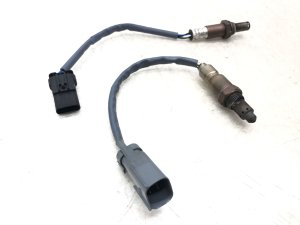
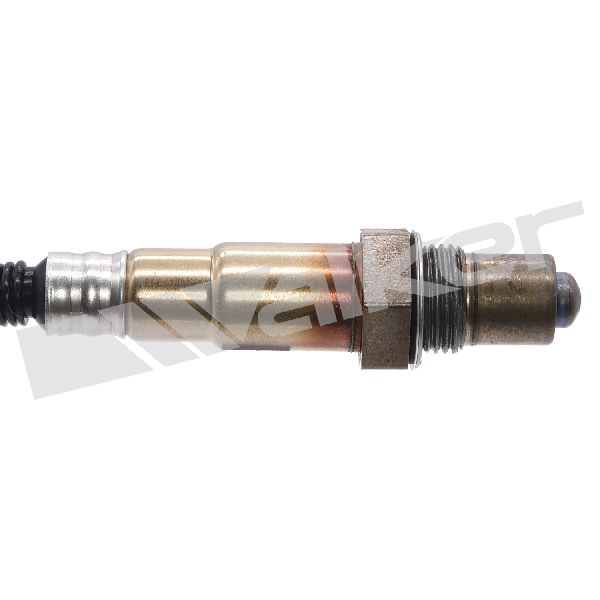
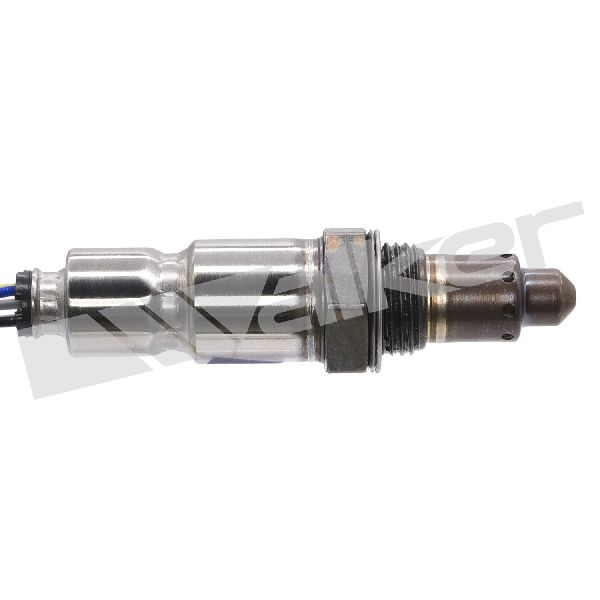
Aftermarket price range: $50-$150 - Downstream Oxygen Sensor (Bank 1, Sensor 2) — If fuel delivery and exhaust leaks are ruled out, the sensor itself may have failed, though it's less common than injectors.
Trusted brands: ACDelco, Denso, Bosch
OEM price range: $120-$180
Aftermarket price range: $60-$110 - Exhaust Manifold Gasket — A common source for exhaust leaks that can lead to a P2097 code.
Trusted brands: Fel-Pro, ACDelco
OEM price range: $30-$60
Aftermarket price range: $15-$40
Related Codes That Often Appear With This One
- P0172 — System Too Rich (Bank 1). This code indicates the upstream sensor is also detecting a rich condition, strongly pointing to a fuel delivery issue like a leaking injector.
- P0300-P0306 — Random or specific cylinder misfire codes. A leaking injector can foul the spark plug in a specific cylinder, causing a misfire that corresponds with the rich code.
- P2099 — Post Catalyst Fuel Trim System Too Rich Bank 2. If both P2097 and P2099 are present on V6 models, it points to a problem affecting both engine banks, such as a faulty fuel pressure regulator or MAF sensor.
Technical Service Bulletins (TSBs) & Recalls
- PIP4964F
- PIP5534A
Platform-Specific Known Issues
- A GM Technical Service Bulletin (#PIP4964F) exists for related vehicles and engines, strongly suggesting that a diagnostic trouble code P2097 should prompt an injector balance test before further diagnosis. This bulletin highlights that leaking fuel injectors are a known issue on GM direct-injection engines.
- A second GM TSB (#PIP5534A) for similar 2.0L/2.5L engines provides a detailed diagnostic tree for P2097. It advises checking fuel trims under various load conditions and even considers that specific driving habits (heavy traffic, frequent coasting) can trigger the code without a part failure.
Mechanic-Grade Diagnostic Values
- Downstream O2 Sensor (Bank 1, Sensor 2) Voltage — expected: Relatively steady voltage around 0.45V on a warm, running engine in closed loop.. Failure: Voltage is stuck high (above 0.8V) or fluctuates rapidly like the upstream sensor.
- Upstream O2 Sensor (Bank 1, Sensor 1) Voltage — expected: Rapidly switching pattern between 0.1V (lean) and 0.9V (rich).. Failure: Sluggish or non-responsive signal; however, this would typically set other codes before P2097.
- Long-Term Fuel Trim (Bank 1) — expected: Within a range of -13% to +13% according to freeze frame data on similar vehicles.. Failure: A significant negative value (e.g., -15% or more) indicates the ECM is consistently removing fuel to compensate for a rich condition.
- Active Fuel Injector Test (AFIT) — expected: All injectors on the tested bank should show a similar pressure drop or flow rate. Results can vary +/-3% from test to test.. Failure: One or more injectors show a significantly different pressure drop/flow rate compared to the others, indicating a leak or restriction.
Scan Tool Commands That Help
- GM GDS2 / AFIT (CH-47976): Injector Balance Test (also called Active Fuel Injector Test) — This is a critical first step after checking for exhaust leaks, as recommended by GM TSBs for P2097. It directly tests for leaking fuel injectors, a primary cause on this platform, before condemning more expensive parts like O2 sensors or catalytic converters.
- GM GDS2: Fuel Trim Reset — After replacing a component that affects the air/fuel mixture (like a fuel injector or MAP sensor), this function should be used to clear the old learned fuel trim values from the ECM, allowing it to adapt to the new part more quickly.
Real Owner Repair Stories
- YouTube video by 'Just Call Me Rosco' (2019 Chevrolet Traverse (platform mate with similar 3.6L V6 engine architecture)) — Check Engine Light with code P2097.
❌ Tried (didn't work) Initial suspicion of a bad exhaust gasket, but the leak persisted after replacement.
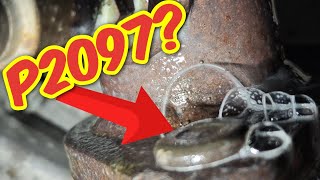
✅ What actually fixed it An exhaust leak was found directly at the weld on the exhaust pipe flange, immediately next to the downstream oxygen sensor bung. The proximity of the leak caused a false rich reading. Re-welding the flange to seal the crack resolved the code.
"I Checked Everything" — The Actual Cause
- If an exhaust smoke test comes back clean, do not assume the system is sealed from causing P2097. The TSBs for this platform point directly to leaking fuel injectors as a primary cause, which a smoke test will not identify. The next diagnostic step should be an injector balance test.
When the Usual Fixes Don't Work
- While GM TSBs strongly point towards leaking fuel injectors as a primary cause for P2097 on this platform, it should not be the only consideration. As seen in a confirmed repair on a related GM vehicle, a difficult-to-find exhaust leak right at the weld of the O2 sensor bung was the true root cause. This highlights the importance of a thorough exhaust inspection, including a smoke test, before performing the more involved injector balance test.
OEM Part Supersession History
12721012, 55486888, 55509133, 55515113→12734337— This part for the 2.0L LSY engine has been revised multiple times by the manufacturer, suggesting improvements to address performance or reliability issues.
Heads up: When replacing, it is critical to use the latest part number (12734337) to ensure you have the most updated design.
Model Year Variations Within This Range
- 2021-2024: Part listings for the 2.0L LSY fuel injector (12734337) show specific date cutoffs (e.g., 'From 1/12/2023') for different GM models sharing the engine. This indicates potential mid-cycle changes to fuel system components. Always verify the correct part number using the vehicle's VIN.
Helpful Videos

![How to Fix P2097 Engine Code in 4 Minutes [2 DIY Methods / Only $9.84]](https://img.youtube.com/vi/rCwtzRmhMwY/mqdefault.jpg)
Used OEM Parts in Stock
New Aftermarket Parts Available

The information in this article is provided for general reference and educational purposes only. Vehicle specifications, procedures, and part compatibility can vary by production date, trim level, and region. Always consult your vehicle's factory service manual and verify part numbers before purchasing or performing repairs. Safety-critical components such as airbags, seat belts, and braking systems should be installed by a qualified professional.
- Cadillac CT5:
- 🧭 Diagnostic Flowchart
- 🎬 Helpful Videos
- 🛍️ Shop This Part
- What's Unique About the 2021-2024 Cadillac CT5
- Symptoms You May Notice
- Most Likely Causes
- Rare But Worth Checking
- Diagnosis Steps
- Parts You'll Likely Need
- Related Codes That Often Appear With This One
- Technical Service Bulletins (TSBs) & Recalls
- Platform-Specific Known Issues
- Mechanic-Grade Diagnostic Values
- Scan Tool Commands That Help
- Real Owner Repair Stories
- "I Checked Everything" — The Actual Cause
- When the Usual Fixes Don't Work
- OEM Part Supersession History
- Model Year Variations Within This Range
- 🎟️ Get 5% Off