

P2097 on 2016-2020 Cadillac CT6: Post Catalyst Fuel Trim Too Rich Causes and Fixes
On a 2016-2020 Cadillac CT6, code P2097 is most often caused by a leaking fuel injector on Bank 1. A GM Technical Service Bulletin (TSB #PIP4964F) specifically directs technicians to perform a fuel injector balance test before replacing other parts like oxygen sensors. On 2.0L Turbo models, certain driving habits can also trigger this code without a mechanical fault.
- For the 2016-2020 Cadillac CT6, P2097 strongly points to a leaking fuel injector on Bank 1 (passenger side).
- Do not immediately replace the oxygen sensor. Follow GM's TSB guidance to perform a fuel injector balance test and check for exhaust leaks first.
- On 2.0L Turbo models, be aware that specific driving habits (heavy stop-and-go) can sometimes trigger this code without a mechanical fault being present.
What's Unique About the 2016-2020 Cadillac CT6
Unlike many other vehicles where P2097 often points to an oxygen sensor or exhaust leak, on this generation of Cadillac engines, a leaking fuel injector is a primary suspect. GM has issued specific guidance for technicians in TSB #PIP4964F, advising them to perform fuel injector balance tests early in the diagnostic process for this exact code. This suggests that fuel system issues, particularly with the direct injection system, are a known concern on this platform. Furthermore, TSB #PIP5534A, which applies to the 2.0L LTG engine, notes that certain driving styles (heavy stop-and-go or 'digital driving') can induce a P2097 without a mechanical fault.
Diagnostic Flowchart
Tap your situation to follow the diagnostic path that matches what you're seeing on this vehicle.
Symptoms You May Notice
🎬 Watch: A breakdown of common P2097 causes and fixes.- Check Engine Light is on
- Reduced fuel economy
- Rough or erratic idling (Note: A normal dual-pulse cold start strategy on these direct-injection engines can cause a temporary rough idle for about 60 seconds after a cold soak, which should not be confused with a constant fault).
- Hesitation when accelerating
- Strong fuel smell from the exhaust
- In extreme cases, black smoke from the tailpipe.
- Replacing the oxygen sensor without first checking for exhaust leaks or performing a fuel injector balance test. The sensor is often just accurately reporting a problem that exists elsewhere.
- Replacing the catalytic converter. A new converter will likely be damaged by the same rich condition if the root cause is not fixed.
Most Likely Causes
- Leaking Fuel Injector(s) on Bank 1 🔴 High Probability → Shop Fuel Injector As per GM TSB #PIP4964F, fuel injectors are a primary suspect for this code on this engine family. Direct injection systems operate under very high pressure, making injectors more susceptible to wear and leakage over time.
How to confirm: Perform a fuel injector balance test using a capable scan tool or the Active Fuel Injector Tester (AFIT) as mentioned in TSB #PIP4964F.
Typical fix: Replace the faulty fuel injector(s) on Bank 1. It is often recommended to replace all injectors on the affected bank at the same time.
Est. part cost: $55-$120 per injector (OEM) - Exhaust Leak 🟡 Medium Probability TSB #PIP4964F also notes that small exhaust leaks, typically at the gasket on the outlet of the catalytic converter, can cause this code by pulling in air and creating a false reading at the O2 sensor.
How to confirm: Visually inspect the exhaust system from the engine manifold to the post-catalyst O2 sensor for cracks, 🎬 See these two simple DIY methods to fix this code. holes, or loose connections. A smoke test or applying low pressure (5-8 psi) air to the tailpipe and spraying gasket areas with a soapy solution can reveal leaks.
Typical fix: Repair the leak by replacing the gasket or damaged exhaust component. Filing the mating surface of the pipe flange is also suggested for a better seal.
Est. part cost: $20-$100 - Faulty Downstream Oxygen (O2) Sensor 🟡 Medium Probability → Shop Oxygen Sensor
How to confirm: Use a scan tool to monitor the voltage of the Bank 1 Sensor 2. A properly functioning sensor should show a relatively steady voltage after warm-up. If it is stuck high or fluctuating wildly like the upstream sensor, it may be faulty. However, GM service information advises not to replace the O2 sensor for this DTC unless a specific O2 sensor circuit code is also present.
Typical fix: Replace the Bank 1, Sensor 2 (downstream) oxygen sensor.
Est. part cost: $40-$100 - Faulty EVAP Purge Solenoid/Valve ⚪ Low Probability Diagnostics in TSB #PIP5534A for related engines involve checking the EVAP system. A purge valve stuck open can introduce unmetered fuel vapors into the intake, creating a rich condition.
How to confirm: Test the purge valve for proper operation. With the engine off, apply vacuum to the valve; it should hold. With the engine running, command it open with a scan tool and check for vacuum flow.
Typical fix: Replace the EVAP purge solenoid valve.
Est. part cost: $25-$75 - High Fuel Pressure ⚪ Low Probability
How to confirm: Test the fuel pressure using a fuel pressure gauge to ensure it is within the manufacturer's specified range. A user on Reddit noted high fuel rail pressure when diagnosing a P2097 on a similar GM vehicle.
Typical fix: Diagnose and replace the faulty component causing high pressure, such as the fuel pressure regulator or high-pressure fuel pump.
Est. part cost: $150-$400
Rare But Worth Checking
- Failing Catalytic Converter: → Shop Catalytic Converter A catalytic converter typically fails as a result of a long-term upstream problem, such as being saturated with unburned fuel from a leaking injector. It is rarely the root cause of the P2097 code itself, but rather a consequence.
Diagnosis Steps
- Check for any other stored DTCs. If codes like P0172 or misfire codes are present, they can help pinpoint the issue. Diagnose and fix them first.
- Carefully inspect the exhaust system for any leaks between the engine and the Bank 1 downstream O2 sensor. Pay close attention to gaskets and welds, especially the flange after the catalytic converter.
- Use a scan tool to observe live data for the Bank 1 oxygen sensors. The upstream sensor (Sensor 1) should fluctuate rapidly, while the downstream sensor (Sensor 2) should hold a relatively steady, high voltage (e.g., above 0.65V) indicating rich.
- Following the guidance of TSB #PIP4964F, perform a fuel injector balance test to check for leaking or malfunctioning injectors on Bank 1.
- If injectors test normal, check the EVAP purge system to ensure the valve is not stuck open.
- If all other possibilities are exhausted, test the Bank 1 downstream O2 sensor and its circuit for proper operation.
Parts You'll Likely Need
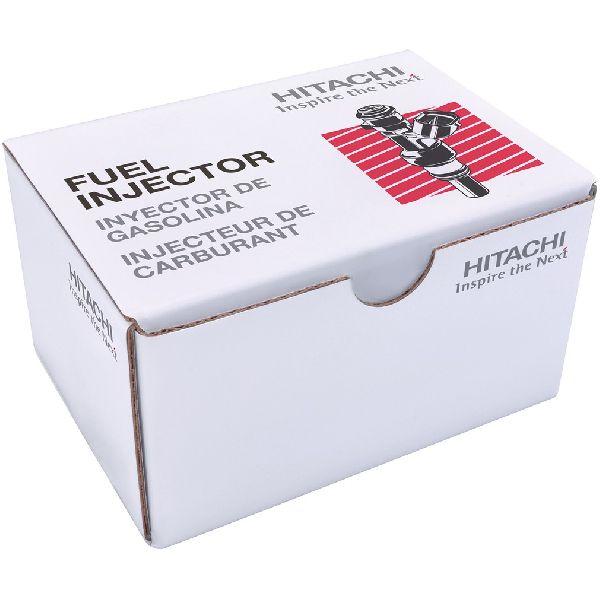
- Direct Fuel Injector
(OEM #12692884)— This is the most likely cause according to manufacturer TSBs for the Cadillac CT6.
Trusted brands: ACDelco, GM Genuine Parts
OEM price range: $95-$120
Aftermarket price range: $50-$90 - Downstream Oxygen Sensor (Bank 1, Sensor 2)
(OEM #12666671 (for 3.0L/3.6L V6), 55488558 (for 2.0L I4))— While often not the root cause, a faulty sensor can trigger this code. It's a common replacement part for fuel trim issues.
Trusted brands: ACDelco, Bosch, Denso, NTK
OEM price range: $38-$80
Aftermarket price range: $40-$100 - Exhaust Manifold Gasket — If an exhaust leak is found at the manifold or converter flange, this gasket will be required for the repair.
Trusted brands: Fel-Pro, ACDelco
OEM price range: $30-$60
Aftermarket price range: $15-$40
Related Codes That Often Appear With This One
- P0172 — This code means 'System Too Rich Bank 1' and is detected by the *upstream* O2 sensor. Having both P0172 and P2097 strongly confirms a persistent rich condition on Bank 1, making a leaking injector the prime suspect.
- P2099 — This is the same 'Post Catalyst Fuel Trim Too Rich' code but for Bank 2 (driver's side). If both codes appear together, it points towards a systemic issue like a fuel pressure problem affecting the entire engine.
- P0300-P0306 — These are engine misfire codes. A severely leaking fuel injector can foul the spark plug in its corresponding cylinder, leading to a misfire on that cylinder (e.g., P0301, P0303, P0305 for Bank 1).
Technical Service Bulletins (TSBs) & Recalls
- PIP4964F: Advises performing an injector balance test for DTC P2097 or P2099 and checking for exhaust leaks.
- PIP5534A: Communicates additional diagnostics for P2097 on certain engines, including investigating driving style and the EVAP system.
Platform-Specific Known Issues
- TSB #PIP4964F advises technicians to check for Diagnostic Trouble Code P2097 or P2099 and perform an injector balance test before proceeding with further diagnostics, also noting to check for exhaust leaks at the converter outlet.
- TSB #PIP5534A provides additional diagnostic assistance for trouble code P2097 on 2.0L LTG and similar engines, indicating this is a known issue. It suggests checking for vacuum leaks, skewed MAF sensors, and even specific driver habits ('digital driver') that can induce the code without a fault.
Mechanic-Grade Diagnostic Values
- Downstream O2 Sensor (Bank 1 Sensor 2) Voltage — expected: Relatively steady voltage around 0.45V to 0.6V in closed loop.. Failure: Voltage is stuck high (above 0.8V) or fluctuates rapidly like an upstream sensor.
- Upstream O2 Sensor (Bank 1 Sensor 1) Voltage — expected: Should fluctuate rapidly between approximately 0.1V (lean) and 0.9V (rich).. Failure: Sluggish, stuck, or not switching, which can provide bad data to the ECM, indirectly causing P2097.
- High-Pressure Fuel System Operating Pressure (3.0L LGW / 3.6L LGX) — expected: 2,000 - 2,800 PSI (13,790 - 19,305 kPa).. Failure: Pressure significantly above or below the desired pressure commanded by the ECM. Note: This would typically set other codes like P0089 but can be a contributing factor.
- Long Term Fuel Trim (for 2.0L LTG per TSB PIP5534A) — expected: Should stay within a normal range of -13% to +13%.. Failure: A high value that drops into the normal range after holding RPM at 2000 suggests a vacuum leak or skewed MAF sensor. A value that stays normal may indicate the 'digital driver' habit is inducing the code.
Scan Tool Commands That Help
- GDS2 (GM Global Diagnostic System 2): Active Fuel Injector Tester (AFIT) - Injector Test — This is the manufacturer-specified procedure (per TSB PIP4964F) to test for leaking or improperly balanced fuel injectors, which is the primary suspected cause of P2097 on these engines.
- GDS2 (GM Global Diagnostic System 2): EVAP Purge/Seal — Used to command the EVAP purge solenoid valve open and closed to test for proper function. A stuck-open valve can introduce unmetered fuel vapor and cause a rich condition, as noted in TSB PIP5534A diagnostics.
- GDS2 (GM Global Diagnostic System 2): O2 Sensor Display / Graphing — To visually monitor the voltage of the downstream O2 sensor in real-time. This helps confirm if the sensor is stuck high (confirming the rich condition) or if it is lazy, non-responsive, or fluctuating like an upstream sensor (indicating a bad catalytic converter).
Wiring & Ground Locations
- G101 — On the lower front of the engine block. On some related platforms, it is on the left radiator support.. This is a primary ground for the Engine Control Module (ECM) and Transmission Control Module (TCM). A poor connection here can cause unpredictable behavior and incorrect interpretation of sensor data, including O2 sensor readings.
- G130 / G104 — Located on the front or rear of the right cylinder head (Bank 1 side).. This is a main engine ground on the same bank as the P2097 code. A compromised ground can introduce electrical noise and voltage offsets that affect sensor readings for that entire bank.
- G131 / G136 — Located on the rear of the left cylinder head (Bank 2 side).. While on the opposite bank, checking all major engine grounds is critical. An issue here could still contribute to system-wide electrical instability.
- Main Engine-to-Chassis Ground Strap — Typically a large braided strap running from the engine block or transmission to the vehicle's frame rail, often underneath the car.. This is the main ground path for the entire powertrain. Corrosion or looseness of this strap can cause a huge range of electrical issues, including erratic sensor behavior that could trigger a P2097.
Real Owner Repair Stories
- YouTube channel 'Buff Motorsports' (2012 GMC Terrain 2.4L (Shares GM engine architecture)) — P2097 code, exhaust fumes in the cab, poor fuel economy, odd idle.
❌ Tried (didn't work) Previous timing chain replacement did not resolve all issues.
✅ What actually fixed it Replacement of a cracked exhaust manifold. The crack allowed fresh air into the exhaust, skewing O2 sensor readings and causing the computer to over-fuel the engine. - YouTube channel 'GenerationX' (2013 Cadillac ATS (Shares LTG engine and platform components)) — P2097 code, car would stall at idle after warming up.
❌ Tried (didn't work) Replacing both upstream and downstream O2 sensors with a cheap 2-pack from Amazon., Putting the old downstream O2 sensor back in.
✅ What actually fixed it Putting the old OEM upstream O2 sensor back in the car. The new, cheap aftermarket upstream sensor was apparently faulty right out of the box and was providing incorrect data, causing the downstream sensor to report a rich condition. - Reddit user r/MechanicAdvice (2016 Mazda Miata) — P2097 code, car drove horribly when cold and would nearly stall.
❌ Tried (didn't work) Initial diagnosis was unclear.
✅ What actually fixed it The dealership diagnosed and replaced a bad fuel pump. The user noted symptoms of the engine dying as if it had no fuel, which pointed them in that direction. - Go-Parts.com blog citing TSBs (2013-2019 Chevy Malibu (Shares LTG engine)) — P2097 code, possibly with hesitation or low power.
❌ Tried (didn't work) Replacing parts without checking for software issues.
✅ What actually fixed it A dealership performed an ECM software update as specified in TSB 19-NA-017. This is a known issue where no mechanical parts are faulty.
"I Checked Everything" — The Actual Cause
- In a documented case on a related GM vehicle (GMC Terrain), a persistent P2097 with an exhaust smell was ultimately caused by a cracked exhaust manifold. This type of leak can be difficult to detect with a typical smoke test, as the crack may only open and leak significantly under specific temperature and pressure conditions of a running engine, leading a technician to believe the system is sealed.
- Similarly, a case on an Alfa Romeo Giulia (another direct-injection turbo platform) with P2097 was only resolved by replacing a cracked exhaust manifold after software updates and an O2 sensor replacement failed to fix the issue. This highlights that hairline cracks in manifolds are a difficult-to-find but real cause for this code.
When the Usual Fixes Don't Work
- While the TSBs for the Cadillac CT6 heavily point towards leaking fuel injectors as the primary cause of P2097, real-world repair stories from vehicles with the same or similar GM engines show that other causes should not be dismissed. In one case involving a GMC Terrain, the final fix was a cracked exhaust manifold that was likely missed during initial inspections. In another case on a Chevrolet Malibu, the code was resolved with a simple ECM software update from the dealer, with no parts required. This demonstrates that while the injector test is a critical step per the TSB, a thorough exhaust inspection and a check for available software updates are equally important and can prevent unnecessary, expensive repairs.
OEM Part Supersession History
12647362, 12650300→12692884— Standard part evolution for performance, durability, or manufacturing improvements.
Heads up: These part numbers apply to the 3.6L V6 (LGX) engine. Always verify fitment with VIN.12638530, 12611545→12669384— Part consolidation and updates for the 3.6L V6 engine family.
Heads up: These part numbers are associated with the broader GM High Feature V6 engine family. PNs can be specific to LFX vs LGX versions.
Model Year Variations Within This Range
- 2016-2018 (2.0L LTG Engine): TSB #PIP5534A applies to these earlier models with the LTG engine, providing a specific diagnostic flowchart for P2097 that includes checking for 'digital driver' habits and potentially replacing all four injectors even if an AFIT test is inconclusive.
Helpful Videos

![How to Fix P2097 Engine Code in 4 Minutes [2 DIY Methods / Only $9.84]](https://img.youtube.com/vi/rCwtzRmhMwY/mqdefault.jpg)
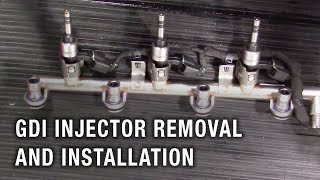
We Have This Part in Stock


The information in this article is provided for general reference and educational purposes only. Vehicle specifications, procedures, and part compatibility can vary by production date, trim level, and region. Always consult your vehicle's factory service manual and verify part numbers before purchasing or performing repairs. Safety-critical components such as airbags, seat belts, and braking systems should be installed by a qualified professional.
- Cadillac CT6:
- 🧭 Diagnostic Flowchart
- 🎬 Helpful Videos
- 🛍️ Shop This Part
- What's Unique About the 2016-2020 Cadillac CT6
- Symptoms You May Notice
- Most Likely Causes
- Rare But Worth Checking
- Diagnosis Steps
- Parts You'll Likely Need
- Related Codes That Often Appear With This One
- Technical Service Bulletins (TSBs) & Recalls
- Platform-Specific Known Issues
- Mechanic-Grade Diagnostic Values
- Scan Tool Commands That Help
- Wiring & Ground Locations
- Real Owner Repair Stories
- "I Checked Everything" — The Actual Cause
- When the Usual Fixes Don't Work
- OEM Part Supersession History
- Model Year Variations Within This Range
- 🎟️ Get 5% Off