

P2097 on 2005-2011 Cadillac STS: Post-Catalyst Fuel Trim Too Rich Causes & Fixes
On a 2005-2011 Cadillac STS, code P2097 is most often caused by a leaking fuel injector on Bank 1, an exhaust leak near an oxygen sensor, or a failing downstream oxygen sensor. For the 3.6L direct-injection V6, leaking injectors are a very common culprit. The fix often involves testing and replacing the faulty injector or sensor, or repairing an exhaust leak.
- P2097 on a Cadillac STS means the engine is running rich on Bank 1, as detected by the post-catalytic converter O2 sensor.
- Before replacing any parts, check for exhaust leaks between the engine and the downstream O2 sensor.
- A manufacturer TSB strongly suggests that a leaking fuel injector is a likely cause, especially on models with the 3.6L direct-injection V6 (2008-2011).
- Do not replace the catalytic converter to fix this code; the rich condition must be resolved first to avoid damaging the new converter.
What's Unique About the 2005-2011 Cadillac STS
For the Cadillac STS, particularly models with the direct-injection 3.6L V6 (LLT engine, 2008-2011), this code has a known and strong link to fuel injector problems. A specific Technical Service Bulletin (TSB) for the 2011 model year, #PIP4964F, directs technicians to perform an injector balance test when P2097 appears, highlighting leaking injectors as a primary concern. [NHTSA] Early direct injection systems like the LLT were known for issues with high-pressure fuel pumps and injectors that could leak or clog. While exhaust leaks and sensor issues are still possible, the official guidance and owner experiences strongly point to verifying fuel system components first on these engines.
Diagnostic Flowchart
Tap your situation to follow the diagnostic path that matches what you're seeing on this vehicle.
Generation note: The 2005-2011 Cadillac STS is a single generation, but it received a significant update for the 2008 model year. This refresh included the introduction of the 3.6L LLT direct-injection V6 engine, which replaced the earlier 3.6L LY7 port-injection V6. The direct-injection models are more prone to the fuel injector issues mentioned in TSB PIP4964F. The 4.6L Northstar V8 was also available until 2010. Bank 1 on the V6 and V8 engines is the passenger side of the engine.
Symptoms You May Notice
- Check Engine Light is on
- Decreased fuel economy
- Rough idle
- Engine hesitation or poor acceleration
- A strong smell of fuel or rotten eggs from the exhaust
- In some cases, no noticeable symptoms other than the Check Engine Light 🎬 Watch: Understanding P2097 symptoms and common causes
- Replacing the catalytic converter without diagnosing the root cause. A P2097 code indicates a fuel mixture problem that needs to be fixed; a new converter will likely be damaged by the same rich condition.
- Replacing the oxygen sensor without checking for exhaust leaks or fuel system issues first. While the sensor can be the problem, it is often just accurately reporting an issue that exists elsewhere.
Most Likely Causes
- Leaking Fuel Injector(s) on Bank 1 🔴 High Probability → Shop Fuel Injector A manufacturer TSB (#PIP4964F) specifically calls for an injector balance test for this code, indicating this is a known issue, especially on the 2008-2011 3.6L LLT direct-injection V6 models which had early-generation DI system problems.
How to confirm: Perform a fuel injector balance test using a capable scan tool. Another method is to remove the spark plugs on Bank 1 (passenger side) and check for a plug that is wet with fuel, or excessively black and sooty compared to the others.
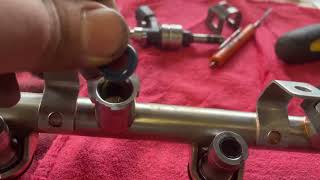
Typical fix: Replace the faulty fuel injector(s). It is highly recommended to replace all injectors on the affected bank (or all 6 for the V6) at the same time due to the labor involved and likelihood of others failing. 🎬 See this 3.6L fuel injector replacement walkthrough
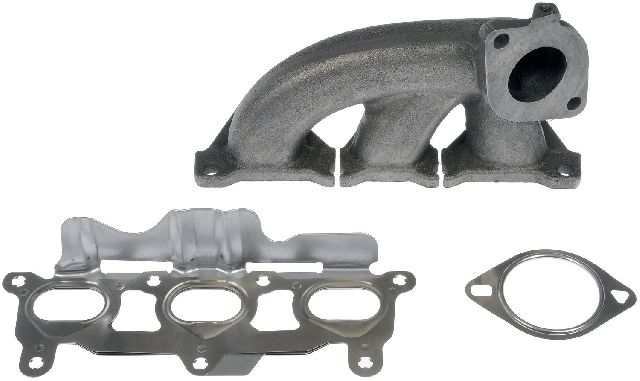
Est. part cost: $50-$150 per injector - Exhaust Leak 🟡 Medium Probability Exhaust systems are prone to leaks from rust and heat cycles. Common leak points are gaskets at the exhaust manifold or cracks in the flexible pipe sections.
How to confirm: Visually inspect the exhaust system from the engine manifold to the downstream O2 sensor for cracks, holes, or loose connections. Listen for hissing or ticking sounds, especially on a cold start. A smoke test is the most effective way to pinpoint hard-to-see leaks.
Typical fix: Repair the leak by replacing the faulty gasket, clamp, or section of exhaust pipe.
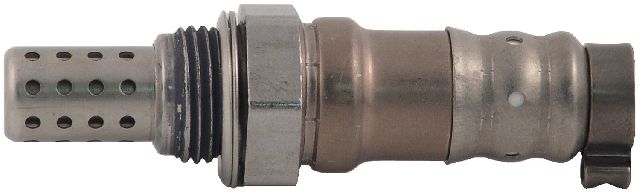
Est. part cost: $10-$200 - Failing Downstream Oxygen Sensor (Bank 1, Sensor 2) 🟡 Medium Probability → Shop Oxygen Sensor
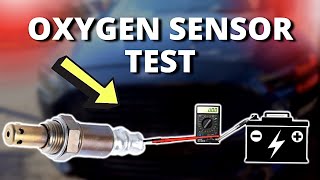
How to confirm: Use a scan tool to monitor the voltage of the Bank 1 Sensor 2. A healthy downstream sensor should show a relatively steady voltage (typically around 0.45V-0.7V) when the engine is warm and at a steady RPM. If the voltage is stuck high (above 0.8V) or fluctuating wildly like the upstream sensor, it is likely faulty. 🎬 Watch: How to test an oxygen sensor
Typical fix: Replace the Bank 1 downstream oxygen sensor. It is often recommended to replace O2 sensors in pairs (both downstream sensors at once).
Est. part cost: $50-$150 - High Fuel Pressure ⚪ Low Probability
How to confirm: Connect a fuel pressure gauge to the fuel rail and check if the pressure is within the manufacturer's specified range. A faulty fuel pressure regulator is a common cause. For direct injection models, this is more complex and may involve monitoring high-pressure fuel system data with a scan tool.
Typical fix: Replace the fuel pressure regulator or high-pressure fuel pump.
Est. part cost: $100-$500
Rare But Worth Checking
- Failing Catalytic Converter: → Shop Catalytic Converter This is less common, as a rich condition is usually the *cause* of converter failure, not the result. However, an internally damaged or clogged converter can sometimes cause erratic sensor readings that the ECM misinterprets.
- Malfunctioning Mass Air Flow (MAF) Sensor: A dirty or failing MAF sensor can send incorrect airflow data to the ECM, leading to an improper air-fuel mixture. This would typically set other codes as well, such as P0101 or P0172/P0175.
- ECM Software Anomaly: Other GM vehicles have had TSBs issued (e.g., #19-NA-017, #17058) where a software glitch could falsely trigger a P2097 code. While not specific to the STS, it's a possibility that a dealer may need to reflash the ECM with updated software.
Diagnosis Steps
- Scan the ECM for any other trouble codes. Address other codes first, especially for misfires (P030X), MAF sensors (P0101), or upstream fuel trim (P0172).
- Visually and audibly inspect the exhaust system for leaks, paying close attention to the manifold gaskets and flex pipes. A cold start can make exhaust ticks more audible.
- Use a scan tool to observe live data. Monitor the short-term and long-term fuel trims for both banks. Watch the voltage readings for the upstream (should fluctuate rapidly) and downstream (should be relatively stable) O2 sensors on Bank 1.
- For the 3.6L LLT V6, prioritize checking the fuel injectors. If a scan tool with injector balance test capability is not available, pull the spark plugs on Bank 1 (passenger side) and inspect them for signs of being fuel-fouled (wet, black, sooty).
- Test the fuel pressure to ensure it is within the correct specifications.
- If all other possibilities have been ruled out, inspect the catalytic converter for damage or clogging by checking for a significant temperature difference before and after the converter with an infrared thermometer.
Parts You'll Likely Need
- Fuel Injector (for 3.6L LLT V6)
(OEM #12638530 (Supersedes: 12632255, 12611545, 12669384))— A leaking fuel injector is a primary cause for this code on the STS with the direct-injection V6, as identified by a manufacturer TSB and numerous owner accounts.
Trusted brands: ACDelco (OEM), Bosch
OEM price range: $100-$200
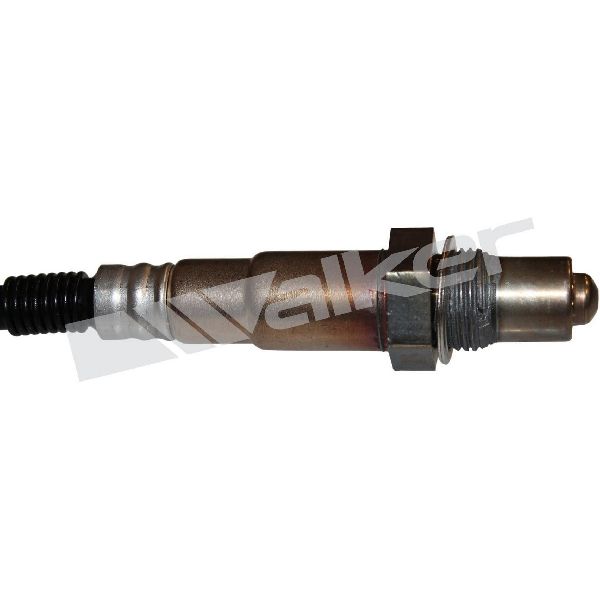
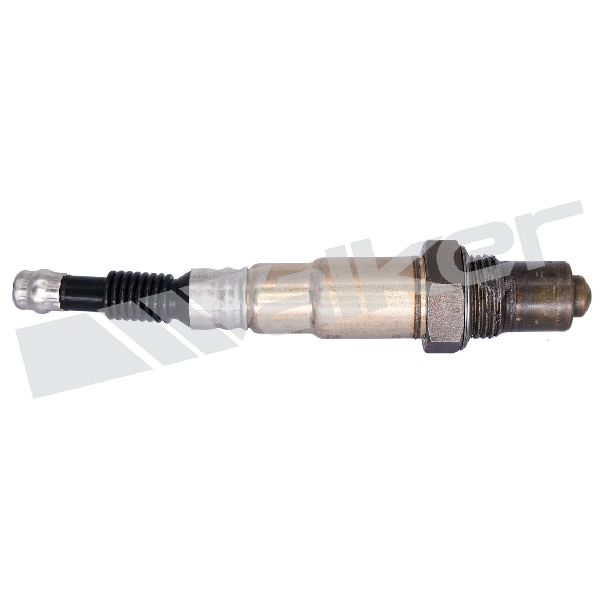
Aftermarket price range: $50-$150 - Downstream Oxygen Sensor (Bank 1, Sensor 2)
(OEM #ACDelco 213-4229 (GM 12609457))— The sensor itself can fail and send incorrect rich readings to the computer. Bank 1 is the passenger side.
Trusted brands: ACDelco, Denso, Bosch
OEM price range: $80-$180
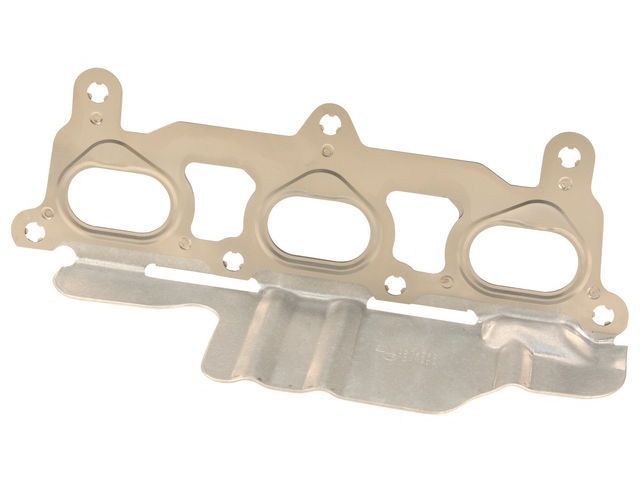
Aftermarket price range: $50-$120 - Exhaust Manifold Gasket — If an exhaust leak is found at the manifold, this gasket will need to be replaced to seal it.
Trusted brands: Fel-Pro, ACDelco
OEM price range: $20-$50
Aftermarket price range: $10-$30
Related Codes That Often Appear With This One
- P2099 — This is the same 'Post Catalyst Fuel Trim Too Rich' code but for Bank 2. Seeing both codes together suggests a systemic problem affecting both engine banks, like high fuel pressure, a faulty MAF sensor, or an ECM software issue.
- P0172 — This code means 'System Too Rich Bank 1' and is detected by the *upstream* oxygen sensor. If you have both P0172 and P2097, it strongly points to a severe rich condition on Bank 1, such as a badly leaking fuel injector.
- P0301-P0306 — These are misfire codes for specific cylinders. A misfire caused by a fouled spark plug from a leaking injector can accompany P2097.
Technical Service Bulletins (TSBs) & Recalls
- PIP4964F: Advises performing an injector balance test for DTC P2097 or P2099, indicating leaking fuel injectors are a known potential cause on 2011 models, but the issue is widely applicable to the LLT engine family.
- 19-NA-017 / 17058: While for other GM models (Malibu, Volt), these bulletins show a precedent for GM issuing software updates to fix false P2097 codes caused by ECM software anomalies.
Platform-Specific Known Issues
- TSB #PIP4964F specifically addresses DTC P2097 on some 2011 models, instructing technicians to check for leaking fuel injectors via an injector balance test before proceeding with other diagnostics.
- On the 3.6L V6, Bank 1 is the rear bank of cylinders (closer to the firewall) on transverse applications, but on the rear-wheel-drive STS, it is the passenger side of the engine.
- Some owners on forums have chased the P2097 code for a long time, replacing O2 sensors and checking for exhaust leaks, only to find the ul
Mechanic-Grade Diagnostic Values
- Downstream O2 Sensor (Bank 1, Sensor 2) Voltage — expected: Relatively steady voltage around 0.45V - 0.7V at warm idle in closed loop.. Failure: Voltage is stuck high (above 0.8V) or fluctuates rapidly between 0.1V and 0.9V like an upstream sensor.
- Low-Pressure Fuel System Pressure (3.6L LLT V6) — expected: 380-410 kPa (55-60 psi) at idle.. Failure: Pressure is significantly above or below this range, suggesting a fuel pump or regulator issue.
- High-Pressure Fuel System Pressure (3.6L LLT V6) — expected: Pressure can exceed 2,000 PSI; specific target value varies with engine load and RPM.. Failure: Scan tool data shows the actual pressure failing to meet the desired pressure commanded by the ECM.
- O2 Sensor Heater Circuit Voltage — expected: 12V supplied from a fused source.. Failure: Low or no voltage at the sensor connector indicates a wiring or fuse problem, which can cause incorrect sensor readings.
Scan Tool Commands That Help
- GM GDS2 (Global Diagnostic System 2): Injector Balance / Active Fuel Injector Tester (AFIT) — This is the manufacturer-recommended first step for the 3.6L LLT V6 when P2097 is present, as per TSB #PIP4964F. It directly tests for leaking or over-fueling injectors, which are a primary cause of this code on this engine.
Wiring & Ground Locations
- G100 — On the rear side of the right (passenger side) cylinder head.. A poor ground at this location can directly affect the electrical signals for components on Bank 1, including the fuel injector and oxygen sensor, potentially causing erroneous readings that lead to a P2097 code.
- G105 — At the back of the underhood fuse block.. This is a major ground point for many engine control systems. Corrosion or a loose connection here can cause a variety of difficult-to-diagnose electrical issues, including sensor and module communication problems.
- Main Engine Block Ground — A large, heavy-gauge strap from the right frame rail to the engine block, near the transmission.. This is the primary ground path for the entire engine block. High resistance or a broken connection here can cause the starter and other components to seek ground through other paths, creating voltage drops and electrical noise that can disrupt sensor readings.
OEM Part Supersession History
12611545, 12632255, 12669384→12638530— Part has been updated by the manufacturer over time to improve reliability or address known issues.
Model Year Variations Within This Range
- 2008-2011: Models with the 3.6L LLT direct-injection V6 have a high-pressure fuel system that produces a distinct, rapid ticking or clicking sound from the engine bay. This is normal operation of the high-pressure fuel pump and injectors and should not be misdiagnosed as a fault.
Helpful Videos

We Have This Part in Stock

The information in this article is provided for general reference and educational purposes only. Vehicle specifications, procedures, and part compatibility can vary by production date, trim level, and region. Always consult your vehicle's factory service manual and verify part numbers before purchasing or performing repairs. Safety-critical components such as airbags, seat belts, and braking systems should be installed by a qualified professional.
- Cadillac STS:
- 🧭 Diagnostic Flowchart
- 🎬 Helpful Videos
- 🛍️ Shop This Part
- What's Unique About the 2005-2011 Cadillac STS
- Symptoms You May Notice
- Most Likely Causes
- Rare But Worth Checking
- Diagnosis Steps
- Parts You'll Likely Need
- Related Codes That Often Appear With This One
- Technical Service Bulletins (TSBs) & Recalls
- Platform-Specific Known Issues
- Mechanic-Grade Diagnostic Values
- Scan Tool Commands That Help
- Wiring & Ground Locations
- OEM Part Supersession History
- Model Year Variations Within This Range
- 🎟️ Get 5% Off