

P2097 on 2013-2019 Cadillac XTS: Post Catalyst Fuel Trim Too Rich Causes and Fixes
On a 2013-2019 Cadillac XTS with the 3.6L engine, code P2097 is most often caused by a leaking or faulty fuel injector. A GM Technical Service Bulletin specifically advises technicians to perform a fuel injector balance test before other diagnostics. Other likely causes include exhaust leaks near the O2 sensors, particularly cracks at the catalytic converter flange, or a failing downstream oxygen sensor.
- For a 2013-2019 Cadillac XTS, P2097 strongly points towards a faulty fuel injector on Bank 1 (the rear bank).
- Do not immediately replace the oxygen sensor. A professional diagnosis should begin with checking for exhaust leaks and performing a fuel injector balance test, per GM's own service information.
- Driving with this code active can lead to poor fuel mileage and may eventually damage the catalytic converter, a much more expensive repair.
- Bank 1 is the cylinder bank closer to the firewall on the 3.6L V6 engine.
What's Unique About the 2013-2019 Cadillac XTS
For the Cadillac XTS and other GM vehicles with the 3.6L LFX engine, there is a strong, documented emphasis on fuel injectors as the root cause for P2097. Manufacturer-issued service bulletins (TSBs), like PIP4964F, specifically guide technicians to investigate fuel injectors with an Active Fuel Injector Tester (AFIT) early in the diagnostic process, even before suspecting the O2 sensor. This suggests that leaking or malfunctioning injectors are a more common and recognized failure point on this platform compared to others, where an oxygen sensor or simple exhaust leak might be the first suspect. Furthermore, TSB 17-NA-321 points to a specific weld crack on the catalytic converter as another known issue for this platform.
Diagnostic Flowchart
Tap your situation to follow the diagnostic path that matches what you're seeing on this vehicle.
Symptoms You May Notice
- Check Engine Light is on
- Reduced fuel economy
- Rough or unstable idle
- Poor engine performance or sluggish acceleration
- Exhaust smell, sometimes described as rotten eggs
- Black soot or smoke from the exhaust under load 🎬 Watch this overview of P2097 meaning, causes, and symptoms.
- Immediately replacing the downstream oxygen sensor without first performing a fuel injector balance test and a thorough exhaust smoke test. GM service documents explicitly state not to replace the HO2S for this DTC without first checking for other causes, as the sensor is often correctly reporting a problem that originates elsewhere.
Most Likely Causes
- Leaking or Faulty Fuel Injector(s) 🔴 High Probability → Shop Fuel Injector Multiple GM Technical Service Bulletins (including PIP4964F) for the 3.6L LFX engine point to fuel injectors as the most common cause for P2097 and P2099 codes. These direct-injection injectors can leak fuel into the cylinder, creating a rich condition that the downstream O2 sensor detects.
How to confirm: A professional technician should perform a fuel injector balance test using a GM-specific tool (AFIT, tool #CH-47976) to identify any injectors that are leaking or have poor flow. This is the manufacturer's recommended first step after checking for leaks. Pulling spark plugs on Bank 1 may also reveal one or more plugs that are black and sooty, indicating a rich condition in that cylinder.
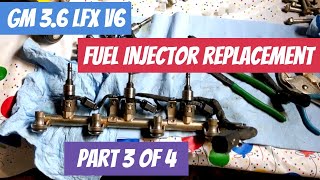
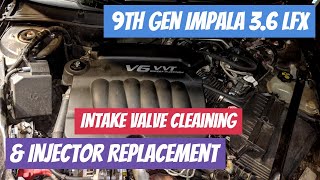
Typical fix: Replace the faulty fuel injector(s). Due to the labor involved, it is highly recommended to replace all three injectors on the affected bank (Bank 1) at the same time. Using a genuine OEM part is critical. 🎬 Watch this step-by-step guide for replacing LFX fuel injectors.
Est. part cost: $70-$150 per injector - Exhaust System Leak 🟡 Medium Probability TSB 17-NA-321 specifically addresses a known issue on 2013-2018 XTS models where cracks can form in the exhaust pipe weld at the catalytic converter mounting flange. This leak, located before the downstream O2 sensor, allows outside air to be pulled into the exhaust stream, which can paradoxically cause the ECM to misinterpret the fuel mixture and trigger a rich code.
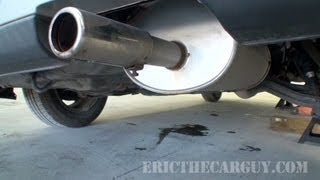
How to confirm: Visually inspect the exhaust system for cracks, especially around the welds and gaskets on the catalytic converters. A smoke test, where smoke is forced into the exhaust system, is the most effective way to pinpoint small, hard-to-see leaks. 🎬 See how to find exhaust leaks using a smoke machine.
Typical fix: If a crack is found on the catalytic converter per the TSB, the entire converter assembly must be replaced. If a leak is at a gasket, replace the gasket and ensure the flange bolts are torqued to spec.
Est. part cost: $20-$100 for a gasket, $500+ for a converter assembly - Faulty Downstream (Post-Catalyst) Oxygen Sensor 🟡 Medium Probability → Shop Oxygen Sensor O2 sensors are consumable parts that degrade over time. A sensor can fail and send incorrect (biased rich) readings to the ECM. However, GM explicitly warns against replacing the O2 sensor for this code without first ruling out fuel injector and exhaust leak issues.
How to confirm: Use a scan tool to monitor the live voltage data from the Bank 1, Sensor 2 (downstream) O2 sensor. A healthy downstream sensor should show a relatively stable voltage, typically between 0.6V and 0.8V. If it's stuck high (e.g., >0.85V) or fluctuating rapidly like the upstream sensor, it may be faulty or indicating a failed catalytic converter.
Typical fix: Replace the Bank 1 downstream oxygen sensor (located on the rear bank, after the catalytic converter).
Est. part cost: $60-$180 - High Fuel Pressure ⚪ Low Probability
How to confirm: Connect a fuel pressure gauge to the fuel rail's service port (if available) or monitor fuel rail pressure via a capable scan tool. Compare the readings to the manufacturer's specifications. This is less common on direct injection systems like the LFX unless there is a high-pressure fuel pump issue.
Typical fix: Replace the faulty high-pressure fuel pump or fuel pressure sensor.
Est. part cost: $250-$600
Rare But Worth Checking
- Failing Catalytic Converter: → Shop Catalytic Converter While a failing catalytic converter more commonly sets a P0420 (Catalyst Efficiency) code, an internally damaged or contaminated converter can sometimes cause erratic O2 sensor readings that lead to a P2097 code. This should be considered only after all other causes, especially injectors and exhaust leaks, are ruled out.
- Engine Mechanical Issue: In rare cases where no fuel or exhaust issues are found, a mechanical problem like a stretched timing chain could affect cam timing and lead to poor combustion, potentially contributing to a rich condition. This would likely be accompanied by other symptoms like misfires or specific timing-related DTCs (e.g., P0016, P0017).
- Wiring Harness Damage: The wiring for the O2 sensor can become damaged or chafed, especially near hot exhaust components, leading to a short or incorrect signal. A visual inspection of the harness leading to the Bank 1 Sensor 2 is a worthwhile check.
Diagnosis Steps
- Scan for any other DTCs. Address any misfire (P030x), upstream rich (P0172), or O2 sensor circuit codes first, as they can provide critical clues.
- Visually inspect the exhaust system from the engine to the tailpipe. Pay extremely close attention to the welded flange where the Bank 1 (rear) catalytic converter bolts to the cylinder head, as this is a known failure point per TSB 17-NA-321.
- Perform an exhaust leak test. A professional smoke test is the most reliable method. Pressurizing the exhaust and spraying welds with soapy water is an alternative. Any leak between the cylinder head and the downstream O2 sensor must be repaired.
- Use a scan tool to monitor live data. Observe long-term and short-term fuel trims for Bank 1. Watch the voltage for the Bank 1, Sensor 2 (downstream) O2 sensor. A healthy sensor should show a steady voltage between 0.6V and 0.8V at a steady cruise. If it is stuck high (>0.85V), it confirms the rich reading.
- Perform a fuel injector balance test. This is the most critical vehicle-specific step. As recommended by GM TSB PIP4964F, use an AFIT (Active Fuel Injector Tester, #CH-47976) to check for leaking or poorly performing injectors. This step should be prioritized over O2 sensor replacement.
- Test fuel pressure. Using a scan tool, monitor the high-pressure fuel rail pressure to ensure it is within OEM specifications under various load conditions. Check low-side fuel pressure (typically 81-87 psi) if a high-pressure pump issue is suspected.
- If all other tests pass and no leaks or injector issues are found, the downstream O2 sensor itself may be faulty. Test the sensor's heater circuit and response before replacing it.
Parts You'll Likely Need
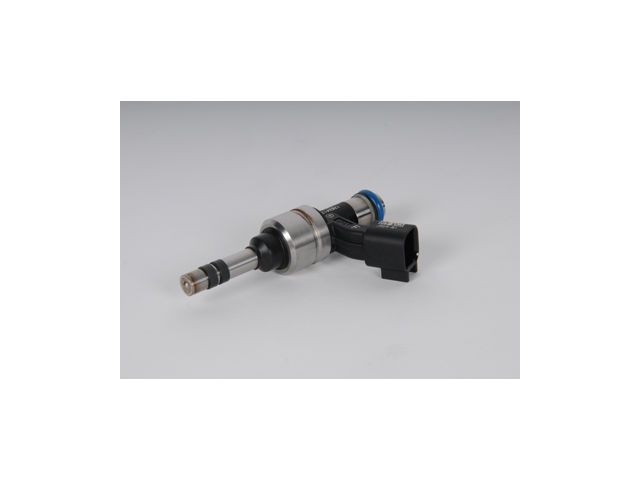
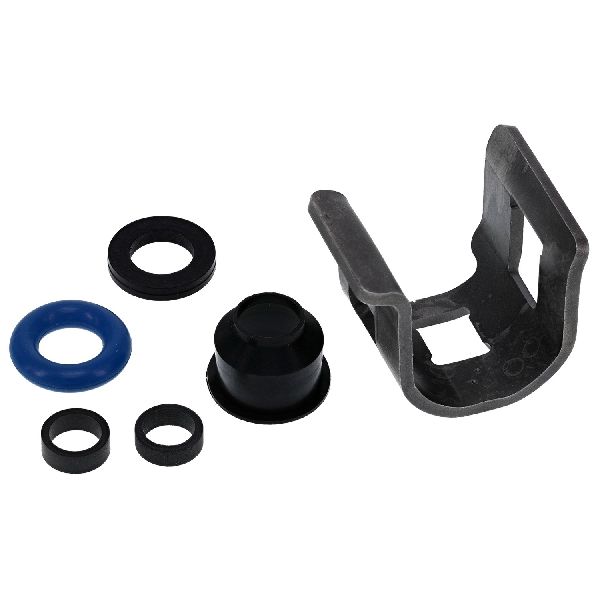
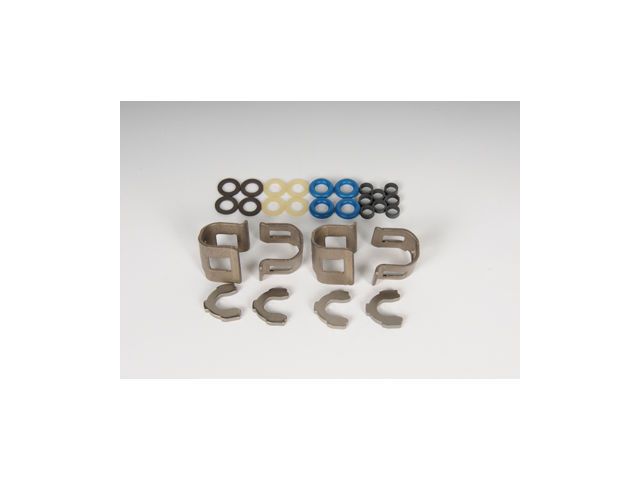
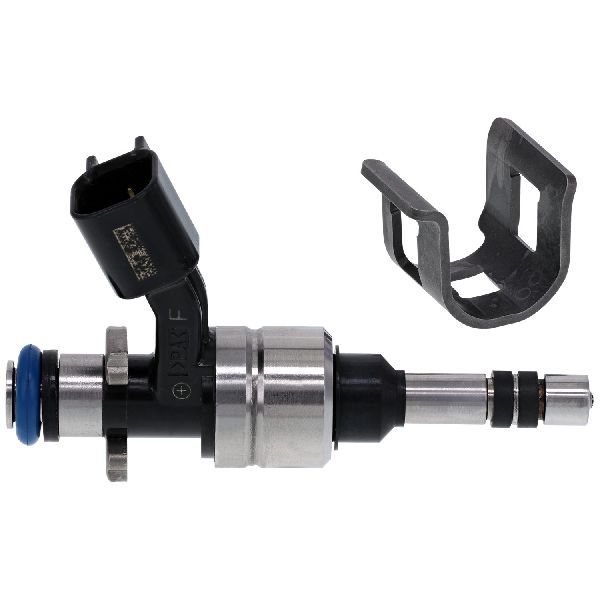
- Fuel Injector
(OEM #12669384 (supercedes 12638530, 12632255))— GM TSBs identify faulty direct fuel injectors as the most frequent cause of P2097 on the 3.6L LFX engine.
Trusted brands: ACDelco (OEM), Bosch
OEM price range: $110
Related Codes That Often Appear With This One
- P2099 — This is the same 'Post Catalyst Fuel Trim Too Rich' code but for Bank 2 (front bank). Seeing both P2097 and P2099 together strongly points to a systemic issue affecting both banks, such as high fuel pressure or a contaminated mass airflow sensor.
- P0172 — This code means 'System Too Rich Bank 1' and is based on the *upstream* O2 sensor. If a fuel injector is leaking badly, both the upstream and downstream sensors will detect the rich condition, often setting both codes.
- P0300-P0306 — These are misfire codes (P0300 for random, P0301-P0306 for specific cylinders). A severely leaking fuel injector can foul the spark plug for that cylinder, leading to a misfire on top of the rich condition.
- P0420 — This code indicates 'Catalyst System Efficiency Below Threshold Bank 1'. A long-term rich condition from a leaking injector can overheat and destroy the catalytic converter, eventually causing this code to appear alongside P2097.
Technical Service Bulletins (TSBs) & Recalls
- PIP4964F: SES Light with DTC P2097 or P2099 - Advises performing a fuel injector balance test with an AFIT tool as a primary diagnostic step before replacing O2 sensors.
- 17-NA-321: Exhaust Smell and/or Leak with Possible MIL - Addresses cracks that can form on the catalytic converter pipe near the mounting flange weld, requiring converter replacement.
Platform-Specific Known Issues
- TSB #PIP4964F and its revisions specifically call out P2097/P2099 on the 3.6L engine and direct technicians to perform a fuel injector balance test with an AFIT tool before replacing any parts. This is the primary diagnostic path.
- TSB 17-NA-321 (replaces PIP5419B) details a known issue with cracks forming on the exhaust pipe weld at the catalytic converter flange on 2013-2017 XTS models, which can cause exhaust leaks leading to this code.
Mechanic-Grade Diagnostic Values
- Downstream O2 Sensor (Bank 1, Sensor 2) Voltage — expected: Relatively stable voltage between 0.6V and 0.8V at steady cruise.. Failure: Stuck high (consistently >0.85V) or fluctuating rapidly like an upstream sensor.
- O2 Sensor Heater Circuit Resistance — expected: Typically 5-7 Ω.. Failure: A reading outside of the specified range indicates a faulty heater element in the sensor.
- Fuel Injector Coil Resistance — expected: 11-14 Ω when engine coolant temperature is between 10-32°C (50-90°F).. Failure: A reading outside this range, or if the difference between the highest and lowest reading of all injectors exceeds 3.0 Ω when tested at other temperatures.
- Low-Pressure Fuel System Pressure — expected: 81-87 psi.. Failure: Pressure below this range could indicate a weak in-tank fuel pump, affecting the high-pressure pump's ability to supply the rail.
Scan Tool Commands That Help
- GM AFIT (Active Fuel Injector Tester, #CH-47976): Injector Balance Test — This is the manufacturer-recommended primary diagnostic step for P2097 after checking for exhaust leaks. It automatically performs a pressure drop test on each injector to identify leaks or clogs that cause a rich condition.
- GM AFIT (Active Fuel Injector Tester, #CH-47976): High and Low Pressure Leak Down Test — For direct injection (SIDI) systems like the LFX, the AFIT can command the fuel system to perform leak tests at different pressures (e.g., ~800 PSI and ~300 PSI) to find leaks that may only appear under specific conditions.
- GDS2 / Professional Scan Tool: Fuel Trim Reset — After replacing a component like a fuel injector or O2 sensor, this function should be used to clear the old learned fuel trim values from the ECM, allowing it to adapt to the new parts more quickly.
Wiring & Ground Locations
- G102 / G103 — On the front and rear of the cylinder heads. These are often studs where multiple ring terminals from the engine harness are attached.. These are the primary engine harness grounds. A loose or corroded connection here can cause incorrect readings from critical sensors, including oxygen sensors and injectors, leading to false rich codes. They are notoriously hard to see and access, especially on the rear (Bank 1) head.
- Main Engine-to-Chassis Ground — A large braided strap typically connecting the engine block to the vehicle's frame or subframe.. A poor main ground forces starter and sensor return current through smaller paths, creating voltage drops and electrical noise that can severely impact ECM calculations and sensor readings.
- G305 — At the base of the left (driver's side) kick panel.. This is an interior ground point for various body and control modules. While less likely to be the primary cause, a fault here could affect modules that communicate with the ECM.
Real Owner Repair Stories
- iCarsoft-us Case Study (similar vehicle) (Jeep Grand Cherokee with rich fuel trim on one bank) — P2097 code, poor fuel economy.
❌ Tried (didn't work) Not specified, but implies other diagnostics were performed before focusing on the injector.
✅ What actually fixed it Replacing a single leaking fuel injector on the affected bank resolved the code and improved fuel economy by 15%.
OEM Part Supersession History
12611545, 12632255, 12638530→12669384— Standard part evolution for improved performance, reliability, or manufacturing efficiency.
Model Year Variations Within This Range
- 2013-2019: No significant variations affecting the diagnosis of P2097 have been identified within this model year range for the 3.6L LFX engine. The causes and diagnostic procedures are consistent.
Helpful Videos


We Have This Part in Stock


The information in this article is provided for general reference and educational purposes only. Vehicle specifications, procedures, and part compatibility can vary by production date, trim level, and region. Always consult your vehicle's factory service manual and verify part numbers before purchasing or performing repairs. Safety-critical components such as airbags, seat belts, and braking systems should be installed by a qualified professional.
- Cadillac XTS:
- 🧭 Diagnostic Flowchart
- 🎬 Helpful Videos
- 🛍️ Shop This Part
- What's Unique About the 2013-2019 Cadillac XTS
- Symptoms You May Notice
- Most Likely Causes
- Rare But Worth Checking
- Diagnosis Steps
- Parts You'll Likely Need
- Related Codes That Often Appear With This One
- Technical Service Bulletins (TSBs) & Recalls
- Platform-Specific Known Issues
- Mechanic-Grade Diagnostic Values
- Scan Tool Commands That Help
- Wiring & Ground Locations
- Real Owner Repair Stories
- OEM Part Supersession History
- Model Year Variations Within This Range
- 🎟️ Get 5% Off