

P2097 on 2011-2018 Chevrolet Camaro: Causes for Post-Catalyst Rich Trim and Fixes
Code P2097 on a 2011-2018 Camaro indicates the engine's computer is maxed out trying to add fuel to correct a perceived lean condition on Bank 1. The most likely causes, per GM TSBs, are a faulty/restricted fuel injector or a small exhaust leak before the rear O2 sensor. Less commonly, the O2 sensor itself is the culprit.
- Do not automatically replace the oxygen sensor. The P2097 code is often caused by another component.
- Per GM's own service bulletin, a leaking fuel injector on Bank 1 is a very common cause.
- Thoroughly inspect the exhaust system for leaks between the engine and the rear O2 sensor.
- Bank 1 is the passenger side of the engine.
- Addressing this code promptly can prevent costly damage to the catalytic converter.
What's Unique About the 2011-2018 Chevrolet CAMARO
For the 5th and 6th generation Camaro, General Motors has issued specific guidance for code P2097. TSB PIP4964F directly instructs technicians to investigate faulty, leaking, or restricted fuel injectors as a primary cause, rather than immediately suspecting the oxygen sensors. [⭐ MANUFACTURER TSB — highest authority] This suggests a known tendency for injector issues on these platforms to trigger this specific code. Forum discussions among Camaro owners confirm that injectors are a common culprit, as are small, hard-to-find exhaust leaks which can draw in outside air and trick the sensors into a false lean reading.
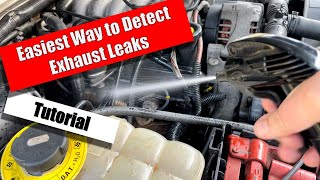
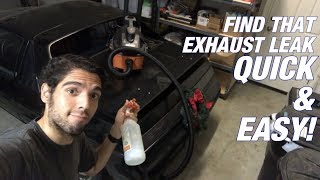
🎬 Watch: A simple trick to find hidden exhaust leaks quickly.Diagnostic Flowchart
Tap your situation to follow the diagnostic path that matches what you're seeing on this vehicle.
Generation note: This range covers the 5th Generation (2011-2015) and the early 6th Generation (2016-2018) Camaro. The 5th Gen uses the LFX V6 and LS3/L99 V8s, while the 6th Gen introduced the LGX V6 and LT1 V8. While the code's meaning is the same, the specific part numbers for injectors and sensors will differ. The TSBs apply across these model years, indicating the potential for similar issues on both generations. [⭐ MANUFACTURER TSB — highest authority]
Symptoms You May Notice
- Check Engine Light is on
- Reduced fuel economy
- Rough or erratic idle
- Engine hesitation or stumbling
- Smell of gasoline from the exhaust
- In some cases, black smoke from the exhaust
- Failed emissions test.
- Replacing the downstream oxygen sensor without first checking for exhaust leaks or testing the fuel injectors. Many owners on forums like Camaro5.com have replaced the sensor only to have the code return because the sensor was correctly reporting a problem caused by something else.
Most Likely Causes
- Faulty, Leaking, or Restricted Fuel Injector(s) on Bank 1 🔴 High Probability → Shop Fuel Injector GM Technical Service Bulletin #PIP4964F specifically highlights this as the most common cause, instructing technicians to perform an injector balance test early in the diagnosis. [⭐ MANUFACTURER TSB — highest authority] A restricted injector can cause a lean condition, which the ECM tries to correct by adding fuel, maxing out the trim and setting P2097.
How to confirm: Perform a fuel injector balance test using a professional scan tool or an Active Fuel Injector Tester (AFIT). A leaking injector will show a pressure drop, while a restricted one will flow less than the others.
Typical fix: Replace the faulty fuel injector(s). It is often recommended to replace all injectors on the affected bank at the same time.
Est. part cost: $50-$150 per injector - Exhaust System Leak (pre-sensor) 🟡 Medium Probability Leaks can occur at exhaust manifold gaskets, flange connections, or at the weld of the O2 sensor bung, especially after exhaust modifications. A small leak can pull outside oxygen into the exhaust stream, making the O2 sensor read a false lean condition.
How to confirm: Visually inspect for soot trails or cracks. The most effective method, recommended by GM TSB PIP4964F, is to pressurize the exhaust from the tailpipe with 5-8 PSI of air and spray soapy water on all joints, gaskets, and welds up to the engine. Look for bubbles. [⭐ MANUFACTURER TSB — highest authority] A smoke test is also effective.
Typical fix: Replace the leaking gasket or repair the leaking section of the exhaust pipe.
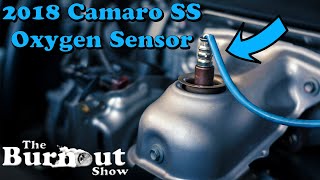
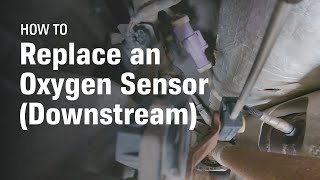
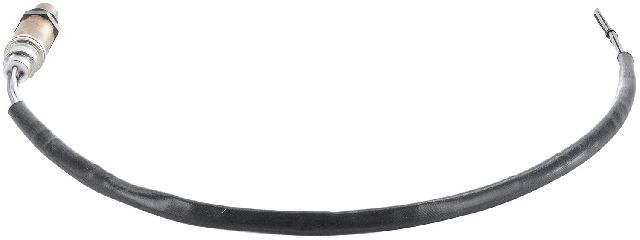
Est. part cost: $20-$100 - Faulty Downstream Oxygen Sensor (Bank 1, Sensor 2) ⚪ Low Probability → Shop Oxygen Sensor While sensors can fail, they are often replaced unnecessarily. A GM diagnostic aid for this code specifically states not to replace the O2 sensor unless a separate sensor circuit code is also present. The sensor is often correctly reporting a problem caused by something else.
How to confirm: Use a scan tool to monitor the voltage of the downstream O2 sensor on a warm engine. A healthy sensor should show a relatively steady voltage. If it's stuck high, low, or is not responding, it may be faulty.
Typical fix: Replace the Bank 1 downstream (post-catalyst) oxygen sensor.
Est. part cost: $50-$120 - Faulty Upstream Oxygen Sensor (Bank 1, Sensor 1) ⚪ Low Probability → Shop Oxygen Sensor
How to confirm: A failing upstream sensor can send incorrect data, causing the ECM to create a rich or lean condition that is then detected by the downstream sensor. Monitor its readings on a scan tool; it should fluctuate rapidly between ~0.1V and ~0.9V. If it's biased or slow to respond, it may be the cause.
Typical fix: Replace the Bank 1 upstream (pre-catalyst) oxygen sensor.
Est. part cost: $60-$150
Rare But Worth Checking
- High Fuel Pressure: A failing fuel pressure regulator can cause system-wide high pressure, leading to a rich condition. This would likely affect both banks, but could trigger a code on one side first.
- Contaminated or Failing Mass Airflow (MAF) Sensor: A dirty MAF sensor can under-report airflow, causing the ECM to inject more fuel than necessary. Cleaning the MAF sensor is a simple diagnostic step. TSB PIP5534A notes a skewed MAF can be a cause. [⭐ MANUFACTURER TSB — highest authority]
- EVAP Purge System Fault: A stuck-open EVAP purge valve can introduce un-metered fuel vapors into the intake, creating a rich condition. TSB PIP5534A recommends checking the purge system early in the diagnosis. [⭐ MANUFACTURER TSB — highest authority]
- Specific Driving Habits: GM TSB PIP5534A notes that certain driving styles, such as heavy stop-and-go traffic or being a "digital driver" (constantly accelerating then coasting), can induce a P2097 code without an actual vehicle fault. There is no mechanical fix for this. [⭐ MANUFACTURER TSB — highest authority]
Diagnosis Steps
- Scan for all DTCs. Note any other codes, especially for O2 sensor circuits, misfires (P0300), or catalyst efficiency (P0420).
- Check for TSBs. Specifically, review PIP4964F and PIP5534A for diagnostic guidance. [⭐ MANUFACTURER TSB — highest authority]
- Following TSB PIP5534A, check the EVAP purge valve and lines for faults. [⭐ MANUFACTURER TSB — highest authority]
- Following TSB PIP4964F, perform a fuel injector balance test (AFIT) to check for leaking or restricted injectors on Bank 1. This is the most common cause. [⭐ MANUFACTURER TSB — highest authority]
- Perform a thorough visual inspection of the Bank 1 exhaust system. Look for soot, cracks, or loose connections from the cylinder head to the post-catalyst O2 sensor.
- If no obvious leak is found, perform a low-pressure exhaust leak test as described in TSB PIP4964F. Apply 5-8 PSI of air to the tailpipe and spray joints and welds with soapy water. [⭐ MANUFACTURER TSB — highest authority]
- Use a scan tool to monitor live data. Observe long-term fuel trims under various conditions (idle in park, idle in drive, steady 50 mph) as per TSB PIP5534A. [⭐ MANUFACTURER TSB — highest authority] Check the voltage readings for both upstream (fluctuating) and downstream (steady) O2 sensors on Bank 1.
- Check fuel pressure to ensure it is within the manufacturer's specified range.
Parts You'll Likely Need
- Fuel Injector
(OEM #ACDelco 12669384 (For 3.6L V6 LFX/LLT, supersedes 12638530, 12632255, 12611545))— A primary cause identified in GM Technical Service Bulletin #PIP4964F for this code on this vehicle. [⭐ MANUFACTURER TSB — highest authority]
Trusted brands: ACDelco, Bosch
OEM price range: $90-$180
Aftermarket price range: $50-$120 - Downstream Oxygen Sensor (Bank 1 Sensor 2)
(OEM #ACDelco 213-4768 (also listed as GM 12639692))— This sensor is what detects the condition and sets the code. While often not the root cause, it can fail and send false readings.
Trusted brands: ACDelco, Denso, NGK
OEM price range: $80-$150
Aftermarket price range: $50-$120 - Exhaust Manifold Gasket — A common source of exhaust leaks that can cause incorrect O2 sensor readings and trigger P2097.
Trusted brands: ACDelco, Fel-Pro
OEM price range: $25-$50
Aftermarket price range: $15-$30
Related Codes That Often Appear With This One
- P2099 — This is the identical code but for Bank 2 (driver's side). If both are present, it points to a systemic issue like fuel pressure, a MAF problem, or an EVAP system fault.
- P0300 — A random misfire code can occur alongside P2097 if a leaking injector is fouling a spark plug or a restricted injector is causing a lean misfire.
- P0420 — Catalyst System Efficiency Below Threshold (Bank 1). A long-term rich condition can damage the catalytic converter, causing it to fail its efficiency test. This code often appears with P2097.
Technical Service Bulletins (TSBs) & Recalls
- PIP4964F: Recommends checking fuel injectors via a balance test for P2097 and provides a specific procedure for finding exhaust leaks.
- PIP5534A: Notes additional diagnostic assistance is available for code P2097, and can be caused by specific driving styles.
Platform-Specific Known Issues
- TSB #PIP4964F: Injector & Exhaust Leak Focus: This TSB advises technicians that the most common cause for P2097 is a fuel injector issue. It recommends performing an injector balance test before other diagnostics. It also details a specific low-pressure (5-8 PSI) air test to find subtle exhaust leaks that cause false lean readings. [⭐ MANUFACTURER TSB — highest authority]
- TSB #PIP5534A: Complex Diagnostics & Driving Habits: This bulletin provides advanced diagnostic steps applicable to the Camaro. It notes that P2097 can be tricky, and can even be caused by specific 'on-off' throttle driving habits. It also points to checking the EVAP system and for skewed MAF sensor readings. [⭐ MANUFACTURER TSB — highest authority]
Mechanic-Grade Diagnostic Values
- Upstream O2 Sensor (Bank 1, Sensor 1) Voltage — expected: Fluctuates rapidly between 0.1V and 0.9V on a warm, closed-loop engine.. Failure: Slow to respond, biased high or low, or a steady voltage.
- Downstream O2 Sensor (Bank 1, Sensor 2) Voltage — expected: Relatively steady voltage, typically around 0.45V to 0.8V, indicating the catalytic converter is working.. Failure: Fluctuating wildly similar to the upstream sensor (bad catalyst) or stuck high/low (bad sensor). A reading consistently above 0.8V triggers the P2097 rich code.
- Long-Term Fuel Trim (Bank 1) — expected: Close to 0%, within +/- 5%.. Failure: A highly positive number (e.g., > +10%) indicates the ECM is adding a large amount of fuel to compensate for a perceived lean condition, which is the trigger for the P2097 code.
- DTC Set Condition (RPM) — expected: The code P2097 will run its check when engine speed is between 1,280-3,480 RPM.. Failure: N/A
- DTC Set Condition (Engine Load) — expected: The code P2097 will run its check when the engine load is steady between 17-65%.. Failure: N/A
Scan Tool Commands That Help
- GDS2 (GM Global Diagnostic System 2): Fuel Injector Balance Test (AFIT - Active Fuel Injector Tester) — This is a primary diagnostic step recommended by TSB PIP4964F to identify restricted or leaking fuel injectors, which are a very common cause of P2097 on these vehicles. [⭐ MANUFACTURER TSB — highest authority]
- GDS2 (GM Global Diagnostic System 2): O2 Sensor Data / Fuel Trim Data — To monitor live voltage of both upstream and downstream O2 sensors and to check short-term and long-term fuel trim values. This helps determine if the sensor is reporting a valid rich/lean condition or if the sensor itself is faulty.
- GDS2 (GM Global Diagnostic System 2): Catalytic Converter Efficiency Test — If the downstream O2 sensor voltage is fluctuating instead of steady, this test can be run to confirm if the catalytic converter has failed, which can be a consequence of a long-term rich condition.
Wiring & Ground Locations
- Bank 1 Sensor 1 (Upstream) Connector — On the V6, Bank 1 is the passenger side. The upstream sensor is located on the exhaust manifold before the catalytic converter. The connector is typically accessible from the top of the engine bay.. Damaged wiring or a poor connection at this sensor can send incorrect air/fuel ratio data to the ECM, causing it to over-fuel and leading the downstream sensor to report a rich condition.
- Bank 1 Sensor 2 (Downstream) Connector — On the V6, Bank 1 is the passenger side. The downstream sensor is located after the catalytic converter. The connector is accessible from under the vehicle.. This is the sensor that sets the code. Damaged wiring, moisture, or corrosion in its connector can cause it to send a false 'rich' signal to the ECM.
- O2 Sensor Wiring (General) — The wiring harness for O2 sensors runs close to hot exhaust components.. Melted insulation, chafing, or breaks in the wires can cause shorts or opens in the sensor circuit, leading to incorrect readings and triggering the P2097 code. A visual inspection of the harness is critical.
Real Owner Repair Stories
- Camaro5 Forum user (2011 Camaro LT (V6)) — P2097 code (Post catalyst fuel trim too rich Bank 1)
❌ Tried (didn't work) Replacing the post-catalyst (downstream) O2 sensor.
✅ What actually fixed it The user was advised by another technician on the forum that the most likely cause was a faulty fuel injector or an exhaust leak before the sensor. The final fix was replacing the fuel injectors on Bank 1.
"I Checked Everything" — The Actual Cause
- A technician on a Camaro forum reported a case on a similar GM vehicle (Malibu) where a smoke test did not reveal an exhaust leak, yet P2097 persisted. The actual cause was a tiny, almost invisible pinhole in the weld where the O2 sensor bung was attached to the exhaust pipe. It didn't leak enough smoke to be seen easily but allowed just enough outside air to be pulled in, skewing the sensor's reading and causing the code. This was found by pressurizing the exhaust and using soapy water, as recommended in TSB PIP4964F.
OEM Part Supersession History
12611545, 12632255, 12638530→ACDelco 12669384— Standard part evolution, design improvement, or consolidation for the 3.6L V6 (LLT/LFX) engines.
Model Year Variations Within This Range
- 2011-2015 (5th Gen V6): These models use the LFX 3.6L V6 engine. While the long block is similar across FWD and RWD GM platforms, the Camaro (RWD) has a specific intake manifold, oil filter housing, and accessory drive configuration. When diagnosing, ensure parts and diagrams are for the RWD LFX.
- 2016-2018 (6th Gen V6): These models use the LGX 3.6L V6 engine. This is a significant redesign from the LFX, with almost no major parts being interchangeable, including different bore, connecting rods, cylinder heads, and timing system. While the P2097 code has the same meaning, the specific components (injectors, sensors) and their locations may differ slightly. The LGX also features Active Fuel Management (AFM) on some cylinders, adding complexity.
Helpful Videos


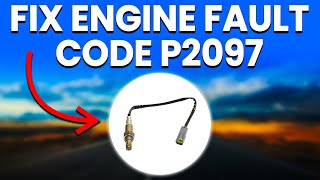
We Have This Part in Stock

The information in this article is provided for general reference and educational purposes only. Vehicle specifications, procedures, and part compatibility can vary by production date, trim level, and region. Always consult your vehicle's factory service manual and verify part numbers before purchasing or performing repairs. Safety-critical components such as airbags, seat belts, and braking systems should be installed by a qualified professional.
- Chevrolet CAMARO:
- 🧭 Diagnostic Flowchart
- 🎬 Helpful Videos
- 🛍️ Shop This Part
- What's Unique About the 2011-2018 Chevrolet CAMARO
- Symptoms You May Notice
- Most Likely Causes
- Rare But Worth Checking
- Diagnosis Steps
- Parts You'll Likely Need
- Related Codes That Often Appear With This One
- Technical Service Bulletins (TSBs) & Recalls
- Platform-Specific Known Issues
- Mechanic-Grade Diagnostic Values
- Scan Tool Commands That Help
- Wiring & Ground Locations
- Real Owner Repair Stories
- "I Checked Everything" — The Actual Cause
- OEM Part Supersession History
- Model Year Variations Within This Range
- 🎟️ Get 5% Off