

P2097 on 2015-2022 Chevrolet Colorado: Rich Fuel Trim Causes and Fixes
On a 2015-2022 Chevy Colorado, code P2097 is most often caused by a leaking fuel injector or a small exhaust leak near the catalytic converter. Diagnosis should start with a fuel injector balance test as recommended by GM's technical service bulletins, before suspecting the oxygen sensor.
- For a P2097 on a 2015-2022 Colorado, suspect a leaking fuel injector first.
- Always perform a fuel injector balance test before replacing oxygen sensors.
- Thoroughly check for small exhaust leaks at the manifold and converter gaskets.
- Do not automatically replace the catalytic converter; it is almost never the root cause of this code.
- Check for any available ECM software updates, as this can be a simple fix in some cases.
What's Unique About the 2015-2022 Chevrolet COLORADO

Unlike many vehicles where an oxygen sensor is the immediate suspect, General Motors has issued specific guidance for the Colorado and other models with this code. Technical Service Bulletin #PIP4964F strongly points towards leaking fuel injectors as a primary cause for P2097 on the 3.6L V6 engine. The bulletin advises technicians to perform a fuel injector balance test before other complex diagnostics. This suggests that on this platform, a fuel system issue is more probable than a simple sensor failure. A forum post on a related GM vehicle echoes this, stating that an O2 sensor will not cause this DTC to set without other circuit-related O2 sensor codes.
Diagnostic Flowchart

Tap your situation to follow the diagnostic path that matches what you're seeing on this vehicle.
Symptoms You May Notice
- Check Engine Light is on
- Reduced fuel economy
- Rough or unstable idle
- Engine hesitation or stumbling during acceleration
- A faint smell of fuel or rotten eggs from the exhaust
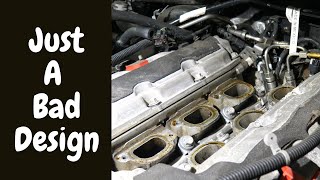
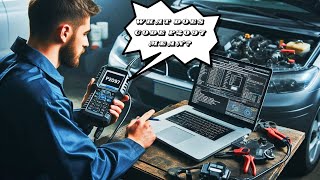
- Black smoke from the tailpipe 🎬 Watch: A helpful breakdown of P2097 symptoms and common causes. in extreme cases
- Replacing the catalytic converter. A P2097 code is rarely caused by a bad converter. The converter is usually the victim of the rich condition, not the cause.
- Replacing the oxygen sensor without proper diagnosis. The O2 sensor is often just the messenger. If there are no specific O2 sensor circuit codes, investigate fuel and exhaust leak issues first, as recommended by GM.
Most Likely Causes

- Leaking Fuel Injector(s) 🔴 High Probability → Shop Fuel Injector GM Technical Service Bulletin #PIP4964F identifies fuel injectors as the most common concern for this code on the 3.6L V6 engine. An injector may be stuck partially open, dripping excess fuel into a cylinder, which the downstream O2 sensor detects.
How to confirm: Perform a fuel injector balance test or an Active Fuel Injector Test (AFIT) using a capable scan tool. This measures the pressure drop for each injector to see if one is flowing more fuel than the others. TSB #PIP5534A also recommends an AFIT test if other diagnostics don't find a cause.
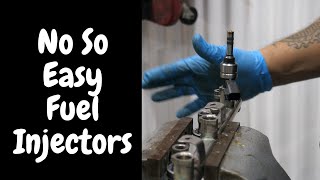
Typical fix: Replace the faulty fuel injector(s). 🎬 Watch: Part 1 of this step-by-step direct injector replacement guide. It is often recommended to replace them as a set to ensure balanced flow.
Est. part cost: $50-$150 per injector - Exhaust System Leak 🟡 Medium Probability TSB #PIP4964F notes that small leaks, especially at the gasket between the engine and the catalytic converter, can pull outside air into the exhaust stream. This extra oxygen can affect sensor readings, causing the ECM to incorrectly adjust fuel mixture.
How to confirm: Visually inspect the exhaust manifold and converter gaskets for black soot trails. A professional method is to introduce low-pressure smoke or air (5-8 psi) into the tailpipe and spray the gasket areas with soapy water, looking for bubbles.
Typical fix: Replace the leaking exhaust gasket or repair the cracked pipe. For small leaks, exhaust putty can sometimes be used as a temporary fix.
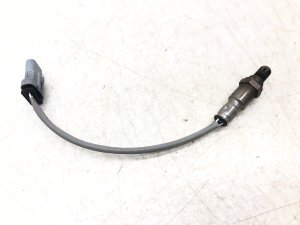
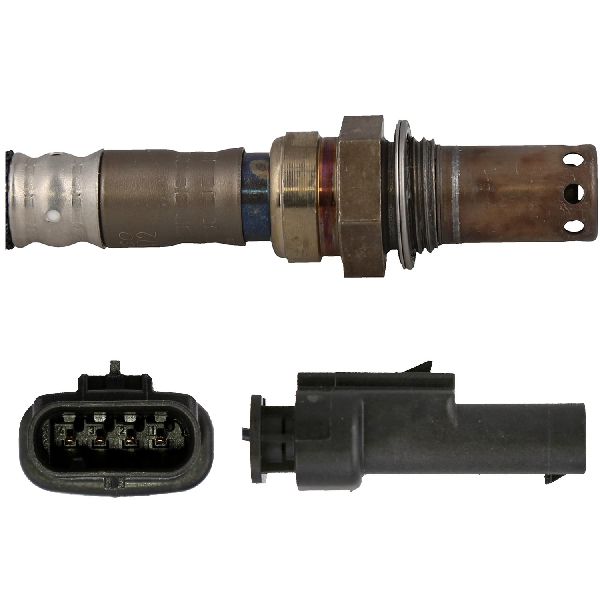
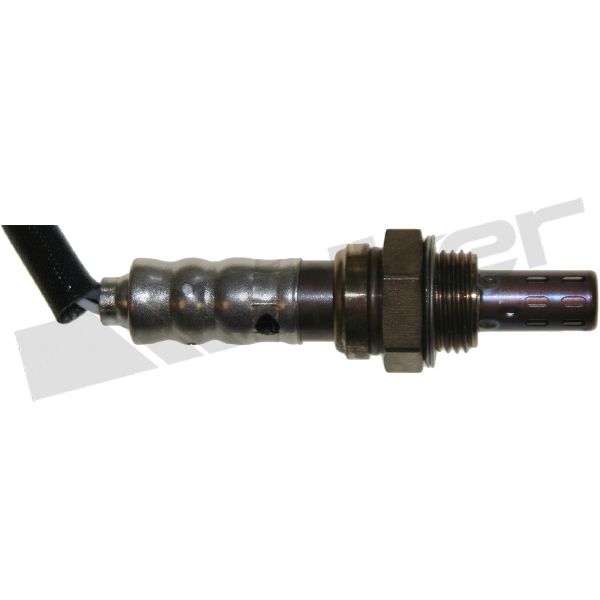
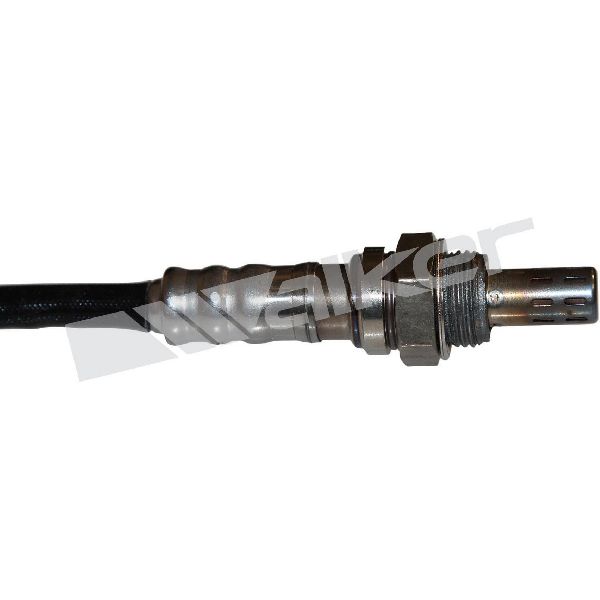
Est. part cost: $20-$60 for gaskets - Faulty Downstream Oxygen Sensor (Bank 1, Sensor 2) 🟡 Medium Probability → Shop Oxygen Sensor The sensor itself can fail, sending a false 'rich' signal to the computer. However, this is also a common misdiagnosis, as the sensor is often reporting a problem that originates elsewhere. A GM forum discussion notes that this code is rarely set by a faulty O2 sensor alone without accompanying sensor circuit codes.
How to confirm: Use a scan tool to monitor the live voltage data from the downstream O2 sensor. A healthy sensor should show a relatively steady voltage (typically 0.6-0.8V) after the engine warms up. If the voltage is stuck high (above 0.8V) or fluctuating wildly like the upstream sensor, it may be faulty, assuming no exhaust leaks or fuel issues are present.
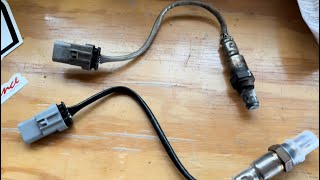
Typical fix: Replace the Bank 1 downstream (post-catalyst) oxygen sensor. 🎬 See this walkthrough for replacing the upstream and downstream sensors.
Est. part cost: $50-$120 - EVAP System Purge Valve Issue ⚪ Low Probability Other GM TSBs for P2097 (like #PIP5534A) point to the EVAP system. If the purge valve sticks open, it can allow unmetered fuel vapors from the charcoal canister to enter the intake manifold, creating a rich condition.
How to confirm: With the engine running, disconnect the purge line from the solenoid and check for vacuum. There should be no vacuum at idle until the ECM commands it open. You can also test the valve with a hand-held vacuum pump.
Typical fix: Replace the EVAP purge solenoid valve.
Est. part cost: $25-$75
Rare But Worth Checking
- ECM Software Anomaly: GM has issued software updates to correct overly sensitive fuel trim monitoring on other models. TSB 19-NA-017 for the 2017 Malibu addresses P2097 caused by a software anomaly. Another bulletin, 18-NA-047, addresses a false P2097 on the 2017-2018 Volt that requires an ECM reprogram. It's worth checking if a similar update is available for your Colorado before replacing expensive parts.
- Contaminated or Skewed Mass Airflow (MAF) Sensor: A dirty MAF sensor can misread the amount of air entering the engine, causing the ECM to add too much fuel. TSB #PIP5534A mentions a skewed MAF sensor as a possible cause. Cleaning the sensor with a dedicated MAF sensor cleaner is a simple and inexpensive diagnostic step.
- Driving Style: TSB #PIP5534A notes that certain driving habits, such as extensive stop-and-go traffic or a 'digital driver' style (constantly on and off the throttle), can sometimes induce this code on some GM vehicles. In these specific cases, GM states there is no mechanical fix.
Diagnosis Steps

- Read all stored DTCs with an OBD-II scanner. Note any other codes besides P2097 and check freeze frame data.
- Visually inspect the exhaust system from the engine to the catalytic converter. Look for black soot marks indicating a gasket leak, especially at flanges.
- Using a scan tool, observe live data for Long Term Fuel Trim (LTFT) and Short Term Fuel Trim (STFT) on Bank 1. High negative numbers (e.g., more negative than -10%) confirm the ECM is trying to correct a rich condition.
- Observe the voltage of the Bank 1 Sensor 2 (downstream) O2 sensor. It should be relatively stable. If it's stuck high (e.g., >0.8V), it indicates a rich condition is being detected.
- Perform a fuel injector balance test (AFIT). This is the key step recommended by GM TSB #PIP4964F to identify leaking injectors.
- If injectors test good, perform an exhaust leak test. Pressurize the exhaust with low-pressure air or smoke and check for leaks at gaskets and welds with soapy water.
- Test the EVAP purge solenoid to ensure it is not stuck open and leaking fuel vapors into the intake. TSB #PIP5534A mentions this as a diagnostic step.
- If no leaks or injector issues are found, test the O2 sensor's wiring and function directly. Check for damaged wiring or melted connectors near the exhaust.
- Check the air filter and clean the MAF sensor with dedicated cleaner. TSB #PIP5534A notes a skewed MAF or non-OEM air filter can be a cause.
- Finally, check with a dealership or professional service database (like ALLDATA) for any available ECM software updates related to fuel trim diagnostics, referencing bulletins like 19-NA-017 or 18-NA-047 as examples for other GM models.
Parts You'll Likely Need
- Fuel Injector
(OEM #ACDelco 12661025 (for 3.6L LFX/LGZ))— Identified by GM as a primary cause for this code on the Colorado. A leaking injector directly creates the rich condition.
Trusted brands: ACDelco, Bosch, Delphi
OEM price range: $100-$180
Aftermarket price range: $50-$120 - Exhaust Manifold to Converter Gasket — A common location for exhaust leaks that can trigger a false P2097 code.
Trusted brands: ACDelco, Fel-Pro, Walker Exhaust
OEM price range: $30-$60
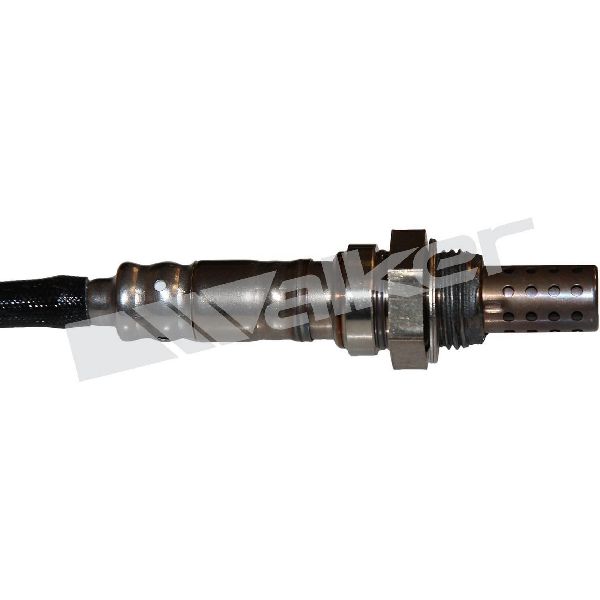
Aftermarket price range: $15-$40 - Downstream Oxygen Sensor (Bank 1, Sensor 2)
(OEM #ACDelco 12663317)— The sensor itself can fail, but it should be tested after checking for leaks and fuel issues. This part is a common replacement for various GM vehicles.
Trusted brands: ACDelco, Denso, Bosch
OEM price range: $70-$130
Aftermarket price range: $40-$90
Related Codes That Often Appear With This One
- P2099 — This is the same 'Post Catalyst Fuel Trim Too Rich' code, but for Bank 2 on V6 engines. Seeing both together points to a systemic issue affecting both banks, like a fuel pressure problem or a MAF sensor issue.
- P0172 — This code means 'System Too Rich Bank 1' as detected by the *upstream* oxygen sensor. If you have both P0172 and P2097, it strongly confirms a persistent rich condition on Bank 1, likely from a leaking injector or fuel pressure issue.
- P030X — These are misfire codes (e.g., P0301 for cylinder 1). A severe fuel injector leak can foul the spark plug and cause a misfire on the corresponding cylinder.
Technical Service Bulletins (TSBs) & Recalls
- PIP4964F: Points to leaking fuel injectors or exhaust leaks as the primary cause on the 3.6L V6.
- PIP5534A: Mentions EVAP issues, skewed MAF sensors, and even driving style as potential causes for P2097 on 2.0L and 2.5L engines.
- 19-NA-017: A software update released for the 2017 Chevy Malibu to fix a software anomaly causing P2097.
- 18-NA-053: A service update for the Chevy Volt involving an ECM reprogram for a false P2097 code.
Platform-Specific Known Issues
- GM TSB #PIP4964F specifically calls out P2097 on the 2015-2022 Colorado 3.6L and recommends performing a fuel injector balance test before extensive diagnosis.
Mechanic-Grade Diagnostic Values
- Downstream O2 Sensor (Bank 1 Sensor 2) Voltage — expected: Relatively steady voltage between 0.4V and 0.6V at idle once warmed up.. Failure: Stuck high (above 0.8V) indicates a rich condition is being detected. Fluctuating rapidly like the upstream sensor (0.1V-0.9V) can indicate a failing catalytic converter.
- Long Term Fuel Trim (LTFT) — expected: Within a normal range of -13% to +13% as defined by GM TSB PIP5534A.. Failure: Consistently high negative values (e.g., -15% or more) confirm the ECM is compensating for a perceived rich condition.
- Upstream O2 Sensor (Bank 1 Sensor 1) Voltage — expected: Rapidly fluctuating between approximately 0.1V (lean) and 0.9V (rich) in closed-loop operation.. Failure: A slow or non-responsive sensor can itself cause fuel control issues, though P2097 is a post-catalyst code.
Scan Tool Commands That Help
- GM GDS2 / Professional Scan Tool: Active Fuel Injector Test (AFIT) / Injector Balance Test — This is a primary diagnostic step recommended by GM TSB #PIP4964F to identify leaking or poorly performing fuel injectors, which are a top cause for P2097 on this platform.
- GM SPS (Service Programming System): ECM Reprogramming — Used to apply software updates that may resolve false P2097 codes caused by software anomalies, as documented in TSBs for other GM models like 19-NA-017 and 18-NA-047. This should be considered after ruling out mechanical faults.
Wiring & Ground Locations
- G101 / G103 — Typically located on the lower left side of the engine block. A poor connection here can affect the Engine Control Module (ECM).. The ECM and its sensors, including the O2 sensors, rely on a clean and solid ground reference. A corroded or loose engine ground can introduce electrical noise and voltage offsets, leading to incorrect sensor readings and false trouble codes.
- Splice Pack SP105 / SP106 (First Gen design pattern) — Under the hood, near the battery (SP105) and airbox (SP106) on earlier models. Check for similar junction points on the 2nd generation.. These ground splice packs are known points of failure due to corrosion. Multiple circuits, potentially including sensor grounds or related systems, run through these packs. A failure here can cause erratic behavior that is difficult to trace.
Real Owner Repair Stories
- Reddit user comment in r/cars (GM Flex Fuel vehicle (model not specified, but behavior is relevant)) — P2097 Check Engine Light
❌ Tried (didn't work) Initial suspicion was a faulty oxygen sensor.
✅ What actually fixed it A software update to the powertrain control module (PCM). The issue was a glitch where the computer miscalculated the ethanol percentage in the fuel, especially if the tank was often run low and not filled completely. - Reddit user comment in r/MechanicAdvice (2017 Chevrolet Equinox 2.4L (related GM platform)) — Intermittent, then persistent P2097 code at highway speeds.
❌ Tried (didn't work) Checking for exhaust, intake, and vacuum leaks (none found).
✅ What actually fixed it The code appeared after a previous repair by another mechanic. The root cause was discovered to be a high-pressure fuel pump that had been left very loose, causing it to pump insufficient fuel volume. Properly installing a new pump resolved the issue.
"I Checked Everything" — The Actual Cause
- A 'digital driver' habit (frequently accelerating then coasting) or extensive stop-and-go city driving can induce a P2097 code, according to GM TSB PIP5534A. In this case, all mechanical and electrical tests would pass, as there is no component failure.
- A software glitch in a Flex Fuel vehicle's programming can cause the ECM to miscalculate the ethanol content of the fuel, leading to incorrect fuel trimming and a P2097 code, even with no physical leaks or faulty parts.
Model Year Variations Within This Range
- 2015-2016 vs 2017-2022: The 3.6L V6 engine was updated in 2017 from the LFX to the LGZ. The LGZ is considered a new-generation, 'clean sheet redesign' with a different block, increased bore, and different power/torque characteristics, though they are architecturally similar. While many P2097 causes are shared, diagnostics or parts could differ slightly between these engine versions.
Helpful Videos

![How to Fix P2097 Engine Code in 4 Minutes [2 DIY Methods / Only $9.84]](https://img.youtube.com/vi/rCwtzRmhMwY/mqdefault.jpg)
Used OEM Parts in Stock
New Aftermarket Parts Available

The information in this article is provided for general reference and educational purposes only. Vehicle specifications, procedures, and part compatibility can vary by production date, trim level, and region. Always consult your vehicle's factory service manual and verify part numbers before purchasing or performing repairs. Safety-critical components such as airbags, seat belts, and braking systems should be installed by a qualified professional.
- Chevrolet COLORADO:
- 🧭 Diagnostic Flowchart
- 🎬 Helpful Videos
- 🛍️ Shop This Part
- What's Unique About the 2015-2022 Chevrolet COLORADO
- Symptoms You May Notice
- Most Likely Causes
- Rare But Worth Checking
- Diagnosis Steps
- Parts You'll Likely Need
- Related Codes That Often Appear With This One
- Technical Service Bulletins (TSBs) & Recalls
- Platform-Specific Known Issues
- Mechanic-Grade Diagnostic Values
- Scan Tool Commands That Help
- Wiring & Ground Locations
- Real Owner Repair Stories
- "I Checked Everything" — The Actual Cause
- Model Year Variations Within This Range
- 🎟️ Get 5% Off