

P2097 on 2008-2015 Chevrolet Equinox: Causes and Fixes for Rich Fuel Trim
Code P2097 on a 2008-2015 Chevy Equinox means the exhaust is too rich (too much fuel) after the catalytic converter. The most common causes are a faulty downstream oxygen (O2) sensor, a cracked exhaust manifold, or a leaking fuel injector. A GM Technical Service Bulletin (PIP4964F) specifically points to checking for leaking fuel injectors, while another common failure on the 2.4L engine is a cracked exhaust manifold, which can also trigger the code.
- P2097 means the computer sees a rich fuel mixture after the catalytic converter.
- For the 2008-2015 Equinox, don't just assume it's the O2 sensor. A GM Technical Service Bulletin strongly suggests checking for leaking fuel injectors first.
- Other common causes include a bad downstream O2 sensor or an exhaust leak before the upstream O2 sensor.
- Driving with this code can damage your catalytic converter over time, leading to a much more expensive repair.
- An experienced DIYer can diagnose and fix most causes, but confirming a bad fuel injector may require specialized tools.
What's Unique About the 2008-2015 Chevrolet EQUINOX

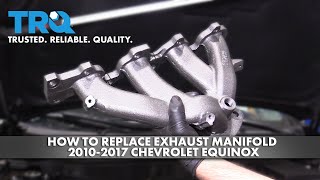
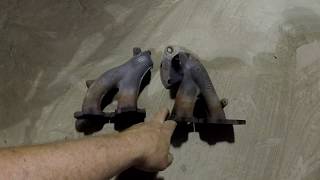
While a faulty O2 sensor is a common cause for this code on many vehicles, the 2010-2015 Equinox with the 2.4L Ecotec engine is particularly prone to two specific issues. First, General Motors has issued a Technical Service Bulletin (TSB #PIP4964F) advising technicians to perform a fuel injector balance test before other diagnostics, suggesting that leaking fuel injectors are a known problem. Second, these engines are notorious for cracked exhaust manifolds 🎬 Watch: See how these 2.4L manifolds crack and leak., which create an exhaust leak before the O2 sensors and can trick the system into a rich condition. Some owners have also reported that a PCM software glitch, especially on Flex Fuel models, can incorrectly trigger this code, which may be resolved with a dealer-performed update.
Diagnostic Flowchart

Tap your situation to follow the diagnostic path that matches what you're seeing on this vehicle.
Generation note: This year range covers the end of the first generation (2008-2009) and the first part of the second generation (2010-2015). The 2.4L 4-cylinder and various V6 engines were available. While the code's meaning is consistent, the 2.4L direct-injection engine in the second generation is particularly noted for fuel system and emissions-related issues, including cracked exhaust manifolds and high-pressure fuel pump failures.
Symptoms You May Notice
- Check Engine Light is on.
- Reduced fuel economy.
- Rough or erratic idle.
- Engine hesitation or stumbling during acceleration.
- A strong smell of fuel from the exhaust, sometimes described as 'rotten eggs'.
- In rare cases, black smoke from the tailpipe.
- Audible ticking or hissing sound from the engine bay, especially when cold, indicating a cracked manifold.
- Replacing the catalytic converter when the actual problem is a faulty O2 sensor, a cracked exhaust manifold, or a leaking fuel injector.
- Replacing the downstream O2 sensor when an upstream exhaust leak (cracked manifold) is the root cause.
- Replacing any hardware when the issue is a PCM software glitch on a Flex Fuel vehicle.
Most Likely Causes

- Exhaust Leak (especially Cracked Exhaust Manifold) 🔴 High Probability The 2.4L Ecotec engine is widely known to develop cracks in the factory exhaust manifold. This is a very common point of failure. A leak before the upstream O2 sensor allows unmetered air in, causing the sensor to read lean and command the ECM to add excess fuel, resulting in a rich condition downstream.
How to confirm: Visually inspect the exhaust manifold for cracks, often appearing near the welds or collectors. Listen for a distinct ticking or exhaust leak sound from the engine bay that may quiet down as the engine warms up and the metal expands. A shop can use a smoke machine to pinpoint the leak.
Typical fix: Replace the cracked exhaust manifold and gasket. This is a common DIY or shop repair for this vehicle.
Est. part cost: $150-$300 for an aftermarket manifold kit - Leaking or Faulty Fuel Injectors 🔴 High Probability → Shop Fuel Injector A specific GM Technical Service Bulletin (PIP4964F) directs technicians to check fuel injectors early in the diagnostic process for this code, indicating it's a known issue. An injector can get stuck open or leak, dumping excess fuel into a cylinder.
How to confirm: Perform a fuel injector balance test using a professional scan tool or an injector testing kit. A mechanic can also perform a leak-down test. Pulling the spark plugs may also reveal one that is significantly darker or wetter than the others.
Typical fix: Replace the faulty fuel injector(s).
Est. part cost: $50-$150 per injector - Faulty Downstream Oxygen Sensor (Bank 1, Sensor 2) 🟡 Medium Probability → Shop Oxygen Sensor O2 sensors are wear-and-tear items that degrade over time, leading to inaccurate readings. They can fail and get 'stuck' reading rich, even if the fuel mixture is correct.
How to confirm: Use a scan tool to monitor the live voltage data from the downstream O2 sensor. A healthy sensor should show a relatively steady voltage (typically 0.6-0.8V). If it's stuck high (above 0.8V) or not responding, it's likely faulty.
Typical fix: Replace the Bank 1 Sensor 2 oxygen sensor. The ACDelco OEM part number for many 2.4L models is 213-4768.
Est. part cost: $40-$120 - Failing Catalytic Converter ⚪ Low Probability → Shop Catalytic Converter If the converter becomes clogged or contaminated (e.g., from excessive oil consumption in some 2.4L engines), it can't properly process the exhaust gases, leading to a rich reading downstream. This should be the last part to check.
How to confirm: A temperature gun can be used to check the inlet and outlet temperatures of the converter; the outlet should be significantly hotter. A fluctuating downstream O2 sensor reading that mimics the upstream sensor on a scan tool also points to a bad converter.
Typical fix: Replace the catalytic converter. This is an expensive repair and should only be done after ruling out all other causes.
Est. part cost: $400-$1200+
Rare But Worth Checking
- Powertrain Control Module (PCM) Software Issue: → Shop Engine Control Module (ECM) On some GM vehicles, particularly Flex Fuel models, a software glitch can cause the computer to miscalculate the fuel's ethanol content, leading to a false P2097 code. This often happens after refueling from a low tank level. A software update (reflash) from a GM dealer is the required fix. TSBs for other Chevy models confirm software anomalies can cause this code.
- Leaking High-Pressure Fuel Pump (HPFP): The 2.4L direct-injection engine has a camshaft-driven high-pressure fuel pump. The seal on this pump can fail, causing fuel to leak directly into the crankcase and mix with the engine oil. This creates a rich condition (often setting P0172 first) and can lead to P2097. Check the oil for a strong fuel smell.
- High Fuel Pressure: A faulty fuel pressure regulator or a problem with the low-pressure fuel pump can cause excessive fuel to be delivered to the injectors. This should be checked with a fuel pressure gauge if injectors and sensors test good.
Diagnosis Steps
- Scan the vehicle for any other DTCs. Address any misfire (P030x), fuel system (P0172), or upstream O2 sensor codes first.
- Thoroughly inspect the exhaust manifold for cracks, especially on the 2.4L engine. Also check gaskets and the flex pipe for black soot or audible hissing.
- Use a scan tool to observe live data. Watch the short-term and long-term fuel trims for Bank 1. High negative numbers confirm the engine is trying to correct a rich condition.
- Observe the voltage of the downstream O2 sensor (Bank 1, Sensor 2). It should be relatively stable. A reading stuck high (e.g., >0.8V) indicates a rich condition or a faulty sensor.
- If driving a 2.4L GDI engine, check the engine oil on the dipstick for a strong smell of gasoline, which points to a leaking High-Pressure Fuel Pump (HPFP).
- Following GM TSB PIP4964F, perform a fuel injector balance test to check for leaking or poorly performing injectors.
- If no other cause is found, especially on a Flex Fuel model, inquire with a GM dealer about a potential PCM software update to correct false P2097 codes.
- As a final step, check the catalytic converter efficiency using a scan tool or temperature readings, but only after all other possibilities have been exhausted.
Parts You'll Likely Need

- Exhaust Manifold with Gasket Kit — The exhaust manifold on the 2.4L Ecotec engine is a very common failure item that cracks and causes exhaust leaks, leading to this code.
Trusted brands: Dorman, AP Exhaust, Walker
OEM price range: $300-$500
Aftermarket price range: $150-$300 - Downstream Oxygen Sensor (Bank 1 Sensor 2)
(OEM #ACDelco 213-4768 (for 2011-2017 2.4L models, verify fitment))— This sensor provides the reading that triggers the code. It is a common failure point due to age and exposure to hot exhaust gases.
Trusted brands: ACDelco, Denso, Bosch, Walker
OEM price range: $80-$150
Aftermarket price range: $40-$100 - Fuel Injector — A GM service bulletin specifically highlights leaking fuel injectors as a likely cause for this code on these vehicles.
Trusted brands: ACDelco, Standard Motor Products (SMP), Bosch
OEM price range: $100-$200
Aftermarket price range: $50-$150
Related Codes That Often Appear With This One
- P0172 — P0172 indicates "System Too Rich (Bank 1)" based on the *upstream* O2 sensor. If both appear, it strongly suggests a true rich condition caused by something like a leaking injector or a faulty high-pressure fuel pump.
- P2099 — This is the same code but for Bank 2 (on V6 engines). If seen together, it points to a systemic issue affecting both engine banks, like a fuel pressure problem or a software issue.
- P0420 — P0420 indicates "Catalyst System Efficiency Below Threshold". This can appear alongside P2097 if the rich condition has damaged or contaminated the catalytic converter over time.
Technical Service Bulletins (TSBs) & Recalls
- PIP4964F: Service Engine Soon lamp on with DTC P2097 or P2099, advising technicians to perform an injector balance test.
- 18-NA-047 / 19-NA-017 (Related): While for other Chevy models (Volt, Malibu), these TSBs show a pattern of GM addressing false P2097 codes with ECM software updates, corroborating this as a potential issue on the Equinox.
Platform-Specific Known Issues
- TSB #PIP4964F: GM issued this bulletin to draw attention to faulty fuel injectors as a primary cause for P2097, advising a balance test before replacing other components.
- Cracked Exhaust Manifold: The 2.4L Ecotec engine used from 2010-2015 has a very high rate of exhaust manifold cracking. This is a well-documented failure pattern among owners and mechanics and a primary suspect for code P2097.
- High-Pressure Fuel Pump (HPFP) Failure: On the 2.4L direct-injection engine, the HPFP is known to leak fuel into the engine oil, causing a rich condition and potential engine damage. A strong fuel smell in the oil is the key indicator.
Mechanic-Grade Diagnostic Values
- Downstream O2 Sensor (Bank 1 Sensor 2) Voltage — expected: Relatively steady reading around 0.45V on a warm, running engine at steady RPM.. Failure: Voltage is stuck high (consistently >0.8V) or is fluctuating rapidly similar to the upstream sensor.
- Upstream O2 Sensor (Bank 1 Sensor 1) Voltage — expected: Rapidly switching between approximately 0.1V (lean) and 0.9V (rich) on a warm, running engine.. Failure: Sensor is slow to respond or stuck at a specific voltage.
- PCM Ground Circuit Resistance (2.4L Engine) — expected: Less than 1.0 ohm.. Failure: Resistance reading is higher than 1.0 ohm, indicating a poor ground connection.
Scan Tool Commands That Help
- GM GDS2 / Professional Scan Tool: Injector Balance Test / Active Fuel Injector Test — Use this command to test for leaking or malfunctioning fuel injectors, as recommended by GM TSB #PIP4964F for diagnosing P2097.
- GM GDS2 / Professional Scan Tool: Fuel Trim Reset — After replacing a component that affects the air/fuel mixture (like an O2 sensor, fuel injector, or manifold), this function should be used to clear the old learned fuel trim values from the ECM.
Wiring & Ground Locations
- G112 — On the 2.4L engine, this ground is located on the lower left front of the engine.. This is a primary ground point for the Engine Control Module (ECM). A poor connection at G112 can cause erratic sensor readings and incorrect ECM behavior, potentially leading to false trouble codes.
- F41 & F42 Fuses — In the underhood fuse block, located next to the brake fluid reservoir on the driver's side.. On 2010-2017 models, fuses F41 and F42 supply power to the oxygen sensor circuits. A blown fuse will cause the sensor's heater to fail, leading to incorrect readings and codes.
- ECM Ground Pins — On the main ECM connectors (gray and black connectors on a 2013 2.4L), the grounds are large black-and-white wires.. These specific pins provide the ground path for the entire ECM. Verifying a low-resistance path from these pins to the battery negative terminal is a crucial step in ruling out electrical issues.
OEM Part Supersession History
GM 12639692→ACDelco 213-4768 (Service Part Number)— Standard practice where GM assigns a different part number for dealership/aftermarket service parts versus the original production line part.
Heads up: Part 213-4768 is specified for 2011-2017 2.4L Equinox models. The 2010 model may use a different part. Some sources indicate that programming may be required after installation for the vehicle to operate correctly.
Model Year Variations Within This Range
- 2010-2015 (Second Generation): These models use 2.4L direct-injection engines (RPO codes LAF, LEA). They are uniquely susceptible to failures of the high-pressure fuel pump (HPFP) leaking fuel into the crankcase, which is not a risk on earlier engines. The cracked exhaust manifold issue is also most prevalent on these DI engines.
- 2008-2009 (First Generation): These models used a 2.4L LE5 port-injected engine. They do not have a high-pressure fuel pump and have different exhaust manifold designs, making the common failure points of the second generation less likely.
Helpful Videos


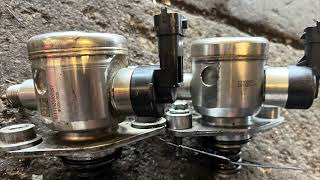
![How to Fix P2097 Engine Code in 4 Minutes [2 DIY Methods / Only $9.84]](https://img.youtube.com/vi/rCwtzRmhMwY/mqdefault.jpg)

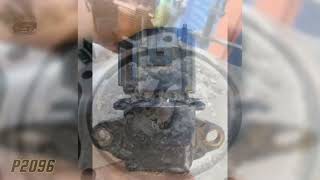
We Have This Part in Stock

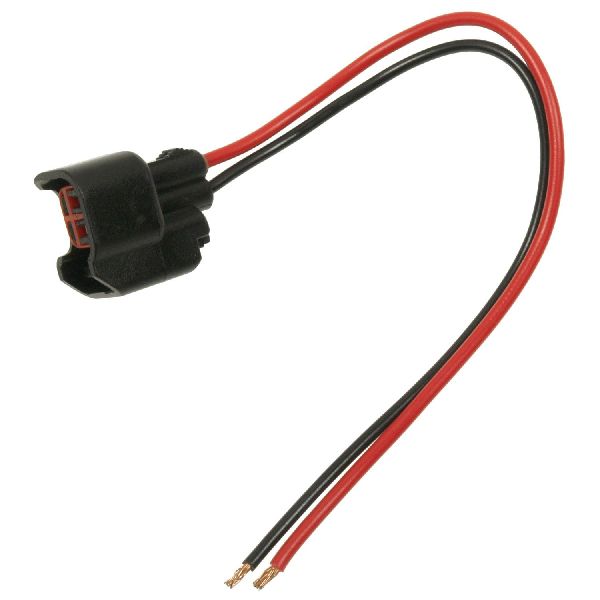


The information in this article is provided for general reference and educational purposes only. Vehicle specifications, procedures, and part compatibility can vary by production date, trim level, and region. Always consult your vehicle's factory service manual and verify part numbers before purchasing or performing repairs. Safety-critical components such as airbags, seat belts, and braking systems should be installed by a qualified professional.
- Chevrolet EQUINOX:
- 🧭 Diagnostic Flowchart
- 🎬 Helpful Videos
- 🛍️ Shop This Part
- What's Unique About the 2008-2015 Chevrolet EQUINOX
- Symptoms You May Notice
- Most Likely Causes
- Rare But Worth Checking
- Diagnosis Steps
- Parts You'll Likely Need
- Related Codes That Often Appear With This One
- Technical Service Bulletins (TSBs) & Recalls
- Platform-Specific Known Issues
- Mechanic-Grade Diagnostic Values
- Scan Tool Commands That Help
- Wiring & Ground Locations
- OEM Part Supersession History
- Model Year Variations Within This Range
- 🎟️ Get 5% Off