

P2097 on 2013-2019 Chevrolet Malibu: Causes and Fixes for Post Catalyst Fuel Trim Too Rich
On a 2013-2019 Chevy Malibu, code P2097 is most often caused by exhaust leaks near the downstream O2 sensor, a faulty downstream oxygen (O2) sensor, or loose intake manifold bolts. GM has issued multiple Technical Service Bulletins (TSBs) like #19NA058 and #19-NA-017, indicating a simple software update at the dealership can often resolve the issue. Before replacing parts, check for software updates and inspect for intake and exhaust leaks. Expect to pay $100-$250 for an O2 sensor replacement.
- P2097 on a Malibu means the exhaust is too rich after the catalytic converter.
- Don't just replace the O2 sensor. First, check for exhaust leaks and ask a dealer about software updates, as these are very common fixes for this specific vehicle.
- Check the intake manifold bolts for tightness; a loose bolt can cause a vacuum leak that leads to this code.
- Symptoms often include a check engine light, poor acceleration, and reduced fuel economy.
- The issue spans both the 8th and 9th generation Malibus (2013-2019).
What's Unique About the 2013-2019 Chevrolet MALIBU

What's notable about the P2097 code on the 2013-2019 Malibu is the wide range of official GM-acknowledged causes. Unlike many vehicles where this code points squarely at an O2 sensor or exhaust leak, GM has issued multiple Technical Service Bulletins (TSBs) for the Malibu that also identify software anomalies needing an update (TSB #19NA058, #19-NA-017), loose intake manifold bolts, incorrect engine oil levels (TSB #PIP5535B), and even specific driving habits as potential culprits. One owner spent over $1,000 on other repairs before discovering the cause was loose intake bolts (NHTSA ODI #11581909). This makes a thorough, step-by-step diagnosis more critical than on other platforms, as simply replacing the O2 sensor may not fix the root cause.
🎬 Watch: A complete walkthrough for diagnosing and fixing the P2097 code.Diagnostic Flowchart

Tap your situation to follow the diagnostic path that matches what you're seeing on this vehicle.
Generation note: The 2013-2019 year range covers two generations of the Chevrolet Malibu: the 8th generation (2013-2016 'Limited' model) and the 9th generation (2016-2019). The causes for P2097, particularly those related to software updates (TSB #19-NA-017) and mechanical issues like loose intake bolts, are common across both generations affecting engines like the 2.0L LTG and 2.5L LCV. TSBs often mention both P2096 (Too Lean) and P2097 (Too Rich) together, as the root cause can trigger either code.
Symptoms You May Notice
- Check Engine Light is on.
- Decreased engine power and acceleration.
- Hesitation or stuttering, especially on the highway.
- Rough or unstable idle.
- Vehicle may stall on startup or at low speeds.
- Reduced fuel economy.
- Slight engine shimmy or vibration (NHTSA ODI #11255637).
- Black smoke from the exhaust in some cases.
- Replacing the upstream (Sensor 1) oxygen sensor when the code is for the post-catalyst (Sensor 2) system.
- Replacing the catalytic converter before ruling out exhaust leaks, sensor faults, and software issues.
- Replacing the O2 sensor without first checking the wiring and connectors for damage, corrosion, or high resistance as per TSB #PIP5445A.
Most Likely Causes


- Exhaust System Leak 🔴 High Probability Leaks can occur at gaskets or from corrosion, especially at the flex pipe welded joint, allowing outside air to enter the exhaust stream before the O2 sensor, which skews its readings. Even inaudible leaks can trigger the code.
How to confirm: Visually inspect the exhaust system from the engine to the tailpipe for cracks, holes, or black soot marks at joints. A smoke test is the most effective method to pinpoint small leaks.
Typical fix: Repair the leak. This may involve replacing a gasket, tightening a clamp, or welding a pinhole leak at a joint. For small holes, exhaust putty or wrap can be a temporary solution.
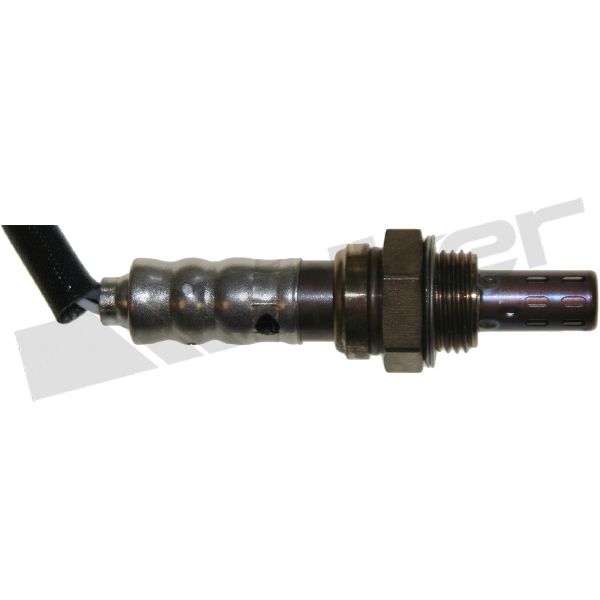
Est. part cost: $10-$50 - Faulty Downstream Oxygen Sensor (Bank 1, Sensor 2) 🔴 High Probability → Shop Oxygen Sensor O2 sensors wear out and can become biased, sending incorrect rich readings to the ECM. TSB #PIP5445A specifically advises checking the rear O2 sensor *circuit* for issues like high resistance, poor terminal tension, or bad crimps, not just replacing the sensor itself.
How to confirm: Use an OBD-II scanner to monitor the live voltage data from the downstream O2 sensor. A healthy sensor on a warm engine should show a relatively steady voltage. If it's stuck high (above 0.8V) or fluctuating wildly like the upstream sensor, it's likely faulty. Test the wiring and connector for damage or corrosion.
Typical fix: Repair wiring issues or replace the downstream oxygen sensor. Using a non-OE sensor can sometimes cause this code to set, so an OEM part is recommended.
Est. part cost: $40-$120 - ECM Software Anomaly 🟡 Medium Probability GM has issued multiple TSBs (e.g., #19NA058, #19-NA-017) indicating that a software glitch can cause P2097 to set falsely, sometimes related to false knock detection. Owner complaints confirm dealers often perform a software update as the first step. (NHTSA ODI #11190353, #11291945).
How to confirm: A Chevrolet dealership or a qualified shop with access to GM's service information can check if your vehicle's VIN has an open campaign or a pending software update for the Engine Control Module (ECM).
Typical fix: Reprogram the ECM with the latest software version. This is a warranty repair for many vehicles under the emissions warranty (8 years/80,000 miles in the U.S.).
Est. part cost: $0-$150 - Loose Intake Manifold Bolts 🟡 Medium Probability → Shop Engine Intake Manifold This is a known issue on some GM engines, including the 2.5L. A vacuum leak at the intake manifold causes the engine to run lean, and the ECM overcompensates with extra fuel, leading to a rich condition detected by the downstream O2 sensor. An owner complaint (ODI #11581909) directly links this to P2097 after $1,000 in other attempted fixes.
How to confirm: Perform a smoke test on the intake system to check for leaks around the manifold gasket. You can also carefully check the torque on the intake manifold bolts; they should be torqued in a cross pattern.
Typical fix: Torque the intake manifold bolts to the manufacturer's specification, which is typically 108 in-lbs (12 Nm or ~9 ft-lbs). In most cases, the gasket does not need to be replaced.
Est. part cost: $20-$60 for a gasket if needed
Rare But Worth Checking
- Incorrect Engine Oil Level: TSB #PIP5535B specifically directs technicians to validate the engine oil level when investigating a repeat P2097 code after a software update, suggesting an incorrect level can influence the PCV system and fuel trims.
- Failing Catalytic Converter: → Shop Catalytic Converter While less common, a failing or clogged catalytic converter can lose its ability to store oxygen, causing erratic readings from the downstream O2 sensor that may be interpreted as a rich condition. Using an aftermarket converter can also sometimes trigger the code.
- Leaking Fuel Injectors: → Shop Fuel Injector A fuel injector that is stuck open or leaking can dump excess fuel into a cylinder, creating a true rich condition that the fuel trim system cannot correct. TSB #PIP5534A suggests performing an AFIT (Active Fuel Injector Test) if a vacuum leak is ruled out.
- Specific Driving Style: TSB #PIP5534A notes that certain driving habits, such as heavy stop-and-go traffic or a 'digital driver' style (hard acceleration followed by coasting), can induce a P2097 code. In these cases, GM states there is no vehicle fault or available fix.
Diagnosis Steps
- Scan for Codes & Freeze Frame Data: Use an OBD-II scanner to confirm P2097 is active and check for other codes. Crucially, review the freeze frame data to see the short and long-term fuel trims at the moment the code was set, as advised by TSB #PIP5215A. A short-term fuel trim of -100% was noted in one diagnostic video at the time of failure.
- Check for TSBs: Ask a dealer or use an online service to see if any Technical Service Bulletins (like #19NA058 or #19-NA-017) apply to your vehicle's VIN. A software update may be the required fix.
- Inspect the Exhaust System: Perform a thorough visual inspection and a smoke test on the exhaust system from the manifold to the tailpipe. Pay close attention to the flex pipe and gasket joints for leaks.
- Check Engine Oil Level: Ensure the engine oil is at the correct level and in good condition, as per TSB #PIP5535B.
- Inspect Intake System: Check for vacuum leaks around the intake manifold. Listen for hissing sounds or use a smoke machine. Check the torque on the intake manifold bolts and tighten to 108 in-lbs (12 Nm) if loose.
- Analyze O2 Sensor Data & Circuit: Use a scanner's live data to observe the downstream O2 sensor voltage. Per TSB #PIP5445A, don't just watch the voltage; inspect the wiring and connector for damage and test the circuit for high resistance, poor terminal tension, and bad crimps.
- Check Fuel System: If no leaks are found, investigate the fuel system. This can include checking fuel pressure and considering an Active Fuel Injector Test (AFIT) to check for leaking injectors, as suggested in TSB #PIP5534A.
- Test the Catalytic Converter: If all other causes are ruled out, the catalytic converter's efficiency may need to be tested by a professional. A temperature gun can be used to check for a significant temperature increase across the converter, indicating it's working.
Parts You'll Likely Need
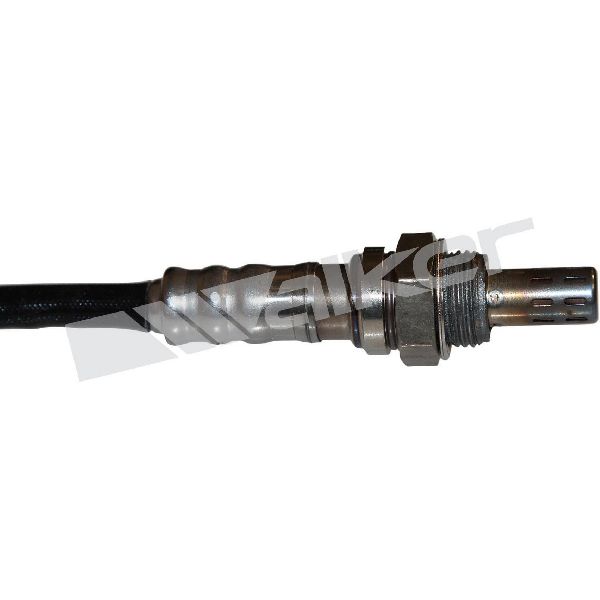
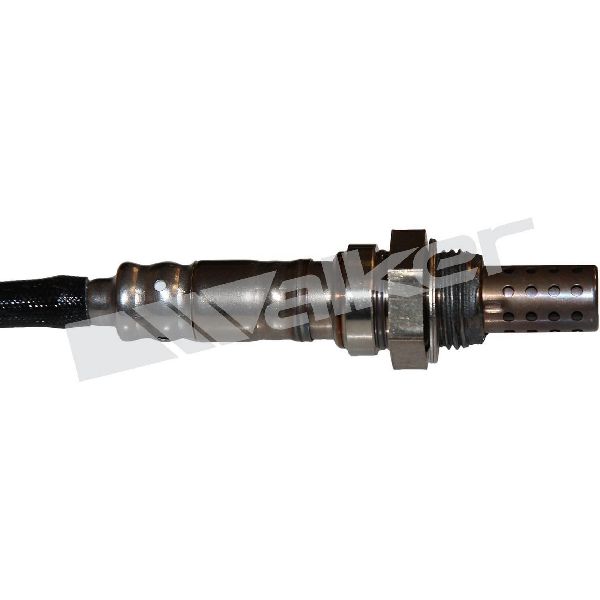
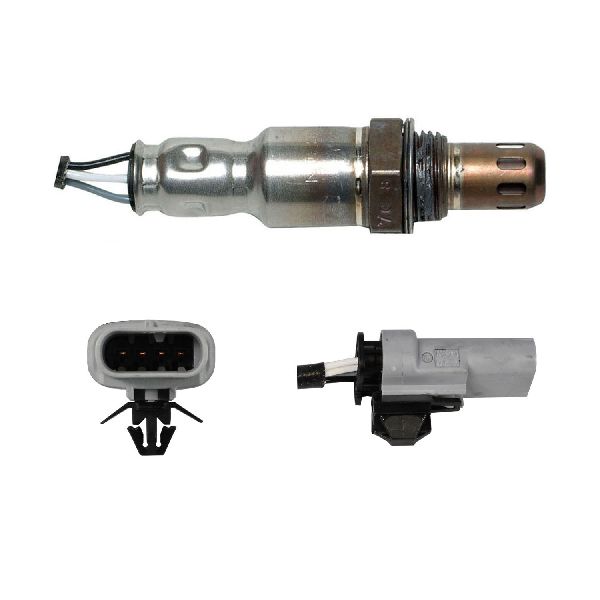
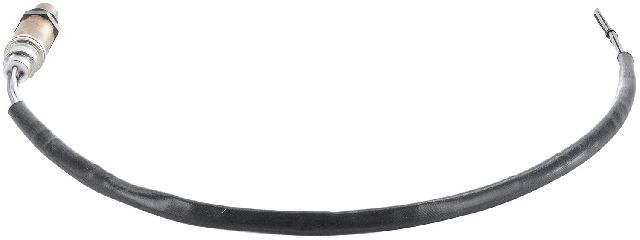
- Downstream Oxygen Sensor (Bank 1 Sensor 2)
(OEM #12661898, 12639692 (ACDelco 213-4768))— This sensor is the primary input for this code and is a common failure point. TSBs also point to checking its circuit. Using a non-OEM sensor can sometimes cause issues.
Trusted brands: ACDelco, Denso, Bosch, NGK
OEM price range: $60-$130
Aftermarket price range: $40-$90 - Intake Manifold Gasket
(OEM #12627910 (for 2.5L LCV))— Needed only if the intake manifold bolts are found to be loose and the gasket is compromised, causing a vacuum leak as cited in owner complaints. Often, simply re-torquing the bolts is sufficient.
Trusted brands: ACDelco, Fel-Pro
OEM price range: $40-$70
Aftermarket price range: $20-$50
Related Codes That Often Appear With This One
- P0171 — System Too Lean. This can appear if an intake or vacuum leak is the root cause. The lean condition is detected first, and P2097 sets after the computer overcompensates with too much fuel. One owner reported P0171, P0131, and P2097 together, which was ultimately caused by loose intake bolts (NHTSA ODI #11581909).
- P0131 — O2 Sensor Circuit Low Voltage. This often points to a wiring issue or a failing oxygen sensor itself, which can accompany the P2097 code. (NHTSA ODI #11581909).
- P2096 — Post Catalyst Fuel Trim System Too Lean. This is the opposite code, and TSBs often mention P2096 and P2097 together, as software issues or sensor problems can cause either fault.
Technical Service Bulletins (TSBs) & Recalls
- PIP5445A: Information on checking the rear Heated Oxygen Sensor circuit for P2097.
- 19NA058: Correction for hesitation/low power and P2097 via a potential software update.
- PIP5535B: Investigation into repeat P2097 codes, directing a check of the engine oil level.
- 19-NA-017: Specifies that a software anomaly can cause P2097 and that reprogramming the ECM is the fix.
Platform-Specific Known Issues
- TSB #19NA058: Addresses hesitation or low power with DTC P2097/P2096, which may be caused by false knock detection. The fix is an ECM software reprogram.
- TSB #PIP5445A: Directs technicians to meticulously check the rear O2 sensor circuit wiring and connections for high resistance or damage before replacing the sensor.
- TSB #PIP5535B: Notes that P2097 can reappear even after software updates and instructs technicians to verify the engine oil level is correct.
- TSB #PIP5534A: Discusses how specific driving styles (heavy stop-and-go, or rapid acceleration/coasting) can trigger P2097 on these vehicles, for which there is no mechanical fix.
Mechanic-Grade Diagnostic Values
- Short-Term Fuel Trim (Freeze Frame) — expected: Close to 0%, typically within +/- 10%. Failure: A value of -100% was observed in the freeze frame data when the P2097 code was set, indicating the ECM was commanding maximum fuel reduction.
- Intake Air Temperature (Freeze Frame) — expected: A plausible ambient temperature (e.g., 60-100°F). Failure: A reading of -40°F was observed in the freeze frame data, which is a default value indicating a sensor or circuit fault. This fault occurred at the same time as the P2097 code.
- Downstream O2 Sensor (Bank 1 Sensor 2) Voltage — expected: A relatively steady voltage, typically between 0.6V and 0.8V on a warm, closed-loop engine.. Failure: Voltage is stuck high (above 0.8V) or fluctuates rapidly like the upstream sensor, which could indicate a bad sensor or a failing catalytic converter.
Scan Tool Commands That Help
- GDS2 (GM Dealer Scan Tool): ECM Reprogramming — Used to apply software updates as specified in TSBs like 19-NA-017. This is often the first and only required step for a software anomaly causing a false P2097 code.
Wiring & Ground Locations
- Downstream O2 Sensor Connector (2.5L) — On the 2013 Malibu 2.5L, the downstream O2 sensor connector is located just below the upstream sensor connector near the thermostat housing. The downstream connector is often white, while the upstream is black.. TSB #PIP5445A specifically calls for checking the circuit, including terminal tension and crimps at the connector. Knowing its location is critical for performing these checks and ruling out a simple wiring issue before replacing the sensor.
- G103 Ground — Located on the cowl at the left rear of the engine compartment, above the brake booster.. This ground serves the Engine Control Module (ECM) and the Data Link Connector (DLC). A poor ground here could cause erratic ECM behavior and communication issues, potentially leading to false diagnostic codes.
Real Owner Repair Stories
- Reddit user, r/MechanicAdvice (2016 Chevrolet Malibu with 71k miles) — Check Engine Light with code P2097. A mechanic friend noted high fuel rail pressure (449 psi).
❌ Tried (didn't work) Initial diagnosis pointed towards a fuel pressure regulator.
✅ What actually fixed it The Chevrolet dealership performed a software update on the Engine Control Module (ECM). They stated it was a known issue covered by TSB 19-NA-017 and that no parts were faulty.
"I Checked Everything" — The Actual Cause
- In one diagnostic case on a 2013 Malibu 2.5L, the technician noted that an elusive cause for P2097 could be an exhaust leak that is not audible and may not be easily found without a smoke test. However, the primary fault identified via freeze frame data was an Intake Air Temperature sensor circuit failure, which read -40 degrees at the time the P2097 code was set.
OEM Part Supersession History
12672472→12678991— This is a GM part number for a fuel rail, which has been superseded. While not a direct cause of P2097 in most cases, using correct, updated parts is crucial during any fuel system diagnosis.N/A→N/A— The downstream oxygen sensor for the 2013-2015 2.5L engine is a different part than for the 2016+ 1.5L/2.0L engines. It is critical to use the correct sensor for the specific engine and model year.
Heads up: The 8th generation (2013-2015) and 9th generation (2016+) Malibus use different engines and exhaust systems. The O2 sensors are not interchangeable.
Model Year Variations Within This Range
- 2017: TSB 19-NA-017 specifically targets the 2017 Chevrolet Malibu with the 1.5L (LFV) engine for a software anomaly that can cause P2096 or P2097. The fix is an ECM reprogram.
- 2013-2015: These 8th generation models primarily use the 2.5L LCV engine. The downstream O2 sensor (Bank 1, Sensor 2) is located at the bottom of the engine, after the first catalytic converter section.
Helpful Videos

![How to Fix P2097 Engine Code in 4 Minutes [2 DIY Methods / Only $9.84]](https://img.youtube.com/vi/rCwtzRmhMwY/mqdefault.jpg)
Used OEM Parts in Stock
New Aftermarket Parts Available


The information in this article is provided for general reference and educational purposes only. Vehicle specifications, procedures, and part compatibility can vary by production date, trim level, and region. Always consult your vehicle's factory service manual and verify part numbers before purchasing or performing repairs. Safety-critical components such as airbags, seat belts, and braking systems should be installed by a qualified professional.
- Chevrolet MALIBU:
- 🧭 Diagnostic Flowchart
- 🎬 Helpful Videos
- 🛍️ Shop This Part
- What's Unique About the 2013-2019 Chevrolet MALIBU
- Symptoms You May Notice
- Most Likely Causes
- Rare But Worth Checking
- Diagnosis Steps
- Parts You'll Likely Need
- Related Codes That Often Appear With This One
- Technical Service Bulletins (TSBs) & Recalls
- Platform-Specific Known Issues
- Mechanic-Grade Diagnostic Values
- Scan Tool Commands That Help
- Wiring & Ground Locations
- Real Owner Repair Stories
- "I Checked Everything" — The Actual Cause
- OEM Part Supersession History
- Model Year Variations Within This Range
- 🎟️ Get 5% Off