

P2097 on 2009-2016 Chevrolet Traverse: Rich Fuel Trim Causes and Fixes
On a 2009-2016 Traverse, code P2097 is most often caused by an exhaust leak near a flange or weld, especially before the Bank 1 downstream O2 sensor. A thorough inspection for leaks should be the first step before replacing any parts. The most common failure point is a cracked weld on the intermediate exhaust pipe (Y-pipe) flange where it connects to the Bank 1 catalytic converter.
- For a 2009-2016 Traverse, P2097 is very often caused by an exhaust leak. Thoroughly inspect the exhaust system before buying any parts.
- Bank 1 is the cylinder bank closer to the firewall.
- A GM service bulletin (PIP4964F) points to leaking fuel injectors as another potential cause, so an injector balance test is a valid diagnostic step.
- Do not immediately assume the catalytic converter is bad, even if you also have a P0420 code. Fixing the root cause of P2097 (like an exhaust leak) will often resolve the P0420 as well.
What's Unique About the 2009-2016 Chevrolet TRAVERSE
For the first-generation Chevrolet Traverse and its GM Lambda platform mates (GMC Acadia, Buick Enclave, Saturn Outlook) with the 3.6L V6 engine, this code is frequently linked to physical failures in the exhaust system. Owners and technicians often report significant exhaust leaks from failed factory welds or rotted-out flanges on the intermediate exhaust pipe (often called the Y-pipe). This leak, occurring just before the downstream O2 sensor, allows outside air to be pulled into the exhaust stream. While this seems like it would cause a lean condition, it can confuse the sensor and paradoxically trigger the rich P2097 code. While fuel system or sensor issues can be the cause, the high frequency of exhaust leak reports on this specific platform makes it a critical first checkpoint.
Diagnostic Flowchart
Tap your situation to follow the diagnostic path that matches what you're seeing on this vehicle.
Symptoms You May Notice
- Check Engine Light is on.
- Reduced fuel economy.
- Rough or erratic idle.
- Engine hesitation or stumbling during acceleration.
- In some cases, a noticeable exhaust leak sound, similar to a loud rumble or the sound of a stolen catalytic converter.
- Potential for a fuel odor.
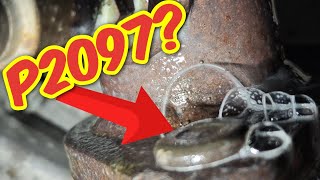
- Replacing the oxygen sensor without first checking for exhaust leaks. An exhaust leak is a very common cause on this vehicle and replacing the sensor will not fix the problem. 🎬 Watch: A helpful breakdown of P2097 causes and common fixes.
Most Likely Causes
- Exhaust Leak (before downstream O2 sensor) 🔴 High Probability Multiple owner and technician reports point to failures at the welded flanges of the intermediate exhaust pipe (Y-Pipe) on the Traverse and its platform mates. A technician noted a specific failure was a bad factory weld on the flange where the Bank 1 catalytic converter attaches to the intermediate pipe.
How to confirm: Visually inspect the entire exhaust system for black soot, cracks, or holes, especially around welds and flanges near the Bank 1 catalytic converter. A common method is to start the car when cold and listen for an obvious leak, which may quiet down as the metal expands. A smoke test or applying a soapy water solution while pressurizing the exhaust with low pressure (5-8 psi) can also pinpoint less obvious leaks, as recommended in GM service information.
Typical fix: If a leak is found at a flange or weld, the pipe section may need to be re-welded by an exhaust shop, which is a common and cost-effective repair. Alternatively, the entire intermediate pipe assembly can be replaced. In some cases, only a gasket needs replacement, but it's advised to file the mating surfaces of the pipe to ensure a good seal.
Est. part cost: $10-$50 for gaskets, $200-$800 for an intermediate pipe. - Leaking Fuel Injectors 🟡 Medium Probability → Shop Fuel Injector A GM Technical Service Bulletin (TSB #PIP4964F) specifically advises technicians to perform a fuel injector balance test when encountering a P2097 or P2099 code, suggesting it's a known issue. The bulletin states this is one of the most common concerns.
How to confirm: Perform a fuel injector balance test using a capable scan tool or an Active Fuel Injector Tester (AFIT) as recommended by the TSB. This measures if any injector is flowing more fuel than the others. Note: The TSB mentions the injector balance test may not be available on 2009 models.
Typical fix: Replace the faulty fuel injector(s). It is often recommended to replace them as a set on the affected bank or all at once.
Est. part cost: $50-$150 per injector. - Faulty Downstream Oxygen Sensor (Bank 1, Sensor 2) 🟡 Medium Probability → Shop Oxygen Sensor O2 sensors are wear-and-tear items and can fail over time, sending incorrect rich readings to the computer. However, this is often misdiagnosed, and the sensor is replaced when the true cause is an exhaust leak.
How to confirm: Use a scan tool to monitor the live voltage data from the Bank 1 Sensor 2. A healthy downstream sensor should show a relatively steady voltage, while a rich condition will cause a steady voltage above 0.45V. If it's stuck high (above 0.8V) or fluctuating wildly like the upstream sensor, it may be faulty. Always rule out exhaust leaks first.
Typical fix: Replace the Bank 1, Sensor 2 oxygen sensor.
Est. part cost: $50-$120
Rare But Worth Checking
- Failing Catalytic Converter: → Shop Catalytic Converter While less common, a failing or clogged catalytic converter can cause this code. This is usually a last resort after other causes have been ruled out due to the high cost of replacement. A temperature gun can be used to check for a clog; the inlet should be significantly cooler than the outlet on a functioning converter.
- High Fuel Pressure: A faulty fuel pressure regulator can cause system-wide high fuel pressure, leading to a rich condition. Check fuel pressure to rule this out.
- PCM Software Issue: In some Chevrolet vehicles, a software glitch can misinterpret sensor data and set a P2097 code prematurely. In some cases, a dealer reflash or even clearing the codes and driving can resolve a phantom code.
- EVAP System Purge: A stuck-open EVAP purge valve can introduce fuel vapors into the intake manifold at the wrong time, creating a rich condition that can trigger P2097. TSB PIP5534A notes that EVAP system diagnostics should be performed first when diagnosing this code on some GM vehicles.
Diagnosis Steps
- Scan for codes: Confirm P2097 is present and check for any other related codes, like P0420.
- Inspect for exhaust leaks: This is the most critical first step for a Traverse. Start the engine cold and listen for a loud rumble. Carefully examine the exhaust system, paying close attention to the Y-pipe flanges and welds, particularly where the Bank 1 (rear) catalytic converter connects to the intermediate pipe. Look for soot trails or use a smoke test.
- Analyze live sensor data: Use a scan tool to observe the voltage from the Bank 1 downstream O2 sensor (Sensor 2). A steady, high voltage (e.g., >0.8V) suggests a rich condition or a biased sensor.
- Check fuel trim values: Observe short-term and long-term fuel trims. If the ECM is commanding a strong negative fuel trim, it is trying to compensate for a rich condition it's detecting. Long-term fuel trim values outside the normal range of -13% to +13% can indicate a problem.
- Perform fuel injector test: Following TSB PIP4964F, perform a fuel injector balance test to check for leaking or over-fueling injectors.
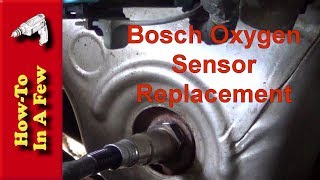
- Test the O2 sensor: If no leaks or fuel injector issues are found, test the sensor itself for proper response. Check wiring for damage. If it fails to respond correctly, it is likely faulty. 🎬 See this walkthrough on replacing the downstream oxygen sensor.
- Check fuel pressure: Verify that the fuel pressure is within the manufacturer's specified range to rule out a faulty regulator.
Parts You'll Likely Need
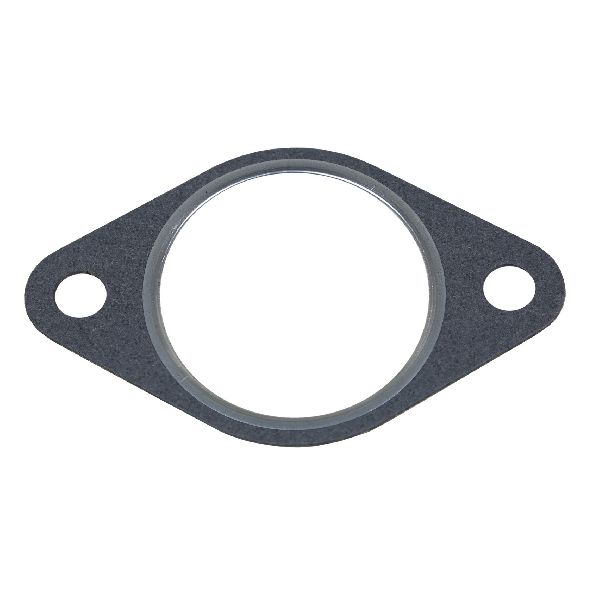
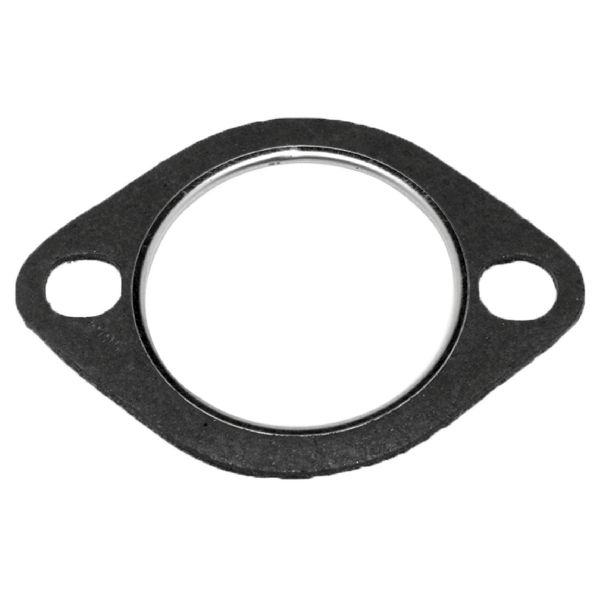
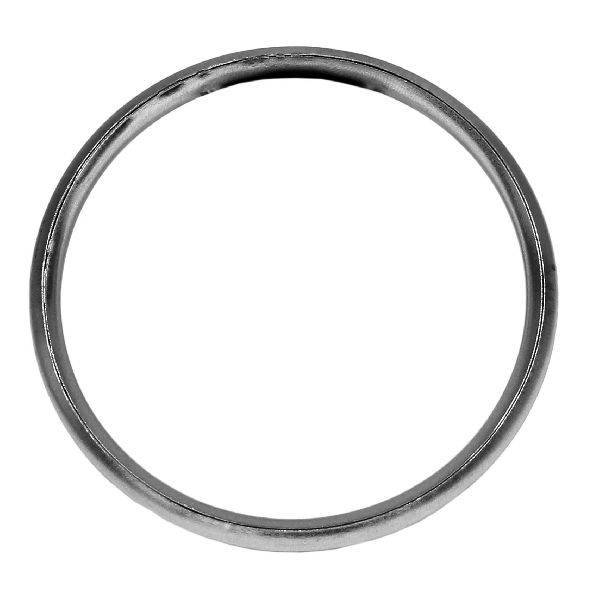
- Exhaust Pipe Gasket — Often required when repairing an exhaust leak at a flange connection. It's recommended to file the mating surfaces flat before installing a new gasket.
Trusted brands: ACDelco, Fel-Pro, Walker Exhaust
OEM price range: $20-$40
Aftermarket price range: $10-$25 - Downstream Oxygen Sensor (Bank 1, Sensor 2)
(OEM #12616125)— This sensor is the source of the code reading. If it has failed internally, it will need to be replaced. This part number is for 2009-2011 models. Part numbers may vary by year.
Trusted brands: ACDelco, Denso, Bosch, Walker Products
OEM price range: $70-$140
Aftermarket price range: $50-$120 - Fuel Injector
(OEM #12638530)— A known issue highlighted by a TSB. A leaking injector will cause a rich condition. This part number is applicable for 2009-2011 models and may be superseded by other numbers like 12669384.
Trusted brands: ACDelco, Delphi, Bosch
OEM price range: $100-$200
Aftermarket price range: $50-$150
Related Codes That Often Appear With This One
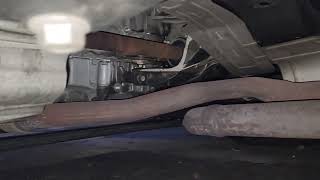
- P0420 — P0420 indicates 'Catalyst System Efficiency Below Threshold (Bank 1)'. An exhaust leak or rich condition that triggers P2097 can also affect the catalytic converter's performance, causing a P0420 code to appear simultaneously. 🎬 Watch: Real-world repair of a Traverse with P0420 and P2097 codes. A real-world example on a 2011 Traverse showed both codes were caused by a single large exhaust leak at a flange.
- P2099 — This is the equivalent code for Bank 2, "Post Catalyst Fuel Trim System Too Rich Bank 2". TSB PIP4964F mentions both P2097 and P2099, indicating the root causes (like fuel injectors or exhaust leaks) can affect either bank.
Technical Service Bulletins (TSBs) & Recalls
- PIP4964F: Advises technicians to check for a P2097 or P2099 code and perform a fuel injector balance test to diagnose a potential rich condition. Also suggests checking for small exhaust leaks if injector tests are normal.
Platform-Specific Known Issues
- A known failure point is the welded flange on the intermediate exhaust pipe (Y-pipe) where the Bank 1 catalytic converter attaches. This weld can fail, causing a major exhaust leak right before the downstream O2 sensor, leading directly to a P2097 code, often accompanied by P0420.
- A repair video for a 2011 Traverse with P2097 and P0420 showed the fix was to re-weld the failed flange on the intermediate pipe. The technician noted it was a 'bad weld from the manufacturer'.
Mechanic-Grade Diagnostic Values
- Post-Catalyst O2 Sensor Voltage (at idle) — expected: Relatively steady voltage between 0.1V and 0.9V. A steady voltage above 0.45V indicates a rich condition.. Failure: A voltage stuck consistently high (e.g., >0.8V) or one that doesn't respond to changes in engine conditions.
- O2 Sensor Heater Circuit Resistance — expected: Typically 5-7 Ω, but should be compared to manufacturer specifications for the exact part.. Failure: Resistance that is significantly higher (open circuit) or lower (short circuit) than the specified range.
- Long Term Fuel Trim — expected: Within a normal range of -13% to +13%.. Failure: A value that stays outside the normal range for an extended period. Positive values above 13% indicate the ECM is compensating for a lean condition, which can paradoxically be reported as a rich condition by the post-cat sensor due to an exhaust leak.
- Exhaust System Backpressure Test — expected: Low pressure, typically below 1.5 PSI at idle.. Failure: Pressure significantly higher than specification, indicating a restriction, such as a clogged catalytic converter.
Scan Tool Commands That Help
- GDS2/Tech2: Injector Balance Test / Active Fuel Injector Tester (AFIT) — As recommended by TSB PIP4964F, this should be one of the first diagnostic steps to rule out leaking or over-fueling injectors, which are a common cause for this code. Note: This test may not be available on 2009 models.
- GDS2/Tech2: Fuel Trim Reset — After a repair (like fixing an exhaust leak or replacing an injector), the learned fuel trim values should be reset so the ECM can relearn the correct parameters with the new/repaired components.
- EVAP/Smoke Machine (e.g., GE-52250): Exhaust System Leak Test — To find small cracks or gasket leaks that are not audible or easily visible. GM service information recommends pressurizing the exhaust to 5-8 PSI and using a soapy solution to find bubbles.
Wiring & Ground Locations
- G110 — Right front of the engine, mounted to the cylinder head.. This is a primary engine ground. A poor connection here could potentially affect various engine sensors, including those involved in the fuel and ignition systems, leading to erratic data and incorrect fuel calculations.
- G113 — Left side of the engine, at the engine-to-transmission stud.. This is another critical engine ground point. A loose or corroded G113 could cause intermittent issues with the Engine Control Module (ECM) and its sensor readings, including the oxygen sensors.
- Engine Control Module (ECM) — Left side of the engine compartment.. The ECM receives signals from all O2 sensors. The wiring harness to the ECM, particularly the connectors for the Bank 1 O2 sensors, should be inspected for damage, corrosion, or looseness.
Real Owner Repair Stories
- YouTube channel 'Precision Auto Tech' (2011 Chevrolet Traverse) — Check Engine Light with codes P2097 and P0420. A loud exhaust leak sound was audible upon starting the vehicle.
❌ Tried (didn't work) The technician immediately identified the exhaust leak by sound before proceeding with other diagnostics.
✅ What actually fixed it The flange on the intermediate pipe where the Bank 1 catalytic converter attaches had broken off due to a 'bad weld from the manufacturer'. The technician re-welded the flange to the pipe, which resolved both codes. - YouTube channel 'Roly Rain Cloud' (2019 Chevrolet Traverse 3.6L) — Check Engine Light with code P2097.
❌ Tried (didn't work) Initially replaced a gasket at a different flange, but the leak persisted.
✅ What actually fixed it A smoke test revealed a significant exhaust leak at the weld where the pipe meets the catalytic converter flange, right next to the oxygen sensor. Welding the cracked weld fixed the leak and was expected to resolve the code.
OEM Part Supersession History
12611545, 12632255→12638530, which may be further superseded by 12669384— Standard part updates for improved reliability or manufacturing changes.
Heads up: These part numbers are generally for the 2009-2011 LLT engine. The LFX engine (2012/2013+) uses different injectors. Always verify the part number with the vehicle's VIN.
Model Year Variations Within This Range
- 2009-2012: These models use the 3.6L LLT V6 engine. TSB PIP4964F notes that the scan tool 'Injector Balance Test' may not be available for the 2009 model year.
- 2013-2016: These models use the updated 3.6L LFX V6 engine. A key change in the LFX is the integrated exhaust manifold cast directly into the cylinder head. This design eliminates the separate manifold and gasket, shifting the first potential exhaust leak point further downstream to the converter connection.
Helpful Videos

We Have This Part in Stock



The information in this article is provided for general reference and educational purposes only. Vehicle specifications, procedures, and part compatibility can vary by production date, trim level, and region. Always consult your vehicle's factory service manual and verify part numbers before purchasing or performing repairs. Safety-critical components such as airbags, seat belts, and braking systems should be installed by a qualified professional.
- Chevrolet TRAVERSE:
- 🧭 Diagnostic Flowchart
- 🎬 Helpful Videos
- 🛍️ Shop This Part
- What's Unique About the 2009-2016 Chevrolet TRAVERSE
- Symptoms You May Notice
- Most Likely Causes
- Rare But Worth Checking
- Diagnosis Steps
- Parts You'll Likely Need
- Related Codes That Often Appear With This One
- Technical Service Bulletins (TSBs) & Recalls
- Platform-Specific Known Issues
- Mechanic-Grade Diagnostic Values
- Scan Tool Commands That Help
- Wiring & Ground Locations
- Real Owner Repair Stories
- OEM Part Supersession History
- Model Year Variations Within This Range
- 🎟️ Get 5% Off