

P2097 on 2017-2023 Chevrolet Traverse: Rich Fuel Trim Causes and Fixes
On a 2017-2023 Traverse, code P2097 is most often caused by a leaking fuel injector or a small exhaust leak near the catalytic converter, according to GM Technical Service Bulletins. Before replacing expensive oxygen sensors, have the fuel injectors tested using an AFIT tool and inspect the exhaust system for leaks, particularly at flanges and welds.
- Do not immediately replace the oxygen sensor for code P2097 on a Traverse; it's often not the root cause.
- Follow GM's advice: Start by testing the fuel injectors for leaks or imbalance.
- Thoroughly inspect the exhaust system for leaks, especially around the catalytic converter flanges. On 2018-19 models, check the Bank 2 exhaust bracket.
- Addressing this code promptly can prevent costly damage to the catalytic converter.
- A professional diagnosis that includes an injector balance test and smoke test is the most effective way to find the true cause.
What's Unique About the 2017-2023 Chevrolet TRAVERSE

For the second-generation Traverse with the 3.6L V6 engine, General Motors has issued specific technical bulletins that point technicians away from immediately blaming oxygen sensors. TSB #PIP4964F explicitly states that the most common cause for P2097 is a faulty fuel injector and that an injector balance test should be performed early in the diagnosis. Another bulletin, #PIP5681C, identifies that a broken exhaust bracket on the opposite side of the engine (Bank 2) can stress and crack the Bank 1 exhaust pipe, causing a leak that triggers this code. This TSB was updated several times, expanding the model years to 2018-2022 and noting the issue can cause cracks on both Bank 1 and Bank 2 pipes. These manufacturer documents strongly suggest starting diagnosis with fuel system and exhaust integrity tests, not sensor replacement.
Diagnostic Flowchart

Tap your situation to follow the diagnostic path that matches what you're seeing on this vehicle.
Generation note: The 2017-2023 range covers the end of the first generation (2017) and the bulk of the second generation (2018-2023). Both generations used a 3.6L V6, but the second generation uses the updated LFY version with more horsepower and a 9-speed transmission. The provided TSBs cover both, indicating the causes are similar across these model years. TSB #PIP5681C regarding a specific exhaust bracket failure applies only to the 2018-2022 models. A much rarer 2.0L Turbo (LTG) engine was offered in 2018-2019 RS trims, which can also experience this code for similar reasons per TSB #PIP5534A.
Symptoms You May Notice
- Check Engine Light is on
- No noticeable change in drivability (very common)
- Reduced fuel economy
- Rough or erratic idle
- Engine hesitation or lack of power
- Exhaust may smell like rotten eggs or fuel
- Black smoke from the exhaust in extreme cases
- Loud exhaust noise or rattle, indicating a leak
- Replacing the downstream oxygen sensor without first testing fuel injectors and checking for exhaust leaks, as advised by GM TSBs.
- Replacing the catalytic converter before confirming it has failed via proper testing.
- Mistaking a lean condition caused by an exhaust leak for a rich condition, as the leak can trick the O2 sensor.
Most Likely Causes

- Leaking or Unbalanced Fuel Injector(s) 🔴 High Probability → Shop Fuel Injector GM Technical Service Bulletin #PIP4964F identifies this as the 'most common concern' for this code on this platform. Direct injection systems like the 3.6L LFY operate under very high pressure, and injectors can fail, leak, or develop poor spray patterns over time.
How to confirm: A professional technician should perform a fuel injector balance test, often called an Active Fuel Injector Tester (AFIT) test, using a GM GDS2 scan tool. This is the GM-recommended first step. The pressure drop for each injector should be very close to the others.
Typical fix: Replace the faulty fuel injector(s). It is often recommended to replace all injectors on the affected bank (Bank 1) at the same time for balanced performance.
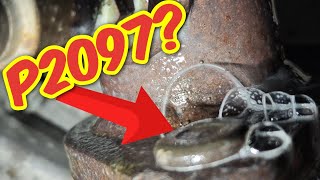
Est. part cost: $50-$150 per injector - Exhaust System Leak 🔴 High Probability TSB #PIP4964F points to leaks at the catalytic converter outlet gasket. TSB #PIP5681C specifically notes that for 2018-2022 models, a broken weld on the Bank 2 (radiator side) flex pipe bracket can cause stress cracks and leaks on the Bank 1 (firewall side) pipe. A video of a 2019 Traverse showed a completely separated flange weld causing P2097. 🎬 Watch: Real-world diagnosis of a separated exhaust flange weld
How to confirm: Visually inspect all exhaust flanges and welds from the engine to the post-catalyst O2 sensor for black soot stains. For 2018-2022 models, specifically check the Bank 2 flex pipe bracket. A smoke test can reveal smaller leaks.
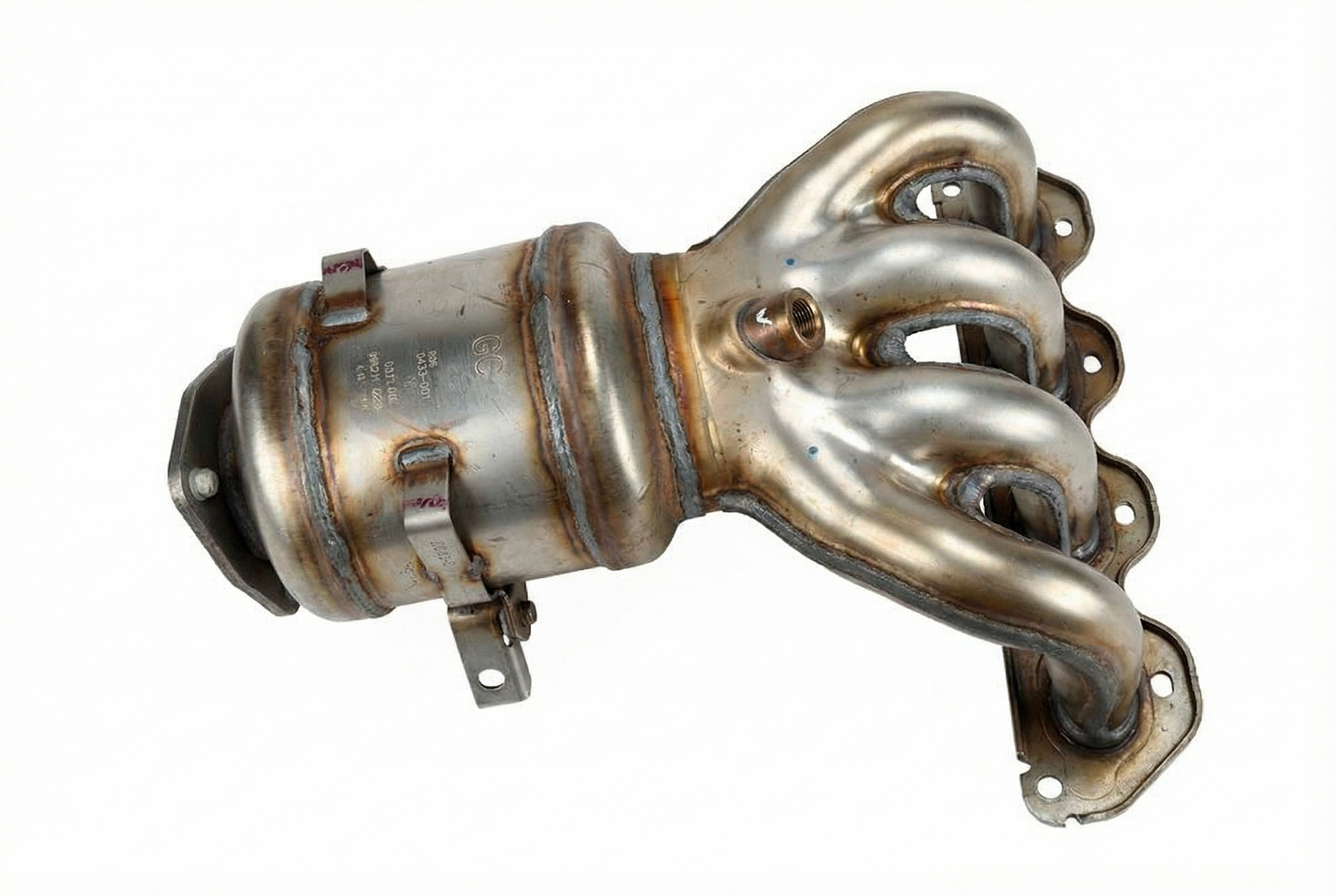
Typical fix: Replace leaking gaskets. If a pipe or flange is cracked, the affected section must be welded or replaced. TSB #PIP5681C advises replacing the affected pipe, not the entire catalytic converter.
Est. part cost: $20-$50 for gaskets, $200+ for pipe sections - Faulty Downstream (Post-Catalyst) Oxygen Sensor 🟡 Medium Probability → Shop Oxygen Sensor O2 sensors are wear items and can fail, sending incorrect signals to the ECM. However, this is often replaced mistakenly when the real issue is a fuel or exhaust leak. GM TSBs strongly advise checking injectors and for leaks first.
How to confirm: Use a scan tool to monitor the live voltage data from the Bank 1 Sensor 2. A healthy sensor on a warm engine should show a relatively steady voltage. If it's stuck high (over 0.7V) without a true rich condition present, or fluctuating wildly like the upstream sensor, it may be faulty.
Typical fix: Replace the Bank 1, Sensor 2 oxygen sensor. 🎬 See this walkthrough for replacing the downstream oxygen sensor
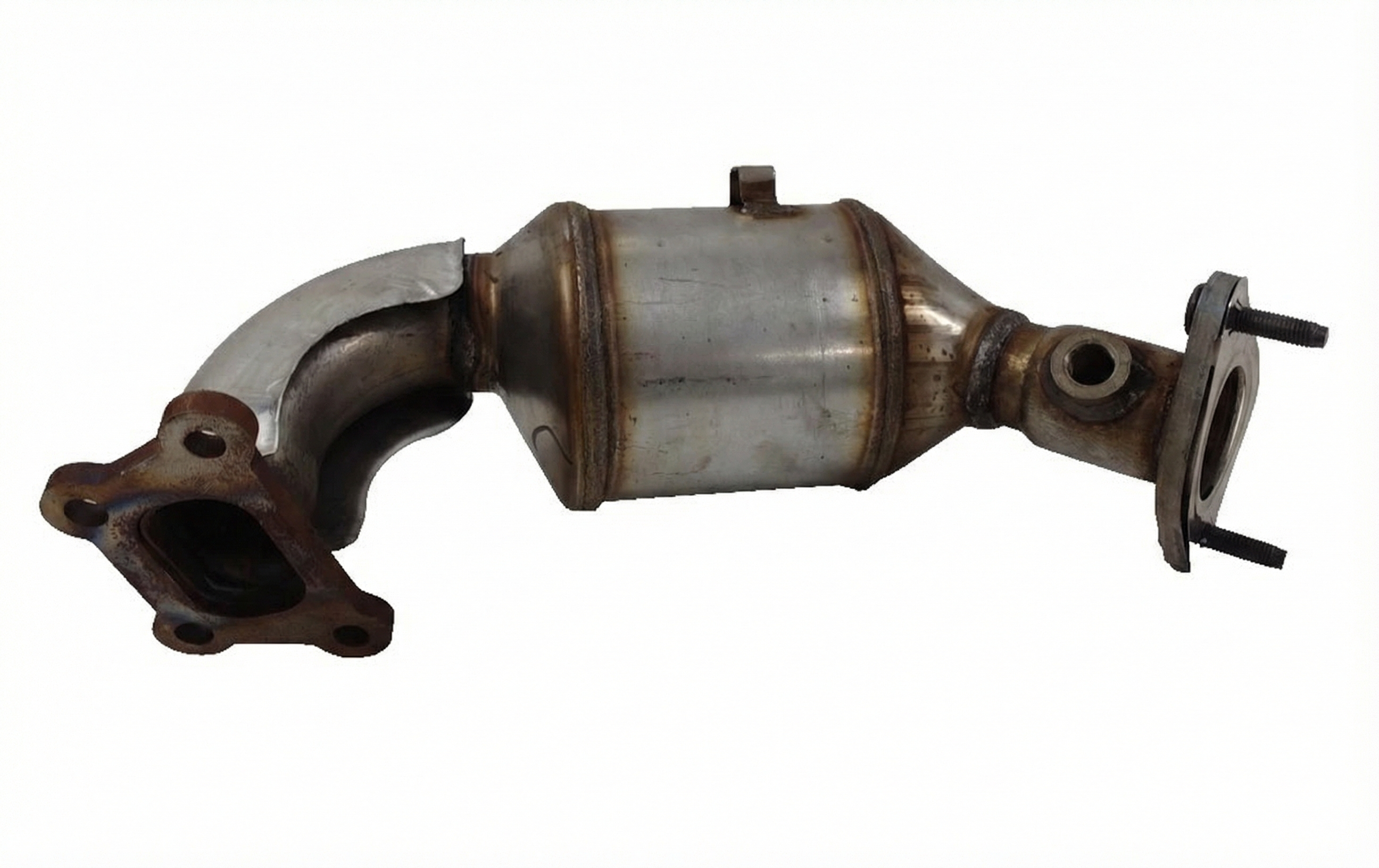
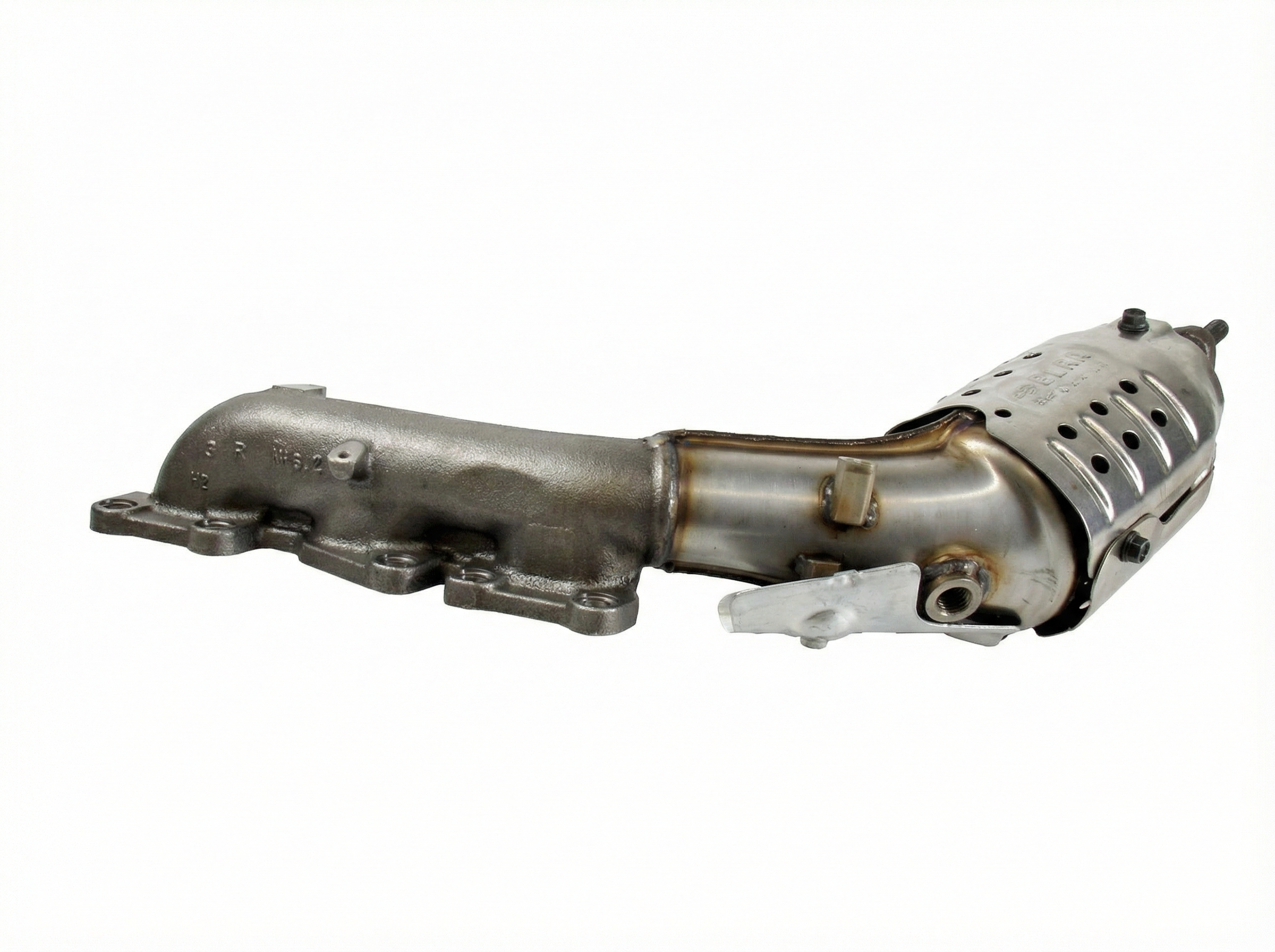
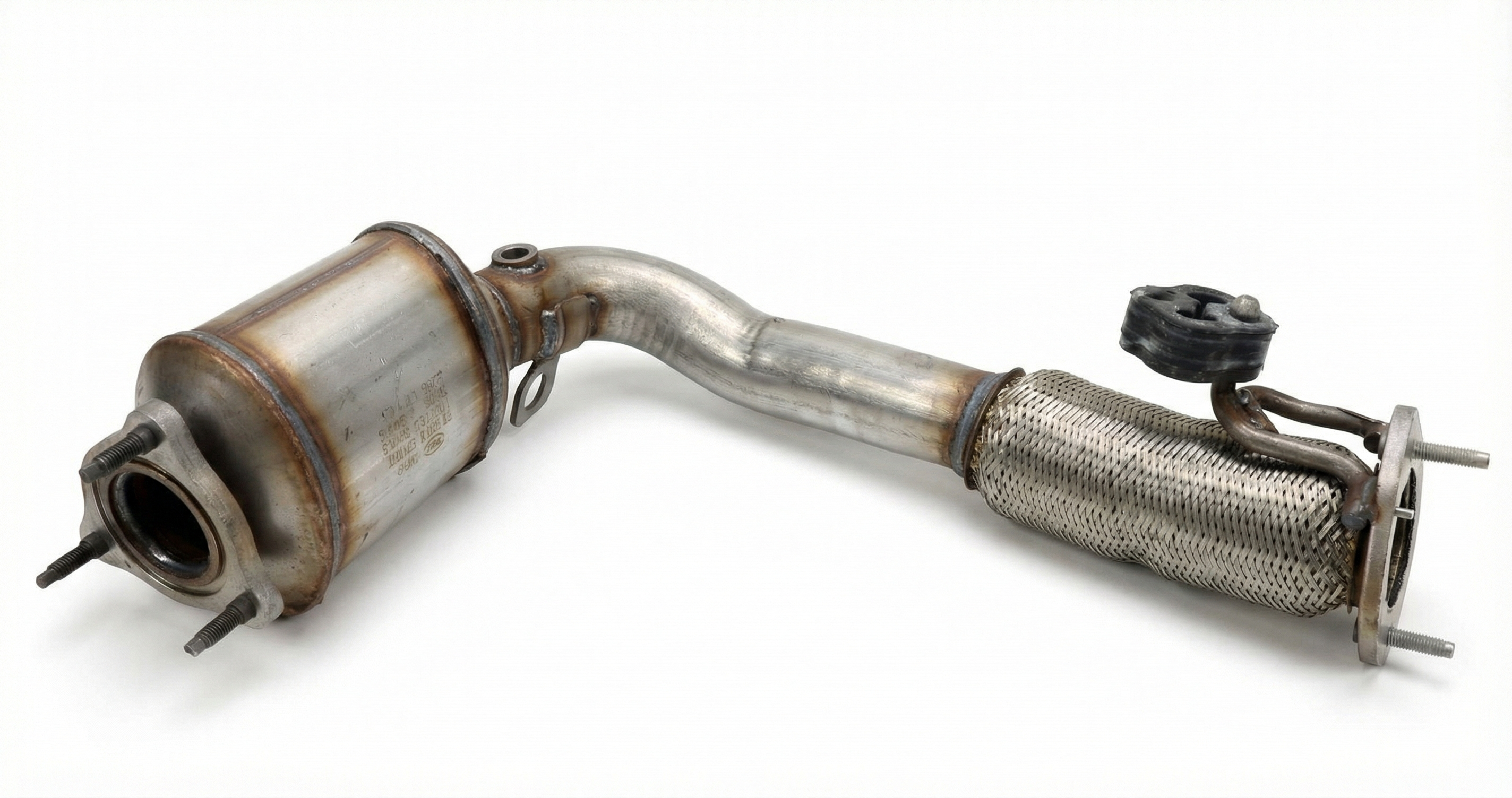
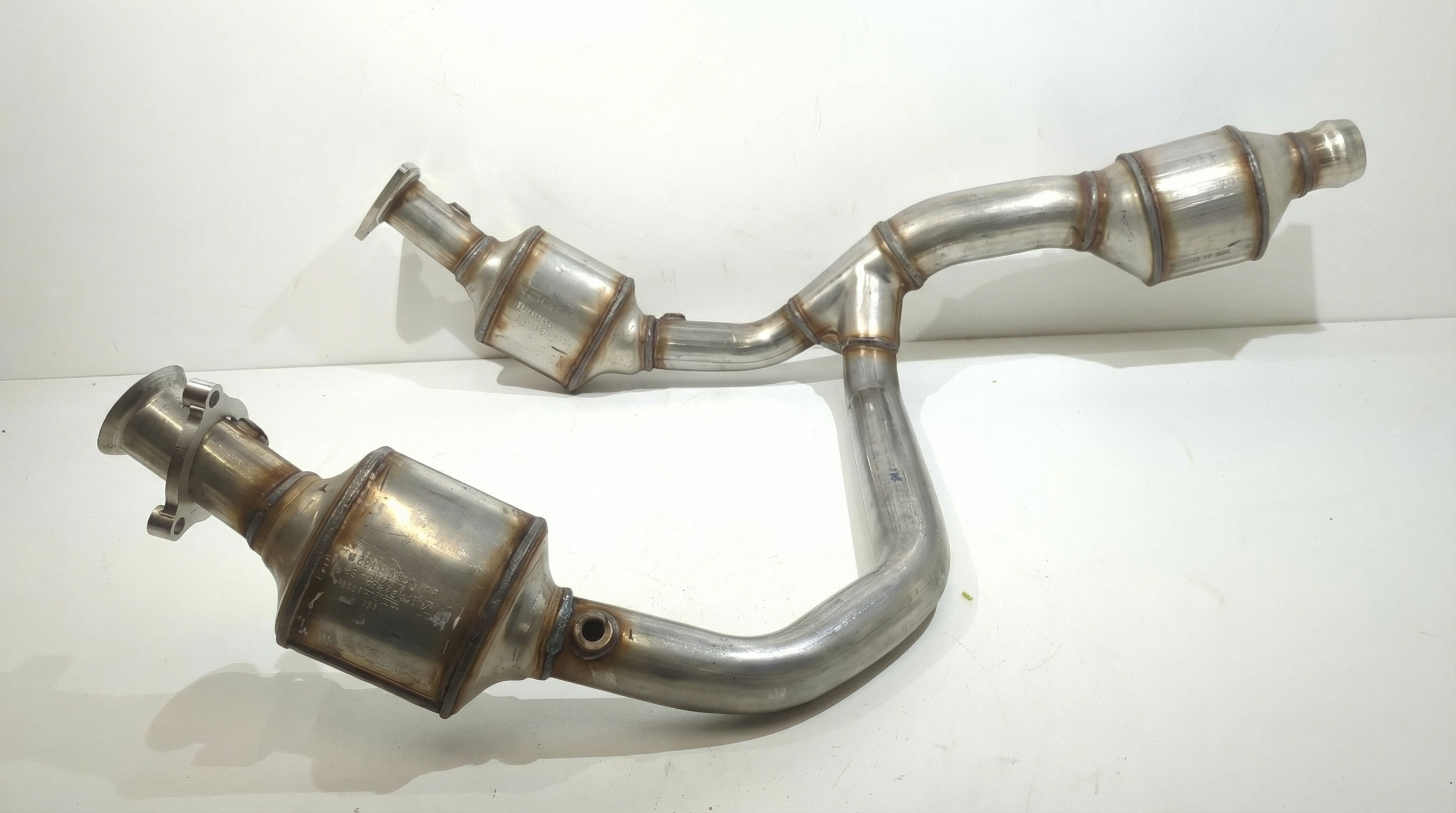
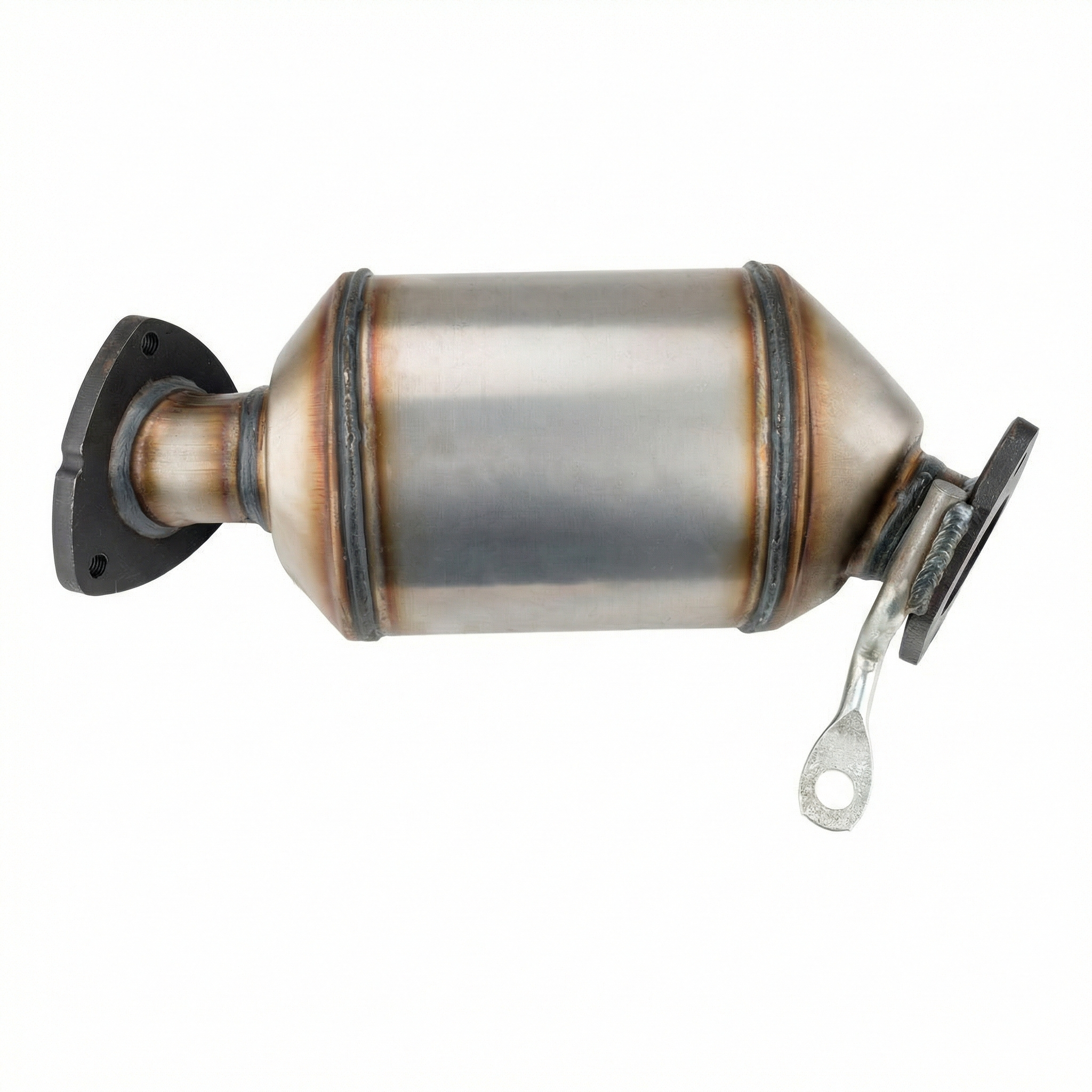
Est. part cost: $50-$120 - Failing Catalytic Converter ⚪ Low Probability → Shop Catalytic Converter A converter can become clogged or chemically inefficient, especially if driven for a long time with a rich condition or misfire. This is a possible cause, but less likely than injectors or leaks. TSB #PIP5681C explicitly states that the exhaust crack issue does not cause hardware concerns on the catalytic converter itself and it should not be replaced for this specific issue.
How to confirm: A professional can perform a backpressure test or use a scan tool to compare upstream and downstream O2 sensor readings. If the downstream sensor's waveform mimics the upstream sensor's, the converter is likely not working. An infrared thermometer can also be used to check for a significant temperature increase across the converter, which indicates normal operation.
Typical fix: Replace the Bank 1 catalytic converter.
Est. part cost: $600-$1500+
Rare But Worth Checking
- Faulty Upstream (Pre-Catalyst) Oxygen Sensor: → Shop Oxygen Sensor A faulty upstream O2 sensor can cause the engine to actually run rich, which the downstream sensor then correctly reports. This would likely be accompanied by other codes like P0172 (System Too Rich Bank 1). 🎬 Watch: How to replace the upstream oxygen sensor
- Mechanical Valvetrain Issue: TSB #PIP4964F notes that if no injector or leak issues are found, a sticking valve or a lifter follower out of place could be a very rare cause. This may or may not cause a misfire.
- Skewed Mass Airflow (MAF) Sensor: TSB #PIP5534A, while for smaller engines, suggests that a skewed MAF sensor can contribute to fuel trim issues that may lead to a P2097 code. This is a less likely cause on the V6 without other accompanying codes.
- ECM Software Glitch: In some Chevrolet vehicles, a software glitch can misinterpret sensor data and set a P2097 code prematurely. If all hardware checks out, checking for an available ECM software update with a dealer is a valid step.
Diagnosis Steps

- Read the trouble codes with an OBD-II scanner and note any other codes present. Check freeze frame data to understand conditions when the code was set.
- Per TSB #PIP4964F, the first diagnostic step should be a fuel injector balance test (AFIT) to check for leaking or over-performing injectors.
- If injectors test normal, perform a thorough visual inspection of the exhaust system on Bank 1 for cracks or black soot stains indicating a leak. Pay close attention to the catalytic converter flanges.
- For 2018-2022 models, specifically inspect the Bank 2 (passenger/radiator side) flex pipe bracket for cracks, per TSB #PIP5681C. A break here can cause a stress crack on the Bank 1 pipe.
- If no visual leaks are found, perform an exhaust leak test using a smoke machine or by applying low-pressure air to the tailpipe and spraying gasket areas with soapy water.
- If no leaks or injector issues are found, use a scan tool to analyze the live data from the upstream and downstream O2 sensors on Bank 1. Compare their readings to determine if a sensor is biased or if the catalytic converter is inefficient.
- As a final step, inspect for vacuum leaks or a skewed Mass Airflow (MAF) sensor, as suggested by TSB #PIP5534A for other GM engines.
Parts You'll Likely Need
- Fuel Injector
(OEM #12669384)— Identified by GM as the most common cause of P2097 on this vehicle. Part number 12669384 is listed for the 3.6L engine in this generation.
Trusted brands: ACDelco, Bosch
OEM price range: $100-$180
Aftermarket price range: $50-$120 - Exhaust Gasket (Catalytic Converter Flange) — Exhaust leaks at the converter flanges are a common cause of this code, per TSBs and owner experiences.
Trusted brands: ACDelco, Fel-Pro, Walker
OEM price range: $30-$60
Aftermarket price range: $20-$40
Related Codes That Often Appear With This One
- P2099 — This is the same code but for Bank 2 (Post Catalyst Fuel Trim System Too Rich Bank 2). GM TSBs often group these codes together as having the same root causes, such as injectors or systemic exhaust issues.
- P0172 — This code means 'System Too Rich Bank 1' and is based on the upstream O2 sensor. If you have both codes, it strongly suggests a true rich condition caused by something like a leaking fuel injector.
- P0420 — This code means 'Catalyst System Efficiency Below Threshold Bank 1'. It can appear with P2097 if the rich condition has damaged the catalytic converter or if a significant exhaust leak is present between the two sensors.
Technical Service Bulletins (TSBs) & Recalls
- PIP4964F: Emphasizes that leaking fuel injectors are the most common cause and an AFIT test should be performed before other diagnostics. Also mentions exhaust leaks at the converter outlet gasket as a cause.
- PIP5681C: Details a specific failure on 2018-2022 models where a broken weld on the Bank 2 exhaust pipe bracket causes stress cracks and leaks on the Bank 1 pipe, leading to various fuel trim and catalyst codes including P2097.
- PIP5534A: While for 2.0L and 2.5L engines, provides additional diagnostic strategies for P2097 related to monitoring fuel trims under different driving conditions and considering skewed MAF sensors or vacuum leaks.
Platform-Specific Known Issues
- TSB #PIP4964F: States that leaking fuel injectors are the most common cause for P2097 and P2099. It advises performing an injector balance test before other diagnostics.
- TSB #PIP5681: Points to a broken or poorly welded exhaust flex pipe bracket on Bank 2 (passenger side) of 2018-2019 models, which can cause stress and cracks in the Bank 1 exhaust system, leading to leaks that trigger P2097.
- TSB #PIP5534A: Mentions that certain driving habits, like heavy stop-and-go traffic or rapid on/off throttle application ('digital driving'), can sometimes induce a P2097 code without a mechanical fault being present.
Mechanic-Grade Diagnostic Values
- High-Pressure Fuel System — expected: 750 psi (5,171 kPa) at idle, up to 2,250 psi (15,513 kPa) at wide-open throttle.. Failure: Significantly lower pressure may indicate a weak high-pressure fuel pump (HPFP); pressure that doesn't build with RPM can also indicate a fault.
- Downstream O2 Sensor (Bank 1 Sensor 2) Voltage — expected: Relatively stable voltage on a warm, running engine. Should be above 0.7V when a rich condition is present.. Failure: Voltage stuck low (e.g., < 0.2V) or fluctuating rapidly like an upstream sensor suggests a faulty sensor or an exhaust leak.
- Upstream O2 Sensor (Bank 1 Sensor 1) Voltage — expected: Rapidly fluctuating between approximately 0.1V and 0.9V.. Failure: A lazy or non-responsive sensor that stays at a fixed voltage can cause fuel control problems, leading to a rich condition downstream.
- Long-Term Fuel Trim (LTFT) Bank 1 — expected: Between -10% and +10%.. Failure: A persistent value more negative than -10% (e.g., -15%) indicates the ECM is consistently reducing fuel to compensate for a rich condition.
- Injector Balance Test (Pressure Drop) — expected: The fuel rail pressure drop for each injector should be within 1.5 PSI of the average for all cylinders.. Failure: An injector with a significantly larger pressure drop is leaking or flowing too much fuel.
Scan Tool Commands That Help
- GDS2 (GM Dealer Tool) or equivalent professional scanner: Fuel Injector Balance Test (AFIT) — This is the primary diagnostic step recommended by GM TSBs to identify leaking or poorly performing fuel injectors, a top cause of P2097. It measures the pressure drop at the fuel rail as it individually pulses each injector.
- GDS2 (GM Dealer Tool) or equivalent professional scanner: Control the Injection Volume for A/F Sensor — This active test allows a technician to command a rich or lean mixture and observe the live voltage response of both the upstream and downstream O2 sensors, helping to confirm if a sensor is responding correctly to mixture changes.
- GDS2 (GM Dealer Tool) or equivalent professional scanner: Cylinder Power Balance — This test helps identify misfiring cylinders by deactivating one cylinder at a time and observing the drop in RPM. While not a direct test for a rich condition, it can help isolate a problematic cylinder that might be contributing to the P2097 code.
Wiring & Ground Locations
- O2 Sensor Harness — Runs from the oxygen sensors on the exhaust pipes to the main engine harness, which connects to the Engine Control Module (ECM).. The wiring for the downstream O2 sensor can be damaged by heat from the exhaust or road debris. A shorted or open wire can send an incorrect signal, causing a false P2097 code. A visual inspection for melted or chafed wires is crucial.
- Engine Ground Straps (e.g., G105, G106) — Various points between the engine block/cylinder head and the vehicle's chassis/frame.. A poor engine ground can cause erratic behavior in various sensors, including the oxygen sensors. Verifying grounds are clean and tight is a fundamental step in diagnosing any electronic engine code. Specific locations must be confirmed with a service manual for the exact year.
Real Owner Repair Stories
- YouTube video from 'Pine Hollow Auto Diagnostics' (2019 Chevrolet Traverse 3.6L) — Check Engine Light with code P2097.
❌ Tried (didn't work) Replacing the exhaust flange gasket., Applying RTV sealant to the leaking flange.
✅ What actually fixed it The exhaust pipe was found to be completely cracked at the flange weld, right next to the oxygen sensor. The leak was so significant that a new gasket couldn't seal it. The final repair was to weld the cracked pipe/flange assembly. - GM Technical Service Bulletin #PIP5681C (2018-2022 Chevrolet Traverse 3.6L LFY) — Check Engine Light with codes including P2097, P0171, P0420, and/or an exhaust rattle noise.
❌ Tried (didn't work) Replacing catalytic converters (the TSB explicitly states the converters are not damaged by this issue)., Replacing oxygen sensors.
✅ What actually fixed it The root cause was identified as a broken or poor weld on the Bank 2 (radiator side) exhaust flex pipe bracket. This failure puts stress on the rest of the exhaust, causing a crack in the Bank 1 pipe. The fix is to replace the affected exhaust pipe section(s).
OEM Part Supersession History
12611545, 12632255, 12638530→12669384— Standard part evolution for improved performance, reliability, or manufacturing efficiency.
Model Year Variations Within This Range
- 2017: This is the final year of the first generation. It uses a 3.6L V6 (LLT) paired with a 6-speed automatic transmission. While causes for P2097 are similar, it does not fall under TSB #PIP5681C for the broken exhaust bracket.
- 2018-2023: This is the second generation, featuring the updated 3.6L LFY V6 engine with direct injection and a 9-speed automatic transmission. Models from 2018-2022 are specifically called out in TSB #PIP5681C as being prone to an exhaust crack on Bank 1 caused by a failed bracket on Bank 2.
- 2018-2019: A 2.0L Turbo (LTG) engine was available on the RS trim. While less common, it can also set a P2097 code, with diagnosis pointing towards similar causes like MAF sensor or other fuel system issues per TSB #PIP5534A.
Helpful Videos
![How to Fix P2097 Engine Code in 4 Minutes [2 DIY Methods / Only $9.84]](https://img.youtube.com/vi/rCwtzRmhMwY/mqdefault.jpg)

We Have This Part in Stock

The information in this article is provided for general reference and educational purposes only. Vehicle specifications, procedures, and part compatibility can vary by production date, trim level, and region. Always consult your vehicle's factory service manual and verify part numbers before purchasing or performing repairs. Safety-critical components such as airbags, seat belts, and braking systems should be installed by a qualified professional.
- Chevrolet TRAVERSE:
- 🧭 Diagnostic Flowchart
- 🎬 Helpful Videos
- 🛍️ Shop This Part
- What's Unique About the 2017-2023 Chevrolet TRAVERSE
- Symptoms You May Notice
- Most Likely Causes
- Rare But Worth Checking
- Diagnosis Steps
- Parts You'll Likely Need
- Related Codes That Often Appear With This One
- Technical Service Bulletins (TSBs) & Recalls
- Platform-Specific Known Issues
- Mechanic-Grade Diagnostic Values
- Scan Tool Commands That Help
- Wiring & Ground Locations
- Real Owner Repair Stories
- OEM Part Supersession History
- Model Year Variations Within This Range
- 🎟️ Get 5% Off