

P2097 on 2016-2019 Chevrolet Volt: Post Catalyst Fuel Trim Too Rich Fixes
On a 2016-2019 Volt, P2097 is almost always caused by a software glitch in the engine's computer. The fix is a dealer-installed software update, not a parts replacement. This service is often covered under the vehicle's federal emissions warranty (8 years/80,000 miles). Do not replace any parts until the software has been updated.
- For a 2016-2019 Volt, do NOT replace any parts for a P2097 code until you have checked for software updates.
- The most likely fix is a two-part software reprogram (PIM then ECM) at a GM dealer, which should be covered by the federal emissions warranty (8 years/80,000 miles).
- The vehicle is safe to drive with this code; it will not cause damage or leave you stranded.
- If the code persists after the update, the next most likely cause is a failing downstream O2 sensor.
What's Unique About the 2016-2019 Chevrolet Volt
Unlike most vehicles where P2097 points to a hardware failure like an O2 sensor or exhaust leak, on the second-generation Chevrolet Volt, this code is most often a false alarm. GM has issued multiple Technical Service Bulletins (TSBs) stating that the diagnostic software for the post-catalyst oxygen sensor is overly sensitive and can incorrectly trigger the P2097 code when no actual rich condition exists. The official fix requires reprogramming both the Power Inverter Module (PIM) and the Engine Control Module (ECM). Therefore, the first and most critical step is always a software check, not a hardware replacement.
🎬 Watch this overview of the P2097 fix for the Volt.Symptoms You May Notice
- Check Engine Light is on
- No noticeable drivability issues or performance loss
- OnStar may send an email 🎬 See a breakdown of P2097 meaning, causes, and symptoms. or text message alert about an emissions system issue
- Replacing the oxygen sensor before checking for software updates.
- Replacing the catalytic converter when the issue is a software glitch or a faulty sensor.
- Charging the customer for a software update that should be covered under the federal emissions warranty (8 years/80,000 miles).
Most Likely Causes
- Outdated Engine Control Module (ECM) or Power Inverter Module (PIM) Software 🔴 High Probability → Shop Engine Control Module (ECM) GM TSBs 18-NA-047, 18-NA-332, and Service Update 17058 identify an overly sensitive diagnostic calibration that falsely triggers the code. The bulletins state the vehicle runs normally but the software incorrectly flags a rich condition.
How to confirm: A GM dealer or a shop with a subscription to GM's Service Programming System (SPS) can check the vehicle's VIN for required software updates in the GM Global Warranty Management system.
Typical fix: Reprogram the Power Inverter Module (PIM) first, then reprogram the Engine Control Module (ECM) with the latest GM calibration. This should be performed before any parts are replaced. This service should be covered under the 8-year/80,000-mile federal emissions warranty.
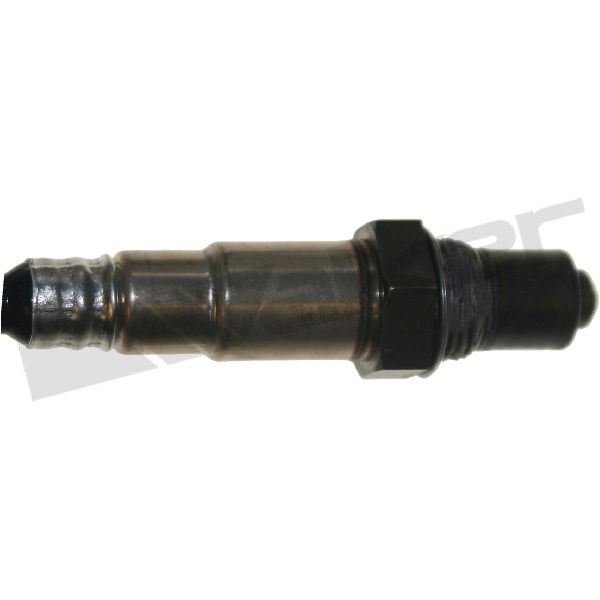
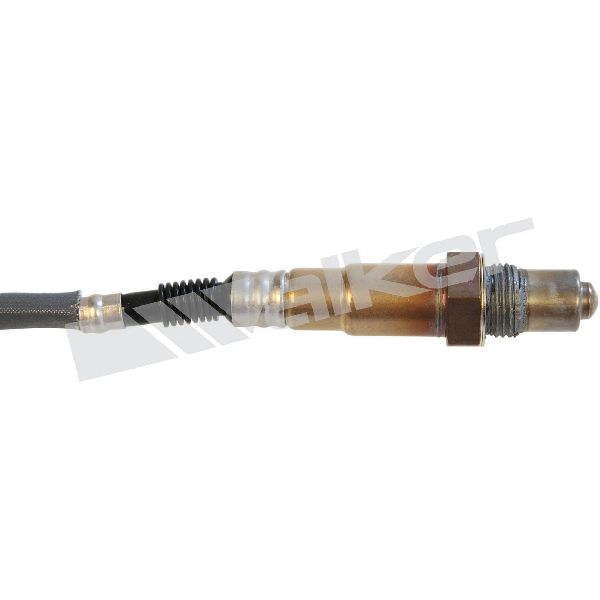
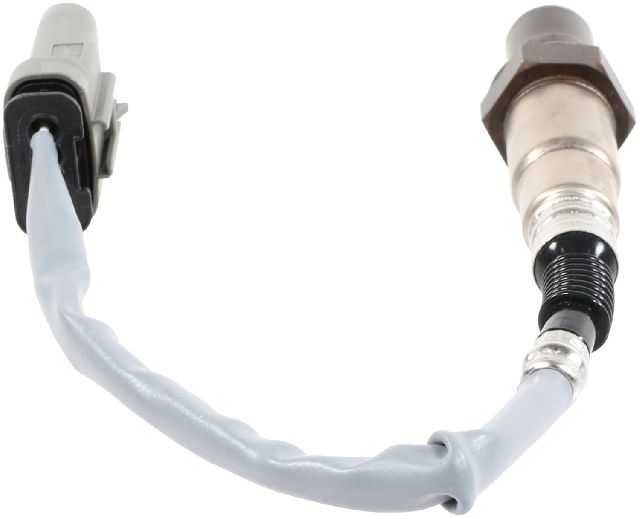
Est. part cost: $0 - Failing Downstream Oxygen (O2) Sensor (Post-Catalyst) ⚪ Low Probability → Shop Oxygen Sensor This is a common cause on most cars, but on the Volt, it should only be considered after the software has been updated and the code returns. Sensors can fail over time, giving false rich readings.
How to confirm: Using a scan tool, observe the live data for the Bank 1 Sensor 2 voltage. After the engine is warm, it should show a relatively steady voltage, typically between 0.4V and 0.8V. If it fluctuates rapidly like the upstream sensor or is stuck high (above 0.8V), it is likely faulty.
Typical fix: Replace the downstream (post-catalyst) oxygen sensor.
Est. part cost: $50-$150 - Exhaust System Leak ⚪ Low Probability Leaks from cracked manifolds, broken flange gaskets, or holes in the exhaust pipe before the downstream O2 sensor can allow outside air to enter, confusing the sensor's readings. This is a generic cause for this code and not specific to the Volt.
How to confirm: Perform a visual inspection of the exhaust system from the engine to the catalytic converter, looking for black soot trails or listening for hissing sounds. A smoke test is the most effective way to find small leaks.
Typical fix: Repair the leak by replacing the gasket, welding the pipe, or replacing the damaged component.
Est. part cost: $20-$300
Rare But Worth Checking
- Leaking Fuel Injector(s): → Shop Fuel Injector A leaking injector can cause a true rich condition. This would typically be accompanied by other codes like P0172 (System Too Rich Bank 1) or misfire codes (P0300-P0304), and you might notice a drop in fuel economy or a rough idle.
- Failing Catalytic Converter: → Shop Catalytic Converter While possible, a failing converter is an unlikely cause for this code on its own. It should only be considered after all other possibilities, especially the software update and O2 sensor check, have been exhausted.
Diagnosis Steps
- Connect an OBD-II scanner to verify P2097 is the only code present. If other codes exist (e.g., for misfires or the fuel system), diagnose them first.
- Crucial Step for Volt: Contact a GM dealership to check if the vehicle's software is up to date. Reference TSB 18-NA-047, TSB 18-NA-332, and Service Update 17058. Ask them to check the vehicle's history in the GM Global Warranty Management system.
- Insist that this repair should be covered under the Federal Emissions Control System Warranty (8 years / 80,000 miles), which covers the ECM and its software calibrations.
- If an update is available, have the modules reprogrammed. The correct procedure is to update the PIM first, then the ECM.
- If the code returns after the software update, proceed with hardware diagnostics.
- Inspect the exhaust system for any leaks between the engine and the downstream O2 sensor. Pay close attention to gaskets and flex pipes.
- Use a scan tool to monitor live data. Observe the voltage of the downstream O2 sensor (Bank 1, Sensor 2) once the vehicle is in closed loop. A healthy sensor will have a steady voltage (approx. 0.4-0.8V). If it's stuck high or fluctuating wildly, the sensor is likely bad.
- Check fuel trim values. High negative long-term fuel trim values would indicate the ECM is compensating for a true rich condition, which could point to a fuel delivery issue like a leaking injector.
Parts You'll Likely Need
- ECM/PIM Software Update — This is the most common and documented fix for P2097 on this specific vehicle, addressing a calibration sensitivity issue.
Trusted brands: GM
OEM price range: $0-$250
Aftermarket price range: N/A - Downstream Oxygen Sensor (Post-Catalyst)
(OEM #ACDelco 213-4768 (GM Genuine Parts))— If the software update does not resolve the code, a failing sensor is the next most likely hardware culprit.
Trusted brands: ACDelco, Denso, NTK 🎬 Watch this walkthrough on how to replace a downstream sensor.
OEM price range: $100-$180
Aftermarket price range: $50-$100
Technical Service Bulletins (TSBs) & Recalls
- 18-NA-047: Specifies reprogramming the ECM after the PIM has been updated.
- 18-NA-332: Another bulletin referencing the false P2097 code and the software update fix.
- Bulletin #18NA332: Provides a specific procedure to reprogram the ECM to correct a condition where the MIL is on and DTC P2097 is set.
- Bulletin #PIP5515A-02: Notes that if the latest calibrations from 17058 are installed and P2097 persists, technicians should not attempt further repairs as GM is aware of the ongoing concern.
- Bulletin #PIP5410D: Advises technicians to install the latest calibrations into the T6 Power Inverter Module for vehicles with P2097 set in current or history.
- GCUS-3-842 (Service Update 17058): Confirms the code can be set falsely with no drivability issues and requires a software update for the Power Inverter Module (PIM).
Platform-Specific Known Issues
- GM Technical Service Bulletin 18-NA-047 and Service Update 17058 were released to address this specific code being set incorrectly due to overly sensitive software diagnostics. The fix is a module reprogramming.
- TSB 18-NA-332 also references this issue and points to the software update as the solution.
- The correct repair sequence is to first reprogram the Power Inverter Module (PIM) per SU 17058, and then reprogram the Engine Control Module (ECM).
Mechanic-Grade Diagnostic Values
- Downstream O2 Sensor (HO2S Bank 1 Sensor 2) Voltage at Idle (Warm Engine, Closed Loop) — expected: A relatively stable voltage between 0.4V and 0.8V.. Failure: Voltage fluctuates rapidly similar to an upstream sensor, or is stuck consistently high (above 0.8V) or low (below 0.2V).
- Post-Catalyst Fuel Trim Adaptation Status (GDS2 Scan Tool Parameter) — expected: The value should be within acceptable limits as defined by the ECM calibration.. Failure: P2097 sets when the post-catalyst fuel adaptation cannot bring the fuel control within its acceptable limits because it perceives a rich condition.
Scan Tool Commands That Help
- GM MDI/MDI2 with SPS (Service Programming System): Power Inverter Module – Programming — This is the first step required to perform Service Update 17058, which is the primary fix for a false P2097 code. After the PIM is programmed, the ECM must also be reprogrammed.
- GM MDI/MDI2 with SPS (Service Programming System): Engine Control Module (ECM) – Programming — This is the second step in the software update process, performed after the PIM has been updated, per TSB 18-NA-047.
Wiring & Ground Locations
- K20 Engine Control Module (ECM) Connector X1 — Located in the front driver's side of the engine compartment, typically requiring bumper removal for access. The X1 connector is often identified by a Blue (BU) terminal position assurance lock.. This is the main connector where the downstream O2 sensor wiring terminates. Checking for corrosion or damage here is a valid step if a sensor is suspected to be faulty.
- ECM Connector X1, Pin 10 — Pin 10 on the X1 connector at the ECM.. This is the HO2S High Signal for Bank 1 Sensor 2. The wire is typically Purple/White (PU/WH). This pin carries the voltage signal from the downstream O2 sensor to the ECM.
- ECM Connector X1, Pin 11 — Pin 11 on the X1 connector at the ECM.. This is the HO2S Low Signal for Bank 1 Sensor 2. The wire is typically Tan/White (TN/WH). This is the low reference (ground) side of the sensor circuit, provided by the ECM.
- G101/G106 — G101 is on the engine block. G106 is on the front center of the frame cross rail, under the crank pulley. These grounds are often jumpered together.. These are primary grounds for the Engine Control Module (ECM) and Transmission Control Module (TCM). A poor ground here can cause a host of erratic sensor readings and module behavior.
Real Owner Repair Stories
- YouTube User 'Volt doc' (2017 Chevrolet Volt) — Check Engine Light on, OnStar sent an email alert for an emissions system issue. OBD-II scan revealed code P2097.
❌ Tried (didn't work) The owner looked up the code online and was concerned it could be a gas cap or other emission system hardware failure.
✅ What actually fixed it Took the vehicle to a Chevrolet dealer. The dealer identified GM document #18-NA-332 and reprogrammed (reflashed) the ECM. This immediately cleared the code and fixed the problem. The repair was performed for free under the emissions warranty. - Reddit user on r/volt (2017 Chevrolet Volt LT, 99,600 miles) — Check Engine Light with code P2097 appeared after a 'Reduced Propulsion' message that went away.
❌ Tried (didn't work) The CEL disappeared temporarily after a full charge and filling the gas tank, but the underlying issue was not resolved.
✅ What actually fixed it A commenter confirmed that the fix is an ECM software update to address the post-catalyst fuel adaptation limits being too sensitive.
OEM Part Supersession History
GM 12666723→ACDelco 213-4768 (GM 12673836)— Part number update/consolidation by the manufacturer.
Model Year Variations Within This Range
- 2019: The 2019 model year introduced a more powerful 7.2 kW charging system and the updated Chevrolet Infotainment 3 system, but these changes do not affect the 1.5L L3A engine or the P2097 diagnosis.
Diagnostic Flowchart
Other Known Issues on This Vehicle
Issues unrelated to this code that are worth knowing about as an owner of this generation:
- Battery Energy Control Module (BECM) Failure 🔴 High — A very common and well-documented failure. Can occur at various mileages, often leading to a no-start or stall condition, stranding the vehicle. (Ref: TSB 18-NA-261 addresses diagnosis. GM issued Special Coverage Program N232432680 extending the warranty to 15 years/150,000 miles.)
- 'Shift to Park' Message / Vehicle Won't Shut Off 🟠 Medium — Extremely common issue where the car fails to recognize it is in Park, preventing it from shutting down and causing battery drain. (Ref: TSB 19-NA-206 (and subsequent revisions) details the fix, which involves replacing a microswitch and/or installing a jumper harness. The repair is often covered under the Voltec warranty.)
- EGR Cooler Clogging 🟠 Medium — Common on higher-mileage vehicles, especially those that run on the gas engine frequently. Carbon buildup clogs the EGR cooler, causing a P0401 code and potential performance issues. (Ref: TSB 18-NA-089 recommends replacing the EGR cooler as the primary fix for P0401 on higher-mileage vehicles.)
Used vs. New Parts: Buying Guide for This Vehicle
When a used part is the smart pick: For this specific P2097 code, the primary fix is a software update, for which no parts are needed. If hardware is required (after the update fails to fix the code), a used part is generally not recommended. A used O2 sensor has unknown remaining life and is not worth the labor to install. A used ECM would require dealer programming and may have compatibility issues, making it a risky choice.
Donor-vehicle mileage cap: roughly under 50000 miles for the part to have meaningful remaining life.
What to inspect on the donor part:
- For an O2 sensor, there are no reliable visual cues. It is considered a wear item and buying new is strongly advised.
- For an ECM, inspect for any physical damage, bent pins, or signs of water intrusion on the case or connectors.
OEM-only on this vehicle (don't cheap out):
- ECM/PIM Software Update: This can only be performed by a GM dealer or a shop with a GM SPS subscription.
- Engine Control Module (ECM): While used ECMs are available, they require VIN programming by a dealer to function, which can be costly and sometimes problematic. A new or professionally refurbished and pre-programmed unit is a safer bet.
Aftermarket brands forum-validated for this vehicle:
- Denso: Denso is a well-regarded OEM supplier for many manufacturers, including GM, and their O2 sensors are considered a reliable alternative to ACDelco.
- NTK (NGK): NTK is another top-tier OEM sensor manufacturer known for quality and reliability that meets or exceeds OEM specs.
Brands owners have reported issues with on this vehicle:
- Bosch: While a major brand, Bosch O2 sensors have a mixed reputation among GM owners, with some reporting compatibility issues, incorrect readings, or premature failure that leads to replacing it with an OEM/Denso part.
Real Owner Stories
Aggregated from forums and TSBs cited above. Mileages and costs reflect what owners reported in those sources.
2016 Chevrolet Volt 1.5L L3A — 75000 miles
Symptoms: Check engine light with code P2097.
What fixed it: Software update for the ECM and PIM performed under warranty.
Source hint: Reddit user in r/volt reports their 2016 Volt with 75k miles had the P2097 code fixed under warranty with a software update for the ECM and PIM.
2017 Chevrolet Volt 1.5L L3A
Symptoms: Check engine light came on; owner took it to the dealer.
What fixed it: Reprogramming the ECM per TSB 18-NA-332.
Cost: $0-$0
Source hint: YouTube video where a 2017 Volt owner documents getting the P2097 code, taking it to the dealer, and having it fixed for free under the emissions warranty by reprogramming the ECM per TSB 18-NA-332.
2017 Chevrolet Volt 1.5L L3A — 58000 miles
Symptoms: P2097 code present; dealer charged for labor despite warranty eligibility.
What fixed it: Software update.
Cost: $160-$160
Source hint: Reddit thread discussing a dealer charging $160 for the labor to perform the update on a 2017 Volt with 58k miles
Related OBD-II Codes
Frequently Asked Questions
Is the P2097 code on my 2016-2019 Chevrolet Volt covered under warranty?
Which TSBs should I reference when taking my Volt to the dealer for a P2097 code?
My dealer wants to replace the O2 sensor for P2097; should I let them?
What is the correct order for updating the software modules on the Volt?
Will a P2097 code cause my Volt to drive differently?
Can OnStar detect this specific issue?
Helpful Videos

Used OEM Parts in Stock
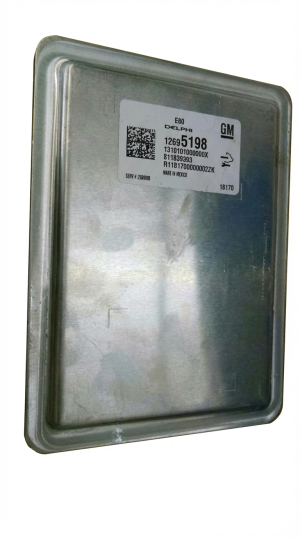
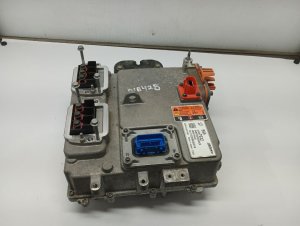
New Aftermarket Parts Available



The information in this article is provided for general reference and educational purposes only. Vehicle specifications, procedures, and part compatibility can vary by production date, trim level, and region. Always consult your vehicle's factory service manual and verify part numbers before purchasing or performing repairs. Safety-critical components such as airbags, seat belts, and braking systems should be installed by a qualified professional.
- Chevrolet Volt:
- 🧭 Diagnostic Flowchart
- 🎬 Helpful Videos
- 🛍️ Shop This Part
- What's Unique About the 2016-2019 Chevrolet Volt
- Symptoms You May Notice
- Most Likely Causes
- Rare But Worth Checking
- Diagnosis Steps
- Parts You'll Likely Need
- Technical Service Bulletins (TSBs) & Recalls
- Platform-Specific Known Issues
- Mechanic-Grade Diagnostic Values
- Scan Tool Commands That Help
- Wiring & Ground Locations
- Real Owner Repair Stories
- OEM Part Supersession History
- Model Year Variations Within This Range
- Other Known Issues on This Vehicle
- Used vs. New Parts: Buying Guide for This Vehicle
- Real Owner Stories
- 2016 Chevrolet Volt 1.5L L3A — 75000 miles
- 2017 Chevrolet Volt 1.5L L3A
- 2017 Chevrolet Volt 1.5L L3A — 58000 miles
- Related OBD-II Codes
- Frequently Asked Questions
- 🎟️ Get 5% Off