

P2097 on 2013-2018 Ford C-Max Hybrid: Causes, Fixes, and Diagnosis for Rich Fuel Trim
This code means your C-Max's exhaust is too rich after the catalytic converter. The most common causes are exhaust leaks before the O2 sensor, particularly at the flex pipe, or a failing oxygen sensor. A thorough diagnosis is needed before replacing parts, as a rich condition can also be caused by fuel system issues.
- P2097 means the exhaust is too rich after the catalytic converter.
- Before buying any parts, thoroughly inspect the exhaust system for leaks, paying special attention to the flex pipe between the engine and the rear O2 sensor.
- Use a scan tool to check live data from the O2 sensors and fuel trims to narrow down the cause.
- Ignoring this code can lead to expensive catalytic converter damage.
- The most likely causes on a C-Max are an exhaust flex pipe leak or a bad downstream O2 sensor.
What's Unique About the 2013-2018 Ford C-Max
For the 2013-2018 Ford C-Max Hybrid, the P2097 code does not appear to be linked to a common, well-documented failure pattern, TSB, or recall. However, owners have noted that the exhaust flex pipe can be a point of failure, leading to leaks that can trigger this code. Unlike some other vehicles where this code points to a specific known issue, diagnosis on the C-Max requires a more fundamental approach, starting with the most common general causes like exhaust leaks and sensor failures before suspecting more complex fuel system or catalytic converter issues.
Symptoms You May Notice
- Check Engine Light is on
- Decreased fuel economy
- Rough or unstable idle
- Engine hesitation or stumbling during acceleration
- A smell of fuel or rotten eggs from the exhaust
- Black smoke from the tailpipe in some cases
- Hard starting when the engine is hot
- Immediately replacing the downstream O2 sensor without first thoroughly checking for exhaust leaks, especially at the flex pipe.
- Replacing the catalytic converter when the actual problem is a faulty sensor, an exhaust leak, or a fuel delivery issue.
Most Likely Causes
- Exhaust System Leak 🔴 High Probability Exhaust components are exposed to road salt and moisture, making them susceptible to rust and corrosion over time. The flexible pipe (flexi) section of the exhaust is a known weak point on the C-Max and platform mates, often developing cracks or breaks that introduce air and skew O2 sensor readings.
How to confirm: Perform a visual inspection of the exhaust system from the engine to the tailpipe, looking for black soot marks, rust holes, or cracks, paying close attention to the woven flex pipe section. A smoke test performed by a technician is the most effective way to pinpoint hard-to-see leaks.
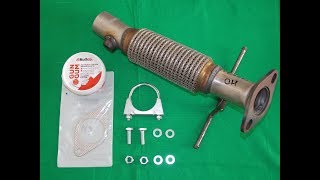
Typical fix: Repairing the leak. This could involve replacing a gasket, but for the C-Max, it often means cutting out the failed flex pipe and clamping or welding in a new repair section. 🎬 Watch: How to fix a broken C-Max exhaust flex pipe yourself. This avoids replacing the entire expensive catalytic converter assembly.
Est. part cost: $50-$150 - Faulty Oxygen (O2) Sensor 🟡 Medium Probability → Shop Oxygen Sensor O2 sensors are wear items that degrade over time and with mileage (typically 80,000-100,000 miles). They can become contaminated by fuel additives, oil, or coolant, or simply fail electronically, causing them to send incorrect rich signals to the PCM.
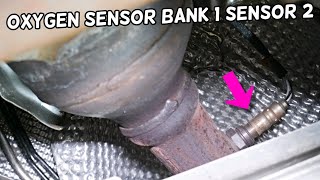
How to confirm: Use an OBD-II scan tool with live data capability. Observe the voltage readings of the downstream O2 sensor (Bank 1, Sensor 2). A healthy downstream sensor should show a relatively stable voltage (typically 0.6-0.8V). If it's stuck high (above 0.8V) or fluctuating rapidly like the upstream sensor, it may be faulty or indicating a separate issue.
Typical fix: Replacement of the downstream (post-catalyst) oxygen sensor. It is also possible the upstream sensor is failing, causing a true rich condition, so diagnosing both is wise.
Est. part cost: $50-$150 - Rich Running Condition ⚪ Low Probability
How to confirm: Check for other trouble codes, especially P0172. Investigate fuel system components. Check long-term and short-term fuel trims with a scan tool. High negative fuel trims (e.g., -10% or more) indicate the PCM is trying to remove fuel, pointing to a rich condition caused by something like a leaking fuel injector, faulty fuel pressure regulator, or a dirty/faulty mass air flow (MAF) sensor.
Typical fix: Depends on the root cause. It could involve cleaning or replacing a leaking fuel injector, or replacing a faulty fuel pressure regulator or mass air flow (MAF) sensor.
Est. part cost: $100-$400
Rare But Worth Checking
- Failing Catalytic Converter: → Shop Catalytic Converter While not the most common cause, a degraded catalytic converter can lose its ability to store oxygen, causing the downstream O2 sensor to give a rich reading. This is typically a more expensive repair and should be the last item considered after all other possibilities are ruled out.
- PCM Software Issue: In some vehicle models (though not specifically documented for the C-Max with P2097), an outdated Powertrain Control Module (PCM) software can cause false codes. Checking if a software update is available from Ford can be a worthwhile diagnostic step, especially if no physical faults are found.
Diagnosis Steps
- Read the code and any other pending/stored codes with an OBD-II scanner. Note the freeze frame data to see the engine conditions 🎬 Watch: A helpful overview of common P2097 causes and fixes. when the code was set.
- Perform a thorough visual and physical inspection of the entire exhaust system. Look and feel for any signs of leaks, such as black soot, cracks, or holes, especially around the flexible exhaust pipe located before the downstream O2 sensor.
- Inspect the wiring and connector for the downstream O2 sensor (Bank 1, Sensor 2) for any damage, corrosion, or loose connections. Ensure it is not melted or chafed by the exhaust.
- Use a scan tool to monitor live data. Watch the voltage of the upstream (Sensor 1) and downstream (Sensor 2) O2 sensors. The upstream should fluctuate rapidly between ~0.1V and ~0.9V. The downstream should be relatively stable around 0.6-0.8V. If the downstream sensor is stuck high or fluctuating like the upstream, it points towards a problem.
- Analyze the long-term fuel trim (LTFT) values. If they are highly negative (e.g., -15% or more), the engine is genuinely running rich. This suggests looking for leaking fuel injectors, high fuel pressure, or a faulty MAF sensor.
- If there are no exhaust leaks and fuel trims are normal, the downstream O2 sensor itself is the most likely suspect.
- If an exhaust leak at the flex pipe is confirmed, replace the flex pipe repair section.
- If the O2 sensor is replaced and the code returns, further diagnosis of the catalytic converter's efficiency and fuel system is needed.
Parts You'll Likely Need
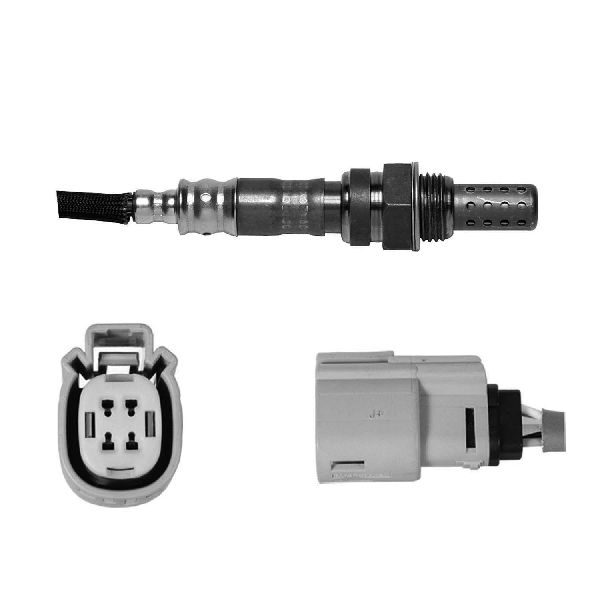
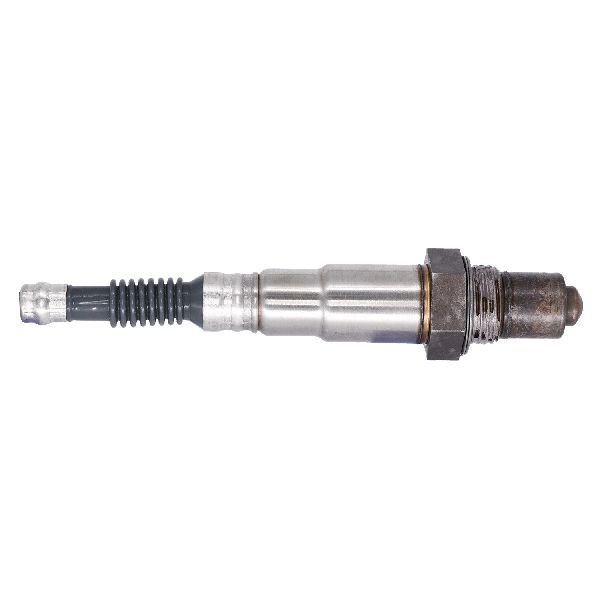
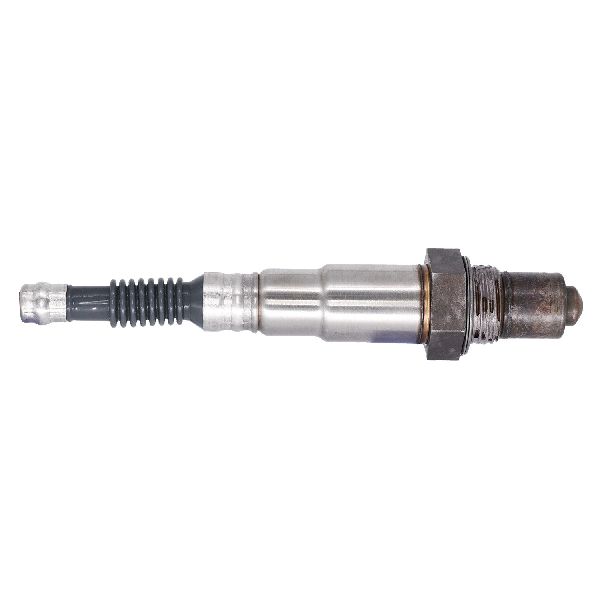
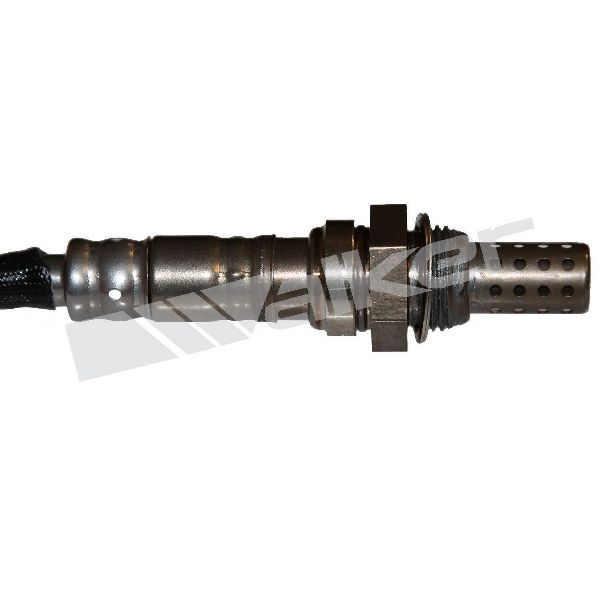
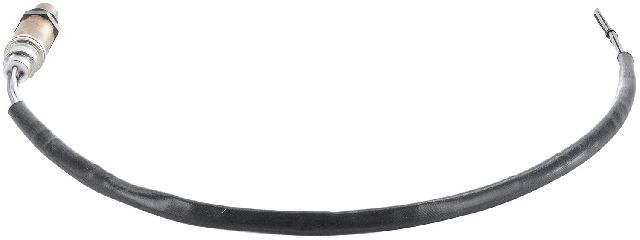
- Downstream Oxygen Sensor (Bank 1, Sensor 2)
(OEM #DY-1203)— This sensor is responsible for triggering the code. It may have failed or become contaminated, leading to inaccurate readings.
Trusted brands: Motorcraft, Bosch, Denso, NTK
OEM price range: $60-$100
Aftermarket price range: $40-$70 - Exhaust Flex Pipe Repair Kit — The flex pipe is a common failure point that causes exhaust leaks, which is a primary cause for P2097 on this vehicle. This kit allows for replacement of just the failed section.
Trusted brands: Walker, AP Exhaust, Various eBay/aftermarket suppliers
OEM price range: N/A (Ford sells as part of the full catalytic converter assembly)
Aftermarket price range: $50-$80 - Exhaust Gasket/Seal — If an exhaust leak is found at a flange or joint, replacing the gasket is often the required fix.
Trusted brands: Fel-Pro, Walker Exhaust
OEM price range: $15-$40
Aftermarket price range: $5-$20
Related Codes That Often Appear With This One
- P0172 — P0172 (System Too Rich Bank 1) indicates the upstream O2 sensor is detecting a rich condition. If both P2097 and P0172 are present, it strongly suggests an actual fuel delivery problem (like a leaking injector or high fuel pressure) rather than just a downstream sensor or exhaust leak issue.
- P0420 — P0420 (Catalyst System Efficiency Below Threshold) can sometimes appear with P2097. While P0420 points to a failing converter, the rich condition from P2097 can also lead to converter inefficiency. Diagnosing the root cause of P2097 is critical before addressing P0420.
Technical Service Bulletins (TSBs) & Recalls
- TSB 19-2158: While not for P2097 directly, this TSB addresses a slow responding oxygen sensor on 2017-2018 C-Max models which could be related to sensor health and trigger other codes.
- TSB 16-0139: Mentions DTCs P2096/P2097 for other Ford models with different engines, indicating the code is monitored across the lineup, but does not specify a common fix for the C-Max.
Mechanic-Grade Diagnostic Values
- Downstream O2 Sensor (HO2S12) Voltage — expected: Relatively stable voltage between 0.45V and 0.8V when the engine is warm and at a steady RPM.. Failure: Voltage is stuck high (above 0.82V) or fluctuates rapidly, mimicking the upstream sensor.
- Long-Term Fuel Trim (LTFT) Bank 1 — expected: Within +/- 10% of 0%.. Failure: A large negative number (e.g., -10% or more) indicates the PCM is compensating for a rich condition detected by the upstream O2 sensor.
- Oxygen Sensor Tightening Torque — expected: 30 Nm. Failure: Over-tightening can crack the ceramic element; under-tightening can cause exhaust leaks and false readings.
Hidden / Shadow Codes Worth Checking
- Mode $06, Test ID $81, Component ID $11: This refers to the Catalyst Monitor test results for Bank 1. It provides the raw test value from the PCM's last catalyst efficiency check, which can be compared against the PCM's maximum allowable limit. (see via A professional-grade OBD-II scan tool that can access Mode $06 diagnostic data.)
Scan Tool Commands That Help
- Ford IDS, FORScan, or other advanced scanner: EVAP Purge Valve Command / Duty Cycle — If a rich condition is suspected but no exhaust leaks are found, a technician can command the purge valve open and closed to test for proper function. A stuck-open valve can introduce un-commanded fuel vapors, causing a rich condition.
- Ford IDS, FORScan, or other advanced scanner: Reset All Adaptations / Clear Fuel Trims — This should be performed after replacing a component like an O2 sensor, fuel injector, or repairing an exhaust leak. It forces the PCM to relearn the fuel trim strategy from a baseline, preventing the old, incorrect learned values from affecting the new parts.
Wiring & Ground Locations
- Powertrain Control Module (PCM) — Located in the engine bay, in front of the left front wheel well, behind the bumper cover and wheel well liner.. The PCM is the central computer that receives signals from the O2 sensors and controls fuel trim. All related wiring terminates here, making it a central point for electrical diagnosis.
- G104 — A primary powertrain ground point located at the rear of the transmission.. A poor ground connection at this point can cause erratic sensor readings and unpredictable behavior from the PCM and its controlled components, including O2 sensors.
- G105 — A ground point located on the left side of the engine compartment.. Serves as another critical ground for various engine and control system components. Verifying its integrity is essential when diagnosing electrical faults.
- S102 — A factory splice point located in the junction box wiring harness, near the breakout to ground G104.. Factory splices can sometimes corrode or fail, creating an open or high-resistance point in a ground circuit. Knowing its location is useful for advanced electrical troubleshooting.
OEM Part Supersession History
AU5Z-9C915-C, AU5Z-9C915-D→AU5Z-9C915-E— Part revision/update by the manufacturer.
Model Year Variations Within This Range
- 2013-2018: The core powertrain and emissions components relevant to P2097 remained consistent throughout the generation. The most notable variation is the supersession of the EVAP purge valve part number, which affects all model years within this range.
Diagnostic Flowchart
Other Known Issues on This Vehicle
Issues unrelated to this code that are worth knowing about as an owner of this generation:
- Shifter Cable Bushing Failure 🔴 High — Widespread enough to trigger a major recall (NHTSA 22V433, Ford 22S43). Affects most 2013-2018 models. (Ref: Recall 22S43)
- Parasitic 12V Battery Drain 🟠 Medium — Common complaint, especially on earlier 2013-2014 models. Often linked to software glitches or modules not shutting down properly.
- Audio Control Module (ACM) Failure 🟡 Low — Frequently reported issue causing symptoms like no audio, popping sounds, or a blinking clock.
- HF35 Transmission Thump/Grind Noise 🟠 Medium — Affects some vehicles, leading to grinding or thumping noises from the transmission. (Ref: TSB 22-2396)
- Faulty Door Latches 🔴 High — Subject to multiple recalls where a door may not latch securely and could open while driving. (Ref: Recall 15V-246 (and subsequent recalls))
Used vs. New Parts: Buying Guide for This Vehicle
When a used part is the smart pick: For this repair, sourcing used parts is generally not recommended for the primary components. However, if a section of the exhaust pipe (not the flex pipe or catalytic converter) is damaged and needs replacement, a rust-free component from a donor vehicle in a dry climate could be a cost-effective option.
Donor-vehicle mileage cap: roughly under 100000 miles for the part to have meaningful remaining life.
What to inspect on the donor part:
- For exhaust components: Check for the absence of significant rust, corrosion, or previous repairs (welds, patches).
- For electrical components (e.g., purge valve): Ensure the connector is not cracked or damaged and there are no signs of physical damage to the part's housing.
OEM-only on this vehicle (don't cheap out):
- Oxygen (O2) Sensor: While not strictly 'OEM-only,' it is highly recommended to use the OEM Motorcraft brand or a direct OE-supplier brand like Denso or NTK. Aftermarket sensors, especially 'universal' types, have a high rate of failure or incorrect readings on Ford vehicles.
- Catalytic Converter: If the converter must be replaced, an OEM part is strongly advised. Aftermarket converters for this platform may not have the correct catalyst loading, leading to a quick return of catalyst efficiency codes (P0420) or failing emissions tests.
Aftermarket brands forum-validated for this vehicle:
- NTK (for O2 Sensors)
- Denso (for O2 Sensors)
- Walker Exhaust (for flex pipe repair kits and gaskets)
Brands owners have reported issues with on this vehicle:
- Unbranded 'universal' oxygen sensors that require wire splicing.
- No-name oxygen sensors from online marketplaces without a clear brand reputation or warranty.
Real Owner Stories
Aggregated from forums and TSBs cited above. Mileages and costs reflect what owners reported in those sources.
2008 Ford C-MAX 1.6 Petrol
Symptoms: Minor exhaust leak at the flexi pipe.
What fixed it: Successful DIY repair using an aftermarket flex pipe kit to avoid the high cost of an OEM replacement.
Source hint: HonestJohn.com Forum - 'Ford C-MAX 1.6 Petrol (57) 2008 - Minor exhaust leak Flexi Pipe'
Ford C-Max 2.0L Hybrid
Symptoms: Broken exhaust flexi pipe causing noise and potential codes.
What fixed it: Cutting out the broken exhaust flexi pipe and installing a clamp-on repair section.
Source hint: YouTube - 'How to fix a broken Ford C-Max / Focus Exhaust Flexi Pipe – Cheap DIY Fix!'
Related OBD-II Codes
Frequently Asked Questions
Does TSB 16-0139 provide a specific fix for the P2097 code on my Ford C-Max?
I have a 2017 C-Max with a slow-responding O2 sensor; could this be related to P2097?
Is the exhaust flex pipe a known failure point for the C-Max and its platform mates?
Can I use a used oxygen sensor from a donor vehicle to fix my P2097 code?
If I need to repair the flex pipe, do I have to replace the whole catalytic converter assembly?
Could my P2097 code be caused by the same issues found in the Ford Fusion Hybrid?
Helpful Videos
![How to Fix FORD P2097 Engine Code in 4 Minutes [2 DIY Methods / Only $9.53]](https://img.youtube.com/vi/UQvufQvtark/mqdefault.jpg)

We Have This Part in Stock


The information in this article is provided for general reference and educational purposes only. Vehicle specifications, procedures, and part compatibility can vary by production date, trim level, and region. Always consult your vehicle's factory service manual and verify part numbers before purchasing or performing repairs. Safety-critical components such as airbags, seat belts, and braking systems should be installed by a qualified professional.
- Ford C-Max:
- 🧭 Diagnostic Flowchart
- 🎬 Helpful Videos
- 🛍️ Shop This Part
- What's Unique About the 2013-2018 Ford C-Max
- Symptoms You May Notice
- Most Likely Causes
- Rare But Worth Checking
- Diagnosis Steps
- Parts You'll Likely Need
- Related Codes That Often Appear With This One
- Technical Service Bulletins (TSBs) & Recalls
- Mechanic-Grade Diagnostic Values
- Hidden / Shadow Codes Worth Checking
- Scan Tool Commands That Help
- Wiring & Ground Locations
- OEM Part Supersession History
- Model Year Variations Within This Range
- Other Known Issues on This Vehicle
- Used vs. New Parts: Buying Guide for This Vehicle
- Real Owner Stories
- 2008 Ford C-MAX 1.6 Petrol
- Ford C-Max 2.0L Hybrid
- Related OBD-II Codes
- Frequently Asked Questions
- 🎟️ Get 5% Off