

P2097 on 2012-2018 Ford Focus 2.0L: Causes and Fixes for Rich Fuel Trim
This code usually points to a faulty upstream oxygen sensor, an exhaust leak, or a failing canister purge valve. Before replacing any sensors, check for exhaust leaks, especially at the flex pipe, and test the purge valve. The upstream (pre-catalyst) oxygen sensor is a more likely culprit than the downstream sensor that triggers the code.
- P2097 means the downstream O2 sensor is detecting a rich fuel mixture.
- Do not immediately replace the downstream O2 sensor. The most common causes are a faulty *upstream* O2 sensor, a stuck-open canister purge valve, or an exhaust leak.
- Your first diagnostic steps should be to check for exhaust leaks (especially the flex pipe) and test the purge valve.
- Use a scan tool to watch live O2 sensor and fuel trim data to determine which component is not behaving as expected.
- Ignoring this code can lead to catalytic converter damage, a much more expensive repair.
What's Unique About the 2012-2018 Ford Focus
On the 2.0L GDI Focus, this code doesn't automatically mean the downstream oxygen sensor is bad. It's often a case of 'shoot the messenger.' A failing upstream (pre-catalyst) sensor can provide incorrect data to the engine computer, causing it to enrich the fuel mixture. The downstream sensor then accurately reports this rich condition, setting the P2097 code. Additionally, a very common failure is the canister purge valve sticking open, which allows unmetered fuel vapor into the intake manifold, creating a rich condition that the sensors detect. Owners and technicians often solve this code by replacing the upstream sensor or the purge valve after ruling out exhaust leaks.
Symptoms You May Notice
- Check Engine Light is on
- Decreased fuel economy
- Rough or erratic idle
- Engine hesitation or stumbling during acceleration
- A strong smell of fuel or a 'rotten egg' smell from the exhaust
- Engine stalling or running rough immediately after refueling (points to purge valve)
- Immediately replacing the downstream (post-catalyst) O2 sensor without checking for exhaust leaks, testing the purge valve, or analyzing the upstream O2 sensor's live data first.
- Replacing the catalytic converter before thoroughly diagnosing the fuel and sensor systems. This is an expensive and often unnecessary repair for this code.
Most Likely Causes
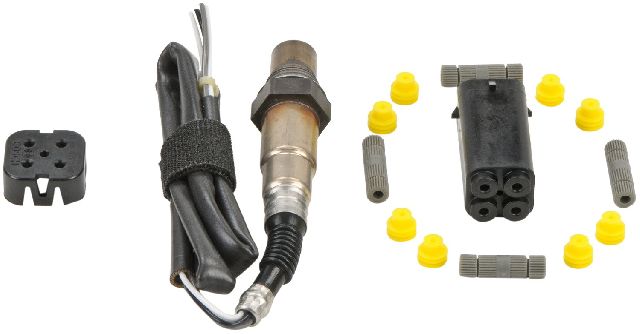
- Faulty Upstream Oxygen Sensor (Bank 1, Sensor 1) 🔴 High Probability → Shop Oxygen Sensor Oxygen sensors are wear items. A failing upstream sensor can send incorrect 'lean' signals, causing the PCM to add too much fuel. The downstream sensor then reports the resulting rich condition. This is a very common failure pattern for this code on the Focus.
How to confirm: Use an OBD-II scanner with live data. The upstream O2 sensor (B1S1) voltage should fluctuate rapidly between approximately 0.1V and 0.9V. If it's stuck, slow to respond, or biased towards a low voltage, it's likely faulty.
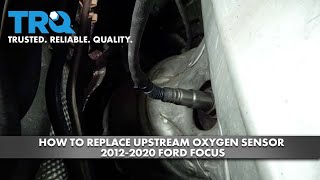
Typical fix: Replace the upstream (pre-catalyst) oxygen sensor. 🎬 Watch: How to replace the upstream oxygen sensor yourself.
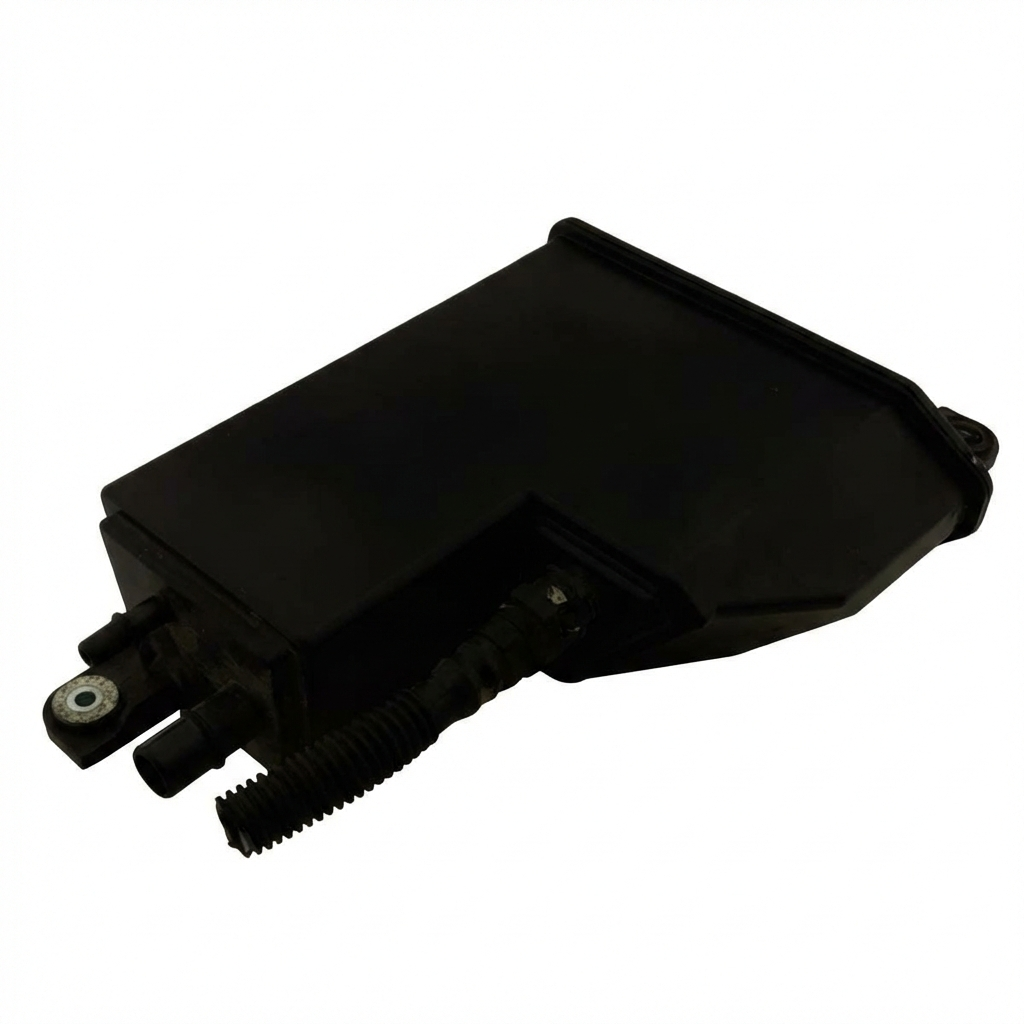
Est. part cost: $50-$120 - Faulty Canister Purge Valve (CPV) 🔴 High Probability The CPV on the 2.0L Focus is notoriously prone to sticking open. This allows a constant flow of fuel vapors from the EVAP canister into the intake manifold, creating a rich condition that the PCM cannot compensate for. This issue was so widespread that Ford issued recall 18S32 and Customer Satisfaction Program 24N07.
How to confirm: With the engine off, disconnect the vapor line from the purge valve. Try to blow through the valve; if air passes through, it is stuck open and has failed. Symptoms often include a rough idle and difficulty starting right after filling the gas tank.
Typical fix: Replace the canister purge valve and its associated tube. 🎬 See this walkthrough for replacing the canister purge valve. Check with a Ford dealer about coverage under recall 18S32 or CSP 24N07.
Est. part cost: $40-$80 - Exhaust Leak 🟡 Medium Probability Leaks from gaskets or cracks in the exhaust manifold or flex pipe before the downstream O2 sensor can allow outside air to enter the exhaust stream. This fresh oxygen makes the downstream sensor 'think' the engine is running lean, causing the PCM to add fuel and create an actual rich condition reported by the upstream sensor, which is then confirmed by the downstream sensor setting P2097.
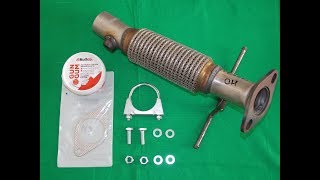
How to confirm: Visually inspect the exhaust manifold and downpipe for cracks or black soot trails. The flex pipe section is a particularly common point of failure. 🎬 Watch: A clever DIY fix for a broken flex pipe. Listen for a ticking or hissing noise that is loudest on a cold start. A professional smoke test is the most definitive way to find a leak.
Typical fix: Replace the leaking gasket or repair/replace the cracked exhaust component (often the downpipe/flex pipe assembly).
Est. part cost: $20-$300 - Faulty Downstream Oxygen Sensor (Bank 1, Sensor 2) ⚪ Low Probability → Shop Oxygen Sensor While this sensor triggers the code, it fails less often than the upstream sensor. It can, however, fail and get 'stuck' on a rich reading.
How to confirm: Using a scan tool, observe the downstream O2 sensor (B1S2) voltage. It should show a relatively stable voltage (typically >0.6V on a healthy, warm engine). If it's stuck high (above 0.8V) regardless of engine conditions, it may be faulty.
Typical fix: Replace the downstream (post-catalyst) oxygen sensor.
Est. part cost: $50-$120
Rare But Worth Checking
- Leaking Fuel Injectors: → Shop Fuel Injector The 2.0L is a GDI (Gasoline Direct Injection) engine. A leaking injector can dump excess fuel into a cylinder, creating a true rich condition. This would likely be accompanied by other codes like a cylinder misfire (P030x) and potentially a smell of fuel on the spark plug or in the oil.
- Failing Catalytic Converter: → Shop Catalytic Converter A contaminated or internally damaged catalytic converter can fail to process exhaust gases correctly, leading to inaccurate O2 sensor readings. This is an expensive fix and should be the last thing to check after all other causes are ruled out.
- High Fuel Pressure: A faulty fuel pressure regulator or a failing high-pressure fuel pump (HPFP) can cause system-wide high fuel pressure. A failing HPFP on this GDI engine can also leak fuel into the crankcase, which can be checked by smelling the oil on the dipstick for gasoline.
Diagnosis Steps
- Read the freeze frame data with an OBD-II scanner to understand the conditions under which the code was set.
- Check for any other stored codes that could point to a root cause (e.g., P0172, P2196, EVAP codes).
- Inspect the exhaust system from the engine manifold to the rear O2 sensor. Pay close attention to the flexible pipe section for cracks, holes, or black soot indicating a leak.
- Listen for an audible ticking or hissing from the exhaust, especially when the engine is cold.
- Test the canister purge valve (CPV). With the engine off, disconnect the hose and attempt to blow through it. If air passes, it's stuck open and needs replacement.
- Use a scan tool to monitor live data. Check Long Term Fuel Trim (LTFT) and Short Term Fuel Trim (STFT) for Bank 1. Consistently high negative numbers (e.g., -15% to -25%) confirm the PCM is trying to correct a rich condition.
- Observe the upstream (B1S1) and downstream (B1S2) oxygen sensors. B1S1 should fluctuate rapidly (0.1V-0.9V). B1S2 should be relatively steady and high (e.g., >0.6V).
- If B1S1 is lazy, stuck, or biased low, it is the likely cause. If B1S2 is stuck high while B1S1 shows normal operation, the downstream sensor may be at fault.
- If sensors appear to be reading correctly, investigate potential fuel system issues. Check the engine oil for a gasoline smell, which would indicate a leaking high-pressure fuel pump.
Parts You'll Likely Need
- Upstream Oxygen Sensor (Bank 1, Sensor 1)
(OEM #Motorcraft DY-1158 (Ford P/N: CJ5Z-9F472-A))— This sensor is a primary input for fuel control and a common failure point. Its failure often causes the P2097 code by creating a rich condition that the downstream sensor reports.
Trusted brands: Motorcraft, Bosch (P/N: 17358), Denso, NTK
OEM price range: $90-$150
Aftermarket price range: $50-$120 - Canister Purge Valve
(OEM #Motorcraft CX-2349 (Ford P/N: BV6Z-9D289-E))— A very common failure on this platform that causes a rich condition. Often presents with stalling after refueling. This part was subject to Ford recall 18S32.
Trusted brands: Motorcraft, Dorman
OEM price range: $50-$90
Aftermarket price range: $30-$60 - Downstream Oxygen Sensor (Bank 1, Sensor 2)
(OEM #Motorcraft DY-1179 (Ford P/N: CV6Z-9G444-A))— Less common, but may be replaced if it is tested and found to be stuck on a high voltage reading.
Trusted brands: Motorcraft, Bosch, Denso
OEM price range: $70-$130
Aftermarket price range: $40-$90
Related Codes That Often Appear With This One
- P0172 — System Too Rich (Bank 1) - This code indicates the upstream sensor is also detecting a rich condition. Having both P0172 and P2097 strongly points towards a systemic issue like a stuck-open purge valve or leaking fuel injector rather than just a sensor fault.
- P2196 — O2 Sensor Signal Biased / Stuck Rich (Bank 1, Sensor 1) - If you have both P2196 and P2097, it strongly points to a faulty upstream O2 sensor as the root cause. Ford recall 18S32 also lists this as a related DTC.
- P0456 — Evaporative Emission System Leak Detected (Very Small Leak) - This code, along with P2097 and rough running after refueling, is a classic sign of a failing canister purge valve.
- P1450 — Unable to Bleed Up Fuel Tank Vacuum - This is a very specific Ford code that strongly indicates a stuck-open canister purge valve, which is a primary cause of P2097 on this vehicle. It is listed as a key indicator in Ford's recall 18S32.
Technical Service Bulletins (TSBs) & Recalls
- Recall 18S32 / NHTSA 18V735: Ford issued a safety recall for the canister purge valve (CPV) on 2012-2018 Focus models. A malfunctioning CPV could stick open, causing excessive vacuum in the fuel system, leading to fuel tank deformation, inaccurate fuel gauge readings, and potential engine stalling. The fix involves a PCM software update and, if necessary, replacement of the CPV and other fuel system components.
- Customer Satisfaction Program 24N07: As a follow-up to the recall, Ford initiated this program to provide a one-time replacement of the CPV for up to 15 years from the warranty start date with no mileage limit, addressing ongoing reliability issues with the part.
Platform-Specific Known Issues
- The flexible braided portion of the exhaust pipe, located just after the exhaust manifold and before the catalytic converter, is a very common place for cracks to develop, causing exhaust leaks that trigger this code.
- The canister purge valve is a known high-failure item, leading to Ford issuing recall 18S32. A stuck-open valve causes excessive vacuum in the fuel tank, which can lead to stalling, erratic fuel gauge readings, and a deformed fuel tank in severe cases.
- Poor factory grounding points can cause a variety of electrical issues. Technicians often add a supplementary ground wire or clean the main grounding points under the airbox to improve electrical stability.
Mechanic-Grade Diagnostic Values
- Upstream O2 Sensor (B1S1) Live Data Voltage — expected: Rapidly fluctuating between 0.1V and 0.9V on a warm, closed-loop engine.. Failure: Voltage is stuck, slow to respond, or biased low (e.g., consistently < 0.4V).
- Downstream O2 Sensor (B1S2) Live Data Voltage — expected: Relatively steady voltage, typically between 0.6V and 0.8V on a warm, healthy catalytic converter.. Failure: Voltage is stuck high (>0.8V) or fluctuating rapidly like the upstream sensor, which could indicate a bad sensor or a failing catalytic converter.
- Long Term Fuel Trim (LTFT) Bank 1 — expected: Close to 0%, with an acceptable range typically within +/- 10%.. Failure: Consistently high negative value (e.g., -15% to -25%), indicating the PCM is trying to remove a large amount of fuel to compensate for a rich condition.
- Downstream O2 Sensor Torque Specification — expected: 35 ft-lbs. Failure: N/A
Hidden / Shadow Codes Worth Checking
- P1450: Unable to Bleed Up Fuel Tank Vacuum. This is a Ford-specific code that is a very strong indicator of a stuck-open canister purge valve (CPV). (see via Most standard OBD-II scanners. It is listed as a key related DTC in Ford's recall documentation for the CPV issue.)
Scan Tool Commands That Help
- Ford IDS (Integrated Diagnostic System): PCM Reprogramming — As part of recall 18S32, Ford requires dealers to reprogram the PCM with updated software. This new software is better able to detect a failing canister purge valve. This should be performed whenever the CPV is replaced or as a preventative measure.
- Ford IDS (Integrated Diagnostic System): Check for DTCs — As part of recall 18S32, after reprogramming the PCM, the dealer must check for specific fault codes (like P1450, P2196) to determine if the CPV and related components (carbon canister, fuel tank) need to be replaced.
Wiring & Ground Locations
- Main Engine Bay Grounds — Underneath the airbox, in front of the battery. There are two ground bolts that attach to the chassis.. The Ford Focus Mk3 is known for having insufficient grounding from the factory, which can cause erratic sensor readings. The factory paint often prevents a solid connection. Cleaning the paint from under these ground connections and re-securing them is a common preventative fix for various electrical issues.
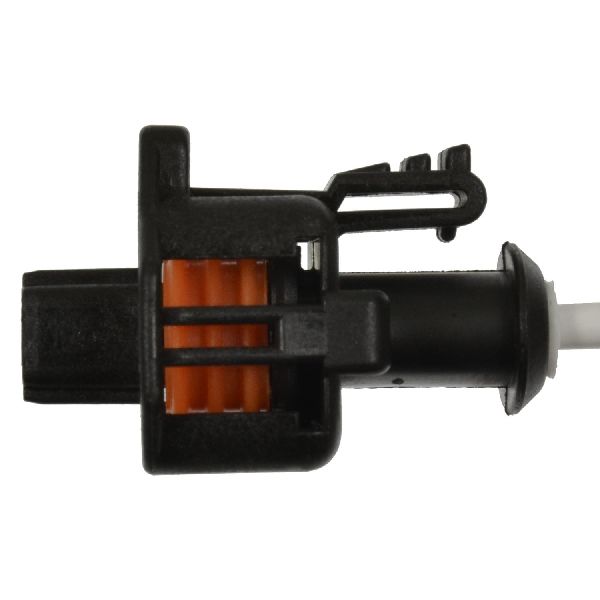
- Upstream O2 Sensor Connector (B1S1) — Located on the driver's side of the engine bay, clipped near the large air intake hose that runs over the top of the engine.. This is the primary connector to check for corrosion or damage when diagnosing the upstream O2 sensor, which is a very common cause of P2097.
- Downstream O2 Sensor Connector (B1S2) — The connector is located in the engine bay, near the firewall on the driver's side. The wiring runs down the back of the engine to the sensor itself, which is located after the catalytic converter.. This is the connector for the sensor that reports the P2097 code. It's important to check for damage or moisture before replacing the sensor itself.
Real Owner Repair Stories
- FocusFanatics.com forum user (2012 Ford Focus SE) — Check Engine Light with code P2097.
❌ Tried (didn't work) Replaced upstream O2 sensor, Replaced downstream O2 sensor, Replaced canister purge valve
✅ What actually fixed it The user finally took the car to an exhaust shop, which performed a smoke test and found a crack in the flex pipe. Replacing the flex pipe assembly resolved the code. - Reddit r/fordfocus user (2014 Ford Focus) — P2097 code, rough idle, stalling after refueling.
❌ Tried (didn't work) Initially suspected O2 sensors.
✅ What actually fixed it Replaced the canister purge valve. The user noted that this is a very common problem and that the recall (18S32) addresses it. The fix immediately solved the stalling and the code did not return.
OEM Part Supersession History
BV6Z-9D289-D→BV6Z-9D289-E— Part revision/update. This is the canister purge valve assembly.
Model Year Variations Within This Range
- 2013-2014 (Focus ST models): A specific PCM software update was made available under recall 18S32. If a vehicle was previously repaired under this recall, it may need a subsequent update under a different program (19S22) to get the final correct software version.
- 2015-2018: The 2015 model year marked a mid-cycle refresh for the Focus, which included updated styling and a retuned suspension. While the 2.0L GDI engine remained largely the same, some electronic components and software calibrations may differ from the 2012-2014 models.
Diagnostic Flowchart
Other Known Issues on This Vehicle
Issues unrelated to this code that are worth knowing about as an owner of this generation:
- DPS6 'PowerShift' Automatic Transmission Failure 🔴 High — Extremely common on 2012-2016 models. Symptoms include shuddering, hesitation, slipping, and complete loss of drive. (Ref: Multiple lawsuits and extended warranties (e.g., 14M01, 14M02) were issued. A final settlement was approved in 2020.)
- Passenger-Side Engine Mount Collapse 🟠 Medium — Common failure after 60,000-100,000 miles. The hydraulic mount collapses, causing severe vibration and harshness at idle and in gear.
- Canister Purge Valve (CPV) Malfunction 🟠 Medium — Very common across all 2012-2018 model years. Leads to rough idle, stalling after refueling, and various EVAP codes. (Ref: Recall 18S32 / NHTSA 18V735; Customer Satisfaction Program 24N07.)
- Electronic Power Assisted Steering (EPAS) Failure 🔴 High — Can occur intermittently or fail completely, resulting in a sudden loss of power steering. Often requires replacement of the entire steering rack.
Used vs. New Parts: Buying Guide for This Vehicle
When a used part is the smart pick: Given the low cost of the most common replacement parts (O2 sensors, purge valve), buying new is generally recommended. A used part would only make sense for a larger, more expensive component like a complete exhaust downpipe/flex pipe assembly, provided it comes from a low-mileage, rust-free donor vehicle.
Donor-vehicle mileage cap: roughly under 60000 miles for the part to have meaningful remaining life.
What to inspect on the donor part:
- For exhaust components: Check for any signs of rust, especially around welds and the flex pipe braiding. Look for black soot that would indicate a pinhole leak.
- For electrical connectors: Ensure the plastic isn't brittle and the locking tabs are intact. Check for any corrosion on the pins.
- Verify the donor vehicle was not from a region that uses heavy road salt.
OEM-only on this vehicle (don't cheap out):
- Canister Purge Valve: Due to the high failure rate and specific recall (18S32), using the latest revision OEM Motorcraft part (BV6Z-9D289-E) is strongly advised. Some owners report premature failure from aftermarket brands like Dorman on this specific part.
- Catalytic Converter: If the converter needs replacement, an OEM part is highly recommended. Aftermarket converters for this platform may not meet the required efficiency standards, leading to recurring codes.
Aftermarket brands forum-validated for this vehicle:
- Oxygen Sensors: NTK, Denso, and Bosch are reputable OEM suppliers and are considered reliable replacements.
Brands owners have reported issues with on this vehicle:
- Canister Purge Valve: Some user reports suggest avoiding Dorman for this specific part on the Focus/Fusion platform, citing weaker internal check valves and materials that don't hold up as well as the revised OEM part.
Real Owner Stories
Aggregated from forums and TSBs cited above. Mileages and costs reflect what owners reported in those sources.
2012-2018 Ford Focus 2.0L
Symptoms: Owner frustrated with dealership charging a $238 diagnostic fee for a well-known purge valve issue despite the existence of CSP 24N07.
What fixed it: Replacement of the canister purge valve under Customer Satisfaction Program 24N07.
Cost: $238-$238
Source hint: Reddit - r/FordFocus - 'Shitty practice? Purge Valve Replacement Recall diagnostic for $238?'
2012-2018 Ford Focus 2.0L GDI
Symptoms: P2097 code present; owner ruled out exhaust leaks first.
What fixed it: Replacing the upstream O2 sensor (often with a Bosch or Motorcraft part).
Source hint: FocusFanatics.com - (General Discussion)
Related OBD-II Codes
Frequently Asked Questions
Is the canister purge valve issue on my 2012-2018 Ford Focus covered by a recall?
Why does my Focus stall or run rough specifically after I fill up the gas tank?
I have a P2097 code; should I replace the downstream oxygen sensor first?
Can a cracked exhaust pipe cause the P2097 'Post Catalyst Fuel Trim Too Rich' code?
What should the voltage readings look like for my oxygen sensors on a scan tool?
Are there any electrical issues I should check for if my sensors seem fine?
Helpful Videos


Used OEM Parts in Stock
New Aftermarket Parts Available


The information in this article is provided for general reference and educational purposes only. Vehicle specifications, procedures, and part compatibility can vary by production date, trim level, and region. Always consult your vehicle's factory service manual and verify part numbers before purchasing or performing repairs. Safety-critical components such as airbags, seat belts, and braking systems should be installed by a qualified professional.
- Ford Focus:
- 🧭 Diagnostic Flowchart
- 🎬 Helpful Videos
- 🛍️ Shop This Part
- What's Unique About the 2012-2018 Ford Focus
- Symptoms You May Notice
- Most Likely Causes
- Rare But Worth Checking
- Diagnosis Steps
- Parts You'll Likely Need
- Related Codes That Often Appear With This One
- Technical Service Bulletins (TSBs) & Recalls
- Platform-Specific Known Issues
- Mechanic-Grade Diagnostic Values
- Hidden / Shadow Codes Worth Checking
- Scan Tool Commands That Help
- Wiring & Ground Locations
- Real Owner Repair Stories
- OEM Part Supersession History
- Model Year Variations Within This Range
- Other Known Issues on This Vehicle
- Used vs. New Parts: Buying Guide for This Vehicle
- Real Owner Stories
- 2012-2018 Ford Focus 2.0L
- 2012-2018 Ford Focus 2.0L GDI
- Related OBD-II Codes
- Frequently Asked Questions
- 🎟️ Get 5% Off