

P2097 on 2008-2015 GMC Acadia: Causes and Fixes for Rich Fuel Trim
On a 2008-2015 Acadia, P2097 is frequently caused by faulty fuel injectors or an exhaust leak, not a bad oxygen sensor. A GM Technical Service Bulletin recommends performing a fuel injector balance test before replacing any parts. In some cases, a simple ECM software update is all that is needed.
- For a 2008-2015 GMC Acadia, suspect faulty fuel injectors before a bad oxygen sensor.
- A GM Technical Service Bulletin (PIP4964F) specifically directs technicians to check injector balance early in the diagnosis.
- Another TSB (#17058) indicates a software update may be required to fix a false P2097 code.
- Do not replace the catalytic converter unless it has been definitively proven to be bad; it is more likely a symptom of the rich condition, not the cause.
- Common symptoms are a lit Check Engine Light and decreased gas mileage.
What's Unique About the 2008-2015 Gmc ACADIA
For the first-generation GMC Acadia and its platform mates (Traverse, Enclave, Outlook) with the 3.6L V6, this code is often not an oxygen sensor issue. General Motors has issued Technical Service Bulletins (TSBs) pointing specifically to faulty/leaking fuel injectors as a common cause. Technicians are advised to perform an injector balance test early in the diagnosis. Another common culprit is an exhaust leak at the flange where the catalytic converter meets the intermediate pipe, which can trick the O2 sensor. Finally, a known software glitch can falsely trigger the code, which is resolved by an ECM reprogram.
🎬 Watch: Overview of common causes and fixes for P2097Diagnostic Flowchart
Tap your situation to follow the diagnostic path that matches what you're seeing on this vehicle.
Symptoms You May Notice
- Check Engine Light is on
- Reduced fuel economy
- Poor or rough engine performance
- Engine may stumble or hesitate on acceleration
- A fuel odor may be noticeable in some cases
- In some cases, there are no drivability symptoms other than the Check Engine Light.
- Replacing the downstream oxygen sensor (Bank 1, Sensor 2) without first checking for TSBs, fuel injector issues, or exhaust leaks. This is the most common incorrect first step reported by owners.
Most Likely Causes
- Faulty or Leaking Fuel Injectors 🔴 High Probability → Shop Fuel Injector A GM Technical Service Bulletin (PIP4964F) specifically identifies fuel injector issues as the most common concern for this code on this platform. These direct injection injectors can become clogged or leak, dumping excess fuel into the cylinders.
How to confirm: Perform a fuel injector balance test or an Active Fuel Injector Tester (AFIT) test using a GM-specific scan tool like a Tech 2. This measures the flow rate of each injector to see if one is leaking or restricted. A technician can also monitor fuel trims with a scan tool. A leaky injector may also cause a hard start when the engine is hot.
Typical fix: Replace the faulty fuel injector(s). 🎬 Watch: Step-by-step guide to replacing fuel injectors and plugs It is often recommended to replace all injectors on the affected bank (Bank 1 has three injectors) at the same time.
Est. part cost: $40-$100 per injector (aftermarket), $100-$160 per injector (OEM) - Exhaust System Leak 🟡 Medium Probability Gaskets and flex pipes can degrade over time. A very common failure point on the Acadia and its platform mates is the welded flange on the intermediate pipe where it connects to the Bank 1 🎬 See this video showing a common Acadia exhaust leak catalytic converter. The weld breaks, creating a significant leak.
How to confirm: Visually inspect the exhaust system, especially the flanges and flex pipe sections. A smoke test is effective. TSB PIP4964F recommends pressurizing the exhaust with 5-8 psi and spraying soapy water on joints and gaskets to reveal leaks, which will appear as large bubbles.
Typical fix: If the flange weld is broken, it can be re-welded by an exhaust shop. If a gasket has failed, replace the gasket and clean the flange surfaces. In severe cases, the entire pipe section may need replacement.
Est. part cost: $10-$50 for gaskets, $100-$250 for weld repair, $500+ for pipe replacement - Engine Control Module (ECM) Software Issue 🟡 Medium Probability → Shop Engine Control Module (ECM) GM released a service update (#17058) and a TSB (18-NA-047) acknowledging that the post-O2 trim diagnostic can falsely fail, causing P2097 to set without a real mechanical issue. The vehicle may run perfectly normally.
How to confirm: A GM dealership or a qualified shop with access to GM's service information system can check the vehicle's history to see if this software update has been performed. If it's marked as 'Open', the update is needed.
Typical fix: Reprogram the ECM with the latest software calibration. This must be done by a dealer or a shop with a J2534 pass-thru tool. No parts are required.
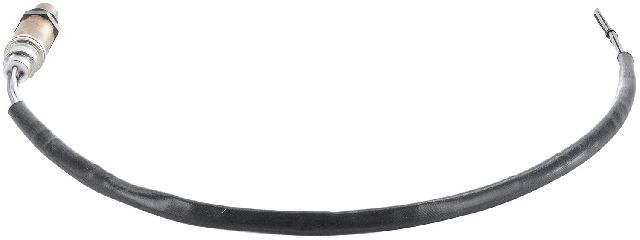
Est. part cost: $0 (if under campaign), $100-$200 for labor - Faulty Downstream Oxygen Sensor (Bank 1, Sensor 2) ⚪ Low Probability → Shop Oxygen Sensor While a common cause on many vehicles, on the Acadia it is more likely to be misdiagnosed. The sensor is often replaced when the actual problem is injectors, an exhaust leak, or a software issue. Owners on forums frequently report replacing the O2 sensor with no change.
How to confirm: Use a scan tool to monitor the live data from the Bank 1 Sensor 2. A properly functioning downstream sensor should show a relatively steady voltage. If it's stuck high (e.g., >0.7V) it indicates a rich condition, but if it's stuck low or fluctuating wildly like the upstream sensor, it may be faulty, but only after ruling out all other causes first.
Typical fix: Replace the Bank 1, Sensor 2 oxygen sensor.
Est. part cost: $50-$150
Rare But Worth Checking
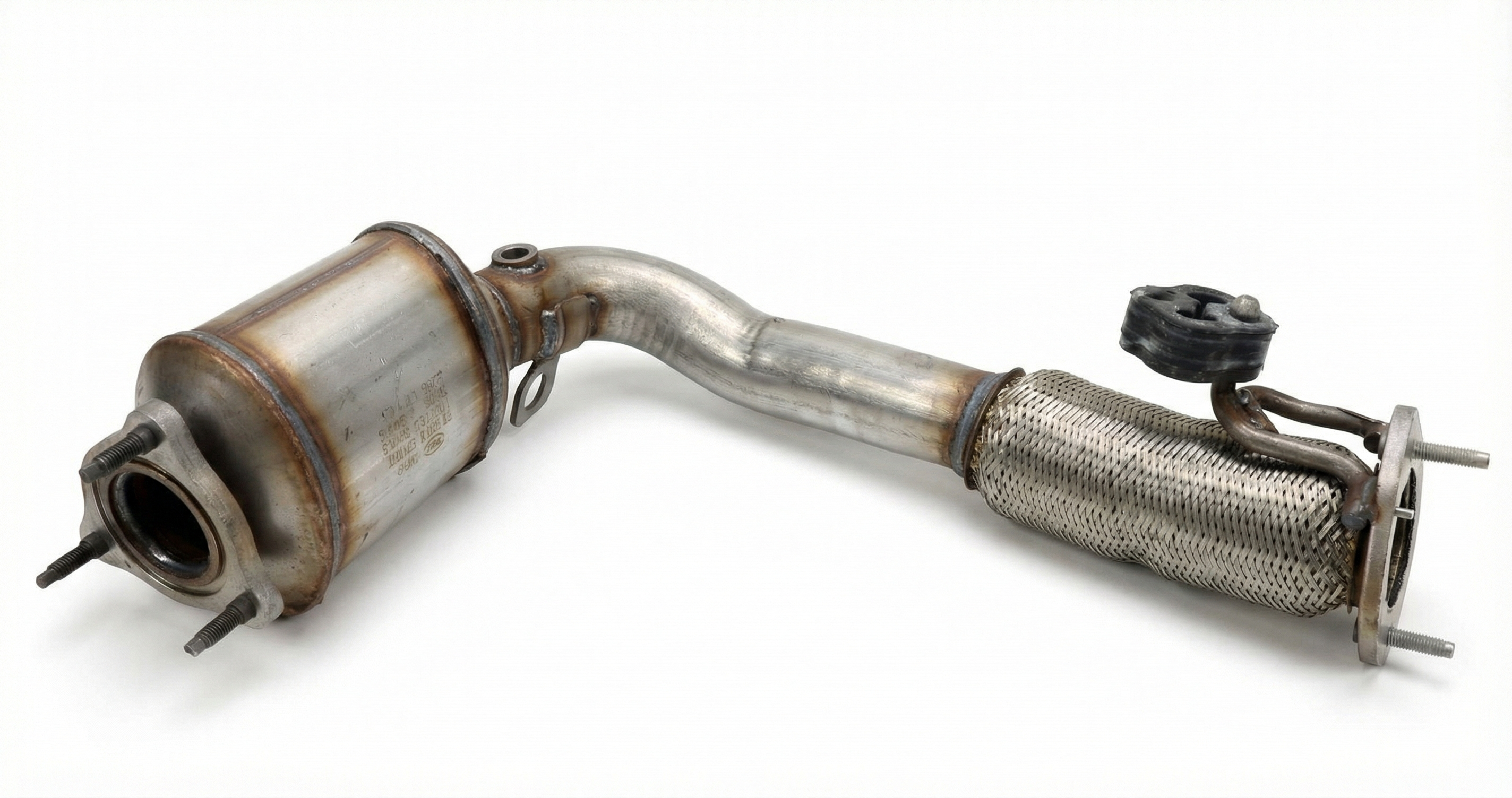
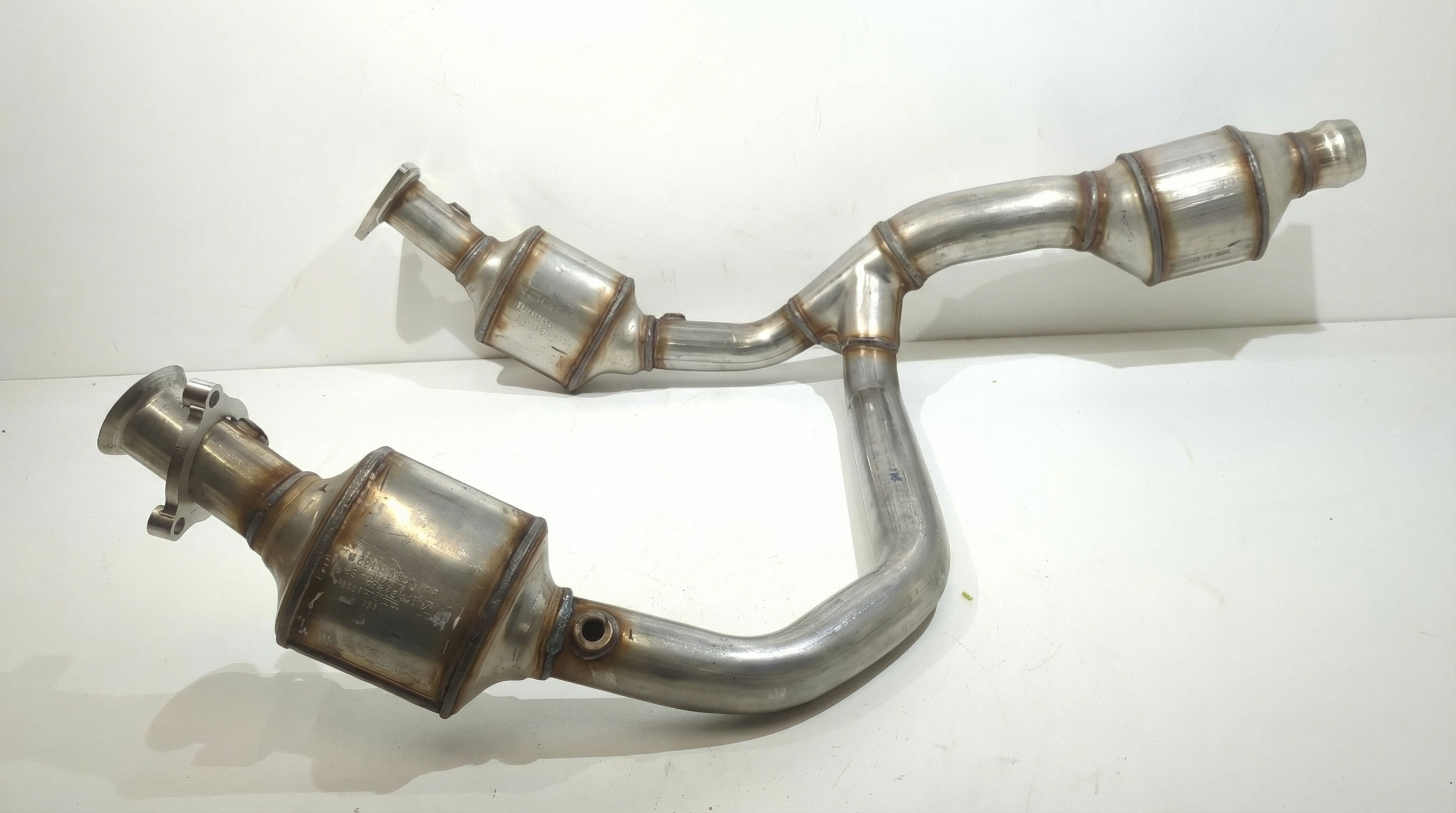
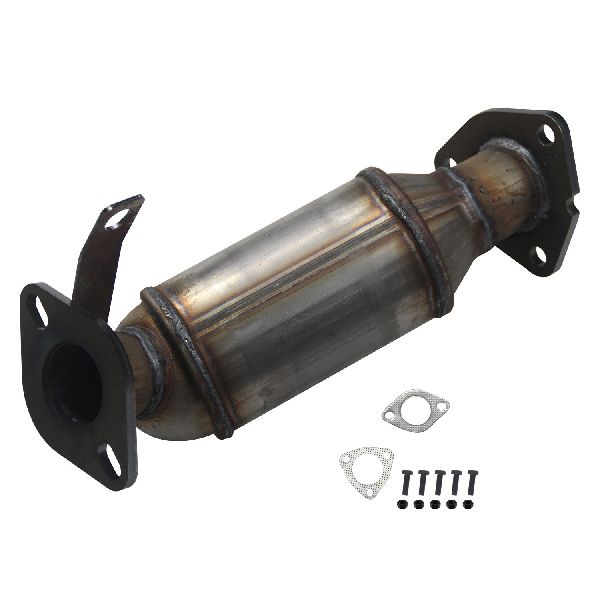
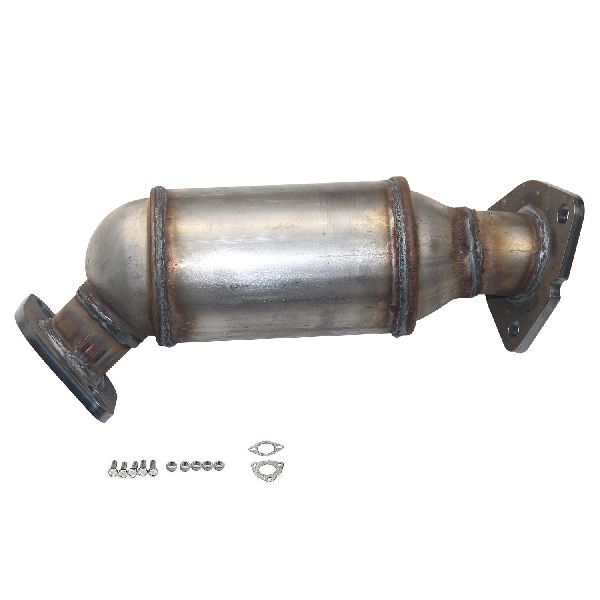
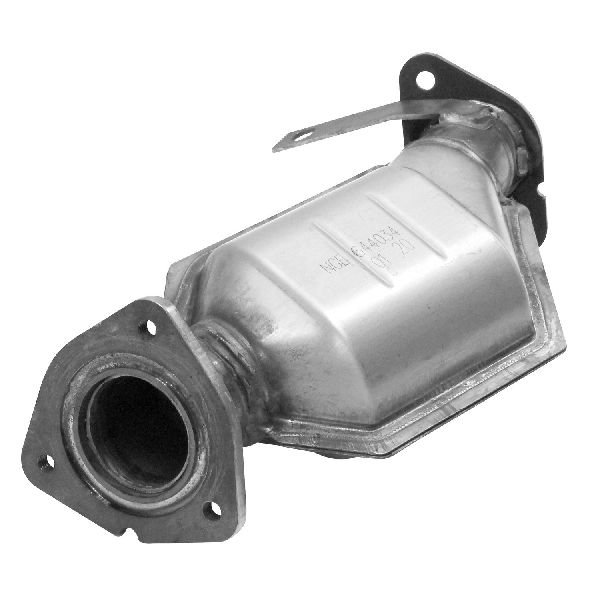
- Failing Catalytic Converter: → Shop Catalytic Converter A failing converter can cause this code, but it's more often the victim of a long-term rich condition (from a leaky injector) rather than the initial cause. Do not replace the converter without confirming it has failed via a back-pressure test or by comparing inlet/outlet temperatures.
- High Fuel Pressure: A failing high-pressure fuel pump (HPFP) can cause high system-wide fuel pressure, leading to a rich condition. This would likely affect both engine banks and set a P2099 (Bank 2) code as well.
Diagnosis Steps
- Check for any applicable Technical Service Bulletins (TSBs) and Service Updates, specifically #PIP4964F and #17058, to see if the symptoms match a known issue with injectors or ECM software.
- Visually and audibly inspect the exhaust system for leaks, paying close attention to the flex pipe and the flange area after the catalytic converter on Bank 1 (firewall side). A smoke test or the soapy water method described in TSB PIP4964F is highly recommended.
- If TSBs point to it, or as a primary diagnostic step for this vehicle, perform a fuel injector balance test (AFIT) to check for leaking or underperforming injectors.
- Use a scan tool to monitor live data. Check long-term and short-term fuel trims. Observe the voltage from the Bank 1 downstream O2 sensor (Sensor 2). It should be relatively stable and high (e.g., >0.7V) if a rich condition truly exists. If it fluctuates rapidly, suspect a bad catalytic converter.
- If a software update (#17058) is available and has not been performed, have the ECM reprogrammed by a dealer or qualified shop.
- If all other causes are ruled out, test the oxygen sensor's circuit and consider replacing the sensor itself.
Parts You'll Likely Need
- Fuel Injector
(OEM #ACDelco 12638530 (or 12669384 as a later revision))— A known high-probability cause for P2097 on the 3.6L V6 engine, as documented in GM service bulletins.
Trusted brands: ACDelco, Bosch, Standard Motor Products
OEM price range: $100-$160
Aftermarket price range: $40-$100 - Downstream Oxygen Sensor (Bank 1 Sensor 2)
(OEM #ACDelco 213-4229)— This is the sensor that triggers the code. While often not the root cause, it can fail and is a potential fix after ruling out injectors and leaks.
Trusted brands: ACDelco, Denso, NGK/NTK
OEM price range: $100-$180
Aftermarket price range: $50-$120 - Exhaust Gasket (Catalytic Converter Outlet)
(OEM #ACDelco 15276331)— If an exhaust leak is found at the flange between the converter and intermediate pipe, replacing the gasket is required for the repair.
Trusted brands: ACDelco, Fel-Pro, Walker Exhaust
OEM price range: $15-$30
Aftermarket price range: $5-$15
Related Codes That Often Appear With This One
- P2099 — This is the same 'Post Catalyst Fuel Trim Too Rich' code but for Bank 2. If both are present, it points towards a systemic issue affecting the whole engine, like a fuel pressure problem, MAF sensor issue, or the ECM software glitch.
- P0300-P0306 — Misfire codes (P0300 for random, P0301-P0306 for specific cylinders). A severely leaking injector can foul a spark plug and cause a misfire on that cylinder.
- P0420 — 'Catalyst System Efficiency Below Threshold'. This code often appears alongside P2097 when an exhaust leak between the two O2 sensors is present, or if the catalytic converter has been damaged by a long-term rich condition.
Technical Service Bulletins (TSBs) & Recalls
- PIP4964F: Service Engine Soon Lamp on, DTC P2097 or P2099 set. Points to fuel injector balance test and exhaust leak diagnosis.
- 17058: Service Update - P2097 (Post O2 Trim Diagnostic) False Failing. Recommends ECM software update.
- 18-NA-047: Technical bulletin related to #17058, explaining the false P2097 code and the ECM reprogram fix.
Platform-Specific Known Issues
- TSB #PIP4964F: Points to faulty fuel injectors as a primary cause of P2097 and P2099, recommending an injector balance test before other diagnostics. Also details a method for finding small exhaust leaks using low pressure air and soapy water.
- TSB #17058 / 18-NA-047: Notes that a software glitch can cause a false P2097 code with no other symptoms. The fix is an ECM reprogram, which a dealer can check for by VIN.
Mechanic-Grade Diagnostic Values
- Fuel Injector Resistance (3.6L V6) — expected: 1.5 - 1.6 ohms per injector when tested at the ECM connector. Another source suggests 11-14 ohms when the engine coolant is between 50-90°F (10-32°C).. Failure: A significant deviation from the expected resistance range, or an open/short reading, indicates a faulty injector coil.
- Downstream O2 Sensor (Bank 1 Sensor 2) Voltage — expected: A steady reading around 0.45 volts on a healthy, warm engine with a good catalytic converter. When a true rich condition exists, the voltage should be steady and high (above 0.7V).. Failure: Voltage that rapidly switches between high and low (similar to an upstream sensor) suggests a failing catalytic converter. Voltage that is stuck low or unresponsive after ruling out other causes may indicate a faulty sensor.
- Upstream O2 Sensor (Bank 1 Sensor 1) Voltage — expected: Should rapidly switch between approximately 0.1V (lean) and 0.9V (rich) on a warm, running engine.. Failure: A sensor that is slow to respond or stuck at a specific voltage is a sign of failure.
Scan Tool Commands That Help
- GM Tech 2 / GDS2: Active Fuel Injector Test (AFIT) — This is the manufacturer-recommended procedure (per TSB PIP4964F) to diagnose leaking or clogged injectors for a P2097 code. It performs a pressure drop test on each injector to verify correct flow and sealing.
- GM Tech 2 / GDS2: Fuel Trim Reset — After replacing a component that affects the air/fuel mixture (like fuel injectors or an O2 sensor), this function should be used to clear the learned long-term fuel trim values, allowing the ECM to adapt to the new parts more quickly.
Wiring & Ground Locations
- Bank 1 Sensor 2 — On the exhaust pipe after the catalytic converter on the firewall side of the engine.. This is the specific sensor that triggers the P2097 code. Its wiring and connector should be inspected for damage.
- G113 — Located on the left side of the engine, at the engine-to-transmission stud.. This is a critical engine ground. A poor connection here can cause a variety of sensor and module communication issues, potentially leading to incorrect readings.
- G103 / G105 — G103 is on the left rear of the engine compartment on the cowl. G105 is at the rear of the engine compartment on the left middle of the instrument panel bulkhead.. These grounds are tied to the Body Control Module (BCM) and Engine Control Module (ECM). A loose or corroded ground at these points can cause erratic electrical behavior and false codes. Some owners have found painted-over factory ground points that cause intermittent issues.
Real Owner Repair Stories
- acadiaforum.net user (2011 GMC Acadia) — P2097 and P0420 codes present.
❌ Tried (didn't work) Replacing the Bank 1 Sensor 2 oxygen sensor.
✅ What actually fixed it The user found a cracked flex pipe on the Bank 1 (rear) exhaust. After having an exhaust shop weld and repair the cracked pipe, both codes were resolved. - YouTube video by 'Ultimate DIY Guy' (2011 GMC Acadia AWD) — Codes P2099, P0420, and P0430.
❌ Tried (didn't work) Initial diagnosis pointed to catalytic converters.
✅ What actually fixed it The video demonstrates the replacement of the downstream oxygen sensors as the first step in the repair process to resolve the fuel trim and catalyst efficiency codes. After replacement and clearing the codes, the issue was resolved.
OEM Part Supersession History
12638530→12669384— This is a common supersession for the 3.6L V6 fuel injector. The newer part number represents a revised design or manufacturing process.
Model Year Variations Within This Range
- 2008-2011 vs 2012-2015: The 3.6L V6 engine was updated in 2012 from the LLT version to the LFX version. While they are dimensionally similar, the LFX featured integrated exhaust manifolds in the cylinder heads and other internal changes. While the P2097 code applies to both, some specific parts like exhaust manifolds and gaskets are not interchangeable. The core causes (injectors, O2 sensors, software) remain consistent.
Helpful Videos

Used OEM Parts in Stock
New Aftermarket Parts Available



The information in this article is provided for general reference and educational purposes only. Vehicle specifications, procedures, and part compatibility can vary by production date, trim level, and region. Always consult your vehicle's factory service manual and verify part numbers before purchasing or performing repairs. Safety-critical components such as airbags, seat belts, and braking systems should be installed by a qualified professional.
- Gmc ACADIA:
- 🧭 Diagnostic Flowchart
- 🎬 Helpful Videos
- 🛍️ Shop This Part
- What's Unique About the 2008-2015 Gmc ACADIA
- Symptoms You May Notice
- Most Likely Causes
- Rare But Worth Checking
- Diagnosis Steps
- Parts You'll Likely Need
- Related Codes That Often Appear With This One
- Technical Service Bulletins (TSBs) & Recalls
- Platform-Specific Known Issues
- Mechanic-Grade Diagnostic Values
- Scan Tool Commands That Help
- Wiring & Ground Locations
- Real Owner Repair Stories
- OEM Part Supersession History
- Model Year Variations Within This Range
- 🎟️ Get 5% Off