

P2097 on 2010-2017 GMC Terrain: Causes and Fixes for Rich Fuel Trim
On a 2010-2017 GMC Terrain, code P2097 is often caused by a leaking fuel injector, a faulty downstream oxygen sensor, or an exhaust leak. A GM Technical Service Bulletin specifically points to fuel injectors as a common culprit that should be tested early in the diagnosis. For 2.4L models, issues related to high oil consumption can also foul sensors and cause this code.
- For a 2010-2017 GMC Terrain, do not ignore the possibility of a leaking fuel injector; a GM TSB highlights this as a frequent cause.
- Before replacing any parts, use a scan tool to check live data from the oxygen sensors and inspect thoroughly for exhaust leaks.
- If your Terrain has the 2.4L engine, be aware of the known oil consumption issues, as this can damage the O2 sensors and catalytic converter, leading to this code.
- Avoid immediately replacing the expensive catalytic converter, as it is often the victim of another failure, not the root cause.
What's Unique About the 2010-2017 Gmc TERRAIN

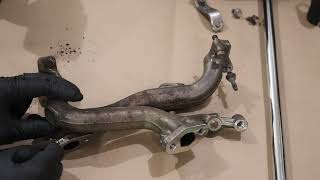
For the 2010-2017 GMC Terrain (and its sibling, the Chevy Equinox), a key factor is a Technical Service Bulletin (TSB) from GM that points directly to leaking fuel injectors 🎬 Watch: Diagnosing a rich running condition on this engine as a common cause for P2097. Additionally, the 2.4L Ecotec engine, common in these vehicles, is known for excessive oil consumption issues due to piston ring design, which can contaminate and damage oxygen sensors and the catalytic converter over time, potentially leading to this code. Another known issue on the 2.4L engine is a tendency for the exhaust manifold to crack 🎬 See what a cracked 2.4L exhaust manifold looks like, which introduces unmetered air and can skew O2 sensor readings, causing this code.
Diagnostic Flowchart

Tap your situation to follow the diagnostic path that matches what you're seeing on this vehicle.
Symptoms You May Notice

- Check Engine Light is on
- Decreased fuel economy
- Rough or erratic idle
- Engine hesitation or lack of power
- Black smoke from the exhaust
- Smell of gasoline or rotten eggs from the exhaust
- Replacing the catalytic converter first. The converter often fails as a result of another problem (like leaking injectors or oil consumption). The P2097 code is a symptom, and replacing the converter without fixing the root cause will lead to the new one failing as well.
- Replacing the downstream O2 sensor without testing. While the sensor can be the cause, it is often just accurately reporting a problem that originates further upstream (like a leaking injector or exhaust leak). Always test before replacing parts.
Most Likely Causes

- Leaking Fuel Injector(s) 🔴 High Probability → Shop Fuel Injector A GM Technical Service Bulletin (PIP4964F) specifically identifies fuel injectors as a primary concern for this code on this platform and recommends an injector balance test early in the diagnosis. This is cited as the most common concern found by GM technicians for P2097/P2099.
How to confirm: Perform a fuel injector balance test using a capable scan tool or have a professional use an Active Fuel Injector Tester (AFIT) as recommended by GM. A professional can also remove the injectors and test them on a bench.
Typical fix: Replace the faulty fuel injector(s). It is often recommended to replace them as a set.
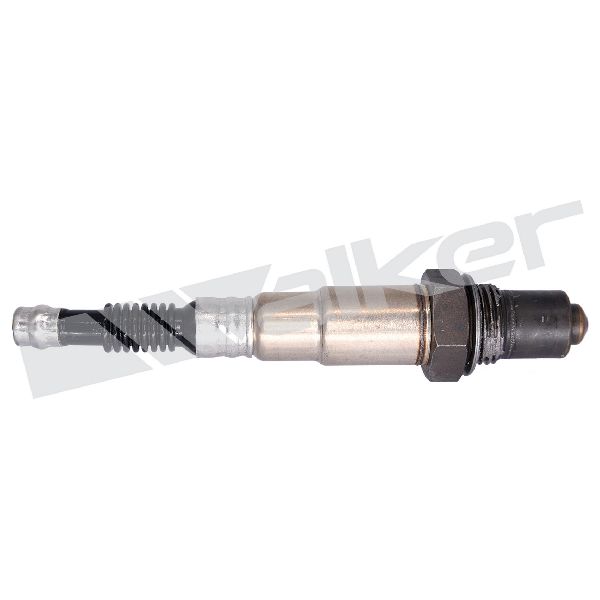
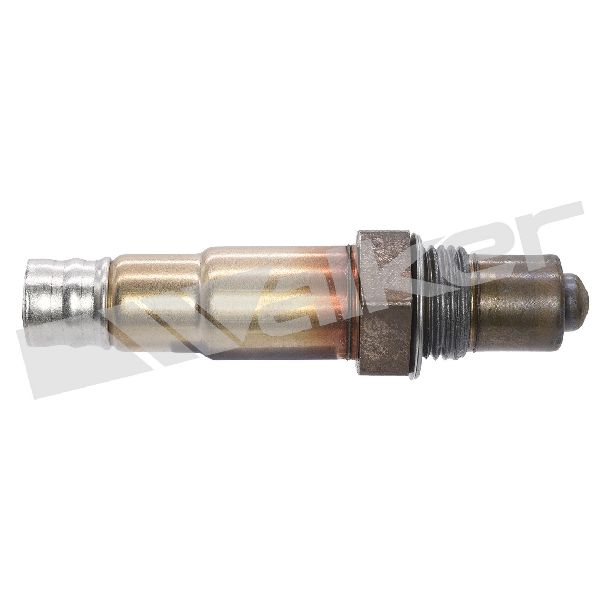
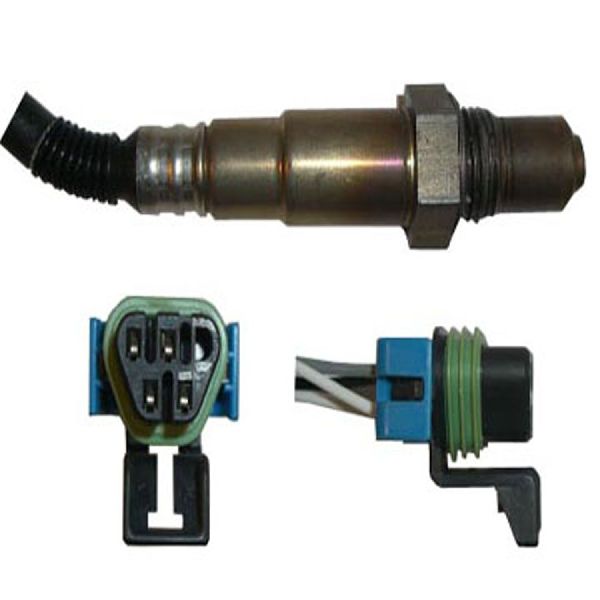
Est. part cost: $40-$90 per injector - Faulty Downstream Oxygen Sensor (Bank 1, Sensor 2) 🟡 Medium Probability → Shop Oxygen Sensor Excessive oil consumption on 2.4L models can foul the sensor with contaminants, causing it to send incorrect rich readings. It's also a common wear-and-tear item that can fail and become biased, reporting rich when the mixture is normal.
How to confirm: Use a scan tool to monitor the live voltage from the downstream O2 sensor (Bank 1, Sensor 2) once the engine is in closed loop. A healthy sensor should show a relatively steady voltage. If it's stuck high (above 0.8V) or fluctuating rapidly like the upstream sensor, it's likely faulty.
Typical fix: Replace the Bank 1 downstream oxygen sensor.
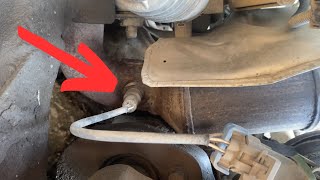
Est. part cost: $50-$150 - Exhaust Leak 🟡 Medium Probability Leaks can occur at gaskets or flex pipes. TSB PIP4964F specifically calls out the possibility of a small leak at the outlet gasket of the primary catalytic converter. The 2.4L engine is also known for cracked exhaust manifolds, which can introduce air and skew sensor readings.
How to confirm: Visually inspect the exhaust system for cracks, rust holes, or black soot marks, particularly around gaskets and welds. A shop can perform a smoke test or use the low-pressure air method described in TSB PIP4964F to pinpoint leaks.
Typical fix: Replace the leaking gasket or repair/replace the damaged section of the exhaust, such as the flex pipe or exhaust manifold.
Est. part cost: $10-$200 depending on the location and severity - Failing Catalytic Converter ⚪ Low Probability → Shop Catalytic Converter The known oil consumption issues with the 2.4L engine can lead to premature catalytic converter failure due to oil contamination. A failing converter may no longer be able to properly process exhaust gases, causing the downstream O2 sensor to report a rich condition.
How to confirm: A shop can perform a backpressure test or use a thermal gun to check temperatures before and after the converter. A significant temperature drop or high backpressure indicates a clog. On a scan tool, if the downstream O2 sensor voltage pattern mimics the fluctuating pattern of the upstream sensor, it's a strong sign the converter is not working.
Typical fix: Replace the catalytic converter. This should only be done after confirming it has failed and addressing the root cause (like oil consumption or a rich running condition).
Est. part cost: $500-$1500+
Rare But Worth Checking
- High Fuel Pressure: A faulty fuel pressure regulator or high-pressure fuel pump (on direct injection engines) can cause excessive fuel delivery, leading to a genuine rich condition. This should be checked with a fuel pressure gauge if other causes are ruled out.
- Faulty Upstream Oxygen Sensor: → Shop Oxygen Sensor A failing upstream (pre-catalyst) O2 sensor can send incorrect data to the ECM, causing it to command a rich fuel mixture that the downstream sensor then correctly reports as a rich condition.
- PCM Software Glitch: On some GM flex-fuel vehicles, a software glitch can cause the computer to miscalculate the ethanol percentage in the fuel, leading to an overly rich mixture and a P2097 code. A PCM reflash or update from a dealer may be required.
Diagnosis Steps
- Scan for any other DTCs that could provide more clues.
- Using a scan tool, observe live data for Long Term and Short Term Fuel Trims (LTFT/STFT). Consistently negative numbers indicate the ECM is pulling fuel to compensate for a rich condition.
- Observe the live voltage of the Bank 1 Sensor 2 (downstream). Once in closed loop, it should be relatively stable. If it is stuck high (e.g., >0.8V), it indicates a rich condition or a faulty sensor. Compare it to the Bank 1 Sensor 1 (upstream), which should fluctuate rapidly.
- Visually inspect the exhaust system from the engine to the tailpipe for any signs of leaks, paying close attention to the exhaust manifold and the gasket at the converter outlet, as noted in TSB PIP4964F.
- Following TSB PIP4964F, perform a fuel injector balance test to check for leaking injectors. This is a key step for this specific vehicle.
- If an exhaust leak is suspected, perform a smoke test or use low pressure (5-8 psi) air at the tailpipe and spray soapy water on joints and gaskets to look for bubbles.
- Test fuel pressure to ensure it is within the manufacturer's specifications.
- Check the wiring and connectors for both upstream and downstream O2 sensors for damage, melting, or corrosion. Also check the related fuses. On a 2013 Terrain, these are fuses #41 (downstream) and #43 (upstream) in the under-hood fuse box.
- If all other tests are inconclusive, test the catalytic converter for efficiency and backpressure.
Parts You'll Likely Need
- Downstream Oxygen Sensor (Bank 1 Sensor 2)
(OEM #12639692 (For 2.4L Engine))— This sensor is the source of the code reading and can fail due to age or contamination from issues like oil consumption.
Trusted brands: ACDelco, Denso, Bosch, NTK/NGK
OEM price range: $100-$180
Aftermarket price range: $50-$120 - Fuel Injector
(OEM #12634126 (For 3.0L/3.6L V6 Engines))— A GM TSB specifically points to leaking fuel injectors as a common cause for this code on the Terrain.
Trusted brands: ACDelco, Delphi, Bosch, Hitachi
OEM price range: $70-$120
Aftermarket price range: $40-$90 - Exhaust Manifold Gasket — If an exhaust leak is found at the manifold-to-head or manifold-to-converter flange, replacing the gasket is the required fix.
Trusted brands: Fel-Pro, Walker Exhaust, ACDelco
OEM price range: $15-$40
Aftermarket price range: $10-$25
Related Codes That Often Appear With This One
- P0300-P0306 — Misfire codes can occur if a leaking injector is fouling a spark plug or causing poor combustion.
- P0420 — This code for 'Catalyst System Efficiency Below Threshold' often appears alongside P2097, as the underlying rich condition or sensor failure can also be interpreted as poor catalyst performance.
- P2099 — This is the equivalent code for Bank 2 on V6 engines. If both P2097 and P2099 are present, it points to a systemic issue like fuel pressure or a PCM software issue rather than a single injector or sensor.
Technical Service Bulletins (TSBs) & Recalls
- PIP4964F: Recommends performing a fuel injector balance test when P2097 or P2099 is found, as leaking injectors are a common cause. Also suggests checking for exhaust leaks at the converter outlet.
Platform-Specific Known Issues
- TSB #PIP4964F: Advises technicians to check for faulty fuel injectors using a balance test when diagnosing P2097 or P2099. It also points to potential small exhaust leaks at the converter outlet gasket.
- Excessive Oil Consumption (2.4L Engine): Many 2.4L Ecotec engines suffer from oil consumption due to piston ring issues. This can foul O2 sensors and the catalytic converter, leading to various codes including P2097.
- Cracked Exhaust Manifold (2.4L Engine): The cast iron exhaust manifold on the 2.4L engine is prone to cracking. This introduces oxygen into the exhaust stream, causing the upstream O2 sensor to read lean, which in turn makes the ECM command a richer fuel mixture, ultimately triggering a P2097 code from the downstream sensor.
Mechanic-Grade Diagnostic Values
- Downstream O2 Sensor (Bank 1, Sensor 2) Voltage — expected: A relatively steady voltage, typically between 0.5V and 0.8V, when the engine is warm and in closed loop.. Failure: Voltage is stuck high (above 0.8V) or fluctuates rapidly in a similar pattern to the upstream sensor.
- Upstream O2 Sensor (Bank 1, Sensor 1) Voltage — expected: Rapidly fluctuating voltage between approximately 0.1V (lean) and 0.9V (rich) as the ECM adjusts the air/fuel ratio.. Failure: A lazy or non-responsive sensor that stays at a fixed voltage or switches slowly.
- Short-Term Fuel Trim (STFT) & Long-Term Fuel Trim (LTFT) — expected: As close to 0% as possible, with minor fluctuations.. Failure: Consistently high negative values (e.g., -10% or more) indicate the ECM is actively removing fuel to compensate for a rich condition detected by the upstream O2 sensor.
Scan Tool Commands That Help
- GDS2 / Professional Scan Tool: Fuel Injector Balance Test — As recommended by TSB PIP4964F, this should be an early diagnostic step to test for leaking or malfunctioning fuel injectors, a primary cause on this platform.
- GDS2 / Professional Scan Tool: Reset Fuel Alcohol Content — On Flex-Fuel compatible models, if the vehicle was run on E85 and then switched back to regular gasoline (or vice-versa), the sensor may not have adapted. Resetting the fuel composition value can resolve an incorrect rich/lean command from the ECM.
Wiring & Ground Locations
- Fuse #41 — In the under-hood fuse block.. This 15A fuse provides power to the downstream (post-catalyst) oxygen sensor on models like the 2013 Terrain. A blown fuse will cause the sensor to stop working, potentially leading to this code.
- Fuse #43 — In the under-hood fuse block.. This 15A fuse provides power to the upstream (pre-catalyst) oxygen sensor on models like the 2013 Terrain. A failure here can cause the ECM to receive incorrect data, leading to an improper fuel mixture and a P2097 code downstream.
- G101 — On the left front of the engine compartment.. This is a primary engine ground location. A poor or corroded ground connection here can affect various engine sensors and the ECM, potentially causing erratic sensor readings and incorrect codes.
Real Owner Repair Stories
- YouTube channel 'Buff Motorsports' (2012 GMC Terrain 2.4L) — Noisy on startup, exhaust fumes in the cab when stationary, poor fuel economy (20 MPG vs. previous 25 MPG), and odd idle issues.
❌ Tried (didn't work) Timing chain had been replaced previously, but noise and some issues persisted.
✅ What actually fixed it Replacement of a cracked exhaust manifold. The crack was significant and was allowing fresh air into the exhaust, causing the O2 sensor to read lean, which made the computer add fuel and trigger the rich code downstream. Replacing the manifold resolved the exhaust smell and improved the idle.
Model Year Variations Within This Range
- 2010-2011: These early model years offered the 3.0L V6 engine. This was replaced by the more powerful 3.6L V6 starting in the 2012/2013 model year. The 2.4L I4 was available throughout the entire generation.
- 2016-2017: The Terrain received a facelift for the 2016 model year, which included cosmetic changes to the front and rear fascias, hood, and interior. However, the powertrain options (2.4L I4 and 3.6L V6) and the underlying mechanicals related to this code remained largely the same as the 2013-2015 models.
Helpful Videos





We Have This Part in Stock



The information in this article is provided for general reference and educational purposes only. Vehicle specifications, procedures, and part compatibility can vary by production date, trim level, and region. Always consult your vehicle's factory service manual and verify part numbers before purchasing or performing repairs. Safety-critical components such as airbags, seat belts, and braking systems should be installed by a qualified professional.
- Gmc TERRAIN:
- 🧭 Diagnostic Flowchart
- 🎬 Helpful Videos
- 🛍️ Shop This Part
- What's Unique About the 2010-2017 Gmc TERRAIN
- Symptoms You May Notice
- Most Likely Causes
- Rare But Worth Checking
- Diagnosis Steps
- Parts You'll Likely Need
- Related Codes That Often Appear With This One
- Technical Service Bulletins (TSBs) & Recalls
- Platform-Specific Known Issues
- Mechanic-Grade Diagnostic Values
- Scan Tool Commands That Help
- Wiring & Ground Locations
- Real Owner Repair Stories
- Model Year Variations Within This Range
- 🎟️ Get 5% Off