

P2097 on 2016-2018 Infiniti QX60: Post-Catalyst Rich Trim Causes and Fixes
On a 2016-2018 QX60, code P2097 is almost always caused by a faulty front Air/Fuel Ratio sensor (Bank 1) or an exhaust leak before it. This happens even if you also have 'lean' codes like P0171. This specific issue is recognized by Infiniti in a TSB. Expect to pay $200-$450 for the sensor replacement, with labor being higher due to difficult access on the firewall side of the engine.
- P2097 on your QX60 means the exhaust is too rich after the catalytic converter on the rear cylinder bank.
- Don't be confused if you also have a P0171 lean code; this combination almost always points to a bad upstream A/F sensor on Bank 1 or an exhaust leak.
- The primary fix is replacing the Bank 1 (rear, firewall side) Air/Fuel Ratio sensor. Use a quality Denso or OEM part.
- Accessing the sensor is difficult and increases labor costs or DIY difficulty.
- An ECM software update may be required after the hardware repair, as per TSB ITB19-010.
What's Unique About the 2016-2018 Infiniti QX60
On the QX60 with the VQ35DE engine, P2097 is often paradoxically accompanied by lean codes like P0171 (System Too Lean Bank 1). This specific combination is noted in Infiniti's Technical Service Bulletin ITB19-010. It usually means the engine isn't actually running rich on its own; rather, a faulty upstream Air/Fuel Ratio sensor is sending a false lean signal to the computer. The computer then overcompensates by injecting too much fuel, which the downstream sensor correctly reports as a rich condition, triggering P2097.
Diagnostic Flowchart
Tap your situation to follow the diagnostic path that matches what you're seeing on this vehicle.
Symptoms You May Notice
- Check Engine Light is on
- Reduced fuel economy
- Rough or erratic idle
- Hesitation during acceleration
- A strong smell of fuel from the exhaust
- Black smoke from the tailpipe in extreme cases
- Replacing the downstream (post-catalyst) oxygen sensor without diagnosing the upstream A/F sensor or checking for exhaust leaks.
- Replacing the catalytic converter when it is not clogged or damaged. A rich condition can harm the converter over time, but it is rarely the initial cause of the code.
- Replacing the Mass Airflow (MAF) sensor. While a MAF issue can cause fuel trim problems, it usually affects both banks and would be accompanied by P0174, not just the Bank 1 codes.
Most Likely Causes
- Faulty Bank 1 Air/Fuel Ratio Sensor (Upstream O2 Sensor) 🔴 High Probability → Shop Oxygen Sensor The A/F sensor is a high-wear item. When it fails, it often reads inaccurately lean, causing the ECM to overcompensate by adding fuel. This is a very common failure pattern that results in a P2097 code accompanied by a P0171. Bank 1 is on the firewall (rear) side of the engine, making access difficult and increasing labor time. Many owners on forums for the QX60 and its platform-mate, the Nissan Pathfinder, confirm this sensor is the primary culprit.
How to confirm: Use a diagnostic scan tool to monitor the live data for the Bank 1 Sensor 1 (A/F sensor) and Bank 1 Sensor 2 (downstream O2 sensor). A faulty A/F sensor will often have a lazy or biased voltage/current reading that reads lean, while the downstream sensor shows a steady rich condition (voltage stuck high, >0.7V). Compare Bank 1 Sensor 1 readings to Bank 2 Sensor 1; if Bank 1 reads significantly leaner, it is almost certainly the faulty component.
Typical fix: Replace the Bank 1 Air/Fuel Ratio sensor. Bank 1 is the rear bank, located near the firewall, and access is difficult, often requiring removal of the engine cowl 🎬 Watch: A live walkthrough of the Bank 1 sensor replacement. or accessing it from underneath the vehicle. Using an O2 sensor socket is critical.
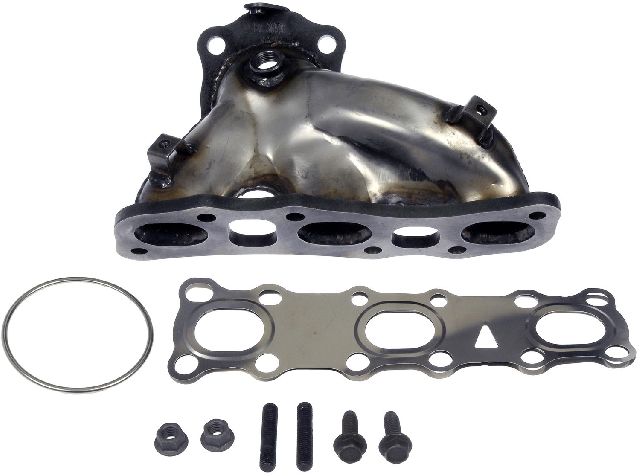
Est. part cost: $150-$250 - Exhaust Leak (before A/F Sensor) 🟡 Medium Probability Gaskets on the exhaust manifold can degrade over time, creating leaks. A leak between the cylinder head and the upstream A/F sensor allows unmetered oxygen into the exhaust, causing a false lean reading that leads to the same P0171/P2097 code combination.
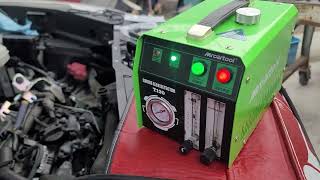
How to confirm: Perform a visual inspection of the exhaust manifold and gaskets for soot trails or cracks. The most reliable method is to use a smoke machine to introduce smoke into the exhaust system (when cold) and watch for where it escapes. Soapy water can also be sprayed on suspected areas to look for bubbles.
Typical fix: Replace the leaking exhaust gasket or repair the cracked exhaust component. This can involve removing the exhaust manifold.
Est. part cost: $20-$80 - ECM Software Logic ⚪ Low Probability Infiniti issued TSB ITB19-010 for this code on these specific vehicles, which can sometimes indicate that the original ECM software is too sensitive or has flawed logic. The TSB often recommends reprogramming the ECM *after* replacing the faulty hardware (like the A/F sensor).
How to confirm: An Infiniti dealership or a qualified shop with access to factory tools (like CONSULT-III plus) can check the current ECM software version against the latest available version referenced in the TSB.
Typical fix: Reprogram the ECM to the latest software version. This is often done in conjunction with replacing a faulty part and is not typically a standalone fix for this code. The procedure requires a stable power supply to the vehicle to avoid damaging the ECM.
Est. part cost: $0-$200 (Labor for reprogramming)
Rare But Worth Checking
- Leaking Fuel Injector: → Shop Fuel Injector A fuel injector stuck open on Bank 1 can cause a genuinely rich condition. This is less likely when paired with a lean code (P0171) but is a possible cause for P2097 alone.
- Faulty Downstream Oxygen Sensor: → Shop Oxygen Sensor The sensor reporting the code (Bank 1, Sensor 2) could itself be faulty, sending an incorrect rich signal. 🎬 See this breakdown of common P2097 causes and fixes. This is less common than the upstream A/F sensor failing.
- EVAP System Malfunction: In some cases, particularly after overfilling the gas tank, the EVAP purge valve can stick open, allowing fuel vapors to enter the intake manifold at the wrong time. This can cause a confusing mix of rich and lean conditions, potentially triggering P2097 and P0171.
Diagnosis Steps
- Use an OBD-II scanner to confirm P2097 and check for any other codes, especially P0171.
- Check for Technical Service Bulletins (TSBs). Specifically, reference ITB19-010 for this known issue on 2016-2018 QX60s.
- Inspect the exhaust system for leaks, particularly the exhaust manifold on Bank 1 (rear bank) and the flex pipe. A smoke test is the most effective method.
- With a scan tool, observe live data. Compare the readings of the Bank 1 and Bank 2 upstream A/F sensors (Sensor 1s). If the Bank 1 sensor reads significantly leaner than Bank 2 under similar conditions, it is likely faulty.
- Observe the downstream O2 sensor voltage for Bank 1 (Sensor 2). With this code, it will likely be stuck high (above 0.7V), indicating a rich mixture.
- If an exhaust leak is ruled out and the A/F sensor is the prime suspect, replace the Bank 1 Air/Fuel Ratio sensor. This is the most common repair.
- After the repair, clear the codes and perform a drive cycle. If the code returns, verify the ECM software is up to date per TSB ITB19-010.
- If the issue persists, investigate less common causes like a leaking fuel injector on Bank 1 or a contaminated downstream O2 sensor.
Parts You'll Likely Need
- Air/Fuel Ratio Sensor (Bank 1, Sensor 1)
(OEM #22693-3RC0A)— This upstream sensor is the most common point of failure leading to the P2097/P0171 code combination on the QX60.
Trusted brands: Denso (OEM supplier), NGK/NTK
OEM price range: $220-$280
Aftermarket price range: $150-$220 - Exhaust Manifold Gasket
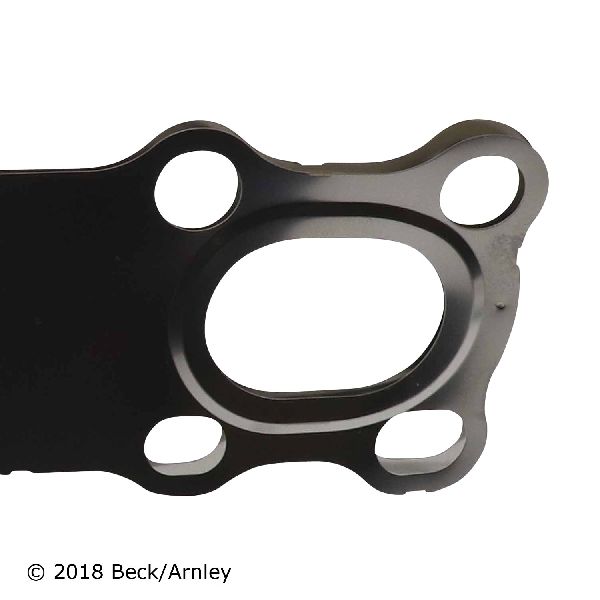
(OEM #14036-JA10B (Manifold to Head))— If an exhaust leak at the manifold is the cause, this gasket will need to be replaced during the repair.
Trusted brands: Fel-Pro, Mahle, Nissan/Infiniti OEM
OEM price range: $40-$60
Aftermarket price range: $20-$40
Related Codes That Often Appear With This One
- P0171 — This code for 'System Too Lean Bank 1' is very common with P2097 on this vehicle. It indicates the upstream A/F sensor is detecting a lean condition (real or false), which causes the ECM to add fuel, leading to the P2097 rich code from the downstream sensor.
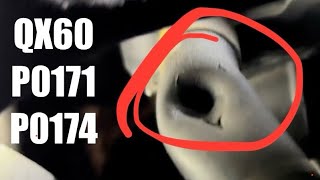
- P0174 — This is the lean code for Bank 2. If present with P2097, it may suggest a problem affecting both banks, such as a vacuum leak or a MAF sensor issue 🎬 Watch: How to address lean codes on the QX60 platform., though the P2097 is specific to Bank 1.
- P2099 — This is the equivalent rich code for Bank 2 ('Post Catalyst Fuel Trim System Too Rich Bank 2'). Seeing P2097 and P2099 together points to a systemic issue like fuel pressure problems or a faulty MAF sensor.
Technical Service Bulletins (TSBs) & Recalls
- ITB19-010: '2016-2018 QX60; MIL ON WITH DTC P2097, P2099, P0171 AND/OR P0174'
- ITB12-056: An earlier TSB for the JX35 (the QX60's predecessor) which also addresses P2097/P2099 by reprogramming the ECM and replacing the A/F sensor, showing a history of this issue on the platform.
Platform-Specific Known Issues
- Infiniti Technical Service Bulletin ITB19-010 was issued specifically addressing P2097 in combination with lean codes (P0171, P0174) for the 2016-2018 QX60 with the VQ35DE engine, indicating this is a recognized fault pattern by the manufacturer.
- The Bank 1 A/F sensor is notoriously difficult to access due to its location on the rear of the engine against the firewall. DIY replacement is challenging and requires specific tools like O2 sensor sockets and patience.
- Owners and technicians strongly recommend using an OEM or Denso-branded A/F sensor for replacement. Cheaper aftermarket sensors may not function correctly or have a short lifespan on these vehicles.
Mechanic-Grade Diagnostic Values
- Upstream A/F Sensor (Bank 1, Sensor 1) Voltage — expected: Approximately 1.5V - 2.2V at idle/stoichiometric. Unlike traditional O2 sensors, higher voltage indicates a LEAN mixture and lower voltage indicates RICH.. Failure: A voltage reading that is biased high (e.g., >3.0V) suggests the sensor is incorrectly reading lean, which causes the ECM to add fuel and trigger P2097. A lazy or non-responsive sensor is also a failure indicator.
- Downstream O2 Sensor (Bank 1, Sensor 2) Voltage — expected: Relatively steady voltage around 0.45V on a warm engine with a healthy catalytic converter.. Failure: For code P2097, this sensor's voltage will be stuck high (typically >0.7V), correctly reporting the rich condition created by the ECM's response to the faulty upstream sensor.
- A/F Sensor Heater Current — expected: Between 0.8 A and 10 A during operation.. Failure: Current draw below 0.8 A or above 10 A will set a separate heater circuit DTC (like P0031 or P0032) and indicates a failure in the sensor's internal heater, which can affect sensor accuracy.
Hidden / Shadow Codes Worth Checking
- Mode $06, TID $81, CID $01 (and others): Mode $06 is not a hidden code but a diagnostic function that shows test results for non-continuously monitored systems. For Infiniti/Nissan, Test ID (TID) $81 and others relate to O2 sensor response rate and switching time. These values can show a sensor is becoming slow or biased (i.e., failing a test) even if it hasn't yet crossed the threshold to set a specific DTC like P2097. (see via A professional scan tool with Mode $06 capability is required. The data is presented as raw hexadecimal values that must be interpreted against manufacturer specifications.)
Scan Tool Commands That Help
- Infiniti CONSULT-III plus: Work Support > Self-Learning CONT (Control) — This function must be performed after replacing the A/F sensor or fixing an exhaust/intake leak. It clears the long-term fuel trim adaptations stored in the ECM, forcing it to relearn values with the new, correct sensor inputs. Failing to do this can cause the code to return temporarily.
- Infiniti CONSULT-III plus: ECU Reprogramming — Used to update the ECM software to the latest version as specified in TSB ITB19-010. This is typically done after replacing the faulty A/F sensor to correct overly sensitive diagnostic logic in the original software.
- Infiniti CONSULT-III plus: Data Monitor > A/F SEN1 (B1) and A/F SEN1 (B2) — This is the primary live data screen to compare the voltage of the Bank 1 and Bank 2 A/F sensors in real-time. A significant difference between the two (with Bank 1 reading leaner) is a strong indicator of a faulty Bank 1 sensor.
Wiring & Ground Locations
- E15 and E9 — Located on the left (driver's side) rear of the engine compartment.. These are primary engine control ground points. The ECM and the shields for the Air/Fuel Ratio sensors connect to these grounds. Corrosion or a loose connection at E15 or E9 can introduce electrical noise or a voltage offset into the A/F sensor signal, potentially causing an incorrect reading that could lead to a P2097 code.
- A/F Sensor Connector (B33 for Bank 1) — On the engine harness, connecting to the Bank 1 A/F sensor pigtail near the firewall.. This connector is a common point for inspection. Technicians check for corrosion, moisture, or backed-out pins. Voltage and resistance tests are performed at this connector by back-probing the pins leading to the ECM.
OEM Part Supersession History
22693-1MR0A→22693-3RC0A— Standard part revision for improved performance, reliability, or manufacturing process.
Heads up: While the older part may physically fit, it is critical to use the specified superseding part (22693-3RC0A) or a high-quality OEM-equivalent (like Denso 234-9133) to ensure correct voltage/current signaling to the ECM.
Helpful Videos


We Have This Part in Stock




The information in this article is provided for general reference and educational purposes only. Vehicle specifications, procedures, and part compatibility can vary by production date, trim level, and region. Always consult your vehicle's factory service manual and verify part numbers before purchasing or performing repairs. Safety-critical components such as airbags, seat belts, and braking systems should be installed by a qualified professional.
- Infiniti QX60:
- 🧭 Diagnostic Flowchart
- 🎬 Helpful Videos
- 🛍️ Shop This Part
- What's Unique About the 2016-2018 Infiniti QX60
- Symptoms You May Notice
- Most Likely Causes
- Rare But Worth Checking
- Diagnosis Steps
- Parts You'll Likely Need
- Related Codes That Often Appear With This One
- Technical Service Bulletins (TSBs) & Recalls
- Platform-Specific Known Issues
- Mechanic-Grade Diagnostic Values
- Hidden / Shadow Codes Worth Checking
- Scan Tool Commands That Help
- Wiring & Ground Locations
- OEM Part Supersession History
- 🎟️ Get 5% Off