

P2097 on 2014-2021 Jeep Cherokee: Post Catalyst Fuel Trim System Too Rich Fixes
On a 2014-2021 Jeep Cherokee, code P2097 is frequently caused by a sensitive engine computer calibration. The first step should be checking with a dealer for a software update, as multiple TSBs address this. If the software is current, the next most likely causes are a failing downstream oxygen sensor (Bank 1, Sensor 2) or an exhaust leak somewhere before the sensor.
- For a 2014-2021 Jeep Cherokee, your first step for code P2097 should be to check if a factory software update is available for your vehicle's computer.
- If software is not the issue, the most common hardware culprits are a bad downstream O2 sensor or an exhaust leak.
- Do not replace the expensive catalytic converter unless all other potential causes have been definitively ruled out.
- This code indicates a 'rich' (too much fuel) condition, which can hurt your gas mileage and eventually damage other components if left unaddressed.
What's Unique About the 2014-2021 Jeep CHEROKEE

For the 2014-2021 Jeep Cherokee (KL generation), this code is very often a software issue rather than a hardware failure. Jeep issued multiple Technical Service Bulletins (TSBs) stating the original PCM software calibration was too sensitive and could falsely trigger the P2097 code. This 'Calibration Robustness Improvement' flash corrects the PCM's logic. This is especially true 🎬 Watch: How to fix the P2097 code on your Cherokee for the 3.2L V6, which is a de-stroked version of the widely used 3.6L Pentastar that has its own history of software-related DTCs. The 2.4L Tigershark engine also has known issues, particularly with oil consumption, which can sometimes foul sensors over time. Therefore, checking for and performing a PCM software update is a critical first diagnostic step before replacing any parts.
Diagnostic Flowchart

Tap your situation to follow the diagnostic path that matches what you're seeing on this vehicle.
Symptoms You May Notice

- Check Engine Light is on
- Reduced fuel economy
- Rough or erratic idle
- Engine hesitation or stumbling during acceleration
- Strong tailpipe odor of unburnt fuel or black smoke from the exhaust.
- In many cases, no noticeable symptoms other than the Check Engine Light
- Replacing the catalytic converter when the actual problem is a faulty oxygen sensor, a simple exhaust leak, or a needed software update.
- Replacing the downstream O2 sensor when the upstream O2 sensor is actually the one sending a faulty signal, causing the PCM to overcompensate.
Most Likely Causes

- Powertrain Control Module (PCM) Software Update Needed 🔴 High Probability → Shop Engine Control Module (ECM) Jeep released multiple TSBs for the Cherokee specifically to correct a 'Calibration Robustness Improvement' for DTC P2097, indicating the original logic was too sensitive and could set the code erroneously.
How to confirm: A Jeep dealership or a qualified repair shop with access to OEM software (like wiTECH) can check your vehicle's VIN against the TSBs and see if the latest calibration is installed.
Typical fix: Reprogramming or 'flashing' the PCM with the updated software. This is not a DIY repair and typically requires a dealer.
Est. part cost: $0 (if covered under warranty/TSB) or $100-$250 for a dealer flash. - Faulty Downstream Oxygen Sensor (Bank 1, Sensor 2) 🟡 Medium Probability → Shop Oxygen Sensor O2 sensors are wear items that degrade over time, becoming 'lazy' or getting stuck, sending incorrect 'rich' signals to the PCM. Contamination from issues like oil consumption on the 2.4L can also shorten their lifespan.
How to confirm: Use a scan tool to monitor the voltage of the Bank 1 Sensor 2. On a warm, running engine, a healthy downstream sensor should show a relatively stable voltage, typically between 0.5v and 0.8v. If it's stuck high (above 0.8v) or fluctuating rapidly like the upstream sensor, it's likely faulty.
Typical fix: Replace the Bank 1, Sensor 2 oxygen sensor. This requires a special O2 sensor socket.
Est. part cost: $50-$150 - Exhaust System Leak 🟡 Medium Probability Leaks from cracked exhaust manifolds, failed flange gaskets, or rusted pipes between the upstream and downstream O2 sensors can introduce outside air. This outside air makes the upstream sensor read lean, causing the PCM to add fuel. The downstream sensor then correctly reads the resulting rich mixture, setting the P2097 code.
How to confirm: Perform a visual inspection of the exhaust system for cracks or black soot trails, especially around the manifold and flex pipe. A smoke test is the most effective way to pinpoint small, hard-to-see leaks.
Typical fix: Repair the leak by replacing the failed gasket, welding the crack, or replacing the damaged exhaust component.
Est. part cost: $20-$300 - Leaking Fuel Injector(s) ⚪ Low Probability → Shop Fuel Injector
How to confirm: A fuel pressure leak-down test can indicate a leaking injector. An injector balance test can also help identify a faulty injector. Sometimes a strong fuel smell under the hood is present.
Typical fix: Replace the leaking fuel injector(s).
Est. part cost: $70-$200 per injector
Rare But Worth Checking
- Failing Catalytic Converter: → Shop Catalytic Converter This is a possible but less common cause. A contaminated or internally damaged converter may not be able to properly process exhaust gases, leading to incorrect readings by the downstream O2 sensor. This should only be considered after all other possibilities have been ruled out.
- High Fuel Pressure: A failing fuel pressure regulator, often integrated into the fuel pump assembly on these vehicles, can cause excessive fuel pressure and a true rich condition across all cylinders on that bank.
Diagnosis Steps
- Check for Technical Service Bulletins (TSBs): This is the most critical first step. Contact a Jeep dealer or use a professional database to see if your VIN is eligible for a PCM software update related to TSBs #1807322, #1806420, #18-060-16, or #1800216REVC. This alone solves a high percentage of cases.
- Scan for Other Codes: Use an OBD-II scanner to check for any other accompanying codes. Codes for misfires (P030X), EVAP leaks (P0456), or the corresponding Bank 2 code (P2099) can provide important clues.
- Inspect the Exhaust System: Carefully inspect the entire exhaust system from the engine to the tailpipe for any signs of cracks, rust, or black soot that would indicate a leak. Pay close attention to gaskets and welds, especially between the two O2 sensors.
- Analyze Live Sensor Data: Use a scan tool to observe the live data stream for the upstream (B1S1) and downstream (B1S2) O2 sensors on Bank 1. The B1S1 voltage should fluctuate rapidly between ~0.1v and ~0.9v. The B1S2 voltage should be relatively steady and high (e.g., >0.6v). If B1S2 is stuck at a very high voltage (e.g., 0.9v) or is fluctuating just like B1S1, the sensor or the catalytic converter may be faulty.
- Perform an Exhaust Leak Test (Smoke Test): If a leak is suspected but not visible, introduce smoke into the exhaust system (with the engine off) and look for smoke escaping from cracks or bad gaskets. This is the most definitive way to find a leak.
- Test the Fuel System: If a true rich condition is suspected, test the fuel pressure to ensure it's within specification. Perform a fuel injector leak-down test to check for dripping injectors.
- Isolate the Faulty Component: Based on the tests, determine if the cause is a software issue, a leaking exhaust, a faulty sensor, or a fuel system problem before replacing parts.
Parts You'll Likely Need
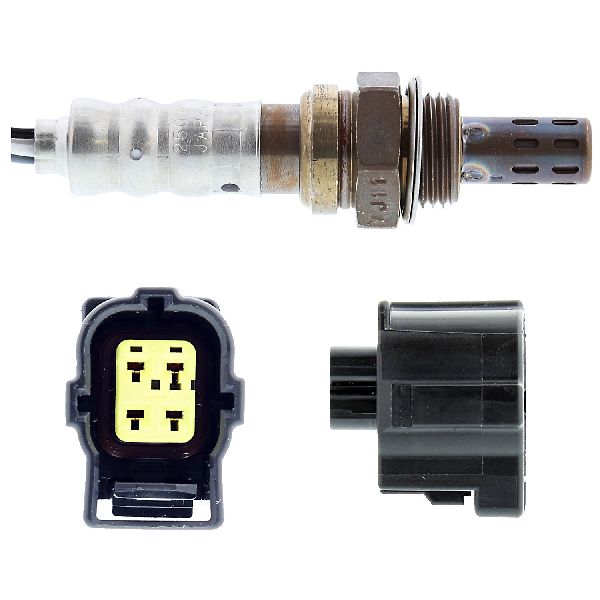
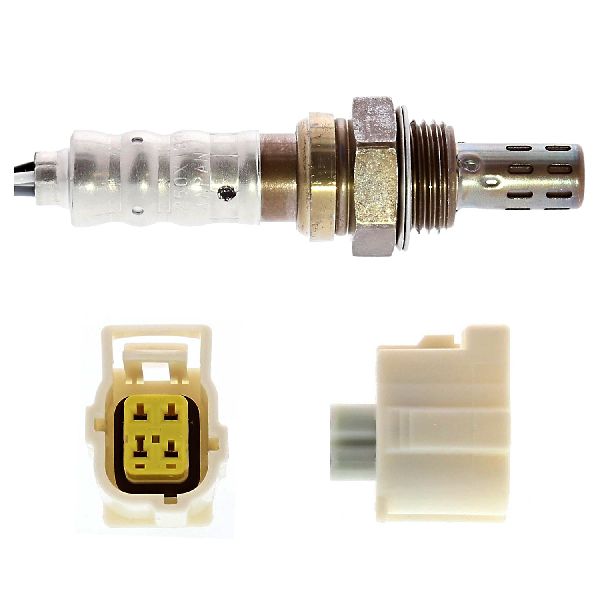
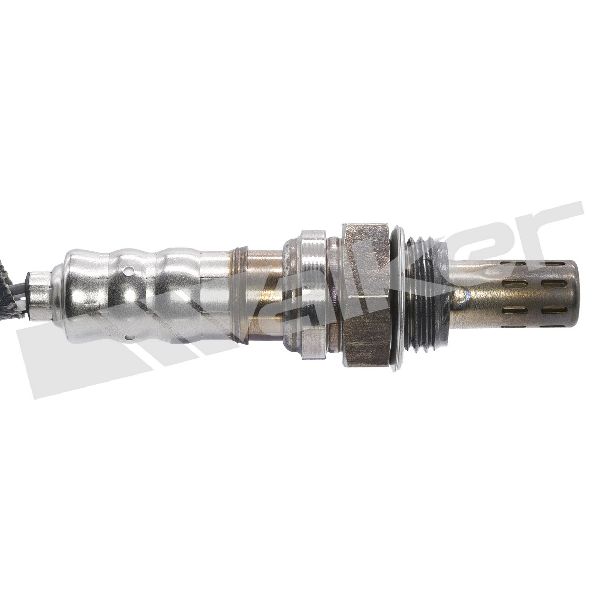
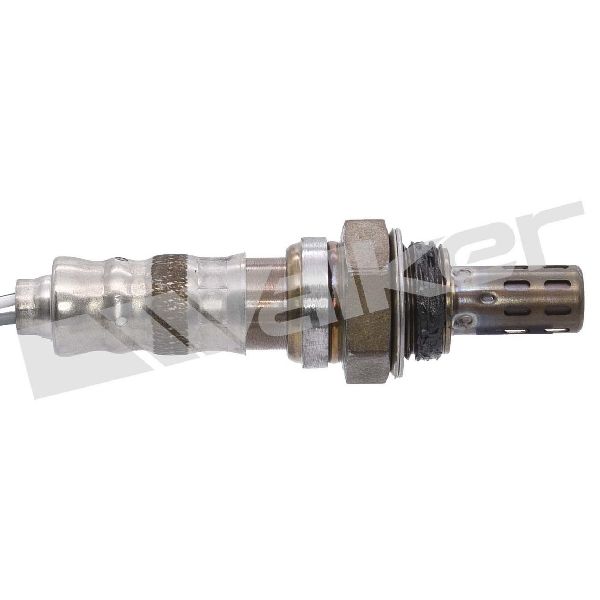
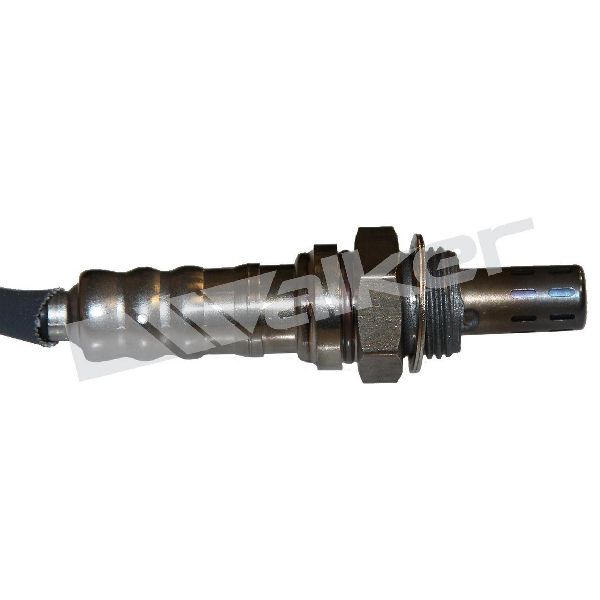
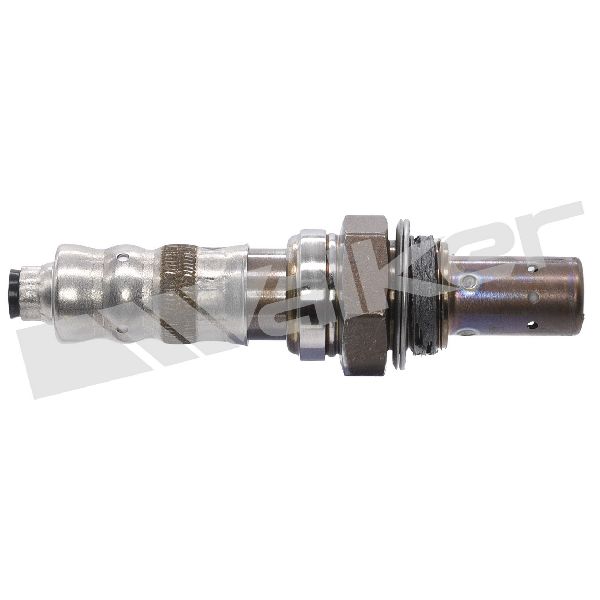
- Downstream Oxygen Sensor (Bank 1, Sensor 2)
(OEM #Mopar 05149180AB (replaces 5149180AA). Fits both 2.4L and 3.2L models.)— This sensor is responsible for reporting the post-catalyst fuel mixture. It is a common wear item and a frequent cause of this code if a software update or exhaust leak is not the issue.
Trusted brands: Mopar, NTK, Denso, Bosch
OEM price range: $100-$180
Aftermarket price range: $50-$120 - Exhaust Gasket(s) — If an exhaust leak is found at a flange (e.g., manifold to pipe), replacing the gasket is the required repair.
Trusted brands: Fel-Pro, Victor Reinz, Mopar
OEM price range: $20-$50
Aftermarket price range: $10-$30
Related Codes That Often Appear With This One
- P2099 — This is the identical code for Bank 2 ('Post Catalyst Fuel Trim System Too Rich Bank 2'). On the 3.2L V6 engine, it's common to see both P2097 and P2099 together, as noted in Jeep's TSBs #1807322 and #18-060-16.
- U1424 — This code for 'Implausible Engine Torque Signal' is listed alongside P2097 in several Jeep TSBs (e.g., #1806420), suggesting a related software issue that is often fixed with the same PCM update.
- P0456 — This code for a small EVAP system leak is also mentioned in TSB #18-060-16 along with P2097, indicating that a single PCM software update may address multiple unrelated DTCs at once.
- P0300 — A random/multiple cylinder misfire code can sometimes appear before P2097, as a rich condition can lead to fouled spark plugs and incomplete combustion.
Technical Service Bulletins (TSBs) & Recalls
- Bulletin #1807322: Mentions P2097 and P2099 for 2021 models.
- Bulletin #1806420: Notes a 'Calibration Robustness Improvement' for P2097 on 2016 models.
- Bulletin #18-060-16: Lists P2097 as a code addressed by a software update for 2014 models.
- Bulletin #1800216REVC: Also refers to a 'Calibration Robustness Improvement' for P2097 on 2016 models.
Platform-Specific Known Issues
- Multiple TSBs (#1807322, #1806420, #18-060-16, #1800216REVC) were issued by the manufacturer for the 2014-2021 Jeep Cherokee to address false P2097 codes via a PCM software update. This is the most significant vehicle-specific issue for this code.
- The 2.4L Tigershark engine is known for excessive oil consumption issues, which can potentially foul O2 sensors over time, leading to incorrect readings.
- The 3.2L Pentastar V6 can suffer from rocker arm wear, which can lead to misfires and affect overall combustion efficiency, potentially contributing to fuel trim codes.
Mechanic-Grade Diagnostic Values
- Fuel Pressure (2.4L & 3.2L engines) — expected: 55-65 PSI. Failure: Pressure consistently below 55 PSI, especially under load, can indicate a weak fuel pump. A rapid drop in pressure after the pump is turned off indicates a leak or a bad check valve.
- Downstream O2 Sensor (B1S2) Voltage — expected: Relatively steady voltage around 0.45V-0.7V on a warm, running engine.. Failure: Voltage stuck high (e.g., >0.8V) or fluctuating rapidly like the upstream sensor (0.1V-0.9V) suggests a faulty sensor or a failing catalytic converter.
- Upstream O2 Sensor (B1S1) Voltage — expected: Should fluctuate rapidly between approximately 0.1V and 0.9V.. Failure: A lazy or non-responsive upstream sensor can cause the PCM to incorrectly adjust fuel trim, leading to a rich condition that the downstream sensor reports.
Scan Tool Commands That Help
- wiTECH (OEM Dealer Tool): View PCM Flash History / Check for Updates — This is the primary step for this vehicle and code. Use the wiTECH tool to connect to the vehicle and check if the PCM's current software part number matches the latest version available from Chrysler to address the TSBs for P2097.
- wiTECH (OEM Dealer Tool): Proxy Configuration Alignment — This function may be required after a PCM flash or replacement of certain modules to ensure all vehicle systems communicate correctly.
- wiTECH (OEM Dealer Tool): Catalytic Converter Efficiency Test — If O2 sensors and fuel delivery check out, this guided test can help determine the health of the catalytic converter without removing it.
Wiring & Ground Locations
- O2 Sensor Heater Fuse — In the main engine bay fuse box (Power Distribution Center), check fuses F07, F08, F10, F16, F30, F59, and F83, as they relate to engine management and sensor heaters.. A blown fuse for the O2 sensor's internal heater can cause the sensor to operate outside its ideal temperature range, leading to slow or inaccurate readings that can contribute to fuel trim codes.
- O2 Sensor Connector (Bank 1) — For the 3.2L V6, Bank 1 is the rear bank of cylinders, closer to the firewall. The downstream sensor is located on the exhaust pipe after the catalytic converter. The wiring harness runs up the back of the engine.. Physical damage to the wiring harness or corrosion in the connector is a common point of failure. The harness can be damaged by road debris or contact with hot exhaust components, causing a short or open circuit.
Real Owner Repair Stories
- jeepcherokeeclub.com forum user (2015 Jeep Cherokee Trailhawk 3.2L V6) — Check Engine Light with code P2097.
❌ Tried (didn't work) Replacing the Bank 1 Sensor 2 (downstream) oxygen sensor. The code returned shortly after.
✅ What actually fixed it The owner took the vehicle to a Jeep dealership. The dealer performed a PCM (Powertrain Control Module) software flash/update as specified in a Technical Service Bulletin (TSB). The code did not return after the update.
OEM Part Supersession History
5149180AA→05149180AB— Standard part revision and improvement by the manufacturer.
Heads up: The new part number (05149180AB) is the correct replacement for the old one. Using old stock (5149180AA) is not recommended. This Mopar part is used in multiple positions (upstream/downstream, left/right) across various Chrysler/Jeep/Dodge vehicles, so confirming fitment for the specific Bank 1 Sensor 2 location is important.
Model Year Variations Within This Range
- 2014-2018 vs 2019-2021: The Jeep Cherokee received a significant facelift for the 2019 model year, which included revised front and rear styling. However, the primary powertrains (2.4L I4 and 3.2L V6) and their associated emissions systems remained largely the same. The diagnostic procedures and common causes for P2097 are consistent across the entire 2014-2021 generation.
Helpful Videos

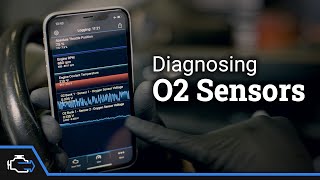
![How to Fix P2097 Engine Code in 4 Minutes [2 DIY Methods / Only $9.84]](https://img.youtube.com/vi/rCwtzRmhMwY/mqdefault.jpg)
We Have This Part in Stock

The information in this article is provided for general reference and educational purposes only. Vehicle specifications, procedures, and part compatibility can vary by production date, trim level, and region. Always consult your vehicle's factory service manual and verify part numbers before purchasing or performing repairs. Safety-critical components such as airbags, seat belts, and braking systems should be installed by a qualified professional.
- Jeep CHEROKEE:
- 🧭 Diagnostic Flowchart
- 🎬 Helpful Videos
- 🛍️ Shop This Part
- What's Unique About the 2014-2021 Jeep CHEROKEE
- Symptoms You May Notice
- Most Likely Causes
- Rare But Worth Checking
- Diagnosis Steps
- Parts You'll Likely Need
- Related Codes That Often Appear With This One
- Technical Service Bulletins (TSBs) & Recalls
- Platform-Specific Known Issues
- Mechanic-Grade Diagnostic Values
- Scan Tool Commands That Help
- Wiring & Ground Locations
- Real Owner Repair Stories
- OEM Part Supersession History
- Model Year Variations Within This Range
- 🎟️ Get 5% Off