

P2097 on 2015 Jeep Grand Cherokee: Post-Catalyst Rich Fuel Trim Causes and Fixes
On a 2015 Jeep Grand Cherokee, code P2097 most often points to a required software update for the Powertrain Control Module (PCM). Before replacing any parts, contact a Jeep dealer with your VIN to check for TSBs #18-098-16 and #18-036-15 REV-A. If the software is current, the next most likely causes are a faulty downstream oxygen sensor (Bank 1, Sensor 2), an exhaust leak between the engine and the sensor, or, more rarely, a failing fuel pump.
- P2097 on a 2015 Grand Cherokee means the passenger side of the engine is running rich.
- Before buying any parts, call a Jeep dealer with your VIN to check for essential software updates (TSB 18-098-16 and 18-036-15 REV-A). This is the most likely fix.
- If the software is current, inspect for exhaust leaks (especially manifold bolts on V8s) before replacing the passenger-side downstream O2 sensor.
What's Unique About the 2015-2015 Jeep GRAND CHEROKEE

For many vehicles, a P2097 code immediately points to a bad oxygen sensor or exhaust leak. However, on the 2015 Grand Cherokee, Jeep issued Technical Service Bulletins (TSBs) because the original PCM software was overly sensitive and could set this code incorrectly. Therefore, the first diagnostic step is often not mechanical but electronic—verifying if a crucial software update has been performed by a dealer. This specific issue is so prevalent that it should always be the first check.
Diagnostic Flowchart

Tap your situation to follow the diagnostic path that matches what you're seeing on this vehicle.
Symptoms You May Notice
- Check Engine Light is on
- Decreased fuel economy
- Rough or erratic idling
- Engine hesitation during acceleration
- A strong smell of fuel or rotten eggs from the exhaust.
- Loud hissing or ticking noise from the engine area, especially when cold.
- Replacing the oxygen sensor before checking if a PCM software update is required. Many owners replace the sensor only to have the code return because the root cause was the PCM's sensitivity, which is corrected by the TSB reflash.
- Replacing the downstream (Sensor 2) O2 sensor when the problem is actually an exhaust leak *before* the sensor, or a faulty upstream (Sensor 1) O2 sensor providing bad data.
Most Likely Causes

- Powertrain Control Module (PCM) Software Update Needed 🔴 High Probability → Shop Engine Control Module (ECM) Jeep issued TSBs #18-098-16 and #18-036-15 REV-A specifically to recalibrate the PCM for this and other fuel trim codes. The factory software was too sensitive and could erroneously trigger the P2097 code.
How to confirm: Contact a Jeep dealership with your vehicle's VIN. They can check their service records to see if these TSBs have been completed. This is the most critical first step.
Typical fix: A Jeep technician will reflash the PCM with the updated software. This is not a DIY repair. 🎬 Watch: A mechanic explains the P2097 fix and software issues. If the vehicle is out of warranty, owners report paying between $150 and $300 for this service at a dealership.
Est. part cost: $0 - Faulty Downstream Oxygen (O2) Sensor 🟡 Medium Probability → Shop Oxygen Sensor O2 sensors are wear items and have a finite lifespan. They can fail and send incorrect readings to the PCM, tricking it into thinking there is a rich condition.
How to confirm: Use a scan tool to monitor the voltage of the Bank 1, Sensor 2 O2 sensor. A healthy downstream sensor should show a relatively stable voltage (typically between 0.5V and 0.8V). If it's stuck high (above 0.8V) or fluctuating wildly like the upstream sensor, it is likely faulty.
Typical fix: Replace the Bank 1, Sensor 2 oxygen sensor. This is located on the passenger side, after the catalytic converter. Access can be tight, often requiring a specialized O2 sensor socket.
Est. part cost: $40-$150 - Exhaust Leak 🟡 Medium Probability Gaskets and exhaust pipe welds can fail over time due to heat cycles and corrosion, allowing outside air to enter the exhaust stream and skew O2 sensor readings. On HEMI V8 models, broken exhaust manifold bolts are a very common failure point, causing a distinct ticking noise when cold.
How to confirm: Perform a visual inspection of the exhaust system from the engine manifold to the downstream O2 sensor. Look for black soot, cracks, or holes. A smoke test is the most effective way to find small leaks. You can also use a soapy water solution on a cold exhaust; bubbles will form at the leak location.
Typical fix: Repair the leak by replacing the faulty gasket, welding a crack, or replacing a section of pipe. For broken manifold bolts, the repair involves extracting the broken bolt and replacing it, which can be labor-intensive.
Est. part cost: $20-$300 - Leaking Fuel Injector(s) ⚪ Low Probability → Shop Fuel Injector
How to confirm: If you also have misfire codes (like P0300), this becomes more likely. A mechanic can perform a fuel injector balance test. You can also check the spark plugs on Bank 1; a plug that is black and sooty indicates a rich condition in that cylinder.
Typical fix: Replace the leaking fuel injector(s) on Bank 1.
Est. part cost: $50-$200 per injector
Rare But Worth Checking
- Failing Catalytic Converter: → Shop Catalytic Converter While more commonly associated with efficiency codes like P0420, a clogged or failing converter can sometimes contribute to a P2097 code by disrupting exhaust flow and sensor readings.
- High Fuel Pressure: A faulty fuel pressure regulator or a failing fuel pump can cause the entire system to run rich, triggering this code. For the 3.6L and 5.7L gasoline engines, the regulator is integrated into the fuel pump module, so a failure requires replacing the entire fuel pump assembly.
- Faulty Mass Air Flow (MAF) or Manifold Absolute Pressure (MAP) Sensor: A malfunctioning MAF or MAP sensor can provide incorrect air volume data to the PCM, leading to an improper fuel mixture calculation and a rich condition.
Diagnosis Steps
- Connect an OBD-II scanner to confirm P2097 is present and check for any other codes.
- Crucially, call a Jeep dealership with your VIN. Ask if TSB #18-098-16 or #18-036-15 REV-A are open or have been performed on your vehicle. If the update is needed, this is the most probable fix.
- If the software is up to date, perform a thorough visual and auditory inspection of the exhaust system for leaks, especially between the engine and the downstream O2 sensor on the passenger side. Listen for ticking or hissing noises.
- Use a scan tool to observe live data from the Bank 1 Sensor 2 (downstream) O2 sensor. The voltage should be relatively steady. If it's stuck high (e.g., >0.8V), this confirms a rich signal is being sent. Compare it to the Bank 2 Sensor 2 reading for reference.
- Test the O2 sensor itself. If the sensor appears to be responding correctly to a genuinely rich condition, investigate upstream causes like leaking fuel injectors or high fuel pressure.
- If an exhaust leak is suspected but not visible, perform a smoke test to pinpoint the exact location.
- If all other possibilities are ruled out, the oxygen sensor itself is likely faulty and should be replaced.
Parts You'll Likely Need
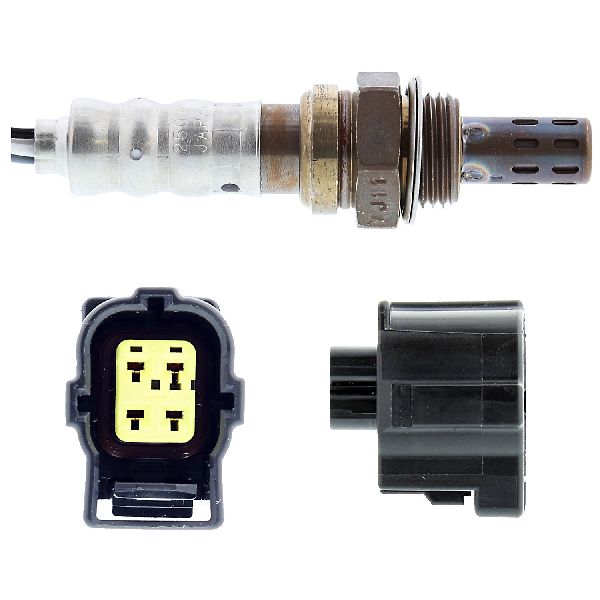
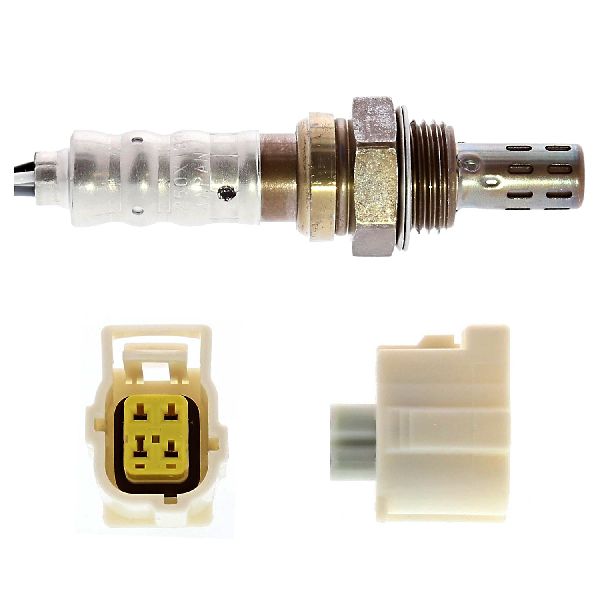
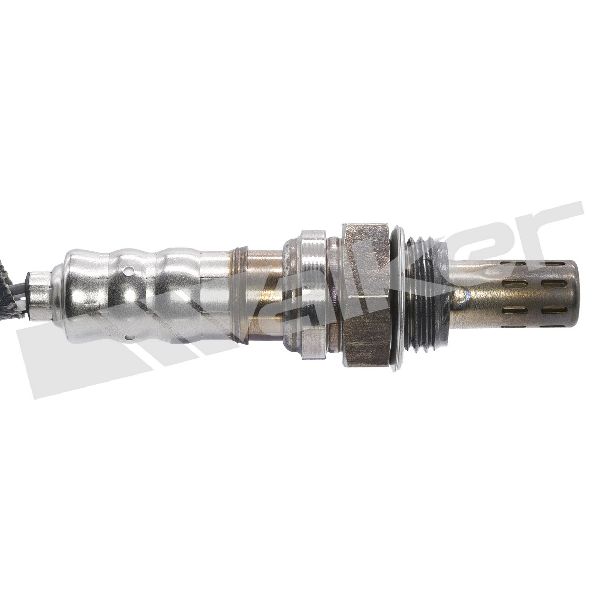
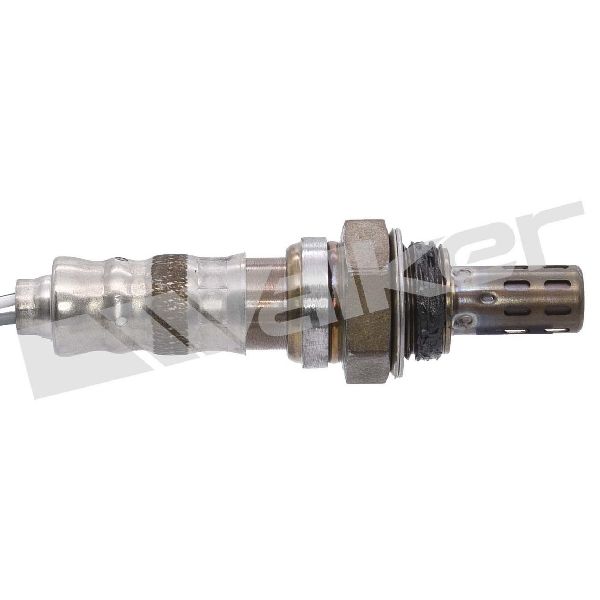
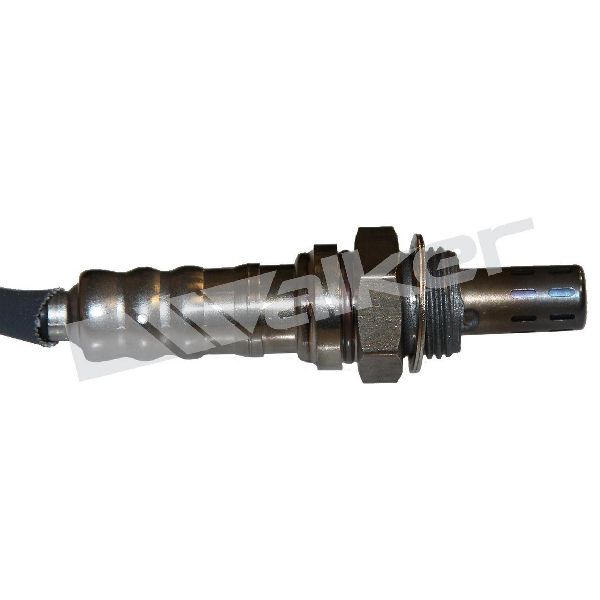
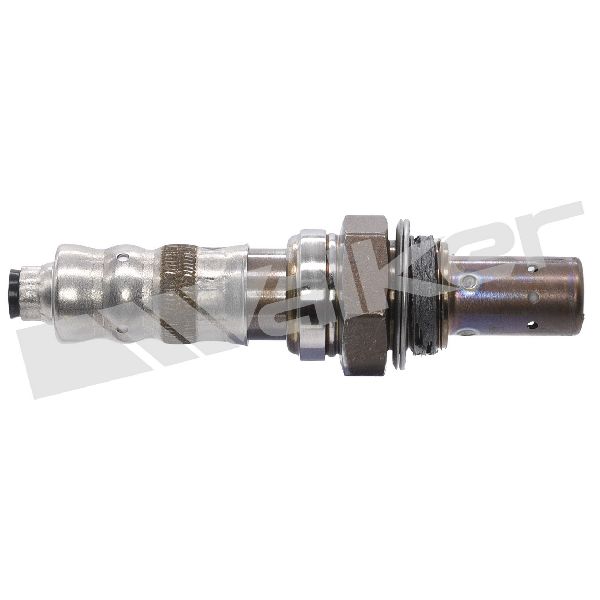
- Downstream Oxygen Sensor (Bank 1, Sensor 2)
(OEM #5149171AB (replaces older part numbers))— This sensor is the primary source of the P2097 reading. If it has failed or is sending inaccurate data, replacing it is the fix (after ruling out software issues). 🎬 Watch this quick 5-minute guide to fixing the P2097 error.
Trusted brands: Mopar, NTK, Denso, Bosch
OEM price range: $100-$180
Aftermarket price range: $50-$120
Related Codes That Often Appear With This One
- P2099 — This is the same 'rich' code but for Bank 2 (driver's side). They often appear together if the cause is a systemic issue like a PCM software glitch or a fuel pressure problem.
- P0300 — A 'Multiple Cylinder Misfire' code can be caused by a severe rich condition that fouls the spark plugs.
- P2096 — This is a 'lean' code for Bank 1. It can appear alongside the rich code if the PCM is struggling to find the correct fuel balance, often pointing to a software issue as noted in the TSBs.
Technical Service Bulletins (TSBs) & Recalls
- 18-098-16: Recommends a PCM software update to address P2097 and other fuel trim/misfire codes.
- 18-036-15 REV-A: Also recommends a PCM software update for P2097 and a list of related diagnostic trouble codes.
Platform-Specific Known Issues

- The Powertrain Control Module (PCM) on 2015 models may have overly sensitive parameters for detecting fuel trim faults. Jeep released software updates under TSBs 18-098-16 and 18-036-15 REV-A to correct this, which often resolves codes P2097, P2099, P2096, and P2098 without replacing any parts.
- On models equipped with the 5.7L HEMI V8, broken exhaust manifold bolts are a frequent cause of exhaust leaks, leading to a ticking noise on cold starts and potentially triggering O2 sensor-related codes like P2097.
Mechanic-Grade Diagnostic Values
- Downstream O2 Sensor (Sensor 2) Voltage at Idle — expected: Relatively steady reading between 0.45V and 0.8V.. Failure: Voltage is stuck high (above 0.8V), stuck low, or fluctuating rapidly like an upstream sensor.
- Upstream O2 Sensor (Sensor 1) Voltage at Idle — expected: Rapidly fluctuating between approximately 0.1V (lean) and 0.9V (rich).. Failure: Slow or no switching, or voltage is stuck in one range.
- O2 Sensor Heater Circuit Resistance — expected: Generally between 10 and 20 Ohms when cold. Vehicle-specific data is preferred.. Failure: Reading is OL (open loop/infinite resistance) or near zero (short circuit).
- Fuel Pressure (Gasoline Engines) — expected: Approximately 58 +/- 5 PSI (400 kPa +/- 34 kPa).. Failure: Significantly higher or lower pressure than the specification.
Scan Tool Commands That Help
- wiTECH (or equivalent professional scanner): PCM Flash / Reprogramming — This is the required function to perform TSBs 18-098-16 and 18-036-15 REV-A, which recalibrate the PCM to correct erroneous fuel trim codes. This is a dealer-level function.
- wiTECH (or equivalent professional scanner): View Live Data (O2 Sensors, Fuel Trims) — Essential for diagnosing the P2097 code. Used to observe the behavior of both upstream and downstream O2 sensors to determine if the sensor is faulty or if it is correctly reporting a rich condition.
Wiring & Ground Locations
- O2 Sensor Fuses (Under-hood Fuse Box) — In the fuse box (Totally Integrated Power Module - TIPM) located in the engine bay.. A blown fuse will cause the O2 sensor's internal heater to fail, leading to incorrect readings and fault codes. For 2014-2020 models, relevant fuses include F22, F32, F51, F63, F64, F72, F77, and F78. A bad sensor can sometimes cause a fuse to blow.
- Bank 1 Sensor 2 Connector — On the passenger side of the vehicle, following the wire up from the oxygen sensor located after the catalytic converter.. The connector must be inspected for corrosion, damage, or loose pins, as a bad connection can mimic a failed sensor. It must be disconnected to replace the sensor.
OEM Part Supersession History
5149171AA, 68066160AA→5149171AB— Standard part revision and consolidation by the manufacturer.
Model Year Variations Within This Range
- 2014-2020: The under-hood fuse box layout for O2 sensor fuses is different from the 2011-2013 models. The 2015 model falls into the later group.
Helpful Videos
![How to Fix P2097 Engine Code in 4 Minutes [2 DIY Methods / Only $9.84]](https://img.youtube.com/vi/rCwtzRmhMwY/mqdefault.jpg)
We Have This Part in Stock

The information in this article is provided for general reference and educational purposes only. Vehicle specifications, procedures, and part compatibility can vary by production date, trim level, and region. Always consult your vehicle's factory service manual and verify part numbers before purchasing or performing repairs. Safety-critical components such as airbags, seat belts, and braking systems should be installed by a qualified professional.
- Jeep GRAND CHEROKEE:
- 🧭 Diagnostic Flowchart
- 🎬 Helpful Videos
- 🛍️ Shop This Part
- What's Unique About the 2015-2015 Jeep GRAND CHEROKEE
- Symptoms You May Notice
- Most Likely Causes
- Rare But Worth Checking
- Diagnosis Steps
- Parts You'll Likely Need
- Related Codes That Often Appear With This One
- Technical Service Bulletins (TSBs) & Recalls
- Platform-Specific Known Issues
- Mechanic-Grade Diagnostic Values
- Scan Tool Commands That Help
- Wiring & Ground Locations
- OEM Part Supersession History
- Model Year Variations Within This Range
- 🎟️ Get 5% Off