

P2097 on 2018-2023 Kia Stinger 3.3L V6: Causes for Rich Fuel Trim (Bank 2) and Fixes
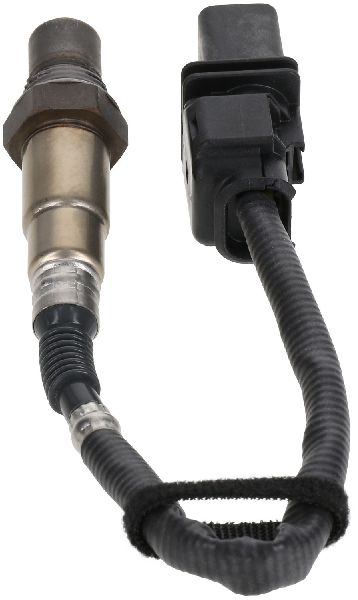
On a 3.3L Stinger, P2097 means the driver's side (Bank 2) exhaust is running rich. If this is the only code, the most likely cause is a failed downstream oxygen sensor on the driver's side. The OEM part (39210-3L550) costs around $170-$250, and it's a DIY-friendly repair for many.
- P2097 on the 3.3L Stinger refers to the DRIVER'S side (Bank 2), not the passenger side.
- If P2097 is the only code, the most likely fix is replacing the downstream (post-catalyst) oxygen sensor on the driver's side.
- Do NOT assume the cause is the High-Pressure Fuel Pump; the major recall for that part was for the 2.0L engine, not the 3.3L V6.
- Before replacing parts, check for exhaust leaks and, on 2018 models, inspect the driver-side wiring harness for chafing.
- Do not replace the catalytic converter unless a catalyst efficiency code (like P0430) is also present and all other causes have been ruled out.
What's Unique About the 2018-2023 Kia Stinger
For the twin-turbo 3.3L Stinger, it is critical to distinguish this code from issues on the 2.0L model. The 2.0T Stinger had a major recall (SC281) for a High-Pressure Fuel Pump (HPFP) that directly causes this code. The 3.3L V6 was *not* part of that recall. While the HPFP can still fail on the 3.3L, the most common cause for an isolated P2097 code is simply a faulty downstream O2 sensor on the driver's side.
Generation note: The 2018-2023 year range covers the entire first generation of the Kia Stinger. A facelift for the 2022 model year included a new variable exhaust system and a slight horsepower increase, but the core engine and emissions components relevant to code P2097 remained the same.
Symptoms You May Notice
- Check Engine Light is on
- Reduced fuel economy
- Vehicle may fail an emissions test
- A smell of gasoline or rotten eggs from the exhaust
- Rough idle (less common)
- Hesitation or chugging when braking (less common)
- Replacing the catalytic converter. The converter is almost always the victim of a persistent rich condition, not the cause of it. Fix the P2097 code first to save the converter.
- Replacing the wrong O2 sensor. P2097 is for Bank 2 (driver's side), Sensor 2 (downstream/post-catalyst). The Stinger has four O2 sensors; ensure you identify the correct one before replacement.
- Assuming the High-Pressure Fuel Pump (HPFP) is covered by a recall. The major HPFP recall (SC281) is for the 2.0T engine, not the 3.3T.
Most Likely Causes
- Faulty Downstream Oxygen (O2) Sensor (Bank 2) 🔴 High Probability → Shop Oxygen Sensor Oxygen sensors are wear-and-tear items that operate in a high-heat environment and degrade over time. This is the most common cause when P2097 appears as a standalone code, a scenario frequently confirmed by owners of the Stinger and its platform-mate, the Genesis G70.
How to confirm: Using a scan tool, observe the live data for the 'Bank 2, Sensor 2' voltage with the engine fully warmed up. A healthy downstream sensor should show a relatively steady voltage, typically between 0.6V and 0.8V. If the sensor's reading is stuck high (e.g., >0.8V) or doesn't respond, it has likely failed.
Typical fix: Replace the Bank 2 (driver's side), Sensor 2 (downstream/post-catalyst) oxygen sensor.
Est. part cost: $60-$250 - Exhaust Leak 🟡 Medium Probability Leaks can develop at gaskets or flex pipes from heat cycles and corrosion. A leak *before* the upstream O2 sensor or between the upstream and downstream sensors can draw in outside air, causing the ECU to incorrectly enrich the fuel mixture, which the downstream sensor then reports as a rich condition.
How to confirm: Perform a visual inspection of the exhaust system from the engine to the rear of the vehicle, looking for black soot marks, cracks, or loose flanges. Listen for hissing or ticking sounds. A professional smoke test is the most reliable method to find small leaks.
Typical fix: Repair the leaking section of the exhaust or replace the faulty gasket.
Est. part cost: $20-$300 - Leaking Fuel Injector(s) ⚪ Low Probability → Shop Fuel Injector Gasoline Direct Injection (GDI) injectors operate under very high pressure and are a known failure point across the Hyundai/Kia lineup, including the Stinger. They can stick open or leak, dumping excess fuel into a cylinder and creating a true rich condition.
How to confirm: A strong indicator is the smell of gasoline on the engine oil dipstick. You can also pull the spark plugs on Bank 2 (cylinders 2, 4, 6) and check for one that is significantly blacker or wetter with fuel than the others. If a misfire code (P0302, P0304, P0306) is present with P2097, a leaking injector is highly suspect.
Typical fix: Replace the faulty fuel injector(s) on Bank 2 and perform an oil change to remove the contaminated oil.
Est. part cost: $80-$250 per injector
Rare But Worth Checking
- Failing High-Pressure Fuel Pump (HPFP): This is a rare cause on the 3.3T for an isolated P2097 code. However, if code P0088 (Fuel Rail/System Pressure - Too High) is also present, the HPFP becomes a primary suspect as it can fail and over-pressurize the fuel system.
- Wiring Harness Damage (2018 models only): A safety recall (SC170 / NHTSA 18V-754000) was issued for 2018 Stingers. A wiring harness on the driver's side (left) fender apron could chafe against a sharp metal burr. This can damage wire insulation and cause an electrical short, potentially affecting the Bank 2 O2 sensor circuit and triggering various codes or a burning smell.
- Leaking Turbocharger Oil Feed Pipe (Bank 2): → Shop Turbocharger Safety recall SC300 (NHTSA #24V169000) addresses a leaking oil feed pipe for the Bank 2 (driver's side) turbo. While not a direct cause, a significant oil leak could potentially drip onto and contaminate the Bank 2 O2 sensor, leading to its failure and a P2097 code.
- Incorrect or Fouled Spark Plugs: → Shop Spark Plug A less common but owner-reported cause. Using incorrect (non-OEM spec) or heavily fouled spark plugs can lead to incomplete combustion. This creates a genuinely rich exhaust mixture that is then detected by the downstream O2 sensor, triggering P2097.
Diagnosis Steps
- Use an OBD-II scanner to confirm P2097 is the only code present. If other codes like P0088 or P0175 are stored, address them first as they indicate a true rich condition, likely from the fuel system.
- If P2097 is isolated, the most likely cause is the Bank 2 downstream O2 sensor. Use the scanner's live data function to monitor the 'B2S2 O2 Sensor Voltage'.
- On a fully warmed engine at a steady 2,500 RPM, the B2S2 voltage should be relatively stable and high (e.g., above 0.6V). If it is stuck high (above 0.8V) or fluctuating rapidly like the upstream sensor, the sensor has likely failed or the catalytic converter is inefficient.
- Perform a thorough visual inspection of the exhaust system on the driver's side for any signs of leaks (soot, cracks) between the engine and the rear O2 sensor.
- For 2018 models, inspect the wiring harness on the driver's side fender apron for any signs of chafing, as per recall SC170.
- Pull the engine oil dipstick and smell it. A strong odor of gasoline suggests a leaking fuel injector is contaminating the oil.
- If all other checks are inconclusive, replace the Bank 2, Sensor 2 oxygen sensor.
Parts You'll Likely Need
- Downstream Oxygen Sensor (Bank 2, Sensor 2)
(OEM #39210-3L550)— This is the most common fix for an isolated P2097 code on this vehicle, as the sensor is a common wear item. Bank 2 is the driver's side. This part number is confirmed for the Stinger, G70, and K900 with the 3.3T engine.
Trusted brands: Kia/Hyundai (Genuine), Bosch, NGK/NTK, Denso
OEM price range: $170-$250
Aftermarket price range: $60-$150
Related Codes That Often Appear With This One
- P0088 — Indicates 'Fuel Rail/System Pressure - Too High'. If seen with P2097, it strongly points to a failing High-Pressure Fuel Pump (HPFP) causing a true rich condition.
- P0175 — Indicates 'System Too Rich (Bank 2)'. This is an upstream code that confirms the ECU is detecting a rich condition before the catalytic converter, often pointing towards a fuel delivery issue like a leaking injector rather than just a sensor fault.
- P0302, P0304, P0306 — Misfire codes for cylinders on Bank 2. These often appear if a leaking fuel injector is the root cause, as the excess fuel fouls the spark plug in that cylinder.
Technical Service Bulletins (TSBs) & Recalls
- SC170 / NHTSA 18V-754000: Affects 2018 models. A front wiring harness may contact a burr on the left fender apron, causing wire damage that could short the Bank 2 O2 sensor circuit. The fix involves inspecting for damage, repairing/replacing the harness if needed, and installing a protective grommet.
- SC300 / NHTSA 24V169000: Affects 2018-2023 3.3T models. The left (Bank 2) turbocharger oil feed pipe can crack and leak oil onto hot exhaust components, creating a fire risk and potentially contaminating the O2 sensor on that bank.
Platform-Specific Known Issues
- Confusion with the 2.0T engine's High-Pressure Fuel Pump recall (SC281) often leads to misdiagnosis. The 3.3T engine is not covered by this recall.
- A safety recall for the 2018 model year (SC170) involves a wiring harness near the driver's side fender that can chafe and cause electrical shorts, potentially affecting the O2 sensor circuit for Bank 2.
- A recall for the Bank 2 turbocharger oil feed pipe (SC300) exists. A significant oil leak from this pipe could potentially foul the Bank 2 O2 sensor.
Mechanic-Grade Diagnostic Values
- Downstream O2 Sensor (B2S2) Heater Resistance — expected: 3.3 - 4.1 Ω at 21°C (69.8°F). Failure: A reading of 'OL' (infinite resistance) or a value significantly outside this range indicates a broken internal heater.
- Upstream O2 Sensor (B2S1) Heater Resistance — expected: 2.5 - 4.0 Ω at 20°C (68°F). Failure: Resistance outside this range indicates a failed heater element in the upstream sensor, which can indirectly affect fuel trims.
- Downstream O2 Sensor (B2S2) Voltage at Idle (Warm Engine) — expected: Relatively steady voltage between 0.6V and 0.8V.. Failure: Voltage is stuck high (>0.8V), stuck low (<0.2V), or fluctuating rapidly like an upstream sensor.
- O2 Sensor Heater Circuit Power Supply (at harness connector) — expected: 11V - 14V (Battery Voltage) with Key On, Engine Off.. Failure: No voltage indicates a blown fuse or a break in the power supply wire.
Scan Tool Commands That Help
- Kia GDS (Global Diagnostic System): Flight Record Function — For intermittent P2097 faults that do not appear consistently. This function can be triggered to record all sensor data during a test drive, capturing the moments leading up to the fault for later analysis by a technician.
- Advanced OBD-II Scanners (e.g., Autel, XTOOL): Active Component Tests / Bidirectional Control — Can be used to manually command fuel injectors to operate. This helps determine if an injector is physically stuck open, though it is less effective for diagnosing intermittent leaks.
Wiring & Ground Locations
- Engine Bay Fuse Box - F38 (or similar) — In the main fuse box in the engine compartment.. A 15A fuse, often labeled 'Oxygen Sensor #1/#2/#3/#4', powers the heater circuits for all O2 sensors. A blown fuse will cause sensors to respond slowly or not at all, potentially leading to fuel trim codes.
- Engine Ground Strap (91860-J5010) — Main ground strap connecting the engine block to the vehicle chassis.. A loose, corroded, or broken main engine ground can cause erratic voltage readings on multiple sensors, including the O2 sensors. This can lead to phantom codes that are difficult to trace, as the sensor itself is not faulty.
- Bank 2 Downstream O2 Sensor Connector — Under the vehicle on the driver's side, connected to the O2 sensor located after the primary catalytic converter.. This is the primary connection point to test for power, ground, and signal integrity. It is exposed to road debris and heat, making it a potential point of failure due to corrosion or wire damage.
Real Owner Repair Stories
- stingerforum.org user (Kia Stinger 3.3T (year not specified)) — Check Engine Light with P2097 after installing aftermarket parts.
❌ Tried (didn't work) Clearing the code
✅ What actually fixed it The owner had installed aftermarket spark plugs. Reverting to OEM-spec spark plugs resolved the code, indicating that improper or incomplete combustion from the wrong plugs was creating a true rich condition detected by the O2 sensor. - g70forum.com user (2019 Genesis G70 3.3T (mechanically identical)) — Check Engine Light with P2097.
✅ What actually fixed it The dealership diagnosed the issue and replaced the Bank 2, Sensor 2 (downstream) oxygen sensor under warranty. This is the most common repair scenario for an isolated P2097 code.
Model Year Variations Within This Range
- 2022-2023: The 2022 facelift model introduced a new variable exhaust system, which resulted in a minor horsepower increase to 368 hp. It also featured a larger 10.25-inch infotainment screen and updated driver-assistance systems. The core engine and emissions components related to P2097 remained the same.
- 2018: Only 2018 models are affected by the SC170 wiring harness chafing recall, which can directly cause electrical faults in the Bank 2 O2 sensor circuit.
- 2019-2021: Compared to the 2018 model, the 2019 GT2 trim added a 360-degree camera, heated rear seats, and wireless charging, but had no significant mechanical changes affecting this code.
Diagnostic Flowchart
Other Known Issues on This Vehicle
Issues unrelated to this code that are worth knowing about as an owner of this generation:
- Premature Brake Rotor Warping & Vibration 🟠 Medium — Very common, often reported between 20,000-30,000 miles. Owners complain of steering wheel shake under braking.
- Interior and Trunk/Tailgate Rattles 🟡 Low — Common complaint, especially on earlier 2018-2020 models. Sources include the trunk area, license plate, and various interior trim pieces. (Ref: TSB SA322 addresses tailgate rattle on some models.)
- Chipping Paint 🟠 Medium — A widespread issue was confirmed for the 'Sunset Yellow' color due to a paint adherence defect, leading to a service campaign for repainting. Owners of other colors also report that the paint is thin and chips easily. (Ref: Service campaign for Sunset Yellow models (approx. 400 cars in the US).)
- Carbon Buildup on Intake Valves 🟠 Medium — A known characteristic of GDI engines, including the Lambda II 3.3T. Typically requires walnut blasting service between 40,000 and 80,000 miles to resolve rough idle and performance loss.
- Failing Manifold Absolute Pressure (MAP) Sensor 🟡 Low — A common failure point on the 3.3T engine, leading to code P0107, rough idle, and hesitation. It is a relatively easy and inexpensive part to replace.
Used vs. New Parts: Buying Guide for This Vehicle
When a used part is the smart pick: A used part only makes sense for larger, mechanical components that might be related to this code, such as an exhaust manifold or downpipe if a crack is found. For electronic sensors, new is almost always the better choice.
Donor-vehicle mileage cap: roughly under 50000 miles for the part to have meaningful remaining life.
What to inspect on the donor part:
- For an exhaust component, check for cracks, heavy rust, or stripped threads at flange points.
- For any electronic part like a sensor, ask for the donor vehicle's VIN to check for accident history or flood damage.
- Avoid parts from regions with heavy road salt usage, as corrosion is more likely.
OEM-only on this vehicle (don't cheap out):
- Oxygen (O2) Sensor: While some aftermarket brands are good, cheap, unbranded sensors are notorious for failing quickly or having incorrect calibration, causing the code to return. A used OEM sensor is often a better bet than a cheap new aftermarket one.
- Catalytic Converter: Aftermarket catalytic converters often lack the precious metal loading of OEM units and may fail to meet efficiency standards, causing catalyst efficiency codes to appear after a short time.
Aftermarket brands forum-validated for this vehicle:
- NGK/NTK (for O2 sensors)
- Bosch (for O2 sensors)
- Denso (for O2 sensors)
Brands owners have reported issues with on this vehicle:
- Unbranded, 'white-box' oxygen sensors sold on auction sites. These often have poor quality control and may not meet the required specifications for response time or heater resistance.
Real Owner Stories
Aggregated from forums and TSBs cited above. Mileages and costs reflect what owners reported in those sources.
2019 Genesis G70 3.3T
Symptoms: Check Engine Light with code P2097.
What fixed it: The dealership diagnosed and replaced the Bank 2, Sensor 2 (downstream) oxygen sensor under warranty.
Source hint: g70forum.com
2018 Kia Stinger 3.3T
Symptoms: Isolated P2097 code.
What fixed it: Replacement of the downstream O2 sensor (Bank 2, Sensor 2).
Source hint: stingerforum.org
Related OBD-II Codes
Frequently Asked Questions
Does the High-Pressure Fuel Pump recall SC281 apply to my 3.3L V6 Stinger?
Could the wiring harness recall SC170 be causing my P2097 code?
Is there a TSB for the oil leak I see near my Bank 2 exhaust?
What should the voltage reading be for Bank 2 Sensor 2 on my Stinger?
If I have P2097 and a misfire code like P0302, what is the likely cause?
Can I check my oil to help diagnose this code?
Helpful Videos

![How to Fix P2097 Engine Code in 4 Minutes [2 DIY Methods / Only $9.84]](https://img.youtube.com/vi/rCwtzRmhMwY/mqdefault.jpg)
Used OEM Parts in Stock
New Aftermarket Parts Available

The information in this article is provided for general reference and educational purposes only. Vehicle specifications, procedures, and part compatibility can vary by production date, trim level, and region. Always consult your vehicle's factory service manual and verify part numbers before purchasing or performing repairs. Safety-critical components such as airbags, seat belts, and braking systems should be installed by a qualified professional.
- Kia Stinger:
- 🧭 Diagnostic Flowchart
- 🎬 Helpful Videos
- 🛍️ Shop This Part
- What's Unique About the 2018-2023 Kia Stinger
- Symptoms You May Notice
- Most Likely Causes
- Rare But Worth Checking
- Diagnosis Steps
- Parts You'll Likely Need
- Related Codes That Often Appear With This One
- Technical Service Bulletins (TSBs) & Recalls
- Platform-Specific Known Issues
- Mechanic-Grade Diagnostic Values
- Scan Tool Commands That Help
- Wiring & Ground Locations
- Real Owner Repair Stories
- Model Year Variations Within This Range
- Other Known Issues on This Vehicle
- Used vs. New Parts: Buying Guide for This Vehicle
- Real Owner Stories
- 2019 Genesis G70 3.3T
- 2018 Kia Stinger 3.3T
- Related OBD-II Codes
- Frequently Asked Questions
- 🎟️ Get 5% Off