

P2097 on 2010-2013 Mazda 3 2.5L: Causes and Fixes for Rich Post-Catalyst Fuel Trim
For a 2010-2013 Mazda 3 2.5L, code P2097 is most often caused by a failing downstream (rear) oxygen sensor or an exhaust leak before it. Replacing the sensor is a common fix, costing around $60-$120 for an aftermarket part and is a straightforward DIY job. Before replacing parts, check for exhaust leaks, especially around the flex pipe, which is a known weak point.
- P2097 means the exhaust is too rich after the catalytic converter.
- The most likely cause on your Mazda 3 is a bad downstream (rear) oxygen sensor.
- Before replacing any parts, always perform a visual inspection for exhaust leaks between the engine and the rear sensor.
- Use a scan tool's live data function to watch the rear O2 sensor's voltage; it should be steady, not stuck high or fluctuating wildly.
- Do not replace the expensive catalytic converter unless all other possibilities have been ruled out.
What's Unique About the 2010-2013 Mazda 3
The 2010-2013 Mazda 3 (second generation, or 'BL') with the 2.5L engine is generally reliable, but like many vehicles of its era, the oxygen sensors are a common failure point as the car ages. This code specifically points to the sensor *after* the catalytic converter, which is primarily used to monitor the converter's efficiency. While the root cause can sometimes be a rich running condition originating from upstream issues, on this platform, the downstream sensor itself is a frequent culprit due to age and exposure to exhaust gases. Additionally, exhaust leaks at the flex pipe are a common issue that can introduce air and cause incorrect sensor readings.
Symptoms You May Notice
- Check Engine Light is on
- Decreased fuel economy
- Rough or erratic idling
- Slight loss of engine power or hesitation upon acceleration
- Strong smell of fuel or rotten eggs 🎬 Watch: A breakdown of P2097 causes and symptoms from the exhaust
- Black smoke from the tailpipe in some cases
- Replacing the catalytic converter first. The converter is expensive and is often just reporting a problem that originates elsewhere. Always diagnose sensors and check for exhaust leaks first.
- Replacing the upstream A/F sensor when the downstream sensor is actually at fault. While the upstream sensor *can* cause this code, the downstream sensor is the more direct and frequent culprit for a P2097 without other codes present.
Most Likely Causes
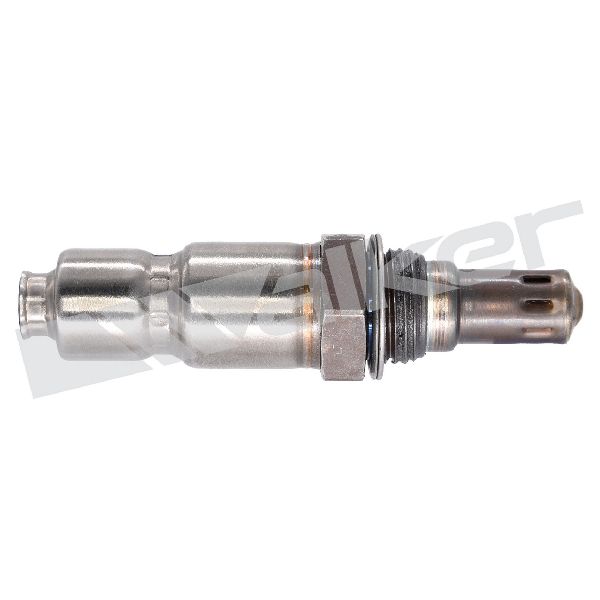
- Failing Downstream (Rear) Oxygen Sensor 🔴 High Probability → Shop Oxygen Sensor Oxygen sensors are wear-and-tear items that degrade over time from heat and contaminants in the exhaust. The downstream sensor is a very common failure point for this code, as it may start sending inaccurate 'rich' signals as it fails.
How to confirm: Use an OBD-II scanner to monitor the live voltage data for the Bank 1 Sensor 2. A healthy downstream sensor should show a relatively stable voltage (typically between 0.5V and 0.8V) after the engine is warm. If the voltage is stuck high (above 0.8V) or fluctuating rapidly like the upstream sensor, it has likely failed. A sensor that reads a steady high voltage when no other symptoms of a rich condition are present is a strong indicator of a biased or failed sensor itself.
Typical fix: Replace the downstream oxygen sensor (Bank 1, Sensor 2). This requires an O2 sensor socket or a 22mm wrench. 🎬 See this step-by-step Mazda 3 O2 sensor replacement guide
Est. part cost: $60-$120 - Exhaust System Leak 🟡 Medium Probability Rust can cause leaks at gasket flanges or in the exhaust pipe itself, especially in regions that use road salt. The flex pipe before the catalytic converter is a particularly common failure point that can throw off O2 sensor readings.
How to confirm: Visually inspect the exhaust system from the engine all the way back to the rear O2 sensor. Look for black soot marks, listen for hissing or ticking sounds, and feel for escaping air (when the exhaust is cool). A shop can perform a smoke test to find small leaks. Pay close attention to the flexible, braided section of the pipe.
Typical fix: Repair the leak. This may involve replacing a gasket, tightening bolts, or welding a patch on the pipe. For a leaking flex pipe, a new section can often be welded in by an exhaust shop without replacing the entire assembly.
Est. part cost: $10-$250 - Failing Upstream (Front) Air/Fuel Ratio Sensor ⚪ Low Probability → Shop Oxygen Sensor While less common for this specific code, a faulty front A/F sensor can send incorrect data to the PCM, causing it to command a rich fuel mixture. The rear sensor then correctly reports this rich condition, setting the P2097 code.
How to confirm: Monitor live data for both upstream (Sensor 1) and downstream (Sensor 2) sensors. If the upstream sensor's readings are sluggish or biased, and long-term fuel trims are highly negative (e.g., -10% or more), it may be the root cause.
Typical fix: Replace the upstream air/fuel ratio sensor (Bank 1, Sensor 1).
Est. part cost: $100-$180
Rare But Worth Checking
- Leaking Fuel Injector: → Shop Fuel Injector A fuel injector stuck open will dump excess fuel into a cylinder, causing a rich condition. This is usually accompanied by other codes like a cylinder-specific misfire (e.g., P030x), a more noticeable rough run, hard starting, and potentially black smoke from the exhaust.
- Failing Catalytic Converter: → Shop Catalytic Converter A damaged or contaminated catalytic converter can fail to properly process exhaust gases, which can be misinterpreted by the rear O2 sensor. This is an expensive repair and should be the last thing to consider after all other causes are ruled out. A clogged converter often presents with a significant loss of power.
- PCM Software Issue: Mazda has issued TSBs for some models where improper PCM logic can cause P2097 to be set erroneously. While TSB 01-012/20 applies to later models, it shows a precedent for this issue. A dealer can check if your vehicle's software is up to date.
Diagnosis Steps
- Read the code with an OBD-II scanner and check for any other stored codes. Note the freeze frame data to see engine conditions 🎬 Watch: How to quickly diagnose and fix this error when the code was set.
- Perform a thorough visual and auditory inspection of the exhaust system from the engine manifold to the rear O2 sensor. Look and listen for any signs of leaks, such as black soot, cracks, or a ticking/hissing sound, especially around the flex pipe.
- Use the scanner to view live data once the engine is fully warmed up (closed loop). Watch the voltage of the downstream O2 sensor (Bank 1, Sensor 2). It should be relatively steady between 0.5V and 0.8V. If it's stuck high (e.g., >0.8V), the sensor is likely biased rich and has failed.
- Check the live data for the long-term fuel trim (LTFT) value for Bank 1. A large negative LTFT (e.g., -10% or more) indicates the computer is actively trying to compensate for a rich condition that may originate from a leaking injector or faulty upstream sensor.
- If an exhaust leak is suspected but not visible, a smoke test can be performed to pinpoint its exact location. This is the most definitive way to rule out leaks.
- If the downstream sensor seems to be reading correctly (i.e., not stuck high) and fuel trims are normal, but the code persists, investigate potential upstream issues like a sluggish front A/F sensor.
- As a final step if all else fails, investigate potential fuel system issues like high fuel pressure or leaking injectors, though these would likely present with other symptoms and codes.
Parts You'll Likely Need
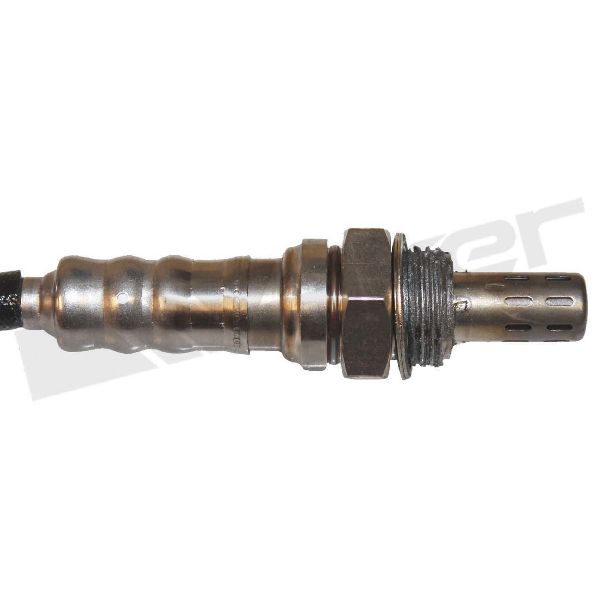
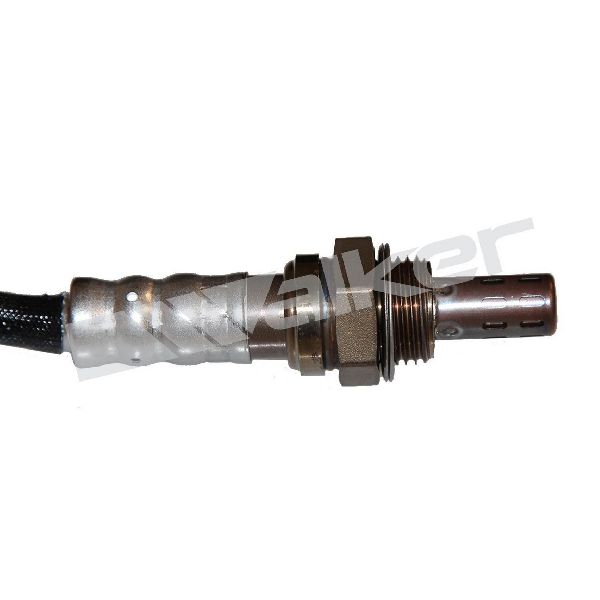
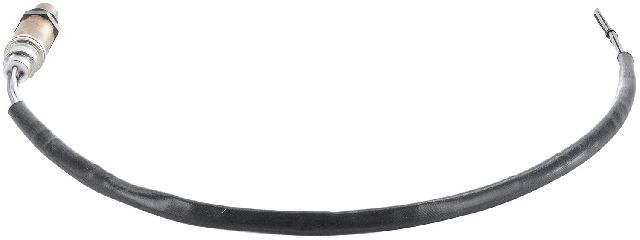
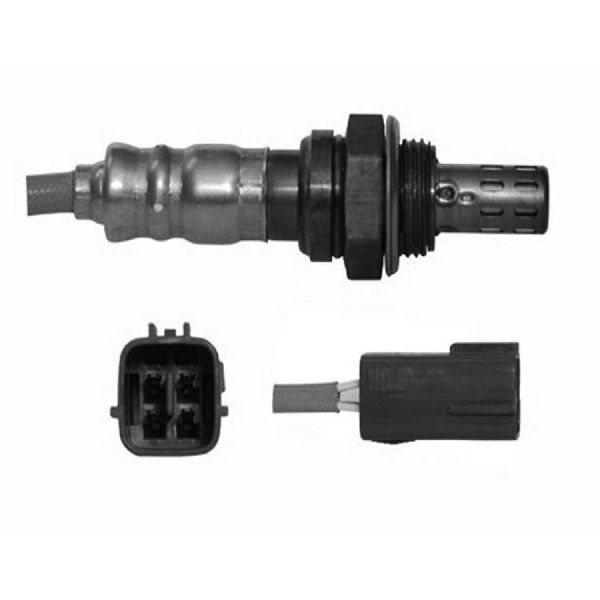
- Downstream Oxygen Sensor (Bank 1, Sensor 2)
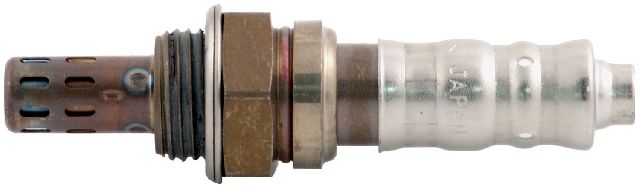
(OEM #L510-18-861B (supercedes L510-18-861A))— This sensor is the most common point of failure for code P2097 on this vehicle. It directly measures the condition that triggers the code.
Trusted brands: Denso (e.g., 234-4380), NGK/NTK (e.g., 24352), Bosch
OEM price range: $150-$220
Aftermarket price range: $60-$120
Related Codes That Often Appear With This One
- P0172 — P0172 means "System Too Rich Bank 1". If the rich condition is severe and detected by the upstream sensor as well, you may see both codes together.
- P0137 — P0137 means "O2 Sensor Circuit Low Voltage (Bank 1 Sensor 2)". This can sometimes appear alongside P2097 if the sensor is failing electrically.
Technical Service Bulletins (TSBs) & Recalls
- TSB 01-012/20: While for later models (2018+), this TSB addresses P2097 caused by improper PCM logic. It establishes that Mazda has corrected this code via software updates in the past, making a dealer software check a valid, albeit rare, diagnostic step if all hardware is confirmed to be working.
- TSB Bulletin #01-012-20-3738: A manufacturer service bulletin for other Mazda models notes that some vehicles may experience a check engine light with DTC P2097:00 that cannot be cleared by itself, even if the detection condition has gone.
- TSB Bulletin #SSPC0: Manufacturer records indicate that on certain vehicles, if the PCM registers DTC P2097, the code cannot be cleared even after the concern that created the DTC has been resolved.
Platform-Specific Known Issues
- The exhaust flex pipe on the second-generation Mazda 3 is a known weak point and can develop leaks over time, which can directly cause P2096 (lean) or P2097 (rich) codes by allowing unmetered air into the exhaust stream before the O2 sensors.
Mechanic-Grade Diagnostic Values
- Long Term Fuel Trim (LTFT) — expected: -13% to +13%. Failure: A value that is consistently and significantly negative (e.g., -15% or more) indicates the PCM is compensating for a rich condition. A value that was high and then drops into the normal range after holding RPMs at 2000 may indicate a vacuum leak or skewed MAF.
- Downstream O2 Sensor (HO2S) Heater Resistance — expected: Approximately 440Ω. Failure: A significantly different resistance value may indicate a faulty heater circuit within the sensor.
- Downstream O2 Sensor (HO2S) Voltage (Warm Engine, Steady RPM) — expected: Relatively stable between 0.4V and 0.6V (or 0.5V to 0.8V as per other sources).. Failure: Voltage stuck high (e.g., >0.8V) indicates a rich reading or biased sensor. Voltage fluctuating rapidly similar to the upstream sensor indicates a failing catalytic converter.
- Mazda Fuel Feedback Correction (SHRTFT12 + LONGFT12) — expected: Within specification.. Failure: For P2097, the PCM sets the code if the sum of short and long term trims is -2.3% to -2.5% or less for 25 seconds (on Skyactiv engines, but logic is similar).
Hidden / Shadow Codes Worth Checking
- Pending Code / Mode 2 Freeze Frame Data: Mazda's diagnostic procedure heavily emphasizes using a capable scanner (like the M-MDS) to check for a PENDING version of P2097 on the first drive cycle. It also requires analyzing the FREEZE FRAME DATA (Mode 2) to understand the exact engine conditions (coolant temp, RPM, speed) when the fault was first triggered. (see via Mazda M-MDS or an advanced OBD-II scanner with Mode 2 and pending code capabilities.)
Scan Tool Commands That Help
- Mazda M-MDS (or equivalent): PID/DATA Monitor — Used to monitor live data PIDs such as LONGFT1 (Long Term Fuel Trim) and SHRTFT12 (Short Term Fuel Trim for HO2S) to verify if the system is actually running rich or if the sensor is biased.
- Mazda M-MDS (or equivalent): Purge Control System Inspection — To functionally test the purge solenoid valve. A stuck-open purge valve can introduce excess fuel vapors, causing a rich condition that could trigger P2097. This is one of the first checks in the factory diagnostic tree.
- Mazda M-MDS (or equivalent): Spark Test — To verify ignition system health. A weak or inconsistent spark can lead to incomplete combustion, resulting in a rich exhaust mixture that is correctly reported by the downstream O2 sensor.
Wiring & Ground Locations
- PCM Connector Pins (Rear O2 Sensor) — At the Powertrain Control Module (PCM). Specific pins for the rear O2 sensor on a generic Mazda 3 diagram are 2Q, 2BE, and 2BH.. These pins are the direct connection points for the rear O2 sensor signal and heater circuits. Technicians can test for continuity, shorts, and proper voltage directly at the PCM to rule out wiring harness issues between the sensor and the computer.
- Engine Bay Ground Points — Key grounds are located on the body near the passenger strut tower, on the engine block/head, on the transmission bell housing, and to the alternator bracket.. A poor ground connection for the engine or PCM can introduce electrical noise and voltage offsets, causing sensors like the O2 sensor to send inaccurate readings to the PCM.
- Incorrect Ground on Oil Filter Housing — A specific case was noted where a main ground wire was mistakenly attached to a bolt on the oil filter housing.. The gasket behind the oil filter housing isolates it from the engine block, creating a very poor ground path. This can cause widespread communication errors (U-codes) and unpredictable sensor behavior, potentially leading to a P2097 code.
Real Owner Repair Stories
- Reddit user slipknotman515 (2010 Mazda 3 2.5L) — P0138 (O2 Sensor Circuit High Voltage Bank 1 Sensor 2), which is electrically related to P2097.
❌ Tried (didn't work) The user was advised against immediately replacing the O2 sensor, as it might be correctly reporting a problem.
✅ What actually fixed it The suggested root cause was not the sensor itself, but either a failing catalytic converter or another issue causing a true rich condition. The advice was to check live data from the Coolant Temp sensor (to see if the car falsely thinks it's cold and is adding fuel) and inspect the wiring harness for corrosion ('green crusties'), especially in salt-prone areas. - KBB Question Forum (Mazda 3 (model year/engine unspecified)) — P2097 code was present.
✅ What actually fixed it The user resolved the P2097 code (implying O2 sensor replacement), but was then immediately faced with a P0420 (Catalyst System Efficiency Below Threshold) code. This strongly suggests the original rich condition reported by P2097 had already damaged the catalytic converter.
"I Checked Everything" — The Actual Cause
- In some cases, particularly when no exhaust leaks or other hard faults are found, the P2097 code can be induced by specific driving styles. A 'digital driver' who frequently cycles between full throttle and coasting can cause fuel mixture fluctuations that the system interprets as a fault. Similarly, extensive stop-and-go city driving can also contribute. In these scenarios, there is no part to fix; the code is a result of the driving conditions. Another possibility after ruling out leaks is a skewed Mass Airflow (MAF) sensor or a non-OEM air filter causing slight, persistent fuel trim deviations that eventually trigger the code.
OEM Part Supersession History
L510-18-861A→L510-18-861B— Revision of the downstream oxygen sensor for the 2.5L engine.L34B-18-861A→L34B-18-861B— Revision of the downstream oxygen sensor for the 2.3L Turbo engine.
Heads up: This part is for the Mazdaspeed3 2.3L Turbo engine ONLY and is not compatible with the naturally aspirated 2.5L engine, despite looking similar.
Model Year Variations Within This Range
- 2012-2013: A mid-cycle facelift occurred for the 2012 model year. While the 2.5L MZR engine and its core components related to P2097 remained the same, the exterior styling was updated ('bubbly' vs 'aggressive'), and the 2.0L engine option was changed to the new Skyactiv-G. The Bluetooth module was also updated around this time.
Diagnostic Flowchart
Real Owner Stories
Aggregated from forums and TSBs cited above. Mileages and costs reflect what owners reported in those sources.
2007 Mazda 6 2.3L
Symptoms: Experienced a P2097 code after unusual driving conditions.
What fixed it: Resetting the code to see if it was a fluke before proceeding with repairs.
Source hint: https://www.mazda3forums.com/threads/need-help-cel-p2097-on-2007-mazda-6-more-details-inside.430945/
Mazda (Model Unspecified)
Symptoms: Chugging when braking and poor acceleration.
What fixed it: Patched suspected exhaust leaks.
Source hint: https://www.reddit.com/r/MechanicAdvice/comments/y3433z/p2097_cant_find_the_source/
2014 Mazda 3
Symptoms: Triggered a related P2096 lean code.
What fixed it: Identified a broken flex pipe as the root cause.
Source hint: https://www.mazda3forums.com/threads/2014-mazda-3-p2096.751338/
Related OBD-II Codes
Frequently Asked Questions
Does TSB 01-012/20 apply to my 2010-2013 Mazda 3 2.5L?
Why is the exhaust flex pipe a common suspect for P2097 on the second-generation Mazda 3?
How can I test if the downstream oxygen sensor on my 2.5L Mazda 3 has failed?
Can a leaking fuel injector cause the P2097 code on this engine?
Are there other Mazda vehicles that share this exact P2097 issue with the 2.5L engine?
Helpful Videos

We Have This Part in Stock

The information in this article is provided for general reference and educational purposes only. Vehicle specifications, procedures, and part compatibility can vary by production date, trim level, and region. Always consult your vehicle's factory service manual and verify part numbers before purchasing or performing repairs. Safety-critical components such as airbags, seat belts, and braking systems should be installed by a qualified professional.
- Mazda 3:
- 🧭 Diagnostic Flowchart
- 🎬 Helpful Videos
- 🛍️ Shop This Part
- What's Unique About the 2010-2013 Mazda 3
- Symptoms You May Notice
- Most Likely Causes
- Rare But Worth Checking
- Diagnosis Steps
- Parts You'll Likely Need
- Related Codes That Often Appear With This One
- Technical Service Bulletins (TSBs) & Recalls
- Platform-Specific Known Issues
- Mechanic-Grade Diagnostic Values
- Hidden / Shadow Codes Worth Checking
- Scan Tool Commands That Help
- Wiring & Ground Locations
- Real Owner Repair Stories
- "I Checked Everything" — The Actual Cause
- OEM Part Supersession History
- Model Year Variations Within This Range
- Real Owner Stories
- 2007 Mazda 6 2.3L
- Mazda (Model Unspecified)
- 2014 Mazda 3
- Related OBD-II Codes
- Frequently Asked Questions
- 🎟️ Get 5% Off